
REVIEW · HISTORICAL TOURS
Historic Kamakura: Temples, Shrines and Street Food Private Walking Tour
Kamakura packs temples, Shinto shrines, bamboo, old lanes, and excellent snacks into one very walkable day. This private tour gives you a useful mix: quiet temple grounds first, then the food stalls and shops of Komachi-dori, followed by tea in a bamboo grove and a look at the Great Buddha.
I like the way the tour combines major sights with small food stops, since you get more than a parade of photo opportunities. I also like the private format. Guides Simon and Chuck are praised for being friendly, flexible, and attentive to families and older relatives. The main drawback is the price: at $220.22 per person, this is a serious outlay, and transportation to and from Kamakura is extra.
Key points to know before booking
- Private six-hour outing: Your group has the guide to itself, so the pace can suit your family or friends.
- A strong mix of sights: Engaku-ji, Tsurugaoka Hachimangu, Hokoku-ji, and the Great Buddha all appear in one day.
- Street food is part of the plan: Lunch, snacks, drinks, and local tastings are included at Komachi-dori.
- Tea in a bamboo grove: Hokoku-ji adds a calm, traditional break to the walking route.
- Guides who adjust to the group: Simon and Chuck are noted for helping families, children, and older adults.
- Station-to-station route: You meet at Kita-Kamakura Station at 9:00 a.m. and finish at Kamakura Station.
Why this Kamakura route works so well
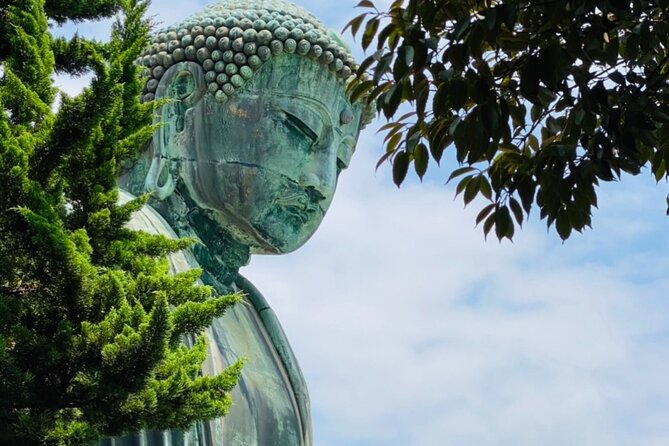
Kamakura is close enough to visit from Tokyo, yet it feels far removed from the capital’s dense streets and tall buildings. The town is known for temples, shrines, the bronze Great Buddha, and a long food street leading toward the main shrine.
The clever part of this tour is the order. You begin at Kita-Kamakura, where Engaku-ji provides a quiet start. From there, the day moves toward the central shrine and Komachi-dori before reaching Hokoku-ji and the Great Buddha. You finish at Kamakura Station rather than returning to the starting point.
That route matters. You are not simply touring one temple and turning around. You are moving through different sides of Kamakura, with time for history, religious architecture, food, and scenery. The listed stops account for about three hours and 45 minutes, leaving the rest of the six-hour schedule for walking, explanations, food, and movement between sites.
Because this is a private activity, you can ask questions without worrying about holding up a large group. The day should also feel less rigid than a standard coach tour. Simon is especially praised for handling families and helping with small children, while Chuck is described as good at judging when to move on without making the day feel rushed.
More history-and-food walks around Tokyo:
- Palermo: Street Food and History Walking Tour
★ 4.9 · 1,486 reviews - Walking Tour and street food Tour Palermo / History and Food
★ 5.0 · 386 reviews - Discover Palermo in 3 hours. Art, history, markets and street food
★ 5.0 · 352 reviews
Starting at Engaku-ji among old temple buildings
Your morning begins at Kita-Kamakura Station at 9:00 a.m., then continues to Engaku-ji. The temple complex includes the Busudan hall, which houses a wooden Buddha statue. You also climb the slopes behind the temple for views and a look at the many tengu statues.
This is a good opening stop because it sets the tone without throwing you into the busiest part of town. Engaku-ji offers buildings, religious art, wooded slopes, and a little uphill walking. The 45-minute visit is long enough to see the main points, though not so long that the first stop consumes the entire morning.
The climb deserves attention. The tour specifically includes the slopes behind the temple, so you should expect more than a flat stroll between gates and halls. The views are part of the reward, but anyone with limited stamina should take the physical requirement seriously. The tour asks for a moderate fitness level, and this is one reason why.
The tengu figures add a quirky touch. These long-nosed supernatural beings belong to Japanese folklore and often appear in mountain and temple traditions. Their presence gives the visit a little more character than a standard look at wooden buildings.
Tsurugaoka Hachimangu and Kamakura’s central shrine
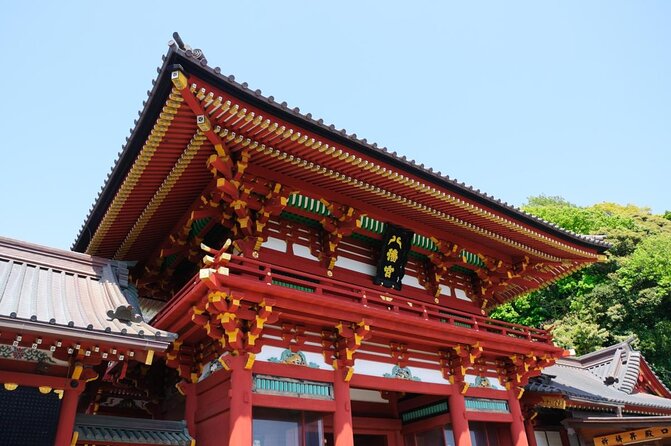
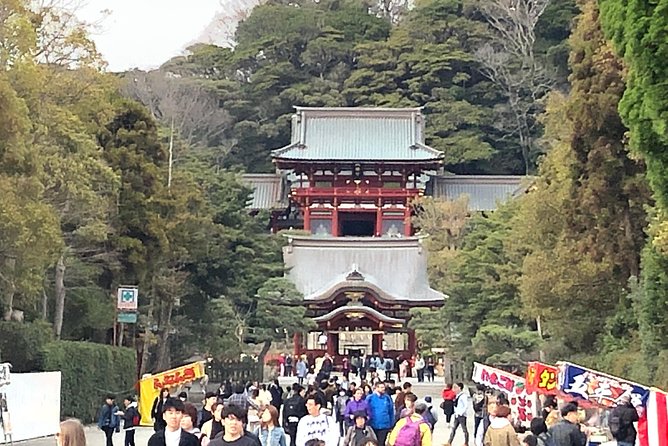
Next comes Tsurugaoka Hachimangu, Kamakura’s most important Shinto shrine. The 30-minute stop includes the main hall, the large torii gates, and a small museum of treasures.
Tsurugaoka Hachimangu feels different from Engaku-ji. The first stop is a Buddhist temple with a quieter, more enclosed mood. Here, the broad approach, shrine gates, and main hall give you a clearer sense of public Shinto space. Your guide can help explain the difference between Buddhist and Shinto settings, which is useful if this is your first visit to Japan.
Thirty minutes is a compact visit. You will see the central features, but you should not expect a slow museum visit or time to inspect every corner. That is not necessarily a flaw. The tour has several major stops, and the shorter shrine visit keeps the day moving toward lunch.
The small treasure museum is included, but the available details do not specify how long you spend inside or which objects are displayed. Think of it as an added glimpse rather than the focus of the stop.
Eating your way along Komachi-dori
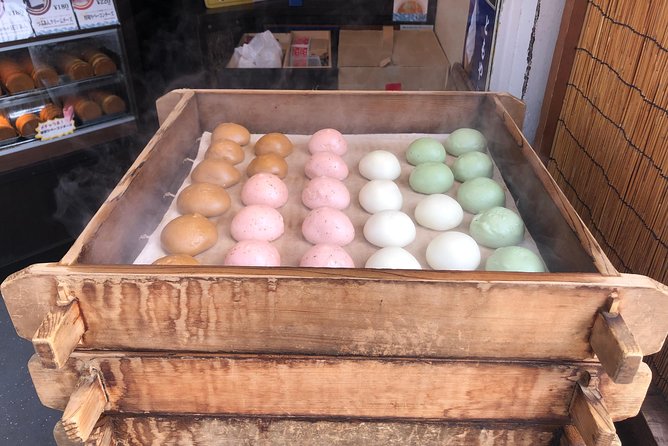
Komachi-dori is where the tour changes pace. This famous street is lined with eateries and stalls selling sweet and savory food, and you spend about an hour sampling local choices.
This is one of the tour’s most useful features. Instead of choosing one restaurant and spending most of the lunch break seated, you get to try a range of small items. The description specifically mentions local delicacies, though the supplied details do not name every dish. Your guide helps you understand what to try, which is especially helpful if you are unsure about unfamiliar food or simply want to avoid guessing.
Lunch, snacks, bottled water, soda, and alcoholic drinks are included. That makes the food stop more than a pause for a quick snack. It is part of the experience and adds real value to the admission fees and guiding.
Still, Komachi-dori is a popular shopping street. You should expect a more commercial setting here than at Engaku-ji or Hokoku-ji. If you want a completely quiet or secluded Kamakura experience, this section may feel busy and polished for visitors. If you enjoy tasting food and browsing stalls, it provides a lively contrast.
The private guide format helps here. Simon is praised for pointing out food that a guest might otherwise pass by, and one family credited him with making street food feel approachable. That is exactly where a guide can earn his keep: not by simply leading you down the street, but by helping you decide what is worth trying.
More street food tours in Tokyo:
- Tokyo: Tsukiji Fish Market Food and Culture Walking Tour
★ 4.7 · 757 reviews - Tsukiji Fish Market: Street Food & Culture Walking Tour
★ 5.0 · 669 reviews - Tsukiji Fish Market: Street Food & Culture Walking Tour
★ 4.8 · 259 reviews - Tokyo: Togoshi Ginza Street Food Tour
★ 5.0 · 34 reviews
Tea and bamboo at Hokoku-ji
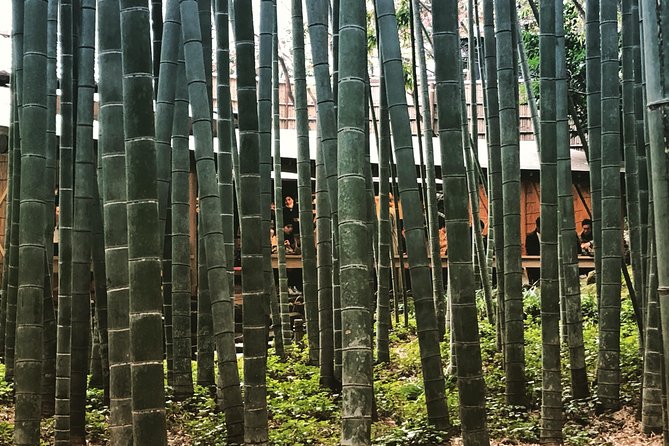
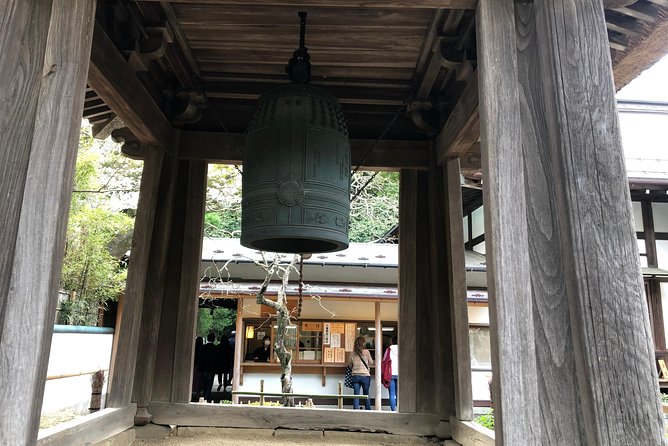
Hokoku-ji is known as Kamakura’s bamboo temple. You enter the cool bamboo grove and stop at the tea house for a traditional cup of green tea.
This is likely the most peaceful part of the day. The bamboo grove offers a change from the shrine approach and food street, and the tea stop gives you a chance to sit rather than keep walking. The tour allows about an hour here, which is generous compared with some of the other stops.
The tea is not an optional extra. It is included in the plan, along with the entrance fee. That matters when comparing this tour with cheaper walking options, since small admissions and food purchases can quickly add up during a full day.
Hokoku-ji also gives the itinerary a better rhythm. You start with temple buildings and an uphill view, move through a major shrine, eat along Komachi-dori, then slow down with tea. I like this kind of pacing because it avoids making six hours feel like one long sequence of gates and statues.
Do not treat the bamboo grove as a large forest walk. The supplied information only promises a visit to the grove and tea house. It is a scenic temple stop, not an extended hike.
Meeting the Great Buddha before Kamakura Station
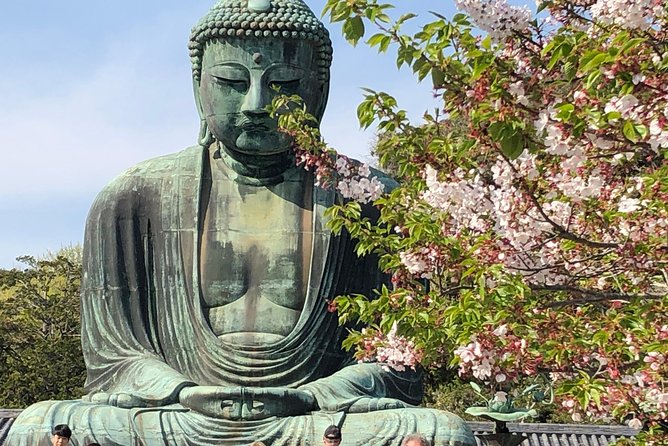
The final listed sight is the Great Buddha of Kamakura, described as Japan’s second-largest bronze Buddha. You spend about 30 minutes at Daibutsukiritoshi before finishing at Kamakura Station.
The Great Buddha is the day’s most instantly recognizable sight. After the smaller details of temple halls, shrine objects, food stalls, and bamboo, the scale of the bronze figure gives the route a strong finish. Thirty minutes should let you see the statue, take photos, and hear the main explanation without turning the stop into a long visit.
The exact details of the visit are limited. The information does not say that interior access is included, so you should count on seeing the statue itself and its setting rather than assume additional access.
Ending at Kamakura Station is practical. You do not need to return to Kita-Kamakura after the final stop, and you can continue your day from the central station. The tour does not include transportation costs, so train fares to Kamakura and any local transport needed during the day are your responsibility. The meeting point is Kita-Kamakura Station, and the end point is Kamakura Station.
What the $220.22 price really buys you
At $220.22 per person, this tour is not a budget introduction to Kamakura. The price makes more sense if you are traveling with a small private group and want the convenience of one guide, included admissions, food, snacks, and drinks.
You are paying for several things at once:
- A six-hour private guide service
- Entrance fees at the listed sites
- Lunch and street-food tastings
- Snacks, water, soda, and alcoholic beverages
- Green tea at Hokoku-ji
- A route that begins at one station and ends at another
- Help choosing food and understanding cultural details
Transportation is not included, so add that to your calculation. Group discounts are available, which may improve the per-person value for a larger private party. Since this is a private activity, the overall cost can be easier to justify for families or friends who value control over the pace.
I would not book this mainly for a bargain. I would book it to reduce planning work and make the day feel personal. If you are comfortable arranging temples, food, and train travel yourself, you can likely spend less. If you want one person to connect the pieces and keep the day moving, the price has a clearer purpose.
The fact that the tour is often booked about 95 days ahead suggests that you should not leave it until the last minute if your schedule is fixed. The provider is Tokyo Memories, and confirmation is received at booking.
Who will get the most from this private walk
This tour suits first-time visitors who want a broad introduction to Kamakura without spending hours researching temple locations and food streets. It also suits families, since the guide can adjust attention to children and help adults who need a more considerate pace.
The reviews praise Simon in particular for being helpful with a little one, and for staying friendly and engaged from the first contact through the end of the day. Chuck is praised for explaining the sights clearly and knowing when to move on. If you receive either guide, you can expect a personal style rather than a large-group speech, based on the way the service is described.
The tour is also a good fit for people who want to try Japanese street food but feel uncertain about what to order. The guide can point out local choices and explain what you are eating. Included drinks, including alcoholic beverages, make the food portion feel more generous than a simple walk through the stalls.
I would be more cautious if you dislike walking, uphill sections, or a full schedule. The day lasts about six hours, and the moderate fitness requirement is important. It is also not ideal if your main goal is deep museum time, since the schedule focuses on several outdoor religious sites, food, and short visits.
Practical details that shape the day
You meet at Kita-Kamakura Station at 9:00 a.m. and finish at Kamakura Station. Those station locations make the route easy to understand, but transportation fares are separate and should be part of your budget.
Wear shoes you can walk in comfortably. The available information does not provide a total distance or a detailed accessibility statement, but the route includes temple grounds, station-to-station movement, and a climb behind Engaku-ji. A moderate fitness level is required.
The tour depends on good weather. If poor weather causes cancellation, you are offered another date or a full refund. You can cancel for a full refund up to 24 hours before the start time, while cancellations or changes made within 24 hours are not refunded or accepted.
The activity has a listed rating of 5 from six ratings, and the strongest themes are clear: personal service, good pacing, family help, food guidance, and cultural explanation. Those qualities matter more here than a long list of monuments. Kamakura is easy to visit on your own, but a private guide can make the day less confusing and more social.
Should you book this Kamakura tour?
Book it if you want one well-paced day covering temples, a major shrine, street food, bamboo, tea, and the Great Buddha. It is especially worth considering for families, first-time visitors, honeymooners, or anyone who wants help with food choices and cultural context.
Skip it if you prefer to travel independently, avoid organized schedules, or want the lowest possible cost. You will need to pay for transportation separately, and the $220.22 price is easier to defend for a private group than for a solo visitor.
For the right group, this is a thoughtful Kamakura introduction. The route gives you major sights without ignoring the pleasures between them: a snack chosen by a local guide, a quiet cup of tea, a wooded temple slope, and the freedom to ask questions as the day unfolds.
FAQ
How long is the Kamakura walking tour?
The tour lasts approximately six hours.
What time does the tour begin?
It begins at 9:00 a.m.
Where does the tour start?
The meeting point is Kita-Kamakura Station in Yamanouchi, Kamakura.
Where does the tour finish?
The drop-off point is Kamakura Station.
Is this a private tour?
Yes. Only your group participates in the private activity.
Which main sights are included?
The route includes Engaku-ji, Tsurugaoka Hachimangu Shrine, Komachi-dori, Hokoku-ji Temple, and the Great Buddha of Kamakura.
Is food included?
Yes. Lunch and snacks are included, along with bottled water, soda, and alcoholic beverages.
Is tea included at Hokoku-ji?
Yes. A traditional cup of green tea at the tea house in the bamboo grove is included.
Is transportation included?
No. Transportation costs are not included in the tour price.
What happens if the weather is poor?
If the experience is canceled because of poor weather, you are offered a different date or a full refund.
Newly added plates around Tokyo
- Tsukiji Fish Market Street Food & Culture Walking Tour★ 5.0 · 8 reviews
- Tsukiji Fish Market: Street Food Tour with Tasting★ 5.0 · 4 reviews
- Ueno Park and Ameyoko Street Food Market Half Day Walking Tour★ 5.0 · 3 reviews
- Tokyo:Enjoy street food & Japanese food culture at Tsukiji Market★ 5.0 · 6 reviews
- Tokyo Fish Market Food Tour: Street Food & Friendly Guide★ 3.0 · 2 reviews
- Private Tokyo food scene 6 hour experience: Depatika, street food, izakaya★ 5.0 · 9 reviews
- Matsushima Bay, Islands and Seafood Market day tour from Tokyo★ 5.0 · 2 reviews
- Tokyo Street Food Tour – 7 Japanese Foods★ 5.0 · 16 reviews
Historical Tours, compared.

Walking Tour and street food Tour Palermo / History and Food
Read our review →
Discover Palermo in 3 hours. Art, history, markets and street food
Read our review →
Lecce History and Street Food Tasting Small Group Tour
Read our review →
Historic Center Street Food, Market, and Eateries Tour
Read our review →
Dubai Old Town, Culture, History, Street food and Souks Tour
Read our review →
Old Dubai Historic Guided Tour: Creek, Street Food & Souks
Read our review →
Browse the lists this tour appears in