
REVIEW · NIGHT MARKET FOOD TOURS
Tokyo: Tsukiji Fish Market Food and Culture Walking Tour
Tsukiji is best understood with someone who knows where to pause. This three-hour walk leads you through a maze of fish stalls, snack counters, and food shops, with stops for Wagyu beef skewers, tamagoyaki, fish cakes, fruit, and sushi or a seafood bowl. I like that the food is not just a parade of samples. Your guide explains why Tokyo chefs shop here and how each item fits Japanese food culture.
I also like the small groups of two to eight people. Guides such as Shun, Nazu, Miki, Robert, and Yoshiko have been praised for making the market easier to navigate and for answering questions along the way. The main drawback is that Tsukiji can be very crowded, especially on Saturday mornings, and the tour cannot handle vegetarian, vegan, halal, or gluten-free diets.
Key points to know before you book
- The final meal changes by day: You may finish with sushi or a fresh seafood bowl.
- The Wagyu skewer is a highlight: It is one of the most consistently praised tastings on the route.
- The market is more than fish: Expect tamagoyaki, fried fish cake, seasonal fruit, and other small bites.
- Your guide matters: Shun, Nazu, Miki, Robert, Luna, and several others have been singled out for warmth, clear explanations, and good food choices.
- Market days affect the experience: The fish market is closed on Wednesdays, Sundays, and other designated closed days, with some tastings unavailable.
- Come ready to walk and eat: Comfortable shoes matter, and this is not a suitable outing for wheelchair users or people with major mobility limits.
Starting at Tsukiji Honganji Temple
The meeting point is the main gate of Tsukiji Honganji Temple. That is a sensible place to begin. It gives you a clear landmark beside the market and a little breathing room before you enter the tight lanes of Tsukiji.
Your guide may explain the temple and the way the neighborhood developed before leading you toward the food stalls. Several guides have used the opening to discuss the history of the market district, shrine or temple etiquette, and the role of Tsukiji in Tokyo’s food trade.
You should arrive in comfortable clothes and shoes. The walking is moderate, but the ground can be crowded and the pace includes frequent stops. If you are meeting a guide for the first time in Tokyo, allow enough time to find the temple gate rather than aiming to arrive at the last second.
More Night Market Food Tours in Tokyo:
- Tokyo: Private Tsukiji Fish Market Tour with 3 Food Stops
★ 5.0 · 9 reviews - Ueno Park and Ameyoko Street Food Market Half Day Walking Tour
★ 5.0 · 3 reviews - Tokyo Fish Market Food Tour: Street Food & Friendly Guide
★ 3.0 · 2 reviews
Entering the Tsukiji Outer Market
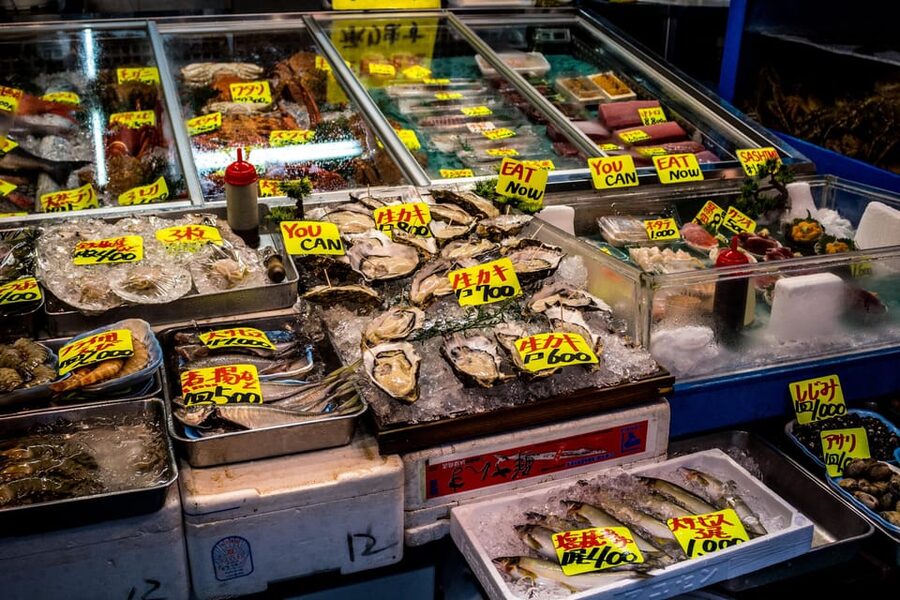
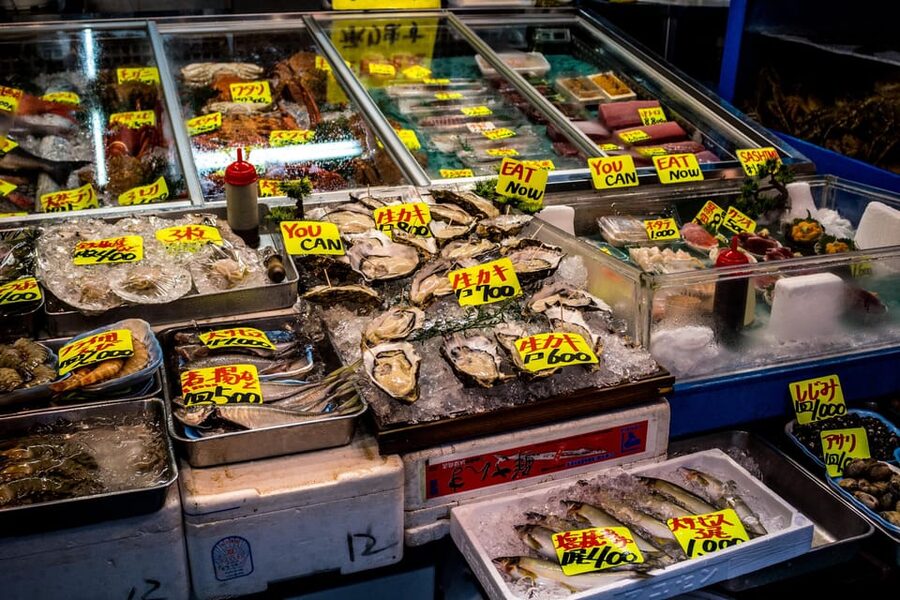
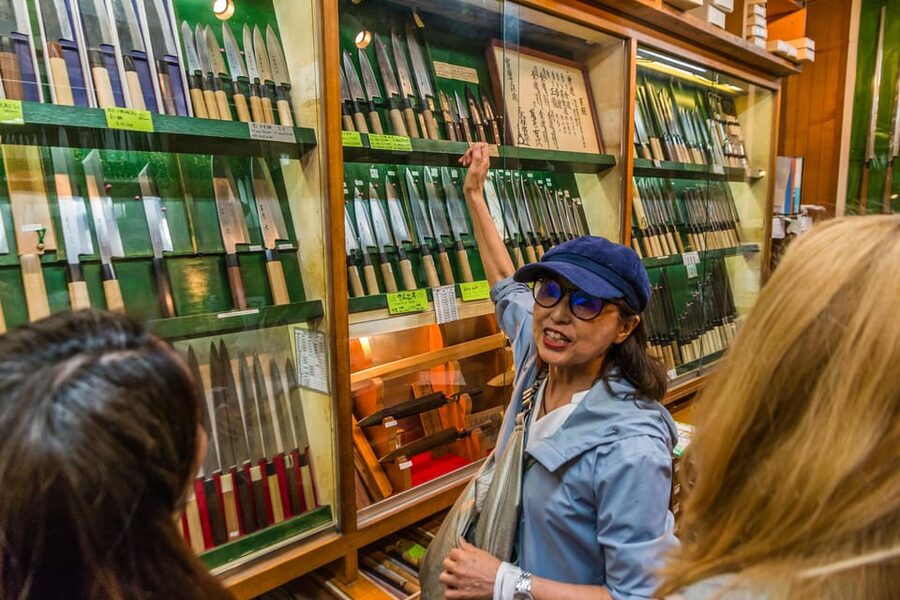
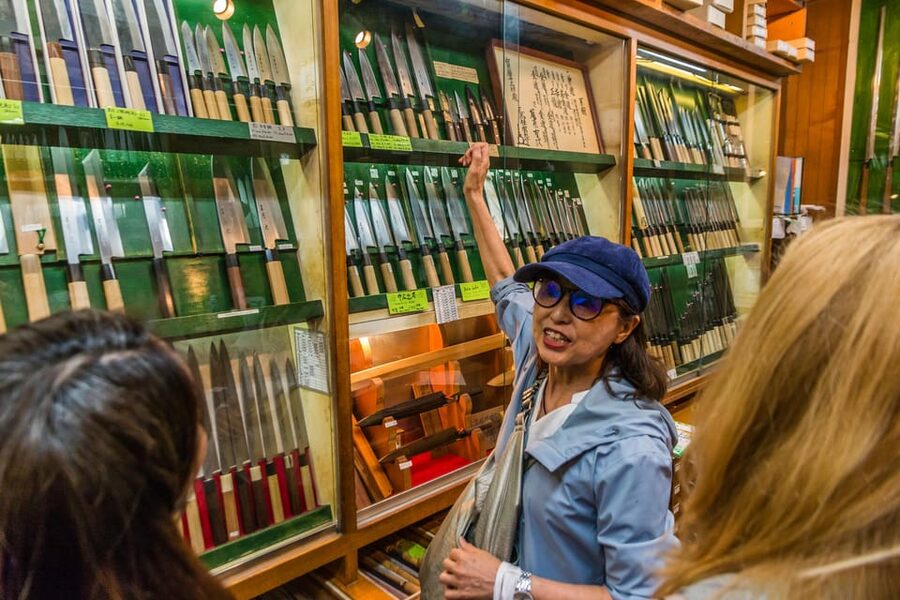
The tour’s main setting is the Tsukiji Outer Market, a dense shopping district filled with fish, shellfish, knives, cooking goods, prepared foods, sweets, tea, and produce. It is not a quiet museum visit. Shopkeepers are working, customers are buying, and narrow lanes can fill quickly.
This is where a guide earns the fee. On your own, you can certainly walk through Tsukiji, but it is hard to tell which counter is worth your time, how to order, or how to avoid buying more food than you can eat. Your guide creates a route and helps you focus on the food rather than the crowd.
The market’s famous fish trade also helps explain why top chefs visit. The appeal is freshness and choice, but the tour adds context. You learn how the market serves both professional cooks and ordinary shoppers, and why certain foods are prepared in front of you rather than sold as packaged souvenirs.
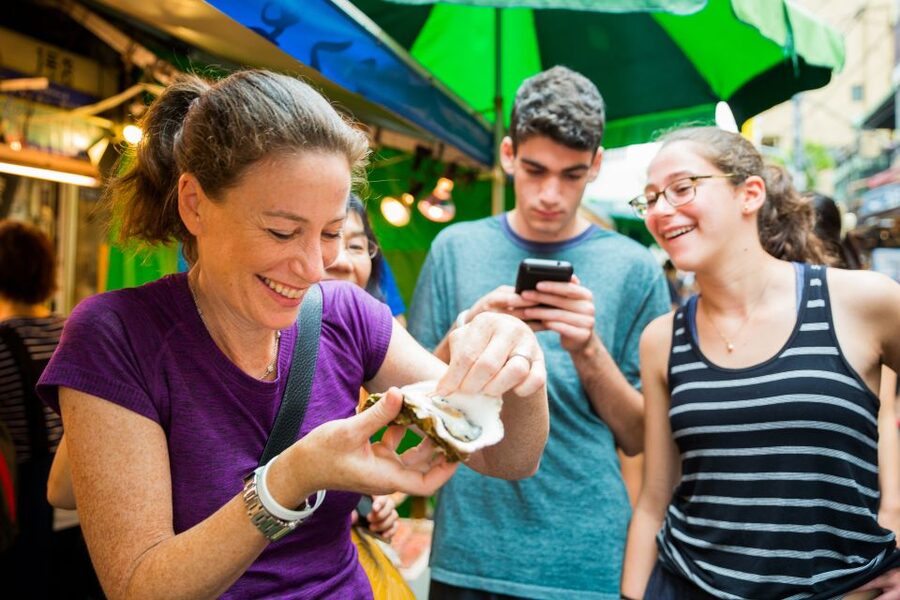
Expect plenty of aromas and visual distractions. One stall may have glistening seafood, another bright fruit, and another rows of rolled omelets. You will probably see many things you would not think to try alone. That is one of the tour’s strongest features.
The first tastings: Wagyu, fish cake, and tamagoyaki
The food comes in stages rather than as one large meal. A typical selection includes a high-grade Wagyu beef skewer, Japanese omelet, fried fish cake, seasonal fruit, and other market samples.
The Wagyu skewer is the clear favorite for many people. It is a small portion, not a full steak, but it gives you a chance to taste well-marbled beef while standing among the market stalls. If you enjoy meat, this may be the most memorable bite of the morning.
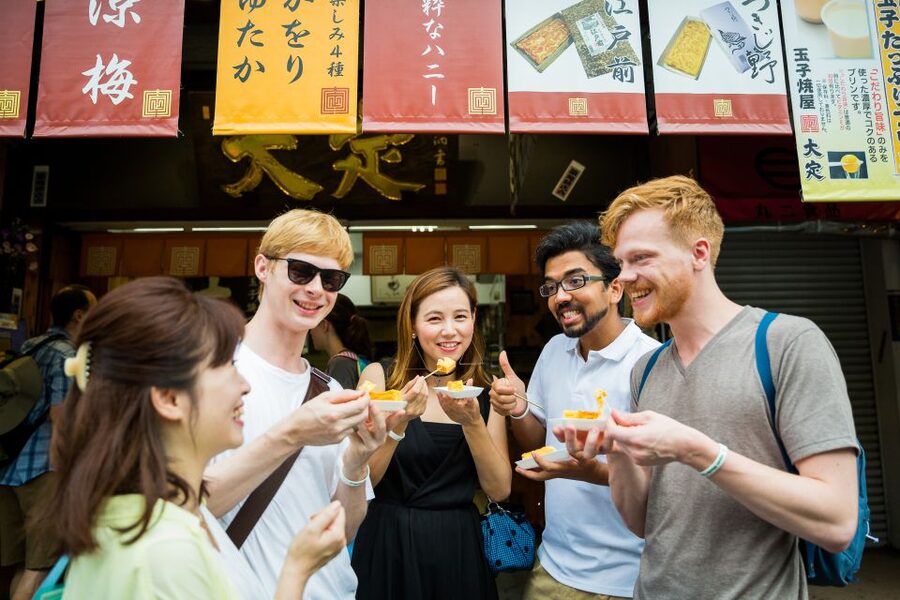
The Japanese omelet, or tamagoyaki, offers a different lesson. It is soft, lightly sweet, and made in a style that reflects the market’s long connection with prepared foods. You may also try fish cake, which gives the tasting a more everyday Japanese flavor than a route made only of expensive seafood.
Seasonal fruit adds welcome variety. It also shows how carefully fruit is presented and valued in Japan. Depending on the time of year and the shops open that day, the exact fruit can change.
The set menu is generous enough that you should not plan a large lunch immediately afterward. Several people have found the tastings and final seafood dish more than sufficient for a morning meal. Still, portions are designed for sampling, so this is a food walk rather than an all-you-can-eat event.
Sushi or seafood bowl at the finish
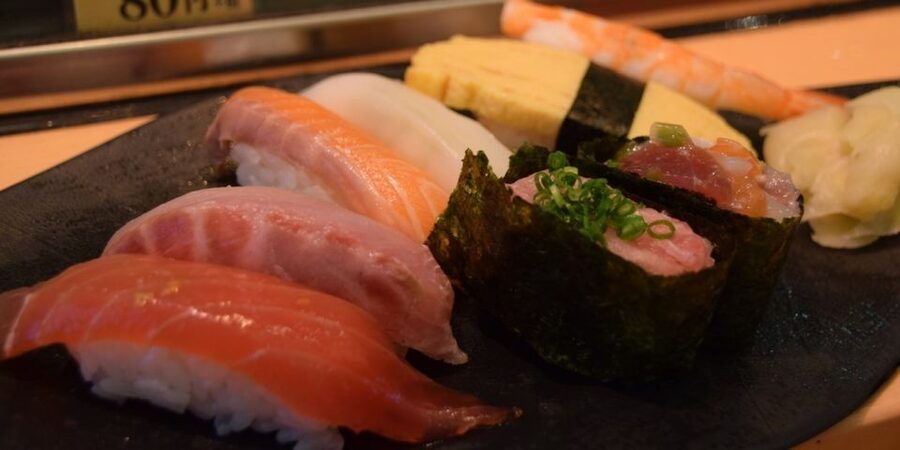
The tour ends with a proper seafood dish at a restaurant. Depending on the day, you receive sushi or a fresh fish bowl. The change is practical, since the available restaurant and menu can vary.
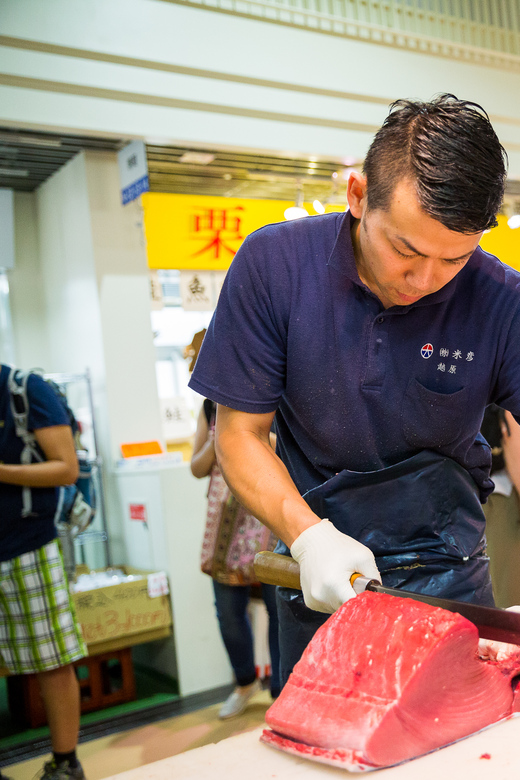
This final stop gives the tasting a useful finish. Instead of eating only quick bites, you sit down to enjoy seafood prepared as a meal. Some guides arrange a fish-cutting presentation, followed by a sashimi bowl. That demonstration can be especially interesting if you want to see how a chef handles and presents the fish.
Do not book this tour expecting a fixed menu with every item guaranteed. The seafood dish depends on the day, and the market’s operating schedule affects other samples. If a restaurant suddenly closes, an alternative meal is provided, but the exact replacement is not specified.
Sake or beer may be available during the meal, but alcoholic drinks are not listed among the included items. If you want one, ask about the cost before ordering. The minimum drinking age in Japan is 20.
More street food tours in Tokyo:
- Tsukiji Fish Market: Street Food & Culture Walking Tour
★ 5.0 · 669 reviews - Tsukiji Fish Market: Street Food & Culture Walking Tour
★ 4.8 · 259 reviews - Tokyo: Togoshi Ginza Street Food Tour
★ 5.0 · 34 reviews - Tokyo Street Food Tour – 7 Japanese Foods
★ 5.0 · 16 reviews
What the guide adds to the experience
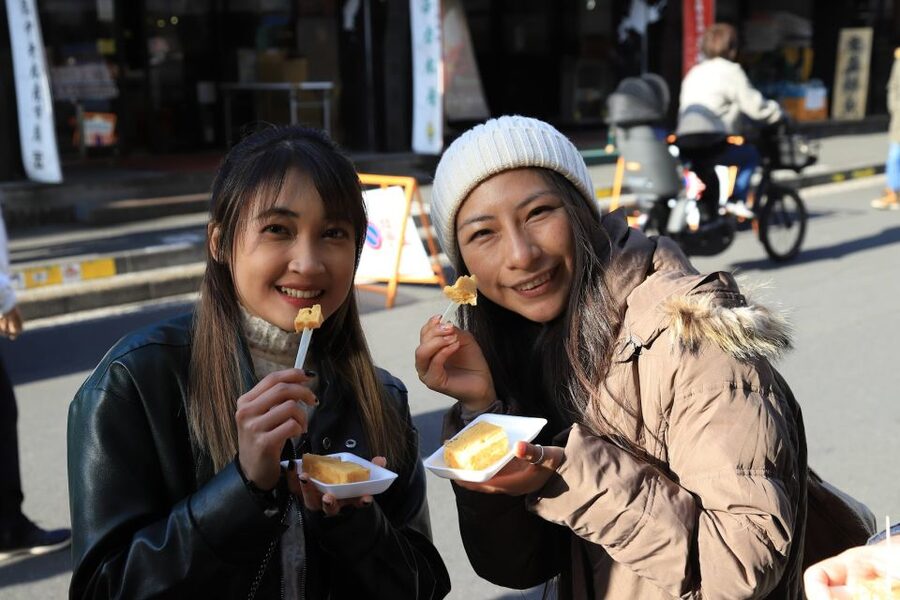
The strongest part of this outing is the human help. A guide can point out a good stall, explain an unfamiliar food, and make vendor interactions much easier. You also avoid spending the first hour simply trying to understand the layout.
Guides named in the feedback include Shun, Nazu, Miki, Robert, Luna, Yoshiko, Yuki, Naomi, Keiko, Nori, Kay, and Chi Haru, also called Sunny. The repeated praise is not just about facts. People valued guides who were friendly, patient, entertaining, and willing to adjust the pace.
Shun has been described as especially good at combining food knowledge with cultural explanation. Nazu and Robert have been praised for their market history and easy manner. Chi Haru received praise for guiding people through the wholesale side and arranging a memorable Wagyu stop. These individual guides change by departure, so you cannot assume you will receive a particular person.
A good guide also helps you spend wisely after the tour. You may learn which tea to take home, find a snack you want to revisit, or receive suggestions for places to see later in Tokyo. One useful strategy is to note the stalls that catch your eye and return after the official route ends.
Crowds, weather, and the best time to go
Tsukiji is active throughout the morning, and the narrow market lanes can become difficult when many people carry umbrellas. A Saturday at 8:30 in the morning may be especially crowded. Rain does not automatically cancel the experience, but it can make it harder to hear the guide and move between stalls.
Midweek can be more comfortable, but you need to check the market calendar first. The fish market is closed on Wednesdays, Sundays, and other closed market days. On those days, Japanese omelet, fish cake, and fruit may not be available because the relevant shops are closed.
This is an important booking detail. The tour can run on a closed market day, but the experience will be different. If your priority is the full selection of food and the strongest market atmosphere, choose an operating day and confirm the start time before paying.
The tour lasts three hours. That is long enough to see a good portion of the Outer Market without turning the morning into an endurance test. It also leaves you time to return to stalls you liked or continue toward other parts of central Tokyo.
Is $96 a fair price?
At $96 per person, this is not the cheapest way to walk through Tsukiji. You pay for the guide, the route, the language help, the food tastings, and the final sushi or seafood bowl.
The value depends on how you use it. If you are comfortable ordering in Japanese, can identify good stalls, and enjoy wandering without a plan, you may prefer to explore on your own and spend the difference on food. Tsukiji is open to independent visitors, and the market itself does not require a tour.
I think the price is easier to justify for a first morning in Tokyo, especially if you want a meal included and dislike guessing what to buy. A small group of up to eight keeps the route more personal than a large bus-style food tour. The guide can answer questions and help you try items that might otherwise seem confusing.
It is also good value for people who want food and context together. You are not only paying for bites. You are paying for someone to explain how the market works, where chefs shop, how to approach the stalls, and what you are eating.
The price is less attractive if you have strict dietary needs, do not eat seafood, or expect every tasting to be luxurious. One person felt the middle tastings were less special than the Wagyu and sashimi bowl. That is a fair point. The strongest items are the beef and final seafood dish, while the smaller samples provide variety rather than constant high-end dining.
Who should book this Tsukiji food walk?
I would recommend it to first-time visitors who want a simple introduction to Tokyo food culture. It suits curious eaters who enjoy tasting unfamiliar foods and asking questions as they walk.
It is also a good fit for couples, friends, and solo visitors who like small groups. The three-hour format works well during a first full day in Tokyo, particularly if you want a substantial morning meal without planning every stop yourself.
Families should consider the walking and food restrictions carefully. Infants do not receive meals, and the tour is not suitable for wheelchair users or people with mobility impairments. Vegetarian and vegan visitors should not book this route, and the provider does not accommodate halal or gluten-free requests.
If you are sensitive to crowds, avoid a rainy Saturday morning if possible. The market can be hard to hear in poor weather, especially when umbrellas are up and people are moving in every direction.
Cancellation is flexible up to 24 hours before the start for a full refund, and you can reserve now and pay later. Those terms help if your Tokyo schedule is still changing, but the market-day warning matters more than the payment option.
My verdict on the Tsukiji experience
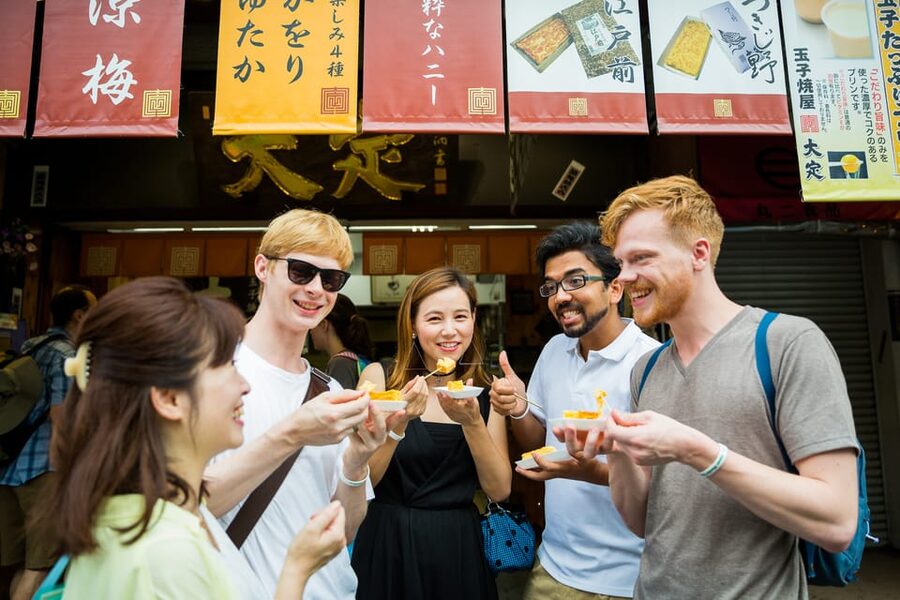
Book this tour if you want help making sense of Tsukiji and you are happy to eat seafood, meat, eggs, and market foods. The combination of Wagyu, tamagoyaki, fish cake, fruit, and sushi or a seafood bowl gives you a broad taste of the area, while a good guide turns a crowded market into a readable place.
Skip it if you prefer a quiet meal, need dietary substitutions, or already know exactly which Tsukiji stalls you want to visit. For most first-time visitors who value local explanation and a meal with their sightseeing, the $96 cost is reasonable. Choose an open market day, wear good shoes, and leave a little room in your appetite.
FAQ
Where does the Tsukiji food tour begin?
You meet the English-speaking guide at the main gate of Tsukiji Honganji Temple.
How long does the tour last?
The tour lasts three hours, including the market walk, tastings, and final sushi or seafood bowl.
How large is the group?
The tour is offered in small groups of two to eight people.
What foods are included?
The included menu features high-grade Wagyu beef skewers, a fresh fish bowl or sushi, Japanese omelet, seasonal fruit, and fried fish cake.
Do I receive sushi or a seafood bowl?
The final dish depends on the day. You receive either sushi or a seafood bowl.
Is the tour offered in English?
Yes. The tour includes a live English-speaking guide.
Is the fish market open every day?
No. The fish market is closed on Wednesdays, Sundays, and other designated closed market days.
What happens on a closed market day?
Japanese omelet, fish cake, and fruit may not be available because the relevant shops are closed.
Can vegetarians or vegans join?
The tour does not accommodate vegetarian or vegan diets, and it is not suitable for vegans or vegetarians.
Is the tour accessible for wheelchair users?
No. The tour is not suitable for wheelchair users or people with mobility impairments.
What should I bring?
Bring comfortable shoes, comfortable clothes, and a camera.
Can I cancel for a refund?
You can cancel up to 24 hours in advance for a full refund.
Newly added plates around Tokyo
- Tsukiji Fish Market Street Food & Culture Walking Tour★ 5.0 · 8 reviews
- Tsukiji Fish Market: Street Food Tour with Tasting★ 5.0 · 4 reviews
- Ueno Park and Ameyoko Street Food Market Half Day Walking Tour★ 5.0 · 3 reviews
- Tokyo:Enjoy street food & Japanese food culture at Tsukiji Market★ 5.0 · 6 reviews
- Tokyo Fish Market Food Tour: Street Food & Friendly Guide★ 3.0 · 2 reviews
- Private Tokyo food scene 6 hour experience: Depatika, street food, izakaya★ 5.0 · 9 reviews
- Matsushima Bay, Islands and Seafood Market day tour from Tokyo★ 5.0 · 2 reviews
- Tokyo Street Food Tour – 7 Japanese Foods★ 5.0 · 16 reviews
Night Market Food Tours, compared.
Small Group: Michelin and Local Hawker Food Tour with 9 tastings
Read our review →
Food Market Visit and Cooking Class with Wine
Read our review →
Venice Street Food Tour with Local Guide with Local Food Market Visit
Read our review →
Cancun Taco Tour, Local Beer and Night Market with Transportation
Read our review →
Cancun Street Food Tour with Food Stalls, Local Market and Murals
Read our review →
Browse the lists this tour appears in