
REVIEW · OLD QUARTER AND MEDINA FOOD WALKS
Old Dubai Historic Guided Tour: Creek, Street Food & Souks
Old Dubai reveals the city before skyscrapers took over the view. This tour brings you through an Emirati heritage house, narrow lanes, Al Seef, the Creek, and the Gold and Spice Souks, with Arabic coffee, dates, karak tea, and samosas along the way. The abra ride is the small, memorable treat that ties the old trading quarter together.
I like the way the guide gives the souks a proper setting instead of dropping you straight into sales pitches. I also like the price: at $10 per person, the combination of guiding, tastings, heritage entry, and the boat ride is unusually good value. The main consideration is that this is a walking tour in heat and crowded market lanes, so it is not suited to wheelchairs, mobility impairments, infants, or children under two.
- Arabic welcome: Begin with coffee, dates, and a look inside a traditional Emirati house.
- Old Dubai on foot: Connect Al Seef, Al Fahidi, the old fort area, and Bur Dubai Souk.
- Small local tastings: Try karak tea and samosas, with some sessions offering extra tastings such as luqaimat.
- Creek crossing: Ride a traditional abra and watch trading ships and the modern skyline pass by.
- Market time: Browse the Spice Souk and Gold Souk, with guidance on bargaining.
- Strong guide element: Guides including Ahmed Hussein, Nasser, Ibrahim, Khan, and Hossam are praised for clear history, humor, and personal attention.
Why Old Dubai Makes a Better First History Lesson
Dubai is often presented through towers, malls, fountains, and luxury hotels. Those are real parts of the city, but they do not explain how Dubai grew. The older districts along Dubai Creek tell a more useful story: trade, boats, family homes, mosques, markets, and the movement of people and goods.
This tour gives you that setting in a compact half-day. You are not left to wander without context. A guide explains the photos in the heritage house, points out traditional building details, and links the old neighborhoods to the United Arab Emirates’ development.
I would choose this experience early in a Dubai stay. It helps you understand the city before you spend time in newer districts. It is also a good answer to the common problem of seeing Dubai’s famous sights but feeling that you have not yet connected with the place.
The tour runs for about three to four hours. That is long enough for a real introduction, but short enough to fit around an afternoon, dinner reservation, or another city visit. The walking is described as easy by one recent participant, but you should still expect warm pavement, outdoor stops, uneven surfaces in older areas, and time on your feet.
Coffee, Dates, and an Emirati Heritage House
The meeting point is Al Khayma Heritage Restaurant. Sharaf DG Metro Station is the nearest metro stop, and selected options include hotel pickup and drop-off from central Dubai hotels.
The first substantial stop is a traditional Emirati house. You begin with Arabic coffee and dates, a simple welcome that gives the visit a social tone rather than making it feel like a rushed museum stop. Inside, photographs help explain the UAE before and during its fast transformation.
This part matters because the house gives you a scale for older domestic life. Dubai’s modern buildings can make the past seem remote, but a traditional home shows how everyday space, hospitality, and family life fit together. The guide is central here. Ask questions about the photographs and the house layout, since this is where the tour’s cultural background becomes more personal.
The planned visit lasts about 30 minutes. That is enough for an introduction, not a full museum visit. If you want a long, detailed study of architecture, this will feel brief. If you want a clear starting point before walking through the old quarter, the timing works well.
Some sessions may include extra food and drink tastes beyond the stated coffee, dates, karak tea, and samosa. One description of a recent visit included two types of Arabic coffee, luqaimat, and tea made with camel milk. Treat those additions as a pleasant possibility rather than a guaranteed menu, since the standard inclusions specifically name Arabic tea or coffee, dates, karak tea, and samosas.
More Old Quarter and Medina Food Walks in Dubai:
- Dubai: Old Town, Creek, Museums, Souks, & Street Food Tour
★ 4.8 · 10,816 reviews - Dubai: Old Town, Souks, Street Food, Guided Tour & Abra Ride
★ 4.9 · 7,170 reviews - Dubai: Old Town, Souks, Street Food, Guided Tour & Abra Ride
★ 5.0 · 1,664 reviews
Al Seef and Al Fahidi: Old Forms, New Setting
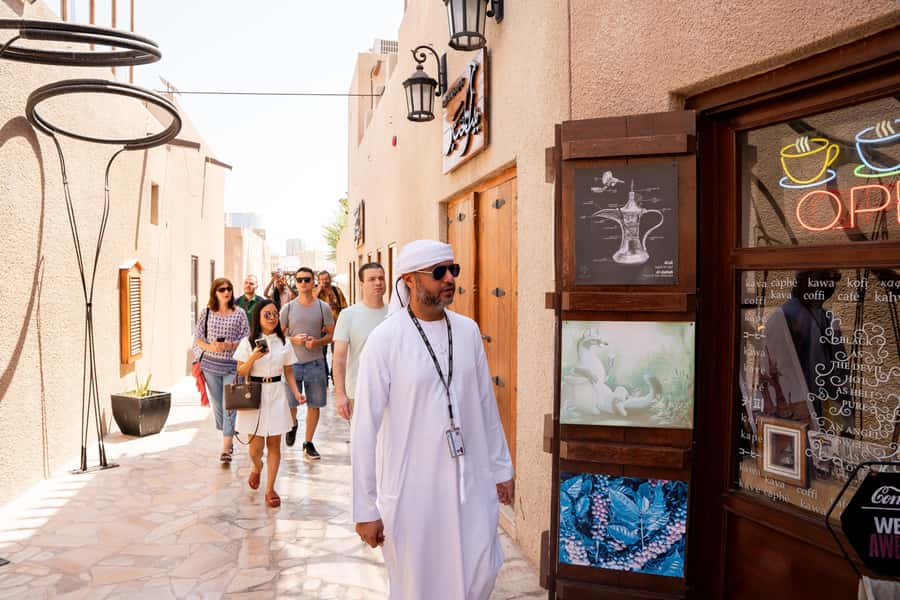
From the heritage house, the route continues through Al Seef. This waterfront area is designed to recall older Dubai, with traditional-looking buildings, lanes, and views toward the Creek. It is a good place for photographs, especially around Al Seef Mosque.
I like this section because it makes an important distinction visible. Some parts of Al Seef are modern recreations, while nearby Al Fahidi contains older structures and a more lived-in historic setting. A good guide helps you notice the difference instead of presenting every old-style wall as untouched history.
The walk through Al Fahidi brings you into narrow lanes where traditional buildings sit beside newer development. That contrast is one of the clearest ways to understand Dubai’s speed of change. You can look from a shaded passage toward a modern building and see several decades of the city’s story in one frame.
Food appears during this walking section. You can expect karak tea and samosas, with the guide explaining local customs and daily life as you eat. Karak is a strong, sweet tea, and the samosa makes this a useful pause rather than a formal meal.
Do not book this tour expecting lunch. The tastings are part of the experience, but they are not meant to replace a full meal. If you have a large appetite, eat beforehand or plan food afterward.
Al Fahidi Fort and Bur Dubai Souk
The route includes a short stop near Al Fahidi Fort, with time for photographs, sightseeing, and explanation. The stop is listed at about 15 minutes, so think of it as a strong orientation point rather than an extended fort visit.
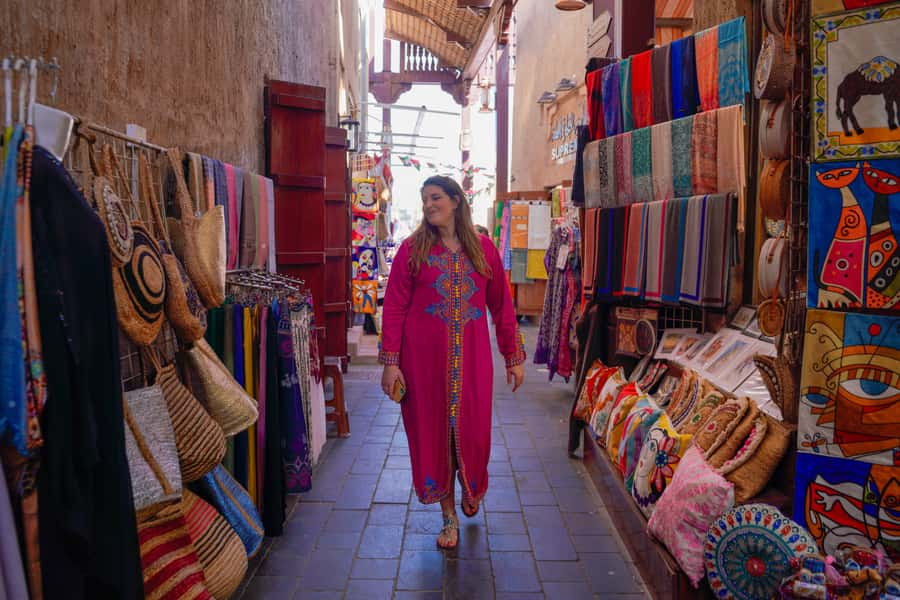
The fort helps place the district in its defensive and civic setting. From there, the walk continues toward Bur Dubai Souk. This is a useful transition from heritage buildings to working market streets, where shops, signs, fabrics, and passing pedestrians give the area a more active feel.
The guide makes the difference here. Without help, a souk can blur into a string of shops. With context, you can pay attention to how the market works, what is being sold, and how sellers approach visitors. You also have someone to ask before agreeing to a purchase.
The market lanes can feel busy, and shopkeepers may invite you inside. That is part of the scene, but you do not need to buy anything. If you are not interested, a polite no and continued walking is enough. Keep your bag close, not because the tour suggests a safety problem, but because crowded market lanes call for ordinary city awareness.
Crossing Dubai Creek by Abra
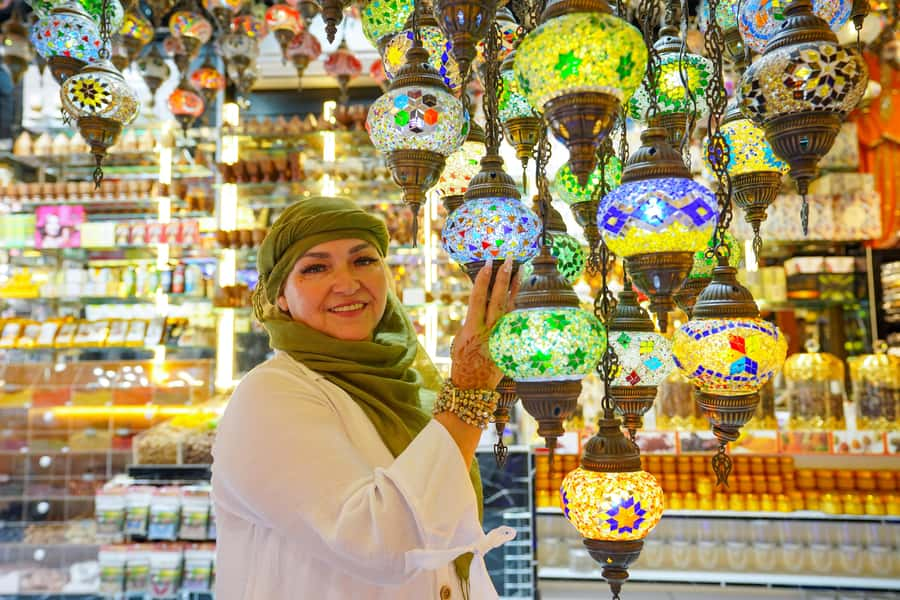
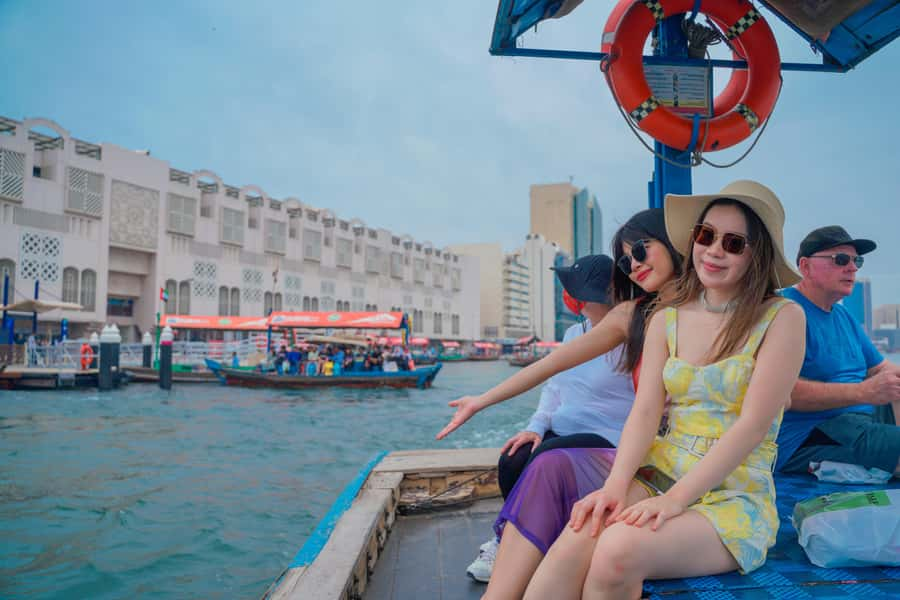
At Bur Dubai Abra Dock, the tour takes a traditional abra across Dubai Creek. The boat portion is short, about 15 minutes, but it is one of the tour’s best moments.
The view changes quickly from street level to water level. You can see large trading ships, the old waterfront, and Dubai’s newer skyline in the same sweep. That mixture explains why the Creek is so important: it connects the older commercial quarters with the image of modern Dubai.
An abra is a working-style wooden water taxi, not a sightseeing cruise with commentary and padded seats. That is exactly why I like it. The ride feels like part of the city’s transport system, even though it also gives you a fine view.
Use the boat crossing as a chance to rest your feet and take photographs. Depending on your selected option and the final arrangements, you may finish at the Gold Souk and make your own way back, or return according to the pickup plan. Confirm the exact end point when booking, especially if you have an evening reservation.
More history-and-food walks around Dubai:
- Dubai Old Town, Culture, History, Street food and Souks Tour
★ 5.0 · 170 reviews - Discover Old Dubai Town, Souks, Street Food, Culture and History
★ 5.0 · 3 reviews - Palermo: Street Food and History Walking Tour
★ 4.9 · 1,486 reviews - Walking Tour and street food Tour Palermo / History and Food
★ 5.0 · 386 reviews
Spice Souk: Smell Before You Shop
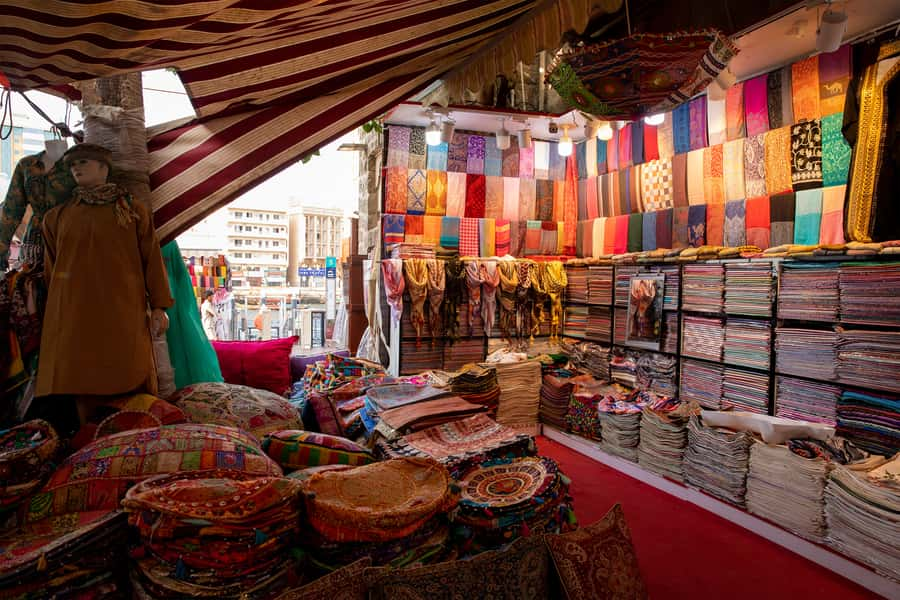
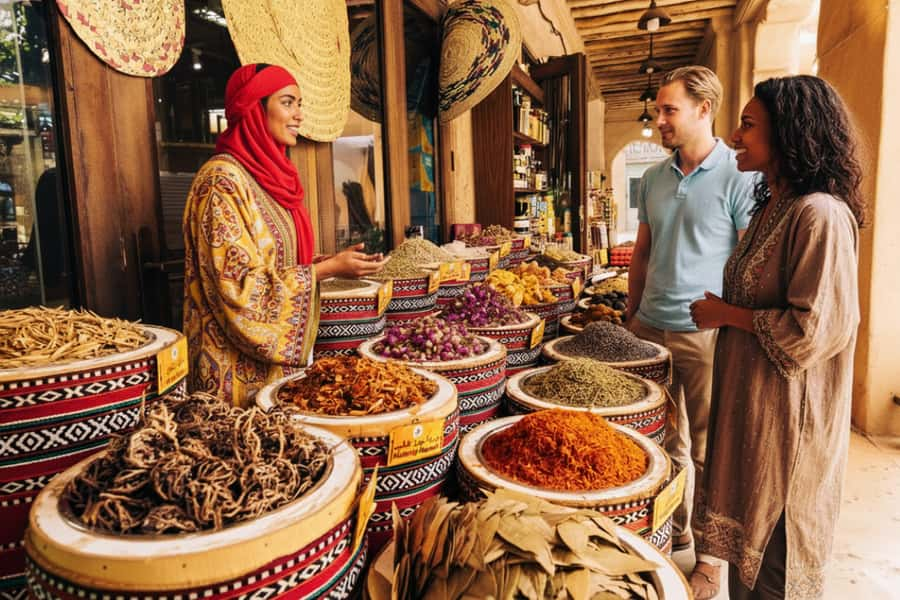
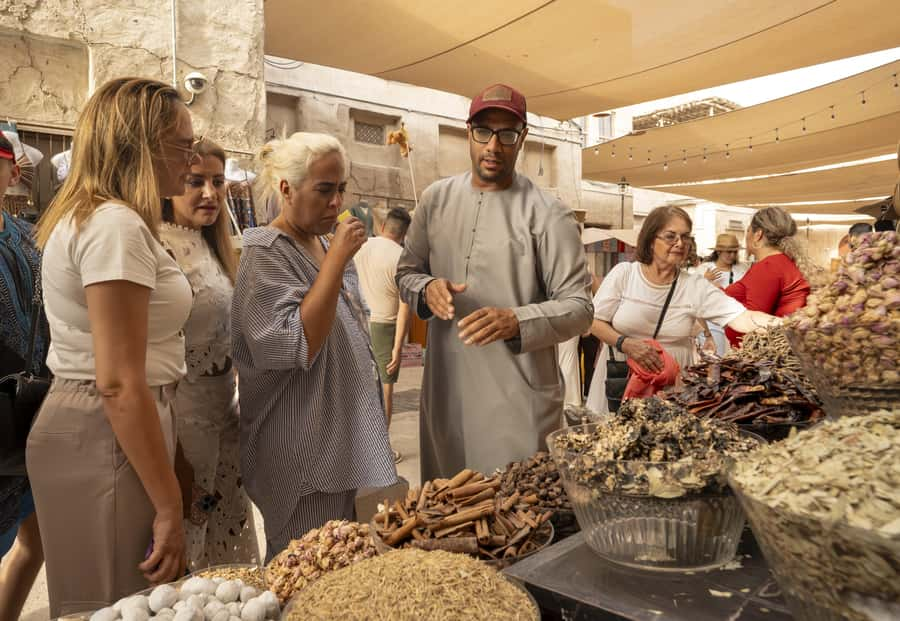
The Spice Souk receives about 30 minutes. Here, the experience is less about ticking off individual shops and more about using your senses. You will see sacks, jars, and displays of spices, dried goods, and other market products, while the smell changes as you move between stalls.
This is the part of the tour where a guide can save you time and confusion. You can ask what an item is used for, how it is commonly prepared, and whether a quoted price is reasonable. The guide may also help you understand how bargaining works.
Bargaining is expected in many souk purchases, but it should remain friendly. Decide what you are willing to pay before getting too involved. You can ask the price, make a counteroffer, and walk away if the number does not suit you. Do not treat every shop as a contest. The goal is to enjoy the market and buy something only if you actually want it.
You may find the sales attention more direct here than in a quiet museum. That is normal for a market visit, though it can be tiring if you prefer to browse alone. The guided format gives you a clear route and a time limit, which helps keep the stop from becoming an endless shopping session.
Gold Souk and the Final Market Walk
The Gold Souk is the final major stop, with roughly 30 minutes for sightseeing, photographs, and browsing. Its appeal is visual: jewelry displays, gold pieces, precious stones, and shop windows designed to catch your eye.
You do not need to plan a purchase to enjoy the stop. The guide can point out how the market operates and give you a better sense of what you are seeing. If you do shop, compare prices and ask about the item before committing. The tour gives you an introduction to bargaining, not a guarantee of the best possible deal.
The Gold Souk can feel highly commercial after the heritage house and Al Fahidi lanes. That contrast is useful. Old Dubai is not a preserved stage set. It is a place where heritage, trade, tourism, and modern business all sit close together.
The scheduled route takes you through the Spice Souk and Gold Souk rather than offering a long free-shopping period. If shopping is your main reason for visiting Dubai, book a separate block of time. If you want a guided introduction followed by the option to browse, this arrangement is more efficient.
What the Guides Add to the Walk
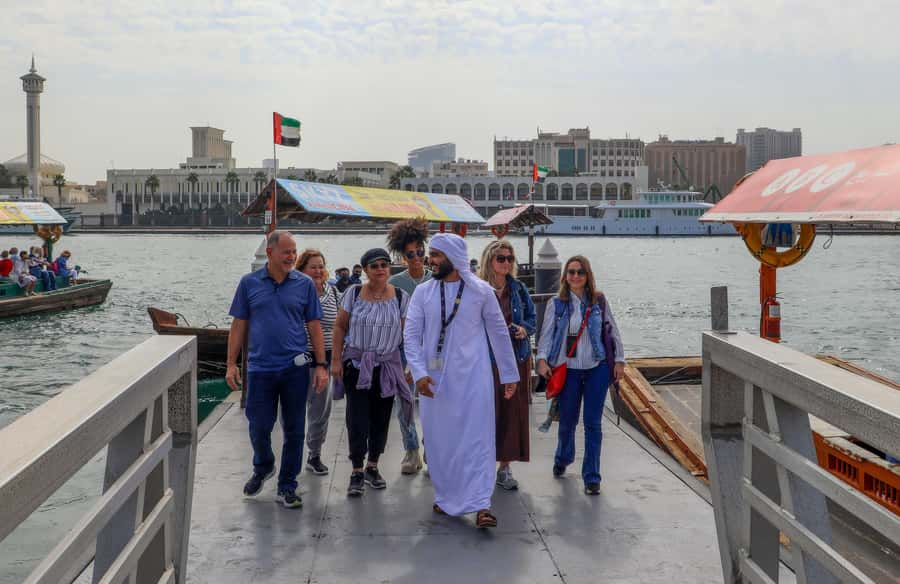
The strongest part of this experience is the guide. The route itself is worthwhile, but the information turns separate stops into a connected story.
Ahmed Hussein is repeatedly praised for clear explanations, personal check-ins, and a welcoming manner. Nasser is described as cheerful and helpful, with a good sense of humor. Ibrahim has led Spanish-language tours and is a strong choice if you prefer to receive the explanation in Spanish.
Khan is noted for making geography, history, and culture easy to follow. Hossam is praised for energy and for explaining history, food, and culture in a friendly way. Other named guides include Maaz, Mustafa, Fesal, Iqbal, and Dago.
Guide assignments can change, so you should not book on the assumption that one specific person will lead your outing. The useful point is that the experience depends on live guiding, and the available languages include English, German, Spanish, Italian, and French.
A guide also helps a mixed-language group. One recent account especially valued a guide who spoke clearly and slowly, allowing people from several countries to follow and ask questions. That is important on a walking tour, where it is easy to miss a detail while looking at buildings or food.
Is $10 a Good Price for Three to Four Hours?
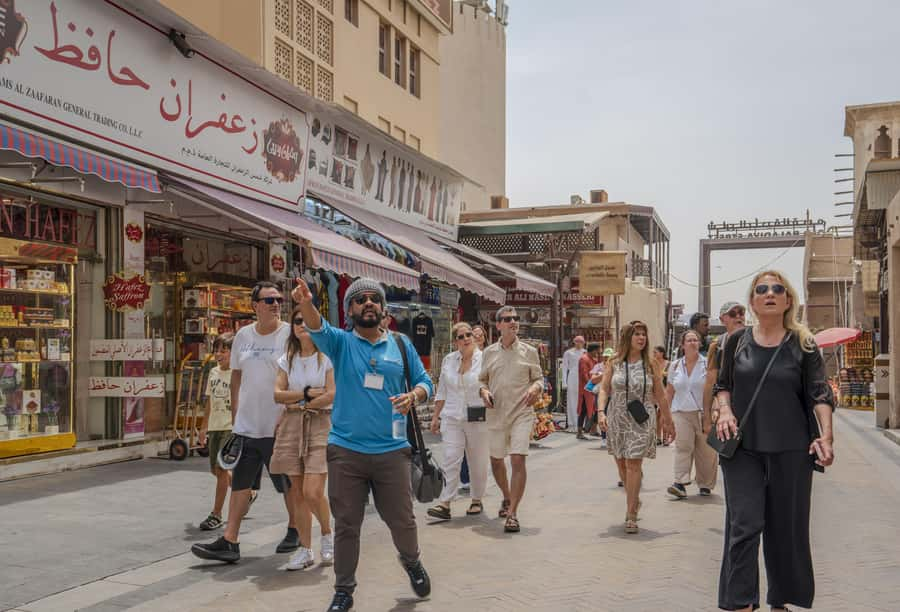
At $10 per person, this is an excellent value if the advertised inclusions are what you want. You receive a guide, heritage house entry, heritage-site access, Arabic coffee or tea, dates, street-food tastings, water, the abra ride, and visits to both major souks.
You would pay more if you arranged several of these pieces separately, especially if you needed a guide to explain the neighborhoods and help with market customs. The value is not in any single stop. It comes from the way the tour combines transport, food, culture, and orientation in one short outing.
The low price also means you should keep expectations sensible. This is not a private, slow-paced architectural tour. The heritage house and fort stops are brief, the food is a tasting rather than a full meal, and the souks include commercial shopping activity.
Free cancellation up to 24 hours ahead and a reserve-now, pay-later option make it easier to fit into a changing Dubai schedule. Starting times vary, and the 5:00 PM evening option does not include a visit to the Coffee Museum. That detail matters if the museum is part of your plan.
Practical Advice for a Comfortable Visit
Wear comfortable shoes. The route includes several walking sections through old lanes and market areas, with outdoor time at Al Seef and the Creek. Sunglasses, a sun hat, and light comfortable clothing are sensible choices.
Do not bring luggage or large bags. Baby strollers are not allowed, and the tour is not recommended for infants. Children under two are not suitable for the experience, and it is not designed for wheelchair users or people with mobility impairments.
If you are staying in central Dubai, check whether hotel pickup is worth the extra convenience. Otherwise, Al Khayma Heritage Restaurant is the clear starting point, with Sharaf DG Metro Station nearby.
Leave room in your schedule after the tour if you think you may shop. The formal route is limited in time, and the Gold Souk is the last main stop. You may want to stay longer, return by abra, or make your own way onward.
Who Should Book This Old Dubai Tour?
I recommend it for a first visit, a short stay, or anyone who has seen modern Dubai and wants the older city explained properly. It is also a good choice for solo visitors who would rather have a clear route and a guide for the souks.
Families with older children may find the boat, snacks, markets, and photographs engaging. I would not choose it for toddlers, stroller users, or anyone who cannot comfortably walk and stand for several hours.
Book it if you value context, small food tastes, and a practical introduction to Old Dubai. Skip it if you want a long shopping session, a private guide, or a major museum experience. For only $10, the tour gives you an unusually broad look at the city, and the abra crossing makes the whole route feel connected rather than pieced together.
FAQ
How long does the Old Dubai Historic Guided Tour last?
The tour lasts about three to four hours, depending on the selected option and starting time.
Where does the tour meet?
The meeting point is Al Khayma Heritage Restaurant in Dubai. Sharaf DG Metro Station is the nearest metro station.
Is hotel pickup available?
Hotel pickup and drop-off are available with selected options for central hotels in Dubai.
What languages are offered?
Live guides are available in English, German, Spanish, Italian, and French.
Is the abra boat ride included?
Yes. A traditional abra ride along Dubai Creek is included in the tour.
What food and drinks are included?
The tour includes Arabic tea or coffee, dates, karak tea, and samosas. Some sessions may offer additional tastings, but the listed inclusions are the items above.
Does the tour visit the Gold and Spice Souks?
Yes. The route includes guided visits to both the Spice Souk and the Gold Souk, with time for shopping and bargaining.
Can I visit the Coffee Museum?
The Coffee Museum cannot be visited if you choose the 5:00 PM evening tour.
Is the tour suitable for wheelchair users?
No. The tour is not suitable for wheelchair users or people with mobility impairments.
What should I bring?
Bring comfortable shoes, sunglasses, a sun hat, and comfortable clothes. Do not bring luggage or large bags, and baby strollers are not allowed.
Newly added plates around Dubai
- Original Street Food Tour of Dubai★ 4.5 · 41 reviews
- Old Dubai Walk, Souk, Street Foods, Al Fahidi and Al Seef Tales★ 4.0 · 9 reviews
- Discover Old Dubai Town, Souks, Street Food, Culture and History★ 5.0 · 3 reviews
- Dubai Souks, Museum, Street Food Walking Tour with Hotel Transfer★ 4.5 · 7 reviews
- Dubai Street Food Tour★ 5.0 · 5 reviews
- Local Street Food and Guided Walking Tour of Dubai Old Town★ 5.0 · 37 reviews
- Private Dubai Street Food Tour .★ 4.5 · 7 reviews
- Private Dubai Old Town Tour,street food,Boat & Museums★ 5.0 · 6 reviews
Old Quarter and Medina Food Walks, compared.
Old Town, Creek, Museums, Souks, & Street Food Tour
Read our review →
Old Town, Souks, Street Food, Guided Tour & Abra Ride
Read our review →
[HOT] Hanoi Old Quarter Walking Street Food – Small Group Tour
Read our review →Old Town, Souks, Street Food, Guided Tour & Abra Ride
Read our review →
Chania: Old Town Highlights Guided Tour with Street Food
Read our review →Browse the lists this tour appears in