
REVIEW · HISTORICAL TOURS
Heritage Walk & Street Food Tasting in Jaipur
Jaipur’s best food experiences often happen away from its grand palaces. This three-hour walk begins at Golcha Cinema and winds through old-city lanes where you can taste samosa, kachori, sweets and masala chai while learning how Jaipur’s markets, crafts and neighborhoods fit together. I especially like the local food stops and the chance to see working artisan communities, not just polished monuments.
The guides, including Vivek, Kumar, Raj and Pushpendra, are praised for explaining the city clearly and adjusting the pace to the group. The main tradeoff is simple: this is a walking tour through crowded, uneven streets, not a relaxed sightseeing ride. Anyone with limited mobility, low tolerance for heat or little interest in street food should think twice.
At a glance
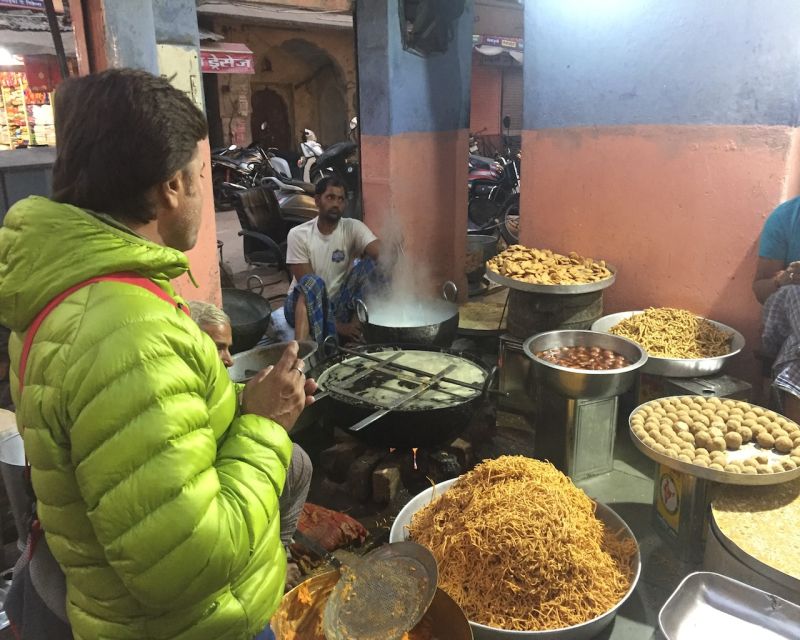
- About 15 tastings are possible: Depending on the route and appetite, you may stop at several small shops and try far more than the advertised samosa, kachori, sweets and chai.
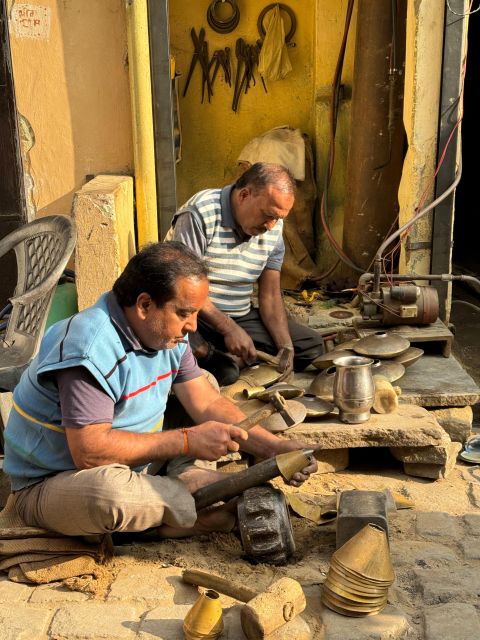
- The route reaches working craft areas: You visit the lane of the Thatheras, a community of metal beaters, and see bangle making with sealing wax.
- It is more than a food crawl: Expect stories about Jaipur’s gates, planned streets, temples, trade and royal past.
- Small groups keep it personal: Groups are limited to 10 people, allowing the guide to answer questions and adjust food choices.
- The meeting point is central: You meet at the entry gate of Golcha Cinema and finish at Chhoti Chopad.
- The price is $21: For three hours of guiding, food, water and cultural context, this is strong value, especially on a first day in Jaipur.
Why this walk shows you a more useful Jaipur
Jaipur’s old city is easiest to understand at street level. The famous pink walls and geometric avenues make more sense when you notice the entry gates, market divisions, workshop lanes and religious spaces that give the plan its daily purpose.
Your guide helps you read details that are easy to miss. A painted facade may look like decoration until you learn about the city’s artistic traditions. A narrow lane may seem like a shortcut until you realize it serves a particular trade or community.
The tour also avoids the usual pressure to buy. The experience is presented as having no hidden agenda, so the focus stays on eating, walking and learning rather than being steered toward shops or commissions. That matters in Jaipur, where a friendly introduction to a craft workshop can sometimes turn into a sales stop.
You should still expect normal old-city activity: traffic, noise, close quarters and people going about their business. This is not a staged village visit. That gives the walk its value, but it also means you need to stay alert and remain comfortable with an active urban setting.
More history-and-food walks around India:
- Old Delhi Cultural, Temples, Heritage Walking Street Food Tour
★ 5.0 · 57 reviews - Jaipur: History Street Food Tour with Local Guide
★ 4.4 · 50 reviews - Spice & Stories: 3-Hour Old Delhi Heritage Food Walk Guided Tour
★ 4.5 · 36 reviews
Starting at Golcha Cinema and Chaura Rasta
Meet your guide at the entry gate of Golcha Cinema. There is no hotel pickup, so arrange your own way to the starting point and allow time to find the correct gate.
The first section heads toward Chaura Rasta, one of the old city’s important market streets. This opening 45-minute stretch combines walking, tea and street food, giving you a quick introduction to the rhythm of Jaipur before the route moves into narrower lanes.
This is a good place to ask your guide about ingredients, spice levels and food preferences. The food is selected at local shops rather than presented as a formal sit-down meal, so you can watch the city carry on around you while you taste.
Masala chai is part of the experience, usually taken at a local tea shop. The samosa and kachori provide the savory side, while Jaipur’s sweets bring a very different texture and flavor. If you have a sensitive stomach, tell the guide early. The route can be adjusted to your comfort, and several guides have shown care with food choices.
Do not eat a large meal before you arrive. The portions may be small at individual stops, but the combined amount can be substantial. One practical point from the food itself: sweets may appear early, so if you prefer a savory-first progression, mention that at the start.
Badi Chaupar and the old city plan
The next 45-minute section reaches Badi Chaupar, a major square in Jaipur’s old city. Here, the walk shifts between tea, local snacks, food tasting and views along the way.
Badi Chaupar helps you see Jaipur as a planned city rather than a collection of random streets. The roads and market areas follow a deliberate geometric pattern, and your guide explains the importance of the city gates and the way the historic quarters were arranged.
This is also a useful point for photographs. The square gives you more room to pause, while the streets leading away from it reveal painted homes, shopfronts and everyday city life. Photography is allowed, but ask before photographing people at close range and do not use flash inside temples.
The guide’s role matters here. A map can show you the shape of the old city, but it cannot explain why a particular market developed in one area or how a building detail connects to Jaipur’s traditions. Vivek is often praised for his clear explanations and easy manner, while Kumar and Raj are also noted for answering questions and adjusting the route to individual interests.
Tripolia Bazar and the craft quarters
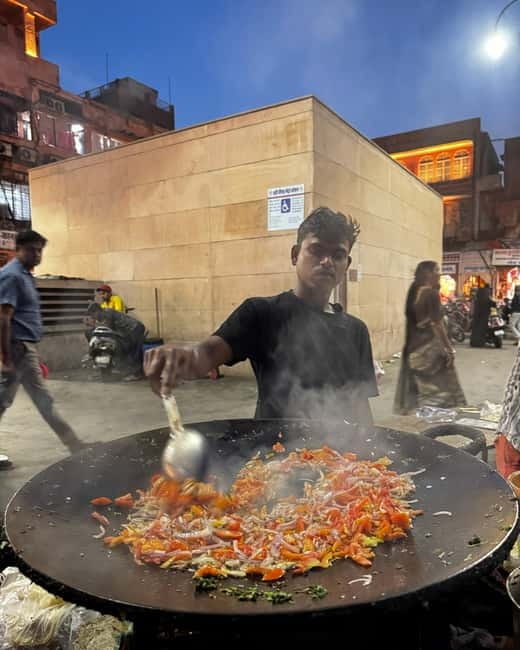
From Badi Chaupar, the route continues toward Tripolia Bazar for another 45-minute section. This part includes a guided walk and passages through market lanes, with the emphasis shifting from eating to trade, architecture and local work.
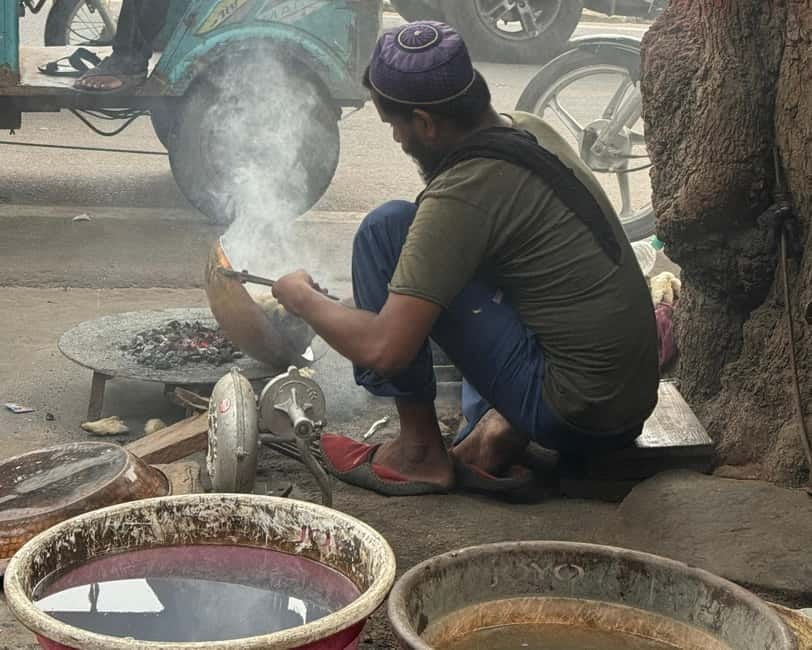
The most unusual stop is the street associated with the Thatheras, a community of metal beaters. This is the kind of detail that gives the walk its character. Instead of simply hearing that Jaipur has a long craft tradition, you see a living work area and learn how the people there maintain their trade.
You may also meet local artisans and see handicrafts being made. The tour specifically includes an introduction to bangle making through sealing wax, a small but memorable process that would be easy to miss if you were walking alone.
These stops are not designed as a formal craft demonstration with a guaranteed set presentation. The value is in seeing the working neighborhood and having your guide explain what you are looking at. If you are interested in design, traditional work or photography, this section may be as rewarding as the food.
The market streets can be tight and active. Wear shoes with a good grip, keep your belongings secure and leave room for pedestrians and shop workers. A small group of up to 10 helps, but you still need to stay together and follow the guide through crossings and narrow passages.
More street food tours in India:
- Mumbai: Street Food and Night Markets Tour
★ 4.9 · 719 reviews - Old Delhi Street Food Tour
★ 5.0 · 497 reviews - Delhi: Old Delhi Street Food Tour with Rickshaw Ride
★ 4.9 · 403 reviews - Old Delhi Street Food Tour – Explore Spices in Chandni Chowk
★ 5.0 · 334 reviews
Choti Chaupar and the final food stops
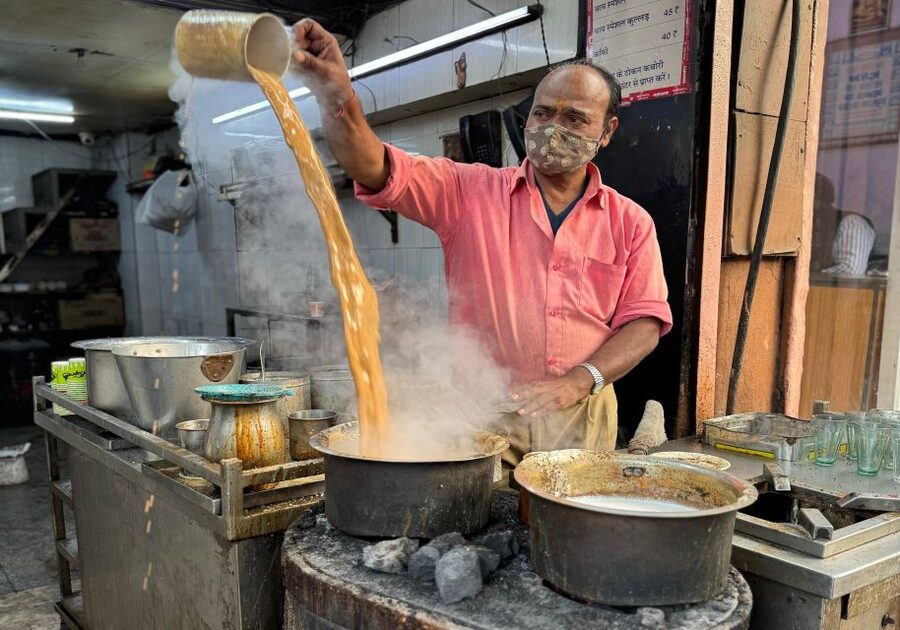
The final 45-minute section leads to Choti Chaupar, also written as Chhoti Chopad. This is where more street food, regional snacks and tastings complete the walk.
By this stage, you should have a better sense of how food connects to Jaipur’s daily life. You are not simply checking off dishes. You are seeing how sweets, fried snacks, tea shops and market businesses occupy the same old streets as temples, homes and craft workshops.
The amount of food can vary. Some groups report trying around 15 items at roughly six stops, while the official highlights focus on samosa, kachori, famous sweets and masala chai. Do not arrive expecting a fixed tasting menu with identical portions every time. Think of it as a guided route through local shops, with the exact mix shaped by the day, the group and your appetite.
The tasting is plentiful enough that you may leave full. That makes the experience good value, but it also makes breakfast or an earlier meal worth keeping light. If you avoid spice, have dietary restrictions or are a picky eater, be direct with the guide. The route has been adapted for different tastes, including people with very low spice tolerance.
Food safety is a common concern in Jaipur. The guide helps you choose established local stops and explains what to look for in street food quality. That does not remove every risk, and no food tour can promise that your stomach will react perfectly, but guidance is more useful than guessing at random stalls.
The history and culture between the bites
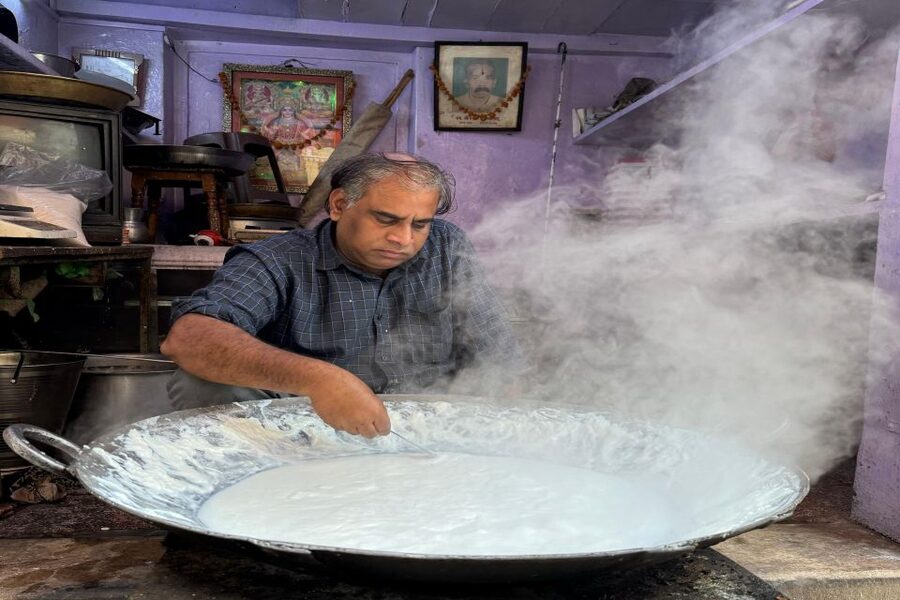
The strongest part of this experience is the balance between food and place. A standard food crawl can leave you full but still unsure where you are. A standard heritage walk can explain buildings without connecting them to daily habits. This one tries to join the two.
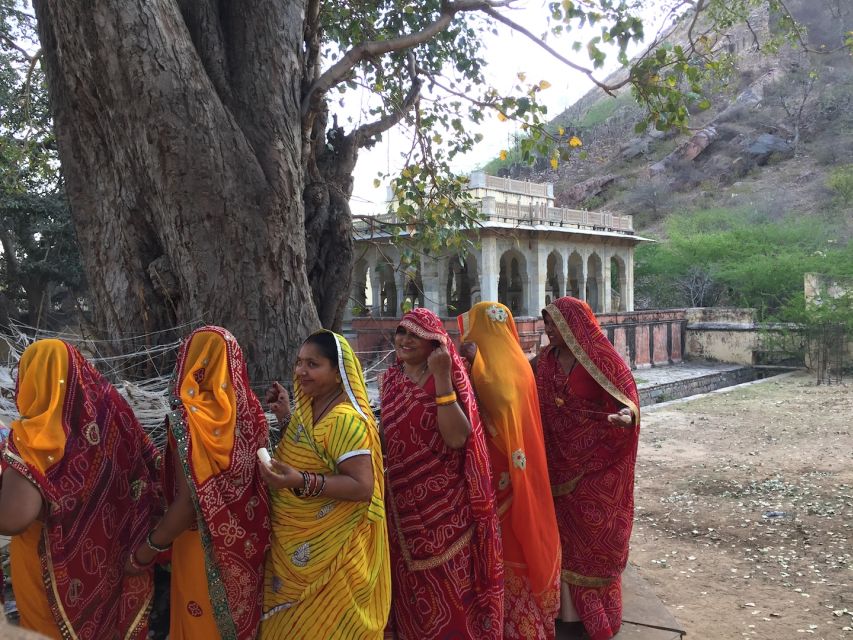
You will hear about Jaipur’s royal past, the old city’s architecture, its gates, local religion and market traditions. You also visit a Hindu temple and see a community well, two stops that broaden the picture beyond food and shopping.
Temple visits require respect. Dress modestly, follow your guide’s instructions and avoid flash photography inside. The tour information recommends comfortable clothing, sunscreen and a hat because weather can change and much of the experience takes place outdoors.
The English-speaking guides are central to the experience. Vivek is described as warm, patient and well connected to the local community. Kumar is praised for clear storytelling about food, history and his home city. Raj is noted for making the walk relaxed and answering questions, while Pushpendra is described as open and engaging when discussing Indian life and culture.
The assigned guide can vary, so you should not book on the assumption that one particular person is guaranteed. What does appear consistent is the focus on local knowledge, a calm walking pace and personal attention in a group of no more than 10.
What the $21 price really buys you
At $21 per person, this is good value if you want both food and orientation. The fee covers the heritage walk, the cultural guide, bottled water and the food tastings at local shops. Three hours gives the guide enough time to explain the setting instead of rushing from one snack to the next.
The value becomes even clearer if you are new to Jaipur. In one short outing, you learn how to find the old city, understand its layout, identify several foods and see craft areas you might not locate comfortably on your own.
You are paying for access and interpretation as much as for the snacks. Samosas and sweets are inexpensive on their own. The useful part is having someone lead you through unfamiliar lanes, choose suitable food stops, explain the dishes and point out architectural and cultural details along the way.
Alcohol is not included, though it is not central to this experience. Hotel transfers are also excluded. You need to reach Golcha Cinema yourself and arrange your own transport after finishing at Chhoti Chopad.
Free cancellation is available up to 24 hours before the start time, and you can reserve now and pay later. Starting times vary, so check availability before planning the rest of your day.
Who should book this Jaipur food walk?
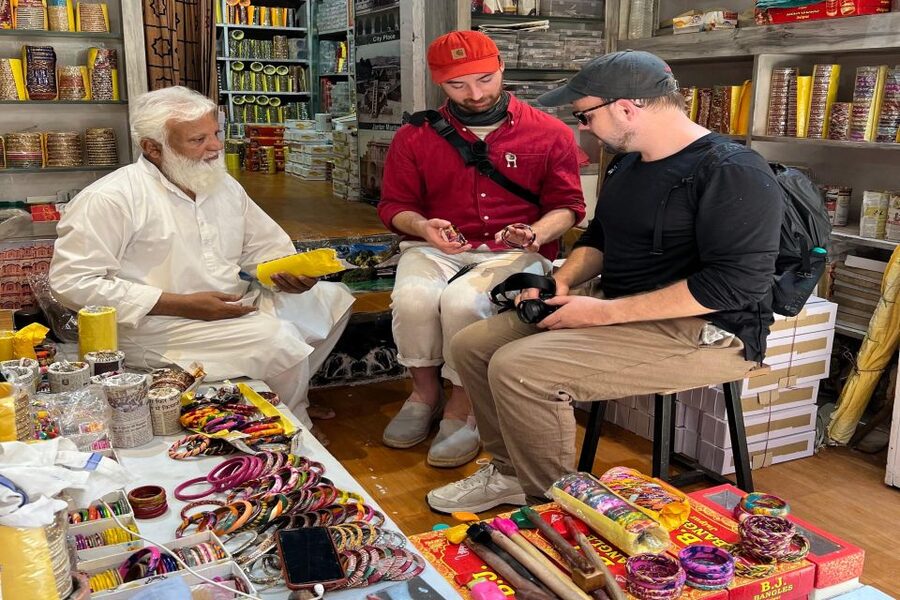
I would recommend it most strongly for first-time visitors, solo travelers, curious eaters and anyone who wants a gentle introduction to the old city before visiting larger sights such as the City Palace or Jantar Mantar.
It also suits people who want a local perspective without committing to a full-day tour. Several visitors enjoyed the walk enough to arrange more sightseeing with the same guide afterward, but you should treat that as an optional extension, not part of the three-hour program.
Food lovers will get the most from it, especially if you like trying small portions of unfamiliar snacks. You do not need to be an expert eater. The guide can explain what you are sampling and help you avoid items that do not suit your taste.
Solo women may appreciate the small group and the support of a guide through unfamiliar lanes. Families can also enjoy the mix of stories, food and short stops, though young children may tire from the walking and busy streets.
This is not suitable for wheelchair users. It is also a poor match if you want a vehicle-based tour, a quiet route or a tightly fixed list of dishes. The walk involves a lot of walking, and the old city is not designed for a perfectly smooth path.
Practical tips for a better three hours
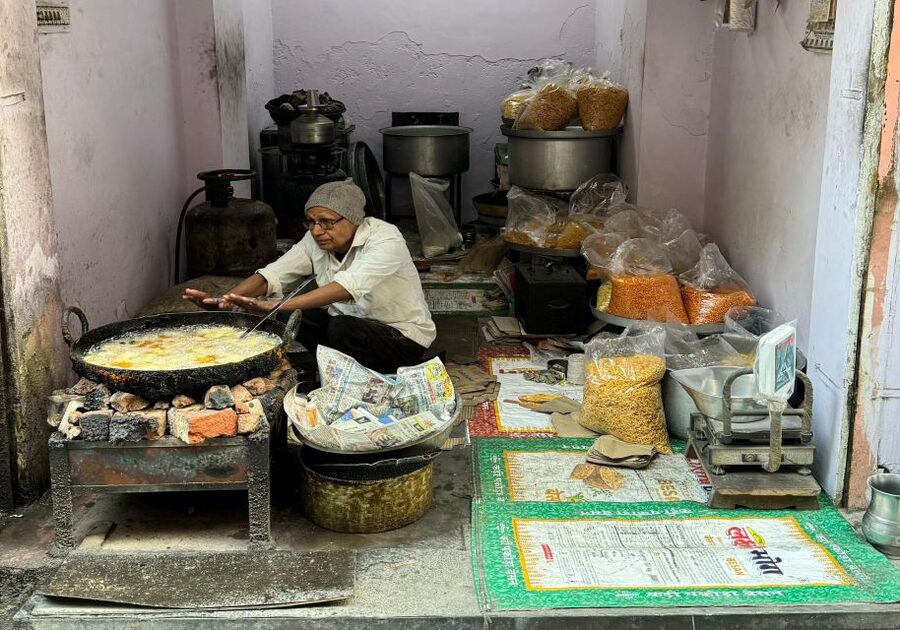
Wear comfortable walking shoes and light, practical clothes. Carry sunscreen, a hat and water, even though one bottle is included.
Bring your passport or another form of identification, along with any personal medication. Tell the guide about food preferences, allergies or spice concerns before the first stop, not after you have already been served.
Keep your camera ready, but use it thoughtfully. The painted houses, craft work and market lanes offer strong visual details, yet people are working and worshipping in these spaces. Ask permission for close portraits and follow temple rules.
Try not to schedule a heavy meal immediately before or after the walk. The tastings are designed to add up, and you may be fuller than expected by the finish.
Should you book it?
Book this tour if you want Jaipur explained through its food, markets and working neighborhoods, not only through its famous monuments. The combination of local snacks, old-city planning, Thathera metalwork, bangle making, a temple and a community well gives you a useful sense of how the Pink City functions.
Skip it if you dislike walking, cannot manage uneven and crowded streets, or want a formal restaurant meal. For $21, though, the balance is hard to fault: you get three hours with a local English-speaking guide, plenty to taste, bottled water and an introduction to parts of Jaipur you could easily miss alone.
FAQ
How long does the Heritage Walk and Street Food Tasting in Jaipur last?
The experience lasts three hours. Check the available starting times when booking.
Where does the tour begin?
The meeting point is the entry gate of Golcha Cinema in Jaipur.
Where does the tour finish?
The walk finishes at Chhoti Chopad, also called Choti Chaupar.
What food is included?
The tasting includes samosa, kachori, famous sweets, masala chai and other local snacks from local shops.
Is hotel pickup included?
No. You need to make your own way to Golcha Cinema, and hotel drop-off is not included.
What language is the tour conducted in?
The live tour guide speaks English.
How large is the group?
The tour is limited to 10 participants.
Is the tour suitable for wheelchair users?
No. The experience involves substantial walking through old-city streets and is not suitable for wheelchair users.
Newly added plates around India
- Varanasi: Night Tour with Aarti Ceremony and Street Food★ 4.7 · 2 reviews
- Varanasi Street Food Crawl (2 Hours Guided Tour)★ 4.5 · 9 reviews
- Udaipur: Guided Street Food Tour with Tastings★ 4.2 · 6 reviews
- Udaipur: Street Food Crawl (2 Hours Local Food Tasting Tour)★ 4.1 · 3 reviews
- Udaipur: Street Food adventure l Eat Just like a local★ 4.6 · 2 reviews
- Trivandrum Street Food Crawl Guided Food Tasting Tour★ 4.5 · 6 reviews
- Varanasi Street Food Crawl (2 Hours Guided Food Tasting Tour)★ 4.5 · 69 reviews
- Ganga Arati with Street Food Tour of Banaras★ 5.0 · 7 reviews
Historical Tours, compared.

Walking Tour and street food Tour Palermo / History and Food
Read our review →
Discover Palermo in 3 hours. Art, history, markets and street food
Read our review →
Lecce History and Street Food Tasting Small Group Tour
Read our review →
Historic Center Street Food, Market, and Eateries Tour
Read our review →
Dubai Old Town, Culture, History, Street food and Souks Tour
Read our review →
Old Dubai Historic Guided Tour: Creek, Street Food & Souks
Read our review →

Old Quarter Hanoi Street Foods and Heritage Road Tour by Walking
Read our review →Browse the lists this tour appears in