
REVIEW · TOKYO STREET FOOD TOURS
Matsushima Bay, Islands and Seafood Market day tour from Tokyo
Matsushima Bay gives you a full day of Japan in one sweep: a fast Shinkansen ride, pine-covered islands, small temples, fresh seafood, and a Sendai dinner before returning to Tokyo. The bay is counted among Japan’s Three Most Scenic Views, and its famous 260 islets make the boat option especially tempting.
I like the small group limit of 11 and the fact that transport between Tokyo, Sendai, and Matsushima is arranged for you. I also like the mix of outdoor sightseeing and local food, from lunch near the fish market to a planned dinner in Sendai. The day is long, though, at about 13 hours, and you will need to keep moving.
The $220 price is easier to justify if you value convenience and a guide who can manage train connections. If you prefer a slow day with plenty of free time, or if you already have a Japan Rail Pass, check the refund arrangement before booking.
Key points to know before you book
- The Shinkansen does the heavy lifting: Your round-trip Tokyo to Sendai train travel is included, saving you the trouble of working out a long day trip on your own.
- Matsushima has three main island visits: You will see Fukuura, Oshima, and Godaidō, with bridges, shrines, temples, forest paths, and bay views.
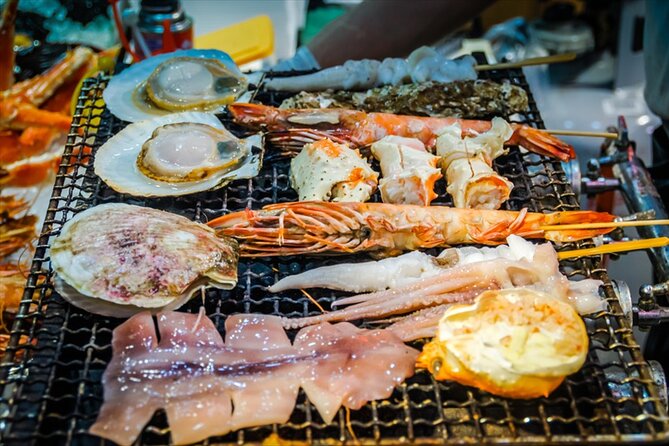
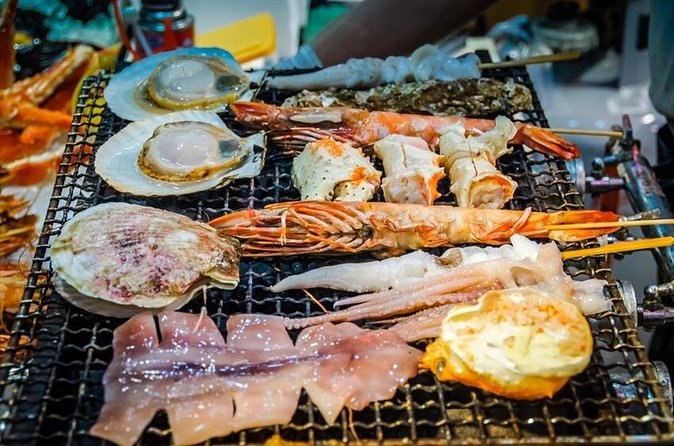
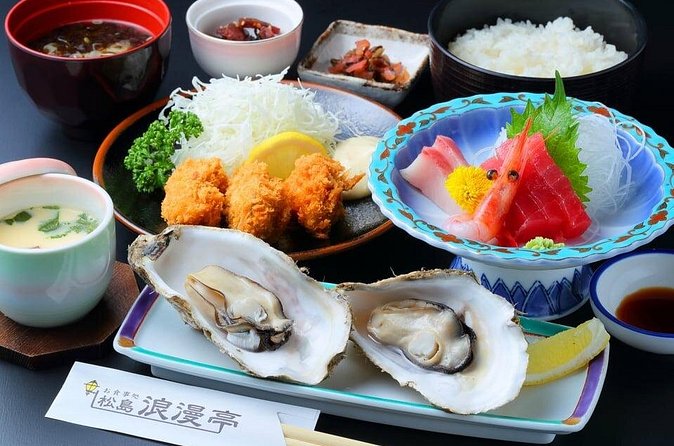
- The seafood stop is a real part of the day: Lunch takes place by Matsushima Fish Market, where you can eat fresh and cooked local seafood.
- The boat cruise costs extra: A local operator offers a bay cruise for about $15, but it is not included in the tour price.
- Mickey is one guide to look for: A detailed account of this tour praises guide Mickey for thoughtful help during the Shinkansen journey.
- Tanabata can add a lucky seasonal bonus: If your date matches Sendai’s early August festival, the streets may be lined with elaborate decorations and food stalls.
Why Matsushima makes a strong day trip from Tokyo
Matsushima is not a quick side trip from Tokyo. It sits in Miyagi Prefecture, near Sendai, so the distance makes independent planning more involved than a visit to Kamakura or Nikko. The Shinkansen changes the calculation.
You meet at Tokyo Station at 7:30 am, then ride to Sendai before continuing by public transportation to Matsushima. That early start and long return ride are the price of seeing one of northeastern Japan’s most admired coastal areas in a single day.
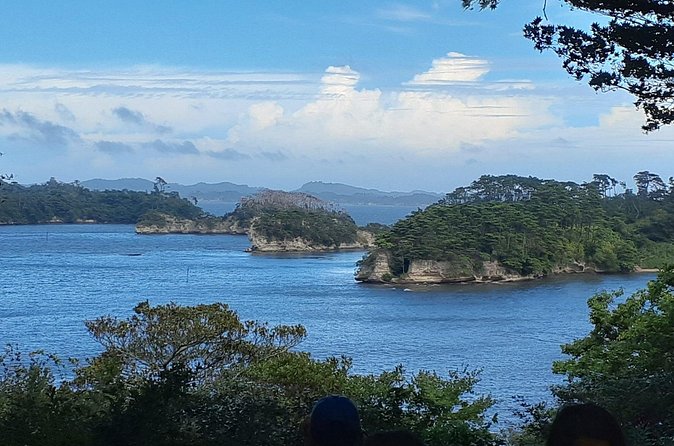
What makes Matsushima special is its shape. The bay is scattered with around 260 pine-clad islets, many of them small enough to look like floating gardens. You will not see every island on foot, but the bridges and viewpoints give you close contact with the shoreline. The optional cruise completes the picture from the water.
I see this tour as a practical answer for you if you want Matsushima but do not want to arrange Shinkansen tickets, local trains, island admission, lunch, and dinner separately. The tradeoff is a schedule that leaves less room for lingering.
More street food tours in Tokyo:
- Tokyo: Tsukiji Fish Market Food and Culture Walking Tour
★ 4.7 · 757 reviews - Tsukiji Fish Market: Street Food & Culture Walking Tour
★ 5.0 · 669 reviews - Tsukiji Fish Market: Street Food & Culture Walking Tour
★ 4.8 · 259 reviews
The Tokyo to Sendai ride
The day begins at Tokyo Station. You should arrive with enough time to find the meeting point and settle in before the 7:30 am departure. Your round-trip Shinkansen ticket between Tokyo and Sendai is included, as is the public transportation fare between Sendai and Matsushima.
That matters because a long-distance day trip can become stressful when train changes are left to you. A guide can help keep the group together and deal with timing, which is particularly useful on the return leg after dinner.
The tour accepts mobile tickets, and the group can include no more than 11 people. That is a useful middle ground. You get more personal attention than on a large coach excursion, but you should still expect the day to follow a fixed rhythm.
One practical point concerns Japan Rail Pass holders. If you have a valid pass, the operator says you should make contact so the Shinkansen tickets can be coordinated and that portion of the tour cost refunded. Do not assume the refund happens automatically.
Seafood at Matsushima Fish Market
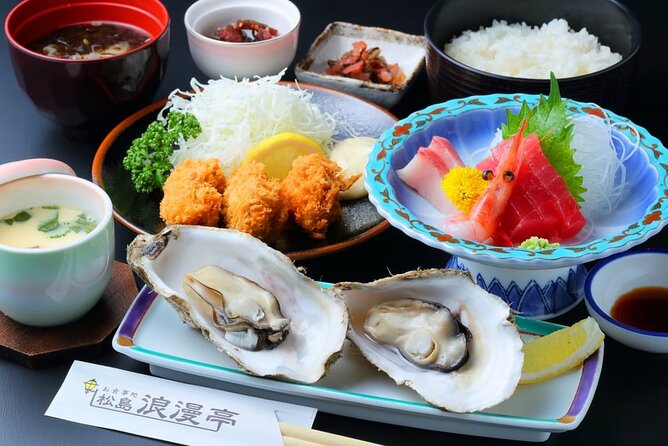
The first major stop is Matsushima Fish Market, with about two hours set aside for seafood vendors and a local restaurant meal. This is not simply a quick photo stop. Lunch is one of the reasons to choose this outing over a sightseeing-only excursion.
You can expect a choice of fresh and cooked seafood, along with local cuisine. The market setting gives the meal a stronger sense of place than a standard restaurant near Tokyo. You can see what is being sold locally, then eat close to the source.
The tour includes lunch, but snacks and extra food are not covered. Keep that in mind if you like to graze through markets or want additional drinks. The schedule gives you time to eat, but it is not presented as a long, open-ended food crawl.
Food restrictions need advance thought. The operator says people with allergies or dietary restrictions should consider alternative meals, with a refund of the meal portion provided on location in such cases. That is helpful, but you should not expect every preference to be handled like a custom menu.
Fukuura Island and its long red bridge
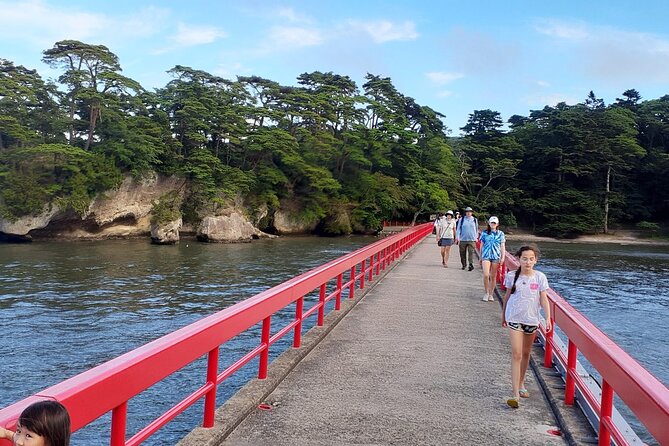
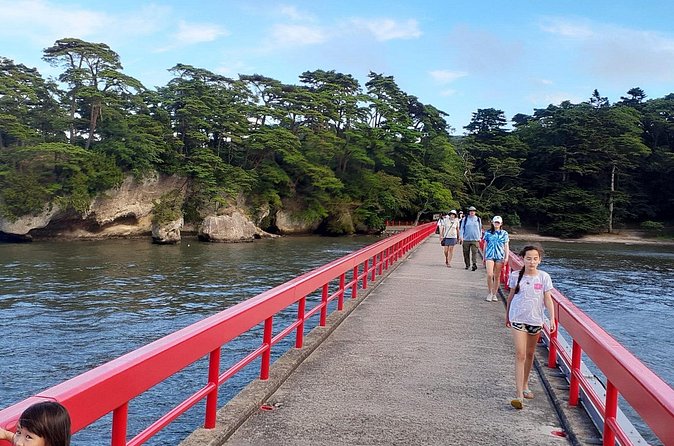
Fukuura Island is reached by a long pedestrian bridge, one of the most memorable approaches of the day. The vermilion structure draws your eye across the water before you even reach the island.
Once across, you can walk through a small island forest, visit a shrine and temple, and stop for views over Matsushima Bay. The walking is gentle in concept, but the overall day includes several island walks and bridge crossings, so comfortable shoes are a sensible choice.
Fukuura gives you the best sense of getting out into the bay without needing a boat. You are surrounded by water, trees, and small coastal views rather than simply looking at Matsushima from a town street.
The visit is listed as about an hour, followed by another hour for the broader bay area. That is enough to see the key features, but not enough for a slow photographic study of every path. You will want to stay aware of the guide’s timing.
Same city, another round of plates:
- Tokyo: Togoshi Ginza Street Food Tour
★ 5.0 · 34 reviews - Tokyo Street Food Tour – 7 Japanese Foods
★ 5.0 · 16 reviews - Private Tokyo food scene 6 hour experience: Depatika, street food, izakaya
★ 5.0 · 9 reviews - Tokyo: Private Tsukiji Fish Market Tour with 3 Food Stops
★ 5.0 · 9 reviews
Oshima Island and a quieter side of Matsushima
Oshima Island offers a different mood. It is a sacred island where monks once meditated in caves, and the setting is described as quiet and contemplative.
That spiritual connection gives the stop more weight than a scenic viewpoint alone. You can walk across to the island, look for the caves and religious features, and enjoy a calmer stretch of the day. After the market and the movement between islands, Oshima can feel like a useful pause.
The visit lasts about an hour. You should not expect a long temple tour or an extended lecture on Buddhist practice, since the supplied details focus on the island atmosphere and its meditation caves. The value is in the setting: a small, sacred place connected to the history of local religious life.
Godaidō, bridges, and the bay views
Godaidō is another important island stop, reached across an elegant vermilion bridge. The island and its temple are among the classic Matsushima sights, and the visit adds a more formal cultural point to the day.
Together, Godaidō, Fukuura, and Oshima give you three different ways to understand the bay. Godaidō brings temple architecture and a well-known viewpoint. Fukuura gives you a forest walk and a shrine. Oshima offers caves and quiet religious associations.
The admission fees for the island walkways are included. That is a small but useful detail because several separate stops can otherwise produce a string of minor charges. The tour handles the local access costs as part of the package.
Should you add the Matsushima boat cruise?
The optional cruise is the clearest extra decision during the day. A local third-party operator offers a bay tour for about $15, and the cost is not included in the $220 tour price.
From the water, you can appreciate the full pattern of the bay and its many pine-covered islets. Walking on two or three islands shows you individual places. A cruise lets you understand how broad and scattered Matsushima really is.
The drawback is that the cruise is not operated as part of the main tour. It is offered locally by a partner, and the tour details do not specify its exact duration or boat schedule. Ask the guide how it fits the day before paying. If the timing works, I would consider it good value for the extra perspective. If you prefer more time on land, the included island visits already give you a solid introduction.
Sendai dinner and the long ride home
After Matsushima, the group heads to Sendai for dinner in the downtown nightlife district. The meal is described as either an all-you-can-eat-and-drink experience, known as tabehodai and nomihodai, or a course dinner.
That format adds a social finish to the day. Instead of simply boarding the train after sightseeing, you get a chance to eat Japanese dishes in a lively part of Sendai and enjoy a proper evening meal.
There is one detail worth confirming before departure. The stop description places dinner in downtown Sendai, while the included-meal description refers to a Japanese dinner enjoyed on the train ride back to Tokyo. Since both descriptions appear in the tour information, ask the operator or guide which arrangement applies on your date.
The dinner is included, but extra snacks and drinks outside the planned meal are not. The return Shinkansen to Tokyo is included too, and the tour ends back at the original meeting point.
What the small group changes
A maximum of 11 people is one of the strongest practical features. In a place that requires several trains, bridges, and timed stops, a compact group is easier to manage than a full-size bus party.
You can also expect the guide to matter more. One account specifically names Mickey and describes a situation in which the guide gave up her seat on the Shinkansen and stood so a late-joining participant could sit. That kind of gesture suggests a guide willing to handle the awkward details of a long transit day.
Do not book this expecting a private tour. Eleven people still means you must follow the group schedule, and the day covers a lot of ground. But the size should make questions and coordination easier than on a large organized excursion.
The tour has received two five-star ratings, including praise for its planning and guiding. The strongest positive theme is not just the scenery. It is the way the guide helps make a rare, complicated day trip from Tokyo work.
Could Tanabata make the date special?
If you visit during the Sendai Tanabata Matsuri, usually held for only a few days each August, the city portion can take on a festive character. Huge decorations line the streets, and food choices expand around the event.
This festival is not promised as part of every departure, so you should treat it as a date-specific bonus rather than a standard feature. If your trip falls during Tanabata, ask how the festival fits with the planned dinner and Sendai schedule.
The festival can also make the city busier and the day less predictable. That is not necessarily a problem, but it gives you another reason to follow the guide’s instructions closely.
Is $220 a fair price?
At $220 per person, this is not the cheapest way to see Matsushima. The price becomes easier to defend once you count the included Shinkansen ride, local transportation, lunch, dinner, island admissions, and guide support.
A separate independent trip would require you to arrange the Tokyo to Sendai return tickets, local transport to Matsushima, island access, meals, and the return connection. You might spend less by booking each part yourself, especially if you already hold a Japan Rail Pass, but you would take on the planning and timing.
The value is strongest for a first visit to Japan, a short stay in Tokyo, or anyone who wants a carefully organized day outside the capital. It is weaker for independent travelers who already understand the rail system and prefer to choose their own restaurants and departure times.
The optional cruise is extra, at about $15. Budget for it only if seeing the bay from the water matters to you.
Who should book this day trip?
I would recommend it to you if you want a major coastal sight without changing hotels. It also suits people who like a mix of food, scenery, religious sites, and public transport rather than a single museum or attraction.
It is a good fit for most people who can manage a full day of walking and train travel. The supplied information says most people can participate, but it does not provide detailed accessibility information. If bridges, island paths, or extended transit are concerns, ask the provider before booking.
Families, couples, solo visitors, and small groups can all find something here. Food-focused visitors get the market and dinner. Photographers get bridges, pine islands, and water views. First-time visitors benefit from having the transport chain handled.
You should think twice if your ideal holiday day starts late, includes long unplanned breaks, or avoids group meals. Thirteen hours is a serious commitment, and Matsushima is too far from Tokyo for the schedule to feel casual.
The final call
Book this tour if you want Matsushima Bay but do not want to build a complicated Tokyo day trip from separate train tickets and local connections. The strongest reasons are the small group, included meals, three island visits, and the chance to add a boat view for a modest extra fee.
Skip it if you already have a Japan Rail Pass and are comfortable arranging the route yourself, or if you want several quiet hours with no fixed timetable. For everyone else, this is a well-packed introduction to Matsushima, with enough seafood and Sendai evening life to keep the day from feeling like a sightseeing checklist.
FAQ
Where does the tour start?
It starts at Tokyo Station, at 1 Chome-9 Marunouchi, Chiyoda City, Tokyo 100-0005, Japan.
What time does the tour begin?
The scheduled start time is 7:30 am.
How long does the experience last?
The full experience lasts approximately 13 hours and ends back at the original meeting point in Tokyo.
Is the Shinkansen included?
Yes. A return Shinkansen ticket between Tokyo and Sendai is included. Japan Rail Pass holders should contact the operator so ticket arrangements and a refund for that portion can be coordinated.
Is lunch included?
Yes. Lunch includes fresh and cooked seafood and local cuisine at a restaurant by the Matsushima seafood market.
Is the Matsushima Bay cruise included?
No. The cruise is optional and operated by a local third-party company. It costs about $15 and is paid separately.
Which islands are visited?
The tour visits Fukuura Island, Oshima Island, and Godaidō. The visits include bridges, island paths, shrines, temples, and bay views.
Is dinner included?
Yes, dinner is included. The details describe either an all-you-can-eat-and-drink or course dinner in downtown Sendai, while another meal description refers to dinner on the return train. Confirm the exact arrangement for your departure.
Can I cancel the tour?
You can cancel for a full refund up to 24 hours before the experience starts. Changes or cancellations made less than 24 hours in advance are not accepted for a refund. Poor weather or failure to meet the minimum group size may lead to a different date, another experience, or a full refund.
Newly added plates around Tokyo
- Tsukiji Fish Market Street Food & Culture Walking Tour★ 5.0 · 8 reviews
- Tsukiji Fish Market: Street Food Tour with Tasting★ 5.0 · 4 reviews
- Ueno Park and Ameyoko Street Food Market Half Day Walking Tour★ 5.0 · 3 reviews
- Tokyo:Enjoy street food & Japanese food culture at Tsukiji Market★ 5.0 · 6 reviews
- Tokyo Fish Market Food Tour: Street Food & Friendly Guide★ 3.0 · 2 reviews
- Tokyo Street Food Tour – 7 Japanese Foods★ 5.0 · 16 reviews
- Private Tokyo food scene 6 hour experience: Depatika, street food, izakaya★ 5.0 · 9 reviews
- Historic Kamakura: Temples, Shrines and Street Food Private Walking Tour★ 5.0 · 6 reviews
Tokyo Street Food Tours, compared.
Tsukiji Fish Market Food and Culture Walking Tour
Read our review →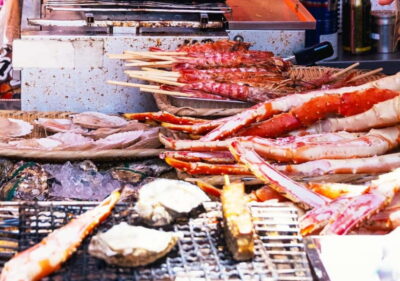
Tsukiji Fish Market: Street Food & Culture Walking Tour
Read our review →Tsukiji Fish Market: Street Food & Culture Walking Tour
Read our review →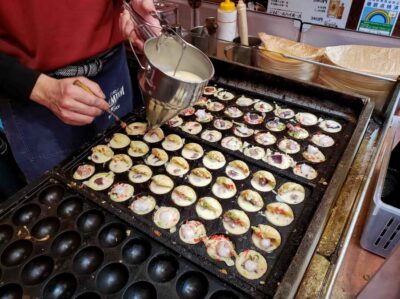
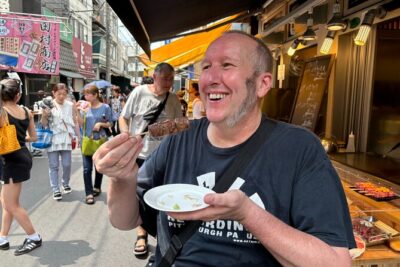
Private Tsukiji Fish Market Tour with 3 Food Stops
Read our review →
Private Tokyo food scene 6 hour experience: Depatika, street food, izakaya
Read our review →
Sensoji Temple & Street Food: Private Tour with guide
Read our review →Browse the lists this tour appears in