
REVIEW · TOKYO STREET FOOD TOURS
Tokyo Street Food Tour – 7 Japanese Foods
Tokyo’s best food experiences do not always happen in famous restaurants. This tour takes you through Musashi Koyama and Togoshi Ginza, two local shopping streets where small food shops serve the neighborhood day after day. You walk, snack, and learn as you go, rather than sit through one long meal.
I like the small maximum group of eight, which leaves room for real conversation with guides such as Makayla, Bunga, Sahori, and Frank. I also like the range of food, from award-winning karaage and old-school yakitori to onigiri, curry bread, pudding, and dango. The main consideration is price: at $91.45, this is not a cheap lunch, and you may finish very full.
Key points at a glance
- Seven Japanese foods in one walking meal: Expect fried chicken, grilled skewers, rice balls, curry bread, pudding, and other local snacks.
- A less touristy side of Tokyo: The route moves through Musashi Koyama and Togoshi Ginza rather than the city’s best-known sightseeing districts.
- A maximum of eight people: The small size suits anyone who wants to ask questions and keep the pace comfortable.
- Food with local context: Guides explain the dishes, the shops, and the area’s culinary past as you walk.
- A point-to-point route: You start at Park City Musashikoyama and finish at Togoshi Ginza Shopping Street, with no hotel pickup.
- A filling two-hour outing: The portions are generous enough that pacing yourself matters.
Why this Tokyo food walk feels different
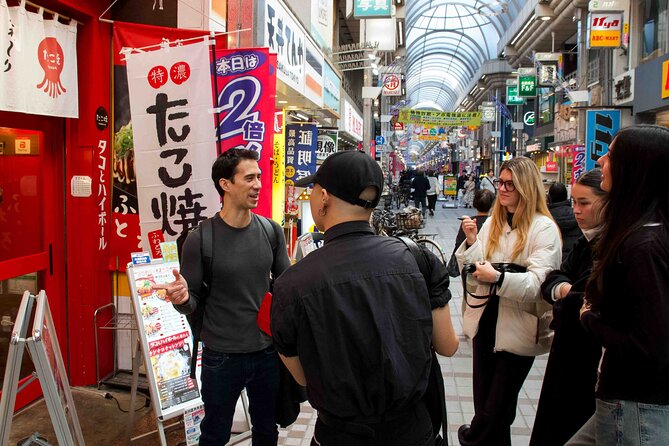
I like this tour because it treats Tokyo food as part of daily life, not as a checklist of sushi and ramen. The route leads through shopping arcades and storefronts where locals buy quick meals, sweets, and snacks. You get a sense of how food fits into a neighborhood, not just how it looks on a plate.
The two areas are in Shinagawa City, away from the usual first-time Tokyo circuit. That does not mean they lack energy or character. It means the focus is on ordinary streets, long-running shops, and food you can eat while walking between stops.
This is also a useful introduction to Japanese eating habits. You may already know karaage or onigiri, but the tour gives you several versions in quick succession. You can compare textures and flavors while your guide explains where each item fits in Japanese food culture.
The experience is listed at about two hours. One food description refers to roughly an hour and a half of walking and grazing, so you should expect a steady outing rather than a seated lunch with long pauses. Wear comfortable shoes and arrive ready to eat.
More street food tours in Tokyo:
- Tokyo: Tsukiji Fish Market Food and Culture Walking Tour
★ 4.7 · 757 reviews - Tsukiji Fish Market: Street Food & Culture Walking Tour
★ 5.0 · 669 reviews - Tsukiji Fish Market: Street Food & Culture Walking Tour
★ 4.8 · 259 reviews
Starting at Musashi Koyama’s covered arcade
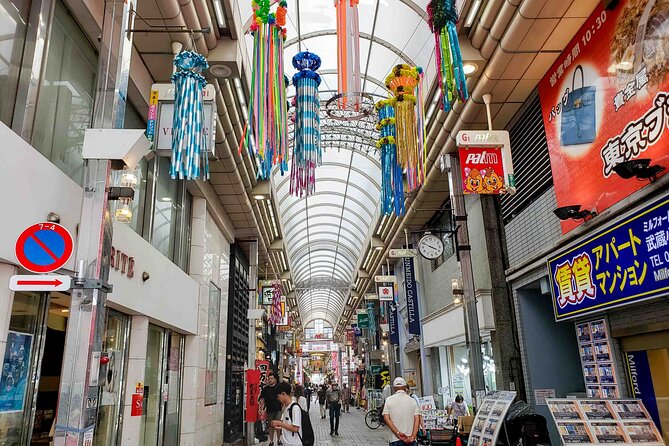
The meeting point is Park City Musashikoyama THE MALL, at 3-chōme-15-1 Koyama in Shinagawa City. From there, the route passes through the decades-old covered Musashi Koyama Shopping Street Palm before continuing toward Togoshi Ginza.
This opening section helps set the tone. Covered arcades are practical places in Tokyo, offering a mix of food shops and everyday businesses under one roof. You are not simply being led from one famous restaurant to another. You are looking at the kind of commercial street that supports local residents.
The first samples begin here. The exact order can vary, but the food selections include several strong examples of Japanese comfort food:
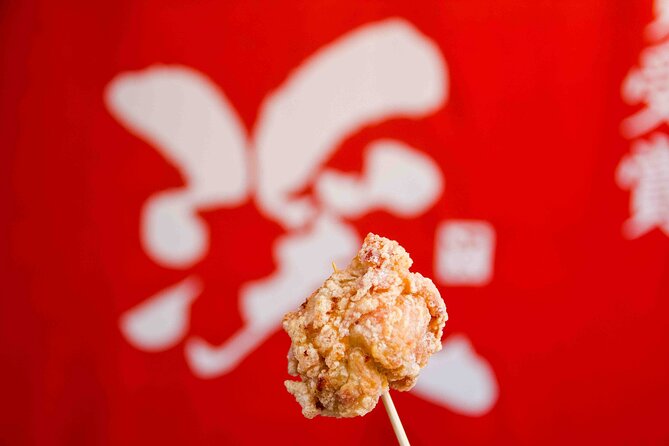
- Karaage: Japanese fried chicken, served from an award-winning vendor. It is a useful first bite because it is familiar enough for most people, yet still shows how Japanese seasoning and frying differ from other versions of fried chicken.
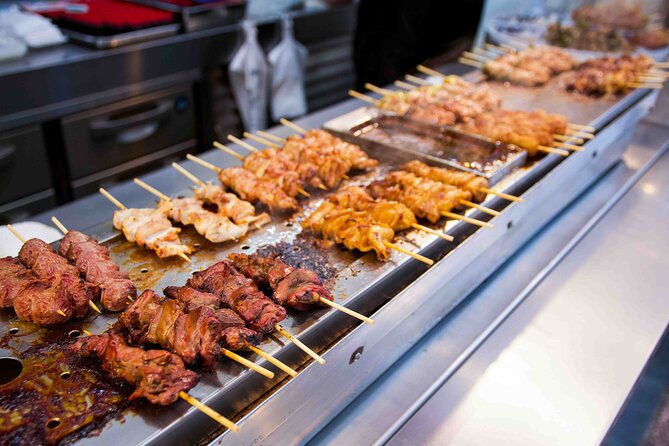
- Yakitori: Charcoal-grilled chicken skewers from a restaurant that has operated since 1926. That long history gives this stop a sense of continuity, and the smoky cooking method provides a contrast to the crisp karaage.
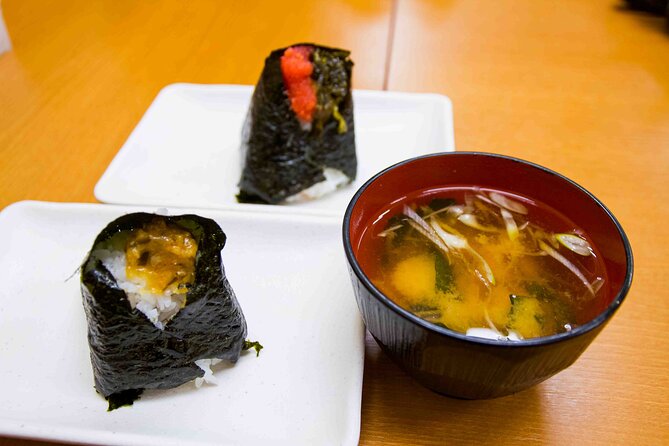
- Onigiri: Hand-made rice balls with more than 40 filling choices. The options range from bacon and cream cheese to spicy tuna, showing how flexible this everyday food can be.
- Curry bread: Freshly baked bread filled with Japanese beef curry. It combines a soft or crisp bread shell with a savory filling, making it one of the heavier snacks on the route.
- Japanese pudding: A very creamy dessert that gives you a sweet finish somewhere in the middle of the walk.
The selection is more varied than a tour built around one food style. You get chicken, rice, bread, curry, and dessert before reaching the main shopping street. That variety is one of the strongest reasons to choose this outing over a basic market tasting.
Walking into Togoshi Ginza Shopping Street
After the first arcade, you walk to Togoshi Ginza Shopping Street, the main destination. The meeting details place the finish at the Togoshi Ginza Shopping Street Association building in Togoshi 1-chōme.
The route is point to point, so this is not a loop that returns you to the starting location. That matters when planning your day. You can continue exploring from Togoshi Ginza after the tour, but you need to arrange your own way back or onward. Hotel pickup and drop-off are not included.
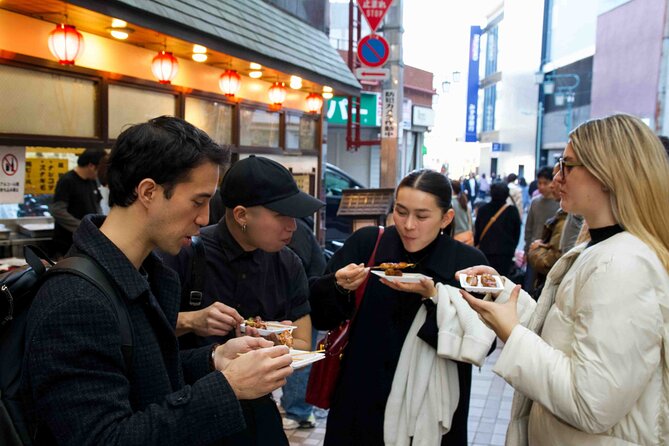
Togoshi Ginza is where the tour’s local focus comes through most clearly. The street is lined with small shops and food counters, and the remaining tastings take place here. One stop mentioned in the feedback is a dango shop, which gives the meal a classic Japanese sweet to balance the savory foods.
The full experience includes seven food types, although only some of the precise dishes are identified in the available details. The named foods are karaage, yakitori, onigiri, curry bread, pudding, and dango, along with at least one additional tasting. That uncertainty is worth noting if you need a fixed menu for dietary or planning reasons.
You should also expect portions to be more than tiny samples. The tour includes lunch, and the food comes from several storefronts. Pace yourself at the beginning, especially if you are visiting with children or are not used to eating several snacks in a short period.
What the guides add to the food
Food tours depend heavily on the person leading them. Here, the guide names connected with the experience include Makayla, Bunga, Sahori, and Frank, though your guide will depend on the date and group.
Makayla is described as personable and good at explaining the area and the food. Sahori led a small group through a less touristy part of Tokyo and adjusted the experience when someone did not want to try a particular food. Frank is associated with strong food choices, dish history, and a friendly walking style. Bunga is also praised for making the first Tokyo food experience enjoyable and for choosing a varied selection.
The important point is not any single guide’s personality. It is the format. With no more than eight people, the guide can explain unfamiliar dishes without speaking to a large crowd. You can ask why an ingredient is used, how a food is normally eaten, or what makes one shop different from another.
The tour also works well for a first day in Tokyo. You get a practical introduction to local food and can ask questions that may help with the rest of your trip. I would not book it only for a detailed culinary lecture, since the tour is short and food-focused. I would book it for a friendly introduction to neighborhood eating.
Same city, another round of plates:
- Tokyo: Togoshi Ginza Street Food Tour
★ 5.0 · 34 reviews - Private Tokyo food scene 6 hour experience: Depatika, street food, izakaya
★ 5.0 · 9 reviews - Tokyo: Private Tsukiji Fish Market Tour with 3 Food Stops
★ 5.0 · 9 reviews - Tsukiji Fish Market Street Food & Culture Walking Tour
★ 5.0 · 8 reviews
The best parts of the food lineup
The karaage may be the safest crowd-pleaser. It is familiar, filling, and easy to eat while walking. The fact that it comes from an award-winning vendor gives this simple snack a clear reason for its place on the route.
The yakitori adds a different cooking style. Charcoal grilling brings a smoky flavor that fried food cannot provide, while the restaurant’s long operating history gives you a link to an older Tokyo food tradition.
Onigiri is especially useful for visitors who want to understand everyday Japanese food. It is portable, inexpensive in spirit, and adaptable. More than 40 filling choices also mean this stop can appeal to different tastes, at least in principle. If you have a strong preference or restriction, ask your guide what options are suitable.
Curry bread is substantial. The combination of Japanese beef curry and baked bread can feel closer to a small meal than a snack, which explains why the tour’s food may add up quickly. The creamy pudding and dango provide sweetness without turning the entire walk into a dessert crawl.
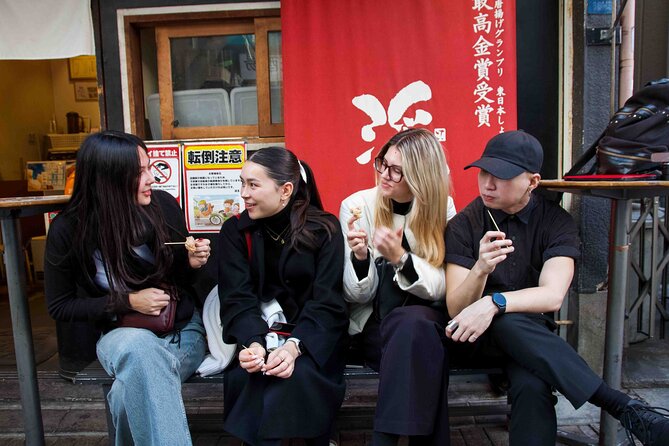
The food is served across several shops rather than presented as one arranged tasting plate. That makes the outing feel more connected to the neighborhood, but it also means you should be prepared to eat outdoors or near the shops, depending on the stop. The supplied details do not promise seating at each location.
Is $91.45 a fair price?
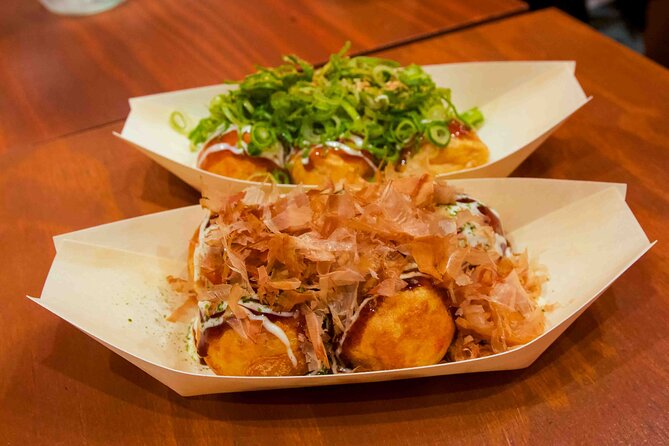
At $91.45 per person, this is a premium price for a two-hour food walk. You are paying more than the basic cost of seven snacks. The fee also covers the guide’s time, the planning of a multi-stop route, local explanations, and one soft drink.
The value depends on what you want from lunch. If you only want inexpensive food, you can spend less by visiting shopping streets on your own. If you want someone to choose the stops, explain the dishes, handle the route, and connect the food to local history, the price becomes easier to justify.
The small group improves the value. A maximum of eight people is far more personal than a large food crawl, and several outings have been intimate groups of two or four. You may not receive a private tour, but a small booking can make the experience feel close to one.
The portions also matter. This is not a quick appetizer round. It includes lunch, seven food types, and a drink. If you arrive hungry and enjoy trying many different foods, you are more likely to feel that you received a full meal and an activity in one package.
I would consider the price worthwhile for a food-focused visitor who wants local guidance and does not want to plan each stop. I would hesitate if your priority is budget dining or if you prefer to choose every dish yourself.
Who should book this experience?
This tour suits food lovers who have already accepted that Tokyo offers much more than sushi and ramen. It is also a good match for first-time visitors who want an easy introduction to ordinary neighborhood food without taking on a complicated solo food crawl.
Families can enjoy the casual format, though the generous portions may require pacing. The available information recommends a moderate level of physical fitness, so you should be comfortable walking between stops for roughly an hour and a half or more.
The experience also fits solo visitors. A group capped at eight gives you a natural setting for conversation, and the guides are described as friendly and easy to talk with. Couples and small family groups may appreciate that the walk can feel personal when the booking is not full.
I would be more cautious if you have strict dietary needs. The menu includes meat, chicken, beef curry, and dairy-based pudding, and the full list of seven foods is not specified in advance. Service animals are allowed, and the route is near public transportation, but the information provided does not promise a particular accommodation for every mobility need.
Practical details before you go
The tour starts at Park City Musashikoyama THE MALL and ends at Togoshi Ginza Shopping Street. Confirm the exact meeting instructions before setting out, especially because the start and finish are in different places.
There is no hotel pickup or drop-off. You receive a mobile ticket, and booking confirmation is provided at the time of reservation. The route is near public transportation, which helps, but you still need to plan your own arrival and departure.
Free cancellation is available if you cancel at least 24 hours before the local start time. Cancellations or changes made inside that window are not accepted for a refund.
Bring an appetite, comfortable shoes, and a little flexibility. The food is bought from local shops, so the experience is about moving through the neighborhood rather than sitting in one controlled dining room. If you have allergies or foods you cannot eat, tell the guide at the start and ask what can be adjusted.
Should you book the Musashi Koyama food walk?
I would book this tour if you want local Tokyo food in a small group, especially if you value conversation and context as much as the meal. The best features are the neighborhood route, the varied menu, the modest group size, and the chance to try foods that many visitors overlook.
I would skip it if $91.45 feels high for lunch, if you want a guaranteed full menu in advance, or if walking between several food shops sounds tiring. For everyone else, this is a well-focused way to spend two hours, with enough food to count as lunch and enough local detail to make the neighborhood worth exploring.
FAQ
How long does the Tokyo street food tour last?
The tour lasts approximately two hours. The walking and food stops together may include about an hour and a half of movement and grazing.
How many foods are included?
Seven types of Japanese street food are included, along with one free soft drink. Named examples include karaage, yakitori, onigiri, curry bread, Japanese pudding, and dango.
Where does the tour start?
The meeting point is Park City Musashikoyama THE MALL at 3-chōme-15-1 Koyama, Shinagawa City, Tokyo 142-0062, Japan.
Where does the tour end?
The tour ends at Togoshi Ginza Shopping Street, at the Togoshi Ginza Shopping Street Association building in Togoshi 1-chōme, Shinagawa City, Tokyo 142-0041, Japan.
How large is the group?
The activity has a maximum of eight participants.
Is hotel transportation included?
No. Hotel pickup and drop-off are not included. The route is near public transportation.
Can I cancel for a refund?
Yes. You can receive a full refund if you cancel at least 24 hours before the experience start time. Changes or cancellations made less than 24 hours in advance are not accepted for a refund.
Newly added plates around Tokyo
- Tsukiji Fish Market Street Food & Culture Walking Tour★ 5.0 · 8 reviews
- Tsukiji Fish Market: Street Food Tour with Tasting★ 5.0 · 4 reviews
- Ueno Park and Ameyoko Street Food Market Half Day Walking Tour★ 5.0 · 3 reviews
- Tokyo:Enjoy street food & Japanese food culture at Tsukiji Market★ 5.0 · 6 reviews
- Tokyo Fish Market Food Tour: Street Food & Friendly Guide★ 3.0 · 2 reviews
- Private Tokyo food scene 6 hour experience: Depatika, street food, izakaya★ 5.0 · 9 reviews
- Matsushima Bay, Islands and Seafood Market day tour from Tokyo★ 5.0 · 2 reviews
- Historic Kamakura: Temples, Shrines and Street Food Private Walking Tour★ 5.0 · 6 reviews
Tokyo Street Food Tours, compared.
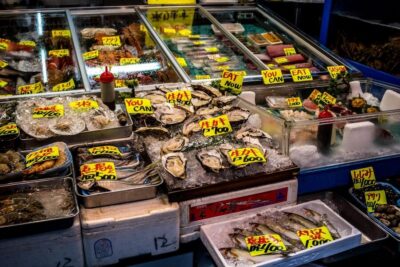
Tsukiji Fish Market Food and Culture Walking Tour
Read our review →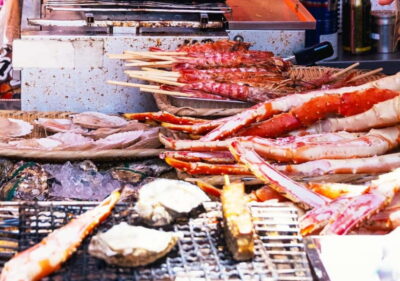
Tsukiji Fish Market: Street Food & Culture Walking Tour
Read our review →Tsukiji Fish Market: Street Food & Culture Walking Tour
Read our review →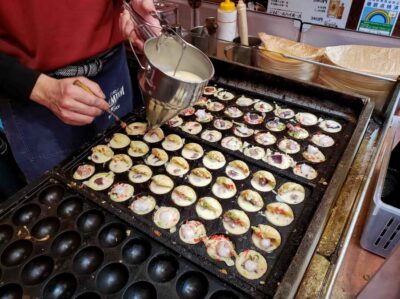
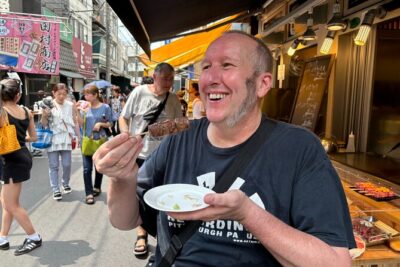
Private Tsukiji Fish Market Tour with 3 Food Stops
Read our review →
Private Tokyo food scene 6 hour experience: Depatika, street food, izakaya
Read our review →
Sensoji Temple & Street Food: Private Tour with guide
Read our review →Tsukiji Fish Market Street Food & Culture Walking Tour
Read our review →Browse the lists this tour appears in