
REVIEW · TOKYO STREET FOOD TOURS
Tokyo: Explore Authentic Japanese Food Culture at Tsukiji
Tsukiji is the place to see how Japanese food culture works at street level. You move through a maze of food stalls and shops, tasting seafood, dried fish, roast beef sushi, seaweed, and other small bites instead of simply looking at the market from the outside. I like the small group of up to six and the way the tour joins food with visits to Tsukiji Honganji Temple and Namiyoke Shrine. The main drawback is that lunch and extra purchases cost more, and this is not a good fit for vegans, people with food allergies, or wheelchair users.
I also like that the guide helps you choose what to eat rather than leaving you to guess among unfamiliar Japanese foods. Haruka has been praised for finding the best spots and explaining the area clearly. You should arrive ready to walk, taste seafood and meat, and make your own choices at the market.
Key points to know before booking
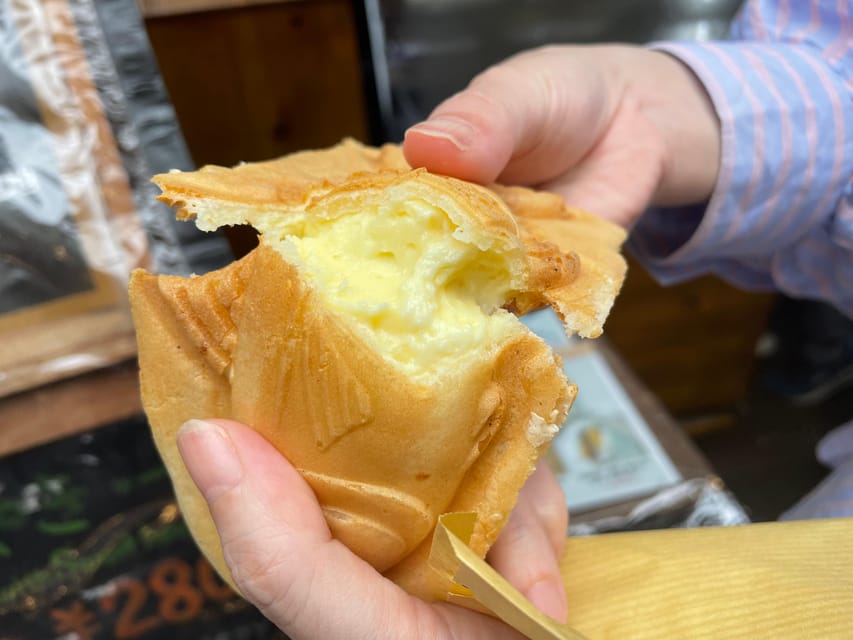
- Tsukiji Outer Market is the main event: Most of the three-hour tour is spent visiting food shops, trying snacks, and learning how the market operates.
- The tastings are varied: Expect seasoned seaweed, dried fish, roast beef sushi, oysters or sashimi, and bean snacks.
- Two important local sites are included: You visit Tsukiji Honganji Temple and Namiyoke Shrine, which is linked to the workers and traditions of Tsukiji.
- Lunch is not included: Your guide helps you reach lunch options, but you pay for that meal and for any extra shopping.
- The group stays small: With no more than six participants, it should be easier to ask questions and keep up in crowded market lanes.
- Food restrictions matter: The included snacks contain seafood and meat, so vegans and people with food allergies should not book this tour.
Why Tsukiji still matters after the wholesale market moved
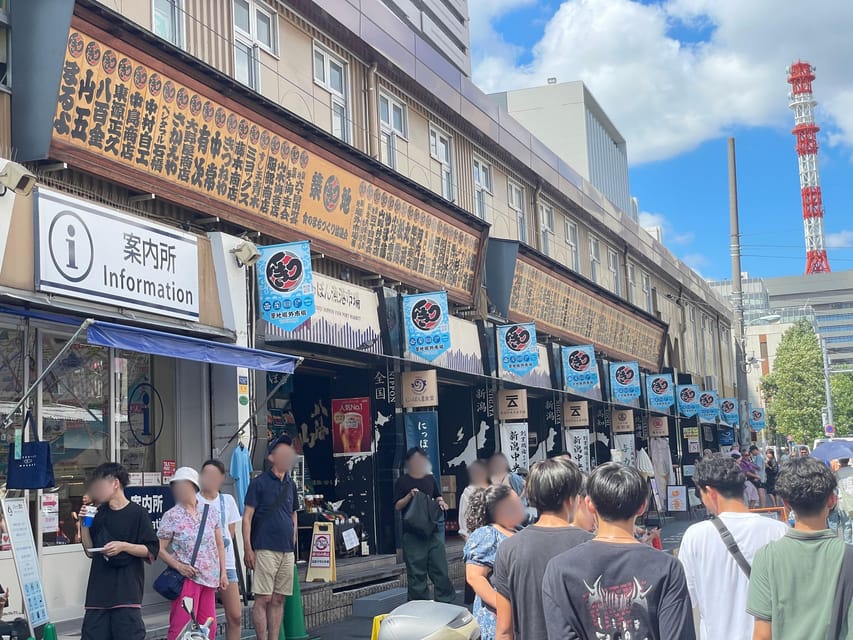
Many people remember Tsukiji as Tokyo’s famous fish market, but the part open to visitors today is the Tsukiji Outer Market. The former central wholesale market closed several years ago, yet the surrounding streets remain a major place for Japanese food shopping and dining.
That distinction matters. You are not signing up for a behind-the-scenes tour of the old wholesale auction floor. Instead, you are exploring the public market where food shops, snack counters, and specialist stores continue to serve local food culture.
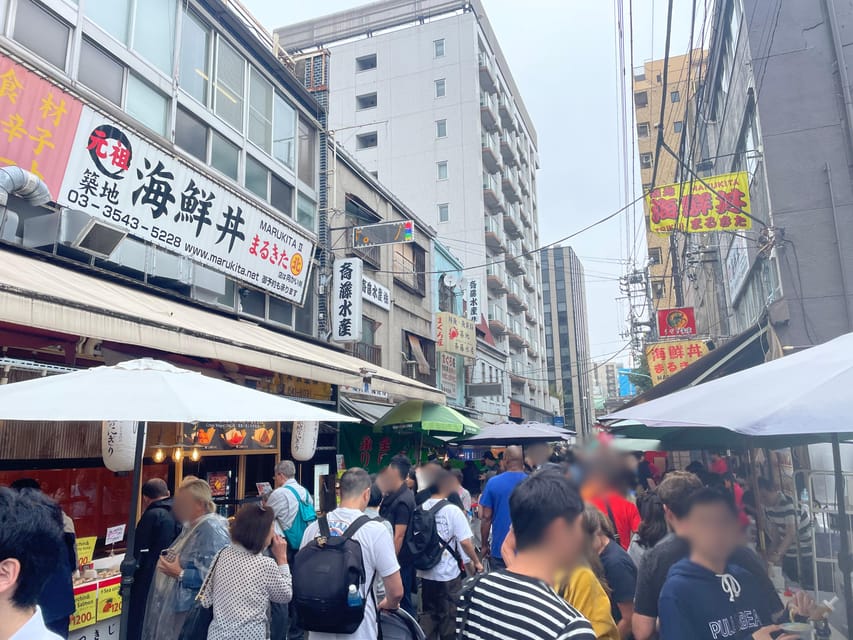
I like this format for a first visit because the market can feel confusing on your own. There are many small shops, unfamiliar ingredients, and quick decisions about what to try. An English-speaking guide gives the food some context and directs you toward selected tastings rather than asking you to wander without a plan.
The tour also treats Tsukiji as more than a seafood stop. You will see how fish fits into a wider Japanese food system that includes dried ingredients, prepared foods, sweets, seaweed, and other pantry staples. That wider view is one of the best reasons to choose this experience instead of simply eating one meal in the area.
More street food tours in Tokyo:
- Tokyo: Tsukiji Fish Market Food and Culture Walking Tour
★ 4.7 · 757 reviews - Tsukiji Fish Market: Street Food & Culture Walking Tour
★ 5.0 · 669 reviews - Tsukiji Fish Market: Street Food & Culture Walking Tour
★ 4.8 · 259 reviews
Starting at Tsukiji Honganji Temple
The meeting point is outside the main gate of Tsukiji Honganji Temple. This gives you a clear landmark, but take care to arrive at the correct entrance and allow enough time to find it.
The temple visit lasts about 20 minutes. It is a photo stop and a guided visit, so you get a short introduction rather than an extended religious tour. The temple is an important part of understanding Tsukiji, and it gives the outing a calmer beginning before you enter the market streets.
I appreciate this opening because it provides a bit of place and purpose before the food begins. Tsukiji is not only a collection of stalls. Religious sites, workers, suppliers, shoppers, and food businesses have all shaped the district.
Do not expect this stop to fill most of your morning. The schedule gives it a modest amount of time, while the main two-hour block belongs to the Outer Market. Wear shoes that are comfortable for walking and standing, since the market portion is much longer.
Two hours among Tsukiji’s food shops
After the temple, you spend roughly two hours in Tsukiji Outer Market. This is the heart of the experience, combining a guided walk, shopping, food tasting, and light meals.
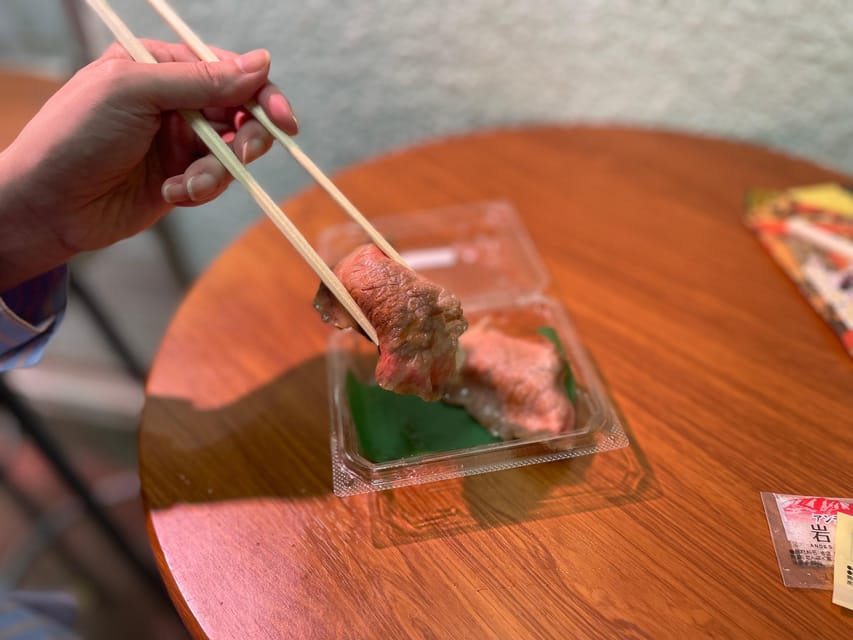
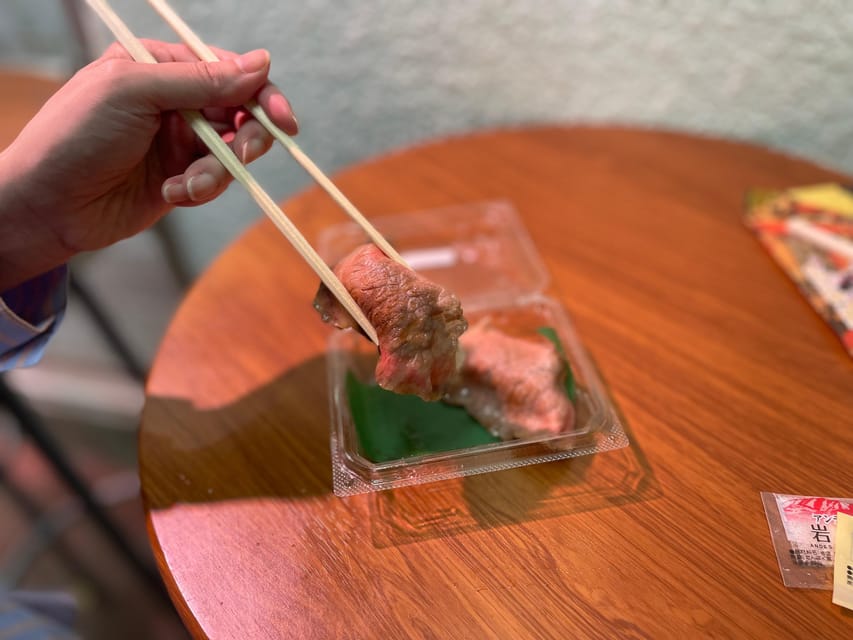
The supplied snacks include seasoned seaweed, dried fish, roast beef sushi, oysters or sashimi, and bean snacks. That is a useful mix because it shows several sides of Japanese eating. Some items are seafood-focused, while others introduce preserved foods, prepared bites, and ingredients you may not normally order on your own.
The exact seafood tasting matters for anyone with a strong preference. The selection lists oysters or sashimi, but it does not promise one specific item for every departure. If you dislike raw seafood or have dietary concerns, tell the guide before eating. The tour information specifically warns that the snacks include seafood and meat.
You may also buy additional food at recommended stores. The cost depends on what you choose, so the advertised price is not the total cost of your morning. Treat the included snacks as the basic tasting portion, then set aside extra money if you want a larger lunch, souvenirs, or more market food.
This is where the small-group format helps. A group of six or fewer can stay together more easily than a large crowd, and you have more room to ask what an ingredient is or how it is normally eaten. The market’s lanes can still feel tight, so keep your belongings close and follow the guide’s directions.
The guide’s role is especially important here. Tsukiji can feel like a maze, and a good escort saves time by taking you to selected shops instead of making you search for every stop. Guide Haruka has been singled out for knowing the best places and for offering clear explanations. Guide assignments can vary, so do not assume Haruka will lead every departure, but the experience is built around that local guidance.
What the tastings tell you about Japanese food
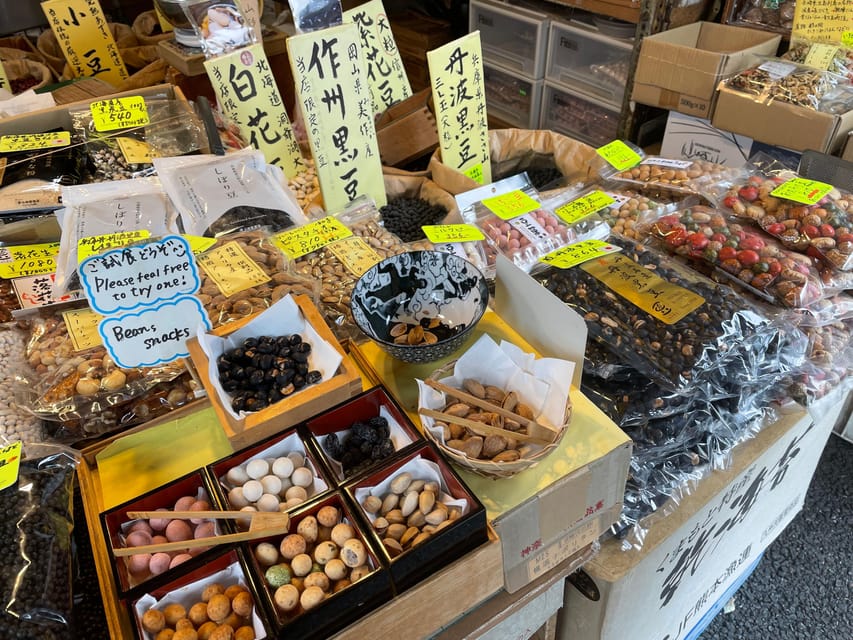
The food list is not just a checklist of free samples. Each item gives you a small lesson in how Japanese food is bought and enjoyed.
Seasoned seaweed and dried fish point to ingredients that add flavor to everyday meals. These are not flashy foods, but they are important in Japanese cooking. Tasting them in the market helps you notice the difference between seeing a packaged ingredient and understanding why people buy it.
Roast beef sushi offers a change from the seafood focus. It also makes the tasting more approachable if you are unsure about raw fish, though the tour still includes oysters or sashimi and other seafood. Bean snacks add another texture and show that the market is not limited to fish counters.
You should think of the tastings as light food, not a full breakfast or lunch. The schedule uses terms such as breakfast, brunch, dessert, and lunch because you may eat at different points during the market visit, but the included food is described as snacks. If you have a large appetite, plan to purchase lunch at the end.
This flexible lunch arrangement is sensible. You can choose the food that suits you instead of being locked into one restaurant or set menu. The tradeoff is that you need to pay separately and make a decision during the tour.
Same city, another round of plates:
- Tokyo: Togoshi Ginza Street Food Tour
★ 5.0 · 34 reviews - Tokyo Street Food Tour – 7 Japanese Foods
★ 5.0 · 16 reviews - Private Tokyo food scene 6 hour experience: Depatika, street food, izakaya
★ 5.0 · 9 reviews - Tokyo: Private Tsukiji Fish Market Tour with 3 Food Stops
★ 5.0 · 9 reviews
Namiyoke Shrine and the working side of Tsukiji
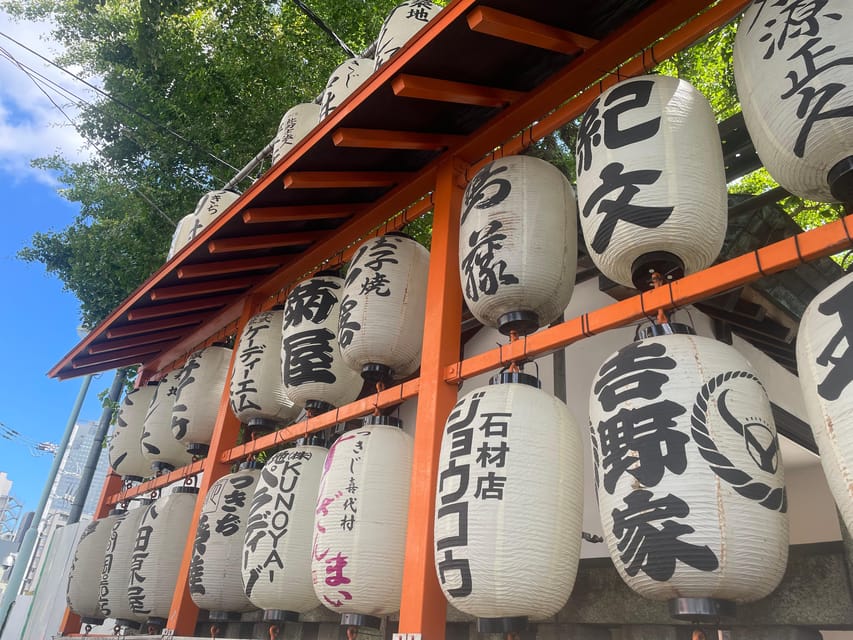
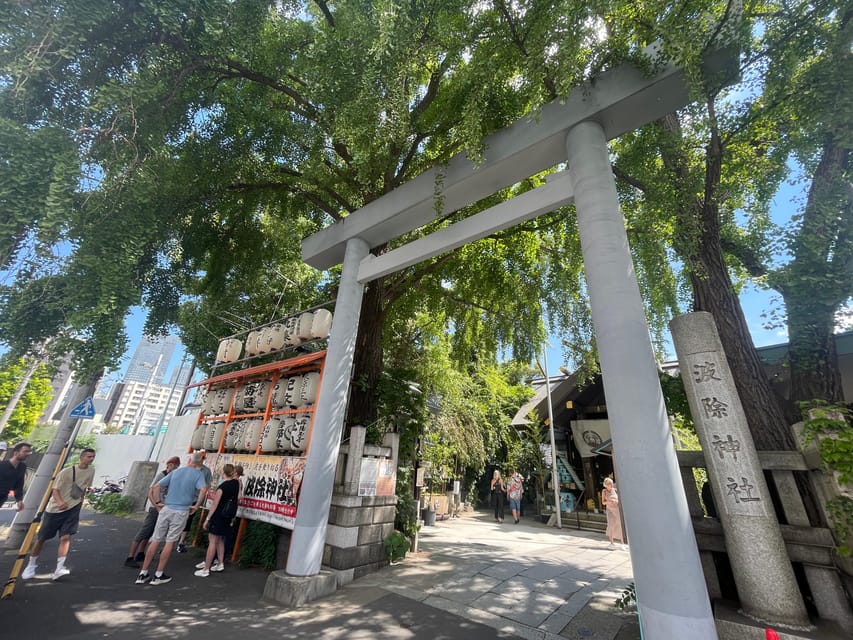
The tour finishes at Namiyoke Shrine, also called Tsukiji Namiyoke Shrine. It supports the workers of Tsukiji and is described as an essential stop for understanding the area.
This is a valuable ending because it links the market to the people who make it function. After seeing the food and trying the snacks, you get a place connected with the workers and traditions behind the district.
The tour does not promise a long guided visit at the shrine, so treat it as the final cultural stop rather than a full historical lecture. You finish at the shrine, not back at the temple. That matters if you have another appointment or need to plan your route afterward.
Is the $99 price good value?
At $99 per person, this is not the cheapest way to eat in Tsukiji. You can visit the Outer Market independently and pay only for what you order. The tour earns its price through the guide, the included tastings, the temple and shrine visits, and the time saved finding suitable stops.
The value improves if this is your first visit to Tsukiji or your first trip to Japan. You get help with unfamiliar foods, an English-speaking explanation, and a small group rather than a large procession. The included items also give you a broad tasting of seafood, preserved ingredients, meat, and snacks.
The value is weaker if you already know the market well, speak Japanese comfortably, or prefer to choose every shop yourself. Extra shopping and lunch can also push your total above $99.
I would budget beyond the tour price for lunch and optional purchases. The experience is best seen as a guided introduction with food included, not an all-inclusive meal.
Who should book this Tsukiji experience?
This tour suits you if you want structure but still want room to choose lunch. It is especially useful for first-time visitors who want to understand what they are seeing instead of simply taking photos and moving on.
It also suits curious eaters who want to try several small portions. The food list is varied, and the guide can help explain the market’s choices. The group limit of six is a good match for people who prefer a more personal outing.
You should think twice if you are vegan, have food allergies, or do not eat seafood or meat. The tour specifically says it is not suitable for vegans or people with food allergies, and the snacks include seafood and meat. The guide should be informed of allergies, but the stated restrictions mean this is not a tour to book casually with serious dietary needs.
It is also not suitable for wheelchair users. The market format includes walking through busy food lanes, and the tour information does not provide wheelchair access.
Timing, comfort, and practical details
The experience lasts three hours, with departure times varying by availability. Since the market visit involves walking, standing, eating, and shopping, comfortable clothing and shoes are sensible choices.
Your meeting point is outside the temple’s main gate. The tour ends at Namiyoke Shrine, so check your plans before booking if you need to return to the starting point.
Cancellation is free up to 24 hours before the tour for a full refund. You can also reserve and pay later, which helps if your Tokyo schedule is still changing.
The English-speaking guide is the only listed tour language. The group is limited to six participants, and the provider is gotcha Corporation.
Should you book it?
Book this tour if you want an easy, guided introduction to Tsukiji’s food culture, especially if you are unsure what to order or how to read the market. The combination of tastings, Tsukiji Honganji Temple, and Namiyoke Shrine gives you more than a quick food crawl.
Skip it if you want a cheap self-guided breakfast, need strict dietary flexibility, or use a wheelchair. For everyone else, the $99 price is reasonable when you value a small group, a clear route, and help finding the market’s best-known foods. Bring an appetite, extra money for lunch, and a willingness to try seafood and meat.
FAQ
Where does the tour begin?
Meet outside the main gate of Tsukiji Honganji Temple at 3-chōme-15-1 Tsukiji.
Where does the tour finish?
The tour finishes at Namiyoke Shrine, also called Tsukiji Namiyoke Shrine.
How long does the experience last?
The experience lasts three hours.
What language is the tour offered in?
The tour is conducted in English with a live English-speaking guide.
How many people are in the group?
The group is limited to six participants.
Is lunch included?
No. Lunch is not included, and you pay separately for lunch and any additional shopping.
What snacks are included?
Included snacks are seasoned seaweed, dried fish, roast beef sushi, oysters or sashimi, and bean snacks.
Is the tour suitable for vegans, people with food allergies, or wheelchair users?
No. The experience is listed as unsuitable for vegans, people with food allergies, and wheelchair users. The snacks include seafood and meat.
Newly added plates around Tokyo
- Tsukiji Fish Market Street Food & Culture Walking Tour★ 5.0 · 8 reviews
- Tsukiji Fish Market: Street Food Tour with Tasting★ 5.0 · 4 reviews
- Ueno Park and Ameyoko Street Food Market Half Day Walking Tour★ 5.0 · 3 reviews
- Tokyo:Enjoy street food & Japanese food culture at Tsukiji Market★ 5.0 · 6 reviews
- Tokyo Fish Market Food Tour: Street Food & Friendly Guide★ 3.0 · 2 reviews
- Tokyo Street Food Tour – 7 Japanese Foods★ 5.0 · 16 reviews
- Private Tokyo food scene 6 hour experience: Depatika, street food, izakaya★ 5.0 · 9 reviews
- Matsushima Bay, Islands and Seafood Market day tour from Tokyo★ 5.0 · 2 reviews
Tokyo Street Food Tours, compared.
Tsukiji Fish Market Food and Culture Walking Tour
Read our review →
Tsukiji Fish Market: Street Food & Culture Walking Tour
Read our review →Tsukiji Fish Market: Street Food & Culture Walking Tour
Read our review →
Private Tsukiji Fish Market Tour with 3 Food Stops
Read our review →
Private Tokyo food scene 6 hour experience: Depatika, street food, izakaya
Read our review →
Sensoji Temple & Street Food: Private Tour with guide
Read our review →Browse the lists this tour appears in