
REVIEW · TOKYO STREET FOOD TOURS
Tsukiji Fish Market: Street Food & Culture Walking Tour
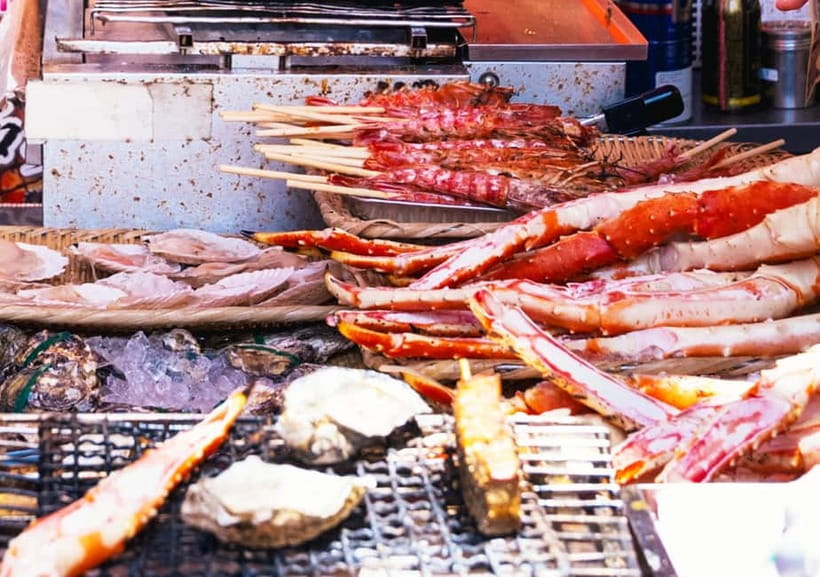
Tsukiji’s best moments are often small: a precise fish cut, a hot snack from a market stall, or a guide explaining why an ingredient matters in Japanese cooking. This two-hour walk puts those details together, with time for street food, a traditional filleting demonstration, and a look at the working side of the market. George and Tomo are two guides associated with this experience.
I like the mix of food and culture, especially the stop at Tsukiji Hongwanji Temple, which gives the morning more shape than a simple snack crawl. I also like the chance to see professional fish preparation rather than only shop displays. The main caution is that this may feel crowded and stop-start, and the group can reach as many as 30 people.
Key points to know before booking
- A two-hour introduction to Tsukiji: The route combines market food, fish preparation, working stalls, and a Buddhist temple.
- Food costs extra: The tour includes guidance and the fish-cutting presentation, but meals and market purchases are not included.
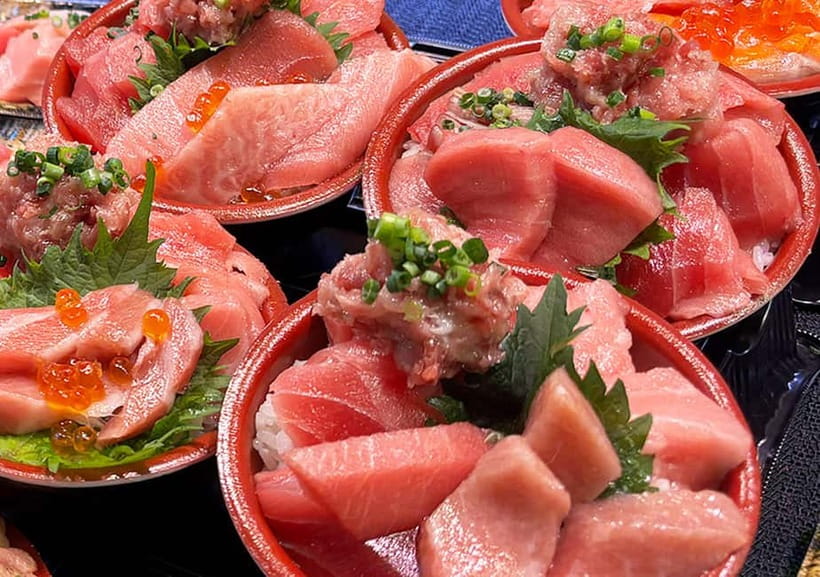
- The fish-cutting show is the centerpiece: You watch a whole fish being filleted with traditional technique, followed by a seafood bowl experience.
- Up to 30 people may join: The tour is described as small-group, but the stated maximum is large enough to affect how easily you hear and follow the guide.
- The temple adds cultural context: Tsukiji Hongwanji offers a short introduction to Buddhism, Tokyo history, and the neighborhood.
- Good access, with practical limits: The tour is wheelchair and stroller accessible, though market crowds and outdoor waiting can still affect comfort.
Why Tsukiji works well as a food tour
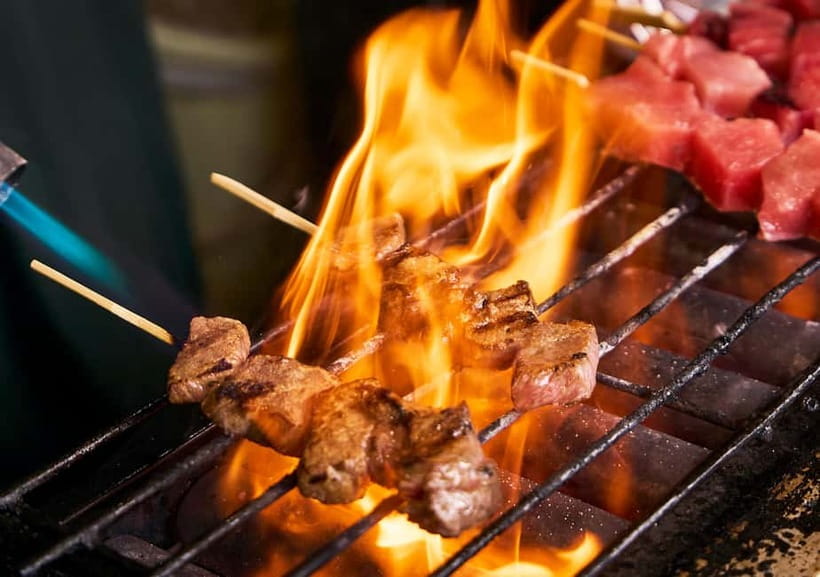
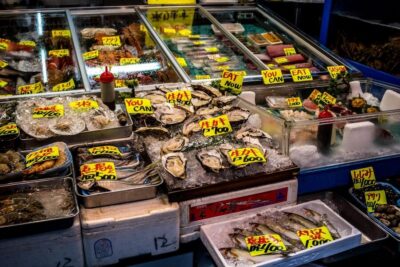
Tsukiji is no longer Tokyo’s main wholesale fish market. That role moved to Toyosu, but Tsukiji’s outer market remains a major place to see food shops, small eateries, cooking ingredients, and seafood businesses serving the public. This tour focuses on that public-facing market, known as Tsukiji Jogai Market, rather than promising access to the wholesale auction floor.
That distinction matters. You are not signing up for a behind-the-scenes visit to Toyosu. You are signing up for a guided walk through a food district where you can see ingredients, preparation, and eating habits up close. The guide helps you make sense of what is in front of you, which is useful when signs, food names, and market customs are unfamiliar.
I like this format for a first morning in Tokyo. You get a quick orientation to Japanese ingredients, a chance to taste items you might otherwise pass by, and some background on the area. You also avoid the common problem of wandering through Tsukiji without knowing which stalls are worth your time.
Still, this is not a long cooking class or a full history tour. The emphasis is on seeing, tasting, and moving through the market. If your top priority is detailed history, expect only short explanations between food stops.
More street food tours in Tokyo:
- Tokyo: Tsukiji Fish Market Food and Culture Walking Tour
★ 4.7 · 757 reviews - Tsukiji Fish Market: Street Food & Culture Walking Tour
★ 4.8 · 259 reviews - Tokyo: Togoshi Ginza Street Food Tour
★ 5.0 · 34 reviews
Starting at Tsukiji Hongwanji Temple
The meeting point is the main hall of Tsukiji Hongwanji Temple at 3-chōme-15-1 Tsukiji. Starting here is a smart choice. The temple gives you a clear landmark and a calm first stop before entering the tighter market streets.
The guide introduces the temple’s character, Buddhist culture, and place in the neighborhood. The scheduled visit lasts about 15 minutes, so think of it as an orientation rather than a full temple lecture. You will learn why the building matters and how it connects to local religious life, then move on to the food market.
I appreciate this opening because it prevents the tour from becoming a simple sequence of food purchases. You begin with a little cultural grounding, then see how food, trade, and daily life fit together. At the same time, the temple stop may feel brief if you are especially interested in Buddhism. The tour gives you an introduction, not an extensive religious study.
The temple is also the return point at the end of the activity. That makes the route easy to understand, especially if you are still getting used to Tokyo’s streets and train stations.
Eating your way through Tsukiji Jogai Market
The first market section lasts about 45 minutes. Your guide leads you through Tsukiji Jogai Market and points out places to buy street food and ingredients. This is where the tour feels most hands-on, since you can look closely at the stalls and decide what appeals to you.
Food is not included in the tour price. That is important when you compare the cost with other guided food walks. The $33.16 fee pays for the guided experience and access to the organized parts of the activity, but you should bring extra money if you want to eat.
That arrangement has one advantage: you choose what you want rather than receiving a fixed menu. It also lets you control your spending. Someone who wants only a small taste can keep costs down, while a serious food fan can buy more. The drawback is that the final price depends on how much you purchase.
Your guide’s help is most useful here. Tsukiji has many stalls, and you may not know which foods are ready to eat, which are ingredients for home cooks, or which purchases make sense for a short visit. A guide can also explain Japanese cooking ingredients in context, rather than giving you a list of unfamiliar names.
The pace may not be perfectly smooth. Market walks often require stopping while the guide explains a stall, waiting for the group to gather, and making room for other people. One clear criticism of this experience is that some time can be spent waiting around. If you prefer constant movement, the pauses may test your patience.
Watching a whole fish become a meal
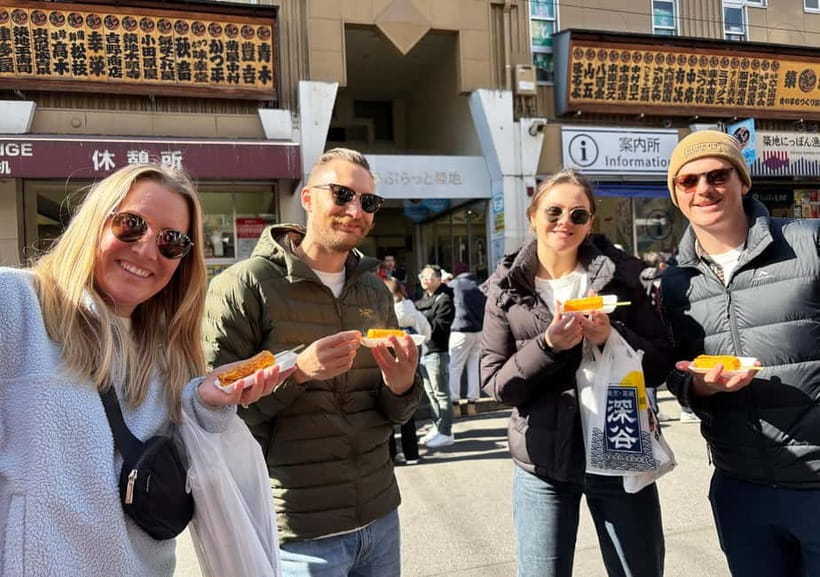
The second Tsukiji Jogai Market stop lasts about 30 minutes and includes the fish-cutting demonstration. A skilled chef fillets a whole fish using traditional techniques, showing the control and precision behind Japanese seafood preparation.
This is more than a quick display. It gives you a chance to see how much craft goes into a food that may arrive at your table looking simple. The knife work, the order of the cuts, and the care used to preserve the fish all connect directly to Japanese food culture.
A seafood bowl follows the demonstration. Since the general tour information says meals are not included, you should treat the bowl and other food as an additional expense unless your booking instructions say otherwise. The activity description pairs the demonstration with a seafood bowl, but it does not provide a separate meal inclusion or menu.
I see this as the strongest part of the tour for anyone curious about Japanese cooking. You are not just told that seafood is important. You watch one part of the process and then see how the ingredient becomes a dish.
The setting can affect how much you get from the demonstration. If the group is full, your view may not be equally good from every position. Also, one poor experience involved a guide speaking too quietly in the market noise. That makes it worth staying close to the guide and raising your hand quickly if you cannot hear.
Same city, another round of plates:
- Tokyo Street Food Tour – 7 Japanese Foods
★ 5.0 · 16 reviews - Private Tokyo food scene 6 hour experience: Depatika, street food, izakaya
★ 5.0 · 9 reviews - Tokyo: Private Tsukiji Fish Market Tour with 3 Food Stops
★ 5.0 · 9 reviews - Tsukiji Fish Market Street Food & Culture Walking Tour
★ 5.0 · 8 reviews
Seeing Tsukiji as a working market
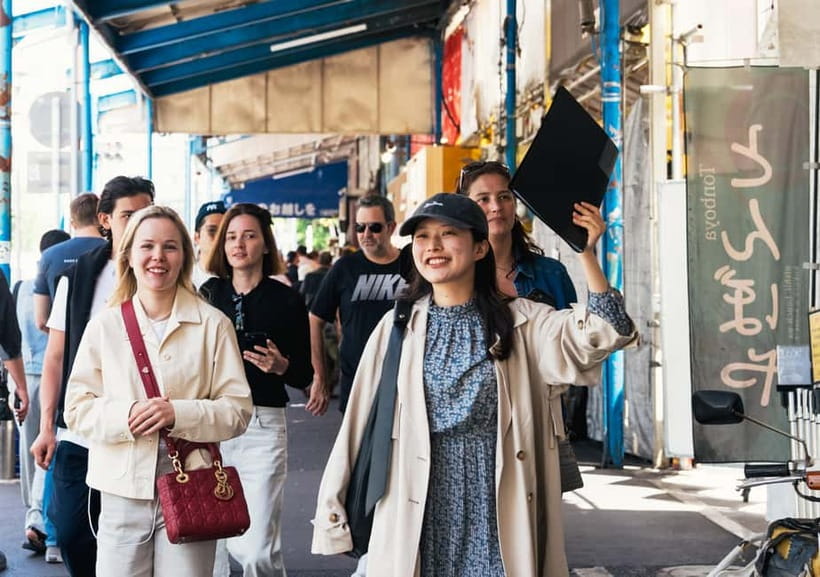
The final market section lasts about 30 minutes and focuses on the authentic working atmosphere of Tsukiji Fish Market. You see professional traders operating in the area, rather than only shops arranged for casual sightseeing.
That difference is valuable. A food market can be entertaining, but it is more useful when you also notice the business behind it. Traders are handling products, serving customers, and keeping the market moving. Your guide helps you watch without getting in the way.
This part is also where crowding may be most noticeable. Tsukiji can become difficult to navigate during busy periods, including the days close to New Year. A guide may need to adjust the route, gather the group often, or skip a stall if there is not enough room.
There are tradeoffs here. Going alone gives you freedom to move at your own pace, but you may miss the meaning behind what you see. Joining the tour gives you explanations and a planned route, but you must stay with the group and accept occasional waiting.
Some people also find that a busy market weakens the sense of order. One criticism of the experience was that the tour felt hectic, with a few stalls skipped because of the crowd. I would not book this expecting a quiet, leisurely stroll.
How much history and explanation will you get?
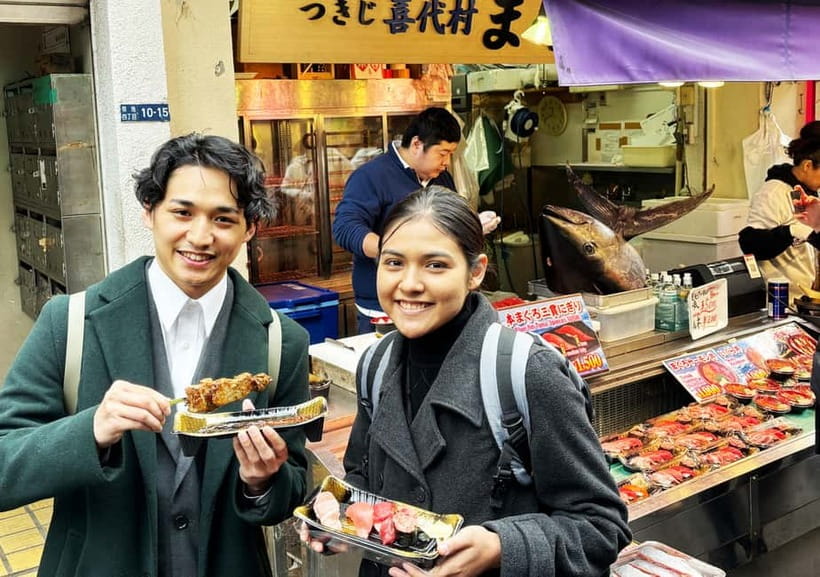
The guide covers Tokyo history, Japanese ingredients, cooking customs, market life, and Buddhism. That is a useful range for a short tour, but the two-hour schedule limits how far each subject can go.
I would describe the cultural content as a layer over the food walk, not the main event. You will learn why certain foods and techniques matter, and you will get a short explanation of the temple. You should not expect a long lecture on Tokyo’s development or a detailed study of Buddhist traditions.
The quality of the experience depends heavily on the guide’s communication. George and Tomo have been associated with particularly strong explanations, with clear English and a good sense of how to connect food to culture. Other feedback points to problems with a guide who spoke too softly and did not always keep the group together.
That variation is worth taking seriously. In a market full of voices, carts, and customers, a quiet guide is hard to follow. Stay near the guide, and speak up if you lose the explanation. The tour is much more useful when you can hear the short stories that connect each stop.
Group size, access, and walking comfort
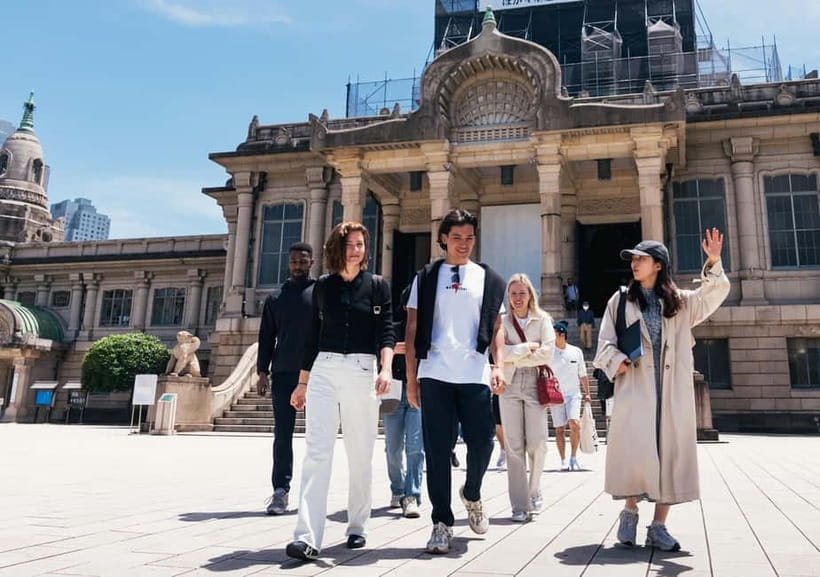
The tour is described as a small-group experience, but the maximum is 30 participants. That is not a tiny private walk. With a full group, the guide may need to pause often, and you may not hear every explanation unless you stay close.
The activity is wheelchair and stroller accessible, and most people can participate. That is a real advantage for families and visitors who need step-free access. Still, accessibility on paper does not remove every market challenge. Crowded streets, outdoor sections, and waiting in the sun can affect comfort.
One participant specifically said that concerns about sun exposure were not handled well. If you cannot remain in direct sun, tell the guide clearly at the start and ask how stops will be handled. The tour requires good weather, so rain or other poor conditions can also lead to a changed date or a full refund.
The route lasts about two hours, which is manageable for many people. I would still wear comfortable shoes and avoid carrying bulky luggage. Those are practical choices for any market walk, especially when the group needs to move through narrow or crowded areas.
Is $33.16 good value?
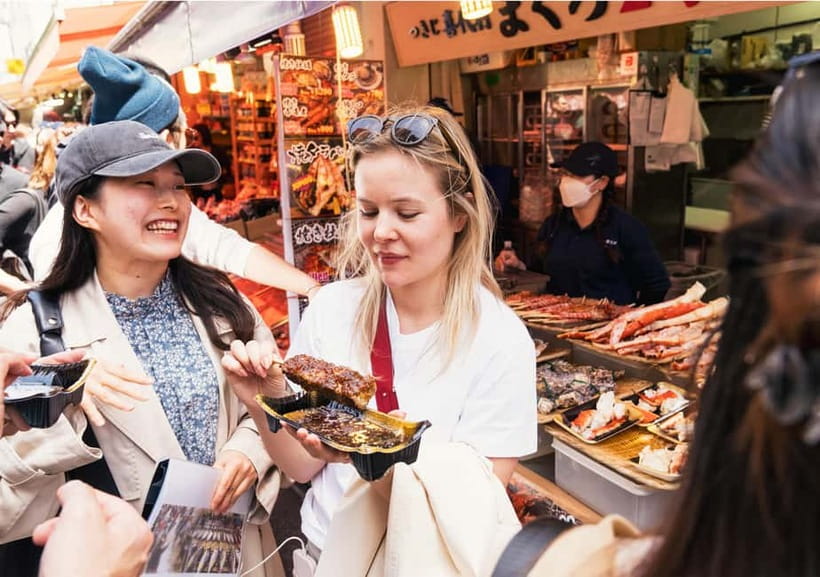
At $33.16 per person, the tour is reasonably priced if you want a guide to explain the market and arrange access to the fish-cutting demonstration. The value comes from the combination of direction, cultural context, and a structured route. You are paying to understand what you are seeing, not simply to enter Tsukiji.
The price looks less attractive if you plan to spend most of your time eating independently. Tsukiji can be visited without a tour, and the food itself is not included. If you are comfortable choosing stalls, asking questions, and finding your own way, you may prefer to walk around alone and keep the admission cost in your pocket.
The fish-cutting demonstration is the key value question. If that is something you could not easily arrange by yourself, the tour becomes more appealing. The temple stop and market explanations add useful context, but the food and fish preparation make the experience distinctive.
I also like that the tour returns to the original meeting point. You do not have to figure out a new end location after eating, and you can continue exploring Tsukiji or take public transportation from there.
Who should book this Tsukiji walk?
I would recommend it for a first-time visitor who wants a guided introduction to Japanese market food without giving up the freedom to choose purchases. It suits curious eaters, families, and people who want a short activity rather than a half-day food program.
It is also a good fit if you enjoy seeing craft at close range. The fish-cutting demonstration gives the tour a clear focus, while the temple and trader section keep it from becoming only a snack stop.
I would be more cautious if you dislike crowds, need a very quiet guide, or want a detailed history lecture. The group may be larger than the phrase small-group suggests, and the pace can feel uneven when the market is busy.
The experience works best when you treat it as an introduction. Let the guide show you how Tsukiji functions, taste what interests you, and use the remaining time afterward to explore at your own speed.
Practical details to keep in mind
You meet at Tsukiji Hongwanji Temple and finish back at the same point. The area is near public transportation, and confirmation is provided when you book.
The tour uses a mobile ticket, which is convenient if you are already carrying your phone around Tokyo. Free cancellation is available up to 24 hours before the start time. Changes or cancellations inside that window are not accepted for a refund, and the cut-off follows local Tokyo time.
Because the experience depends on good weather, poor conditions can lead to a different date or a full refund. The tour lasts approximately two hours, but market crowds may affect the exact rhythm of the morning.
Should you book it?
Book this tour if you want guided market context, a traditional fish-cutting demonstration, and a short temple visit in one compact outing. At $33.16, it offers solid value for someone who would rather learn what they are seeing than simply wander among stalls.
Skip it if you already know Tsukiji well, want to choose every stop yourself, or dislike group movement in crowded streets. The tour’s best features are its food guidance and fish preparation demonstration, while its weak points are the possible waiting, uneven guide volume, and group size of up to 30 people.
FAQ
How long does the Tsukiji Fish Market tour last?
The experience lasts approximately two hours. The schedule includes about 45 minutes at Tsukiji Jogai Market, 30 minutes for the fish-cutting demonstration and seafood bowl experience, 30 minutes at the working market, and 15 minutes at Tsukiji Hongwanji Temple.
Where does the tour start and finish?
The tour starts at the main hall of Tsukiji Hongwanji Temple, 3-chōme-15-1 Tsukiji, Chuo City, Tokyo 104-0045, Japan. It ends back at the meeting point.
Is food included in the tour price?
Meals are not included. You should plan to pay separately for street food and other market purchases. The fish-cutting demonstration is included, while the seafood bowl mentioned in the schedule should be treated as an additional food expense unless your booking details state otherwise.
Is the tour wheelchair and stroller accessible?
Yes. The activity is described as wheelchair and stroller accessible, and most people can participate. Market crowds and outdoor conditions may still affect comfort.
How many people can join the tour?
The maximum group size is 30 participants. The experience is presented as a small-group tour, but it may not feel highly personal when operating at full capacity.
What happens if the weather is poor or I need to cancel?
You can cancel up to 24 hours before the start time for a full refund. If the tour is canceled because of poor weather, you will be offered another date or a full refund.
Newly added plates around Tokyo
- Tsukiji Fish Market Street Food & Culture Walking Tour★ 5.0 · 8 reviews
- Tsukiji Fish Market: Street Food Tour with Tasting★ 5.0 · 4 reviews
- Ueno Park and Ameyoko Street Food Market Half Day Walking Tour★ 5.0 · 3 reviews
- Tokyo:Enjoy street food & Japanese food culture at Tsukiji Market★ 5.0 · 6 reviews
- Tokyo Fish Market Food Tour: Street Food & Friendly Guide★ 3.0 · 2 reviews
- Tokyo Street Food Tour – 7 Japanese Foods★ 5.0 · 16 reviews
- Private Tokyo food scene 6 hour experience: Depatika, street food, izakaya★ 5.0 · 9 reviews
- Matsushima Bay, Islands and Seafood Market day tour from Tokyo★ 5.0 · 2 reviews
Tokyo Street Food Tours, compared.
Tsukiji Fish Market Food and Culture Walking Tour
Read our review →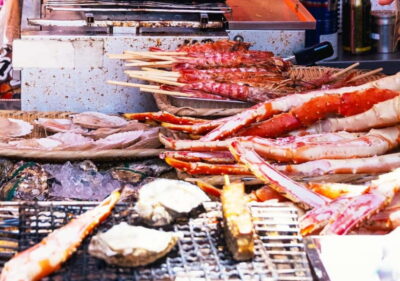
Tsukiji Fish Market: Street Food & Culture Walking Tour
Read our review →
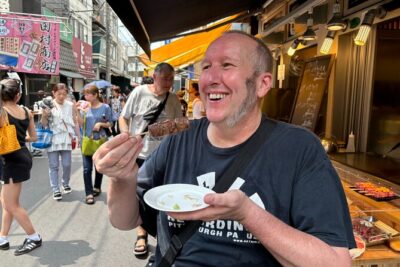
Private Tsukiji Fish Market Tour with 3 Food Stops
Read our review →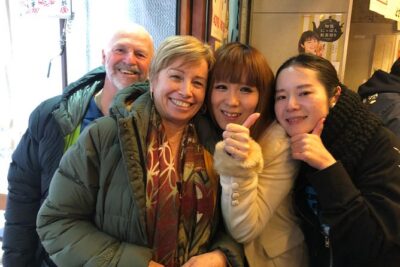
Private Tokyo food scene 6 hour experience: Depatika, street food, izakaya
Read our review →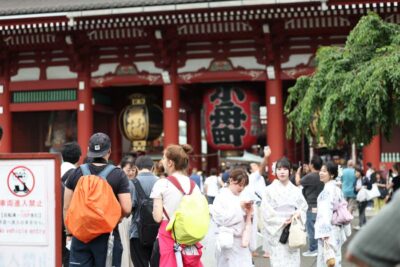
Sensoji Temple & Street Food: Private Tour with guide
Read our review →Tsukiji Fish Market Street Food & Culture Walking Tour
Read our review →Browse the lists this tour appears in