
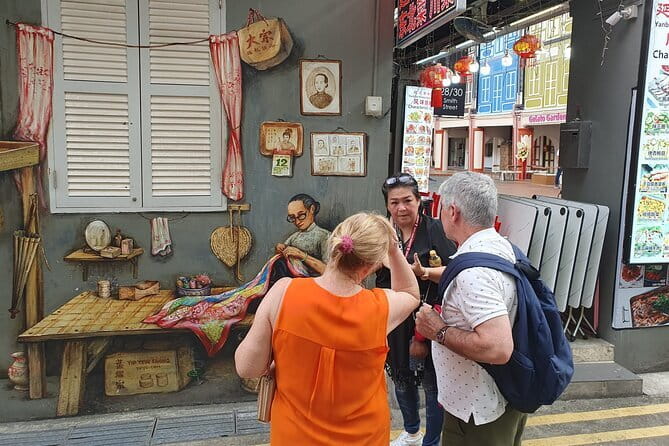
REVIEW · CHINATOWN FOOD TOURS
Chinatown Heritage and Local Street Food Small Group Tour
Singapore’s best food lessons often happen at a hawker table, not in a restaurant. This Chinatown food tour connects that everyday eating culture with temples, old streets, and the stories behind Singapore’s Chinese, Hindu, and Muslim communities.
I like the small group size, capped at 10, and the way guides Jason and Carol bring personality to the walk. I also like the generous food list: chicken rice, local cakes, tea, kaya breakfast, and possibly durian, with the menu adjusted for allergies when possible.
The main consideration is pace. You walk for about two and a half hours, with roughly an hour around Chinatown and another hour at Maxwell Food Centre. It suits you best if you have moderate fitness and want a full meal rather than a quick snack stop.
Key points at a glance
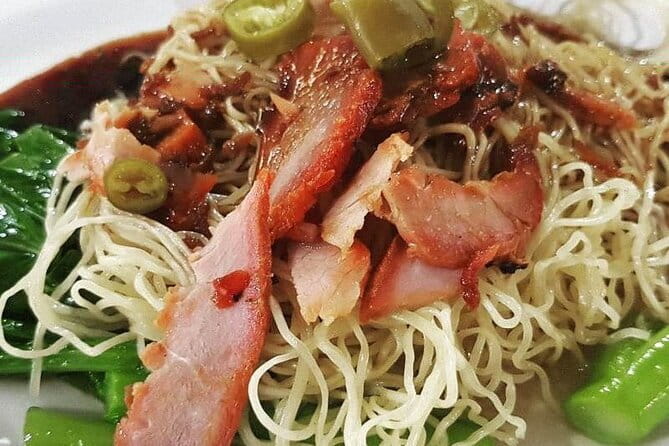
- Seven to eight local tastings: Expect several small portions of Singaporean food and drinks, with examples including chicken rice, laksa, traditional cakes, tea, kaya, and durian.
- Jason and Carol lead the walk: Jason is especially praised for his storytelling, humor, food explanations, and ability to adjust the route to personal interests.
- Chinatown’s major faith sites: The walk includes the Buddha Tooth Relic Temple, Sri Mariamman Temple, and Jamae Mosque.
- Maxwell Food Centre is the food anchor: The guide may queue for Tian Tian Chicken Rice and explain how hawker dishes fit into daily life.
- Small group, free admission: The group is limited to 10, and entry to the listed cultural sites does not cost extra.
- Simple meeting plan: Meet at Maxwell Station Exit 2 and return to the same meeting point. Transport and personal spending are not included.
Why this Chinatown walk works so well for a first day
This is a useful first look at Singapore because it gives you both orientation and something to eat. You do not simply move from stall to stall. You walk through a part of the city where Chinese, Hindu, and Muslim landmarks sit close together, then connect those surroundings to the food on your plate.
I especially like that the tour uses Chinatown as more than a backdrop. The guide points out traditional shops, shophouses, streets with older names, and places of worship. That helps you understand why Singaporean food is not one single style. The meal reflects several communities and generations living side by side.
The price is $52.31 per person. That is fair if the promised 7 to 8 tastings amount to the substantial meal described by past participants. Some food portions may be small, but the overall selection can add up to a full lunch or breakfast, depending on the schedule and menu.
You should not book this expecting a formal cooking class or a restaurant tasting menu. This is a walking tour with food along the way. The charm comes from eating what is available at Chinatown’s hawker centres and hearing the guide explain the dishes in their local setting.
More Chinatown eating walks in Singapore:
- Singapore: Chinatown Hawker Food Tasting Tour
★ 5.0 · 96 reviews - Kampong Glam, Little India & Chinatown with Local Street Food Tastings
★ 4.5 · 70 reviews - Michelin Premium Food Tour with Hawker Centre & Chinatown Tour
★ 4.5 · 50 reviews
Starting at Maxwell Station Exit 2
Your meeting point is Maxwell Station Exit 2, and the tour finishes back there. That keeps the logistics simple, especially if you are still learning Singapore’s transport system.
The activity is about two hours and 30 minutes, although the listed stops include long blocks at Chinatown and Maxwell Food Centre. Allow a little flexibility around the stated time, particularly if the group waits for a popular stall or stops for questions.
Because the group can include no more than 10 people, you should get more conversation than on a large coach outing. That matters here. Food tours work best when you can ask why one dish is eaten at breakfast, how a hawker stall became famous, or what an unfamiliar ingredient is doing in a bowl.
The tour does not include transport. You walk between the Chinatown sights and food stops, so wear comfortable shoes and arrive ready to spend most of the activity on your feet. A moderate level of fitness is recommended.
Buddha Tooth Relic Temple, a strong visual opening
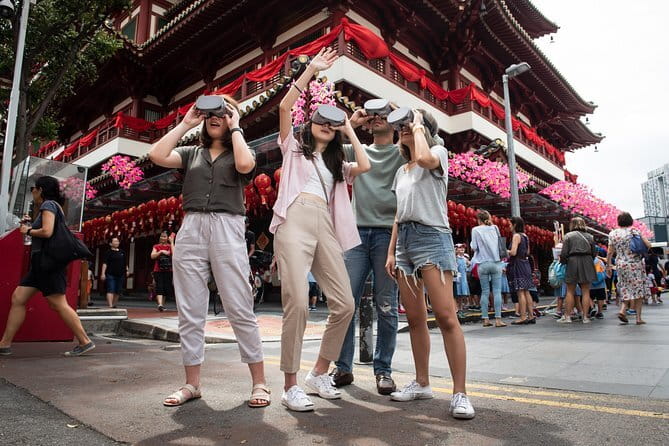
The first listed stop is the Buddha Tooth Relic Temple and Museum, in the centre of Chinatown. You receive about five minutes here, with admission included.
That is enough time for a brief introduction and a look at the building, but not enough for a long museum visit. If you want to study every gallery or spend quiet time inside, plan to return on your own. The temple is most useful on this tour as an opening point, giving you an immediate sense of Chinatown’s religious and cultural setting.
The short visit also keeps the food portion from being squeezed out. This is not a temple tour that happens to include snacks. It is a food and heritage walk, so the guide uses the temple as one piece of a larger story.
Follow the site’s visitor rules and dress in a respectful way. The tour information does not promise a private ceremony or special access, so think of this stop as a guided exterior and interior introduction rather than a full religious program.
Chinatown Complex and the story of hawker food
The visit to Chinatown Complex is scheduled for about 20 minutes. This is one of Singapore’s major hawker centres, with a broad selection of local dishes.
The value here is not only the chance to see food stalls. You begin to understand how Singaporeans eat in ordinary settings. A hawker centre brings many vendors under one roof, allowing you to compare dishes, prices, and cooking styles without sitting down for a formal restaurant meal.
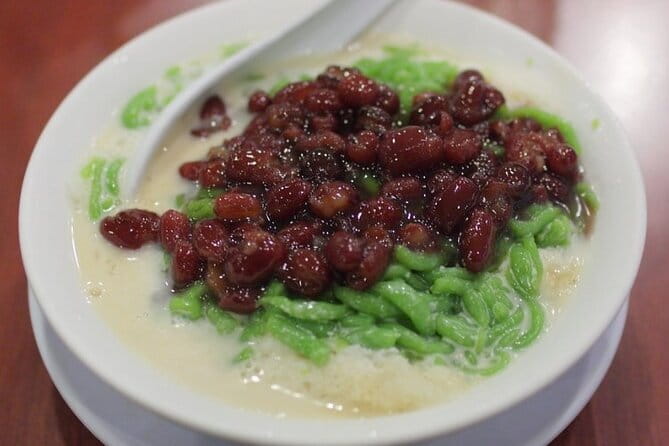
The exact tastings can vary, but the tour promises seven to eight local food and drink samples. Examples connected with the food experience include chicken rice, spicy laksa, traditional cakes, tea, kaya, and durian. If you have never tried Singaporean food, this range gives you a useful introduction without requiring you to order a full serving of every dish.
The 20-minute timing is fairly brief, so do not expect a long independent hunt through the centre. The guide is likely to keep the group moving and explain what you are seeing. That is helpful on a first visit, though independent food lovers may wish they had more time to browse.
More history-and-food walks around Singapore:
- Street Food, Cultural & Historical Tour of 3 Ethnic Quarters
★ 5.0 · 23 reviews - Chinatown Heritage Walk & Street Food Tasting (Small Group)
★ 5.0 · 16 reviews - Palermo: Street Food and History Walking Tour
★ 4.9 · 1,486 reviews - Walking Tour and street food Tour Palermo / History and Food
★ 5.0 · 386 reviews
Sago Street and the old Chinatown story
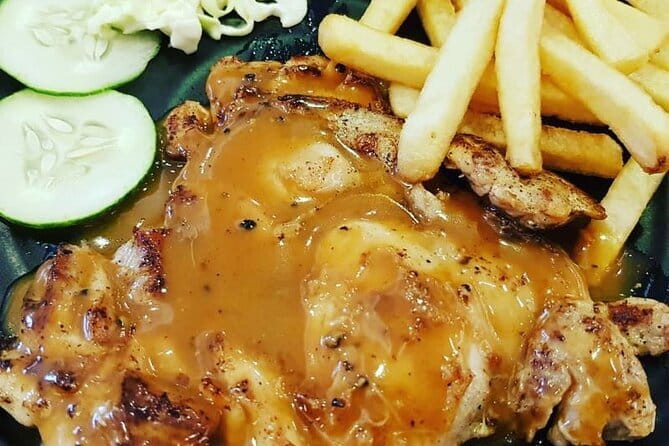
Sago Street receives about five minutes, but the short stop has unusual historical value. It was once known as the Street of the Dead, connected to the funeral trade that served Chinatown’s Chinese community in the 19th and early 20th centuries.
That detail gives the street a very different character from the souvenir shops and dining spots nearby. You can see how a small street may reveal past customs that are easy to miss when you simply walk toward the next meal.
Five minutes is enough for an explanation and a quick look, not a full study of the area. The guide’s storytelling is important here. Jason is praised for making Singapore’s past easy to follow and for using humor without losing the point of the story.
One hour through Chinatown’s shophouses and temples
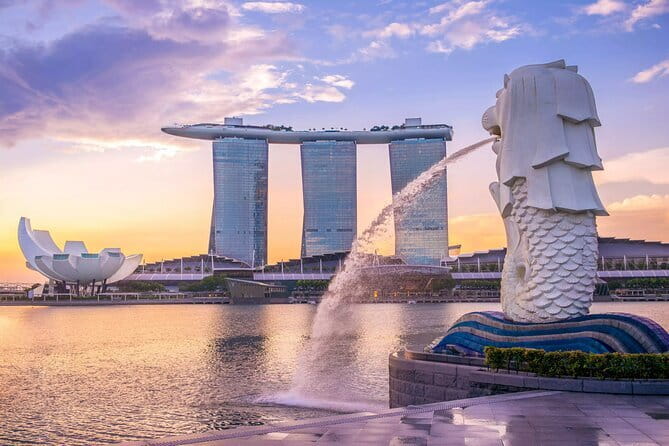
The longer Chinatown walk lasts about an hour. This is where the tour moves beyond food stops and gives you a better sense of the district’s layout.
You pass traditional shops, old shophouses, and streets that show how Chinatown has changed. The guide can add context as you walk rather than asking you to absorb a long lecture in one place. I prefer this style because the buildings and street life give you something concrete to look at while the story unfolds.
The route includes Sri Mariamman Temple, Singapore’s oldest Hindu temple, and Jamae Mosque, also called Jamae Chulia Mosque, one of the country’s oldest and most historic mosques. Seeing these sites in the same district is one of the strongest parts of the walk. It shows Singapore’s religious variety in a direct, physical way.
The listed information does not give a separate duration for each temple or promise entry into every building. Your time may focus on the exterior, the surrounding street, or a brief visit inside, depending on conditions and the guide’s plan. If a particular temple matters greatly to you, ask the guide how much time is available.
Maxwell Food Centre and the main tasting session
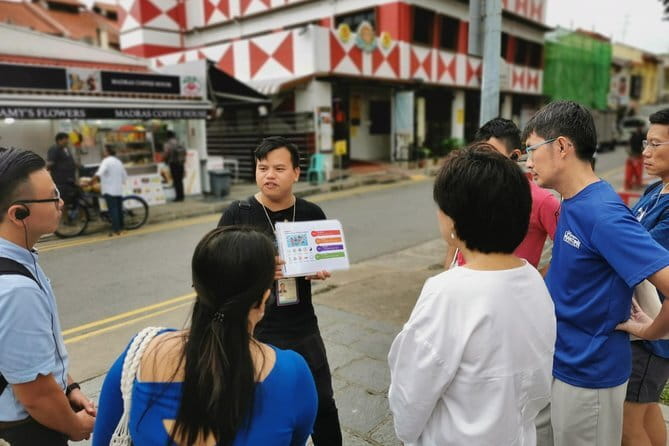
The final major stop is Maxwell Food Centre, with about an hour set aside for food. This is where the tour earns much of its price.
Maxwell is known for local dishes, and the guide does more than point out stalls. Jason has been praised for explaining each dish while connecting it to Singapore’s past and daily habits. He may also queue for Tian Tian Chicken Rice, a well-known stall that can draw a line.
That queue is worth considering. It can make the meal feel more authentic, but it also uses part of your limited tour time. You are paying for guidance and interpretation, not for instant service. If the group waits, the guide can use that time to explain the dish or answer questions.
The tastings can be quite generous. One reported menu included a substantial chicken rice meal, cake, tea, durian, and a kaya breakfast. Another described the food as close to a five-course meal. These examples suggest that the experience can go well beyond a few bites, but you should allow for changes based on stall availability, timing, dietary needs, and the day’s route.
Kaya is a sweet coconut and egg spread commonly paired with toast or other breakfast foods. Durian is more divisive. If you are curious, it is a chance to try one of Southeast Asia’s most famous fruits with someone who can explain it. If you already know you dislike strong smells or unfamiliar textures, tell the guide early.
The tour includes the food and drink tastings, but not personal expenses. That means you may want extra money if you wish to buy another dish, a drink, or a souvenir snack after the included samples.
How the guides shape the experience
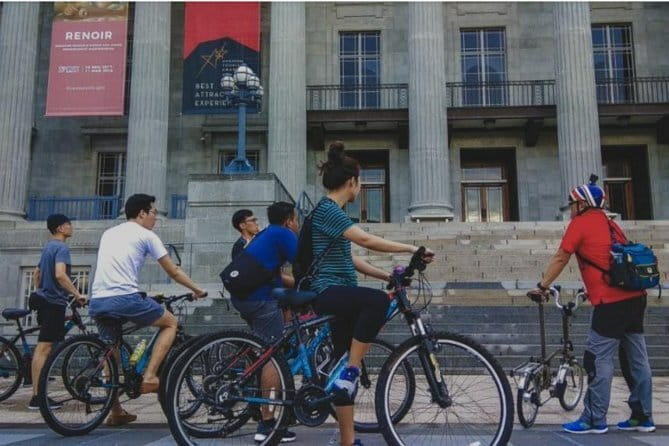
The strongest praise centers on Jason’s manner. He is described as funny, professional, and good at keeping the group involved. His role is not just to carry you between landmarks. He explains why the food matters and uses the streets around you to bring Singapore’s past into the walk.
That combination is useful because Chinatown can be visually busy. Without context, you might notice colorful buildings and temples but miss how the district developed. Jason’s stories give those details a place in the larger picture.
Carol also leads the experience, and one outing included both Carol and Jason. The tour can therefore feel personal rather than scripted, especially with a small group. The guide may adjust the food choices to suit your interests. A family with a daughter who had allergies received food suggestions suited to her needs, but you should still state allergies clearly when booking and again at the meeting point.
Do not assume every item can be changed. Hawker food is prepared by independent stalls, and the tour provider does not list a separate allergy-free menu. The useful point is that the guide has shown a willingness to help where possible.
Who will get the most from the $52.31 price
I see the best value here for a first-time visitor who wants a guided introduction to Singaporean food and Chinatown in one compact outing. You receive a small group, a local guide, several tastings, cultural stops, and a walk through a major hawker district.
The price makes less sense if you only want to eat one famous chicken rice dish. You could visit Maxwell on your own for less, but you would miss the organized tasting sequence and the explanations about the temples, streets, and dishes.
It also suits families, provided everyone can walk for the full duration and manage unfamiliar food. The guide can tailor some choices to personal interests, and the relaxed format may be easier for a family than a formal meal.
Food-focused visitors should note that the menu is not fixed in the supplied details. If you need a precise list for dietary, religious, or medical reasons, ask before booking. The tour includes snacks and drinks, but it does not promise that every famous Singapore dish will appear.
The experience is less suitable if you dislike group pacing, queues, hawker centres, or eating several small portions over a walk. It is also not ideal for anyone looking for extensive museum time, since the temple and heritage stops are brief compared with the food sections.
Practical details that affect your day
Confirmation is provided when you book, and the activity offers a mobile ticket. You can use that to keep the meeting details on your phone rather than carrying printed paperwork.
The group maximum is 10 people. The tour is often booked about 47 days ahead, which suggests that planning early is sensible if your Singapore dates are fixed. That is especially useful for a small-group experience with limited spaces.
Admission to the listed cultural stops is free. Transport is not included, and the tour begins and ends at Maxwell Station Exit 2. Free cancellation is available up to 24 hours before the start time. Changes or cancellations made later are not accepted for a refund.
The activity provider is Looppee Tour. Since the tasting menu can depend on the day, arrive hungry but not exhausted. A light meal beforehand may leave you too full, while arriving very hungry gives you more room for the food but may make the walking pace feel harder.
Should you book this Chinatown food tour?
Book it if you want a friendly, story-led introduction to Singapore, with enough food to count as a real meal and enough walking to put Chinatown in context. The small group, Jason’s strong guiding style, the temple visits, and the seven to eight tastings make this a solid choice for a first full day in the city.
I would choose it over a basic food crawl because it connects the dishes to the streets and communities that produced them. I would skip it only if you prefer to explore hawker centres alone, need a fully fixed menu, or want long visits inside museums and temples.
For most curious eaters, $52.31 is reasonable, especially when the tastings include substantial items such as chicken rice, cake, tea, kaya, and possibly durian. Arrive ready to walk, ask questions, and try foods outside your usual routine.
FAQ
How long does the Chinatown Heritage and Local Street Food Small Group Tour last?
The tour lasts approximately two hours and 30 minutes.
Where does the tour start and finish?
It starts at Maxwell Station Exit 2 and ends back at the same meeting point.
How many people can join the tour?
The activity has a maximum of 10 participants.
What food is included?
The tour includes seven to eight local food and drink tastings. Examples include chicken rice, spicy laksa, traditional cakes, tea, durian, and a kaya breakfast, though the exact selection can vary.
Are temple admissions included?
Admission to the listed cultural stops is free. The tour includes the Buddha Tooth Relic Temple, Sri Mariamman Temple, and Jamae Mosque as part of the Chinatown walk.
Is transport included?
No. Transport and personal expenses are not included.
Can I cancel for a full refund?
Yes. You can cancel at least 24 hours before the experience start time for a full refund. Cancellations or changes made less than 24 hours before the start time are not accepted for a refund.
Newly added plates around Singapore
- UNESCO Hawker Culture: Chinatown Food Tasting Tour★ 4.9 · 43 reviews
- Singapore Street Food Join-In Tour★ 5.0 · 2 reviews
- Private Tour Singapore Street Food & Night Tour★ 5.0 · 4 reviews
- UNESCO Hawker Culture: Chinatown Food Tasting Tour★ 5.0 · 47 reviews
- Singapore Nightlife: Street Food, Night Views and Drinks★ 5.0 · 19 reviews
- Signature Urban Night Tour: Sunset Street Food in Singapore★ 5.0 · 4 reviews
- Singapore Street Food and Ethnic Quarters Kick Scooter Tour★ 5.0 · 8 reviews
- Singapore: Little India Hawker Food Tasting Tour★ 5.0 · 21 reviews
Chinatown Food Tours, compared.
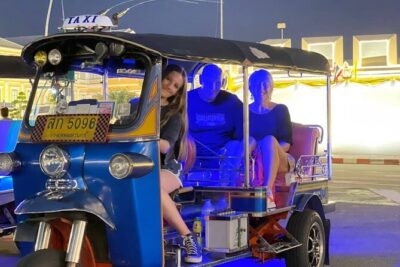
Bangkok Tuk-Tuk Tour by Night with Chinatown Street Food Meal
Read our review →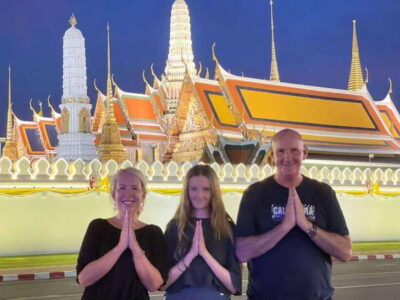
Bangkok Tuk-Tuk by Night with Chinatown Street Food Meal
Read our review →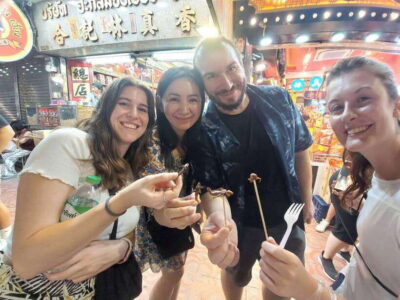
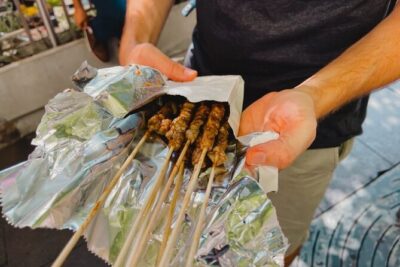
Sydney’s Chinatown Street Food and Stories Walking Tour
Read our review →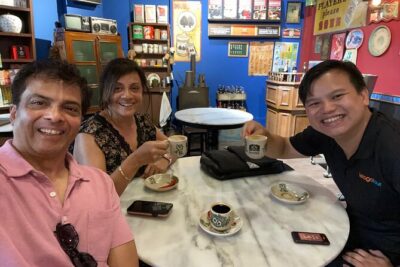
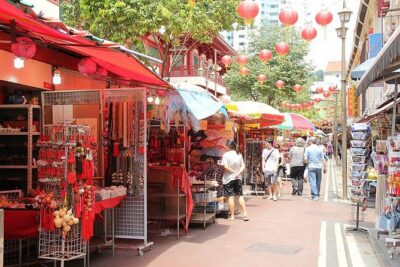
Kampong Glam, Little India & Chinatown with Local Street Food Tastings
Read our review →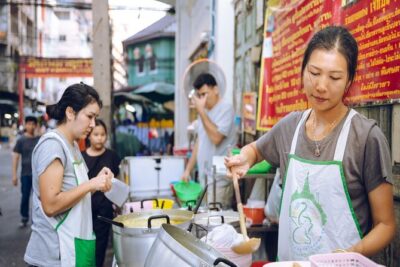
Bangkok Hidden Gems: Talad Noi, Chinatown & Street Food Tour
Read our review →Browse the lists this tour appears in