
REVIEW · NIGHT MARKET FOOD TOURS
UNESCO Hawker Culture: Chinatown Food Tasting Tour
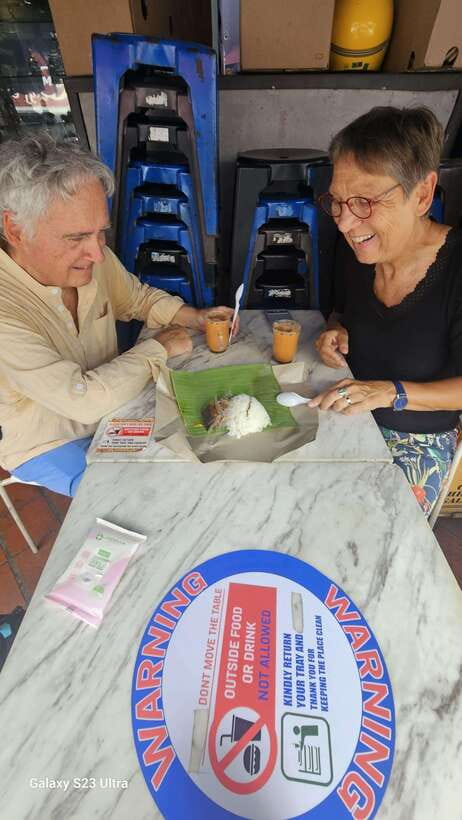
Singapore’s hawker food is best understood one bite at a time, and this three-hour walk gives you a friendly guide to the city’s Chinese, Malay, and Indian cooking. You can sample nine to ten dishes and drinks, including the famous Hainanese chicken rice, without having to guess what to order at a crowded food center.
I especially like the mix of food and place. You visit Sri Mariamman Temple, the Buddha Tooth Relic Temple, old shophouses, and Yip Yew Chong’s murals, then stop for coffee in a traditional coffeehouse. Guides such as Jeannette, Ronnie, Kelvyn, and Liang are praised for adding personal stories and clear background on Singapore’s culture and government.
The main consideration is the pace: this is a short walking tour with a lot of food, history, and stops packed into three hours. You may finish very full, and the experience can be less flexible than a private tour.
Key points to know before booking
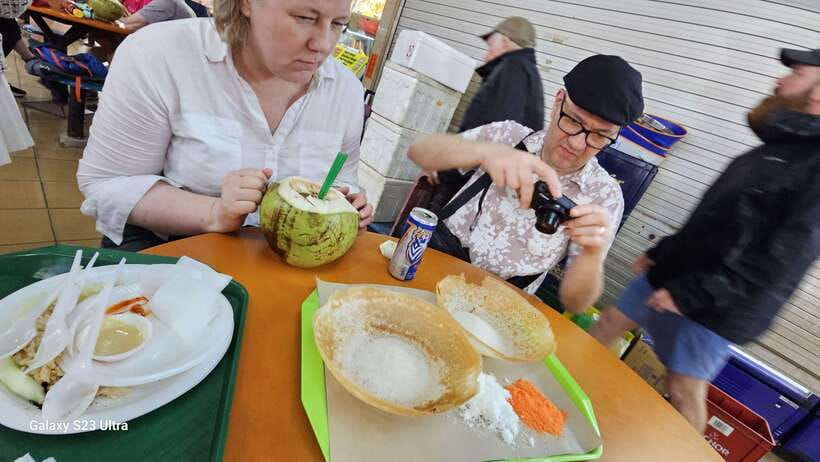
- Up to 10 tastings: Expect 9 to 10 handpicked dishes and drinks at Chinatown hawker centers, including chicken rice and possible Michelin Bib Gourmand selections.
- Small group format: The maximum group size is 10, which gives you a better chance to ask questions and follow the guide through busy food halls.
- More than a food stop: The route includes Sri Mariamman Temple, Ann Siang Hill, the Buddha Tooth Relic Temple, Chinatown Complex, and Smith Street.
- Strong guide element: Jeannette, Ronnie, Kelvyn, Liang, Silvia, Pauline, Edwin, and other local guides have led the experience, with food and Singapore history at the center.
- Useful first-day activity: The gentle mix of walking, food, and orientation can help you get your bearings early in a Singapore visit.
- Private option available: An upgrade offers a more personal experience with flexible timing.
Why this Chinatown food walk works
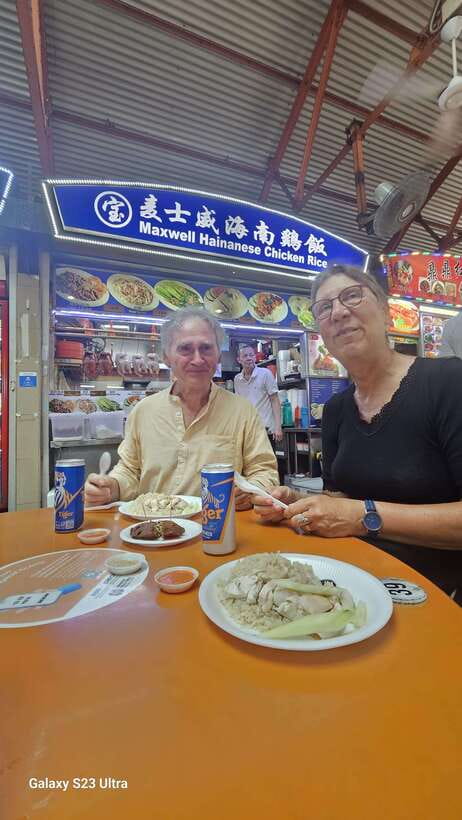
Singapore’s hawker centers can feel simple from the outside, yet they are not always easy to navigate. A food center may contain dozens of stalls, unfamiliar dish names, long lines, and very different ways of ordering. I like having a guide here because the value is not only in the food. You also get an explanation of what you are eating and why hawker culture matters to Singapore.
UNESCO has recognized Singapore’s hawker culture as part of the intangible food heritage of humanity. That recognition is useful context, but the real appeal is more down to earth: you sit or stand around ordinary food centers and taste the dishes Singaporeans eat every day.
The tour includes a licensed local guide, one bottle of mineral water, and 9 to 10 selected foods or drinks. At $88.81 per person, it is not a budget lunch. Still, the price can make sense if you would otherwise struggle to choose dishes, want an organized introduction to Chinatown, and value a guide who can explain the city as you walk.
The group cap of 10 is important. This is not a giant coach excursion that sweeps through Chinatown. A smaller group makes questions easier and helps the guide keep the food stops manageable. The exact guide matters, since the strongest part of the experience is the person explaining the food and local culture.
More Night Market Food Tours in Singapore
- Small Group: Michelin and Local Hawker Food Tour with 9 tastings
★ 5.0 · 1,890 reviews - Small-Group Food Tour With Hawker Center: Eat Like A Local
★ 5.0 · 420 reviews - Singapore: Local Hawker Food Tour with Tastings
★ 4.7 · 181 reviews
Starting at Pagoda Street and Sri Mariamman Temple
The meeting point is Bee Cheng Hiang at 69 Pagoda Street, in the heart of Chinatown. From there, the route begins with Sri Mariamman Temple, Singapore’s oldest Hindu temple, founded in 1827 by Naraina Pillai, an important figure in the local Indian community.
You get about 10 minutes at the temple. That is enough for an introduction and a look at its architecture, though not enough for a long visit. The temple was named a National Monument because of its historical and architectural importance, so this opening stop quickly shows you that Chinatown is not only Chinese in character.
This is one of the tour’s useful ideas. Singapore’s neighborhoods are often described by ethnic labels, but the city’s food and streets reflect several communities living alongside one another. Beginning with a Hindu temple helps set up the broader story before the food tasting begins.
Dress and behavior should be respectful at religious sites. The supplied details do not set out a formal dress code, so follow the temple’s posted instructions on the day.
Ann Siang Hill and the story of Chinese immigrants
The next stop is Ann Siang Hill Park, with about 15 minutes for the area. Ann Siang Hill was once a business center for Chinese immigrants, and its restored shophouses preserve much of the district’s older character.
I like this section because it gives the food a human setting. The shophouses are not just attractive backdrops for photographs. They point to the businesses, homes, and working life that helped shape Chinatown.
The stop is short, so expect a focused explanation rather than a long architectural tour. Your guide may connect the area to immigration, trade, and the hard conditions faced by newcomers. Liang, one of the guides who has led this route, has also shared family stories about his grandparents, which can make the history feel more personal.
The walk through Ann Siang Hill also helps break up the eating. You are not sitting at one table for three hours. You move between streets, temples, and food centers, with enough walking to keep the tastings from becoming one long meal.
Maxwell Food Centre and Singapore’s famous chicken rice
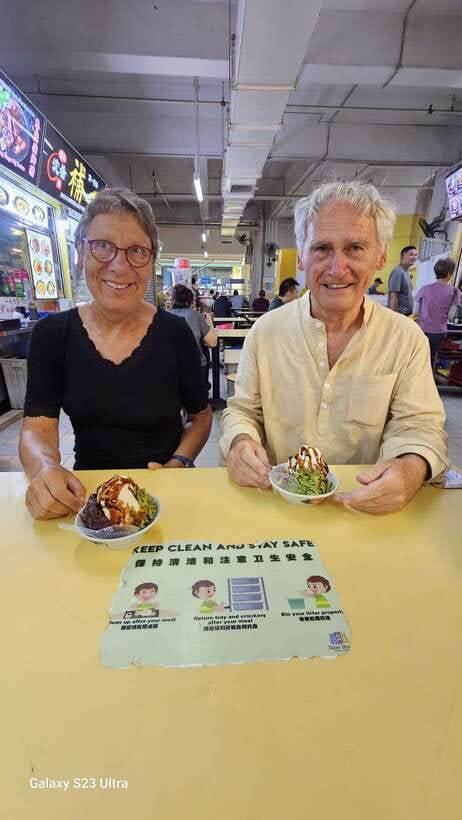
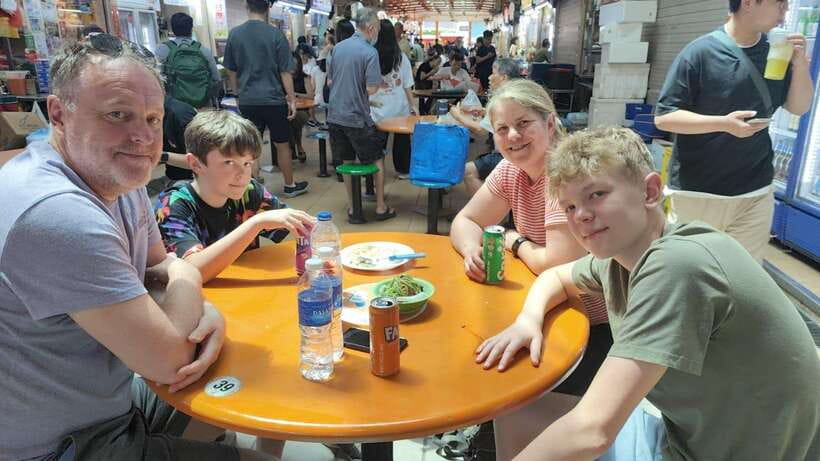
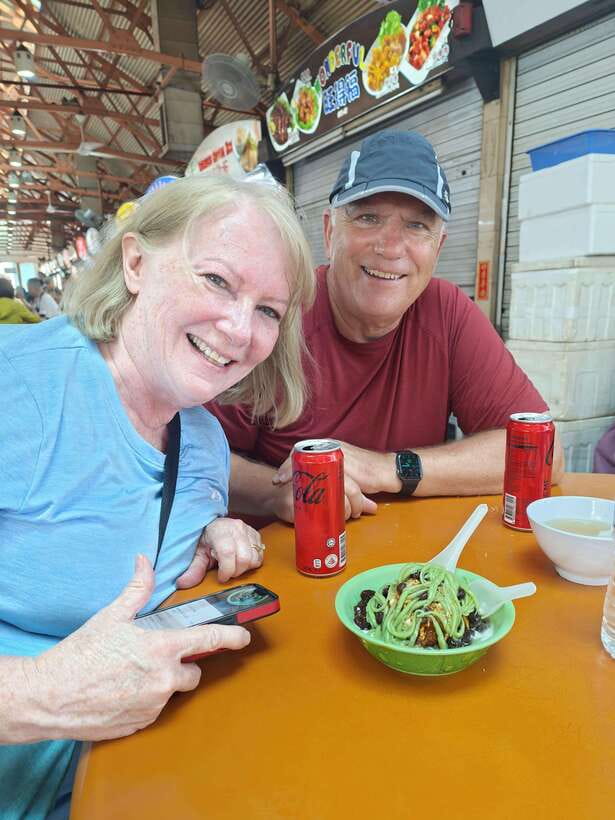
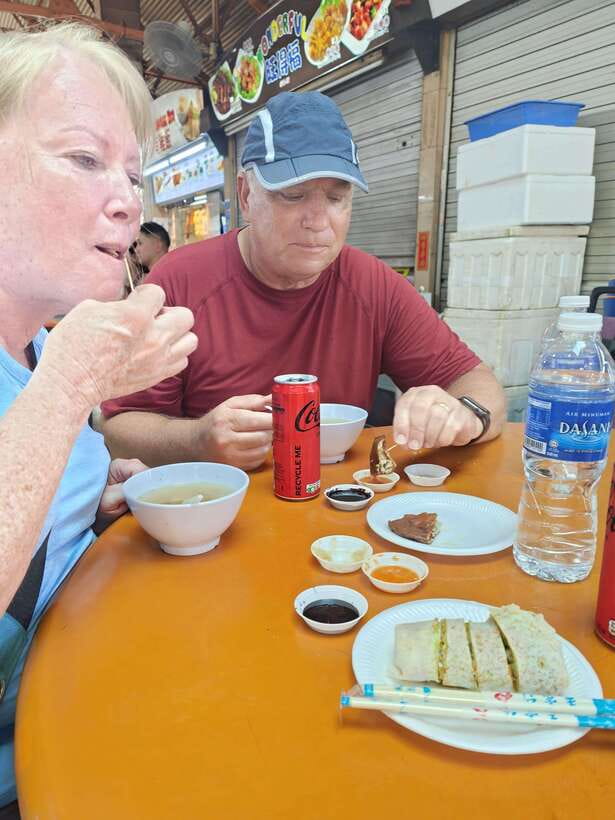
Maxwell Food Centre is the main food stop, with about 35 minutes listed for the visit. It is known for classic hawker dishes, including Singapore’s signature Hainanese chicken rice, along with Fuzhou pancakes and other local foods.
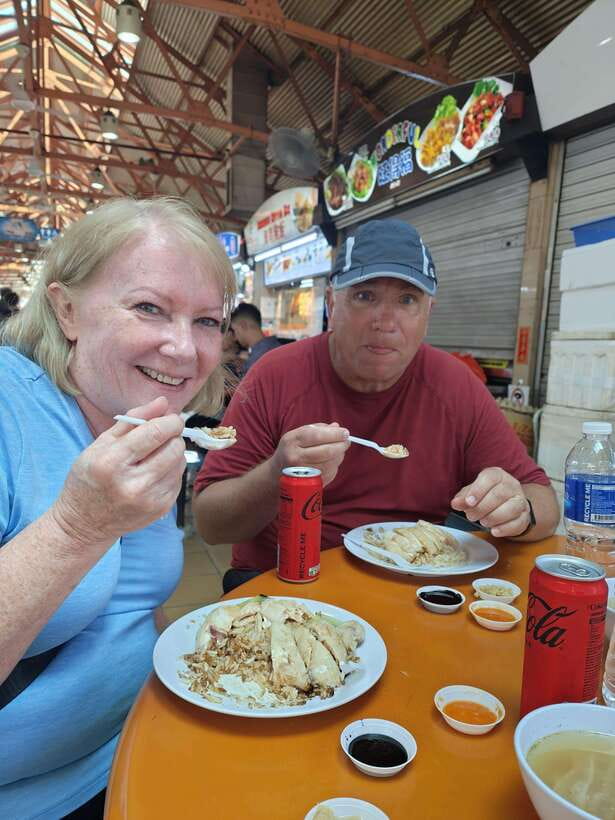
Chicken rice is a smart dish to include early in a Singapore food introduction. It looks modest, but the combination of rice, chicken, sauce, and seasoning shows how a simple meal can become a national favorite. The tour may also include dishes from vendors recognized by the Michelin Bib Gourmand guide.
You are promised 9 to 10 handpicked foods and drinks across famous hawker centers, not necessarily 9 to 10 full meals. That distinction matters. Even so, the quantity can be substantial, especially if you are not used to tasting several dishes in one sitting. I suggest arriving hungry and keeping breakfast light.
Thirty-five minutes is enough for a guided tasting, but it does not give you unlimited time to wander every stall. The benefit is that you do not have to spend your first visit comparing menus. The drawback is that your choices are set by the route and the day’s food arrangements.
Food preferences and allergies are worth raising when you book or meet the guide. The supplied information does not promise vegetarian, halal, gluten-free, or allergy-specific substitutions, so do not assume every dietary need can be handled.
More Chinatown eating walks in Singapore:
- Singapore: Chinatown Hawker Food Tasting Tour
★ 5.0 · 96 reviews - Kampong Glam, Little India & Chinatown with Local Street Food Tastings
★ 4.5 · 70 reviews - Michelin Premium Food Tour with Hawker Centre & Chinatown Tour
★ 4.5 · 50 reviews - UNESCO Hawker Culture: Chinatown Food Tasting Tour
★ 4.9 · 43 reviews
The Buddha Tooth Relic Temple and Museum
The Buddha Tooth Relic Temple and Museum receives about 10 minutes. This Tang-style Chinese Buddhist temple has ornate interiors and exhibits related to Buddhist art and history. It also houses a relic said to be a tooth of the Buddha.
Ten minutes makes this a brief cultural stop rather than a full museum visit. I see that as a strength for a food-focused walk, since the temple adds context without taking over the afternoon. You can see the setting, listen to the guide, and continue before the sightseeing becomes tiring.
The temple also shifts the mood. After the noise and activity of Maxwell Food Centre, the interior offers a quieter look at Chinatown’s religious life. The route does not treat food as separate from culture. Temples, immigrant neighborhoods, old businesses, and hawker cooking are presented as parts of the same urban story.
If you want a detailed examination of the museum exhibits, you would need to return independently. This tour gives you an introduction, not an extended temple tour.
Chinatown Complex and the old street-hawker story
The route continues through Chinatown, including Chinatown Complex, for about 20 minutes. The complex is known for shophouses with Chinese-style tile ornaments and motifs. It also connects with the story of street hawkers who once sold food along the roads before hawker centers became a central part of Singapore’s food system.
This stop helps explain why hawker culture is more than a convenient place to eat. It reflects government planning, small family businesses, immigrant traditions, and affordable everyday meals. A guide can connect those subjects in a way that a meal alone cannot.
The Chinatown Complex area can be busy and noisy. Stay close to the guide, especially when moving between food areas and narrow streets. The small group limit helps, but this is still an active neighborhood rather than a quiet museum setting.
The tour’s emphasis on history and politics may suit you if you like context with your lunch. Several guides, including Ron and Jeanette, have been praised for discussing Singapore’s economy, government, and social changes as well as food. If you want only a rapid series of tastings, some of the explanations may feel like a detour.
Smith Street murals and a traditional coffeehouse
Smith Street is the final major section, with roughly 30 minutes. You walk through alleys lined with picturesque shophouses and see murals by local artist Yip Yew Chong. His work depicts Chinese heritage and ordinary family life, making the murals a useful visual link to the stories told earlier.
This part is especially good for photographs. You can capture old facades, painted scenes, and the details that make Chinatown feel different from Singapore’s modern commercial districts. The route also connects with scenes associated with Crazy Rich Asians, giving film fans a small pop-culture angle without making the whole tour about the movie.
The stop ends with a rest at a traditional coffeeshop. You sit down for a hot drink and get a taste of Singapore’s coffee tradition. This is a welcome pause after several food tastings and a fair amount of walking.
The coffeehouse stop is not simply a final beverage. It gives the tour a slower ending and lets you ask questions. Guides such as Jeannette have been especially praised for making the experience feel personal, while Ronnie and Kelvyn are noted for combining food explanations with broader stories about Singapore.
What the guide adds to the food
The route is fixed, but the guide shapes the experience. The strongest accounts of this activity focus on people such as Jeannette, Ronnie, Kelvyn, Liang, Silvia, Pauline, Edwin, and Ron. That does not mean you can select a particular guide when booking. It does show how much the quality depends on who leads your group that day.
I would expect a good guide to help you try foods you might skip on your own, explain unfamiliar dishes, and adjust the conversation to your interests. One guide helped a traveler who had a disability, while another adapted the discussion for a family with children. Those details suggest a warm, attentive style, but the tour is still a walking experience and no specific accessibility plan is promised.
The history can be a real bonus. You may hear about early Chinese settlers, religious communities, old trade areas, family stories, opium dens, government, and the present-day food scene. The exact balance will vary by guide and group. The activity works best for someone who enjoys learning while eating.
Timing, group size, and practical value
The tour lasts about three hours and ends at Chinatown Complex, 335 Smith Street. The nearest MRT station to the end point is Maxwell Station. Since the meeting point is on Pagoda Street and the ending point is elsewhere in Chinatown, you should allow a little time to locate the start and arrange your next activity after the tour.
The activity is near public transportation, and most people can participate. It is not described as a strenuous hike, but you should expect regular walking, standing, and moving through food centers and streets.
A private upgrade is available if you want flexible timing and a more personal outing. That option should appeal to families, couples, or small groups with strong food preferences. The standard group tour is likely the better value if you want a structured introduction without paying for a private arrangement.
Free cancellation is available until 24 hours before the start time. Changes or cancellations inside that window are not refunded. The operator can also substitute an attraction if weather or another unforeseen problem causes a closure, with no additional compensation. A minimum number of participants applies, and if that minimum is not met, you are offered another date or experience, or a full refund.
Who should book this Singapore food tour
I would book this for a first or second day in Singapore. It gives you an overview of Chinatown, introduces hawker food, and helps you learn what to order later on your own. It also suits solo visitors, couples, and families who want a local guide rather than a restaurant-based tasting menu.
The tour is a good fit if you enjoy:
- Trying unfamiliar foods in small portions
- Learning about food, religion, migration, and city life together
- Walking through old neighborhoods
- Asking a guide questions
- Having a planned route through busy hawker centers
I would think twice if you need a fully customized diet, dislike group schedules, or want long visits inside the temples and museum. The activity is also less appealing if you prefer choosing every dish yourself.
Should you book it?
Book it if you want an organized and social introduction to Singapore’s hawker culture, with Chinatown’s temples, shophouses, murals, and coffee traditions included. The food is the hook, but the best value comes from the combination of tastings and explanation.
At $88.81, it is more expensive than simply eating at a hawker center. You are paying for the guide, planning, tastings, local context, and the chance to avoid guesswork. For a first visit, that can be worthwhile. If you already know Singapore’s food centers well, choose the private upgrade only if flexible timing and personal attention matter to you.
FAQ
How much does the UNESCO Hawker Culture: Chinatown Food Tasting Tour cost?
The listed price is $88.81 per person. Group discounts may be available.
How long does the tour last?
The experience lasts approximately three hours.
Where does the tour begin?
It begins at Bee Cheng Hiang, 69 Pagoda Street, Singapore 059228.
Where does the tour end?
The tour ends at Chinatown Complex, 335 Smith Street, Singapore 050335. The nearest MRT station to the end point is Maxwell Station.
How much food is included?
The tour includes 9 to 10 handpicked foods and drinks at famous hawker centers. These may include Michelin Bib Gourmand dishes.
Is chicken rice included?
Singapore’s famous Hainanese chicken rice is one of the featured hawker classics. The tour also includes other dishes and drinks.
How many people can join the group?
The maximum group size is 10 people.
Is a private tour available?
Yes. You can upgrade to a private tour with more personal attention and flexible timings.
What is the cancellation policy?
You can cancel up to 24 hours before the experience for a full refund. Cancellations or changes made less than 24 hours before the start time are not refunded.
Newly added plates around Singapore
- UNESCO Hawker Culture: Chinatown Food Tasting Tour★ 4.9 · 43 reviews
- Singapore Street Food Join-In Tour★ 5.0 · 2 reviews
- Private Tour Singapore Street Food & Night Tour★ 5.0 · 4 reviews
- Singapore Nightlife: Street Food, Night Views and Drinks★ 5.0 · 19 reviews
- Signature Urban Night Tour: Sunset Street Food in Singapore★ 5.0 · 4 reviews
- Singapore Street Food and Ethnic Quarters Kick Scooter Tour★ 5.0 · 8 reviews
- Singapore: Little India Hawker Food Tasting Tour★ 5.0 · 21 reviews
- Singapore Chinatown Local Hawker Food Tour★ 5.0 · 2 reviews
Night Market Food Tours, compared.
Small Group: Michelin and Local Hawker Food Tour with 9 tastings
Read our review →
Food Market Visit and Cooking Class with Wine
Read our review →
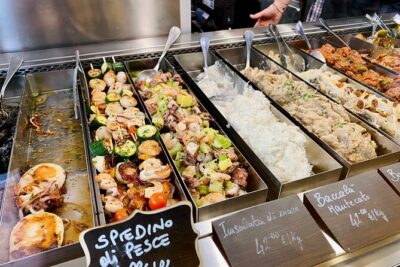
Venice Street Food Tour with Local Guide with Local Food Market Visit
Read our review →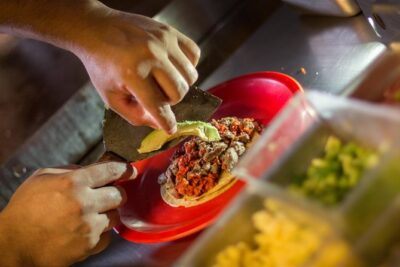
Cancun Taco Tour, Local Beer and Night Market with Transportation
Read our review →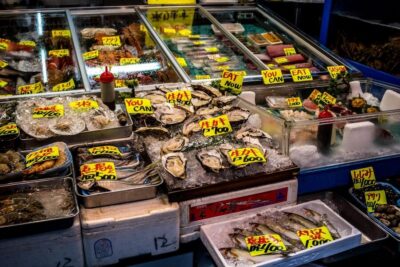
Tsukiji Fish Market Food and Culture Walking Tour
Read our review →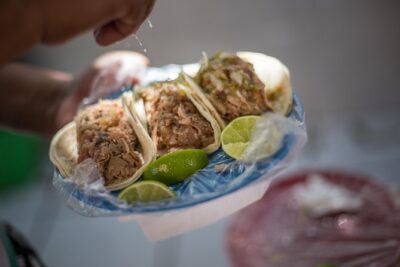
Cancun Street Food Tour with Food Stalls, Local Market and Murals
Read our review →Browse the lists this tour appears in