
REVIEW · CHINATOWN FOOD TOURS
Kampong Glam, Little India & Chinatown with Local Street Food Tastings
Singapore’s food story makes the city easier to understand, and this tour puts that story on foot. In about three hours, you move from Malay and Muslim Kampong Glam to Little India, then ride the MRT to Chinatown while tasting food from all three traditions. Nine tastings give you a useful first look at dishes you might not order alone.
I like the private format, since your guide can answer questions and adjust the pace for your group. I also like the mix of food and place: Sultan Mosque, flower shops, goldsmiths, hawker stalls, and the Buddha Tooth Relic Temple all help explain the city beyond the plate. The main catch is value. At $177.65 per person, this is a costly three-hour outing, and the schedule can feel tight if you want long photo stops or a relaxed meal.
Key points at a glance
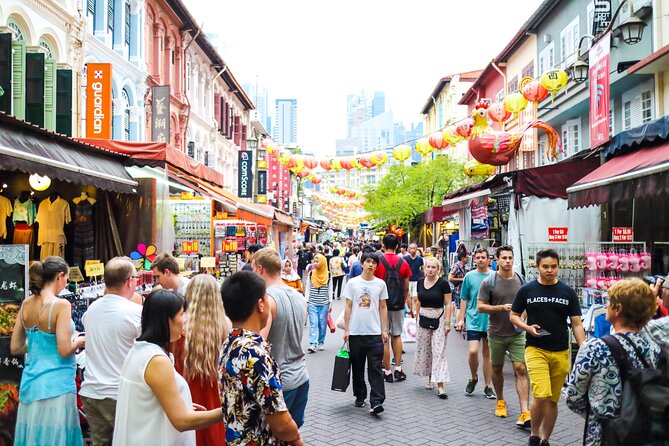
- Three food quarters in one walk: Kampong Glam, Little India, and Chinatown each bring a different cultural setting and cooking tradition.
- Nine included tastings: Expect seven or eight shared food portions plus one or two individual local drinks, depending on the day’s arrangement.
- Private guide service: Guides including Grayson, Grace, Joseph, Nigel, Ian, Loy, and Sujit have led this experience.
- Local transport included: The route uses the MRT between Little India and Chinatown, with tickets supplied.
- Easy city introduction: The tour combines food, neighborhoods, religion, transport, and daily life in a short window.
- Hotel pickup is optional: Choose the transfer upgrade if you prefer door-to-door service.
Why this tour works as a first taste of Singapore
Singapore can feel polished and orderly at first glance. The food quarters show you the more personal side of the city: family-run stalls, market shopping, religious buildings, old trades, and recipes tied to several communities. This tour gives you a quick framework for understanding that mix.
The route is not a restaurant crawl built around large plated meals. It is a walking tour with shared portions and local drinks. That distinction matters. You are tasting a broad range of food, not sitting down for a full meal at each stop.
The private format is one of the strongest features. Your group participates alone, so you can ask about ingredients, customs, or places to return later. Guides named in the feedback include Grayson, Grace, Joseph, Nigel, Ian, Loy, and Sujit. The strongest praise goes to guides who explain the background of the food instead of simply handing it over.
You should arrive hungry. One group was full after the tastings and did not need dinner that night. The portions are described as seven or eight food tastings shared among the group, plus one or two individual drinks. Exact dishes can vary, which is normal for a street-food route and also means you should not book expecting a fixed menu.
More Chinatown eating walks in Singapore:
- Singapore: Chinatown Hawker Food Tasting Tour
★ 5.0 · 96 reviews - Michelin Premium Food Tour with Hawker Centre & Chinatown Tour
★ 4.5 · 50 reviews - UNESCO Hawker Culture: Chinatown Food Tasting Tour
★ 5.0 · 47 reviews
Starting in Kampong Glam beside Arab Street
The meeting point is at 56 Arab Street, in Kampong Glam. This puts you close to one of Singapore’s most recognizable religious buildings, Sultan Mosque, with its large golden domes and broad facade. Your guide explains how this Malay and Muslim quarter developed before leading you through the surrounding streets.
The area today mixes heritage buildings with newer shops and cafes. Haji Lane is nearby, and one tour included Arabic snacks before the group continued toward Little India. You may also get suggestions for places to return to later, such as a jazz club or a shop that suits a particular purchase.
This first section lasts about 35 minutes, though the full timing includes walking and food stops. It is a good opening because the setting immediately gives context to the first tastes. You are not simply trying an unfamiliar snack in isolation. You are seeing the streets, businesses, and religious life connected to that food tradition.
The drawback is that Kampong Glam is only one part of a fast route. You will see key sights, but you will not have a long visit inside every building or time for extended shopping. If Sultan Mosque is a priority, ask your guide what can be seen during the tour and plan a separate return visit if needed.
Little India, where the route turns louder and more colorful
From Kampong Glam, the tour continues on foot toward Little India. The walk is roughly a kilometer according to one detailed account, so comfortable shoes matter. Singapore can also be hot and humid, and one person specifically found the heat tiring.
Little India gives you a strong change of mood. The route passes fruit and vegetable shops, flower garland sellers, goldsmiths, and pawnshops. These everyday businesses help you see the neighborhood as a working community rather than a display made only for sightseeing.
The food stop here may include tosai, a South Indian-style crepe, along with other tastes from the local hawker scene. The food is served in places that may look modest, but that is part of the point. You are seeing how Singaporeans eat in food centers and small stalls, not being steered only to formal restaurants.
This section is listed at about 35 minutes. That is enough for a guided introduction, a few explanations, and tastings, but it is not enough to inspect every lane. Keep your expectations realistic: the tour samples the district rather than covering it in detail.
If you have dietary concerns, ask before booking or at the start of the tour. The supplied information does not give a fixed menu or list of substitutions, so you should not assume every tasting can be changed. The guide can explain what is being served, but the available alternatives are not specified.
Riding the MRT from Little India to Chinatown
The MRT ride is a small but worthwhile part of the experience. Tickets are included, and you travel as local residents do rather than relying on a private vehicle for every part of the route. That gives the tour a practical sense of Singapore’s public transport system.
For a short experience, this is useful city orientation. You see how the three quarters connect, and you learn that Chinatown is not a separate attraction reached only by tour bus. It is part of the city’s normal transport network.
The ride also breaks up the walking. This matters if you are traveling with an older family member or anyone who needs occasional relief from the heat. Still, the tour is mainly on foot, and the operator does not recommend it for people with mobility issues. One guide was praised for taking special care of a person using a cane, but that individual attention should not be treated as a guarantee that the route suits every mobility level.
More street food tours in Singapore:
- Small Group: Michelin and Local Hawker Food Tour with 9 tastings
★ 5.0 · 1,890 reviews - Small Group: Singapore Street Food & Night Tour with 9 tastings
★ 5.0 · 1,240 reviews - Singapore: UNESCO Street Food & Cultural Experience
★ 5.0 · 524 reviews - Small-Group Food Tour With Hawker Center: Eat Like A Local
★ 5.0 · 420 reviews
Chinatown food and the Buddha Tooth Relic Temple
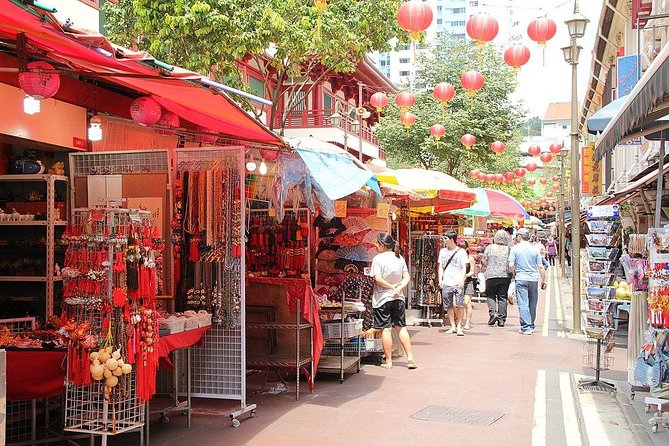
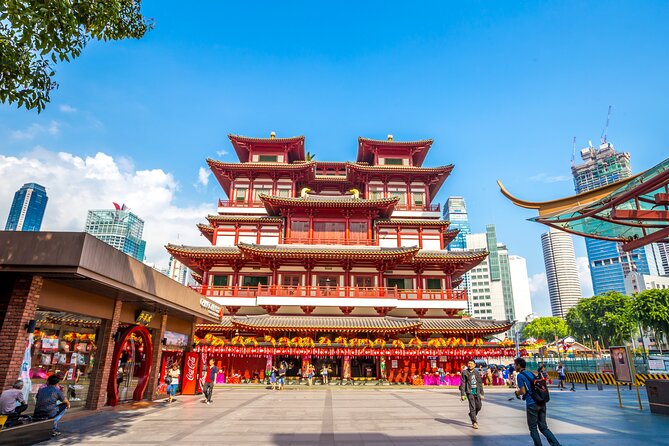
The final neighborhood is Chinatown, where the route ends near the Buddha Tooth Relic Temple at 288 South Bridge Road. The tour spends about 35 minutes here, showing you the busy streets and explaining more about Chinese Singapore.
The tastings may include Chinese dumplings and chicken rice. One important practical point is that the quality and availability of a particular dish can change. A hawker center closure and unusually heavy crowds once affected the chicken rice stop, leaving the guide with fewer choices. That is a normal risk when a food tour depends on working stalls rather than a prearranged restaurant menu.
The final stop is a useful place to end because the temple is easy to recognize and gives you a clear landmark for continuing your day. You can arrange your own next stop from Chinatown, though no onward transport is included beyond the tour’s MRT tickets.
Do not expect the Chinatown portion to be a full temple visit, museum tour, or long food-market session. It is the last part of a three-neighborhood route. The value lies in linking the district to the earlier stops and giving you a few Chinese tastes before the tour ends.
What the nine tastings really include
The tour includes nine local food and drink tastings. The breakdown is seven or eight food or snack portions shared by the group, with two or one local drinks served individually. This wording suggests a varied sample rather than nine full servings per person.
The portions can still add up. Several accounts describe the food as generous, and one group felt too full for dinner afterward. You should eat lightly beforehand, but do not arrive expecting a formal nine-course meal.
Known examples include Arabic snacks in Kampong Glam, tosai in Little India, Chinese dumplings, chicken rice, and local drinks. The exact selection is not guaranteed. That flexibility lets the guide work with what is available at the stalls, but it also means you cannot judge the experience by a single promised dish.
Some foods may be unfamiliar. That is a strength if you enjoy trying things outside your usual order. The guide explains where dishes come from and how they relate to local eating customs. A few foods may be eaten in a hands-on street-food style, so napkins and wet wipes are useful to carry. The operator has addressed a past shortage of wipes, but bringing your own small pack is still sensible.
Guide quality makes the biggest difference
The experience depends heavily on the guide. The most effective guides do three jobs at once: explain the neighborhood, introduce the food, and manage the clock.
Grayson is praised for making the tour engaging and explaining both food and Singaporean culture. Grace is described as patient and attentive, including during rainy weather, and has been appreciated for explaining the background of dishes. Joseph is credited with giving detailed answers and helping participants understand the country’s varied communities.
Nigel is noted for historical and cultural explanations, while Ian is praised for showing small stalls and hawker-market food. Loy is remembered for keeping up a steady stream of facts and stories during the walk. Sujit is described as helpful with both the food and the wider history of the neighborhoods.
Names do not guarantee which guide you will receive. Still, the pattern is clear: the best version of this tour is led by someone who turns each tasting into a short lesson. If your guide is moving quickly, ask questions early. A private tour gives you a better chance to shape the conversation than a large group would.
Pace, heat, and the real cost
Three hours is efficient, but it is also the source of the tour’s main limitation. You cover three districts, eat nine times, walk a good deal, use the MRT, and stop for explanations. There is not much spare time for long photography sessions, shopping, or lingering over a dish.
The price is $177.65 per person. That is high for three hours, especially since the included food comes in shared portions. You are paying for the private guide, the route design, nine tastings, MRT tickets, and the convenience of having the food and cultural explanation arranged for you.
I think the price makes the most sense for a small private group that values personal attention and has limited time in Singapore. It is harder to justify if you mainly want inexpensive hawker food or prefer to explore at your own speed. You could spend less by visiting food centers independently, but you would need to choose dishes, find the stalls, manage transport, and provide your own cultural context.
Hotel pickup and drop-off can be added with a private vehicle. This is useful if you are staying far from Arab Street or want to avoid arranging the opening and closing transfers. It adds convenience, not extra tour time.
Who should book this experience
I would choose this tour for a first afternoon in Singapore, especially if you want a quick introduction before exploring independently. It suits couples, families, and small groups who enjoy asking questions and trying unfamiliar food.
It is also a good fit if you have only a few free hours. One booking was made at short notice for a Sunday afternoon between business commitments. The tour gave that group a compact look at three districts without requiring a full day.
You should think twice if you dislike heat, have difficulty walking, or want extended time at each sight. The route is mainly a walking tour, and the pace can feel rushed when you add photographs or extra stops. It is also not ideal if you need a guaranteed menu for dietary reasons, since the food selection can change.
Book at least 24 hours before the start time if you want the option of a full refund. Cancellations made less than 24 hours before departure are not refunded, and changes inside that window are not accepted.
Should you book it?
Book this tour if you want a private, food-led introduction to Singapore’s three main cultural quarters, and you are happy to trade depth for range. The combination of local stalls, neighborhood walks, the MRT, and a personal guide is more useful than a simple list of restaurant stops.
Skip it if $177.65 feels too steep for a three-hour outing, or if you want a slow photographic walk with long meals. For everyone else, arrive hungry, wear comfortable shoes, carry water and wet wipes, and keep the rest of your day flexible. That gives you the best chance to enjoy the food without feeling hurried.
FAQ
How long does the tour last?
The tour lasts approximately three hours.
Where does the tour begin?
It begins at 56 Arab Street in Singapore, in the Kampong Glam area.
Where does the tour end?
It ends near the Buddha Tooth Relic Temple at 288 South Bridge Road in Chinatown.
Are hotel transfers included?
Hotel pickup and drop-off are included only if you choose the option with hotel transfers. The standard tour does not include them.
How many food tastings are included?
Nine local food and drink tastings are included. The package provides seven or eight shared food or snack portions and one or two individual local drinks.
Is the MRT ride included?
Yes. MRT tickets are included, and the route uses the MRT to travel from Little India to Chinatown.
Is this a private tour?
Yes. Only your group participates in the private tour.
Is the tour suitable for people with mobility issues?
The tour is mainly a walking experience and is not recommended for people with mobility issues. Most participants can take part, but the route includes walking between neighborhoods.
Can I cancel for a refund?
You can receive a full refund if you cancel at least 24 hours before the local start time. Cancellations and changes made within 24 hours are not refunded or accepted.
Newly added plates around Singapore
- UNESCO Hawker Culture: Chinatown Food Tasting Tour★ 4.9 · 43 reviews
- UNESCO Hawker Culture: Chinatown Food Tasting Tour★ 5.0 · 47 reviews
- Singapore Street Food Join-In Tour★ 5.0 · 2 reviews
- Private Tour Singapore Street Food & Night Tour★ 5.0 · 4 reviews
- Singapore Nightlife: Street Food, Night Views and Drinks★ 5.0 · 19 reviews
- Signature Urban Night Tour: Sunset Street Food in Singapore★ 5.0 · 4 reviews
- Singapore Street Food and Ethnic Quarters Kick Scooter Tour★ 5.0 · 8 reviews
- Singapore: Little India Hawker Food Tasting Tour★ 5.0 · 21 reviews
Chinatown Food Tours, compared.
Bangkok Tuk-Tuk Tour by Night with Chinatown Street Food Meal
Read our review →
Bangkok Tuk-Tuk by Night with Chinatown Street Food Meal
Read our review →
Sydney’s Chinatown Street Food and Stories Walking Tour
Read our review →
Bangkok Hidden Gems: Talad Noi, Chinatown & Street Food Tour
Read our review →
Michelin Premium Food Tour with Hawker Centre & Chinatown Tour
Read our review →Browse the lists this tour appears in