
REVIEW · HIDDEN FOOD SPOTS
Bangkok Hidden Gems: Talad Noi, Chinatown & Street Food Tour
Bangkok’s old Chinese quarter is best understood on foot, one narrow lane and one bite at a time. This tour takes you from Talat Noi’s weathered shophouses and street art to Chinatown’s food stalls, with stops at Holy Rosary Church and the 200-year-old Chow Sue Kong Shrine along the way.
I like the small groups, capped at 12, because a guide can explain what you are seeing and help you order unfamiliar food. I also like that the samples are included, from turnip cake and chwee kueh to duck noodles and pad Thai. The main drawback is the walking route: the tour covers about 2 km, but crowded lanes, standing, heat, and occasional detours can make it feel longer.
Key points to know before booking
- Talat Noi comes first: Explore a 300-year-old Chinese neighborhood before reaching Chinatown proper.
- Food is part of the tour: Thai, Chinese, and fusion samples are included, not an extra expense.
- The history is varied: See a Portuguese-founded church, a Hokkien shrine, a traditional Chinese mansion, and an old riverside building.
- The 4 pm start works well: You begin in daylight and reach Chinatown as the evening activity picks up.
- Groups stay intimate: A maximum of 12 people allows more room for questions and personal help.
- Plan for walking: About 2 km is listed, with crowded streets, market lanes, and time spent on your feet.
Starting at River City and entering Talat Noi
Meet your guide at River City Bangkok, near Gate 1 and the Starbucks on the first floor, at 4 pm. The meeting point is beside Si Phraya Pier, so it is near public transport, though it may not be close to your hotel. Give yourself time to find the correct entrance, especially if you are arriving by taxi during heavy traffic.
The route begins in Talat Noi, a neighborhood shaped by Chinese communities for more than 300 years. This is one of the best parts of the outing because the streets feel more local and less packaged than the main Chinatown roads. You pass narrow lanes, old homes, small businesses, market stalls, and walls decorated with local art.
Your guide gives the neighborhood a human scale. Instead of simply walking past an old building, you can ask who used it, how the area developed, and how Chinese traditions fit into modern Bangkok. Guides such as Nana, Pam, Gof, and Dong have been praised for being friendly, attentive, and willing to answer questions. English ability can vary by guide, but the strongest guides add useful history without turning the walk into a lecture.
More Chinatown eating walks in Bangkok:
- Bangkok Tuk-Tuk Tour by Night with Chinatown Street Food Meal
★ 5.0 · 635 reviews - Bangkok Tuk-Tuk by Night with Chinatown Street Food Meal
★ 4.6 · 263 reviews - Bangkok: Chinatown Food Tour with Michelin Food Stalls
★ 4.8 · 226 reviews
Holy Rosary Church and Talat Noi’s mixed heritage
The first major stop is Holy Rosary Church, founded in 1787. Its European-style Gothic Revival design feels unexpected in a neighborhood so closely linked to Chinese Bangkok. Portuguese settlers helped establish the church, adding another layer to Talat Noi’s already mixed religious and cultural past.
You spend about 15 minutes here. That is enough time to look at the exterior and take in the setting, but it is not a long church tour. If you want a detailed architectural visit, you may find the stop brief. Its value is in the contrast: within a short walk, Bangkok gives you Chinese lanes, a Portuguese Catholic church, Thai food, and riverside buildings from earlier eras.
Street art appears along the route, too. It is not treated as a separate gallery visit, but your guide points out pieces as you move through the area. Keep your camera ready, since the appeal is often in how the art sits beside peeling walls, old doors, tangled utility lines, and everyday neighborhood life.
Tasting turnip cake, chwee kueh, and duck noodles
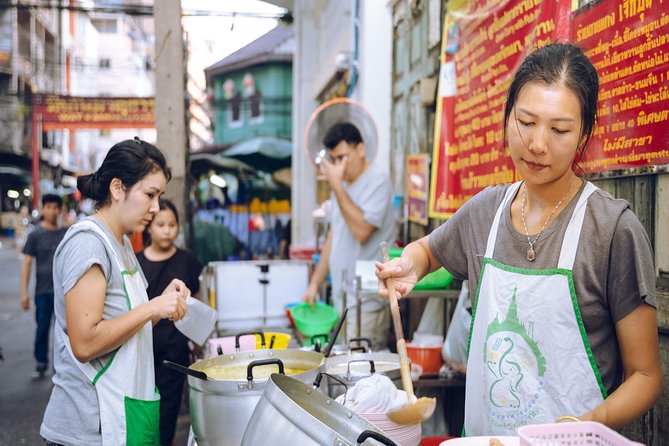
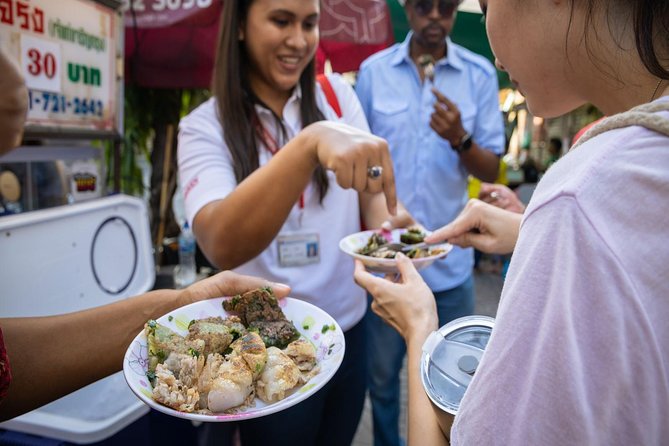
Food is the practical heart of this walk. Samples include turnip cake, chwee kueh, chao tha duck noodle soup, and pad Thai from Uncle Pom. These are not just generic snacks chosen for tourists. They give you a quick introduction to Chinese and Thai flavors that you might not order alone.
Turnip cake is a Chinese dim sum dish with a soft interior and savory taste. Chwee kueh is a steamed rice cake served with preserved radish. These may be unfamiliar if your usual Bangkok meals are curries, grilled meat, or mango sticky rice, which is exactly why a guide helps.
The group also stops at a café beside the Chao Phraya River for food and a drink. The café occupies a building dating from the reign of King Rama II and the Rattanakosin era, giving the pause more character than a standard coffee break. You can relax with coffee or tea while your guide explains the area and offers suggestions for other places to eat during your stay.
The food is included in the $42.48 price, which makes the cost easier to justify. You are paying for several tastings, a local guide, route planning, and access to places that can be awkward to find on your own. The value is strongest if you enjoy trying small portions and want help identifying what you are eating.
Vegetarians can be accommodated if you provide notice at least 24 hours before the tour. Other dietary needs are not listed as supported, so do not assume substitutions will be available. If you have allergies or strict restrictions, this may not be the right food walk.
Chow Sue Kong Shrine and old Chinese traditions
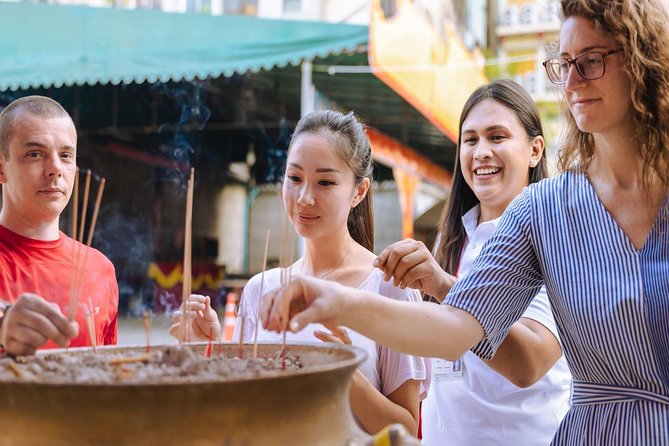
After eating, the group visits Chow Sue Kong Shrine, a Hokkien shrine more than 200 years old. It is a quieter stop, and you can ask for blessings for well-being, protection, and guidance.
The shrine offers a useful change of pace. Talat Noi is full of movement, but religious spaces ask you to slow down and notice details. Your guide can explain the shrine’s role and help you behave respectfully. Dress should be sensible for a religious site, and you should follow any instructions about where to stand or what you may photograph.
The stop lasts about 15 minutes. It is not designed as a long religious studies visit, but it gives you a clear sense of how Chinese customs remain part of daily life in Bangkok rather than existing only as museum pieces.
More Hidden Food Spots in Bangkok:
- Bangkok: Talad Noi Hidden Gems & Street Food Adventure
★ 4.6 · 29 reviews - 4-Hour Hidden Bangkok TukTuk Street Food Guided Tour
★ 5.0 · 23 reviews - Hanoi: Street Food Tour with Train Street & Hidden Alleyways
★ 5.0 · 2,831 reviews - Hanoi: Guided Street Food Tour with Train Street Experience
★ 4.9 · 2,479 reviews
Sol Heng Tai Mansion and Hong Sieng Kong
The route includes Sol Heng Tai Mansion, one of Bangkok’s remaining traditional Chinese houses. The mansion is especially worthwhile for visitors interested in old domestic architecture, since it gives context to the lanes around it. Details about access can vary, so treat it as a sight along the walking route rather than expecting a long interior tour.
Next comes Hong Sieng Kong, a riverside gallery and café in an old building. This stop connects the past with a more modern creative side of Talat Noi. You may see local artwork, take a break with coffee or tea, and enjoy the Chao Phraya setting.
The planned visit lasts about 30 minutes, making it one of the longer stops. It is also a welcome chance to sit after walking through narrow lanes. Some people will love the art and riverside atmosphere. If you prefer a nonstop food crawl, this pause may feel slower than expected.
Crossing into Chinatown as evening begins
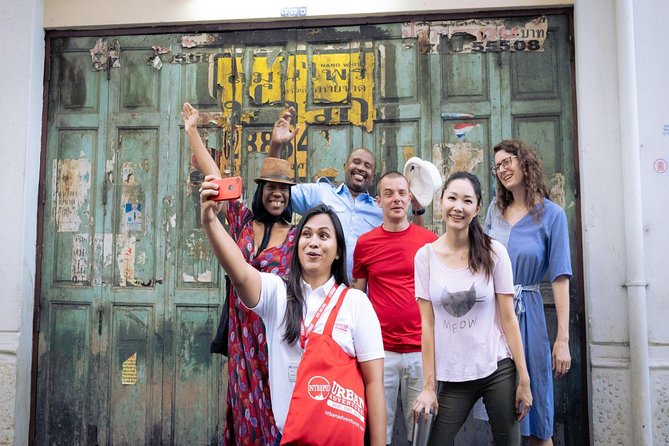
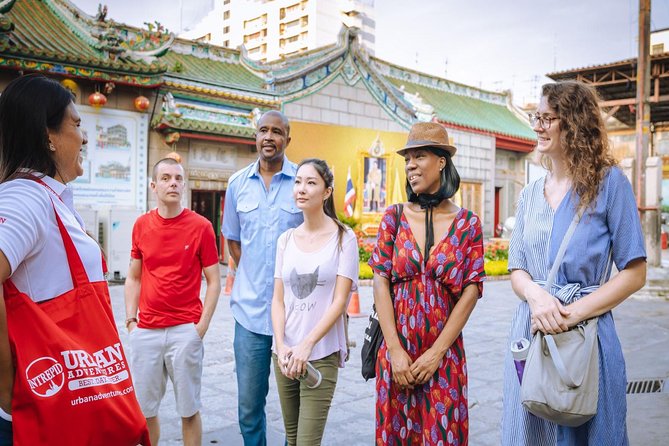
The final part takes you into Bangkok’s Chinatown, one of the world’s largest Chinese quarters. Here the mood changes. The streets become more crowded, the shopping more obvious, and the old neighborhood mixes with newer businesses and modern city life.
Your guide helps you move through the crowds and keeps the group together. That matters during festivals and busy evenings, when traffic and footfall can make the route harder to follow. Guides have also helped participants find their way back to central Bangkok after the walk, including directions toward the MRT at Wat Mangkon.
The tour is scheduled to end at Wat Mangkon Kamalawat, although the meeting information also lists River City as the start and end point and notes that you can connect from Chinatown to MRT Wat Mangkorn. Confirm the final arrangement with your guide at the beginning. This small point matters if you have a dinner reservation or a timed evening plan.
Chinatown itself can be repetitive if you want a tightly edited sightseeing route. You pass market lanes, stalls, shops, and food sellers rather than a long series of major monuments. The reward is atmosphere and access, not a checklist of grand sights. I would not book this walk mainly for shopping, since you may not have much time to stop at individual stalls.
How the $42.48 price measures up
At $42.48 per person, this is fairly priced for a small food and neighborhood walk. The food samples are included, and you also receive a local English-speaking guide, cultural explanations, and help navigating a part of Bangkok that can be confusing on your first visit.
The value depends on how you use the tour. If you only want to wander Chinatown and buy snacks, you could spend less by exploring independently. If you want to understand why the church, shrine, Chinese homes, river buildings, and food traditions sit so close together, the guide adds real value.
A group of five can feel almost like a private walk, and the 12-person maximum still keeps the experience manageable. Personal attention is especially useful when ordering food, explaining ingredients, or adjusting for a slower walker. The tradeoff is that the itinerary can change if a site closes, a street is blocked, or a food stall is unavailable.
Timing, walking, and weather
The 4 pm start is sensible. You get daylight for Talat Noi’s lanes and buildings, then move into Chinatown as the afternoon turns toward evening. Bangkok can be hot and humid, so light clothing, water, and comfortable shoes will help.
The official walking distance is about 2 km, but distance is not the whole story. You may stop frequently, stand while eating, squeeze through crowded lanes, and cross busy streets. One account describes the outing as tiring for older people or anyone who cannot walk or stand for several hours. I would treat this as an active city walk, not a gentle coffee-and-sightseeing trip.
Rain can change the mood and the route. Guides have bought ponchos for participants during sudden downpours, but you should still bring a compact rain jacket or umbrella if the forecast looks poor. Some roads or sites may close for public events, royal occasions, renovations, or other reasons beyond the operator’s control. In that case, another site or food stop may be used.
Who will enjoy this walk most
I would recommend it to a first-time Bangkok visitor who wants an introduction to Talat Noi and Chinatown without spending an entire day on a formal sightseeing tour. It suits people who like food samples, local stories, religious buildings, old neighborhoods, and a little uncertainty in the route.
It is also a good choice for solo visitors. A small group gives you company, while the guide handles ordering and directions. Guides including Pam and Nana have been especially attentive with questions, food preferences, and practical advice for the rest of a Bangkok stay.
I would think twice if you dislike street food, need a precise schedule, or want long visits inside historic buildings. The experience moves between several short stops, and the guide may need to adjust the plan. It is also less suitable for children under eight, since the minimum age is eight.
Free cancellation is available up to 24 hours before the 4 pm start. After that point, the price is not refunded, and changes are not accepted.
Should you book the Talat Noi and Chinatown walk?
Book it if you want food and neighborhood character more than headline attractions. The strongest parts are the small group, the variety of samples, Talat Noi’s old lanes, Holy Rosary Church, Chow Sue Kong Shrine, and the riverside café in a historic building.
Skip it if you are mainly interested in shopping, dislike walking in crowds, or expect a polished restaurant meal. For most first-time visitors who want a guided introduction to old Bangkok, $42.48 is a reasonable spend, especially with food included and a guide to connect the many pieces of the route.
FAQ
Where does the tour begin?
The tour begins at River City Bangkok, at 23 Soi Charoen Krung 24, near Gate 1 and the Starbucks on the first floor. The meeting area is by Si Phraya Pier.
What time does the tour start?
The scheduled start time is 4 pm.
How long does the tour last?
The tour lasts approximately 2 hours and 30 minutes.
How much walking is involved?
The tour covers about 2 km, or 1.2 miles. You should also expect time standing at food stops and walking through crowded lanes.
What food is included?
Included samples may include turnip cake, chwee kueh, chao tha duck noodle soup, and pad Thai from Uncle Pom. Thai, Chinese, and fusion foods are included.
Can vegetarians join the food tour?
Yes. Vegetarian requirements can be accommodated if you provide the information at least 24 hours before the tour date.
What is the group size?
The maximum group size is 12 people.
What is the minimum age?
The minimum age is eight years old.
Can the itinerary change?
Yes. If a site closes or a food stall is unavailable, an alternative site or food stop may be used.
What is the cancellation policy?
You can cancel at least 24 hours before the start time for a full refund. Cancellations or changes made less than 24 hours before the start are not accepted for a refund.
Newly added plates around Bangkok
- 4-Hour Hidden Bangkok TukTuk Street Food Guided Tour★ 5.0 · 23 reviews
- LR-01 TaLad NangLerng, ride along the old town and try local street foods★ 4.5 · 13 reviews
- Famous Thai Street Food Tasting Experience!★ 5.0 · 4 reviews
- Bangkok 3-in-1 Tour: Longtail Boat,TukTuk & Street Food Adventure★ 5.0 · 73 reviews
- Authentic Street Food Tour in China Town Bangkok★ 5.0 · 25 reviews
- Private – STREET FOOD TOUR THONBURI incl. dinner★ 4.5 · 5 reviews
- Street Food at China Town★ 4.5 · 4 reviews
- Bangkok Night Market Tour Dinner and Vintage Find★ 5.0 · 9 reviews
Hidden Food Spots, compared.
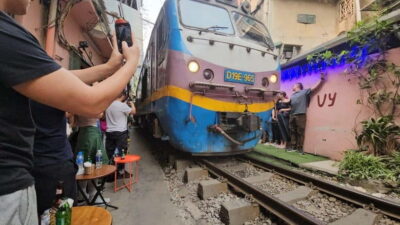
Street Food Tour with Train Street & Hidden Alleyways
Read our review →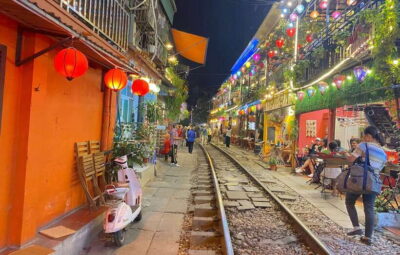
Guided Street Food Tour with Train Street Experience
Read our review →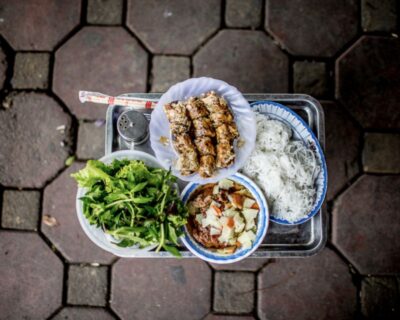
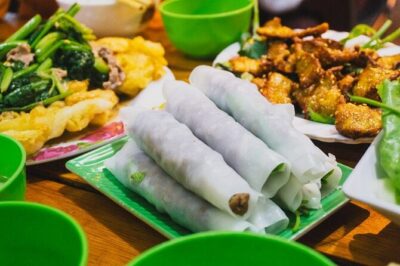
Walking Street Food Tour in Hanoi and Train Street
Read our review →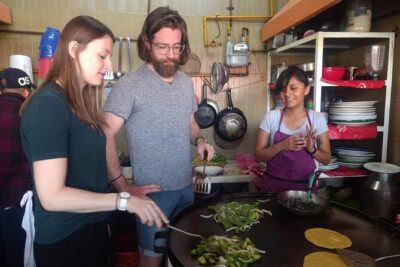
Hidden Markets, Street Food & Salsa-Making Tour
Read our review →
Saigon’s Hidden Flavors – Private Street Food Walk with Local Students
Read our review →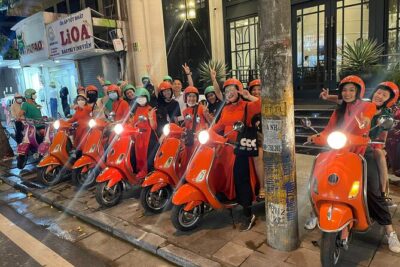
Vespa Female Ao Dai riders Night Street Food + See Train Street
Read our review →
Amman Walking Tour: Hidden Gems, Culture & Street Food
Read our review →Browse the lists this tour appears in