
REVIEW · HIDDEN FOOD SPOTS
Mexico City: Hidden Markets, Street Food & Salsa-Making Tour
Mexico City’s best food lessons often happen beside a market stall, not in a polished cooking school. This five-hour outing takes you to two local markets, introduces you to murals tied to Diego Rivera’s circle, and ends with hands-on salsa making at a family business. The Metro ride is part of the lesson, too, giving you a useful look at daily city life.
I like the mix of food, art, and social history, especially the Abelardo Rodriguez market murals and their connection to Mexico City’s working neighborhoods. I also like the personal scale: groups cap at 12, and guides such as Andrea, Axel, Viri, Poncho, and Alfonso have been praised for explaining the city with warmth and humor.
The main caution is the amount of walking. You cover about 6 kilometers through markets and city streets, often on your feet for hours. Food and drinks are described as tastings, but the booking details also say they are not included unless specified, so bring spending cash and confirm exactly what your price covers.
Key points at a glance
- Murals inside a working market: See the 1,450 square meters of artwork at Mercado Presidente Abelardo L. Rodriguez, including work linked to students of Diego Rivera.
- Two very different markets: One focuses on murals and local life, while Mercado Jamaica combines flowers, produce, and prepared food.
- A real Metro tutorial: Ride public transport with your guide and learn enough to feel more confident using the system later.
- Street food from morning onward: Expect tamales, atole, tacos, huaraches, fruit, and pineapple tepache, with exact tastings depending on the day.
- Salsa made the old-fashioned way: Wash, cut, grill, and crush ingredients in a molcajete before eating your salsa with a huarache.
- Small-group local access: A maximum of 12 people makes it easier to ask questions and keep the group together in crowded markets.
Why this market tour feels different
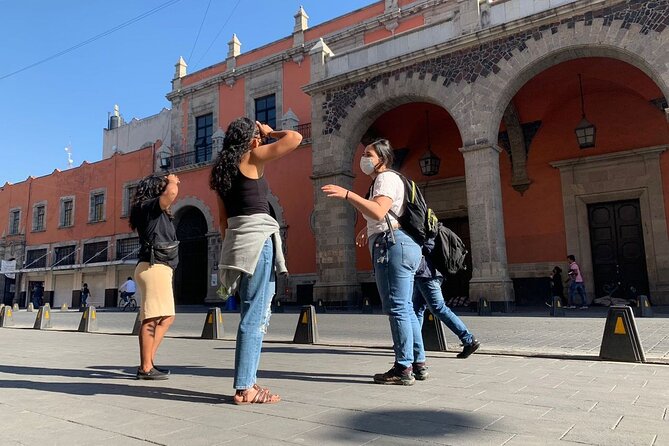
Many Mexico City food tours stay around famous restaurants or the most photographed parts of Centro Histórico. This one takes a less polished route. You begin at República de Guatemala 4, outside the Hostel Mundo Joven facade, then move through market corridors, public transport, and family-run food businesses.
That change of setting matters. Markets show you what people buy for breakfast, how flowers are sold by the bucket, and how a quick meal fits into a working day. You are not simply looking at food. You are watching commerce, family routines, art, and public life share the same space.
The tour is offered in English and runs for about five hours, starting at 8:30 a.m. That early start works well for food. Tamales and atole are morning staples, and market stalls are already active before the heat of the afternoon. You finish at the Palacio de Bellas Artes facade, which gives you a central location for continuing your day.
More Hidden Food Spots in Mexico:
- Mexico Off the Beaten Track: Street Food & Bikes — All Inclusive
★ 5.0 · 14 reviews - 🟢Mexico Off The Beaten Track/ Street Food Bike Tour 🟢
★ 5.0 · 4 reviews - Hanoi: Street Food Tour with Train Street & Hidden Alleyways
★ 5.0 · 2,831 reviews
Mercado Presidente Abelardo L. Rodriguez and its murals
The first market is listed as Mercado Melchor Muzquiz, while the detailed stop description identifies it as Mercado Presidente Abelardo L. Rodriguez. This naming difference is worth noting when you check your confirmation and meet your guide.
The market’s unusual feature is its interior artwork. About 1,450 square meters of murals cover the space, and the works are tied to students of Diego Rivera. The setting makes the art more interesting than a standard gallery visit because you see it among stalls, shoppers, and everyday trade.
Your guide also explains the market’s connection with early 20th-century social and political life in Mexico City. The references to Rivera and Frida Kahlo add cultural context, but the real value is seeing how public art was placed where ordinary people could encounter it.
The market also includes features such as a daycare and an auditorium. Those details help explain the market as a community institution rather than just a place to buy groceries. Guides including Viri and Alfonso have also focused on nearby buildings, construction periods, architecture, and murals, so you can expect the walk through Centro Histórico to include more than food.
Your first tastings are likely to include tamales and atole. A tamal gives you a filling start, while atole is a warm, thick corn-based drink often paired with breakfast. The precise flavors may vary, and the official details do not promise a fixed menu for every departure.
Mercado Jamaica: flowers, produce, and prepared food
The next section begins with a ride on the Mexico City Metro. For many people, this is one of the most useful parts of the morning. Your guide handles the route and helps you understand how to move through the station, so you get a practical introduction instead of trying to decode the system alone.
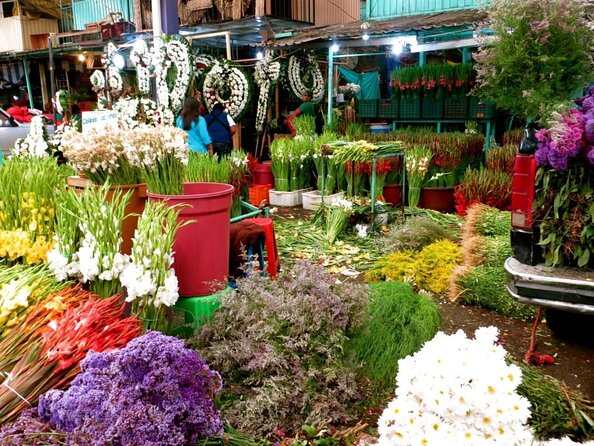
At Mercado Jamaica, three markets work together in one place: flowers, fresh produce, and prepared food. The flower section is the visual centerpiece. One of the tour’s more playful details is asking a vendor to select flowers that match your eye color. It is a small exchange, but it gives you a reason to speak with a seller rather than simply walk past the displays.
The produce area adds another layer. You may buy vegetables used later in the salsa lesson while your guide explains local farming practices. This connects the meal to the market itself and shows how ingredients move from farm and stall to plate.
The prepared-food area is where much of the tasting happens. The listed foods include tacos, huaraches, tamales, atole, fruit, and pineapple tepache. Some tour descriptions and past experiences also include café de olla and green chorizo tacos. Since the official booking information says food and drinks are not included unless specified, carry pesos for purchases and ask your guide what is covered that day.
Mercado Jamaica is large enough to feel exciting, but it can also be crowded and noisy. Keep your group in sight, carry only what you need, and avoid bringing large camera equipment. Small cameras are allowed, but professional gear is not suitable for this outing.
The salsa lesson with a local family
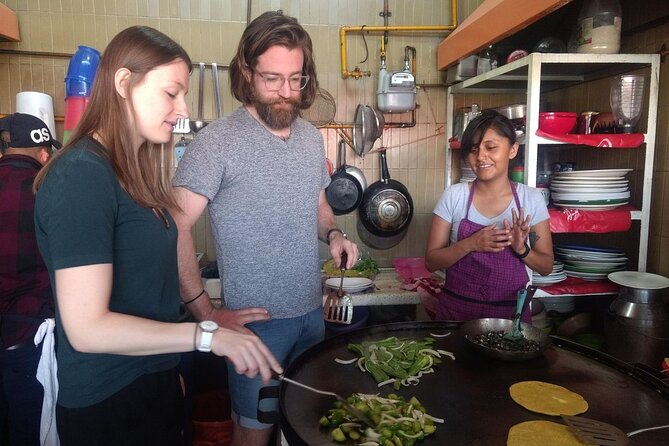
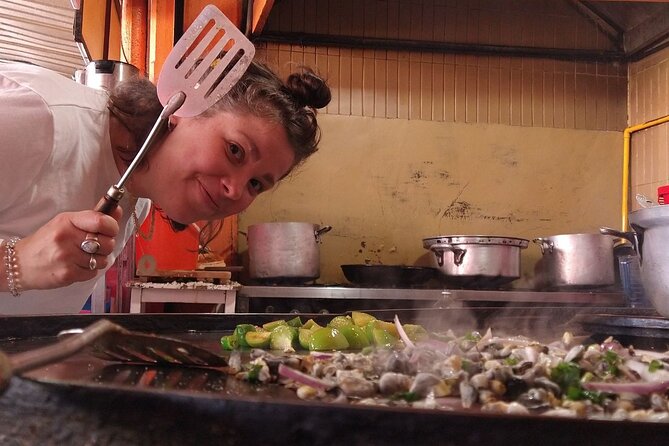
The cooking portion is the heart of the tour. You take fresh ingredients from the market to a local family business with nearly a century of tradition. This is not a formal class with individual workstations and a printed recipe. You wash, cut, and grill the ingredients, then crush them with a molcajete.
That tool matters. A molcajete is a volcanic-stone mortar used to grind chilies, tomatoes, onions, and other ingredients into salsa. The texture is different from a fully blended sauce, and the work gives you a better feel for how Mexican cooks build flavor.
The family staff guide the process patiently. You can expect to help with the preparation, rather than merely watching someone else cook. Dietary needs can be accommodated if you request vegetarian, gluten-free, or lactose-free food at least 24 hours ahead.
The finished salsa is served with a classic huarache. A huarache is a flat, oval masa base, usually topped with beans, sauce, cheese, meat, or vegetables. It is a satisfying way to finish the tasting, though you should not assume every topping will suit your diet without confirming in advance.
This lesson also gives the tour a human connection that a normal market walk can lack. You meet a family business, use ingredients purchased nearby, and eat something you helped prepare. For me, that is more useful than collecting another restaurant recommendation because you leave with a technique you can repeat at home.
More street food tours in Mexico:
- Cancun Taco Tour, Local Beer and Night Market with Transportation
★ 5.0 · 816 reviews - Cancun Street Food Tour with Food Stalls, Local Market and Murals
★ 5.0 · 723 reviews - Mexican Cooking Class with Food Market Visit in Mexico City
★ 5.0 · 506 reviews - Merida Street Food Walking Tour
★ 5.0 · 417 reviews
What the food is really like
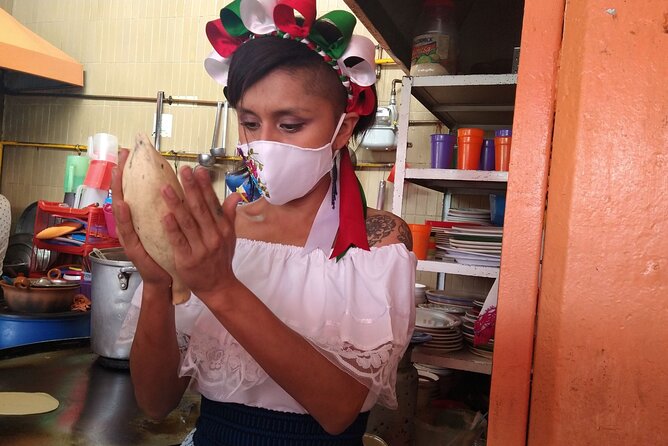
Do not eat a full breakfast before you arrive. The food is spread across the morning, and the combination of tamales, atole, tacos, fruit, huaraches, and possible extra bites can add up.
The tour introduces several different textures and flavors:
- Tamales: Soft masa wrapped around a savory or sweet filling.
- Atole: A warm, thick traditional drink made from corn.
- Tacos: Small portions that may include local fillings such as green chorizo.
- Huarache: A larger masa dish that works well with your homemade salsa.
- Tepache: A lightly fermented pineapple drink with a sweet and tangy taste.
- Fresh fruit and produce: A chance to try seasonal market ingredients.
Exact servings depend on the vendors, the day, and your guide. That flexibility is part of the market setting, but it also means you should not book this as a tightly measured culinary class with a guaranteed menu.
Guides make a major difference
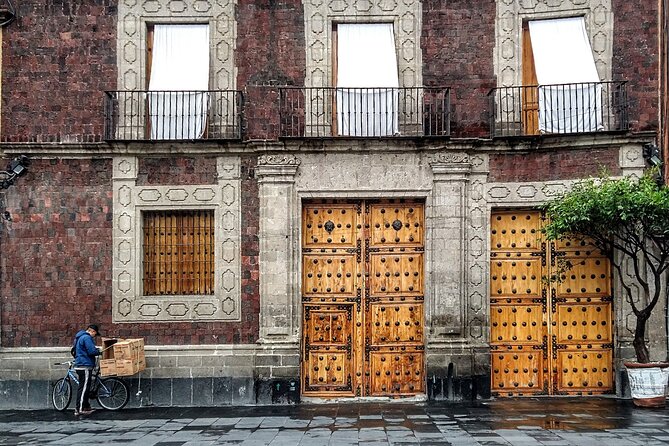
The tour depends heavily on the guide. The strongest guide names associated with this experience include Andrea, Axel, Viri, Poncho, Alfonso, Adriana, Roy, Victor, and Rogelio. Their roles go beyond translating food names. They explain the markets, introduce vendors, give Metro help, and adjust the pace for the group.
Andrea has been especially effective at helping people understand the subway and settling in quickly during their first days in the city. Axel has been praised for his friendly manner and strong connection with local people. Viri brings attention to buildings, murals, food traditions, and the practical side of using the Metro.
Alfonso and Poncho are good examples of guides who add city context to the food. Their tours have included architecture, art, neighborhood history, vendor introductions, and advice for the rest of a Mexico City stay. Adriana has also been noted for handling special requests, while Roy has taken care with vegetarian needs.
You cannot choose a guide from the information provided, so treat these names as examples of the standard to expect, not a guarantee. A good guide is particularly important here because the tour moves through places where signs and explanations may not always be aimed at English speakers.
Walking, clothing, safety, and weather
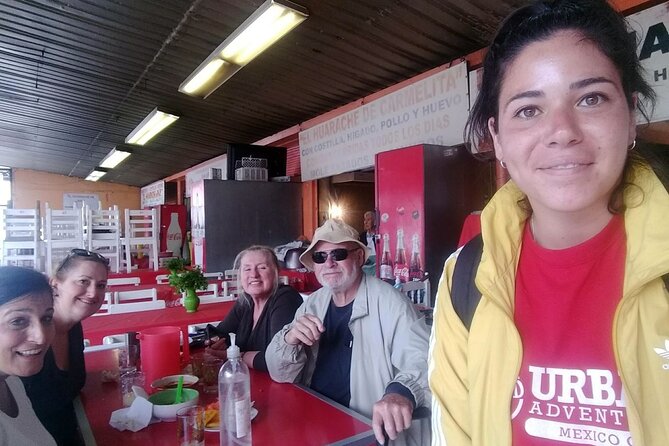
The route covers around 6 kilometers, or 3.7 miles. That is not extreme for a city walk, but markets slow you down, and standing at food stalls can be tiring. Wear broken-in walking shoes and bring water.
Dress simply and conservatively. Long trousers or jeans and a T-shirt fit the setting better than dress clothes, and you will be more comfortable around food stalls and public transport.
Leave your passport, extra cards, and expensive valuables at your hotel. Bring a small amount of spending money instead. You also need a small camera if you plan to photograph the murals or flowers, since large professional equipment is not appropriate.
Rain is a real concern from May through September. Pack a raincoat or umbrella, as the tour continues through markets and streets rather than staying indoors. A light waterproof layer is easier than trying to find shelter while the group is moving.
The tour requires a moderate fitness level. It may suit children and older family members who are comfortable walking, but the combination of distance, crowds, stairs or station movement, and a long morning can be demanding.
Is the $69.45 price good value?
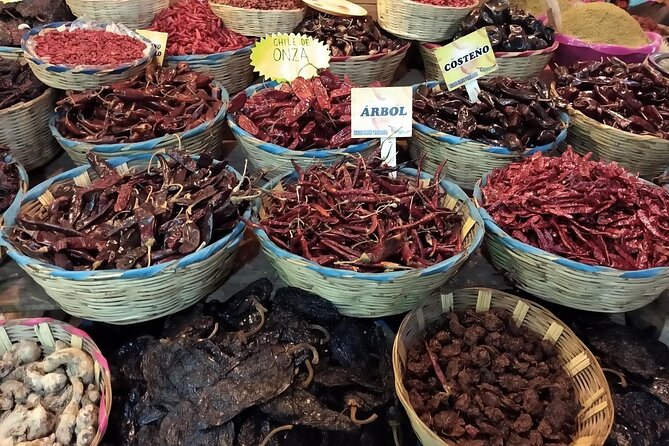
At $69.45 per person, the value comes from the combination of a guide, two markets, food introductions, Metro assistance, and the salsa lesson. You are paying for access and interpretation, not simply transportation between food stalls.
I think the price is fair if you want a first-day orientation to Mexico City. The tour can help you understand the Metro, point you toward local markets, and give you ideas for eating independently afterward. A private guide for five hours would cost much more, while a self-guided market visit would cost less but would not include the same explanations or family salsa lesson.
The unclear point is food inclusion. The experience description lists tastings, while the inclusion section says food and drinks are not included unless specified. I would budget extra for the tastings and ask for clarification before departure. This is not a major expense compared with the tour price, but it prevents an unpleasant surprise.
With a maximum of 12 people, you get a better chance to hear the guide and take part in the salsa preparation. If the group is smaller, the visit may feel more personal. If you are hoping for a private tour, note that a small group is not the same as a guaranteed private booking.
Who should book this experience?
I would recommend it to first-time visitors who want a practical introduction to Mexico City beyond the main sights. It suits solo travelers particularly well because the small group, guide support, and shared food make the morning easy to join.
Food-focused visitors will enjoy the range of everyday dishes, but this is not only a food tour. Art lovers get the murals, architecture fans get city context, and nervous Metro users get a guided first ride. Families can enjoy the hands-on salsa lesson, provided everyone is ready for a long walk.
You may want a different outing if you need step-free access, dislike public transport, have a very limited diet, or prefer a short tasting route with fixed portions. The tour is active, informal, and shaped by market conditions.
Cancellation is free up to 24 hours before the 8:30 a.m. start time. Changes or cancellations inside that window are not accepted for a refund.
Should you book it?
Book this tour if you want to see how food, public art, markets, and transport fit together in everyday Mexico City. The strongest reasons are the Abelardo Rodriguez murals, the flower market, the Metro lesson, and the family salsa preparation.
Skip it if you want a quiet, polished cooking studio or a guaranteed list of dishes. For most visitors who enjoy walking and are willing to carry a little extra cash, this is a useful first or second day activity. It gives you more than lunch: you get a practical start to finding your own way around the city.
FAQ
How long does the Mexico City market and salsa tour last?
The tour lasts approximately five hours and starts at 8:30 a.m.
Where does the tour begin?
You meet at República de Guatemala 4 in Centro Histórico, at the Hostel Mundo Joven facade.
Where does the tour end?
The tour ends at the facade or entrance of Palacio de Bellas Artes on Avenida Juárez.
Which markets does the tour visit?
The listed markets are Mercado Melchor Muzquiz and Mercado Jamaica. The detailed description identifies the first market as Mercado Presidente Abelardo L. Rodriguez.
Is the tour offered in English?
Yes. The experience is offered in English.
What food and drinks are included?
The tour features tastings such as tamales, atole, tacos, huaraches, fruit, and pineapple tepache. Food and drinks are not included unless specified, so you should bring spending cash and confirm the exact arrangements.
Do I get to make salsa?
Yes. You help wash, cut, and grill ingredients, then crush them in a molcajete with guidance from a local family business.
How much walking is involved?
The tour covers about 6 kilometers, or 3.7 miles, through markets and city streets. A moderate fitness level is recommended.
Can dietary requirements be accommodated?
Vegetarian, gluten-free, and lactose-free requirements can be accommodated if you provide notice at least 24 hours before the tour.
What is the cancellation policy?
You can cancel up to 24 hours before the start time for a full refund. Cancellations or changes made less than 24 hours before the start are not accepted for a refund.
Newly added plates around Mexico
- Tour of the Oaxaca Food Market★ 4.0 · 4 reviews
- Taco Tour in Oaxaca : delicious street food by bike★ 5.0 · 3 reviews
- Oaxaca Street Food Essentials★ 5.0 · 21 reviews
- Mexico City Street Food Tour Adventure★ 5.0 · 12 reviews
- Private Half-Day Traditional Markets Street Food Tour in Mexico City★ 3.0 · 2 reviews
- Night Street Food & Bike Tour / Small Groups /All Inclusive★ 5.0 · 25 reviews
- Mexico Off the Beaten Track: Street Food & Bikes — All Inclusive★ 5.0 · 14 reviews
- Private Street Food & Mural Art Tour in Mexico City★ 3.5 · 3 reviews
Hidden Food Spots, compared.
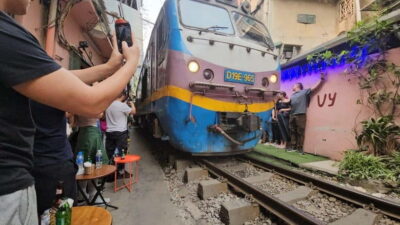
Street Food Tour with Train Street & Hidden Alleyways
Read our review →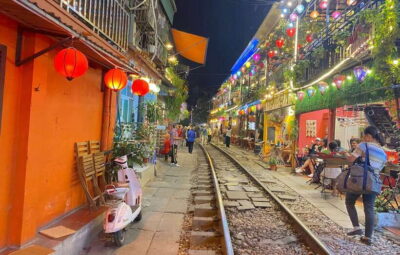
Guided Street Food Tour with Train Street Experience
Read our review →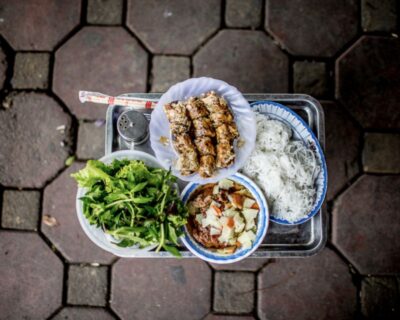
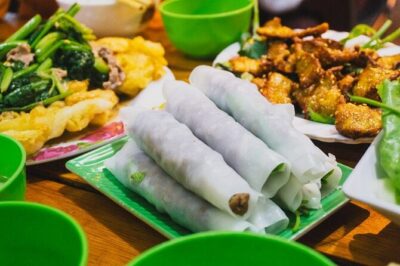
Walking Street Food Tour in Hanoi and Train Street
Read our review →
Saigon’s Hidden Flavors – Private Street Food Walk with Local Students
Read our review →
Vespa Female Ao Dai riders Night Street Food + See Train Street
Read our review →
Amman Walking Tour: Hidden Gems, Culture & Street Food
Read our review →
Saigon Street Food & Hidden Alleys by Scooter – 7/9/12 Tastings
Read our review →Browse the lists this tour appears in