
REVIEW · CHINATOWN FOOD TOURS
Street Food at China Town
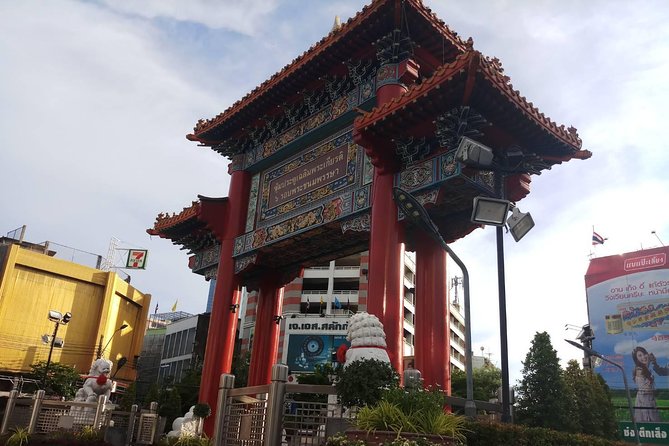
Bangkok’s Chinatown is at its best after dark, when food carts, shopfront kitchens, and crowded pavement tables turn Yaowarat Road into one long open-air dining room. This small-group evening tour gives you a guided way into that scene, with local dishes ranging from pink yentafo and Chinese noodles to oyster omelets, herbal drinks, and Thai desserts.
I like the wide food range, which moves from soup and noodles to seafood, fried dishes, sweets, and fruit. I also like the group limit of six, since that makes it easier to hear your guide and ask what you are eating. The main drawback is that the exact route and menu can change, lod chong is not served on Thursdays, and late arrivals of more than 10 minutes are treated as a voluntary cancellation.
Key points to know before booking
- A six-person maximum keeps the evening personal: You are not signing up for a large food march.
- The 6:00 PM start catches Chinatown at dinner time: Expect the area to be active, crowded, and full of competing food smells.
- The tasting list covers more than one style of cooking: You may sample Thai, Chinese, seafood, noodle, soup, fried, and sweet dishes.
- Thursday has a dessert change: Lod chong is replaced by Chinese cake.
- The route and meals can change: Treat the listed menu as a guide, not a fixed promise.
- The tour ends on Yaowarat Road: You finish in the heart of Chinatown, not back at the starting point.
Why Bangkok Chinatown works so well after 6:00 PM
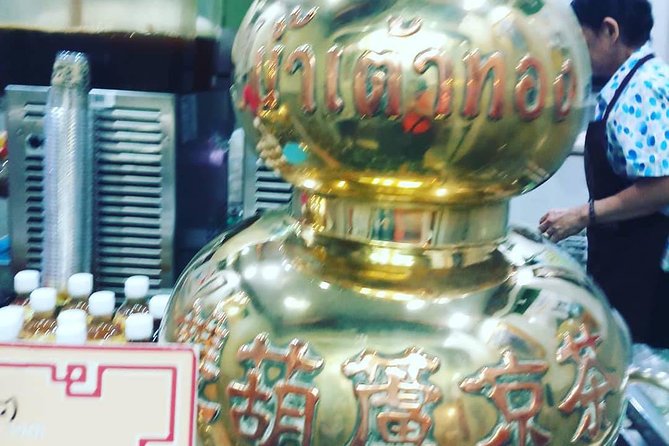
I like this tour because it uses the right setting for street food. Chinatown is not a quiet market built for sightseeing alone. It is a working food district, with restaurants, stalls, shops, and pavement kitchens competing for attention.
Starting at 6:00 PM puts you there as dinner service gets going. That matters. You see food being prepared for the evening rather than sampling a few leftover snacks in a nearly empty lane. The atmosphere can also be crowded and noisy, so you should come ready for a lively city outing rather than a calm restaurant meal.
The meeting point is listed at Hua Lamphong, on Rong Muang in Pathum Wan. The tour ends on Yaowarat Road in Chakkrawat, Samphanthawong. This point-to-point design is useful because you finish where much of the Chinatown action is concentrated.
You should still allow extra time to reach the meeting point. The information provided does not name a particular guide, so look for the licensed local representative and confirm the exact meeting instructions when your booking is confirmed.
More Chinatown eating walks in Bangkok:
- Bangkok Tuk-Tuk Tour by Night with Chinatown Street Food Meal
★ 5.0 · 635 reviews - Bangkok Tuk-Tuk by Night with Chinatown Street Food Meal
★ 4.6 · 263 reviews - Bangkok: Chinatown Food Tour with Michelin Food Stalls
★ 4.8 · 226 reviews
A guided route from Hua Lamphong to Yaowarat Road
The official itinerary names one food stop, Pa’jin Cockle Texas Yaowarat, while the tour description lists several tastings along the Chinatown route. That suggests an evening built around multiple sampling points rather than one sit-down meal.
The walk lasts about two hours, though the full experience is described as two to three hours. That small difference is normal for street food. A queue, a crowded pavement, or a popular stall can stretch the schedule. I would avoid booking a tightly timed attraction immediately afterward.
One useful feature is the ability to adjust the route, places, and meals as appropriate. That gives the guide room to respond to conditions on the street. It also means you should not expect a rigid checklist in the exact order shown online.
The advertised group maximum is six people. That is a strong practical advantage. In a small group, you can ask whether a dish is sweet, sour, spicy, seafood-based, or suitable for your preferences without trying to catch a guide’s voice over a large crowd.
The tour includes basic medical insurance, though that should not replace your own travel insurance. It also includes an experienced, friendly, fully licensed local guide and the food and drink tastings.
First tastes: yentafo and Chinese herbal drink
Yentafo is one of the more distinctive dishes on the menu. It is known for its pink broth, usually paired with noodles and assorted ingredients. The color alone makes it a good introduction to Chinatown’s food culture, where familiar noodle soup can arrive with a different balance of sweet, sour, salty, and fermented flavors.
You may find the dish surprising if you expect a plain soup. The exact ingredients and preparation can vary, and the supplied details do not specify every topping. Ask your guide what is in your bowl before eating if you have allergies or strong dislikes.
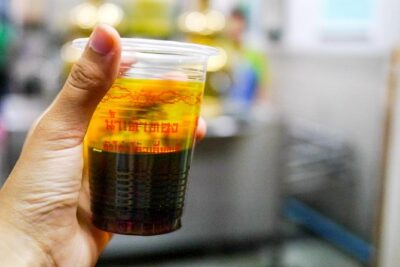
The Chinese herbal drink offers a useful contrast. Street food tours can become a steady parade of fried or spicy food, so a cool herbal drink gives your palate a change of pace. Its flavor may be less familiar than bottled soda or fruit juice, but that is part of the point.
I appreciate that the menu includes drinks as well as food. You are not simply being led from one snack to another. The evening gives you small examples of the tastes that make this part of Bangkok different from a standard restaurant meal.
Oyster omelet or fried rice at the hot pan
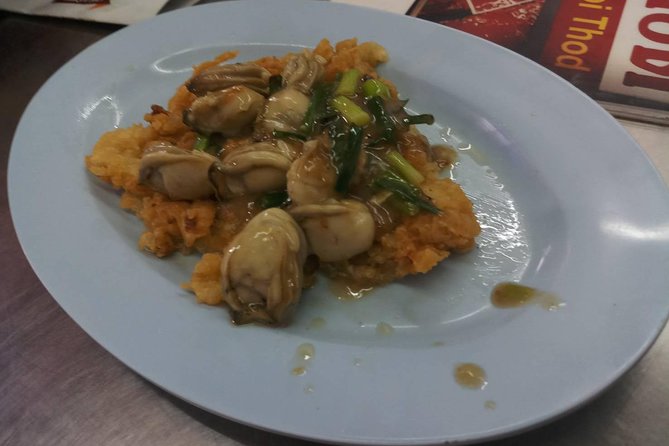
The next listed savory choice is an omelet with oyster fried pan or fried rice. Either option keeps the focus on food cooked hot and served as part of the evening street scene.
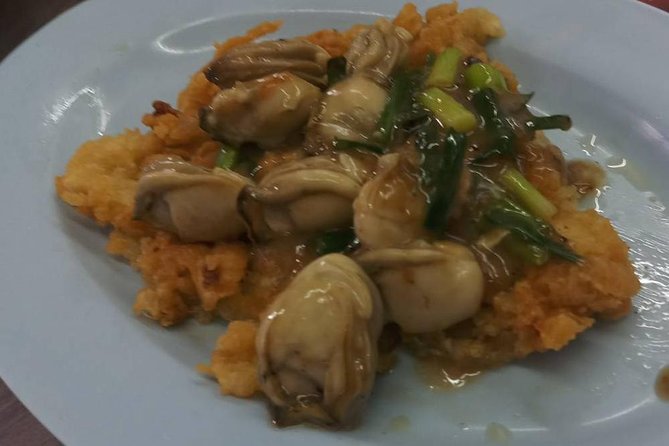
An oyster omelet is a classic choice for Chinatown. The appeal is in the mix of egg, seafood, and a hot pan texture. It can be rich, so a small tasting portion makes sense after soup and noodles. If the preparation is fried rice instead, you get something more familiar and filling.
The menu wording suggests that the exact selection may depend on availability. Do not book expecting a guaranteed individual dish if you have your heart set on the oyster omelet. The route and meals may be adjusted, and street kitchens can run out of a particular item.
This is also a good point to tell the guide about food restrictions. The supplied information does not provide a vegetarian, allergy, halal, or vegan menu. It is safest to ask before booking if you need a strict diet.
More street food tours in Bangkok:
- Bangkok: Michelin Guide Street Food Tour by Tuk Tuk
★ 4.4 · 1,274 reviews - Bangkok: E-Scooter Night Tour with Local Street Food
★ 4.8 · 488 reviews - Night Street Food Tour of Bangkok’s Chinatown
★ 5.0 · 173 reviews - Bangkok Food Tour by Tuk Tuk – Hotel-pickup & Dinner
★ 5.0 · 113 reviews
Chinese noodles and peppery soup
Chinese noodles paired with a peppery soup bring another layer to the evening. The soup should appeal to you if you like bold seasoning, though pepper heat is not the same as chili heat. Ask your guide how strong the broth is before you take a full spoonful.
Noodles are a smart inclusion on a street food route. They provide something substantial between smaller bites and help turn the experience into a light meal rather than a string of samples. The noodle dish also connects the food to Chinatown’s Chinese culinary influence without pretending every dish is from the same tradition.
The tour description does not specify a particular noodle style or soup base. That is worth keeping in mind. You are paying for a guided tasting experience, not a fixed restaurant menu with exact recipes guaranteed in advance.
Desserts change with the day
The sweet course is one of the more flexible parts of the menu. Possible choices include pa thong go, mango with sticky rice, kanom bueng, or fruit.
Pa thong go is a Thai-style fried dough snack, often eaten with a sweet accompaniment. Mango with sticky rice is a more familiar Thai dessert, with fruit, sticky rice, and a sweet creamy element. Kanom bueng is a crisp Thai snack with a filling, while fruit provides the lightest finish.
Lod chong is listed as another dessert or tasting, but it is not available on Thursdays. On that day, Chinese cake is offered instead. If dessert is a major reason for booking, Thursday is worth noting before you choose your date.
The menu’s flexibility is both a strength and a limitation. It lets the guide work with what is available and keeps the route practical. At the same time, you should view the food list as a sample of possibilities, not a contract promising every named item.
The flavors are broad, but the portions are not explained
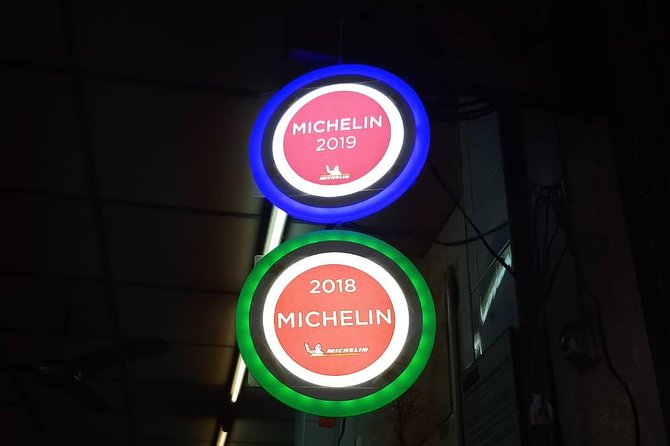
The tasting list covers a lot of ground: yentafo, Chinese herbal drink, an oyster omelet or fried rice, noodles, peppery soup, and dessert. That is enough variety to show you several sides of Chinatown’s food culture in one evening.
What is not stated is the size of each serving. You should expect tasting portions rather than a formal multi-course dinner, but the exact amount is not given. If you arrive hungry, that may be sensible. If you want a large meal, plan to buy something extra after the tour.
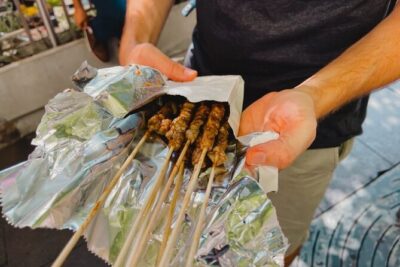
The food also includes seafood, especially at the named Pa’jin Cockle Texas Yaowarat stop. Grilled seafood is a natural fit for this district, and the provided food notes specifically highlight grilled squid as a memorable possibility. You should mention allergies to shellfish or other seafood before the tasting begins.
The food is one of the main reasons to choose this experience, but the setting matters just as much. You are not only sampling flavors. You are learning how Chinatown eats at night, in a place where food and shopping share the same crowded streets.
What the atmosphere is really like
Chinatown is crowded, with many shops and food choices packed close together. That density creates the excitement, but it can also make the walk less comfortable if you dislike noise, crowds, or standing.
The street food environment is not the same as a polished dining room. You may be eating while standing, beside a stall, or at a compact shared table. The information provided describes the shops as clean and hygienic, but no specific seating arrangement is promised.
I like the fact that the tour ends on Yaowarat Road. You can continue exploring after the guided portion, shop, or find another meal. You are not left in an unfamiliar suburb after the food stops.
A tuk-tuk ride has been associated with one account of a Chinatown food outing, but it is not listed as an included feature here. Do not book this tour expecting tuk-tuk transport. The confirmed inclusions are the guide, tastings, and basic medical insurance.
Is $59 a fair price?
At $59, this is not the cheapest way to eat in Chinatown. You can buy individual street dishes for much less. The value comes from the guide, the planned sequence of tastings, the small group, and the chance to try foods you might otherwise walk past.
For me, the group size is important to the price. A maximum of six gives the guide a better chance to explain dishes and keep the group together in crowded streets. If you already know Chinatown well and feel comfortable ordering on your own, you may get better value by spending the money directly on food.
If you are new to Bangkok, the price is easier to justify. You get a focused evening introduction, several foods, drinks, and a route that finishes in the district you came to see. The tour also includes basic medical insurance, though that is a modest extra rather than a reason by itself to book.
The best value comes when you treat the tour as both dinner and orientation. It saves you the work of choosing every stall and gives you a local guide to help explain the food. It is less compelling if you want one large meal, a fixed menu, or a low-cost self-guided outing.
Who should book this evening food walk?
I would point this experience toward first-time visitors to Bangkok who want a clear introduction to Chinatown after dark. It also suits people who like trying several dishes in one night rather than committing to one restaurant.
The small group should work well for couples, friends, and solo food lovers who want some guidance without joining a very large outing. The broad menu is useful for curious eaters, but anyone with strict dietary needs should ask questions before booking.
Families may enjoy the dessert and familiar fried rice options, but the crowded streets and peppery soup may not suit every child. The experience is also less suitable for anyone who needs guaranteed seating, a precise schedule, or a completely fixed menu.
The tour is available with a Hebrew-language option if booked at least one day in advance. That is a valuable detail for Hebrew speakers, since the language request cannot be left until the last minute.
Timing, cancellation, and practical planning
Confirmation is provided when you book, and the tour is near public transportation. The start time is 6:00 PM, with the meeting point at Hua Lamphong and the finish on Yaowarat Road.
Be on time. Arriving more than 10 minutes late is treated as a voluntary cancellation, with no indication that the group can wait. I would arrive early enough to find the meeting point without rushing.
Free cancellation is available up to 24 hours before the start time for a full refund. Cancellations or changes made less than 24 hours before the start are not refunded or accepted. The cut-off uses local Bangkok time.
The experience requires good weather. If poor weather causes cancellation, you are offered another date or a full refund. That policy matters for an outdoor food route, where rain can affect both walking and street-stall operations.
Should you book Street Food at China Town?
Book it if you want a guided first taste of Bangkok Chinatown, enjoy trying several small dishes, and value a group capped at six. The mix of noodles, soup, seafood, fried food, herbal drinks, and dessert gives you a strong range in a short evening.
Skip it if you prefer choosing every dish yourself, need a guaranteed menu, or want a quiet sit-down dinner. Also think twice if you cannot eat seafood or need strict dietary control, since the food list includes seafood and no alternative menu is specified.
For most food-focused visitors new to Bangkok, the combination of a 6:00 PM start, local guide, varied tastings, and a Yaowarat Road finish makes the $59 price reasonable. Just arrive early, keep your plans flexible, and remember that Thursday brings Chinese cake instead of lod chong.
FAQ
What time does the tour start?
The tour starts at 6:00 PM.
Where do I meet the guide?
The meeting point is Hua Lamphong, Rong Muang, Pathum Wan, Bangkok 10330, Thailand.
Where does the tour end?
The experience ends on Yaowarat Road, in Chakkrawat, Samphanthawong, Bangkok.
How long does the experience last?
It lasts approximately two to three hours. The listed food route itself is described as about two hours.
What food and drinks are included?
The listed tastings include yentafo, lod chong or Chinese cake, a Chinese herbal drink, an omelet with oyster fried pan or fried rice, Chinese noodles with peppery soup, and dessert options such as pa thong go, mango with sticky rice, kanom bueng, or fruit.
Is lod chong available every day?
No. Lod chong is not available on Thursdays. Chinese cake is offered instead.
How many people can join the tour?
The tour has a maximum of six participants.
What happens if I cancel or the weather is poor?
You can cancel at least 24 hours before the start time for a full refund. Cancellations made less than 24 hours in advance are not refunded. If poor weather cancels the experience, you are offered a different date or a full refund.
Newly added plates around Bangkok
- 4-Hour Hidden Bangkok TukTuk Street Food Guided Tour★ 5.0 · 23 reviews
- Famous Thai Street Food Tasting Experience!★ 5.0 · 4 reviews
- Bangkok 3-in-1 Tour: Longtail Boat,TukTuk & Street Food Adventure★ 5.0 · 73 reviews
- LR-01 TaLad NangLerng, ride along the old town and try local street foods★ 4.5 · 13 reviews
- Authentic Street Food Tour in China Town Bangkok★ 5.0 · 25 reviews
- Private – STREET FOOD TOUR THONBURI incl. dinner★ 4.5 · 5 reviews
- Bangkok Night Market Tour Dinner and Vintage Find★ 5.0 · 9 reviews
- Bangkok: Michelin Guide Street Food Tour by Tuk Tuk★ 4.5 · 56 reviews
Chinatown Food Tours, compared.
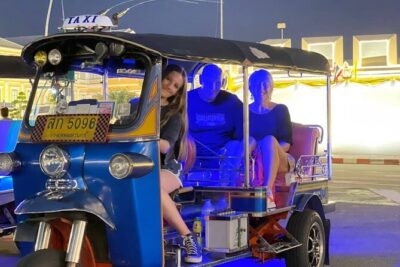
Bangkok Tuk-Tuk Tour by Night with Chinatown Street Food Meal
Read our review →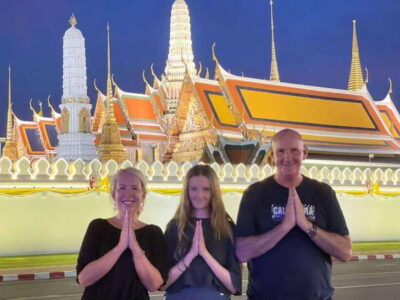
Bangkok Tuk-Tuk by Night with Chinatown Street Food Meal
Read our review →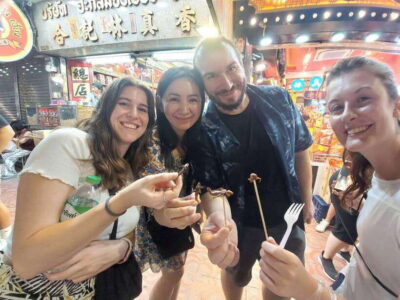
Sydney’s Chinatown Street Food and Stories Walking Tour
Read our review →
Kampong Glam, Little India & Chinatown with Local Street Food Tastings
Read our review →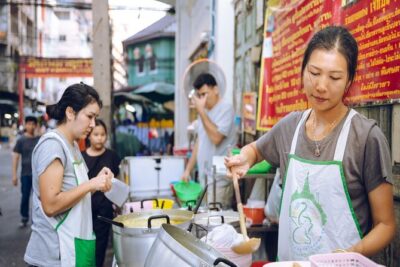
Bangkok Hidden Gems: Talad Noi, Chinatown & Street Food Tour
Read our review →Browse the lists this tour appears in