
REVIEW · HISTORICAL TOURS
Street Food, Cultural & Historical Tour of 3 Ethnic Quarters
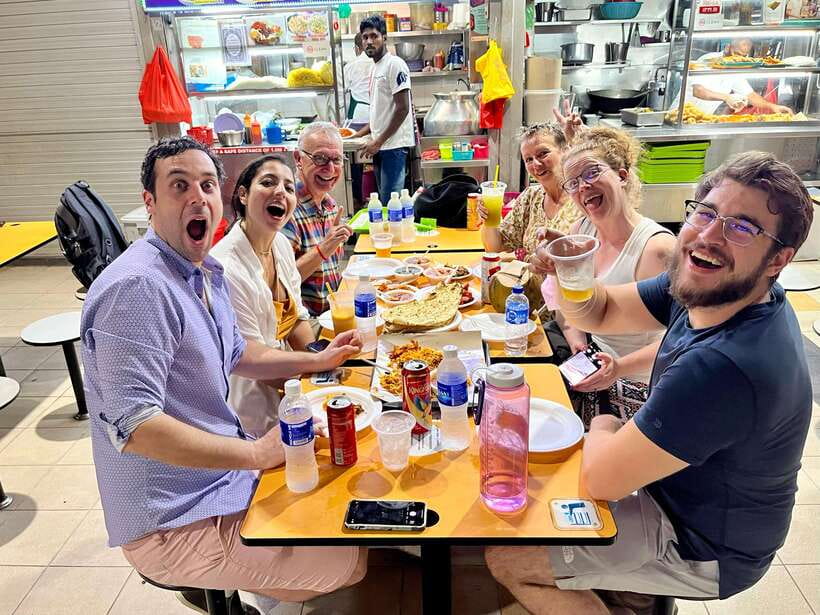
Singapore’s immigrant story is easiest to understand with a snack in one hand and a local guide beside you. Gerry, a Singapore-born Chinese Peranakan whose great grandparents arrived from Fujian in 1910, links Chinatown, Little India, and Kampong Glam through food, old photographs, and personal stories.
I like the small group of no more than eight, which gives you room to ask questions. I also like that the food stops support family-run eateries and hawker stalls rather than turning the day into a parade of tourist restaurants. The main consideration is stamina: six hours, about 6,000 steps, warm weather, markets, and several food stops can be a lot for anyone with mobility or dietary limits.
Key points at a glance
- Gerry’s local perspective: He grew up in Singapore and uses family history, photographs, humor, and everyday stories to explain the city.
- Three historic quarters: Chinatown, Little India, and Kampong Glam each show a different part of Singapore’s immigrant and colonial past.
- Food with context: You eat at hawker centres, family eateries, and local stalls while seeing where ingredients and traditional goods are sold.
- Public transport included: Short MRT or public transport rides connect the neighborhoods and show you how residents move around Singapore.
- A generous food day: Beer, coffee, tea, local snacks, lunch, dessert, and food tastings are included in the $148 price.
- A walking tour with limits: Expect roughly 6,000 steps and uneven, crowded market settings, so comfortable shoes matter.
Why this six-hour tour works
Singapore can look polished and modern at first glance. Skyscrapers, spotless stations, and orderly roads tell only part of the story. This tour takes you into older neighborhoods where food, religion, trade, and family businesses reveal how the city grew.
The strongest part is the connection between what you see and what you eat. A market is not just a colorful stop for photographs. It shows the ingredients that shape local cooking. A hawker centre is not simply a cheap place for lunch. It reflects Singapore’s effort to preserve an everyday food culture built by immigrant families.
Gerry’s background adds a personal thread. He was born six years after Singapore became independent in 1965, and his family roots reach back to Fujian, China. That gives him a useful position: he can explain older immigrant life while also discussing the post-independence changes that made Singapore the modern city you see today.
You should expect plenty of conversation. Gerry uses old images to show earlier streets, businesses, and living conditions, then compares them with the present-day neighborhoods. His humor is a large part of the experience, but the day is not only entertainment. You get a clearer sense of how government policies, urban planning, and the survival of small businesses shaped the city.
More history-and-food walks around Singapore:
- Chinatown Heritage Walk & Street Food Tasting (Small Group)
★ 5.0 · 16 reviews - Chinatown Heritage and Local Street Food Small Group Tour
★ 5.0 · 10 reviews - Palermo: Street Food and History Walking Tour
★ 4.9 · 1,486 reviews
Chinatown: food, faith, and harder stories
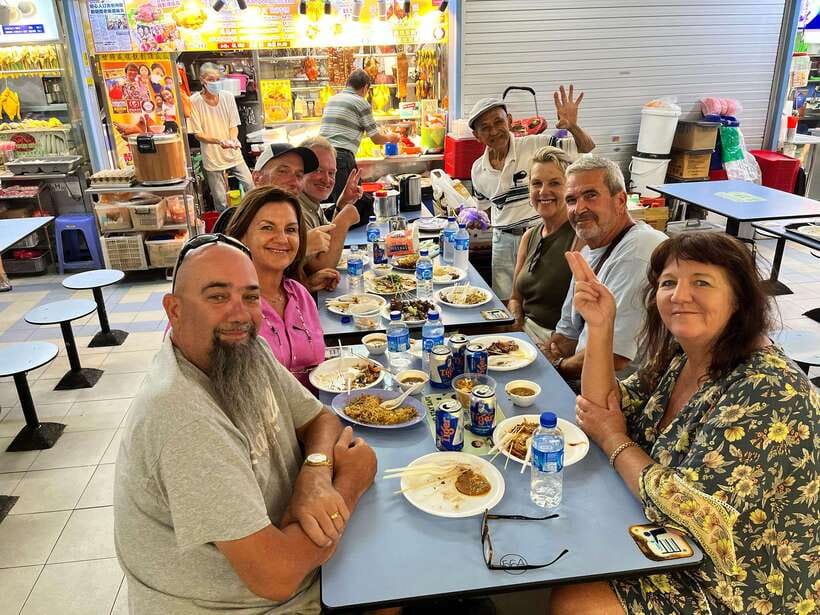
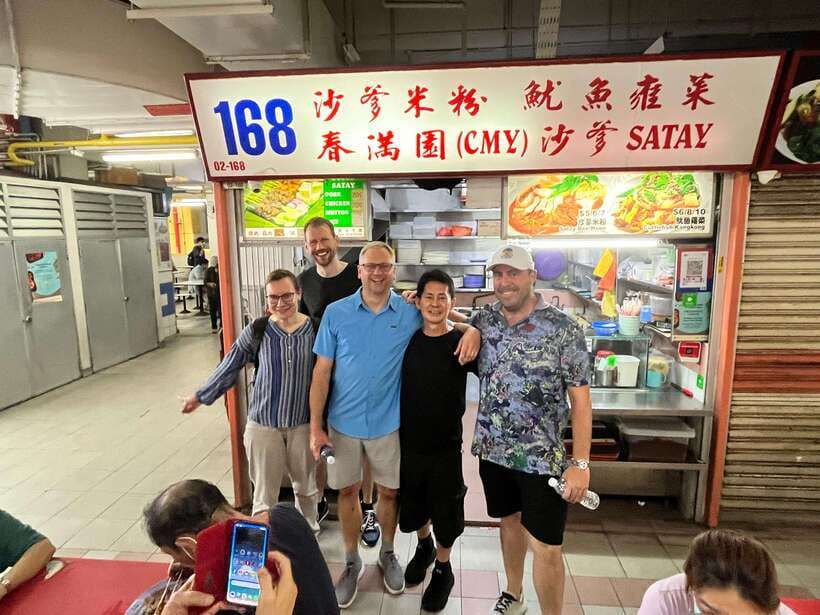
The Chinatown portion begins with local Chinese food and drink at a hawker centre. Hawker centres are central to Singapore’s food culture, and the ones visited on this experience are part of the city’s UNESCO-recognized hawker tradition.
This is a good place to start because you can see how ordinary meals fit into daily life. Food is served in a shared public setting, not a formal restaurant, and the choices reflect Singapore’s Chinese culinary traditions. Some food and drink stops are connected with places listed in the Michelin Guide, though the exact dishes can vary.
The tour also includes a Buddhist temple. Gerry provides the setting and explains how religious sites fit into the neighborhood’s history. You are not simply moving from one eating stop to the next. The temple helps show the community structures that supported early Chinese immigrants.
Chinatown’s street stalls bring a different mood. You may see goods, snacks, and small traders operating in the same district where earlier immigrant businesses once served new arrivals. Gerry’s stories cover difficult subjects, including the Street of the Dead, red lanterns and private chambers, and opium dens.
These details give Chinatown some weight. Singapore’s early immigrant quarters were not tidy heritage displays. People arrived looking for work, faced hard conditions, and built businesses and social networks under pressure. The old photographs help you picture that past without relying only on dates and names.
The Chinatown hour is fairly short, so do not expect a full museum-style examination of every site. Its value comes from the mix of food, temple, market streets, and storytelling. If you want a relaxed walk with time for shopping, this schedule may feel quick. If you want a useful first look at the district, it makes good use of the time.
Little India: markets that explain the plate
A short public transport ride takes you to Little India. Tickets are included, and the trip itself is part of the experience. Singapore’s public transport system is clean, efficient, and well connected, so using it helps you see how the three quarters relate to the wider city.
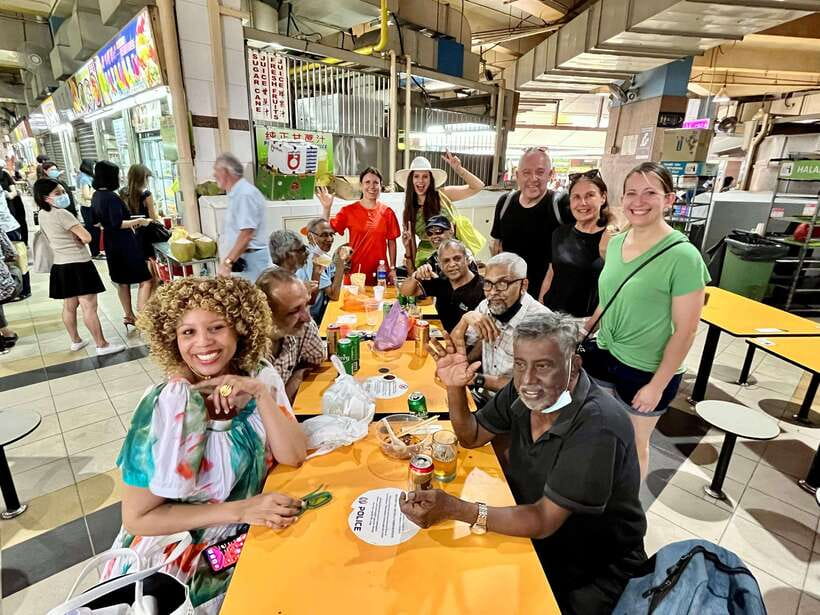
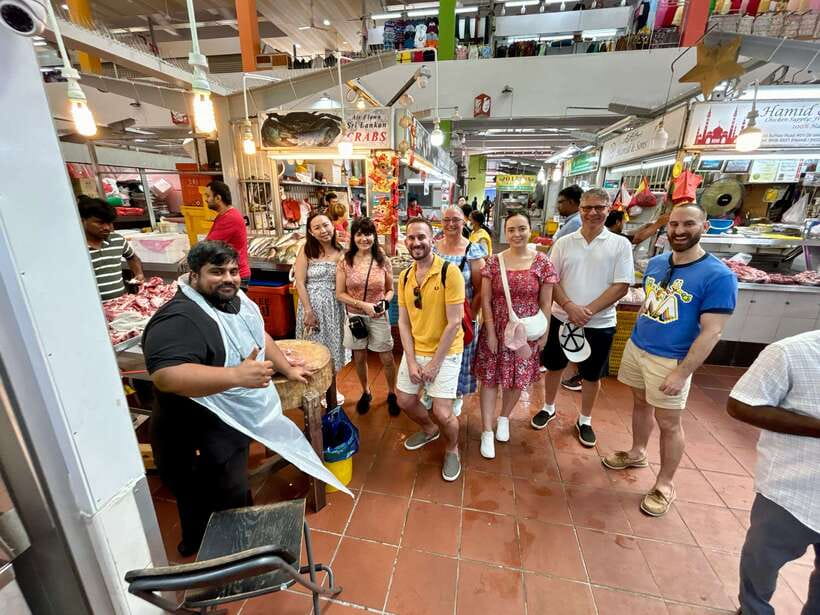
Little India begins with produce and food markets. You visit wet and dry sections with seafood, meat, fruit, vegetables, spices, and other ingredients. This is one of the most useful parts of the tour for anyone who wants to understand food beyond the finished dish.
Spice stalls are especially helpful because they connect sight and smell with the meal later in the day. You can see the raw materials used in Indian cooking, while Gerry explains how markets and family businesses fit into neighborhood life. The seafood and meat stalls also show the practical side of food shopping, not just the polished presentation found in restaurants.
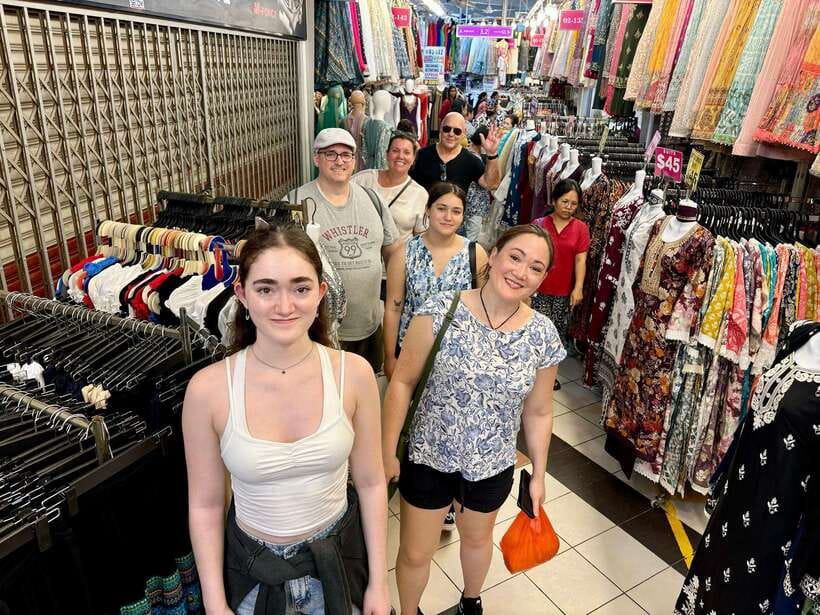
You also visit Indian clothing shops and street stalls. These businesses give Little India a strong sense of place. The quarter is not presented as a frozen historic zone. It remains a working area where people shop, eat, trade, and maintain cultural traditions.
Lunch takes place at a family eatery serving local Indian and Malay food and drink. The food is varied across the full day, so pacing matters. You may want a very light breakfast, or none at all, especially if you enjoy trying everything offered. Several people praised the amount of food, and one useful practical point is clear: arrive hungry but not uncomfortable.
Coffee, tea, beer, local snacks, and food tastings are part of the wider program. The exact balance depends on the day and the available stalls, but you should expect more than one small sample. This is a food tour with a substantial meal, not a simple market walk with one tasting.
Little India is also where dietary limits become important. The experience is not suitable for vegans or people with gluten intolerance. It is also not designed around special dietary substitutions, so ask before booking if you have food restrictions.
Kampong Glam: textiles, lanes, and a sweet finish
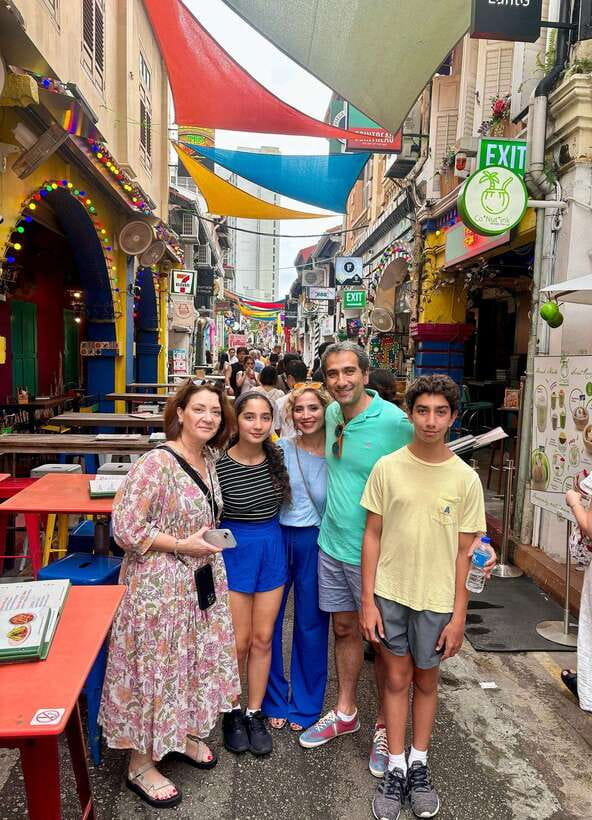
The final neighborhood is Kampong Glam, the Malay quarter. Here, the focus shifts from markets and hawker centres to textile shops, colorful street art, Haji Lane, and the area around Singapore’s first Sultan Mosque.
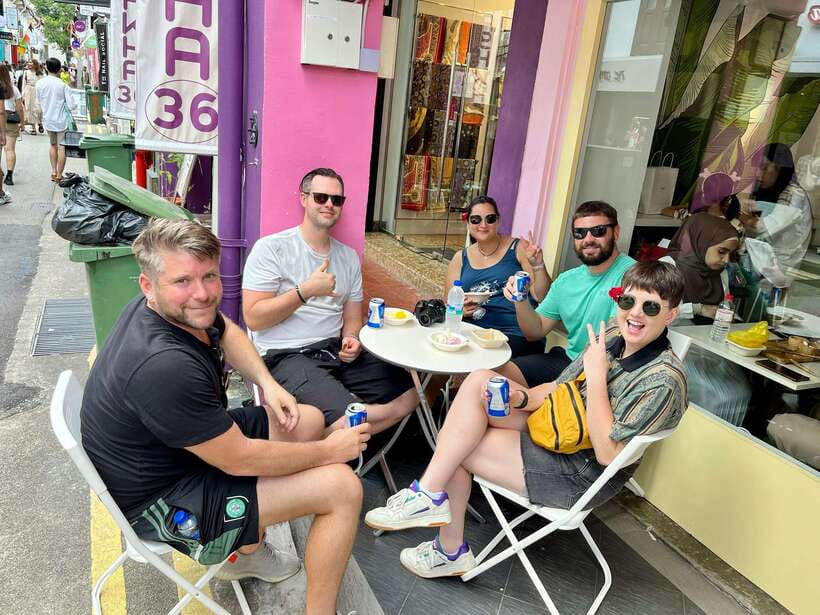
Haji Lane brings a more playful side of the tour. You walk through a narrow street known for its bright walls, small businesses, and creative decoration. The neighborhood’s appearance is different from Chinatown and Little India, which helps you see how each quarter developed its own identity.
Arab Street adds a look at textile trading and Muslim commercial life. Gerry introduces the Sultan Mosque and explains its place in Singapore’s story. The stop is not simply about architecture. It shows how the Malay and Muslim communities shaped the quarter and how religious, commercial, and social life overlapped.
Dessert is served in an old shophouse accommodation once used by Muslim pilgrims in the nineteenth century. That detail gives the final food stop a strong sense of place. You are eating in a building connected with the movement of people through the city, rather than ending at an anonymous café.
One point to keep in mind is that the last neighborhood focuses more on dessert than on a full savory meal. If you expect another large food course in Kampong Glam, you may find the finish lighter. It is still a pleasant way to end the day, especially after lunch and the earlier tastings, but the food balance is not equal in every quarter.
More street food tours in Singapore:
- Small Group: Michelin and Local Hawker Food Tour with 9 tastings
★ 5.0 · 1,890 reviews - Small Group: Singapore Street Food & Night Tour with 9 tastings
★ 5.0 · 1,240 reviews - Singapore: UNESCO Street Food & Cultural Experience
★ 5.0 · 524 reviews - Small-Group Food Tour With Hawker Center: Eat Like A Local
★ 5.0 · 420 reviews
Gerry’s guiding style and the small-group advantage
Gerry is the main reason this experience feels more personal than a standard neighborhood tour. He is described as funny, warm, and easy to talk with, and he uses plenty of pictures and stories. That matters in Singapore, where the visible modern city can otherwise make the older history hard to imagine.
The small group size, capped at eight, supports this approach. You can ask about a dish, a family business, transport, religion, or Singaporean customs without trying to get the guide’s attention in a crowd. If you enjoy asking questions, this format is a strong fit.
The guide also makes an effort to support local and small businesses. That does not mean every stop is a tiny independent stall, but the day is built around hawkers, traders, markets, and family-run food places. You see the people and businesses that keep traditional food culture alive.
There is also a practical sense of care. Gerry can help with pickup arrangements when the location qualifies, and he provides advice about meeting points if hotel pickup is not available. The group returns to Raffles City or City Hall MRT, which keeps the finish central.
Is $148 a fair price?
At $148 per person, this is not a budget hawker crawl. The price makes more sense when you count what is included: six hours with a local guide, several food and drink stops, beer, lunch, dessert, public transport tickets, and pickup and drop-off where available.
You are also paying for interpretation. You could visit Chinatown, Little India, and Kampong Glam independently for less money. You would not, however, easily recreate the same sequence of markets, historic references, food stops, and old photographs in one day. You would also need to research where to eat and how to connect the neighborhoods.
The value is strongest if you want a guided introduction to Singapore’s food culture and do not want to spend your first days sorting out hawker stalls on your own. It is weaker if you are a highly independent eater who already knows Singapore well or if you want a slow, restaurant-focused food tour.
The food quantity appears generous, so think of the price as covering a full day of eating as well as sightseeing. You do not need to budget for the included food, drinks, or transit. Personal purchases and souvenirs are extra.
Walking, transport, and who should book
You will walk about 6,000 steps, with time on foot in markets and busy streets. Wear comfortable shoes and light, comfortable clothing. The tour is not suitable for people with low fitness, back problems, vertigo, respiratory issues, or mobility impairments.
Large bags, oversize luggage, strollers, mobility scooters, non-folding wheelchairs, walking frames, and baby carriages are not allowed. Babies under one year are also not suitable for the experience. Pregnant people are advised not to book.
The tour is conducted in English and works best for you if you enjoy food, history, conversation, and a fairly active day. It also suits families with older children. A 15-year-old accompanied one parent and had a very positive experience, but the walking and food pace may not suit every child.
You should also be comfortable eating in market and hawker settings. This is not a quiet luxury food tour. It is a social, practical look at how Singapore eats and lives.
Should you book the three-quarter food tour?
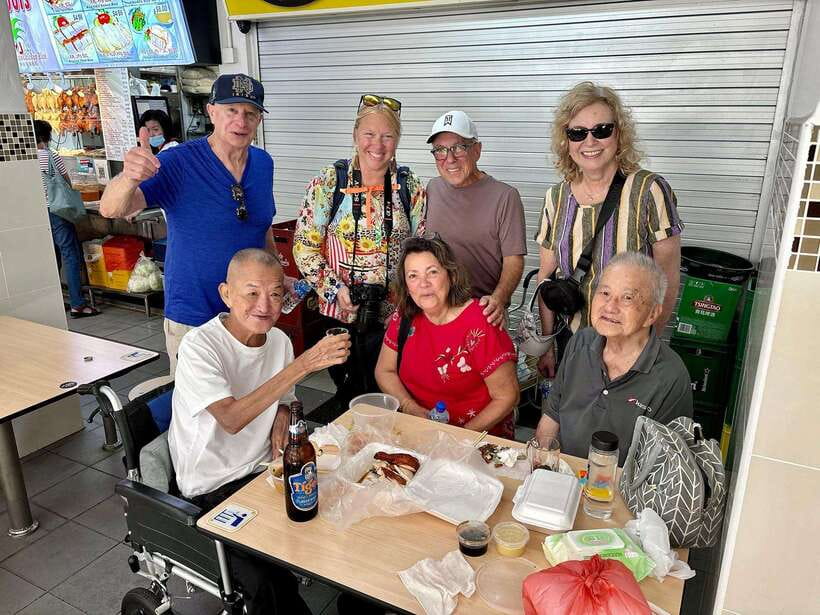
Book it if you want a guided first look at Singapore that combines food with social history. Gerry’s personal background, old photographs, humor, and care for small businesses give the day more meaning than a checklist of famous neighborhoods.
You may want to skip it if you need a wheelchair-friendly route, have serious food restrictions, dislike public transport, or prefer to explore one district slowly. The schedule covers a lot of ground, and Kampong Glam has a lighter food finish than the earlier stops.
For most visitors who have six hours, a healthy appetite, and comfortable walking shoes, the tour offers a useful balance: plenty to eat, enough history to make the neighborhoods clearer, and just enough transport time to show how Singapore functions beyond the postcard views.
FAQ
How long does the tour last?
The experience lasts six hours, including walking, food stops, neighborhood visits, and public transport between the three quarters.
Which neighborhoods are included?
The tour visits Chinatown, Little India, and Kampong Glam, representing Chinese, Indian, and Malay areas of Singapore.
Who leads the tour?
The guide is Gerry, a Singapore-born Chinese Peranakan whose great grandparents arrived from Fujian, China, in 1910.
Is food and drink included?
Yes. Food and drink are included, with lunch, local snacks, coffee, tea, beer, dessert, and tastings across the day. Personal purchases are not included.
Is public transport included?
Yes. Public transportation tickets for the rides between the three neighborhoods are included.
Where does pickup and drop-off take place?
Pickup and drop-off are available at some city-area hotels, depending on location. You may also meet at Chinatown, Little India, or the nearest MRT station. The listed central options are City Hall MRT and Raffles City, with the return to Raffles City or City Hall MRT.
Is the tour suitable for people with dietary or mobility restrictions?
The experience is not suitable for vegans or people with gluten intolerance. It is also not suitable for people with mobility impairments, wheelchair users, back problems, vertigo, respiratory issues, low fitness, or pregnancy.
Newly added plates around Singapore
- UNESCO Hawker Culture: Chinatown Food Tasting Tour★ 4.9 · 43 reviews
- Private Tour Singapore Street Food & Night Tour★ 5.0 · 4 reviews
- UNESCO Hawker Culture: Chinatown Food Tasting Tour★ 5.0 · 47 reviews
- Singapore Street Food Join-In Tour★ 5.0 · 2 reviews
- Singapore Nightlife: Street Food, Night Views and Drinks★ 5.0 · 19 reviews
- Signature Urban Night Tour: Sunset Street Food in Singapore★ 5.0 · 4 reviews
- Singapore Street Food and Ethnic Quarters Kick Scooter Tour★ 5.0 · 8 reviews
- Singapore: Little India Hawker Food Tasting Tour★ 5.0 · 21 reviews
Historical Tours, compared.
Walking Tour and street food Tour Palermo / History and Food
Read our review →
Discover Palermo in 3 hours. Art, history, markets and street food
Read our review →
Lecce History and Street Food Tasting Small Group Tour
Read our review →
Historic Center Street Food, Market, and Eateries Tour
Read our review →
Dubai Old Town, Culture, History, Street food and Souks Tour
Read our review →
Old Dubai Historic Guided Tour: Creek, Street Food & Souks
Read our review →
Browse the lists this tour appears in