
REVIEW · TOKYO STREET FOOD TOURS
Tokyo: Togoshi Ginza Street Food Tour
Tokyo’s best food streets are not always the famous ones. This two-hour walk begins at Musashi Koyama and heads into Togoshi Ginza, a local shopping district with about 400 shops. You’ll eat charcoal-grilled yakitori from a shop dating to 1929, award-winning karaage, an onigiri of your choice, curry bread, pudding, and more. I like the local setting, where people shop and eat as part of daily life, and the generous range of food, which lets you try things you might skip on your own.
The catch is simple: you walk about 1.86 miles, or 3 kilometers, while eating several substantial portions. That makes this a poor pick if you tire easily, and you should arrive hungry. Most food is eaten outdoors or on the move, so weather can affect your comfort.
Key points at a glance
- Yakitori from a 1929 shop: Begin with charcoal-grilled chicken skewers in Musashi Koyama.
- Forty-plus onigiri fillings: Pick a rice ball ranging from spicy tuna to bacon and cream cheese.
- Two connected local districts: Walk from Musashi Koyama Palm Shopping Street to Togoshi Ginza, Tokyo’s longest shopping street.
- Seven tastings and one drink: The food adds up to much more than a few token samples.
- Small groups of eight or fewer: Guides such as Sahori, Daisy, Bunga, and Brian can keep the walk personal.
- A useful two-hour introduction: You see a residential side of Tokyo without giving up much of your day.
Why this food walk feels different from central Tokyo
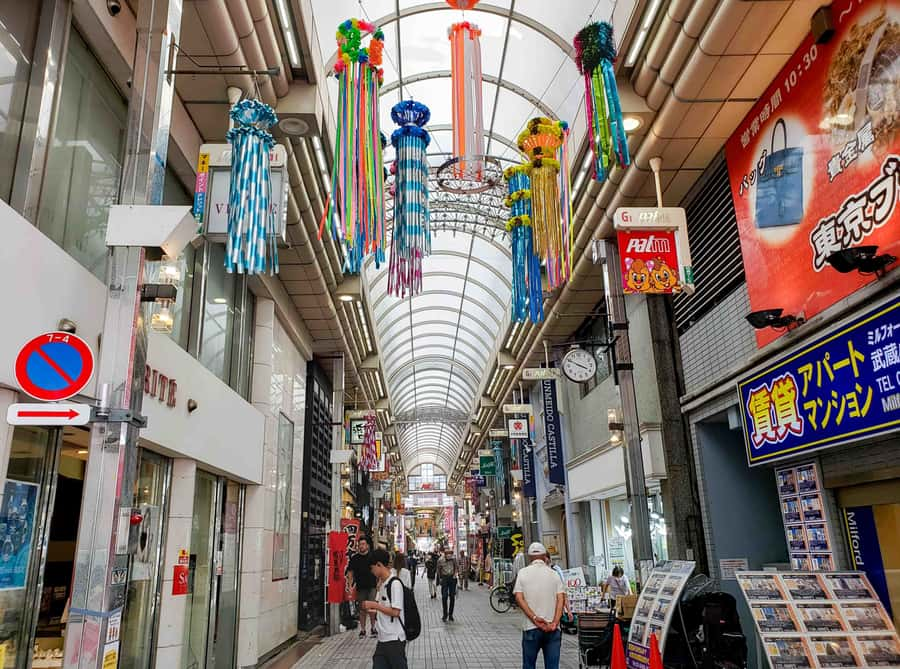
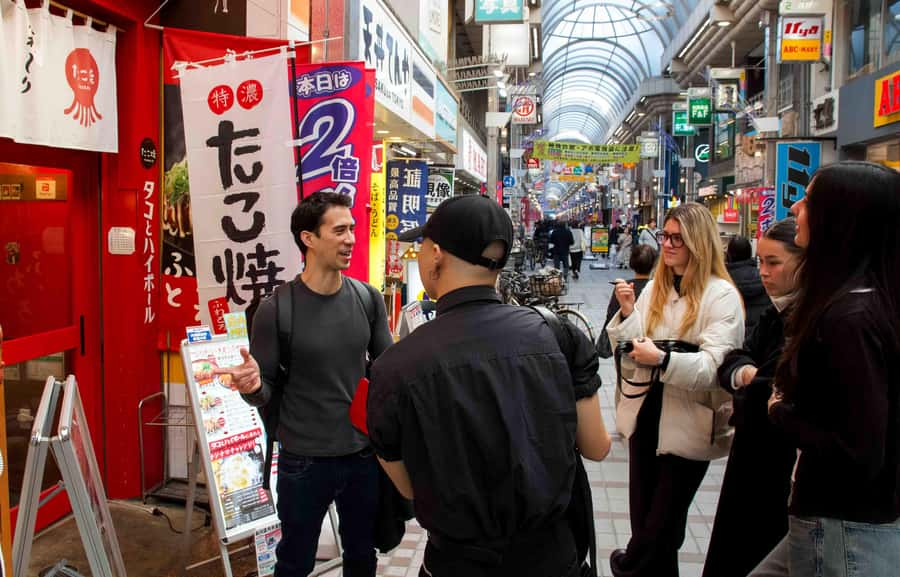
The main appeal is the setting. You are not simply moving between restaurants in a tourist center. You start at the entrance to Musashi Koyama Palm Shopping Street, then walk through a part of Tokyo where local shopping streets, food counters, and neighborhood routines matter more than famous sights.
Togoshi Ginza is known as Tokyo’s longest shopping street, with roughly 400 shops. That gives the walk a useful sense of place. You can watch the food being bought and sold in a working neighborhood instead of treating Japanese cooking as a display made only for visitors.
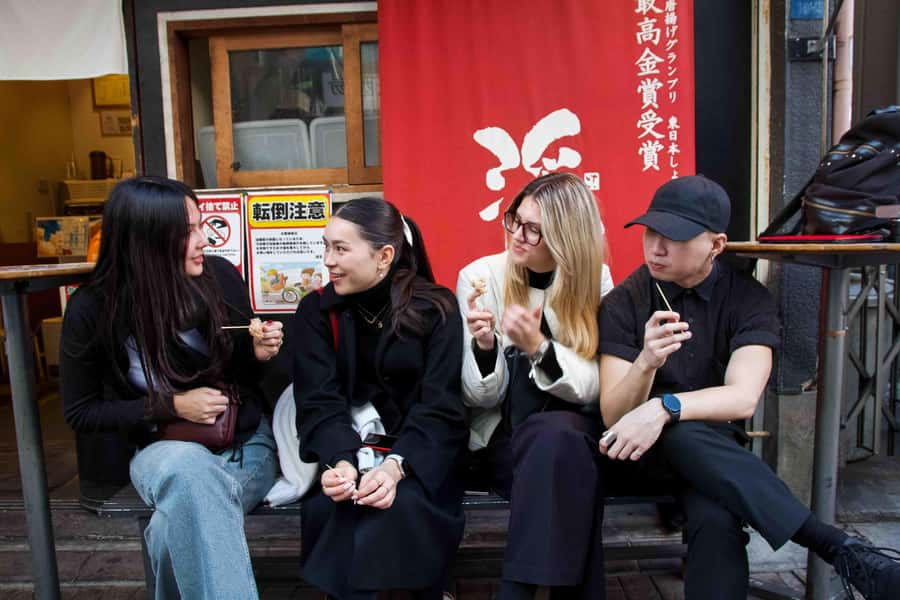
I especially like this kind of tour early in a Tokyo visit. A guide helps you cross the language gap, explains what you are eating, and points out why a particular shop matters. Several guides lead the experience, including Sahori, Daisy, Bunga, Brian, and Frank. Names and assignments can change, but the format remains a small English-language group limited to eight people.
The pace is fairly quick because the tour lasts only two hours. You will not have a long sit-down meal at every stop. Instead, you sample, walk, look around, and try the next specialty. That suits you if you want a broad taste of Tokyo rather than one carefully paced restaurant meal.
More street food tours in Tokyo:
- Tokyo: Tsukiji Fish Market Food and Culture Walking Tour
★ 4.7 · 757 reviews - Tsukiji Fish Market: Street Food & Culture Walking Tour
★ 5.0 · 669 reviews - Tsukiji Fish Market: Street Food & Culture Walking Tour
★ 4.8 · 259 reviews
Starting with yakitori in Musashi Koyama
Your meeting point is outside the Starbucks at the entrance to Musashi Koyama Palm Shopping Street. Look for the guide holding a Food Tours Tokyo sign. This is one detail worth getting right, since the route begins in Musashi Koyama and later continues to Togoshi Ginza.
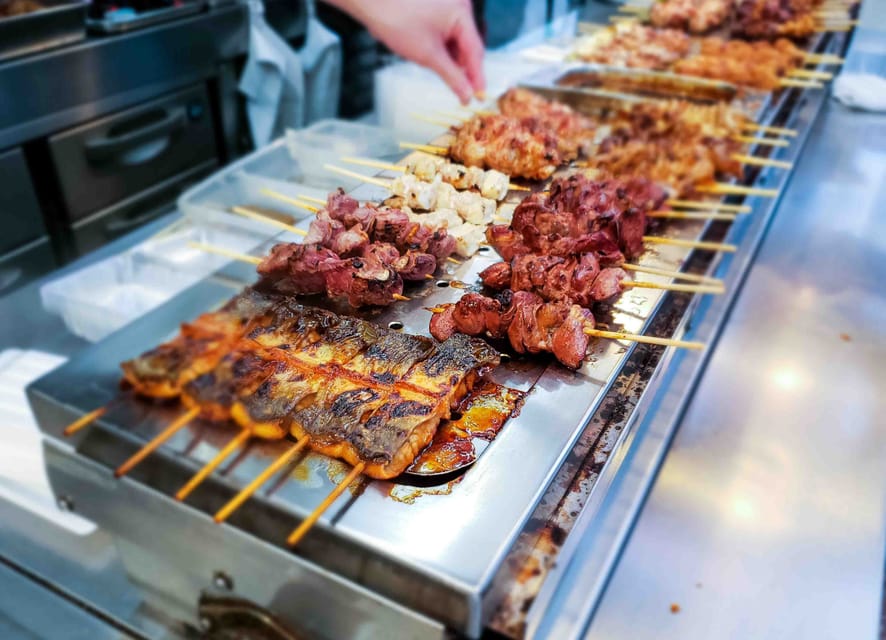
The first food is charcoal-grilled yakitori. The shop has been around since 1929, giving the stop a connection to the long life of neighborhood food businesses. Yakitori is familiar to many visitors, but the local shop setting changes the experience. You are tasting a practical Japanese favorite where it is part of ordinary eating, not just ordering a plate in a restaurant aimed at foreign diners.
The charcoal matters. It gives the chicken a smoky edge while keeping the food easy to eat as you continue walking. Your guide also explains the dish and its place in Japanese food culture, so this is more than a quick skewer handed over without context.
Do not expect a full restaurant service here. The strength of the stop is its directness: grilled chicken, a long-running shop, and a first look at Musashi Koyama. If you prefer leisurely meals with a table and time between courses, the moving format may feel hurried.
Walking from Musashi Koyama to Togoshi Ginza
After the first tasting, you make your way toward Togoshi Ginza. The two districts are linked by the walk, and that walk is part of the point. You get a look at a less visited side of Tokyo, with residential streets and local shopping rather than a parade of major attractions.
The full distance is about 3 kilometers. That is manageable for many people, but the food stops make the distance easy to underestimate. You are not taking a relaxed sightseeing stroll with long breaks. You are covering ground between tastings, and you may finish feeling pleasantly full.
I would wear comfortable shoes and avoid scheduling a large meal right before the tour. On a cold day, bring an extra layer. One guide noted that much of the experience takes place outdoors, and the weather can matter more here than it would on a restaurant-based food tour.
This neighborhood walk is also useful for people who have already seen Shibuya, Asakusa, or Shinjuku. It will not replace Tokyo’s major sights, but it gives you a different picture of the city: small food shops, local errands, and a shopping street used by residents.
Karaage, the crowd-pleasing middle course
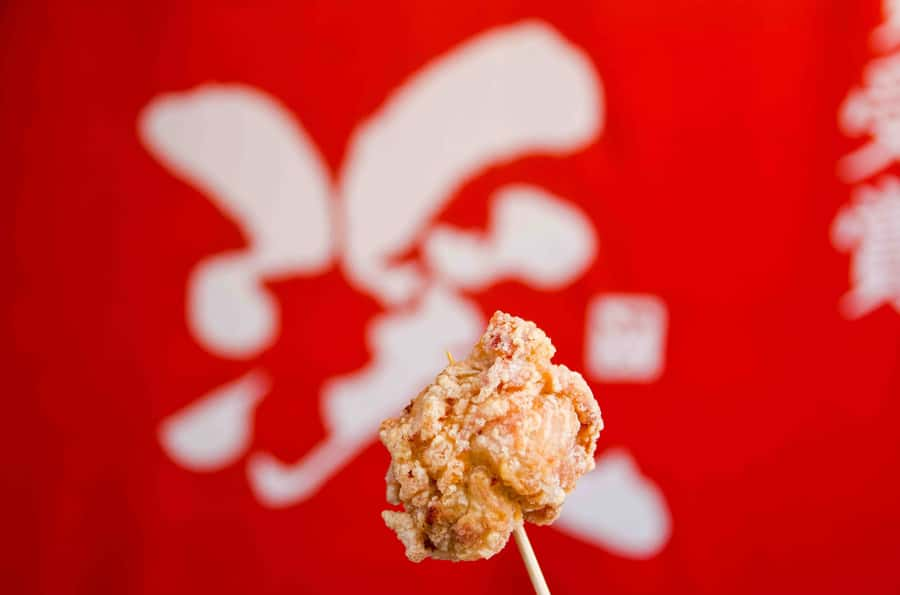
In Togoshi Ginza, the tour stops for Japanese fried chicken, or karaage. This is one of the most accessible dishes on the route. The chicken is seasoned, coated, and fried until crisp, with a juicy center when prepared well.
The stop is described as award-winning, but the practical value is that you can taste a dish many Japanese people know and love in a specialist setting. Karaage is familiar enough for cautious eaters, yet distinct enough to show how Japanese seasoning and frying differ from ordinary Western fried chicken.
This is also where the amount of food begins to matter. You are not getting a single tasting and then moving on to a dessert. The yakitori and karaage arrive early, and they help explain why you should save room for the later stops.
If you have food allergies or strict dietary needs, ask the tour operator before booking. The available information does not list substitutions or allergy handling, so you should not assume that every tasting can be changed.
Same city, another round of plates:
- Tokyo Street Food Tour – 7 Japanese Foods
★ 5.0 · 16 reviews - Private Tokyo food scene 6 hour experience: Depatika, street food, izakaya
★ 5.0 · 9 reviews - Tokyo: Private Tsukiji Fish Market Tour with 3 Food Stops
★ 5.0 · 9 reviews - Tsukiji Fish Market Street Food & Culture Walking Tour
★ 5.0 · 8 reviews
Choosing an onigiri from more than 40 fillings
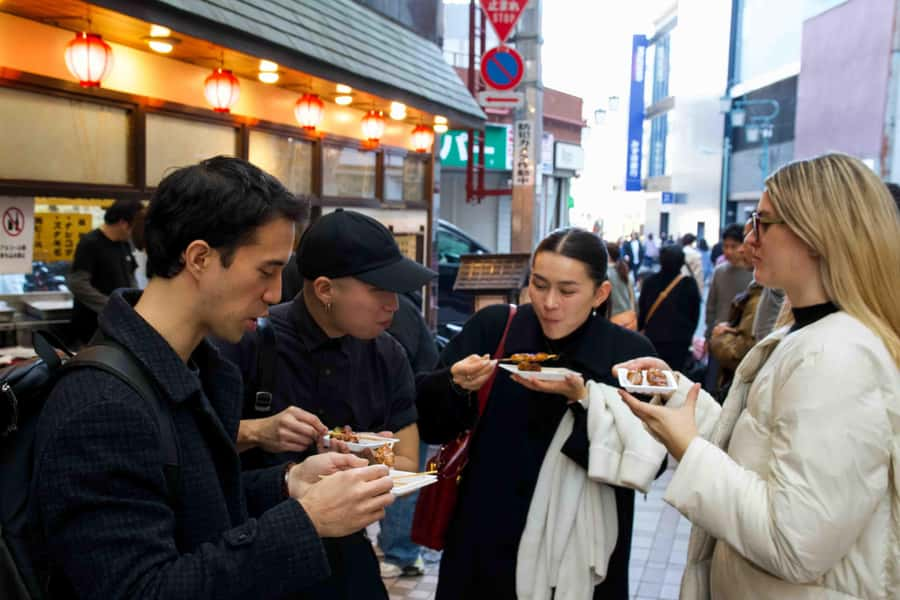
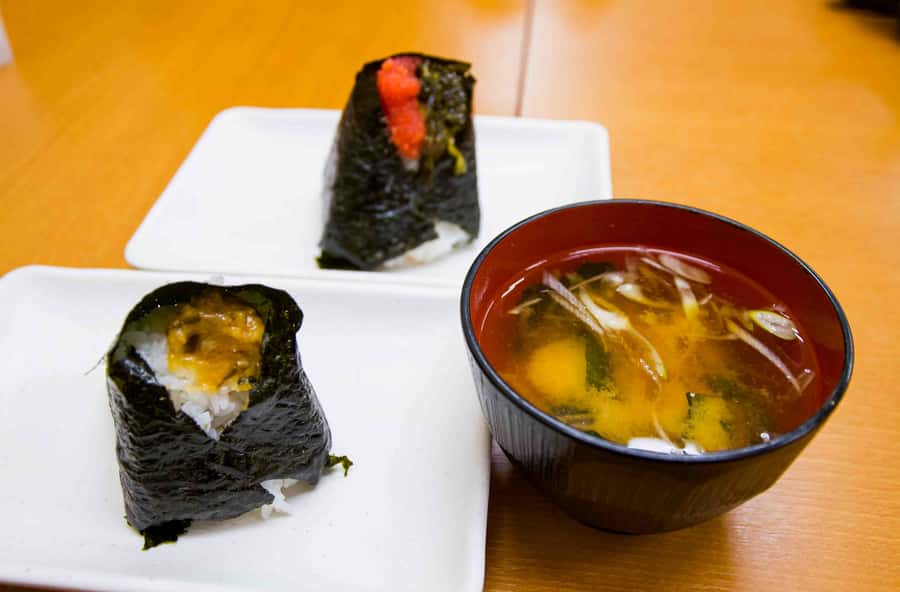
The onigiri stop is perhaps the most flexible part of the tour. You choose from more than 40 fillings, with options ranging from spicy tuna to bacon and cream cheese. That range gives you a chance to pick something familiar, adventurous, or simply odd enough to remember.
Onigiri are compact rice balls made for practical eating. They fit the shopping-street setting perfectly: filling, portable, and easy to buy for a quick meal. The sheer number of choices also makes this more engaging than being handed one fixed sample.
I like that you make a decision here. A guide can explain the choices, but you still have a small say in what enters your lunch-sized food tour. If you are traveling with children, this can be an easy stop because each person can choose a filling that suits them.
The bacon and cream cheese option shows how modern Japanese food shops adapt familiar formats. Spicy tuna offers a more expected seafood choice. You might find the variety exciting, but it can also slow the group slightly while everyone decides. In a group of up to eight, that is still a manageable wait.
Curry bread with a savory finish
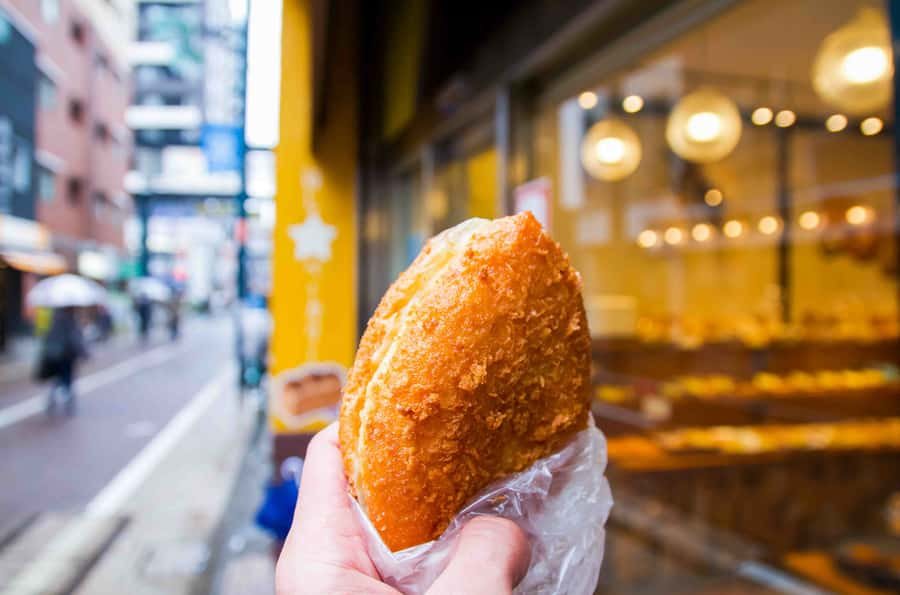
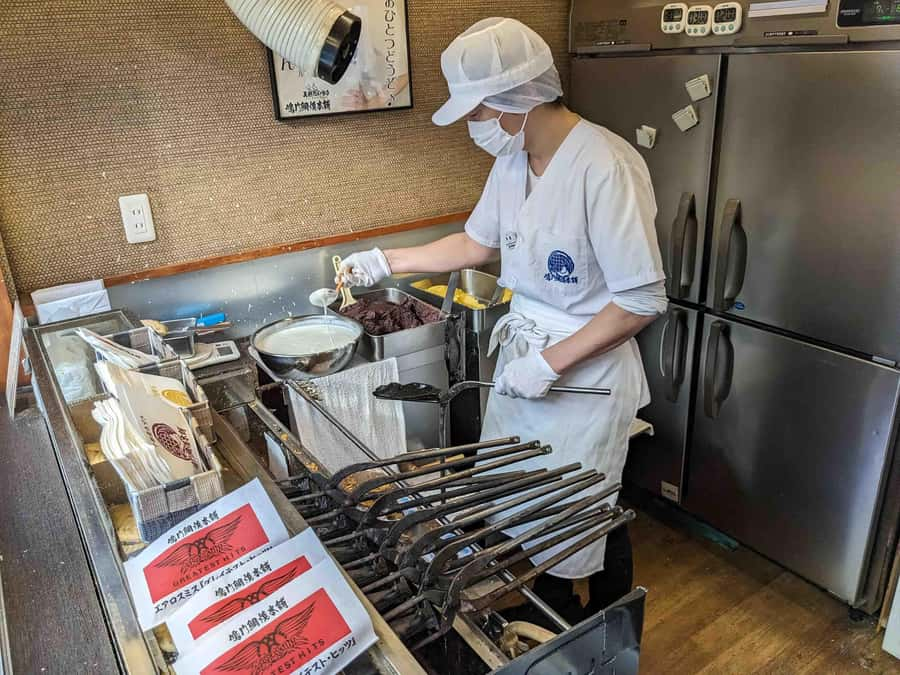
Next comes curry bread filled with beef curry. This is a useful reminder that Japanese street food is not limited to sushi, ramen, or seafood. Curry bread combines a crisp bread shell with a warm, savory center, making it substantial even when eaten as a snack.
The beef curry filling gives this stop a heavier feel than the rice ball or chicken. By this point, you may be glad for the walking distance between shops. The route lets you work through the food rather than sitting still while several courses arrive at once.
I would rank curry bread among the stops that first-time visitors might not think to order independently. It is common enough to be part of everyday Japanese food culture, but it does not always appear on a short list of famous dishes. That is exactly why a local food walk can help.
The drawback is that fried foods can stack up. Yakitori, karaage, and curry bread are all different, but together they create a filling meal. Pace yourself early, even if the first two samples seem small.
Ending with Japanese pudding and another sweet
The tour finishes with extra-rich Japanese pudding and another dessert if you still have room. This is a cheerful ending, but do not assume the final course will be a tiny afterthought. The tour includes seven food tastings in total, and several people have found the overall quantity more than expected.
Japanese pudding often has a soft, dense texture and a strong egg and custard character. It offers a change from the savory chicken, rice, and curry bread. The second dessert gives you one last chance to try something sweet, though the exact item is not specified.
This is a good reason not to fill up at the start. You want enough appetite left to enjoy the last stop, especially if you have a strong sweet tooth. If you do not, the guide can still offer a natural stopping point, but the food is part of the fixed experience and you should plan for a substantial intake.
What the guide adds to the two-hour route
The guide is the bridge between food and place. You learn about the background of each dish, but the more useful service is help with the ordering process and the neighborhood itself.
English-speaking guides have included Sahori, Daisy, Bunga, Brian, and Frank. Sahori has been especially noted for friendly communication and for helping with Tokyo train directions after the tour. Daisy has led private-feeling outings for very small groups and has worked well with families. Bunga has been praised for fun facts and for keeping the mood relaxed on a cold day.
Brian, who is not Japanese but speaks Japanese fluently and understands the local customs, has also led the walk. That is a useful reminder that a guide does not need to be born in the neighborhood to explain it well. What matters is language ability, preparation, and an easy manner with the group.
The group limit of eight is important. A small party can gather around a shop counter, make food choices without a long delay, and ask questions. It also leaves room for the guide to adjust the conversation to families, first-time visitors, or people already familiar with Japanese food.
Guide quality can vary from person to person, as it does on any walking tour. The names above give you a sense of the team, not a promise that you will receive a particular guide. If a specific guide is important to you, ask when booking.
Is $95 a fair price?
At $95 per person, this is not the cheapest way to eat street food in Tokyo. You could buy individual snacks for less if you already know where to go, can read the menus, and do not need help choosing.
The value comes from the structure. You get seven food tastings, one alcoholic or non-alcoholic drink, an English-speaking guide, and a route through two local shopping districts. You also avoid spending time guessing which stalls are worth trying. For a first visit, that convenience can make the price reasonable.
The food quantity is another part of the calculation. This is not a tour where you pay nearly a hundred dollars for three bites and a story. Yakitori, karaage, onigiri, curry bread, pudding, and another dessert add up to a real meal, though the exact size of each tasting is not specified.
I would see the price as fair for someone who values guidance and variety. It is less compelling for an independent food expert who already knows Togoshi Ginza and speaks enough Japanese to order confidently. The strongest value comes from the access to a less familiar neighborhood and the chance to try several dishes in a short period.
Who should book this food tour?
I would recommend it to first-time visitors who want food beyond sushi and ramen. It is also a good match for families, couples, and small groups who like trying several things rather than choosing one restaurant.
You will probably enjoy it most if you:
- Arrive hungry and like generous portions
- Can walk 3 kilometers in about two hours
- Want a local shopping street rather than a major sightseeing district
- Prefer guided ordering to guessing at unfamiliar counters
- Enjoy both savory food and dessert
- Appreciate a small group of eight or fewer
I would think twice if you have limited mobility, a low level of fitness, or strict dietary restrictions. The tour involves a fair amount of walking, and the food list includes chicken, beef curry, rice, fried items, and dairy in at least one onigiri option. The available information does not promise vegetarian, vegan, halal, gluten-free, or allergy-friendly alternatives.
Book it early in your Tokyo schedule if you want to return later to a shop or explore the area on your own. The tour gives you a practical introduction, but two hours is not enough to see all 400 shops along Togoshi Ginza.
Practical details before you go
The meeting point is outside Starbucks at the entrance to Musashi Koyama Palm Shopping Street. Find the guide holding a Food Tours Tokyo sign. The tour ends after the food route, and hotel pickup and drop-off are not included.
The experience lasts two hours and is offered with an English-speaking guide. Starting times depend on availability. You can reserve now and pay later, and cancellation is free up to 24 hours before the tour for a full refund.
Wear shoes suitable for walking and dress for the weather. Much of the route is outside, and the tour does not recommend itself to people with a low level of fitness. Since the food comes in several stops, have a light breakfast or lunch beforehand rather than arriving stuffed.
Should you book the Togoshi Ginza food tour?
Book it if you want a guided introduction to everyday Tokyo food and do not mind walking between shops. The combination of a 1929 yakitori stop, 40-plus onigiri fillings, award-winning karaage, beef curry bread, and pudding gives you much more variety than a single meal.
Skip it if you want a seated restaurant experience, a short walk, or complete control over every ingredient. For everyone else, $95 buys a well-filled two hours, a small English-speaking group, and an easy way to reach a part of Tokyo you might otherwise miss.
FAQ
Where does the tour meet?
Meet outside the Starbucks at the entrance to Musashi Koyama Palm Shopping Street. The guide will be holding a Food Tours Tokyo sign.
How long does the tour last?
The tour lasts two hours.
How much walking is involved?
The route involves around 1.86 miles, or 3 kilometers, of walking.
How many people are in the group?
The tour is limited to eight participants.
What language is the tour offered in?
The live tour guide speaks English.
What food is included?
The tour includes seven food tastings, including yakitori, karaage, onigiri, beef curry bread, Japanese pudding, and another dessert. You also receive one alcoholic or non-alcoholic drink.
Are hotel pickup and drop-off included?
No. You need to reach the meeting point yourself, and hotel pickup and drop-off are not included.
Can I cancel for a full refund?
Yes. You can cancel up to 24 hours in advance for a full refund.
Newly added plates around Tokyo
- Tsukiji Fish Market Street Food & Culture Walking Tour★ 5.0 · 8 reviews
- Tsukiji Fish Market: Street Food Tour with Tasting★ 5.0 · 4 reviews
- Ueno Park and Ameyoko Street Food Market Half Day Walking Tour★ 5.0 · 3 reviews
- Tokyo:Enjoy street food & Japanese food culture at Tsukiji Market★ 5.0 · 6 reviews
- Tokyo Fish Market Food Tour: Street Food & Friendly Guide★ 3.0 · 2 reviews
- Tokyo Street Food Tour – 7 Japanese Foods★ 5.0 · 16 reviews
- Private Tokyo food scene 6 hour experience: Depatika, street food, izakaya★ 5.0 · 9 reviews
- Matsushima Bay, Islands and Seafood Market day tour from Tokyo★ 5.0 · 2 reviews
Tokyo Street Food Tours, compared.
Tsukiji Fish Market Food and Culture Walking Tour
Read our review →
Tsukiji Fish Market: Street Food & Culture Walking Tour
Read our review →Tsukiji Fish Market: Street Food & Culture Walking Tour
Read our review →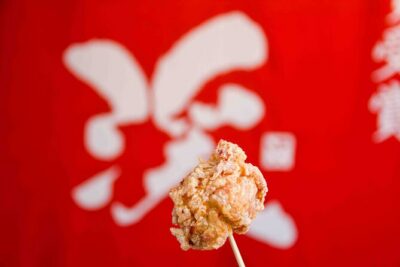
Private Tsukiji Fish Market Tour with 3 Food Stops
Read our review →
Private Tokyo food scene 6 hour experience: Depatika, street food, izakaya
Read our review →
Sensoji Temple & Street Food: Private Tour with guide
Read our review →Tsukiji Fish Market Street Food & Culture Walking Tour
Read our review →Browse the lists this tour appears in