
REVIEW · JAPAN STREET FOOD TOURS
Nagoya Street Food Walking Tour of Osu
Osu is the kind of place that makes sense on foot, with food stalls, temples, old shops, secondhand stores, and small surprises packed into a busy shopping district. This private tour gives you a way into that mix, starting at Osu Kannon and adding five local snacks along the way. The food includes miso kushi katsu, gohei mochi, karaage, and tenmusu, with sweet items such as uiro or agemanbo possibly appearing too.
I like two things here. First, the guide does more than point out food: you learn how a Buddhist temple differs from a Shinto shrine, and you hear about Osu’s past and customs. Second, the private format lets your guide adjust explanations and food stops to your group. The main consideration is timing: two hours can feel short in a district this full, and Saturday crowds may slow you down.
Key points at a glance
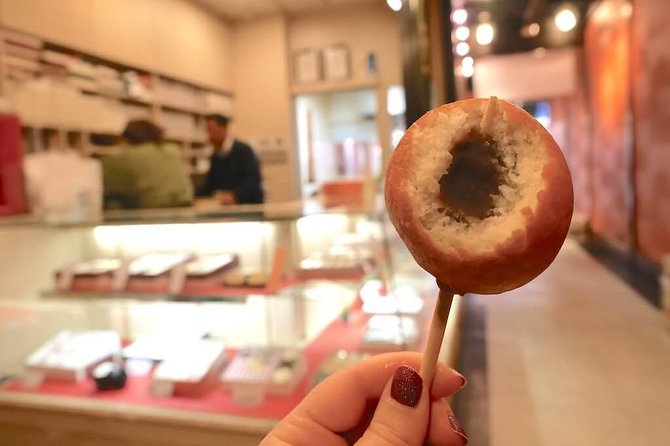
- Five snacks are included, so this is more than a food walk with one sample and a few recommendations.
- Osu Kannon and Bansho-ji Temple add cultural context between food stops.
- Private groups only make it easier to ask questions and set your own pace.
- Guides Patricia, Erica, and Lena have received especially strong praise for English explanations and local history.
- Come hungry, since the portions add up even though each tasting is served as a snack.
- Dietary restrictions may be a problem, so contact the operator before booking.
Why Osu works so well for a food walk
Nagoya’s Osu district is not a single tidy attraction. It is a collection of covered shopping streets, side lanes, temples, food counters, and independent shops. That mix is exactly why it can be rewarding and slightly confusing on your own.
A food walk gives the area a useful shape. You begin at a major temple, move through shopping streets, pause for savory and sweet foods, and finish back at the meeting point. Along the way, your guide explains what you are eating and why certain foods matter in Nagoya.
I like that the tour does not treat Osu as just a snack market. The area has religious sites, secondhand shopping, burial-related places, and local businesses selling everything from inexpensive bites to more costly goods. One guide, Patricia, was praised for bringing together an unusual mix of secondhand upmarket shops, temples, shrines, and a burial site. That range helps you see Osu as a neighborhood with layers, not only a place to grab lunch.
The tour is private, so only your group takes part. That matters in a crowded shopping district. You can ask a basic question about temple etiquette without feeling rushed, and your guide can explain unfamiliar foods at your level.
More street food tours in Japan:
- Hungry Osaka Street Food Tour:15 Tastings & 3 Drinks with a Local
★ 5.0 · 1,727 reviews - Tokyo: Tsukiji Fish Market Food and Culture Walking Tour
★ 4.7 · 757 reviews - Hungry Osaka Street Food Tour: 15 Dishes & 3 Drinks
★ 4.9 · 694 reviews
Starting at Osu Kannon and learning the difference
The meeting point is outside the 7-Eleven at 2-chome-23-32 Osu, in Naka Ward. From there, you meet your guide and begin near Hosho-in, better known as Osu Kannon.
This is a useful opening because many first-time visitors confuse Japanese shrines and temples. Your guide explains the difference between Shinto and Buddhism before the food begins. That small lesson gives you a better way to read the rest of your time in Japan.
Osu Kannon is a Buddhist temple, while a Shinto shrine belongs to Japan’s native religious tradition. The tour uses this setting to explain the visual and cultural differences. You also receive an omikuji, a fortune slip, which adds a hands-on touch rather than leaving the temple visit as a quick photo stop.
The temple visit is not presented as a long formal lecture. That suits the tour’s format. You have about two hours in total, so the cultural explanations need to be clear and useful without taking over the food walk.
Miso kushi katsu and the first savory stop
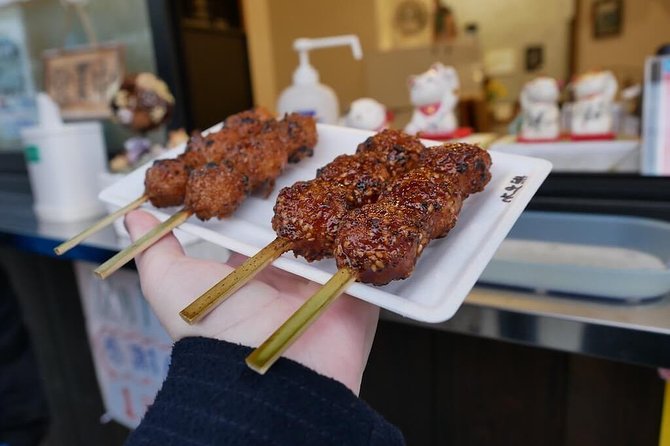
One of the first foods is miso kushi katsu, skewered meat covered in a thick red miso sauce. It gives you a direct taste of Nagoya-style flavor: hearty, salty, and more substantial than a delicate snack.
The sauce is important here. Miso appears again in the next tasting, so you get to notice how one local ingredient works with different foods. Kushi katsu is also easy to eat while walking, which helps the tour keep moving through Osu’s shopping streets.
If you prefer light flavors, this may be one of the stronger foods on the route. That is not a flaw, but it is worth knowing. The tour is built around local favorites, and Nagoya’s red miso profile can be bold.
Gohei mochi brings another taste of miso
Gohei mochi is grilled rice shaped around a stick and coated with miso sauce. It is simple, filling, and very different from the fried meat skewers that come before it.
This stop gives the guide another chance to explain a local food rather than simply handing you something to eat. You can compare the chewy rice with the richer sauce and see why the food works as a quick street-side snack.
The food selection is one of the tour’s strongest points because it includes foods you may not think to order alone. You are not spending the entire walk on familiar items such as fried chicken. Instead, the route introduces you to foods that carry a clearer local identity.
Food items can change slightly from one tour to another. That flexibility is useful in a working shopping district, but it means you should not treat the published list as a fixed menu.
Same city, another round of plates:
- Tsukiji Fish Market: Street Food & Culture Walking Tour
★ 5.0 · 669 reviews - Tsukiji Fish Market: Street Food & Culture Walking Tour
★ 4.8 · 259 reviews - [1 Group Only] Osaka Street Food Tour for Family
★ 5.0 · 208 reviews - Umami Town Street Food Tour
★ 5.0 · 120 reviews
Karaage at a well-regarded Osu shop
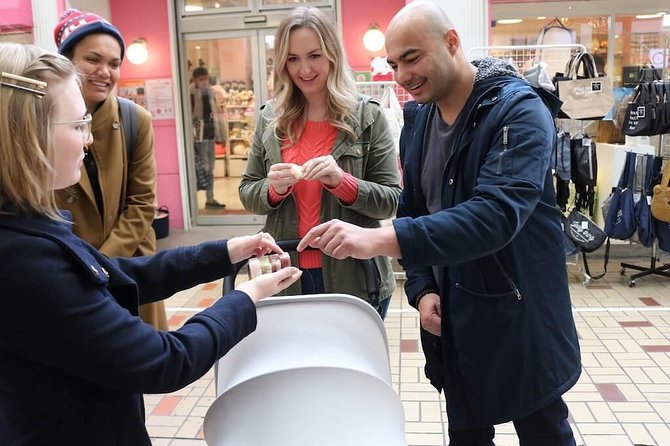
The karaage stop focuses on one of Osu’s popular shops for Japanese fried chicken. Karaage is familiar enough to make the tour comfortable, but it still works well in this setting because you can compare a local shop’s version with the fried chicken you may have eaten elsewhere in Japan.
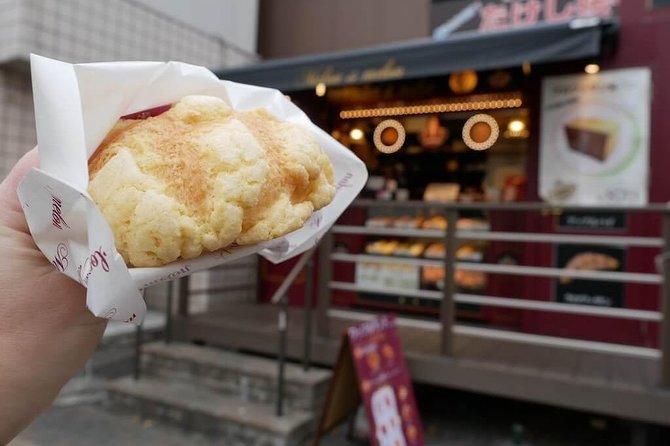
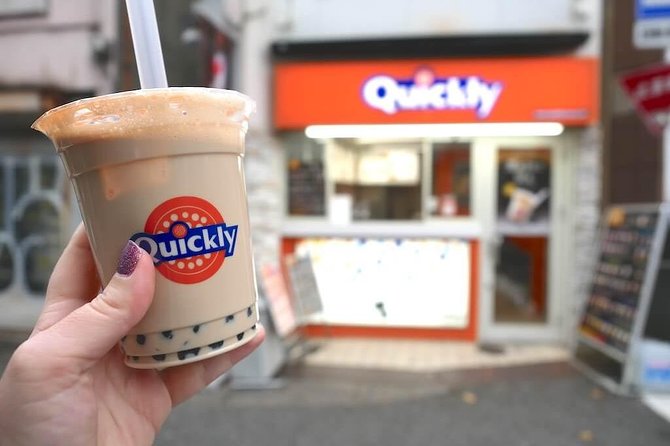
Past tour routes have also included bubble tea, melon pan, and other sweet or savory bites. The exact foods are not guaranteed, but the pattern is clear: you should expect several small stops rather than one large meal.
A practical tip is to avoid starting after a full lunch. One participant specifically warned that the food adds up to more than expected, and that arriving already full is a mistake. The tour is only about two hours, but five tastings can make it a proper meal for some people.
Tenmusu and the appeal of small local shops
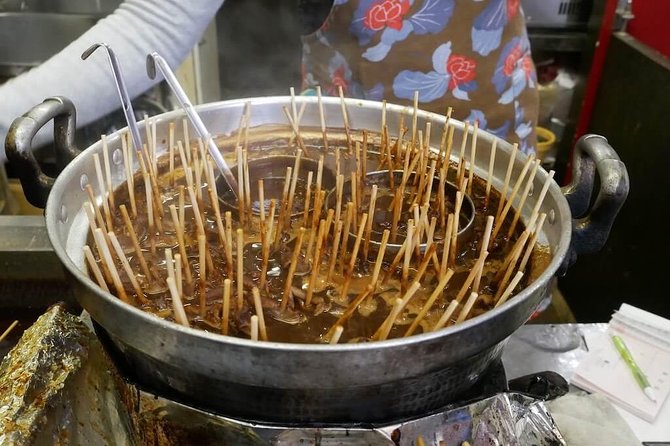
Later, you visit a popular local shop for tenmusu. This Nagoya specialty combines a rice ball with a piece of shrimp tempura. It is compact, filling, and easy to carry, but it also shows how Japanese convenience food can be carefully prepared rather than plain.
Tenmusu is a good contrast to miso kushi katsu and gohei mochi. The route moves across different textures and styles, from grilled rice to fried foods and filled rice snacks. If your guide adds a sweet stop such as uiro or agemanbo, the final balance becomes even wider.
The guide’s local knowledge matters most at stops like this. Osu has food on many corners, but you need someone to sort the everyday places from the shops worth your limited time. The tour is not simply about walking past food counters. It takes you inside selected places and gives you a reason to try each one.
Bansho-ji Temple adds a pause from the food
Bansho-ji Temple is another cultural stop on the route. It breaks up the eating and gives you time to look around while your guide explains more about Osu and Nagoya.
This balance is one reason I would choose the tour over a simple self-guided snack crawl. Food alone can blur together after several stops. The temples provide visual and historical pauses, and the guide connects the religious sites to the surrounding district.
You should not expect a full temple tour or an extended museum-style history lesson. The focus remains food and neighborhood discovery. Still, the short explanations can help you understand why Osu has retained its appeal through changes in the city and shopping habits.
What the private format changes
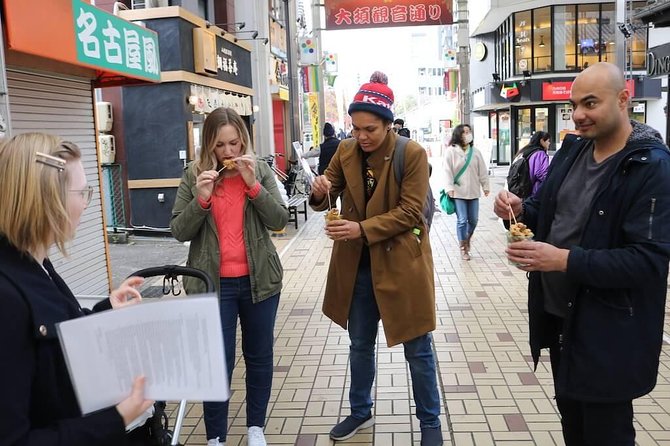
A private tour is a meaningful feature here, not just a label. Only your party participates, so the guide can respond to your questions and keep the explanations at a comfortable level.
Guides named in past tours include Patricia, Erica, and Lena. Patricia was praised for her explanations of local history and for showing a varied side of the district. Erica was noted for explaining Japanese culture and traditions clearly. Lena was singled out for excellent English and for leading a food-focused route with some history included.
The experience can therefore depend on your assigned guide. The available feedback points to strong English communication, but you should still think of this as a personal walking tour rather than a scripted performance. You get the most from it by asking questions about ingredients, religion, customs, and daily life in Osu.
Private also means you pay more than you would for a large group tasting walk. At $101.47 per person, the price is not cheap if you judge it only by the amount of food. The value comes from combining five snacks, a local guide, cultural explanations, temple visits, and help finding places you might otherwise pass.
For a couple or small group that wants an organized introduction to Osu, the price can make sense. If you mainly want the cheapest possible meal, it is less convincing.
Timing, crowds, and walking comfort
The advertised duration is about two hours. That makes this a good fit before another Nagoya activity, especially if you want an introduction rather than a full-day commitment.
The route includes several stops in and around Osu Shopping Street, so you should expect to walk and stand while eating. Exact distances are not provided, and the pace may change with crowds. Saturday can be especially busy, which may make the walk slower and the food counters more crowded.
The listed operating information shows Monday availability from 11:00 a.m. to 4:00 p.m. Confirm the exact date and time when booking, since availability is subject to confirmation. The tour ends back at the meeting point, so you do not need to arrange a separate pickup or drop-off.
Transportation to the meeting point is not included. You are responsible for getting to the 7-Eleven starting location, and the area is near public transportation.
Who should book this Osu food tour
I would recommend this experience to you if you want a first look at Nagoya that combines food with culture. It suits couples, families, and small groups who prefer a private guide to a large scheduled group.
It is especially useful if you are unsure what to order in Osu. The guide takes away much of the guesswork and gives you a chance to sample foods such as gohei mochi, tenmusu, and agemanbo that you might otherwise pass by.
You should also book it if you enjoy asking questions. The cultural side of the walk is not filler. The explanations about temples, shrines, Japanese customs, and Osu’s past give the food a clearer setting.
I would hesitate if you have serious dietary restrictions. The tour is not recommended for people with dietary restrictions unless they contact the operator before booking. Several included foods contain meat, fried items, rice, or sauces, and the route is built around tasting local specialties.
I would also think twice if you want a long, slow meal. This is a moving food walk with several tastings, not a sit-down restaurant experience.
My verdict on the $101.47 price
The price is best understood as a guide fee plus a tasting route, not as five snacks purchased separately. You are paying for someone to choose the stops, explain the food, introduce Osu’s religious sites, and help you use two hours well.
That makes the tour more useful early in your Nagoya stay. Afterward, you will have a better sense of which parts of Osu deserve another look and which foods you want to seek out again.
The cost is harder to justify if you already know Osu well or are comfortable choosing food on your own. Independent eating will cost less. You may also enjoy more freedom by wandering without a schedule.
Still, the private format and strong guide feedback give this experience a clear purpose. It is not merely a list of snacks. It is a short orientation to one of Nagoya’s most varied districts.
Should you book it?
Book this tour if you want a compact, food-led introduction to Osu with real cultural context. The best reasons are the private format, the five included tastings, and guides such as Patricia, Erica, and Lena, who have been praised for clear English and useful explanations.
Skip it if your priority is the lowest food cost, a long restaurant meal, or a route designed around strict dietary needs. For everyone else, arrive hungry, allow for Saturday crowds, and treat the tour as your first chapter in Osu rather than your only visit.
FAQ
How long does the Nagoya Osu street food tour last?
The tour lasts approximately two hours.
Is the tour private?
Yes. Only your group participates in the activity.
How many street foods are included?
Five street foods are included, although the exact items may differ slightly between tours.
Which foods might I try?
Possible foods include miso kushi katsu, gohei mochi, karaage, tenmusu, uiro, and agemanbo. Food selections may change slightly.
Are the food tastings included in the price?
Yes. Five street food snacks are included, along with all fees and taxes.
Does the tour visit Osu Kannon?
Yes. The tour begins near Hosho-in, also called Osu Kannon.
Does the tour visit Bansho-ji Temple?
Yes. Bansho-ji Temple is one of the listed stops.
Is an omikuji included?
Yes. An omikuji fortune slip is included.
Where does the tour start and finish?
The tour starts at the 7-Eleven at 2-chome-23-32 Osu, Naka Ward, Nagoya. It ends back at the meeting point.
Is transportation included?
No. Transportation to and from the tour is not included.
Can people with dietary restrictions join?
The tour is not recommended for people with dietary restrictions unless they contact the operator before booking.
What is the cancellation policy?
You can cancel for a full refund up to 24 hours before the experience start time. Changes or cancellations made less than 24 hours before the start time are not accepted for a refund.
Newly added plates around Japan
- Tsukiji Fish Market Street Food & Culture Walking Tour★ 5.0 · 8 reviews
- Tsukiji Fish Market: Street Food Tour with Tasting★ 5.0 · 4 reviews
- Ueno Park and Ameyoko Street Food Market Half Day Walking Tour★ 5.0 · 3 reviews
- Tokyo:Enjoy street food & Japanese food culture at Tsukiji Market★ 5.0 · 6 reviews
- Tokyo Fish Market Food Tour: Street Food & Friendly Guide★ 3.0 · 2 reviews
- Tokyo Street Food Tour – 7 Japanese Foods★ 5.0 · 16 reviews
- Private Tokyo food scene 6 hour experience: Depatika, street food, izakaya★ 5.0 · 9 reviews
- Matsushima Bay, Islands and Seafood Market day tour from Tokyo★ 5.0 · 2 reviews
Japan Street Food Tours, compared.
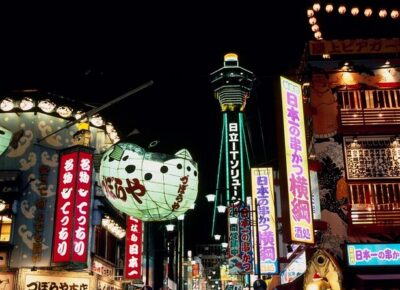
Hungry Osaka Street Food Tour:15 Tastings & 3 Drinks with a Local
Read our review →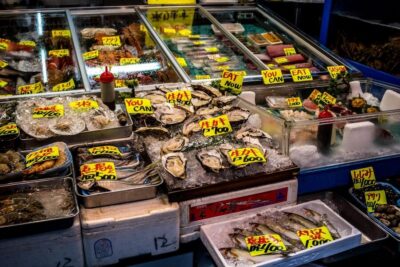
Tsukiji Fish Market Food and Culture Walking Tour
Read our review →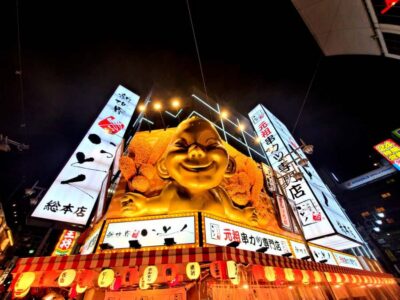
Hungry Osaka Street Food Tour: 15 Dishes & 3 Drinks
Read our review →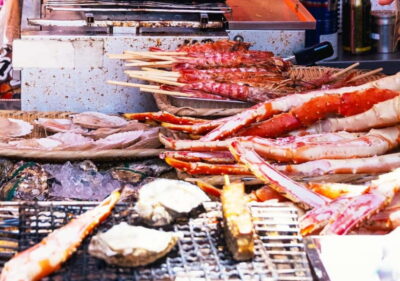
Tsukiji Fish Market: Street Food & Culture Walking Tour
Read our review →Tsukiji Fish Market: Street Food & Culture Walking Tour
Read our review →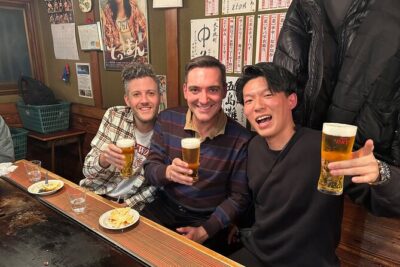
[1 Group Only] Osaka Street Food Tour for Family
Read our review →
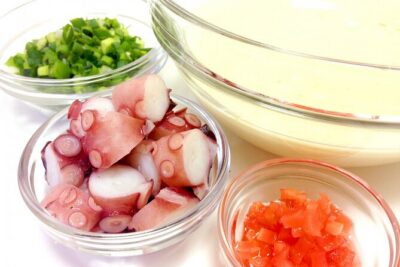
Takoyaki making experience ~Japan’s popular street food~
Read our review →Browse the lists this tour appears in