
REVIEW · COOKING CLASSES
Eat Osaka: Street Food Cooking in an Authentic Kitchen!
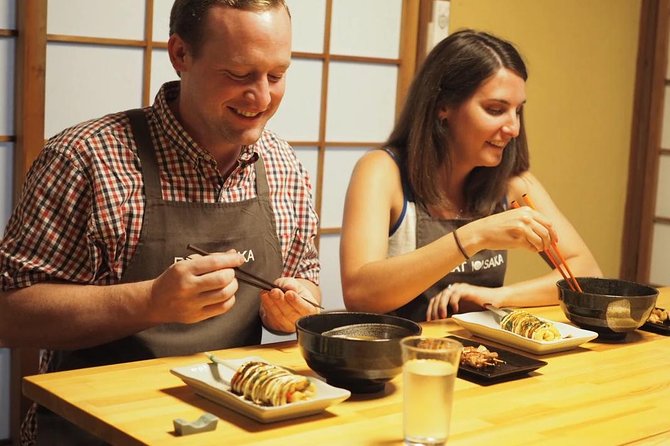
Osaka’s food culture makes the most sense when you get your hands dirty. In this small cooking class, you work in an old Japanese restaurant kitchen and prepare familiar street-food dishes rather than simply watching a chef do the work. The class can include handmade udon, vegetable tempura, okonomiyaki, yakitori, pickled cucumber, and mochi, with the exact menu details presented in more than one way.
I like the small group limit of eight, since it gives you room to ask questions and handle the tools yourself. I also like that drinks are part of the meal, so you can sit down afterward with local beer, sake, or green tea instead of rushing off the moment the cooking ends. The main point to check is the menu: the description lists several dishes, so confirm what your session will prepare if one particular food is the reason you are booking.
Key points at a glance
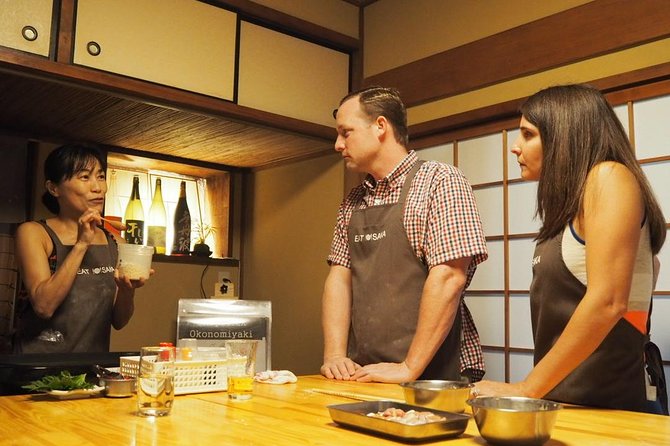
- A real cooking session, not a demonstration: You prepare the dishes yourself with guidance from a bilingual local chef.
- An old Japanese-house setting: The class takes place in a purpose-built kitchen inside an older Japanese home.
- Several Osaka favorites: Published details include okonomiyaki, handmade udon, tempura, yakitori, pickled cucumber, and mochi.
- A small maximum of eight people: This is useful for questions, corrections, and hands-on practice.
- Drinks are included: Finish your meal with beer, sake, or green tea.
- A short, easy-to-fit activity: The class lasts about two and a half hours and returns you to the meeting point.
Cooking Osaka food in an old Japanese house
The setting does a lot of the work here. You are not seated in a polished restaurant watching a cooking show. You enter a purpose-built kitchen in an old Japanese house, a place that gives the activity a more personal scale and helps connect the food to everyday Osaka life.
That matters because Osaka street food is not only about famous dishes. It is about practical cooking, strong flavors, simple tools, and food made to be shared. Working in a home-style space lets you see how the dishes come together instead of treating them as mysterious restaurant creations.
The kitchen also has professional-level ingredients and tools. You do not need to arrive with cooking experience. The class is built around instruction, and the chef guides you through each stage. If you are unsure about cutting, mixing, shaping, or handling hot oil, this is the point at which you can ask for help.
The group can hold no more than eight people. That is small enough for the chef to keep an eye on several workstations without turning the class into a private lesson. It also gives the session a social side. You may cook alongside a couple, a family, or another small group, then share the meal you have made.
More Cooking Classes in Osaka:
- Osaka Okonomiyaki Cooking Experience for Families & Groups
★ 4.9 · 8 reviews - Athens: Food Market Visit and Cooking Class with Wine
★ 4.9 · 1,087 reviews - Mexican Cooking Class with Food Market Visit in Mexico City
★ 5.0 · 506 reviews
What you may cook during the 2.5-hour class
The food list deserves a close look because the supplied descriptions do not present exactly the same menu. One version highlights Osaka-style tempura, handmade udon, pickled cucumber, and a sweet mochi dessert. Another describes okonomiyaki, udon noodles, and yakitori skewers with a signature sauce.
The safest way to read this is that Eat Osaka offers a street-food class built around several Osaka favorites, but the dishes may depend on the particular session or current menu. If you have your heart set on okonomiyaki, yakitori, or mochi, ask before booking or confirm the menu for your date.
Handmade udon noodles
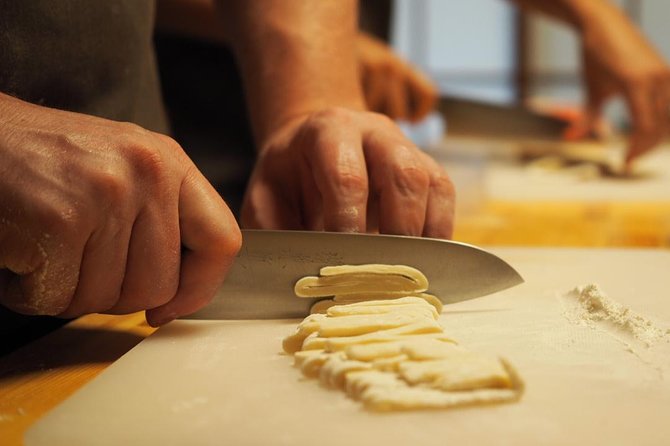
Making udon from scratch is one of the most useful parts of the class. You are not simply learning how to boil noodles from a packet. You get to see how flour-based noodles are formed, handled, and prepared for eating.
For many people, this will be the most hands-on part of the session. Noodle making gives you a clear task, and the results are easy to understand: chewy noodles with a texture that differs from standard dried pasta. The class is a good fit if you enjoy learning a technique you can try again at home.
Osaka-style okonomiyaki
The class description also places Osaka-style okonomiyaki at the center of the experience. This savory pancake is closely linked with Osaka food culture and is made from a batter combined with other ingredients before being cooked and finished with sauce and toppings.
The value here is not just eating a pancake. You learn how the mixture is assembled and how the dish becomes a complete meal from ordinary ingredients. The chef also explains the reasons behind the steps, which helps you understand the dish rather than copy a recipe without context.
More street food tours in Osaka:
- Hungry Osaka Street Food Tour:15 Tastings & 3 Drinks with a Local
★ 5.0 · 1,727 reviews - Hungry Osaka Street Food Tour: 15 Dishes & 3 Drinks
★ 4.9 · 694 reviews - [1 Group Only] Osaka Street Food Tour for Family
★ 5.0 · 208 reviews - Umami Town Street Food Tour
★ 5.0 · 120 reviews
Tempura and yakitori
The published menu information includes vegetable tempura and yakitori skewers with a signature sauce. These offer two different lessons. Tempura depends on handling ingredients and batter carefully, while yakitori focuses on skewering and coating food with a strong sauce.
The tempura element may be especially useful for vegetarians, since one participant was accommodated with a vegetarian version. Still, you should state your dietary needs in advance rather than rely on a last-minute change.
Pickled cucumber and mochi
Pickled cucumber gives the meal a sharp, fresh side dish to balance the warmer foods. It is a small addition, but it shows how Japanese meals often use contrast: hot and cool, crisp and soft, savory and sweet.
The sweet mochi dessert provides a final change of pace. Mochi has a distinct sticky texture, so making it yourself is more memorable than simply finding it in a shop. If dessert is important to you, check that mochi is included in your scheduled menu because the activity descriptions emphasize different combinations of dishes.
Guidance from Miki, Nathalie, and the Eat Osaka team
The strongest feature of this class is the teaching style. The instructors named in the available information include Miki, Niki, Natalie, and Nathalie, with the names likely reflecting members of the Eat Osaka team. Your specific chef may vary by date.
The instruction is bilingual, and the class is designed to explain both the steps and the reasons behind them. That is a useful difference. A recipe can tell you what to do, but a good teacher can explain why a mixture should look a certain way, when to stop, and how the finished food fits into Osaka cooking culture.
Miki is praised for making it easy to ask questions and for connecting the cooking with Japanese culture. Nathalie, also referred to as Natalie in the supplied information, is described as patient and relaxed while teaching udon and tempura. These details suggest a class where you can learn at a comfortable pace rather than feel tested.
Families should find the format workable. The hosts are described as warm and patient with children and adults, and the activity gives everyone a task. Still, young children may need close supervision around professional tools and hot cooking surfaces. The provided details do not give a minimum age, so ask Eat Osaka if age is a concern.
The meal at the end is part of the experience
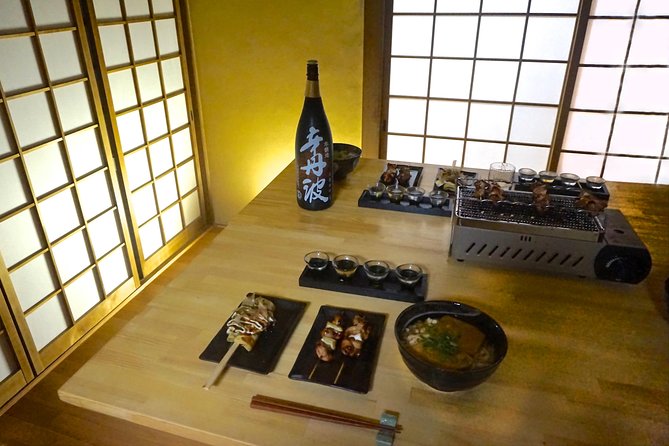
Once the cooking is finished, you sit down and eat what you have made. That changes the mood of the class. You are not carrying food away in a box or stopping at a restaurant after the lesson. The meal is the payoff for the work you have just done.
Welcome drinks are included, and the end-of-class choices include beer, sake, or green tea. This is a small but worthwhile detail. A cold beer or cup of tea gives you time to talk about the dishes, compare results, and ask follow-up questions while the experience is still fresh.
Sake makes the meal feel more connected to Japanese food culture, while green tea gives you a nonalcoholic option. If you do not drink alcohol, you are not left out of the shared toast. The provided information does not specify how many drinks are included, so treat this as an included drink service rather than an open bar.
Why the small group matters
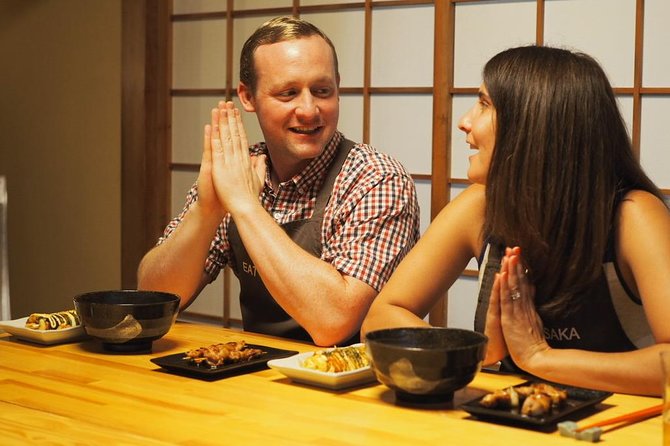
Eight people is a sensible maximum for a cooking class. With more participants, instructions can become hard to hear and the teacher may have little time to correct your technique. Here, the group size leaves more room for individual help.
That is important for dishes such as udon and tempura. A chef can show you a movement, watch you try it, and adjust your method. The same applies to shaping, mixing, and using professional tools.
The group size also creates a friendly social setting without promising a private tour. You might meet people from other countries, as one couple did while cooking with another couple from Ireland. If you are traveling alone, this can be an easy way to share a meal and an activity without signing up for a large group outing.
Price, timing, and practical value
The price is $79.28 per person for about two hours and 30 minutes. That is not the cheapest way to eat in Osaka, where you can buy street food for far less. You are paying for the instruction, ingredients, kitchen use, equipment, drinks, and the chance to prepare several dishes yourself.
I think the price makes the most sense if you value the activity as a food lesson, not simply as lunch. You get a meal, but you also leave with techniques and a better understanding of Osaka-style dishes. The value is stronger for couples, families, and food-focused visitors who want an active experience between sightseeing stops.
The session is long enough to feel substantial but short enough to fit into a busy Osaka schedule. It is not an all-day commitment. You should allow extra time for finding the meeting point and walking from public transport, even though the activity is near public transportation.
The meeting point is Eat OsakaHigashinari at 1丁目-2-10 Higashinaka-Hon, Higashinari Ward, Osaka. The class ends back there, so you do not need to arrange a separate return transfer. Use the mobile ticket and confirm the meeting details before leaving your hotel.
Who will get the most from this class
This cooking class suits you if food is one of the main reasons you are visiting Japan. It gives you more than a tasting stop, and you have enough time to learn several techniques.
It is also a good choice for:
- Couples looking for a shared activity beyond restaurants
- Families who want a practical cultural experience
- Solo visitors who enjoy meeting a small group
- Vegetarian diners who arrange their needs ahead of time
- People who want to understand Osaka food rather than only photograph it
- Visitors with a free two-and-a-half-hour window near public transportation
You may want to choose another activity if you dislike hands-on cooking or want a formal restaurant meal. The class involves preparation, tools, and following instructions. It is also less suitable if you need a fixed menu and cannot accept the possibility of changes between sessions.
Booking and cancellation details
Confirmation is provided at the time of booking, and the activity accepts mobile tickets. The maximum group size is eight people. A minimum number of participants is required, so if Eat Osaka cancels because that minimum is not met, you will be offered another date or experience, or receive a full refund.
You can cancel for a full refund up to 24 hours before the start time. Cancellations and changes made less than 24 hours before the local start time are not accepted for a refund. Keep that cutoff in mind when planning around train journeys, weather, or a packed sightseeing day.
Should you book Eat Osaka?
I would book this class if you want an active food experience and like the idea of cooking in a small old-house kitchen. The strongest reasons are the hands-on format, the eight-person limit, the included drinks, and the clear effort to explain Osaka food culture rather than rush through a recipe.
Before paying, confirm the menu for your date. The supplied details name different combinations of dishes, including udon, tempura, okonomiyaki, yakitori, pickled cucumber, and mochi. If you are happy with a rotating street-food menu, that flexibility should not be a problem. If one dish is essential, get that detail settled first.
FAQ
Where does the cooking class take place?
The class starts and ends at Eat OsakaHigashinari, 1丁目-2-10 東中本, Higashinari Ward, Osaka, Japan. The meeting point is near public transportation.
How long does the experience last?
The cooking class lasts approximately two hours and 30 minutes.
What dishes will I make?
The provided menu details include handmade udon, Osaka-style okonomiyaki, vegetable tempura, yakitori with a signature sauce, pickled cucumber, and mochi dessert. The exact combination may vary, so confirm the menu for your session if a specific dish matters to you.
Are drinks included?
Yes. Welcome drinks are included, and after cooking you can enjoy beer, sake, or green tea with the meal.
How many people can join?
The activity has a maximum of eight participants.
Is the class suitable for vegetarians?
A vegetarian participant was accommodated with a vegetarian meal. You should tell Eat Osaka about your dietary needs before the class.
What is the cancellation policy?
You can cancel up to 24 hours before the local start time for a full refund. Changes or cancellations made less than 24 hours before the start time are not accepted for a refund.
Newly added plates around Osaka
- Retro Osaka Street Food Tour: Shinsekai★ 4.5 · 77 reviews
- Osaka Street Food Tour: Private & Personalized★ 4.5 · 36 reviews
- Evening Street Food Hopping Tour in Downtown Osaka★ 5.0 · 8 reviews
- Osaka 2 Hour Local Street Food Tour in Dotonbori and Namba★ 5.0 · 2 reviews
- Deep Dive: Osaka Food Markets from Local to Luxurious!★ 5.0 · 31 reviews
- Eat Like a Local in Osaka – Private Custom Street Food Tour★ 4.3 · 33 reviews
- Osaka Shinsekai Street Food Tour – Evening★ 5.0 · 2 reviews
- Osaka: Kuromon Market Street Food Tour with Pro Local Guide★ 5.0 · 5 reviews
Cooking Classes, compared.
Food Market Visit and Cooking Class with Wine
Read our review →
Mexican Cooking Class with Food Market Visit in Mexico City
Read our review →


Food Market Shopping and Cooking Workshop in A Coruña
Read our review →
Syracuse: Sicilian Street Food Hands-On Cooking Class
Read our review →
Portuguese street food cooking class with Drinks
Read our review →Browse the lists this tour appears in