
REVIEW · NIGHT MARKET FOOD TOURS
Deep Dive: Osaka Food Markets from Local to Luxurious!
Osaka’s food culture makes the most sense when you see its full range: polished department-store displays, neighborhood grocery shops, Korean food streets, kitchenware stores, and the famous Kuromon Market. The route gives you a useful map of the city’s eating life, not just a short parade of snack stalls. I especially like the contrast between Takashimaya’s elegant depachika and the plain, working markets around Tenma.
I also like the way a private guide can adjust the outing to your interests. Guides including Ferdinand, Kevin, Lito, Damian, Thomas, and Alejandro have helped visitors with translations, food questions, shopping, photography, and even children’s interests in mochi and gaming. The main caution is cost: at $91 per person, food and transport are extra, and this is more a guided market and food-culture walk than an all-inclusive tasting tour.
Key points to know before you book
- Seven connected stops: The route links Takashimaya, Pulala Tenma, Tenjinbashi-suji, Tsuruhashi Korea Town, Kuromon Market, Doguyasuji, and Namba.
- Food is purchased separately: Snacks, meals, drinks, samples, and souvenirs are not included in the price.
- Private guiding matters: Only your group participates, giving the guide room to answer questions and adapt the pace.
- Expect serious walking: The tour lasts about four hours and includes several neighborhoods, markets, and shopping streets.
- The best cultural range comes from the contrasts: You see local grocery shopping, Korean influences, tourist-friendly stalls, and high-end Japanese food displays.
- Morning or afternoon departures are available: Choose based on your appetite, weather, and plans for the rest of the day.
Osaka food culture beyond the famous snack streets
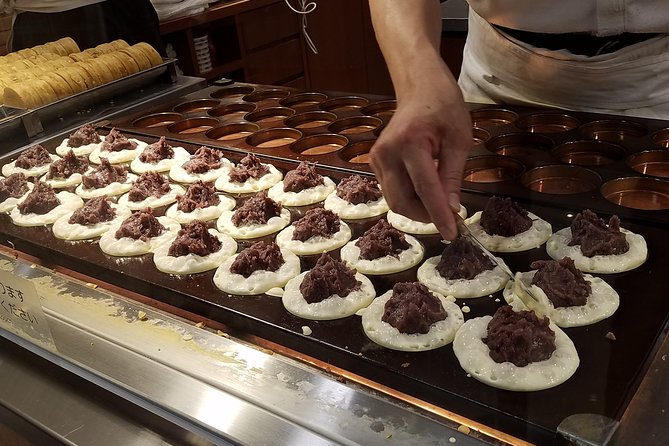
Many first visits to Osaka focus on Dotonbori, takoyaki, okonomiyaki, and bright restaurant signs. This experience takes a wider view. You move through places where people shop for ingredients, compare prepared foods, buy serving dishes, and follow food traditions shaped by Japanese, Chinese, and Korean communities.
That wider view is the strongest reason to consider the tour. You are not simply shown a stall and handed a bite. You learn how Osaka’s food world is organized, how products are presented, and how local shopping differs from the market experience designed for sightseeing.
The route is listed as about four hours, though the schedule adds up to a little more than three hours of named stops. That leaves some room for walking between locations, transport, questions, purchases, and time in Namba at the end. Plan for a moving afternoon rather than a tightly timed sequence.
The tour is private, so you do not share the experience with a large group. That can make a real difference in narrow market lanes and crowded shopping arcades. It also gives you a better chance to ask about unfamiliar ingredients or request help ordering something you want to try.
More Night Market Food Tours in Osaka:
- Deep Dive: Osaka Food Markets from Local to Luxurious!
★ 5.0 · 2 reviews - Phuket: Full Day City Tour with Night Market
★ 4.5 · 2,888 reviews - Small Group: Michelin and Local Hawker Food Tour with 9 tastings
★ 5.0 · 1,890 reviews
Starting at Takashimaya’s polished depachika
The first stop is Takashimaya Osaka Store, where you enter a department-store basement food hall known in Japan as a depachika. This is a fine starting point because it introduces the careful presentation and high standards of Japanese food retail.
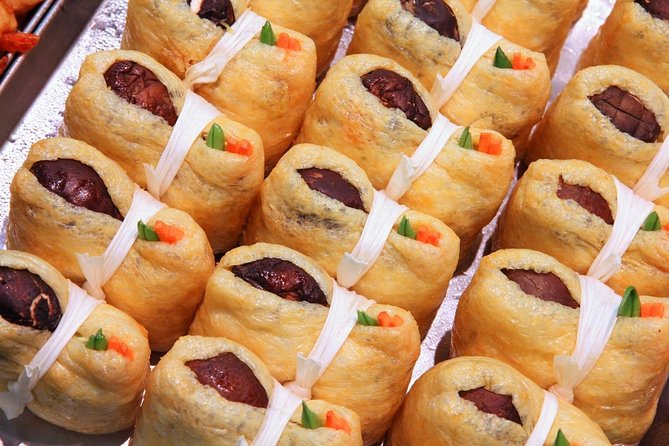
You can expect beautifully arranged raw ingredients, Japanese sweets, prepared foods, Western-style foods, and gift-ready packages. The displays are part of the lesson. Food here is treated not only as something to eat, but also as something to present, give, and admire.
I like this stop because it corrects a common picture of Japanese food markets. Osaka’s food culture is not limited to open-air stalls and quick bites. It also includes refined department-store counters where quality, appearance, and packaging carry real weight.
The drawback is that this is not a free tasting stop. You can purchase food, but the tour price does not cover samples, refreshments, or meals. If you arrive hungry, keep some yen ready from the beginning.
Seeing everyday shopping at Pulala Tenma
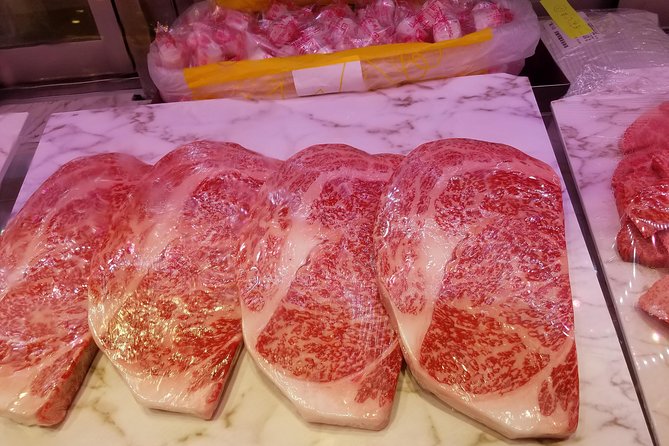
Pulala Tenma brings the tour closer to ordinary market shopping. Here you see seafood, meat, vegetables, and other ingredients displayed for local use rather than arranged mainly for sightseeing.
Your guide explains how these ingredients fit into Japanese cooking and how a local wet market differs from the more famous visitor markets. This is one of the places where the experience can feel most useful. You begin to recognize the raw materials behind dishes you may already know from restaurants.
I would pay close attention to the guide’s explanations here. The value is not simply in looking at fish, produce, or cuts of meat. It is in learning what people buy, how food is sold, and how the market connects to daily meals.
This stop may appeal less if you want nonstop eating. It is a market lesson, not a built-in breakfast. Some people have stopped at a local restaurant during the outing, but that depends on the guide, timing, and your own purchases. Do not assume a meal is included.
Walking the full length of Tenjinbashi-suji
Tenjinbashi-suji Shopping Street is presented as Japan’s longest covered shopping street. The arcade offers a different kind of food experience, with shops and services spread through a long local corridor rather than concentrated in one market building.
The guide explains the street’s history and its current role. You also visit a very Osaka-style supermarket, which may sound ordinary but is useful if you want to understand how residents shop. Supermarkets can reveal more about normal eating habits than a display made only for visitors.
Look for the details that are easy to miss when walking alone: the balance between food shops and everyday businesses, the way goods are priced and packaged, and the types of ingredients placed within easy reach. This is also a good section for questions, since the pace can be adjusted more easily than in a packed market.
Tenjinbashi-suji is long, so comfortable shoes matter. The tour requires a moderate amount of walking, and the distance can feel harder in hot weather. If you have young children, consider their stamina before booking.
More street food tours in Osaka:
- Hungry Osaka Street Food Tour:15 Tastings & 3 Drinks with a Local
★ 5.0 · 1,727 reviews - Hungry Osaka Street Food Tour: 15 Dishes & 3 Drinks
★ 4.9 · 694 reviews - [1 Group Only] Osaka Street Food Tour for Family
★ 5.0 · 208 reviews - Umami Town Street Food Tour
★ 5.0 · 120 reviews
Meeting Osaka’s Korean food culture in Tsuruhashi
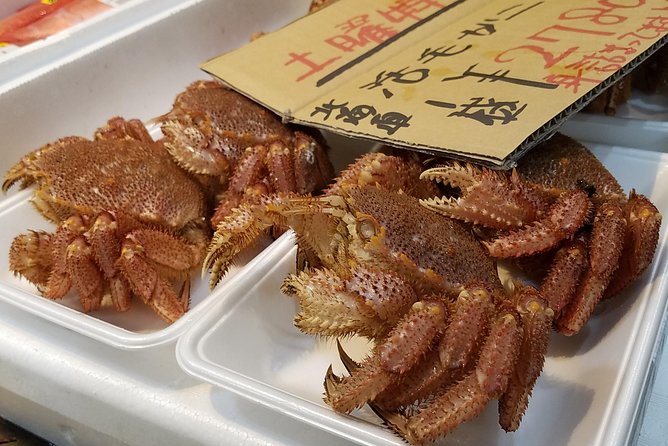
Osaka Tsuruhashi Ichiba takes you into one of the city’s best-known Korean neighborhoods. Food is central here, but the area also includes clothing, household goods, and other products that show the broader cultural life of the neighborhood.
This stop adds historical and social context to the food route. Korean ingredients and cooking traditions are part of Osaka’s food story, and a visit here gives you a look at influences that are easy to miss if you stay only around Dotonbori.
You might find snacks, prepared foods, and ingredients to buy as you walk. Guides have also helped with translation when visitors wanted to try particular dishes. If you have a specific interest in Korean food, tell your guide early so the route can make better use of your time.
Some of the most useful explanations on this tour concern the links between Japanese, Chinese, and Korean food traditions. The guide’s personal background can shape how these topics are presented. Guides such as Kevin and Ferdinand have been praised for explaining cultural connections in clear, engaging ways.
Comparing Kuromon with local markets
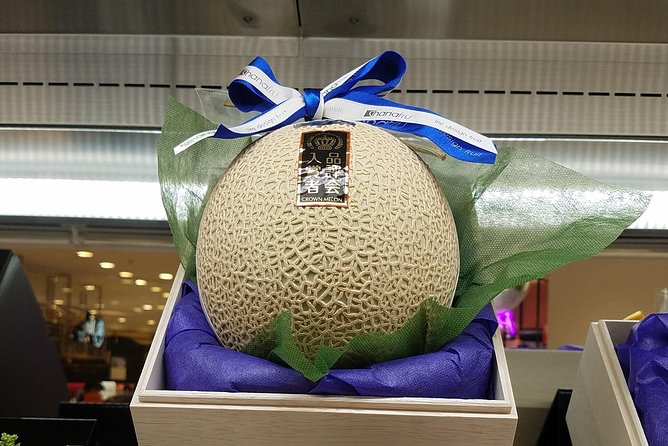
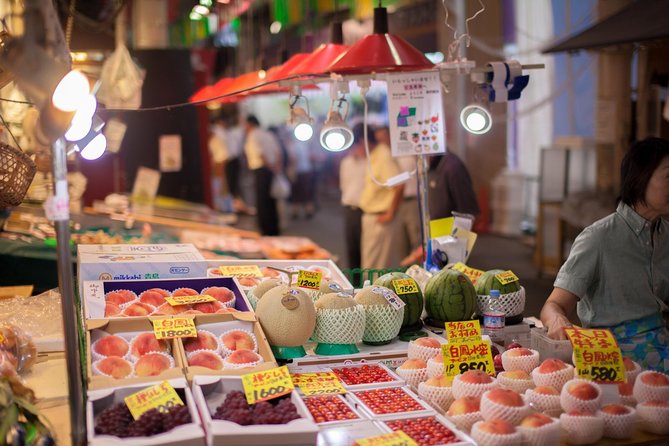
Kuromon Market is the most visitor-focused stop on the route. It is famous for seafood, produce, prepared foods, and attractive stalls where you can buy something on the spot.
The market is worth seeing, but go in with realistic expectations. Prices can be higher than at less tourist-oriented markets. You are paying partly for convenience, presentation, and the chance to see many appealing foods in one place.
The guide helps you make sense of the market rather than simply leading you through it. You can ask what is worth buying, how to order, and how Kuromon differs from the earlier stops. That comparison is the real payoff. A polished market may look similar to a local one at first glance, but the pricing, presentation, and customer base tell a different story.
Bring extra money if you want seafood, sweets, drinks, or other snacks. Nothing edible is included automatically. One important point needs clear emphasis: the description presents the route as offering food opportunities, but the listed inclusions do not cover tastings. Some participants have had food at a market or restaurant, while others have received no included samples. Treat eating as an optional expense, not a guaranteed part of the package.
Browsing knives and ceramics at Doguyasuji
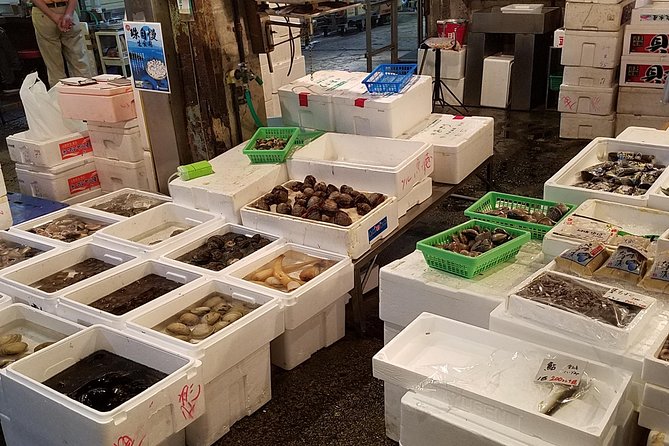
Sennichimae Doguyasuji Shopping Street shifts the focus from ingredients to the tools used to prepare and serve food. This is the place to look at Japanese cooking knives, ceramics, lacquer chopsticks, tea cups, serving dishes, and wax models of sushi.
For many people, this is more than a shopping stop. A kitchen knife or ceramic bowl can be a lasting reminder of Osaka, and the guide can help explain what you are looking at. If you are considering a knife, ask questions about the intended use and remember that international airline and customs rules may affect how you carry it home.
The wax food displays are fun and make good photographs, but the cooking tools are the more practical draw. You can also see how food presentation extends beyond the restaurant into the dishes, utensils, and serving pieces.
This stop may be less interesting if you have no room in your luggage or no interest in kitchen goods. Still, it rounds out the route by showing that Osaka’s food culture includes the equipment and visual style behind the meal.
Finishing around Namba and Dotonbori
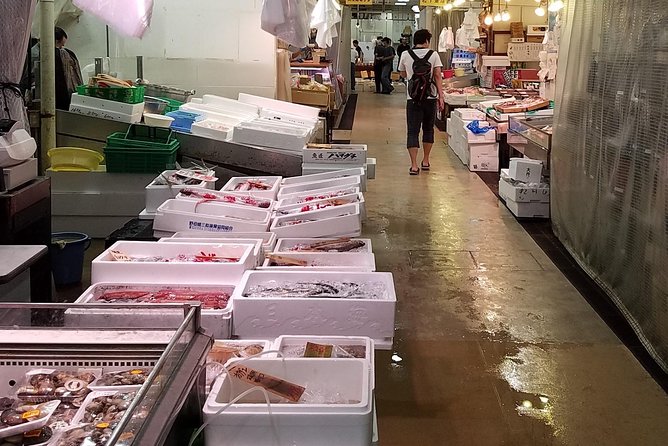
The tour ends at Ebisu Bridge in Dotonbori, with time in the Minami, or Namba, area if the schedule allows. This gives you a familiar Osaka finale after the less obvious markets and neighborhoods earlier in the day.
The end point is practical. You are left in one of Osaka’s best-known entertainment and dining districts, with plenty of options for a meal after the tour. It is also a good moment to use what you learned. You can choose a restaurant, identify a dish, or return to a market with more confidence.
The guide may help you understand nearby sights, but this final portion is flexible. Do not expect a long guided tour of every Namba attraction. The main work of the experience has already happened in the markets and shopping streets.
The stated meeting point is the McDonald’s in front of Temma Station, at 4-chōme-12-1 Tenjinbashi. The route ends at Ebisu Bridge, so you cross a substantial portion of the city during the experience. Transportation during the tour costs about 330 yen per adult and is not included.
What the $91 price really buys you
At $91 per person, this is not a cheap way to collect snacks. If you compare it with a food tour that includes several meals or fixed tastings, the price may seem high.
The stronger value is the guide’s time and interpretation. You visit several types of food places that would be difficult to connect efficiently on your own, and you gain help with customs, ingredients, ordering, and local context. The private format adds value if your group has specific interests or needs a flexible pace.
The price makes the most sense for someone who wants to understand Osaka’s food system, not just eat one famous dish. It is also useful early in a Japan trip because you leave with more confidence about markets, supermarkets, kitchenware shops, and ordering.
The value weakens if you have only a short time in Osaka, dislike walking, or expect a generous series of included samples. Budget separately for food, drinks, souvenirs, and the 330 yen transport charge. Group discounts may be available, and free cancellation is offered up to 24 hours before the start time.
Choosing a guide and getting the most from the route
The guides named in the available information include Ferdinand, Kevin, Thomas, Lito, Alejandro, Damian, and Oshi. Their strengths vary, but the recurring advantage is the ability to explain food and culture while adjusting to the group.
Ferdinand has a culinary background and has helped identify specialties, dishes, knives, and the development of food traditions. Kevin has been especially effective at explaining Japanese, Chinese, and Korean cultural links. Thomas has adapted the route for children interested in mochi and gaming.
Lito has worked well with groups that needed a flexible schedule, while Alejandro has offered cultural explanations and customized the experience. Damian has been praised for patience with shopping and photo stops. Oshi has led groups through the market route in difficult summer heat with a calm, pleasant manner.
You will get more from the experience if you tell the guide what you want at the start. Mention allergies, children’s interests, a desire to buy a knife, a preference for local groceries, or a wish to try a particular food. Since the tour is private, those details can shape the day.
Who should book this Osaka market walk
I recommend it most strongly for food-focused visitors who want context, not just consumption. It suits first-time visitors who want to learn how Osaka works beyond its famous restaurant signs, and repeat visitors who have already seen Dotonbori and want a more local shopping route.
It is also a good choice for families if children can manage several hours of walking. A private guide can adapt the pace and respond to specific interests, but young children may tire before the route ends.
You should think twice if you want an all-inclusive food experience. The tour’s title and description may create expectations of regular tastings, yet the practical arrangement is that you buy your own snacks and meals. You should also reconsider if hot weather, long walks, or public transport connections are a problem.
Should you book it?
Book this experience if you want a guided introduction to Osaka’s markets, food shopping, Korean cultural influences, kitchenware, and Namba, all in one private outing. Its best feature is the contrast between places: high-end depachika displays, local wet markets, a long shopping arcade, Tsuruhashi, Kuromon, and Doguyasuji.
Skip it if your main goal is a long list of included tastings. For that purpose, the $91 price is harder to justify. For food-curious visitors who value a good guide and want to understand how to navigate Osaka on their own, the route offers useful lessons that can improve the rest of your stay.
FAQ
How long does the Osaka food market tour last?
The experience lasts approximately four hours, including visits to several markets, shopping streets, neighborhoods, and the Namba area.
What places are included on the route?
The route includes Takashimaya Osaka Store, Pulala Tenma, Tenjinbashi-suji Shopping Street, Osaka Tsuruhashi Ichiba, Kuromon Market, Sennichimae Doguyasuji Shopping Street, and Minami in the Namba area.
Are food tastings included in the price?
No. Snacks, food items, refreshments, and samples are not included. You are responsible for buying anything you want to eat during the tour.
Is transportation included?
No. Transportation during the tour costs 330 yen per adult and is paid separately.
Is the tour private?
Yes. Only your group participates, and a native or near-native speaker of your chosen language guides the experience.
Where does the tour start and finish?
The tour starts at the McDonald’s in front of Temma Station at 4-chōme-12-1 Tenjinbashi, Kita Ward. It ends at Ebisu Bridge in Dotonbori.
Newly added plates around Osaka
- Osaka Street Food Tour: Private & Personalized★ 4.5 · 36 reviews
- Retro Osaka Street Food Tour: Shinsekai★ 4.5 · 77 reviews
- Eat Osaka: Street Food Cooking in an Authentic Kitchen!★ 5.0 · 87 reviews
- Evening Street Food Hopping Tour in Downtown Osaka★ 5.0 · 8 reviews
- Osaka 2 Hour Local Street Food Tour in Dotonbori and Namba★ 5.0 · 2 reviews
- Eat Like a Local in Osaka – Private Custom Street Food Tour★ 4.3 · 33 reviews
- Osaka Shinsekai Street Food Tour – Evening★ 5.0 · 2 reviews
- Osaka: Kuromon Market Street Food Tour with Pro Local Guide★ 5.0 · 5 reviews
Night Market Food Tours, compared.
Small Group: Michelin and Local Hawker Food Tour with 9 tastings
Read our review →
Food Market Visit and Cooking Class with Wine
Read our review →
Venice Street Food Tour with Local Guide with Local Food Market Visit
Read our review →
Cancun Taco Tour, Local Beer and Night Market with Transportation
Read our review →
Tsukiji Fish Market Food and Culture Walking Tour
Read our review →
Cancun Street Food Tour with Food Stalls, Local Market and Murals
Read our review →Browse the lists this tour appears in