
REVIEW · NIGHT MARKET FOOD TOURS
Deep Dive: Osaka Food Markets from Local to Luxurious!
Osaka’s food culture is at its best when you move beyond one famous market. This four-hour walk links an upscale department-store food hall with Tenma’s local markets, Korean-influenced Tsuruhashi, Kuromon Ichiba, and Namba’s cooking-supply street. I like the range of food worlds and the chance to see what locals buy, not just what tourists photograph.
I also like the small group, limited to eight people, and the guide’s role in explaining customs, history, and everyday life. Ferdinand, a French guide living in Japan, has led this experience and can add a useful outsider’s view. The main drawback is simple: food is not included, so your final cost depends on how much you buy, and the walking can be tiring.
Key points at a glance
- Four different Osaka food settings: Move from polished department-store goods to ordinary produce stalls, Korean food shops, Kuromon’s famous vendors, and kitchen-supply stores.
- Kuromon Ichiba is only one part: The day gives you more context than a quick visit to the city’s best-known market.
- Tsuruhashi adds Korean-Japanese food culture: This stop brings a different look, sound, and set of food traditions to the day.
- A guide makes the difference: Ferdinand has explained local customs, history, and his experience as a French resident of Japan.
- You pay for your own tasting: Snacks, samples, drinks, and souvenirs are extra, so bring room in your budget.
- Small groups help: With no more than eight participants, it should be easier to ask questions and keep pace through crowded streets.
Why this food walk shows the real Osaka
Osaka has a long-standing reputation for taking food seriously. This experience builds on that idea without reducing the city to a slogan or a single market. You see how food appears in different parts of urban life: as carefully packaged luxury goods, as household shopping, as street food, as restaurant supplies, and as a reason to gather in a neighborhood.
That range is the strongest feature here. Kuromon Ichiba gets much of the attention, but the other stops help you understand what makes it special. A department-store food market shows the polished end of Japanese retail. Tenma shows the everyday end. Tsuruhashi adds Korean influence, while Doguyasuji connects the food scene to the tools and equipment behind Osaka’s restaurants.
You should think of this as a guided food-and-market walk rather than a fixed tasting menu. You will see meats, fish, vegetables, prepared foods, and specialty goods, but the cost of eating them is yours. That arrangement gives you freedom, though it also means the $59 price does not cover your lunch or every tempting snack.
More Night Market Food Tours in Osaka:
- Deep Dive: Osaka Food Markets from Local to Luxurious!
★ 5.0 · 31 reviews - Phuket: Full Day City Tour with Night Market
★ 4.5 · 2,888 reviews - Small Group: Michelin and Local Hawker Food Tour with 9 tastings
★ 5.0 · 1,890 reviews
Starting in Tenma near the station
The meeting point is the McDonald’s directly in front of Tenma Station. This is a practical place to begin, but check your route carefully before setting out. The name Tenma appears again in the market portion of the walk, so it helps to arrive with the station and meeting point clear in your mind.
Tenma is a fitting starting district because the day begins close to ordinary shopping life rather than at a grand sightseeing landmark. You are not being eased into Osaka with a long historical lecture. You are being pointed toward food, shops, and the way the city feeds itself.
Your guide speaks English, Spanish, or French, depending on the language you choose when booking. The provider describes the guide as a native or near-native speaker. Ferdinand, who led one French-language experience, also shared his life in Japan as a French resident. That personal angle can make explanations about customs feel more grounded than a list of dates and facts.
Takashimaya: Osaka food at its polished end
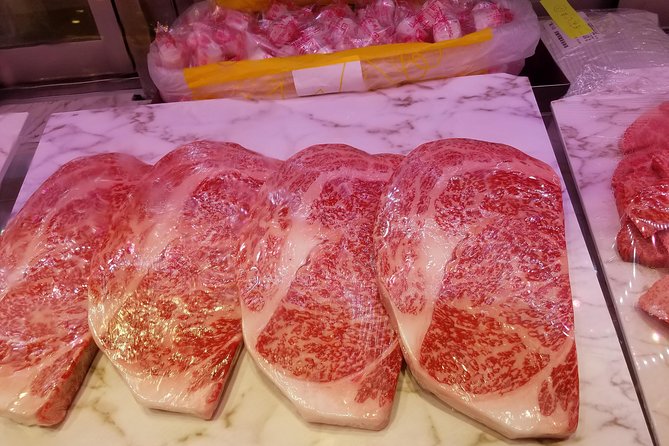
The first major stop is the TUMI Takashimaya Osaka Store, included as a guided sightseeing visit. The useful food comparison here is the department-store marketplace associated with Takashimaya. Japanese department stores are known for carefully presented food halls, high-quality ingredients, gift boxes, and prepared dishes meant to look as good as they taste.
You can expect this part to feel more controlled and refined than the open market stops later in the day. Packaging, presentation, and price matter here. It is a good place to see how food becomes a premium retail product in Japan.
This stop also helps you avoid a common mistake: assuming Japanese food culture is only about crowded stalls and casual bites. Osaka has both sides. If you enjoy design, presentation, and the social ritual of buying food as a gift, this section may be especially interesting.
The tradeoff is that department-store prices can make casual sampling less appealing. Since food is not included, you may prefer to look closely, ask questions, and save your snack budget for later. The guide can help explain what you are seeing, but your purchases remain optional.
Pulala Tenma and Tenjinbashisuji: the everyday food shop
Pulala Tenma, also known as the Tenma Ichiba Market Building, shifts the mood. This is the part of the day where the focus moves toward regular shopping and the ingredients used in daily cooking. The experience highlights meats, fish, produce, staples, and other food items that serve local households.
That distinction matters. A famous food market can become a stage for quick purchases, while a local market shows the less glamorous work of choosing ingredients for ordinary meals. You might see the kind of food shopping that supports neighborhood life, even if the exact vendors and products vary on the day.
The nearby Tenjinbashisuji Shopping Street adds another layer. It is a long shopping area with a strong local feel, and here the food experience is part of a wider street scene. You are not confined to one indoor market. You move through a district where food shops sit alongside other businesses and services.
The schedule assigns about 25 minutes to each listed stop, so do not expect unlimited time at every stall. This is a survey of several Osaka food districts, not a slow morning devoted to one market. If you like comparing places and asking focused questions, the pace should work well. If you want to inspect every fish counter or browse every shop, you may find it brisk.
More street food tours in Osaka:
- Hungry Osaka Street Food Tour:15 Tastings & 3 Drinks with a Local
★ 5.0 · 1,727 reviews - Hungry Osaka Street Food Tour: 15 Dishes & 3 Drinks
★ 4.9 · 694 reviews - [1 Group Only] Osaka Street Food Tour for Family
★ 5.0 · 208 reviews - Umami Town Street Food Tour
★ 5.0 · 120 reviews
Tsuruhashi and Osaka’s Korean food connection
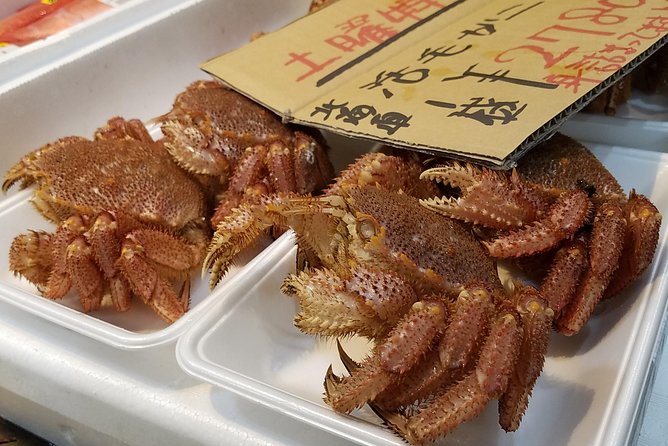
Tsuruhashi gives the walk its clearest change of character. The experience describes it as a Japanese-infused Korea Town that sees fewer tourists than Osaka’s most famous central sights. That makes it useful for anyone who wants to understand how food traditions cross borders and become part of neighborhood identity.
Here you can expect Korean influence within an Osaka setting, rather than a separate cultural display removed from daily life. The food, shops, and market atmosphere offer a different point of comparison with Tenma and Kuromon. Your guide can explain customs and background, which is valuable because a quick walk through the area may leave you noticing only the visual differences.
This is one of the more distinctive stops because it widens the idea of what counts as Japanese food culture. Osaka’s markets are not isolated from the wider region. People, recipes, businesses, and eating habits move across communities.
You should keep your expectations measured. The supplied details do not promise a specific cooking demonstration, meal, or included tasting in Tsuruhashi. Treat it as a guided neighborhood visit where you can buy food if something catches your eye.
Kuromon Ichiba beyond the postcard view
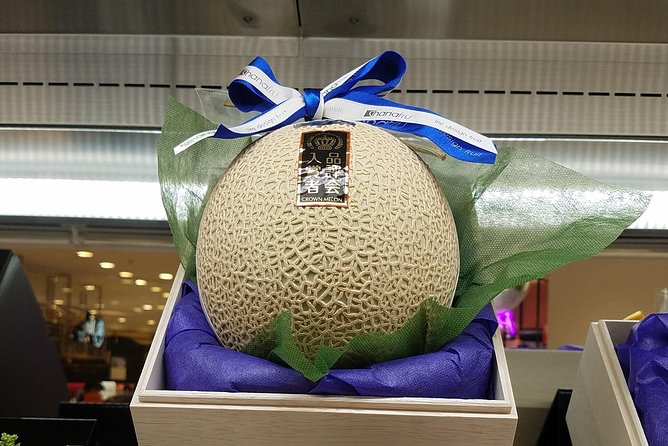
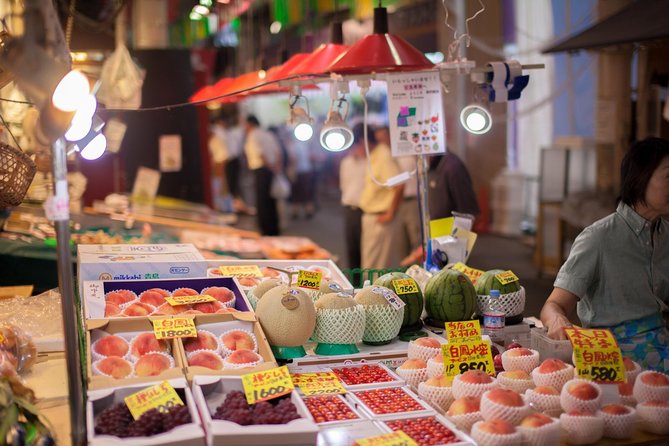
Kuromon Ichiba is the best-known name on the route. It is famous for delicacies sold raw and cooked, with stalls designed to catch the eye and appetite. You may find seafood, meat, produce, prepared food, and snacks that are easy to eat while walking, but all purchases are your responsibility.
The advantage of visiting Kuromon with a guide is context. Without help, you can easily see a row of attractive foods, take a few pictures, and move on. A guide can explain what you are looking at, how certain foods fit into local habits, and how Kuromon differs from the more everyday markets visited earlier.
The disadvantage is that Kuromon can be the most tempting place to spend money. The $59 fee covers the guide, not your tastings. Set a snack budget before you arrive, especially if you want to try several items rather than make one purchase.
I would also avoid treating this as a guaranteed feast. The route promises access to food markets and the chance to buy snacks, not a set number of samples. That freedom suits curious eaters who want to choose their own food. It is less suitable if you want every bite arranged and prepaid.
Doguyasuji: where restaurants get their tools
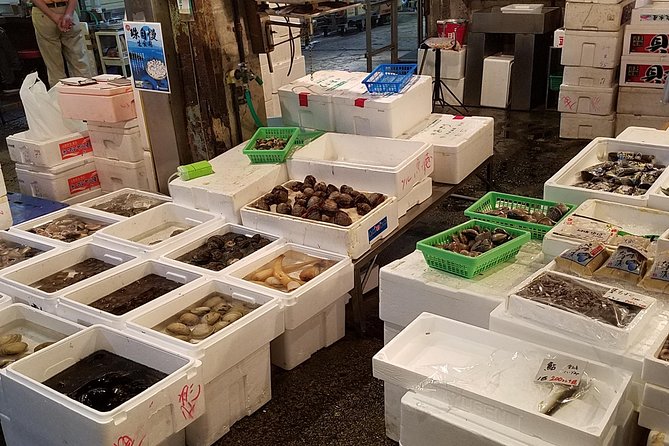
Sennichimae Doguyasuji Shotengai brings the food story into the kitchen. This shopping street is associated with cooking equipment and restaurant supplies, so it shows the practical side of Osaka’s dining culture. Food does not reach a table by magic. Knives, dishes, pans, signs, and other tools help create the city’s restaurant life.
This stop is especially useful if you enjoy cooking, Japanese tableware, or the behind-the-scenes side of restaurants. Even if you do not plan to buy anything, the street gives you a different way to think about Osaka’s food identity. It is not only about eating. It is also about the objects, skills, and businesses that support eating.
As with the markets, souvenirs are not included. You can browse without buying, but kitchen goods may be more difficult to resist than expected. Leave room in your luggage if you are interested in practical purchases, though the experience does not promise any particular products or shopping discounts.
Finishing in Namba
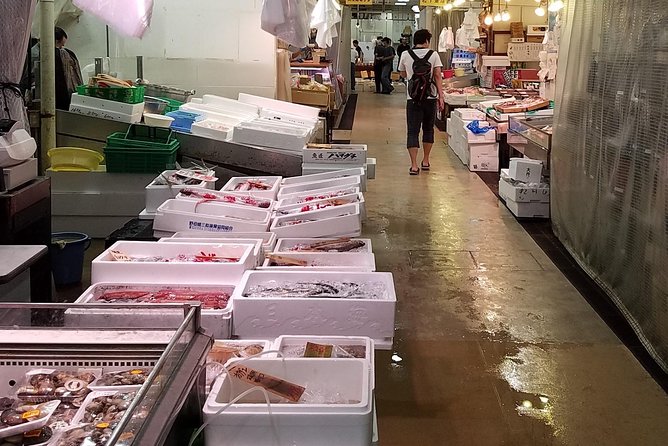
The walk finishes in Namba, one of Osaka’s main city areas. Ending here is convenient for anyone who wants to continue eating, shopping, or sightseeing on their own. It also gives the route a clear progression from neighborhood markets to a major central district.
Namba is not presented as a separate food tasting stop with a promised meal. Instead, it serves as the final setting for the tour. By this point, you will have seen several ways Osaka handles food, from premium retail to local shopping and restaurant equipment.
The route lists roughly 25 minutes for each stop, but the total duration is four hours. That means the day includes walking, transitions, and guided explanation. Wear comfortable shoes, as specifically advised. This is not a sit-down food tour with long breaks.
What $59 really buys you
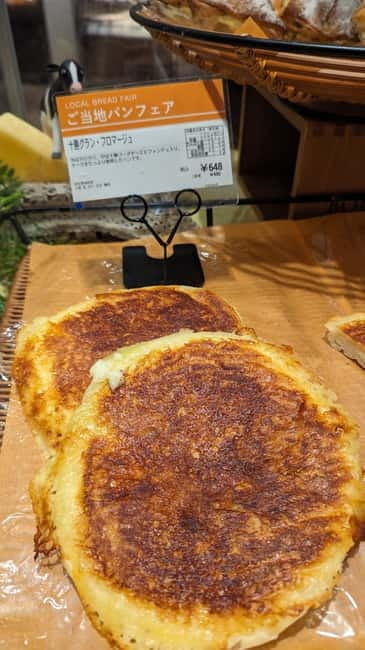
At $59 per person, the value depends on how much guidance you want. You are paying for four hours with a language-specific guide, a small group limited to eight people, and access to several food districts that can be confusing to connect on your own.
The route is broad. You get more than Kuromon Ichiba, and that variety is the main reason to consider it. A person who already knows Osaka’s markets and feels comfortable reading signs may prefer to explore independently and spend the money on food. A first-time visitor who wants explanations, comparisons, and a manageable route may find the fee sensible.
Budget separately for transportation during the tour, listed as 330 yen per adult. Samples, food, refreshments, and souvenirs are also extra. The final amount can rise quickly if you buy several dishes, so do not treat $59 as the full cost of the day.
The small group improves the value. With up to eight people, you have a better chance of asking about unfamiliar foods or customs than you would in a large group. It does not guarantee a private tour, but it should make the guide’s explanations easier to follow.
Who should book this experience
I would recommend this walk to you if you want food context as much as food itself. It suits curious eaters, first-time Osaka visitors, and anyone who wants to compare upscale retail, local shopping, Korean-influenced food culture, a famous market, and restaurant-supply shops in one outing.
It also suits you if you prefer to choose your own snacks. Since you pay for food separately, you can skip anything that does not appeal to you and spend more on the items you genuinely want to try.
You may want to skip it if you need a guaranteed meal, included tastings, or a relaxed pace at each market. Four hours with several stops gives you breadth, not deep time at every shop. It is also less appealing for anyone who dislikes walking or would rather spend the morning in one market.
The guide’s personal perspective is another reason to book. Ferdinand’s French background and life in Japan add a cross-cultural angle, while the available languages make the experience accessible to English, Spanish, and French speakers.
Final call on this Osaka market walk
Book this experience if you want Osaka explained through its food districts rather than reduced to one famous market. The strongest feature is the contrast between Takashimaya’s polished food retail, Tenma’s everyday shopping, Tsuruhashi’s Korean influence, Kuromon’s ready-to-eat appeal, and Doguyasuji’s restaurant tools.
Skip it if you are mainly looking for an all-inclusive tasting tour. The $59 fee covers the guided walk, while food, drinks, samples, transportation, and souvenirs cost extra. Bring comfortable shoes, a little snack money, and an appetite for looking as well as eating.
FAQ
Where does the experience begin?
It begins at the McDonald’s directly in front of Tenma Station in Osaka.
How long does the experience last?
The experience lasts four hours.
What languages are available?
The tour is available with a live guide speaking English, Spanish, or French.
Is food included in the price?
No. Samples, food, refreshments, and snacks are not included. You are responsible for buying anything you want to eat.
Is transportation included?
Transportation during the tour is not included. The listed transportation cost is 330 yen per adult.
How large is the group?
The experience is limited to eight participants.
Newly added plates around Osaka
- Retro Osaka Street Food Tour: Shinsekai★ 4.5 · 77 reviews
- Osaka Street Food Tour: Private & Personalized★ 4.5 · 36 reviews
- Eat Osaka: Street Food Cooking in an Authentic Kitchen!★ 5.0 · 87 reviews
- Evening Street Food Hopping Tour in Downtown Osaka★ 5.0 · 8 reviews
- Osaka 2 Hour Local Street Food Tour in Dotonbori and Namba★ 5.0 · 2 reviews
- Deep Dive: Osaka Food Markets from Local to Luxurious!★ 5.0 · 31 reviews
- Eat Like a Local in Osaka – Private Custom Street Food Tour★ 4.3 · 33 reviews
- Osaka Shinsekai Street Food Tour – Evening★ 5.0 · 2 reviews
Night Market Food Tours, compared.
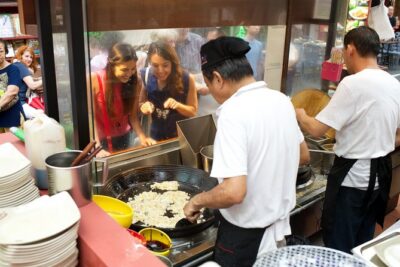
Small Group: Michelin and Local Hawker Food Tour with 9 tastings
Read our review →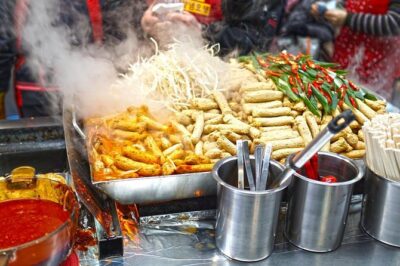
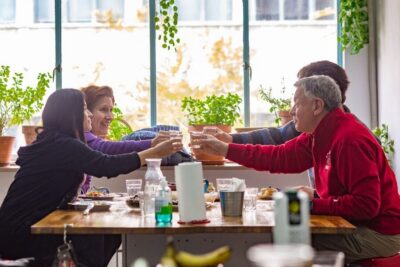
Food Market Visit and Cooking Class with Wine
Read our review →
Venice Street Food Tour with Local Guide with Local Food Market Visit
Read our review →
Cancun Taco Tour, Local Beer and Night Market with Transportation
Read our review →
Tsukiji Fish Market Food and Culture Walking Tour
Read our review →
Cancun Street Food Tour with Food Stalls, Local Market and Murals
Read our review →Browse the lists this tour appears in