
REVIEW · CHINATOWN FOOD TOURS
Bangkok: Chinatown Food Tour with Michelin Food Stalls
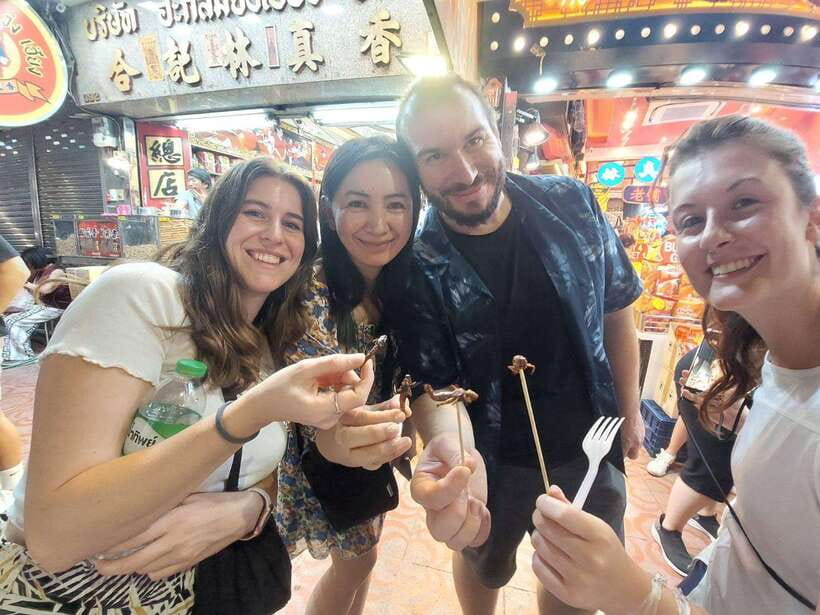
Bangkok’s Yaowarat Chinatown is best understood one bite at a time. This three-hour evening walk takes you from Wat Mangkon Kamalawat through neon-lit streets and food stalls, with more than 10 tastings along the way. I like the small eight-person group, which makes it easier to keep together in the crowds, and the chance to try places you might pass without knowing what to order.
I also like the mix of Michelin-recognized food and modest local stalls, rather than a tour built around one famous stop. The main caution is simple: you need to arrive hungry, and this is not a good fit for vegans, vegetarians, children under 10, or anyone who has trouble with moderate walking.
Key points at a glance
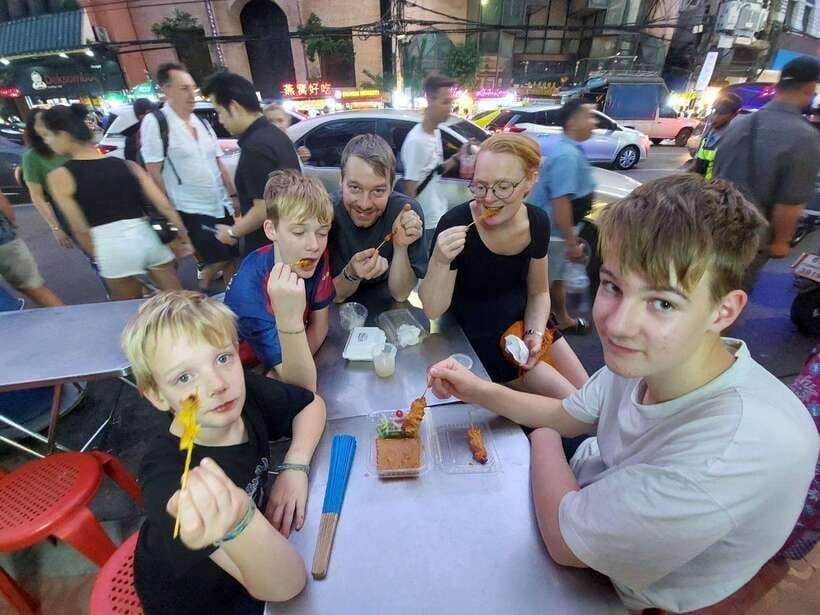
- More than 10 tastings: Expect spring rolls, barbecued meats, dumplings, noodles, seafood, stir-fried dishes, sweets, and drinks.
- A real Chinatown setting: Start near Wat Mangkon Kamalawat and finish at Chinatown Gate as Yaowarat lights up for the evening.
- Michelin-recognized food: The route includes at least one Michelin-recognized food stall, with some departures visiting two recognized vendors or restaurants.
- Guides who shape the experience: Peak, Eve, Na, K, Sunday, and other English-speaking guides have been praised for humor, care, pacing, and local food knowledge.
- Good value for serious eaters: At $36 per person, the number of tastings can cost less than ordering a similar range of dishes independently.
- Plan for restrictions: Dietary needs can be accommodated with advance notice, but the experience is not suitable for vegans or vegetarians.
Starting beside Wat Mangkon Kamalawat
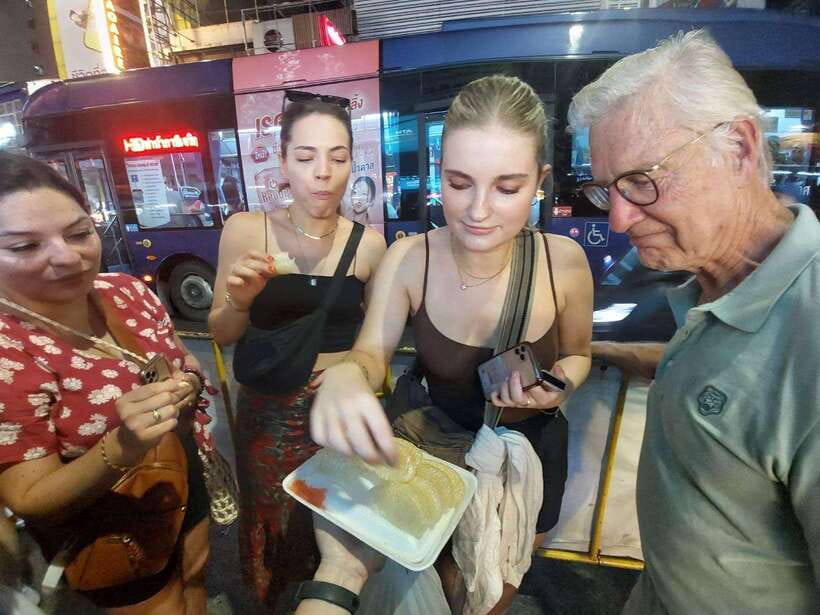
The meeting point is Wat Mangkon Kamalawat, also called Wat Leng Noei Yi. This puts you in a useful corner of Chinatown from the start, close to one of the area’s best-known Chinese Buddhist temples and the food streets of Yaowarat.
Your guide gathers the group before leading you into the evening food scene. Because the group is capped at eight people, the walk should feel more personal than a large procession. That matters here. Chinatown traffic can be thick, sidewalks can be narrow, and food stalls often sit close to the road.
The meeting point is also practical for anyone arriving by Bangkok public transport or taxi, though hotel pickup is not included. Give yourself time to reach the temple, especially if your driver is unfamiliar with the exact entrance. One recent departure had a participant arrive late after a taxi went to the wrong place, and the guide helped the person catch up. That is reassuring, but it is still smarter to arrive early.
More Michelin Street Food Tours in Bangkok:
- Bangkok: Michelin Guide Street Food Tour by Tuk Tuk
★ 4.4 · 1,274 reviews - Bangkok: Michelin Guide Street Food Tour by Tuk Tuk
★ 4.5 · 56 reviews - Small Group: Michelin and Local Hawker Food Tour with 9 tastings
★ 5.0 · 1,890 reviews
Why Yaowarat works so well for a food tour
Chinatown is not a tidy outdoor dining park. It is a working neighborhood where Chinese family traditions, Thai cooking, small restaurants, market stalls, shrines, shop houses, traffic, and street vendors all share the same busy few blocks.
That mix is the point. Chinese immigrants helped shape Bangkok’s food culture, and Yaowarat remains one of the clearest places to see that influence in daily life. Your guide explains how dishes and cooking habits developed, giving you more context than a simple list of snacks.
I particularly like the way the food provides a map of the neighborhood. A steamed dumpling, a bowl of noodles, a roast meat dish, or a sweet bun can each point to a different part of the Thai-Chinese story. You are not only eating. You are learning why this corner of Bangkok tastes the way it does.
The setting changes as night falls. Neon signs come on, cooking smoke drifts through the lanes, and more people arrive to eat. Bring a camera if you enjoy street photography, but keep it secure and do not let picture-taking slow the group down.
The first tastings: familiar food with a local setting
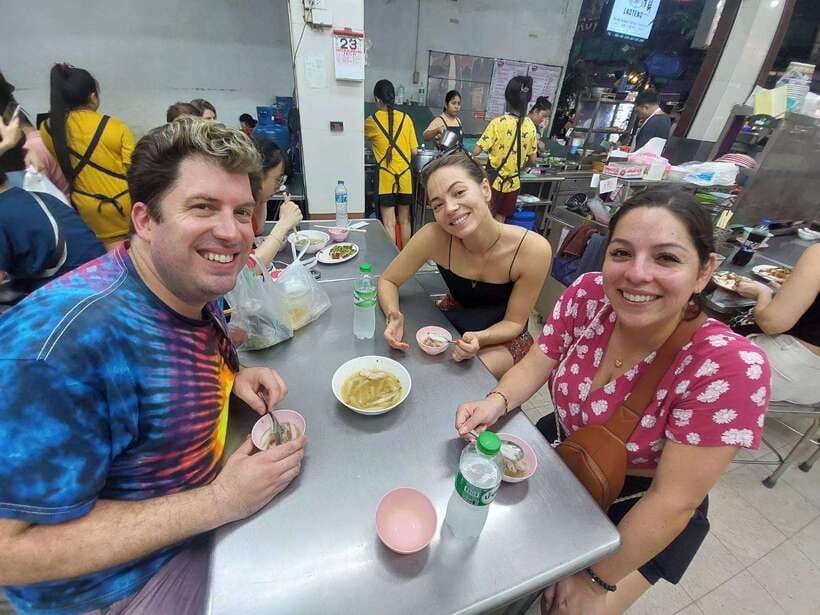
The route begins with a range of Thai-Chinese street food rather than one large meal. You might try crispy spring rolls, barbecued meats, freshly steamed dumplings, or stir-fried dishes. The format is useful for first-time visitors because you can sample several foods without committing to a full plate at each stop.
The portions can add up quickly. Some people described eating 13 or even more than 15 different dishes, while the advertised minimum is more than 10 tastings. You should treat that number as a strong guide rather than a strict promise of identical dishes every night, since vendors, availability, and group needs can affect the route.
Your guide handles much of the ordering and explanation. That removes one of the main hurdles of Bangkok street food: knowing what to point at, how much to order, and what a dish contains. Guides such as Eve, Na, Peak, and K have been singled out for explaining recipes, checking that everyone is keeping up, and helping people try unfamiliar foods without pressure.
The food is shared across the group in many cases, so hand sanitizer or wipes are sensible additions to your day bag. One useful practical note from the experience is that guests may use their hands for some tastings. Bottled water is included, but bring extra water if you are visiting Bangkok during a hot spell.
Local stalls and dishes you might miss alone
The strongest reason to book this tour is not simply the Michelin stop. It is the route through small food businesses that can be hard to assess on your own.
Some stalls are famous, but others are easy to overlook if you do not speak Thai or cannot read the menus. The guide chooses places that locals return to and explains what you are tasting. You might find fragrant noodle soup, spicy seafood, dumplings, roast meats, pancakes, or other dishes that vary with the day.
This is also where the small group helps. Eight people can gather around a stall without taking over the entire pavement. The guide can pass food around, answer questions, and watch for anyone who has fallen behind.
The experience is not designed as an extreme-food challenge. One person noted that the dishes were delicious but not especially unusual. That is useful to know. If you want insects, very rare regional specialties, or a daring food stunt, this may not be the right choice. If you want a broad and approachable introduction to Bangkok street food, the range is more appealing.
More Chinatown eating walks in Bangkok:
- Bangkok Tuk-Tuk Tour by Night with Chinatown Street Food Meal
★ 5.0 · 635 reviews - Bangkok Tuk-Tuk by Night with Chinatown Street Food Meal
★ 4.6 · 263 reviews - Night Street Food Tour of Bangkok’s Chinatown
★ 5.0 · 173 reviews - Bangkok Hidden Gems: Talad Noi, Chinatown & Street Food Tour
★ 4.5 · 53 reviews
The Michelin-recognized stop
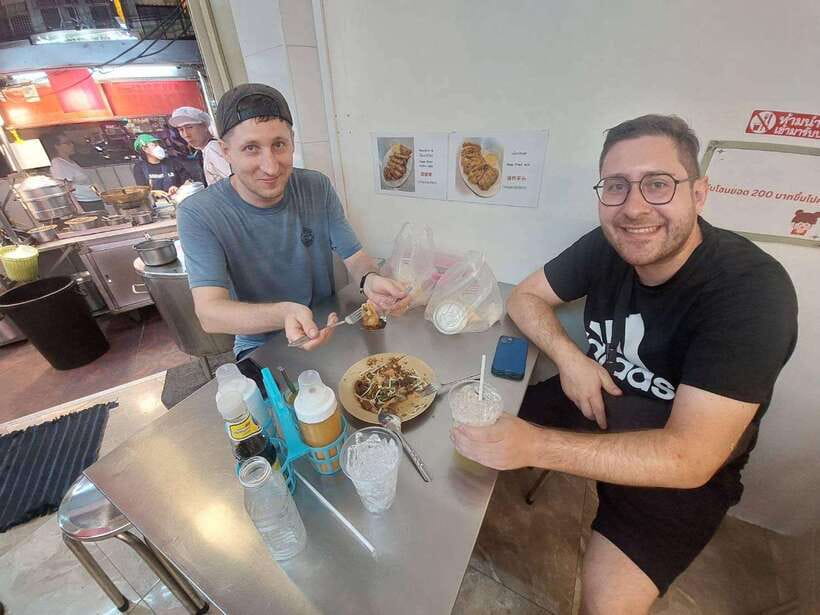
Later in the evening, the route reaches a Michelin-recognized food stall known for a specialty that has received wider attention. This gives the tour a clear highlight, but it works best because it comes after several less publicized stops.
Michelin recognition does not mean the setting becomes formal. You are still eating in Chinatown’s street-food environment, with the sounds, crowds, and practical energy of Yaowarat around you. The value is seeing how a humble food business can earn serious culinary attention.
The exact vendor can vary, and the tour information promises a Michelin-recognized stall rather than naming one fixed restaurant. Several departures have included two Michelin-recognized vendors or restaurants, but you should not assume every group follows precisely the same sequence.
I would not book this solely to collect a Michelin badge. Book it because the recognized stop is part of a larger evening of food and local explanation. That approach keeps expectations realistic and lets the rest of the route do its work.
Sweets, tea, and the final walk to Chinatown Gate
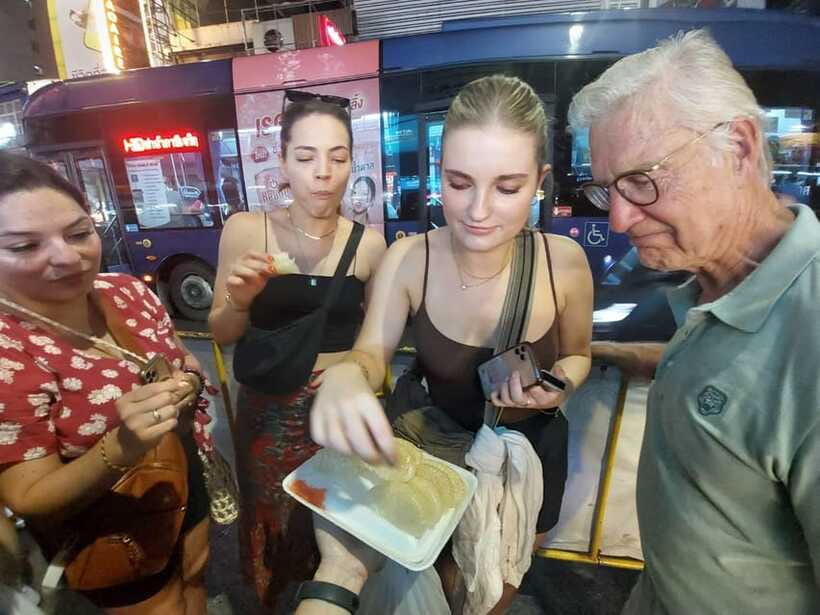
The later stops turn toward dessert. Traditional Chinese sweets, freshly made buns, or local-style pancakes may appear, along with a refreshing drink from a classic Chinatown tea stall.
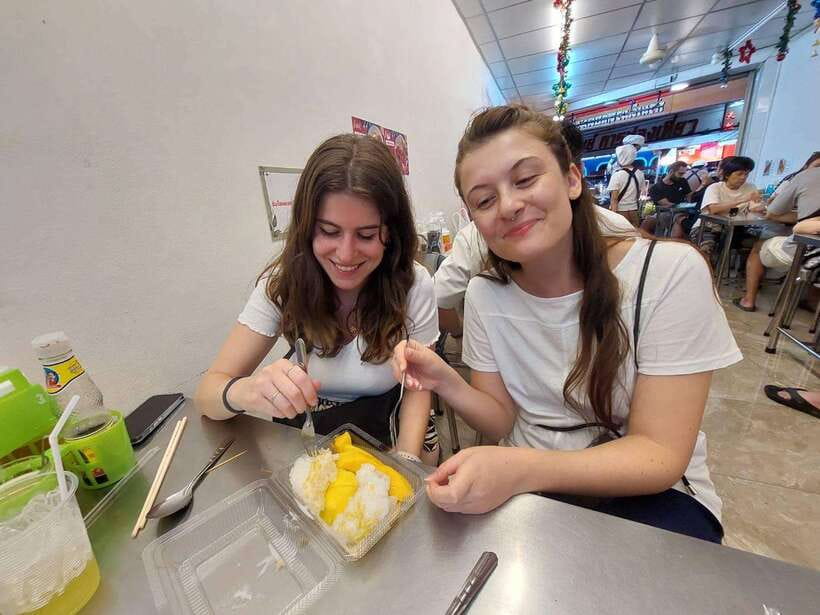
This sweet finish is welcome because the earlier dishes lean savory and can be filling. Mango sticky rice has been a favorite stop on at least some departures, although the precise dessert selection may change. A small sweet also gives you a final taste of the Chinese and Thai traditions that overlap throughout Yaowarat.
The tour ends at Chinatown Gate. That is a handy landmark for continuing your evening, taking photographs, or arranging a taxi. It is not hotel drop-off, so plan your ride from there. A guide may help with directions or transport advice, but personal expenses and your return trip are not included.
One practical detail: a few people have found the end of the route slightly confusing. Stay with the guide until the official finish and confirm the exact meeting point for your onward transport.
Guides make the difference
The food is the reason to book, but the guide often determines how smoothly the night runs. Peak has been praised for humor, energy, flexibility, and careful attention to the group. Eve is noted for clear explanations and a friendly manner. Na is described as attentive and good at making sure nobody leaves hungry. K and Sunday have also been praised for history, warmth, and keeping the group together.
These are not minor details in Chinatown. The streets can be noisy and crowded, and the best food stops may not be obvious. A calm guide who can explain the dishes, manage the pace, and spot dietary concerns adds real value.
The pacing appears to be one of the tour’s strengths. The three-hour schedule gives you enough time to eat properly without turning every stop into a rushed photo opportunity. Some departures run a little over three hours, but do not plan a tight appointment immediately afterward.
The guide can also make the route more flexible. One departure was adjusted around personal tastes, and another guide helped a participant who needed gluten-free options. Dietary restrictions can be discussed in advance, but you should not assume every dish can be altered once the tour begins.
Is $36 good value?
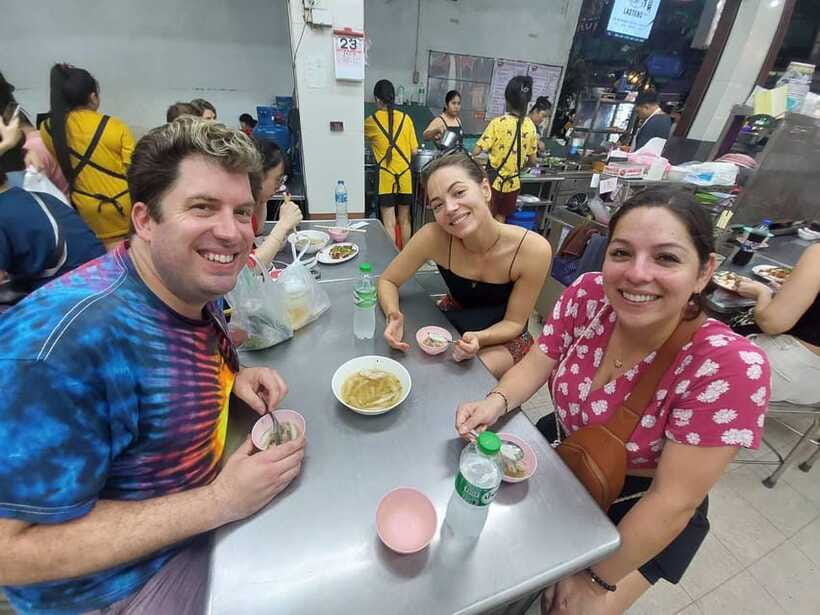
At $36 per person, this is a fair price if you want a large range of tastings and some guidance. Ten or more dishes, bottled water, an English-speaking guide, historical context, and a Michelin-recognized stop would be difficult to organize smoothly on your first night in Chinatown.
The value is strongest for solo visitors and couples who would otherwise order only two or three dishes. A solo diner cannot easily buy ten different items without wasting food or spending much more. A small group lets you taste broadly while sharing.
The price is less compelling if you already know Yaowarat well, speak Thai, and are comfortable choosing stalls on your own. You are paying for selection, explanation, group coordination, and access to places you might overlook, not just for the food itself.
At the end of the evening, most people should expect to be full. Eat lightly earlier in the day, but do not arrive dehydrated. Comfortable walking shoes are essential, and a camera is encouraged. Pets are not allowed.
Who should book this evening walk?
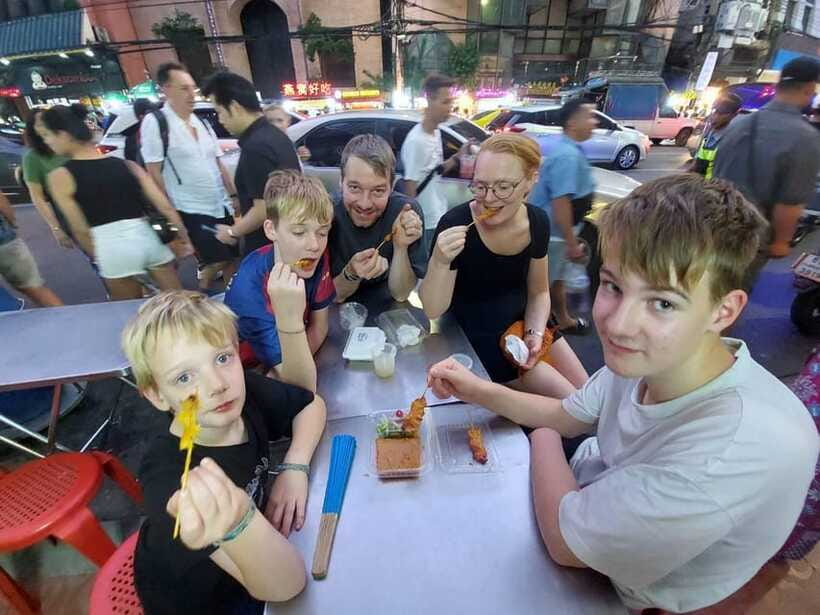
I would recommend it to first-time visitors who want an easy introduction to Chinatown without spending an hour guessing at menus. It also suits solo eaters, couples, and small groups who want to try many dishes rather than sit down for one long restaurant meal.
Food-loving families should note the age rule: children under 10 are not suitable for this activity. It is also not suitable for wheelchair users because of the moderate walking distance and street conditions.
Vegetarians and vegans should choose another experience. The tour focuses heavily on Thai-Chinese food, including meats and seafood, and the stated restrictions exclude both groups. Pescatarians may be able to enjoy part of the route, but advance notice is still wise.
People with allergies or other dietary restrictions should contact the provider before booking. The guides have helped with gluten-free choices, but the tour is built around shared street-food stops, so you should explain your needs clearly.
Booking details worth knowing
The tour lasts three hours and operates in the evening, with starting times depending on availability. It is conducted in English, and the maximum group size is eight participants.
Hotel pickup and drop-off are not included. You meet at Wat Mangkon Kamalawat and finish at Chinatown Gate, so allow time for your own transport at both ends.
The activity offers free cancellation up to 24 hours before departure, and you can reserve now and pay later. That flexibility is useful in Bangkok, where weather, traffic, and changing plans can affect an evening.
Should you book the Yaowarat food tour?
Book it if you want a generous helping of Bangkok food in one organized evening, especially if Chinatown feels intimidating on your own. The combination of 10 or more tastings, local stalls, Chinese-Thai food history, and Michelin-recognized cooking gives you plenty for the $36 price.
Skip it if you need a vegetarian or vegan menu, cannot manage moderate walking, or prefer to explore at your own pace. For everyone else, arrive early, wear good shoes, bring wipes, and save room for dessert. This is a practical, friendly way to get your bearings in Yaowarat, with enough food to make dinner afterward unnecessary.
FAQ
How long does the Bangkok Chinatown food tour last?
The tour lasts three hours. Some departures may run slightly longer, so avoid scheduling an appointment immediately afterward.
Where does the tour start and finish?
It starts at Wat Mangkon Kamalawat, also known as Wat Leng Noei Yi, and finishes at the Chinatown Gate.
How much food is included?
The tour includes more than 10 food tastings. Depending on the route, you may try around 13 to 15 dishes, along with drinks and dessert.
Is Michelin-recognized food included?
Yes. The tour includes a stop at a Michelin-recognized food stall. Some departures have also included two Michelin-recognized vendors or restaurants, but the exact route can vary.
Can dietary restrictions be accommodated?
Dietary restrictions can be accommodated with advance notice. The tour is not suitable for vegans or vegetarians, so contact the provider before booking if you have another dietary need.
Is the tour suitable for children or wheelchair users?
The tour is not suitable for children under 10 or wheelchair users. The walk is of moderate distance and takes place through Chinatown’s busy streets.
Newly added plates around Bangkok
- 4-Hour Hidden Bangkok TukTuk Street Food Guided Tour★ 5.0 · 23 reviews
- LR-01 TaLad NangLerng, ride along the old town and try local street foods★ 4.5 · 13 reviews
- Famous Thai Street Food Tasting Experience!★ 5.0 · 4 reviews
- Bangkok 3-in-1 Tour: Longtail Boat,TukTuk & Street Food Adventure★ 5.0 · 73 reviews
- Authentic Street Food Tour in China Town Bangkok★ 5.0 · 25 reviews
- Private – STREET FOOD TOUR THONBURI incl. dinner★ 4.5 · 5 reviews
- Street Food at China Town★ 4.5 · 4 reviews
- Bangkok Night Market Tour Dinner and Vintage Find★ 5.0 · 9 reviews
Chinatown Food Tours, compared.
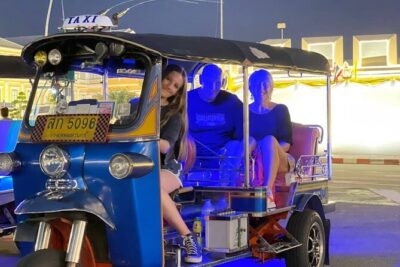
Bangkok Tuk-Tuk Tour by Night with Chinatown Street Food Meal
Read our review →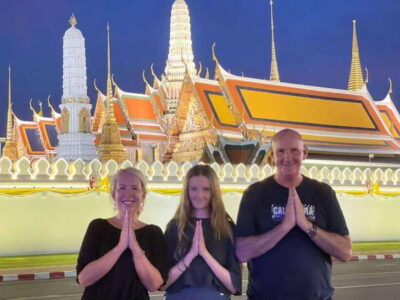
Bangkok Tuk-Tuk by Night with Chinatown Street Food Meal
Read our review →
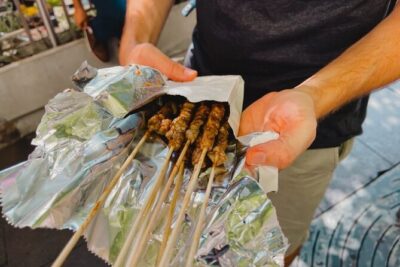
Sydney’s Chinatown Street Food and Stories Walking Tour
Read our review →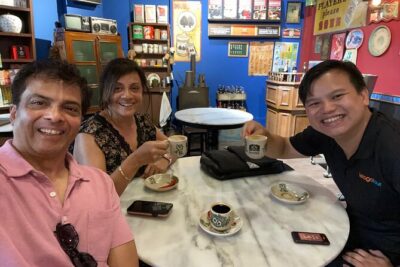
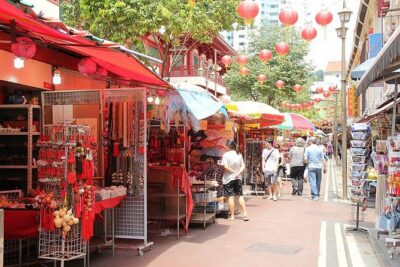
Kampong Glam, Little India & Chinatown with Local Street Food Tastings
Read our review →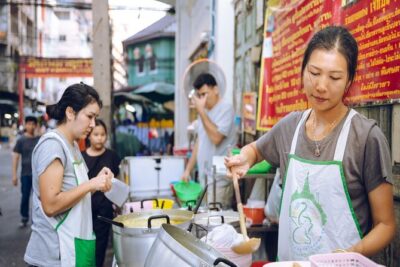
Bangkok Hidden Gems: Talad Noi, Chinatown & Street Food Tour
Read our review →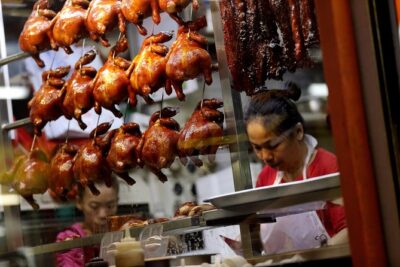
Michelin Premium Food Tour with Hawker Centre & Chinatown Tour
Read our review →Browse the lists this tour appears in