
REVIEW · JAPAN STREET FOOD TOURS
Fukuoka: Nakasu Food Stall Private Guided Tour with Tastings
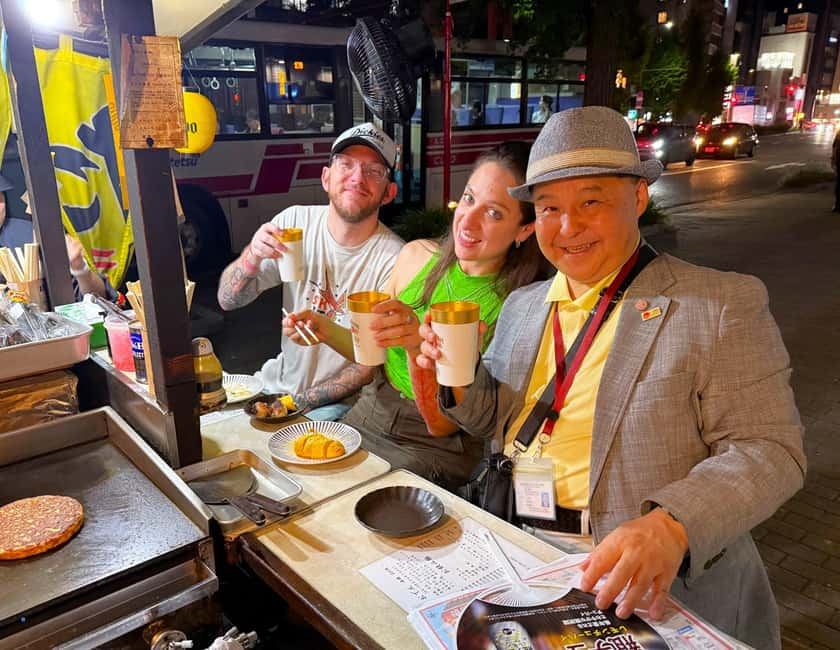
Fukuoka’s Nakasu food stalls are best understood at the counter, with a hot bowl of ramen or a skewer of yakitori in front of you. This private walk puts an English-speaking guide beside you, so you can handle the small stalls, menus, ordering, and local customs without guessing.
I especially like the 1,000-yen allowance at each stall, which makes sampling easier, and the guides’ personal connections with stall owners. Morry is known for adding close-up magic and mentalism while you wait, while guides such as Aya and Shota can tailor food choices and recommendations.
The main catch is timing. Some stalls may not be ready during the earliest start, and two hours can pass quickly if queues are long. Weather can also change the plan, with indoor dining sometimes replacing the outdoor stalls.
Key points to know before booking
- Meet at FamilyMart Tenjin 1-chome: Look for the guide holding a yellow DeepExperience sign.
- Expect a private English-language tour: Guides have included Morry, Manabu, Rie, Aya, and Shota.
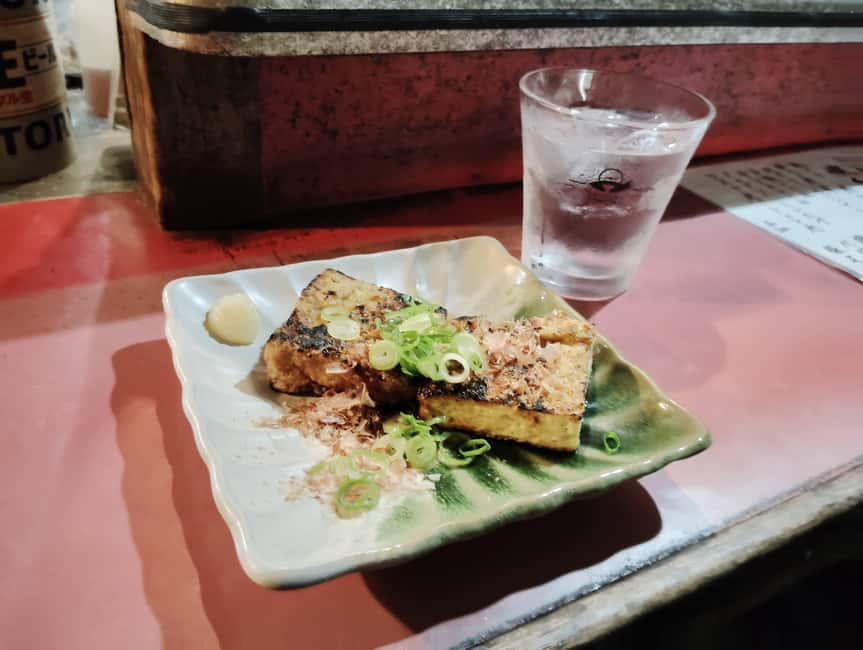
- Taste several Fukuoka staples: Likely choices include ramen, oden, yakitori, and stewed dishes.
- Use 1,000 yen per stall: The allowance covers food and drinks, but you should bring extra cash for anything beyond it.
- Plan for a quick evening: The tour lasts two hours and usually focuses on two stalls.
- Allow for changing conditions: Early openings, queues, and rain can affect which stalls you visit.
Why Nakasu’s food stalls are worth your evening

Fukuoka’s yatai are small mobile food stalls where diners sit close together at a counter. Nakasu, along the river between the old cities of Hakata and Fukuoka, is one of the city’s best-known places to experience this style of eating.
The appeal is not just the menu. You are also seeing how a compact Japanese food business works: the cook prepares dishes in front of you, the guide helps with conversation, and the people beside you may be local regulars or visitors from somewhere else.
I like this kind of food experience because it gives you a useful first step. After two hours, you may feel ready to return to a stall on your own, rather than simply having eaten at a restaurant designed for outsiders.
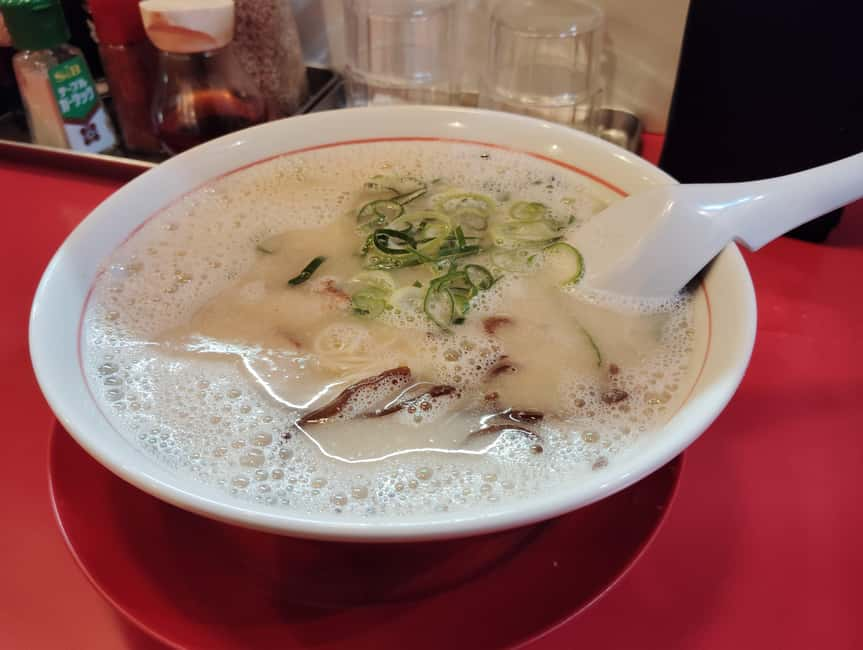
Still, keep your expectations realistic. Yatai culture is popular with visitors, and the food quality can vary from stall to stall. One particularly useful piece of advice is to think of the stalls as much for their setting and social feeling as for fine dining. The ramen may be the strongest dish of the night, while other items are more about trying something local in a tight, friendly space.
More street food tours in Japan:
- Hungry Osaka Street Food Tour:15 Tastings & 3 Drinks with a Local
★ 5.0 · 1,727 reviews - Tokyo: Tsukiji Fish Market Food and Culture Walking Tour
★ 4.7 · 757 reviews - Hungry Osaka Street Food Tour: 15 Dishes & 3 Drinks
★ 4.9 · 694 reviews
Meeting near Tenjin and heading toward Nakasu
The meeting point is in front of FamilyMart Tenjin 1-chome. Your guide will hold a yellow sign marked DeepExperience, which should make the first meeting straightforward.
This is a central place to begin, but you should still leave enough time to find it. Your guide then leads you toward Nakasu and the riverside stall area. The walking part gives you a chance to ask questions before sitting down, and your guide can explain what kind of evening lies ahead.
The tour is private, so the pace can be adjusted to your group. You can talk about food preferences, ask for recommendations, and get help with dishes that may not be obvious from a Japanese menu.
The meeting point also matters because yatai are not a single fixed restaurant. Stalls may be spread along the area, and the evening’s route can depend on opening times, queues, weather, and available seats.
The first stall: learning how yatai dining works
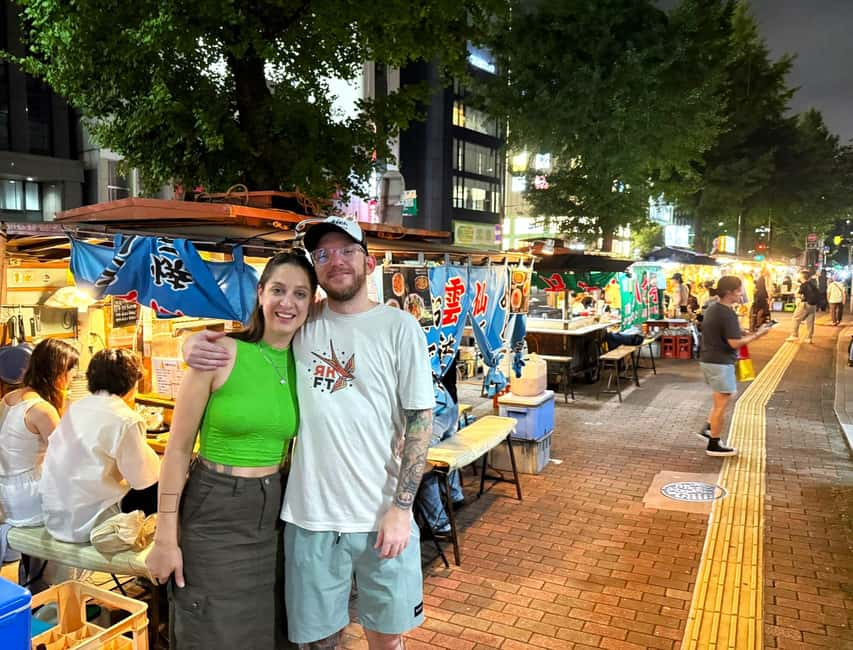
At the first food stall, your guide handles the practical details that can make a tiny Japanese counter feel intimidating. You can watch how people order, see how dishes are prepared, and ask what each item is before committing.
The food allowance is 1,000 yen per stall for food and drinks. That gives you a clear amount to spend and removes some of the worry about ordering in an unfamiliar setting. Bring cash anyway, since cash is specifically recommended and you may want to order beyond the allowance.
The exact dishes depend on the stalls available that evening. Possible choices include oden, yakitori, ramen, and stewed specialties. Oden offers a slow-cooked, comforting taste, while yakitori gives you smaller portions that are easy to share. Ramen is usually the most filling choice, and stewed dishes let you try another side of local comfort food.
Your guide can also help with dietary needs. One guide, Pierre’s experience suggests, was able to adjust the meal for a non-strict vegetarian diet. That does not mean every restriction can be handled, so you should explain your needs clearly before ordering.
The second stall and the value of variety
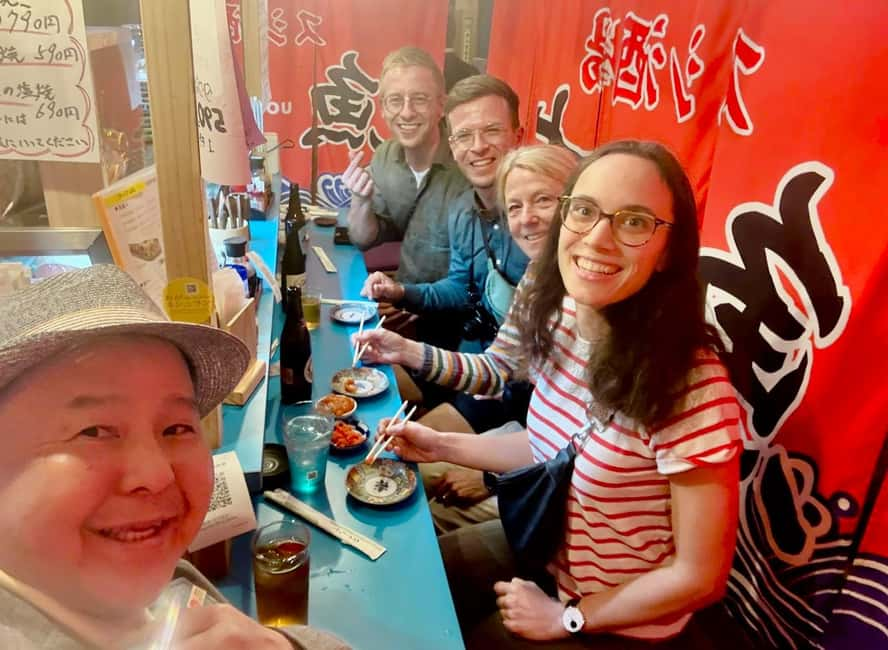
The tour is designed to take you to more than one stall, with the practical information indicating two stalls as the usual focus. That is enough for a taste of variety without turning the evening into a race through a long list of stops.
A second stall matters because each yatai has its own feel and specialties. One might be best for ramen, while another offers skewers or simmered dishes. Your guide’s local contacts can also help steer you away from the most obvious tourist choices when suitable alternatives are open.
This is where the private format earns its price. A standard group walk can give you an overview, but a private guide can spend time explaining why a stall is selected and what to try there. Shota, for example, has tailored food stops to personal interests and added restaurant suggestions for later in the trip.
Do not expect a full meal at every stop. The 1,000-yen allowance is helpful, but it is not an unlimited tasting budget. If you have a large appetite or want several drinks, plan to pay more.
Same city, another round of plates:
- Tsukiji Fish Market: Street Food & Culture Walking Tour
★ 5.0 · 669 reviews - Tsukiji Fish Market: Street Food & Culture Walking Tour
★ 4.8 · 259 reviews - [1 Group Only] Osaka Street Food Tour for Family
★ 5.0 · 208 reviews - Umami Town Street Food Tour
★ 5.0 · 120 reviews
Your guide is a major part of the experience
The guides are not interchangeable in personality, and that is worth considering when you book. Morry has been especially associated with this experience and combines food explanations with close-up magic, mentalist tricks, quizzes, and light conversation while waiting in line.
That may sound like a small extra, but queues are part of the reality here. A popular stall can take time, and a good guide keeps the wait from becoming dead time. Morry has also helped with late arrivals and, in one case, collected a delayed group from its hotel, though you should not assume that personal arrangement is guaranteed.
Other guides bring different strengths. Rie is fluent in English and has worked well with visitors who want conversation with local people. Aya has experience working at a yatai, giving her a direct connection to the stall culture. Manabu has been praised for thoughtful guiding, while Shota has focused on matching food stops to individual interests.
The main thing I would want from any guide is not a rehearsed lecture. It is help reading the situation: when to order, how much to choose, what a dish contains, and how the stall fits into Fukuoka’s past and present. This tour appears strongest when the guide acts as a local companion rather than simply pointing out dishes.
History and local context between bites
Your guide explains the story of the food stalls and the relationship between Hakata and Fukuoka. That context gives the evening more shape than a simple series of snacks.
You can ask about local food customs, the role of yatai in the city, and why certain dishes are associated with Fukuoka. The experience is informal, so expect conversation while walking and eating rather than a long historical talk at one formal stop.
I find this format useful because food culture is easier to understand when you see it in place. A bowl of ramen means more when you know why the city is famous for it, and a compact stall makes more sense when someone explains how the setting works.
The language support is also practical. You can interact with stall owners and other diners without worrying that every order or question will go wrong. That does not remove every cultural difference, but it makes you more willing to try something unfamiliar.
Timing, queues, weather, and the early start
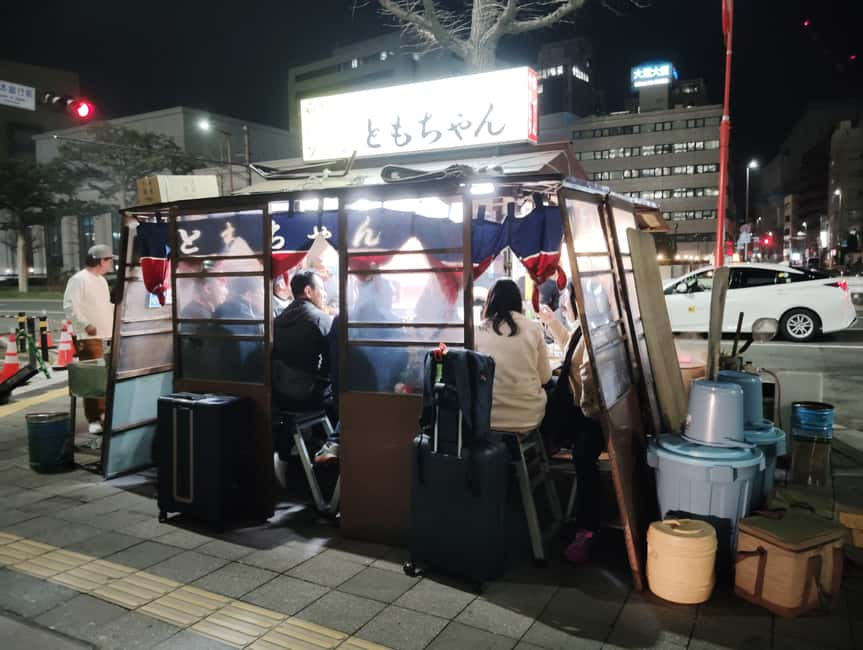
The two-hour length is convenient for an evening in Fukuoka. You can fit it before or after other plans, and you will not lose an entire night to a food activity.
The early start needs care. One available start time has been listed around 5:30 p.m., but some stalls may still be setting up after that. If you choose an early departure, the guide may need to alter the plan or use an alternative stop.
Queues are another factor. The most popular ramen stall may require patience, and the tour cannot control how quickly a small kitchen serves its customers. The upside is that your guide can entertain you, explain the food, or suggest how to use the time.
Rain can affect the outdoor part of the experience. Poor weather may mean fewer open stalls, a more crowded route, or an indoor alternative. One wet evening led to an indoor stop, which still worked, but the outdoor yatai atmosphere was naturally reduced.
Wear comfortable shoes and bring a camera if you want photos of the river area and stall fronts. Smoking is not allowed during the activity.
Is $101 good value?

At $101 per person, this is not the cheapest way to eat ramen or yakitori in Fukuoka. If your only aim is a low-cost dinner, you can spend less by choosing a stall yourself.
The price makes more sense when you value guidance, language help, and a private format. You are paying for two hours with a local guide, visits to multiple stalls, food and beverage support of 1,000 yen at each stall, and help making sense of a setting that can feel confusing on a first visit.
The allowance softens the cost, but you should read it correctly. It is not a promise that all food and drinks are covered. Your total may rise if you order extra dishes, additional drinks, or items above the allowance.
For a first night in Fukuoka, I think the value is strongest. You get an introduction to the yatai system and can return later with more confidence. For a food-focused visitor who already knows the city and speaks Japanese, the added help may be less important.
Who will enjoy this Nakasu food walk?
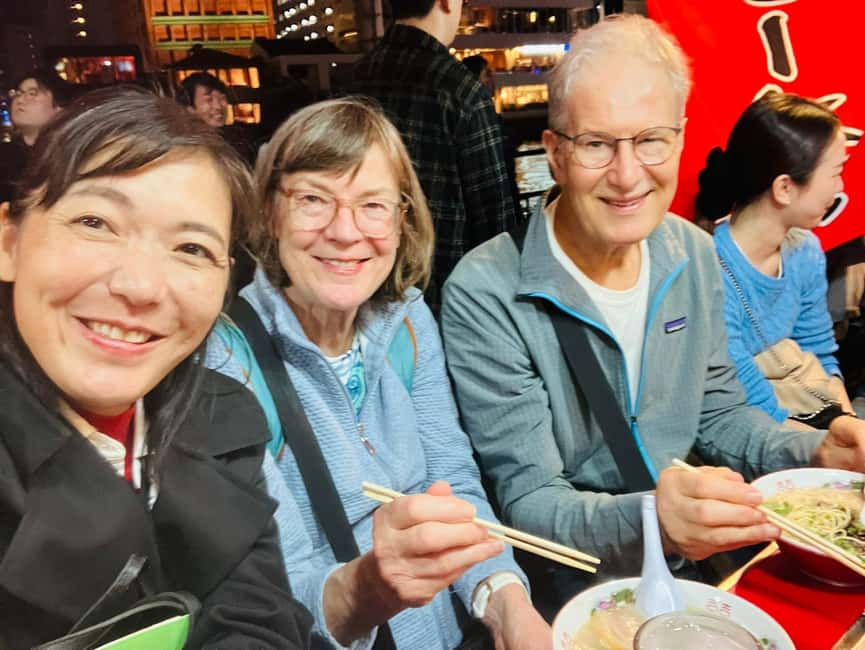
I would recommend it most to first-time visitors, solo diners, couples, and small private groups who want a social meal without having to decode every step.
It also suits people who enjoy conversation. The best moments may come between dishes, when your guide explains local customs, introduces you to a stall owner, or gives restaurant advice for the rest of your stay.
It is a good fit if you are curious but cautious about Japanese street food. You can ask what you are ordering, sample several styles, and let the guide help you make choices.
I would think twice if you need a strict, highly predictable menu, dislike waiting, or want a large sit-down dinner. You should also be comfortable with close counter seating and the possibility of a changed route in bad weather.
Practical booking advice
Book with the understanding that the exact guide may vary. Morry, Manabu, Rie, Aya, and Shota have all led this experience, but the booking information identifies the service as an English-language private tour rather than promising one named guide.
Bring cash, comfortable shoes, and a camera. Tell the guide about food preferences early, especially if you avoid meat, fish, or particular ingredients.
The tour offers free cancellation up to 24 hours before departure and a reserve-now, pay-later option. Check the available start times carefully, especially if you want the earliest slot and hope to see outdoor stalls already operating.
The activity returns to FamilyMart Tenjin 1-chome after two hours. That makes it easy to continue your evening in central Fukuoka, provided queues or weather have not changed the schedule.
Should you book the Nakasu yatai tour?
Book it if you want more than a meal. The real benefit is having someone beside you who can guide you through the small counters, explain the food, and help you meet the culture on its own terms.
I would especially choose it for a first visit, a solo evening, or a group that wants local food without language stress. The guides’ personal style, including Morry’s magic and Aya’s yatai experience, can add a memorable human touch.
Skip it if you are happy to order alone and prefer to control every dish and yen. The outdoor stall setting is weather-dependent, early openings can be uncertain, and two hours gives you a taste rather than a full survey of Fukuoka’s food scene.
FAQ
Where does the tour meet?
The meeting point is in front of FamilyMart Tenjin 1-chome. The guide will hold a yellow sign marked DeepExperience.
How long does the activity last?
The tour lasts two hours and returns to FamilyMart Tenjin 1-chome.
Is the tour conducted in English?
Yes. The activity includes a live English-speaking guide.
Is this a private tour?
Yes. It is organized as a private group experience.
How many food stalls will I visit?
The tour includes visits to multiple stalls, with the provided information indicating that two stalls are the usual focus.
What food might I taste?
Possible dishes include oden, ramen, yakitori, and stewed specialties. The exact selection depends on the stalls visited.
What is included in the food allowance?
You receive a 1,000-yen food and beverage subsidy at each stall. Bring extra cash if you want to order beyond that amount.
Newly added plates around Japan
- Tsukiji Fish Market Street Food & Culture Walking Tour★ 5.0 · 8 reviews
- Tsukiji Fish Market: Street Food Tour with Tasting★ 5.0 · 4 reviews
- Ueno Park and Ameyoko Street Food Market Half Day Walking Tour★ 5.0 · 3 reviews
- Tokyo:Enjoy street food & Japanese food culture at Tsukiji Market★ 5.0 · 6 reviews
- Tokyo Fish Market Food Tour: Street Food & Friendly Guide★ 3.0 · 2 reviews
- Matsushima Bay, Islands and Seafood Market day tour from Tokyo★ 5.0 · 2 reviews
- Tokyo Street Food Tour – 7 Japanese Foods★ 5.0 · 16 reviews
- Private Tokyo food scene 6 hour experience: Depatika, street food, izakaya★ 5.0 · 9 reviews
Japan Street Food Tours, compared.
Hungry Osaka Street Food Tour:15 Tastings & 3 Drinks with a Local
Read our review →
Tsukiji Fish Market Food and Culture Walking Tour
Read our review →
Hungry Osaka Street Food Tour: 15 Dishes & 3 Drinks
Read our review →
Tsukiji Fish Market: Street Food & Culture Walking Tour
Read our review →Tsukiji Fish Market: Street Food & Culture Walking Tour
Read our review →
[1 Group Only] Osaka Street Food Tour for Family
Read our review →
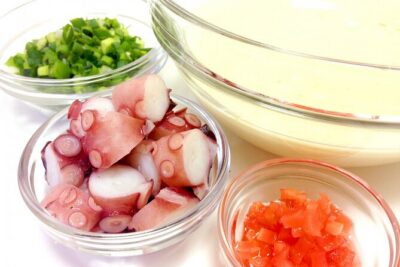
Takoyaki making experience ~Japan’s popular street food~
Read our review →Browse the lists this tour appears in