
REVIEW · NIGHT MARKET FOOD TOURS
UNESCO Hawker Culture: Chinatown Food Tasting Tour
Singapore’s Chinatown is best understood one bite and one street at a time. This three-hour tour links immigrant history with bak kwa, traditional coffee shops, Yip Yew Chong murals, Maxwell Food Centre, and the Buddha Tooth Relic Temple. It is more than a meal with a guide. You get the story behind the food and the streets where it developed.
I like two things here. First, the guides make the past easy to grasp, from Pagoda Street and the Chinatown Heritage Centre to Sago Lane, once called the street of the dead. Second, the food is not limited to one famous dish. You may try nine to ten handpicked foods and drinks, including chicken rice, Fuzhou oyster pancakes, sweets, and local coffee. The main consideration is that hawker centers cannot be booked in advance, so you may wait for seats and food, and special diets are not always easy to handle.
Key points to know before booking
- Bak kwa begins the story: Start with Singapore’s sweet and savory grilled meat snack while learning how immigrants shaped Chinatown.
- Murals reveal everyday life: Yip Yew Chong’s detailed wall paintings offer memorable photo stops and a look at older street scenes.
- Nine to ten tastings fill the afternoon: Plan to arrive hungry, because the food adds up quickly.
- Maxwell Food Centre is the main meal stop: Expect chicken rice, Fuzhou oyster pancakes, drinks, sweets, and other local bites.
- The walking route keeps changing pace: Temples, alleyways, coffee shops, historic streets, and food halls break up the three hours.
- The guide makes the difference: Ronnie, Jeanette, Kent, Kelvin, Edwin, Janet, and others have been praised for warmth, humor, and clear explanations.
Why this Chinatown food tour works
At $69 per person, this is not the cheapest way to eat in Singapore. It can be good value if you want a guide to choose the food, explain unfamiliar dishes, handle ordering, and connect each stop to the city’s past.
You are paying for three hours of guiding as well as food. The package includes a licensed guide, one bottle of mineral water, and 9 to 10 selected foods and drinks from famous or Michelin-recognized local hawker stalls. You also get help navigating Chinatown’s lanes and food centers, where a first-time visitor could easily spend time guessing what to order.
I especially like the balance between walking and eating. You are not planted at one restaurant for the whole tour. The route moves from Pagoda Street to murals, Ann Siang Hill, Maxwell Food Centre, the Buddha Tooth Relic Temple, and Chinatown Complex. That variety gives you a better sense of how Chinatown functions as a neighborhood, not just as a dining stop.
The tradeoff is pace. Three hours goes quickly, and food-center waits can shorten time at individual sights. This is a walking tour with frequent stops, not a slow architectural tour. Wear comfortable shoes, and carry an umbrella or poncho because Singapore rain can arrive without much warning.
More Night Market Food Tours in Singapore
- Small Group: Michelin and Local Hawker Food Tour with 9 tastings
★ 5.0 · 1,890 reviews - Small-Group Food Tour With Hawker Center: Eat Like A Local
★ 5.0 · 420 reviews - Singapore: Local Hawker Food Tour with Tastings
★ 4.7 · 181 reviews
Meeting at Chinatown MRT and starting with bak kwa
The tour has two possible starting location options listed around Chinatown, including Chinatown MRT Exit A. Your exact meeting point depends on the booking choice, so check the confirmation carefully and keep your contact details accurate.
The first major stop is the Chinatown Heritage Centre, reached after beginning with a taste of bak kwa. This grilled meat snack is sweet, smoky, and chewy, and it gives the guide an easy way to introduce food traditions linked to Chinese migration.
The Chinatown Heritage Centre adds context. Instead of treating old streets as a collection of attractive facades, your guide explains how immigrant communities lived, worked, and built their lives in Singapore. The stop includes a guided visit, sightseeing, walking, and a photo opportunity, with about 35 minutes set aside.
That amount of time is enough for a clear introduction without turning the tour into a long museum visit. If you want a detailed, room-by-room museum experience, you may find the stop brief. If you want the background needed to understand the rest of the walk, it does the job well.
Pagoda Street, murals, and old coffee shops
From the heritage center, the route continues through Chinatown for another roughly 35 minutes. This is where the tour’s walking side becomes especially useful. Your guide points out details you might otherwise pass without noticing, then explains how streets, businesses, and customs fit into the area’s story.
The Yip Yew Chong murals are among the most memorable photo stops. These large scenes bring older Chinatown life to the walls, with the sort of everyday details that help you picture the neighborhood before modern Singapore took shape. They are not just colorful backdrops. Your guide uses them to talk about work, family life, food, and local routines.
The route also passes traditional coffee shops. Singaporean coffee culture is a small but important part of the food experience, and tasting local coffee gives you another way to notice how Chinese food traditions adapted in Singapore.
I like this section because it slows the meal down. You are not simply moving from one stall to the next. The murals and coffee shops give your palate a break while showing you the human side of Chinatown.
Ann Siang Hill and Singapore’s film-famous streets
Ann Siang Hill adds a change of mood. Its historic streets and restored shophouses make a strong setting for photographs, including locations recognizable from Crazy Rich Asians. The tour allows about 35 minutes here for walking, sightseeing, a guided explanation, and photos.
This stop is useful for understanding that Chinatown is not one uniform district. The streets shift in style and atmosphere, and Ann Siang Hill connects the old commercial quarter with a more polished side of central Singapore.
You should not expect a long film-location tour. The connection to Crazy Rich Asians is one photo-friendly detail within a broader look at the area. The real value comes from the guide explaining what you are seeing and how the streets have changed.
For photography, this is one of the better parts of the route. Bring a phone or camera, but keep the group moving. Three hours leaves little room for extended solo photo sessions.
More Chinatown eating walks in Singapore:
- Singapore: Chinatown Hawker Food Tasting Tour
★ 5.0 · 96 reviews - Kampong Glam, Little India & Chinatown with Local Street Food Tastings
★ 4.5 · 70 reviews - Michelin Premium Food Tour with Hawker Centre & Chinatown Tour
★ 4.5 · 50 reviews - UNESCO Hawker Culture: Chinatown Food Tasting Tour
★ 5.0 · 47 reviews
Maxwell Food Centre and the serious eating begins
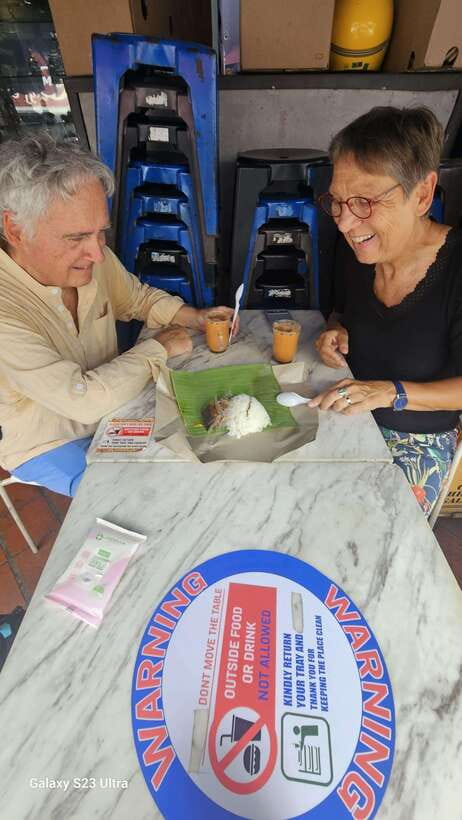
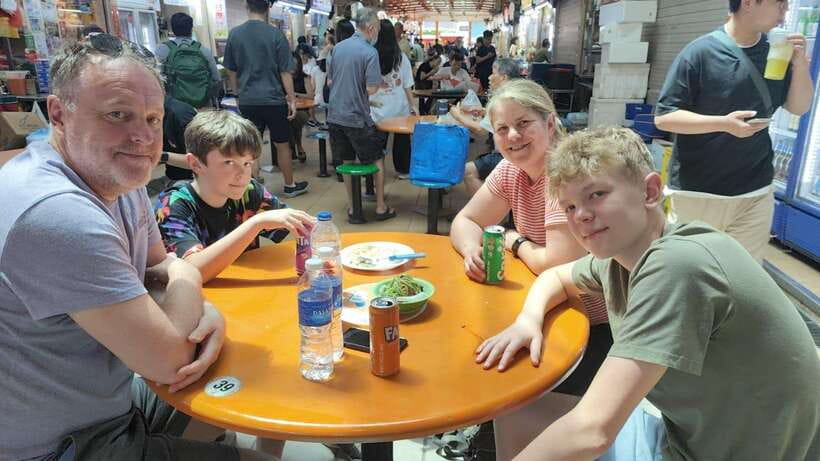
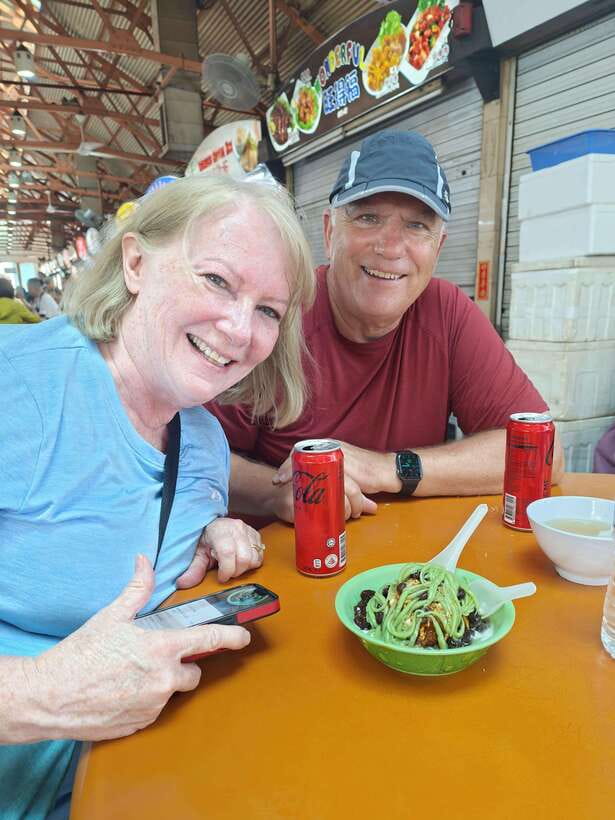
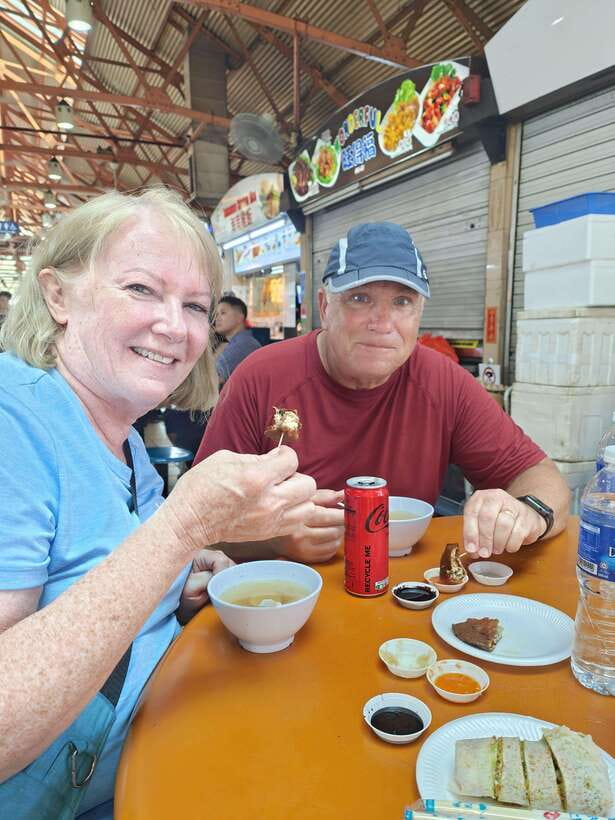
Maxwell Food Centre is the central food stop, with about 35 minutes for a visit, a break, walking, snacks, and tastings. Arrive hungry. Several people who have taken the tour found themselves comfortably full by the end, and that is easy to understand when 9 to 10 foods and drinks are spread across the morning or afternoon.
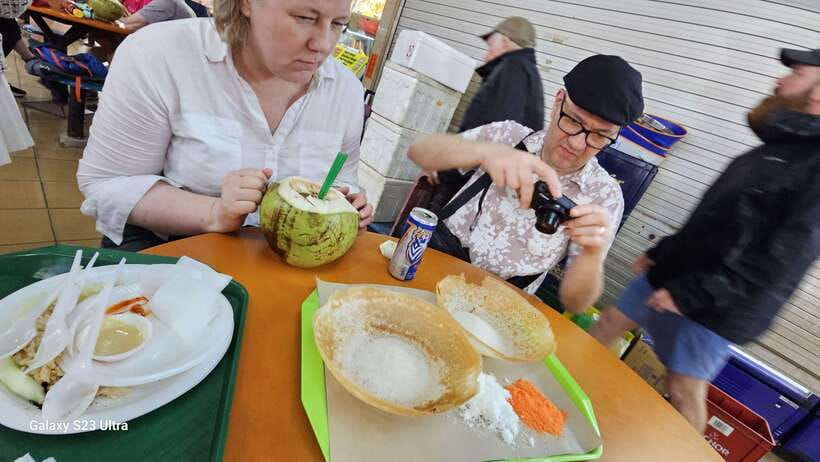
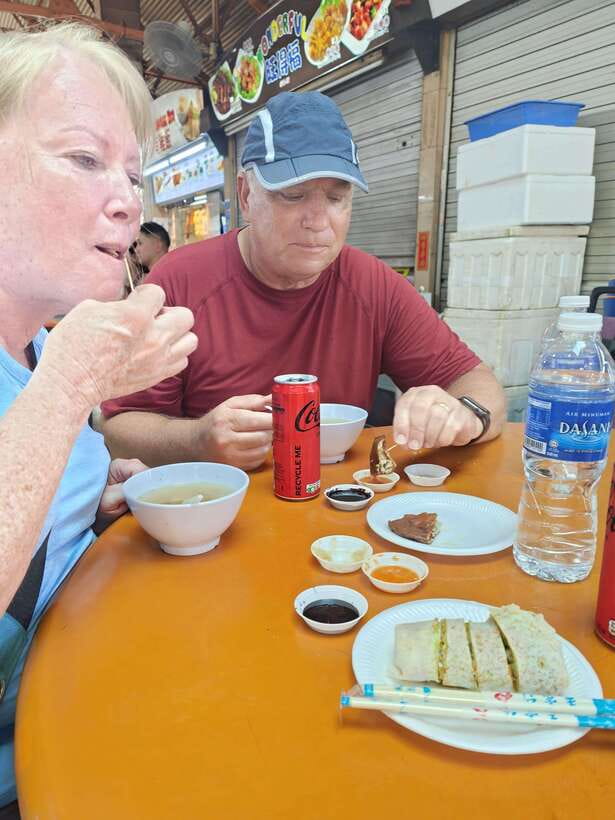
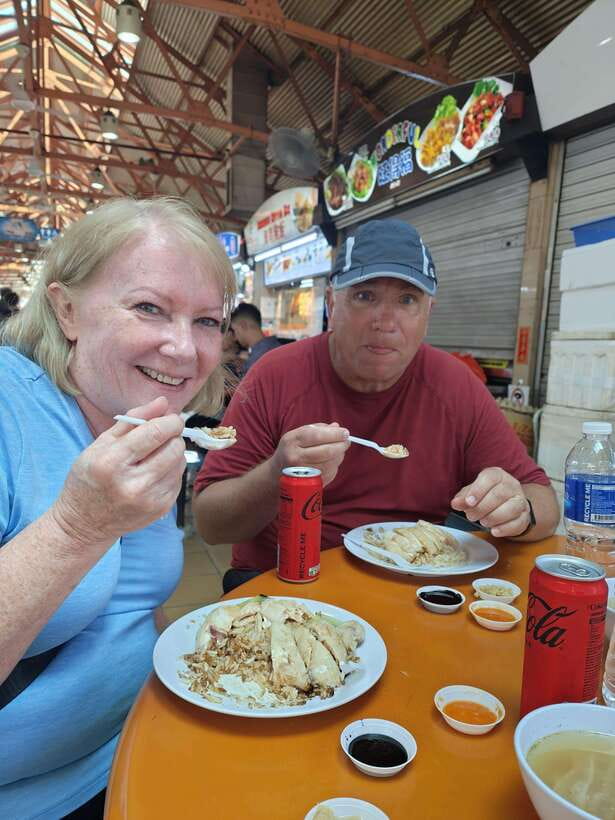
The exact selection can vary, but the experience specifically highlights famous chicken rice and Fuzhou oyster pancakes. You may also taste sweets, local coffee, and other small hawker dishes chosen by the guide.
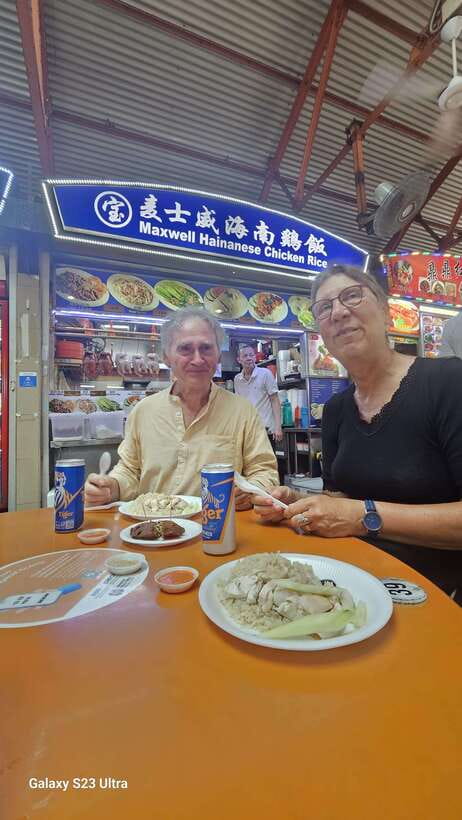
Chicken rice is a smart dish for a guided introduction because the details matter. The rice, seasoning, sauces, and texture all contribute to the dish, and your guide can explain what makes it a Singapore favorite. The Fuzhou oyster pancake offers a different texture and flavor, giving you a broader sample of the city’s food traditions.
You are not expected to find every stall yourself. The guide chooses the food and places the orders, which is especially helpful if you do not know the names of local dishes. Guides such as Ronnie have also been praised for recommending dinner options after the tour, including chili crab.
There is one practical limit. The operator cannot reserve tables or pre-order food at the hawker center. Your guide may need to wait for seats, order dishes, and organize the group around available tables. That is part of eating at a real hawker center, but it means the schedule cannot run with restaurant-style precision.
Buddha Tooth Relic Temple and the meaning behind the landmark
The Buddha Tooth Relic Temple receives about 20 minutes for a guided visit and sightseeing. Even if you have seen photographs of its ornate exterior, the guide’s explanation gives the stop more purpose.
This is not treated as a quick picture stop alone. You learn about the temple’s cultural role and the traditions connected with it. The visit offers a quieter pause after the food center, though appropriate behavior and clothing are important at a religious site.
The short time allocation keeps the tour moving, but it also means you should not expect an extensive museum visit. If the temple is a major personal interest, you may want to return later on your own. During the tour, it works well as a focused cultural stop.
Sago Lane and Chinatown Complex
Sago Lane brings a darker historical note. Once known as the street of the dead, it is tied to older funeral and end-of-life practices in Chinatown. The name alone signals that the neighborhood’s story includes hardship and loss as well as food and colorful streets.
This detail helps prevent the tour from becoming a polished version of Chinatown with all the difficult parts removed. Your guide can connect the lane to the lives of immigrants and the conditions they faced.
The final main stop is Chinatown Complex, with roughly 20 minutes for guided sightseeing and walking. Its architecture and food scene show a different side of hawker culture from Maxwell Food Centre. The route ends at Chinatown Complex or nearby, depending on the drop-off option.
Ending here makes practical sense. You finish close to more food, public transport, and the rest of Chinatown. You can continue eating, explore independently, or head back to your hotel without retracing the entire route.
The guides are the heart of the experience
Food tours depend heavily on the person leading them, and the guide names associated with this experience are worth noting. Ronnie has been praised for combining humor, passion for hawker food, and strong knowledge of Singapore’s past. Jeanette is described as upbeat, friendly, and good at making landmarks come alive.
Other praised guides include Kent, Kelvin, Edwin, and Janet. Kent was noted for his humor and professional manner. Kelvin took particular care of a solo participant, including help with the MRT. Edwin explained both the food and the background behind it, while Janet was described as clear and professional.
You are not guaranteed a specific guide unless your booking says so. Still, the pattern is encouraging: the experience works best when the guide treats you as a person rather than simply leading a fixed script.
Private and small-group options are available. A private tour gives you the best chance of discussing food preferences and adjusting the pace, though the general information warns that dietary needs may not be handled unless you book privately and contact the operator ahead of time.
Languages offered are English, Chinese, and Japanese. The guide’s ability to explain unfamiliar dishes matters as much as the food itself. A good explanation can turn an odd-looking snack into a memorable part of the day.
Food allergies, vegetarian diets, and arriving hungry
The safest advice is simple: contact the operator before booking if you have allergies, strict dietary needs, or follow a vegetarian or vegan diet. The tour information does not promise that all special diets can be handled, except that private tours may offer more flexibility.
One vegan participant was accommodated as well as possible, but you should treat that as a helpful effort, not a guarantee. Hawker stalls have their own ingredients, cooking methods, and availability, so flexibility matters.
Do not eat a full meal beforehand. The tour begins with bak kwa and continues with multiple tastings, drinks, sweets, and hawker dishes. You may not need lunch afterward.
Also remember that tastings are generally shared or served as part of the group’s food experience. If you require precise portion control, ask before booking. The tour is designed for sampling a range of foods rather than choosing one personal dish at each stop.
Timing, walking, weather, and group comfort
Three hours is enough to see a lot of Chinatown without exhausting most people, but it is still a walking tour. You move between historic streets, food centers, murals, temples, and alleys. Comfortable footwear is essential.
The tour is not wheelchair-accessible. Narrow lanes, uneven walking conditions, crowded food centers, and the general route design make this an important consideration when deciding.
Singapore’s heat and rain can also affect your comfort. Carry an umbrella or poncho, drink water, and use the included mineral water as a small but useful extra. Hawker center seating can take time, so patience is part of the experience.
Children aged 0 to 2 can join free. The child ticket policy limits the number of child tickets linked to adult bookings: one adult may buy one child ticket, two adults may buy two, and additional children pay the full adult price.
Free cancellation is available up to 24 hours before the tour for a full refund. You can also reserve now and pay later, which helps if your Singapore schedule is still changing.
Who should book this $69 experience?
I would choose this tour if you are visiting Singapore for the first time, have a short stopover, or want a guided introduction to hawker food without guessing at every stall. It is also a good fit if you enjoy history but do not want to spend three hours inside museums.
The tour suits adventurous eaters who want variety. Chicken rice is familiar to many people, but bak kwa, Fuzhou oyster pancakes, local coffee, sweets, and other selections give you a wider taste of Singapore.
It is less suitable if you want a leisurely meal at one restaurant, complete control over every ingredient, or a private architectural tour with long stops at each landmark. The pace is active, and the food-center process includes waiting.
Should you book it?
Book it if you want food, history, street art, and local context in one compact Chinatown walk. At $69, the value is strongest when you count the guide’s time, the 9 to 10 tastings, the ordering help, and the access to places you might skip on your own.
Go hungry, wear comfortable shoes, and contact the operator early about dietary needs. If you are spending only a day or two in Singapore, this tour gives you a useful first map of Chinatown and enough food to shape the rest of your trip.
FAQ
Where does the tour start?
The starting point has two possible options around Chinatown, including Chinatown MRT Exit A. The exact meeting point depends on the option you book.
How long does the tour last?
The tour lasts three hours.
How much does the tour cost?
The listed price is $69 per person.
What food and drinks are included?
The tour includes 9 to 10 handpicked foods and drinks from famous or Michelin-recognized local hawker stalls. Highlighted tastings include bak kwa, chicken rice, Fuzhou oyster pancakes, local coffee, and sweets.
Is a licensed guide included?
Yes. A licensed tour guide is included, along with one bottle of mineral water.
What languages are available?
Live guides are available in English, Chinese, and Japanese.
Can I book a private tour?
Yes. Private and small-group options are available. Private tours may offer more flexibility for special dietary needs.
Is the tour suitable for wheelchair users?
No. The activity is not wheelchair-accessible.
Can I cancel the booking?
Yes. You can cancel up to 24 hours in advance for a full refund. Reserve now and pay later is also available.
Newly added plates around Singapore
- Singapore Street Food Join-In Tour★ 5.0 · 2 reviews
- Private Tour Singapore Street Food & Night Tour★ 5.0 · 4 reviews
- UNESCO Hawker Culture: Chinatown Food Tasting Tour★ 5.0 · 47 reviews
- Signature Urban Night Tour: Sunset Street Food in Singapore★ 5.0 · 4 reviews
- Singapore Street Food and Ethnic Quarters Kick Scooter Tour★ 5.0 · 8 reviews
- Singapore Nightlife: Street Food, Night Views and Drinks★ 5.0 · 19 reviews
- Singapore: Little India Hawker Food Tasting Tour★ 5.0 · 21 reviews
- Singapore Chinatown Local Hawker Food Tour★ 5.0 · 2 reviews
Night Market Food Tours, compared.
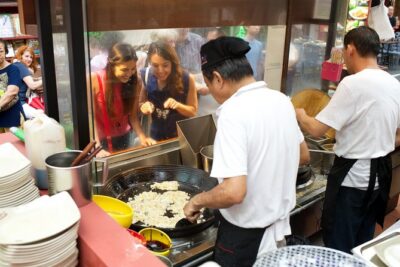
Small Group: Michelin and Local Hawker Food Tour with 9 tastings
Read our review →
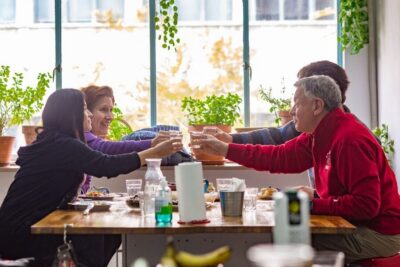
Food Market Visit and Cooking Class with Wine
Read our review →
Venice Street Food Tour with Local Guide with Local Food Market Visit
Read our review →
Cancun Taco Tour, Local Beer and Night Market with Transportation
Read our review →
Tsukiji Fish Market Food and Culture Walking Tour
Read our review →
Cancun Street Food Tour with Food Stalls, Local Market and Murals
Read our review →Browse the lists this tour appears in