
REVIEW · COOKING CLASSES
Street Food Cooking Class in Taipei : Gua Bao/Lu Rou Fan/Boba Tea
Taiwanese street food is more than something to grab between sights. In this class, you learn how gua bao, lu rou fan, and bubble tea are built from the ground up, then sit down to eat what you made. The hands-on work gives you a better feel for Taiwan’s everyday food than simply ordering another snack at a night market.
I like the small group of no more than eight, since cooking guidance matters when you are shaping buns or working with sticky tapioca dough. I also like the recipe book, a useful souvenir for anyone who wants to repeat the dishes at home. The main drawback is time: two hours goes quickly, and the class may feel brisk if you want a long lesson on every ingredient or technique.
Key points to know before booking
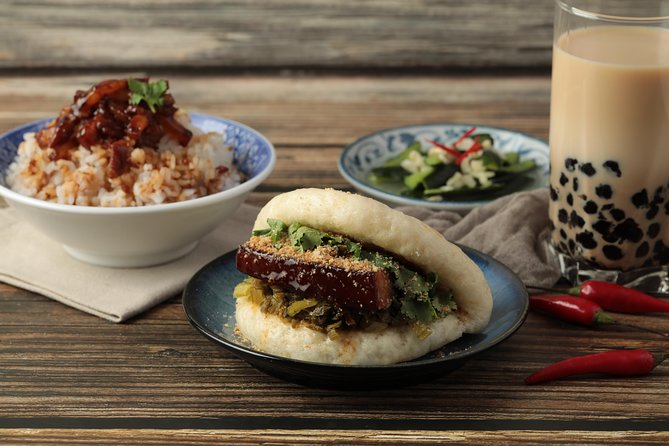
- You make three Taiwanese favorites: Gua bao, lu rou fan, and bubble milk tea form the core of the class.
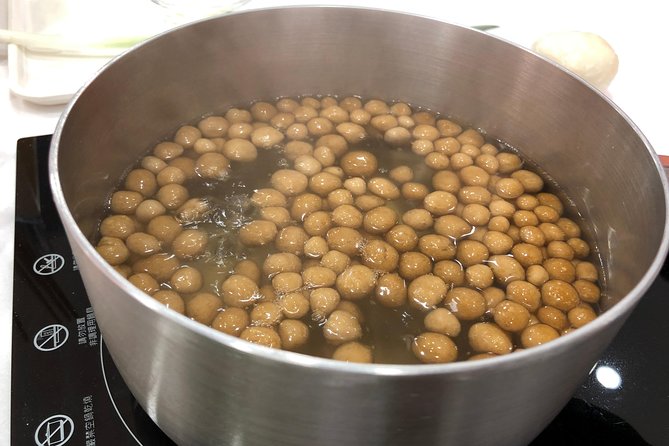
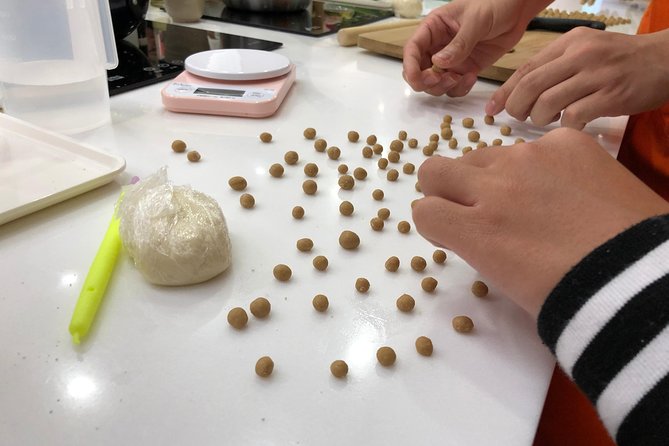
- The tapioca pearls are made from scratch: This is one of the more hands-on parts, and it can be surprisingly difficult.
- The gua bao gets special attention: You prepare the steamed buns and learn how to braise the pork belly.
- The group is capped at eight people: That makes it easier to receive help while cooking.
- You eat at the end: The class finishes with a homemade meal, not just a demonstration.
- A recipe book is included: You can take the lessons home and try them again.
A practical introduction to Taiwanese small eats
Taiwan’s xiao chi means small eats, but the food is not small in importance. These are the everyday dishes that shape the country’s food culture: soft buns, seasoned pork, rice, and sweet milk tea with chewy pearls.
This class focuses on dishes you are likely to encounter across Taipei. Gua bao is often called a Taiwanese hamburger, though the comparison only goes so far. Instead of a sliced roll, you get a soft, folded steamed bun filled with braised pork belly and other toppings. Lu rou fan is a bowl of rice topped with finely braised pork, a simple meal with plenty of savory flavor. Bubble milk tea adds a sweet finish and a bit of food history, since Taiwan is closely associated with the drink’s worldwide rise.
I like this combination because it gives you three different kitchen tasks. You work with dough for the bun, manage a slow-cooked pork dish, and handle tapioca starch for the pearls. The dishes also make sense together as a lesson in texture: pillowy, tender, and chewy.
More Cooking Classes in Taipei:
- Athens: Food Market Visit and Cooking Class with Wine
★ 4.9 · 1,087 reviews - Mexican Cooking Class with Food Market Visit in Mexico City
★ 5.0 · 506 reviews - Florence: Cooking Class with Local Food Market Tour
★ 4.9 · 407 reviews
Arriving at CookInn Taiwan in Zhongshan
The class meets at CookInn Taiwan’s Zhongshan classroom at 66 Section 1, Chengde Road, on the second floor, in Taipei’s Datong District. The scheduled start is 2:30 pm, and the class ends at the same location.
You should allow enough time to find the building and reach the second floor. The meeting point is specific, but the supplied details do not include a neighborhood walking route or transport instructions, so check the address before setting out. A mobile ticket is accepted, which keeps the arrival process simple.
The fixed meeting point is useful if you are fitting the class between sightseeing plans. You do not need to arrange transport from one kitchen to another, and the end of the activity is predictable. Since the class starts in the afternoon, it can work well after a morning in Taipei, though you should avoid planning a tight evening appointment immediately afterward.
Making the steamed buns for gua bao
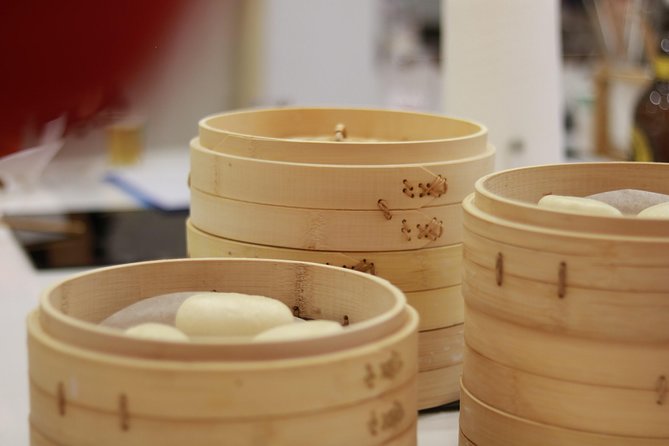
The class begins with one of its most appealing projects: preparing the dough for gua bao. You learn how to form the steamed bun and how it becomes the soft, foldable base for the pork filling.
This is a good place to pay attention to the instructor’s hand movements. Dough work often looks simple until you try it yourself. The small group helps here, since you can ask for correction instead of copying a technique you have misunderstood.
The bun is the heart of gua bao. If it is too firm, it loses the gentle texture that makes the dish special. If it is handled poorly, it may not hold its shape. The class gives you a chance to see that the familiar street-food snack depends on more than placing pork inside a ready-made bun.
The timing does have a limit. In about two hours, you should expect a focused lesson rather than a long bakery-style workshop. If you are especially interested in bread or steamed dough, you may wish the class spent more time on fermentation and shaping. Still, making the bun yourself adds real value compared with simply eating gua bao at a restaurant.
Braising pork belly for lu rou fan and gua bao
Next comes the pork. You learn the basic approach to braising pork belly for the gua bao filling and lu rou fan. The pork is the common thread between the two dishes, but it is served in different ways: tucked inside the bun for gua bao and spooned over rice for lu rou fan.
One practical detail is worth noting. The class description says you learn the braising process, while one participant described serving the prepared pork over pre-made rice. That means the focus is on the pork and seasoning rather than a full lesson in cooking rice from raw grains.
This part of the class helps explain why Taiwanese comfort food can taste so satisfying despite a short ingredient list. The flavor comes from the braising method and the balance of seasoning, not from complicated presentation. You also get to compare the same pork in two formats, one handheld and one bowl-based.
The class is not a restaurant meal followed by a recipe talk. You take part in the preparation, then eat the result. That makes the lesson more useful for home cooks, though you should not expect to leave with large portions packed for later. The point is to cook, sit down, and understand the dishes while they are fresh.
More street food tours in Taipei:
- [Private Tour] Shilin Night Market Walking Tour With a Private Tour Guide (2-hr)
★ 5.0 · 123 reviews - Taipei: Street Food & Hidden Eats Night Market Food Tour
★ 4.8 · 112 reviews - Taipei Hidden Eats, Market & Street Food Tour with 8+ Tastings
★ 5.0 · 109 reviews - Taipei Food Tour: Night Market & Convenience Store(Food Included)
★ 4.5 · 100 reviews
The gua bao is likely the class favorite
If you have time to make only one of these dishes at home later, gua bao may be the best place to start. The method is distinctive, the finished dish is easy to recognize, and the bun gives you a clear test of what you learned.
The pork belly is placed inside the steamed bun, creating a soft-and-tender combination with a satisfying contrast between bread and filling. The class places special attention on both elements, rather than treating the bun as a store-bought wrapper.
The food is also a good reason to arrive hungry. You will prepare several dishes and eat them at the end, so this is more than a light snack break. If you have a large breakfast or an early lunch, you may not have much room by the time the meal is served.
Families can also find this section approachable. Angela is described as patient with children aged 8, 10, and 11, and the class involved them in the cooking. That does not guarantee the same instructor for every session, but it suggests the format can work for families who want children to take part rather than watch from the side.
Rolling and shaking bubble tea from scratch
The boba portion is more than pouring pearls into a prepared drink. You make the chewy tapioca pearls yourself, then shake a cup of bubble milk tea.
This can be the trickiest part of the class. Tapioca dough has a particular texture, and the process may feel less straightforward than it first appears. That is useful rather than frustrating if you see it as a lesson in technique. Homemade boba gives you a better understanding of why the pearls are so chewy and why consistency matters.
The drink also provides a welcome change of pace after working with pork and dough. You finish with something sweet and cold, although the exact drink ingredients and flavor choices are not specified. The class clearly includes bubble milk tea, but you should not book it expecting a full survey of Taiwan’s tea traditions.
For many people, this will be the most memorable activity because it turns a familiar drink into a small kitchen project. You get to make the pearls and shake the finished beverage yourself, instead of simply ordering it with a chosen sweetness level.
Eating the finished meal
At the end of the class, you sit down to eat what you prepared. That meal is important: it lets you judge the texture of the bun, the tenderness of the pork, and the chew of the pearls while the process is still fresh in your mind.
The class is not built around a formal food tasting with many separate courses. It is a meal based on the dishes you made. That gives the afternoon a clear purpose and makes the $79 price easier to assess.
I see the value in the combination of instruction, ingredients, cooking time, and a sit-down meal. You are also paying for a compact introduction to three well-known Taiwanese foods and a recipe book to take home. For someone who already cooks often and knows these dishes well, the price may feel high for two hours. For a first-time visitor who wants a practical food activity, it is a fairer proposition.
The group size matters here, too. With up to eight people, the meal remains part of a small class rather than a large demonstration. The exact teaching style may vary by instructor, but Angela is described as friendly, capable, patient, and clear in her explanations.
What the recipe book adds
A recipe book may sound like a minor extra, but it changes the value of a short cooking class. You do not have to rely on memory after returning home, especially for the pork seasoning or tapioca process.
I would keep it with your travel papers until you return. The recipes are the part of the experience that can continue after Taipei, and they give you a way to recreate the meal for family or friends. One participant specifically looked forward to trying the dishes at home, which is a good sign for anyone choosing activities based on lasting use rather than a one-time photo.
Do keep your expectations practical. A recipe book cannot replace the instructor’s hands-on correction, and the information provided does not say how detailed it is or whether metric and alternative measurements are included. Still, it is a better souvenir than another generic food photograph.
Who will get the most from this class
This class suits you if you want to do something active with Taiwanese food instead of only eating it. It works especially well for:
- First-time visitors who want context for familiar Taipei street foods
- Home cooks who enjoy learning dishes they can repeat
- Families with children who can take part in simple kitchen tasks
- Couples or small groups seeking a two-hour indoor activity
- Bubble tea fans curious about making tapioca pearls
- People who want a meal and a class in one afternoon
It may be less suitable if you want a long, slow cooking lesson, a market visit, or a broad tour of Taipei’s food districts. There is no food-market walk included, and the activity remains at the CookInn Taiwan classroom. It also may not satisfy someone looking for advanced culinary training. The emphasis is on approachable Taiwanese favorites.
Timing, group size, and cancellation details
The class lasts about two hours and begins at 2:30 pm. Since the activity ends at the same place where it starts, you can plan around a known finish point, although the information does not give an exact ending time beyond the approximate duration.
The maximum group size is eight. That is small enough to support direct instruction and large enough to make the class feel social. If you prefer one-on-one teaching, this is still a group experience, but it is far more focused than a large demonstration.
You receive confirmation at booking, and the activity uses a mobile ticket. Free cancellation is available if you cancel at least 24 hours before the local start time. Changes or cancellations made within 24 hours are not accepted for a refund. The class also requires a minimum number of participants, so if it is canceled for that reason, you are offered another date or activity, or a full refund.
Should you book the Taipei street-food class?
Book it if you want to understand three famous Taiwanese foods by making them yourself. The gua bao lesson, from steamed bun to braised pork, is the strongest reason to go, while the homemade boba adds a playful challenge and a useful contrast.
The $79 cost is easiest to justify if you value instruction, a meal, a small group, and a recipe book you can use later. It is less compelling if you only want a cheap lunch or already know how to make these dishes.
I would choose this class for a food-focused afternoon, a family activity, or a rainy-day plan in Taipei. Arrive ready to work, not just watch, and leave room for the meal. If you want a short, friendly introduction to Taiwanese street food with skills you can carry home, this is a sensible pick.
FAQ
Where does the cooking class meet?
The class meets at CookInn Taiwan’s Zhongshan classroom at 66 Section 1, Chengde Road, second floor, in Taipei City’s Datong District.
What time does the class start?
The scheduled start time is 2:30 pm.
How long does the cooking class last?
The activity lasts approximately two hours.
What dishes will I make?
You will learn to make gua bao, braised pork for lu rou fan, and bubble milk tea with tapioca pearls made from scratch.
Will I eat the food I prepare?
Yes. The class ends with a meal made from the dishes prepared during the session.
How many people can join the class?
The class has a maximum of eight participants.
Is a recipe book included?
Yes. A recipe book is provided as a souvenir.
Can I cancel for a full refund?
Yes, if you cancel at least 24 hours before the experience start time. Cancellations or changes made less than 24 hours before the start are not refunded or accepted.
Newly added plates around Taipei
- Backstreet Food Tour: Food, Culture, and Fun★ 5.0 · 63 reviews
- Jiufen, Heping Island Park & Keelung Night Market Day Tour★ 4.5 · 10 reviews
- Private Keelung Food Tour with Local Markets & Tastings★ 5.0 · 11 reviews
- Yansan Night Market Food Tour★ 5.0 · 30 reviews
- N113 Jingtong Station Pingxi Old Street Jiufen Old Street Keelung Miaokou Night Market Day Tour (10h)★ 5.0 · 2 reviews
- Taipei Street Food & Night Market Tour with a Local: Private & Custom★ 4.5 · 35 reviews
- 2-hr Raohe Night Market Walking Private Tour with a Tour Guide★ 5.0 · 61 reviews
- Local Favorites: Taiwan Night Market Food Tour in 2 hours★ 5.0 · 5 reviews
Cooking Classes, compared.
Food Market Visit and Cooking Class with Wine
Read our review →
Mexican Cooking Class with Food Market Visit in Mexico City
Read our review →
Food Market Shopping and Cooking Workshop in A Coruña
Read our review →
Eat Osaka: Street Food Cooking in an Authentic Kitchen!
Read our review →
Syracuse: Sicilian Street Food Hands-On Cooking Class
Read our review →Browse the lists this tour appears in