
REVIEW · HISTORICAL TOURS
Private Berlin Bites & Historical Highlights – 2,5hrs
Berlin tells its story in courtyards, kebab stands, beer shops, graffiti-covered alleys, and memorials as much as in grand museums. This private Berlin food and history walk links those everyday places with major sights in Mitte, giving you a quick, flavorful introduction to the city.
I like the focus on Berlin-born döner culture, not just imported restaurant fare, and I like the private format, which lets your group keep the pace and ask questions. The main drawback is time: at roughly two to two and a half hours, this is a brisk sampler rather than a full meal tour or a detailed history walk.
Key points to know before booking
- Hackesche Höfe and Street Art Alley provide an early look at Berlin’s courtyards, Jewish quarter, and graffiti culture.
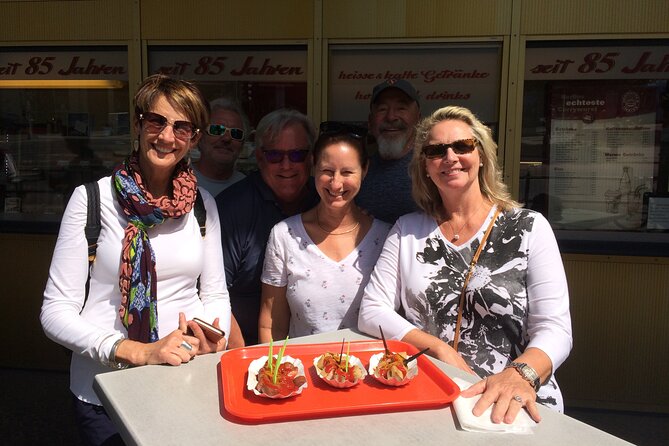
- Mustafa’s Can Gemüse Kebap is the food centerpiece, with a 20-minute stop devoted to Berlin’s famous vegetable döner.
- A Spätkauf stop adds a traditional Berliner beer custom to the tasting route.
- The Holocaust memorial brings serious historical weight to an otherwise casual food walk.
- The private English-language format suits couples, families, and small groups who want a flexible pace.
- The $180.62 per-person price makes the most sense when you value a private guide, included food and drinks, and a compact introduction to Mitte.
Why this short Berlin walk works
The best feature of this experience is its contrast. You move from ornate courtyards to street art, from a hot döner to a cold beer, then from ordinary city life to the stark Memorial to the Murdered Jews of Europe. Berlin can feel scattered at first, so this route gives you several useful threads to hold onto.
You are not simply walking from one famous sight to another. The guide connects what Berlin eats and drinks with the people, neighborhoods, and political changes that shaped the city. That makes the tour more useful than a simple snack crawl, though it does not replace a dedicated museum visit or a longer historical tour.
The private setup is especially helpful in Berlin, where a small side street or courtyard can lead to an unexpected story. You can ask about the difference between Mitte and the old Scheunenviertel, request more food detail, or spend less time at a stop that does not suit your group.
The experience is offered in English and includes food and drinks. The advertised duration is about two and a half hours, while the general tour information describes it as approximately two hours, so I would plan on a short half-day commitment rather than relying on a precise minute-by-minute schedule.
More history-and-food walks around the world:
- Palermo: Street Food and History Walking Tour
★ 4.9 · 1,486 reviews - Walking Tour and street food Tour Palermo / History and Food
★ 5.0 · 386 reviews - Discover Palermo in 3 hours. Art, history, markets and street food
★ 5.0 · 352 reviews
Starting at Neue Promenade and Hackesche Höfe
The meeting point is Neue Promenade 3, near Hackescher Markt in Berlin-Mitte. This is a practical starting area because you are already in one of central Berlin’s most interesting urban districts, with public transportation nearby.
The first formal stop is Hackesche Höfe, a group of interconnected courtyards known for art-deco facades, shops, cultural spaces, and changing street life. The tour uses the courtyards to introduce the former Spandauer Vorstadt and the Scheunenviertel, an area closely linked with Berlin’s Jewish past.
You have about 10 minutes here. That is enough to see the layout, take photographs, and hear why these inner courtyards matter, but not enough for an architectural study. If you want detailed information about every courtyard or time for browsing shops, you will need to return on your own.
I like this opening because it avoids beginning with a standard postcard view. Berlin’s courtyards show how the city hides layers behind its main streets. Their enclosed spaces feel different from the broad avenues and monumental buildings elsewhere in Mitte.
Your guide may also use this area to explain how neighborhood identity changes over time. The important point is not only the decoration on the buildings, but the way homes, workshops, businesses, and social spaces have occupied the same urban blocks across different periods.
Street Art Alley and Berlin’s backstreet character
A quick stop at Street Art Alley follows. The exact amount of time is not specified, so think of it as a photo opportunity and a short introduction to Berlin’s graffiti culture rather than a formal gallery visit.
This part gives the tour a useful modern counterpoint. Hackesche Höfe presents carefully maintained architecture, while the alley offers a more raw and temporary form of public expression. Berlin’s street art changes constantly, so the exact work you see depends on the day.
The route also moves through Berlin-Mitte’s backstreets and courtyards. Along the way, you may see how the historic center blends major monuments with ordinary city blocks, small businesses, and walls used as public canvases.
I would bring a phone or camera, but keep your hands free for walking and food. Since the tour is short, the guide will need to keep the group moving. You are getting a taste of the scene, not an extended street-art workshop.
Mustafa’s Can Gemüse Kebap and Berlin’s famous döner
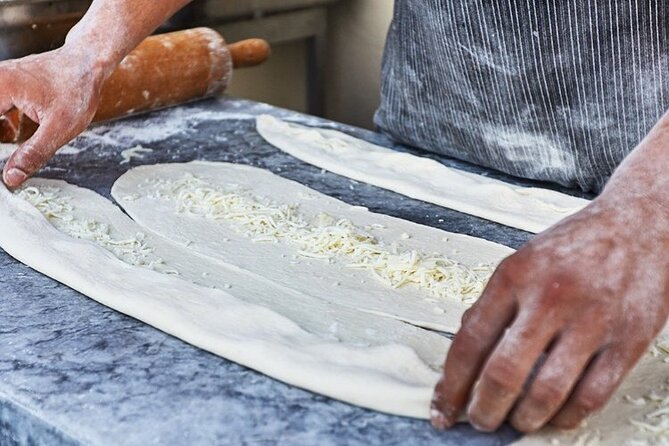
The food highlight is a 20-minute stop at Mustafa’s Can Gemüse Kebap. Here you try the vegetable döner associated with one of Berlin’s best-known street-food names.
The important story is that döner has become a Berlin staple. While the dish has roots beyond Germany, the Berlin-style version developed into a defining fast meal in the city. The tour explains that journey rather than treating the kebab as just a convenient lunch.
This stop is short, so expect a focused tasting rather than a leisurely restaurant meal. Food is included, but the supplied details do not promise a choice of several dishes, a sit-down table, or a full menu. If you have dietary restrictions, ask before booking because no specific accommodation is listed.
The value here comes from context. A döner tastes different when you understand why it matters to Berlin’s daily life and how it moved from immigrant food culture into a dish eaten across the city. It is also a practical introduction to the kind of food you can seek out during the rest of your stay.
One useful expectation: this is street food, not fine dining. That is part of the point. The experience favors a recognizable local habit over a polished tasting menu, so book it if you enjoy casual food served in a city setting.
More street food tours in the world:
- Dubai: Old Town, Creek, Museums, Souks, & Street Food Tour
★ 4.8 · 10,816 reviews - Ho Chi Minh City Street Food Tour & Sightseeing By Motorbike
★ 5.0 · 9,413 reviews - Medellin: Comuna 13 Graffiti Tour, Cable Car & Street Food
★ 4.8 · 9,046 reviews - Dubai: Old Town, Souks, Street Food, Guided Tour & Abra Ride
★ 4.9 · 7,170 reviews
A Spätkauf stop and Berlin’s beer-on-the-go custom
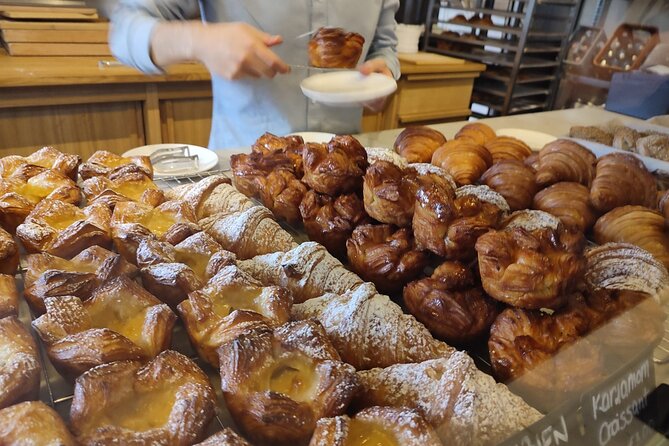
The Spätkauf stop lasts about five minutes. A Spätkauf is a late-opening neighborhood shop, and the guide uses it to explain Berlin’s beer culture and the custom of having a drink while walking through the city.
You will sample traditional Berliner favorites, with drinks included. The short timing suggests a quick stop rather than a pub session, so do not expect a long beer tasting or a detailed brewery tour.
This small moment is valuable because it shows how local customs live in ordinary places. A city’s food culture is not limited to famous restaurants. In Berlin, the corner shop can tell you something about neighborhood routines, nightlife, and the relaxed relationship many people have with a beer outdoors.
The guide also frames the stop as a lesson in being a real Berliner. Take that lightly, but enjoy the local ritual. You are not being asked to master a complicated tradition. You are simply seeing how a familiar drink fits into the city’s public life.
Because the stop includes alcohol, families and non-drinkers should clarify what alternatives are available before booking. The supplied details confirm drinks are included, but they do not specify the exact selection or nonalcoholic options.
Mitte’s landmarks between the food stops

Between the tasting stops, the route passes through the historic heart of Berlin. The broader walk includes views or discussion of Museum Island, Hackescher Markt, Brandenburg Gate, and remnants of the Berlin Wall.
These sights are not all listed as separate timed stops, so you should not expect lengthy visits inside museums or formal tours of each landmark. Instead, the guide uses them as reference points while walking. That approach works well if you are new to Berlin and want a map in your head before exploring more deeply.
Museum Island gives you a sense of Berlin’s major cultural institutions. Hackescher Markt connects the courtyards to a lively central meeting place. Brandenburg Gate provides the grand political image that many people associate with the city, while the Berlin Wall remnants remind you that modern Berlin was once divided by force.
I like the route’s mix of celebrated sights and smaller details. You can take in the big names without spending the entire tour on broad avenues. The backstreets and food stops keep the experience grounded in daily Berlin.
Still, anyone hoping to tour Museum Island interiors or study the Wall in detail should plan separate visits. This walk offers orientation and atmosphere, not admission-based sightseeing.
The Memorial to the Murdered Jews of Europe
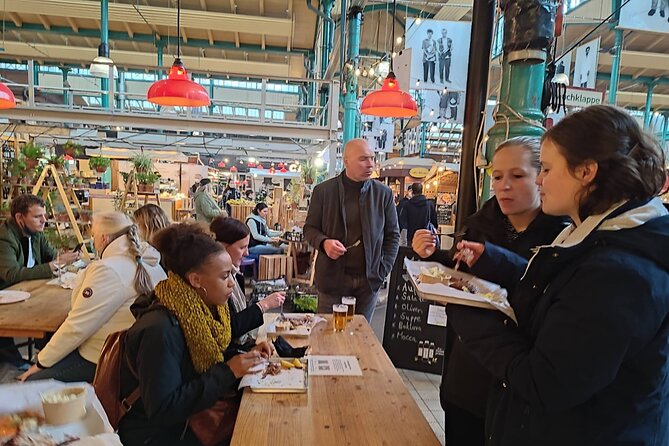
The Memorial to the Murdered Jews of Europe is one of the most serious points on the route. The memorial honors Jewish victims of the Holocaust committed by Nazi Germany.
The stop lasts about five minutes. That is enough to see the field of concrete stelae and pause for reflection, but it is not enough for a full explanation of the memorial’s design, the Holocaust, or the documentation center below it.
The change in mood is deliberate and important. A tour that begins with courtyards, street art, döner, and beer could feel too light if it ignored Berlin’s Nazi past. By including the memorial, the route acknowledges that the city’s easygoing present exists beside painful history.
Give this stop the attention it deserves. It is not a backdrop for a quick joke or a rushed photograph. If you want more time, you can return independently after the tour, but the supplied information does not include an admission visit or guided entry.
This is also one reason the tour suits first-time visitors who want a balanced introduction. You see Berlin as a place of food and creativity, but also as a city that preserves reminders of its darkest chapter.
Brandenburg Gate as the finish
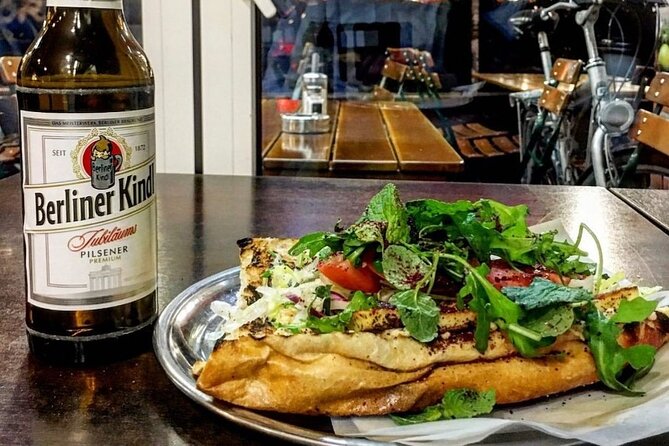
The tour ends at Brandenburg Gate, at Pariser Platz. This is a strong finishing point because it places you near one of Berlin’s most recognizable landmarks and within easy reach of other central sights.
Ending here gives you a useful choice. You can continue sightseeing around Pariser Platz, walk toward the Reichstag area, return to Museum Island, or use public transportation to reach another part of Berlin. The activity does not include a return transfer, so plan your next move from the gate.
The finish also completes the tour’s story. You begin in courtyards and side streets, taste a dish tied to migration and city life, learn a local beer habit, confront Holocaust history, and finish at a symbol of Berlin’s political past and present.
Is $180.62 per person a fair value?
At $180.62 per person, this is not a budget food walk. The price needs to cover more than the food itself, since you are paying for a private English-language guide, route planning, historical explanation, included drinks, and the convenience of having the experience limited to your own group.
For two people, the total cost is substantial. For a family or larger private group, group discounts may improve the calculation, although the amount of any discount is not provided. Check the final price for your party rather than assuming the per-person rate will remain unchanged.
I see the best value for visitors with limited time who want one compact introduction to Berlin’s food and history. If you would otherwise book a separate orientation walk and spend money sampling döner and beer on your own, the combined format may feel worthwhile.
The value is weaker if your main goal is a large amount of food. The tour includes food and drinks, but the route has only one clearly defined food tasting and one brief beverage stop. You should not book it expecting a full lunch with many courses.
The private format matters most if you want questions answered in real time or need a pace suited to your group. It also helps if you dislike large walking groups. One named guide connected with the experience is Lee, who is praised for handling the street-food format well.
Who should book this Berlin food tour?
I would recommend it to first-time visitors who want to understand Berlin through ordinary places as well as famous sights. It is also a good fit for couples, families, and small groups who prefer a private walk in English.
Food lovers should book it if they enjoy casual local specialties with a story. You will learn why döner matters in Berlin, see how a Spätkauf fits into local life, and connect those habits to the city’s neighborhoods.
History-minded visitors can enjoy the route, but should keep expectations measured. The tour touches the Scheunenviertel, Jewish history, the Holocaust memorial, the Berlin Wall, and Brandenburg Gate, yet its short length limits the depth of each subject.
This may not suit you if you want a long museum visit, a serious Holocaust history seminar, a dedicated architecture tour, or a large number of tastings. It also may not be the right choice if you expect fine dining.
Confirmation is provided when you book. The tour is near public transportation, service animals are allowed, and most people can participate. Free cancellation is available up to 24 hours before the start time, while cancellations or changes made later are not accepted for a refund.
Should you book it?
Book this private Berlin tour if you want a fast, personal introduction to Mitte that mixes döner, beer, street art, courtyards, and difficult history. Its strongest feature is the connection between everyday Berlin and the city’s major historical landmarks.
Skip it if you want a substantial meal or detailed visits inside museums and memorial sites. At $180.62 per person, it is a premium choice, but the private guide and included food and drinks can make the price reasonable for a group that values convenience and conversation. Plan for about two to two and a half hours, wear comfortable shoes, and arrive ready for a walking tour rather than a sit-down feast.
FAQ
How long does the Berlin Bites and Historical Highlights tour last?
The experience is advertised as 2.5 hours, while the general duration is also described as approximately 2 hours. Plan for a short half-day activity.
How much does the tour cost?
The listed price is $180.62 per person. Group discounts are available, though the specific discount amount is not provided.
Is the tour private?
Yes. Only your group participates in the activity.
What language is the tour offered in?
The tour is offered in English.
Where does the tour begin?
The meeting point is Neue Promenade 3, 10178 Berlin, Germany.
Where does the tour end?
The tour ends at Brandenburg Gate, Pariser Platz, 10117 Berlin, Germany.
Is food included?
Yes. Food is included, with the route featuring Berlin-style döner at Mustafa’s Can Gemüse Kebap.
Are drinks included?
Yes. Drinks are included, including a stop at a Spätkauf focused on traditional Berliner beer culture.
Can I cancel for a full refund?
Yes, if you cancel at least 24 hours before the experience begins. Cancellations or changes made less than 24 hours before the start time are not accepted for a refund.
Newly added plates around the world
- Zanzibar:Stone town Street food market walking tour,transfer★ 4.5 · 9 reviews
- Zanzibar: Stone town visit, Shopping tour &Night food Market★ 4.4 · 2 reviews
- Xi’an Muslim Quarter Night Market Foodie Walking Tour★ 4.2 · 22 reviews
- Xi’an: Gourmet & Street Food Tour★ 4.8 · 22 reviews
- Zanzibar: Stone town tour, Prison island & night food market★ 4.5 · 2 reviews
- Verona: Street Food and History Tour with Local Guide★ 4.7 · 6 reviews
- Vienna Food Tour: Dishes, Wine, Street Food & Culture★ 4.7 · 12 reviews
- Verona: City Highlights & Street Food Walking Tour★ 5.0 · 3 reviews
Historical Tours, compared.
Walking Tour and street food Tour Palermo / History and Food
Read our review →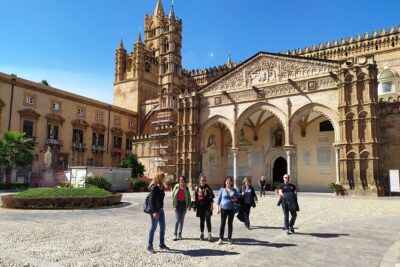
Discover Palermo in 3 hours. Art, history, markets and street food
Read our review →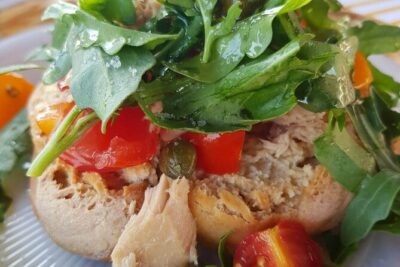
Lecce History and Street Food Tasting Small Group Tour
Read our review →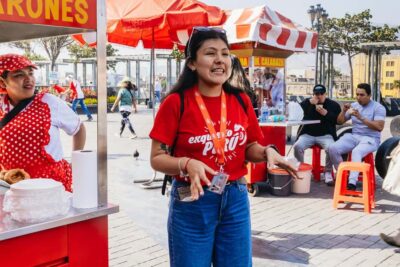
Historic Center Street Food, Market, and Eateries Tour
Read our review →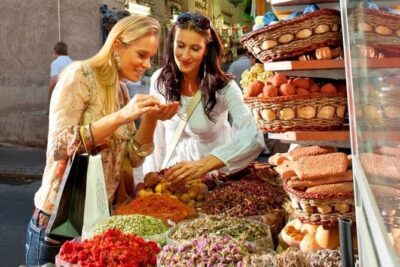
Dubai Old Town, Culture, History, Street food and Souks Tour
Read our review →

Old Dubai Historic Guided Tour: Creek, Street Food & Souks
Read our review →
Browse the lists this tour appears in