
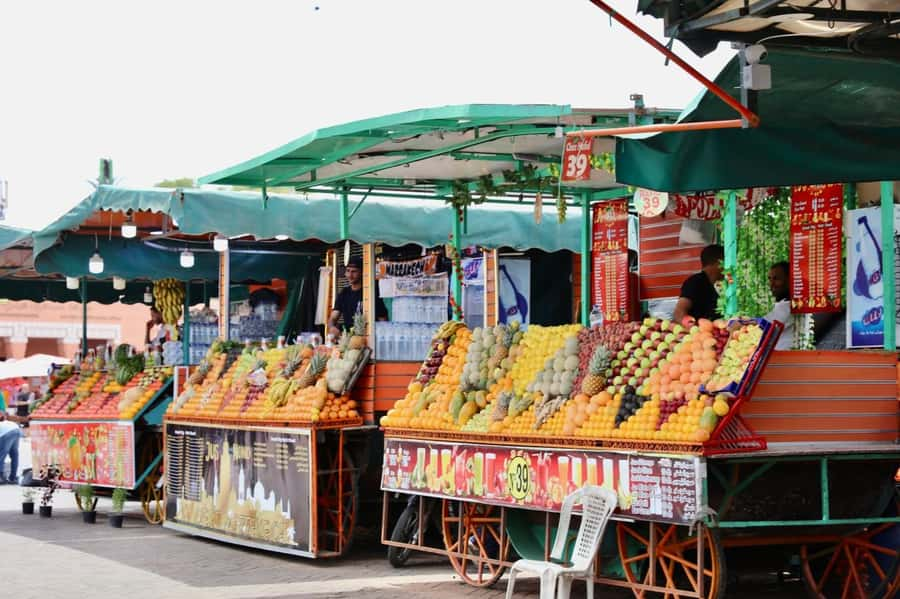
REVIEW · MARRAKECH STREET FOOD TOURS
Marrakech Street Food Tour – Taste Local Flavors
Marrakech’s best food stories are often found between the grand monuments, in market stalls, bakeries, spice counters, and small cafés. This two-hour evening walk takes you from Jemaa el-Fnaa into the Medina and Mellah market, with generous samples along the way.
I like the mix of savory and sweet dishes, from tangia and roast lamb to pastries, dates, and almond drinks. I also like the final mint tea stop, where you can sit down, ask questions, and enjoy the tilework, rugs, lamps, and fountain after the market walk.
The main drawback is the short running time. Two hours gives you a lively introduction, but not a slow, full meal at every stop. Hotel pickup is not included, and the narrow Medina lanes may require a little patience if your group moves slowly.
Key points at a glance
- Meet at Jemaa el-Fnaa: The tour begins in Marrakech’s famous central square, then moves into the Medina.
- Mellah market food stops: See fresh produce, meats, local specialties, and the everyday shopping side of the city.
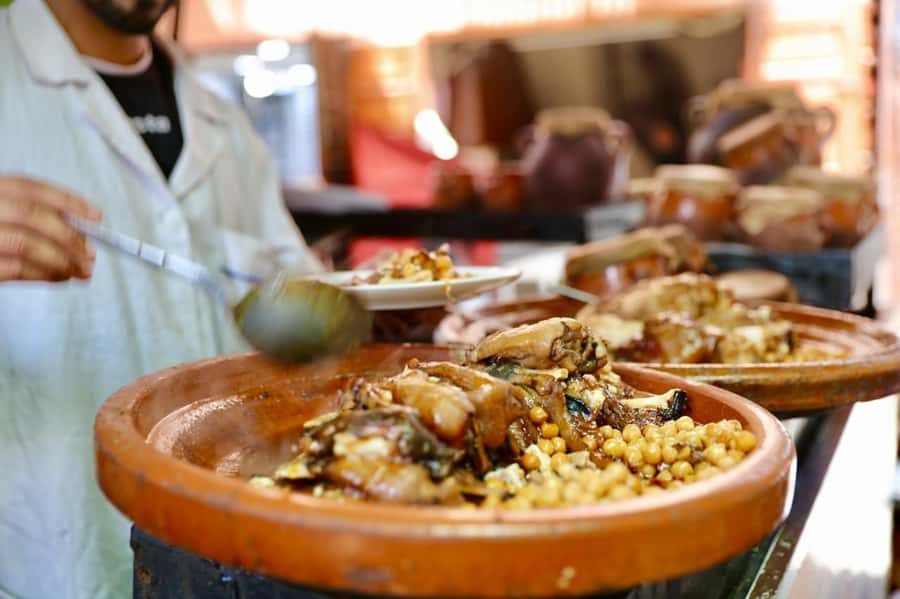
- A broad tasting menu: Try tagine, méchoui, tangia, kofte, Moroccan salads, pastries, dates, and almond drinks.
- Spices and food customs: Learn about saffron, cumin, ras el hanout, bread, haggling, and Moroccan cooking.
- A calm finish: End with mint tea on an outdoor café terrace decorated with rugs, mosaic lamps, and fountains.
- Private or group format: Choose a shared walk or a private experience, with guides speaking English, Arabic, or French.
Starting at Jemaa el-Fnaa after dark
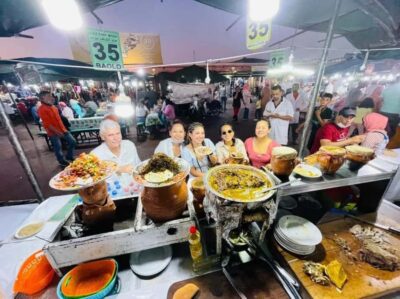
The meeting point at Jemaa el-Fnaa Square makes sense for an evening food walk. This is the place where Marrakech’s main Medina routes gather, and it gives you an immediate look at the city’s evening rhythm before you turn into the smaller lanes.
You should expect plenty of movement, sound, and competing aromas around the square. The tour is not a quiet restaurant crawl. It is a walking experience through working markets, so you will be close to produce sellers, food stalls, shoppers, and craftspeople.
Your guide helps turn that commotion into something easier to understand. Instead of simply pointing out dishes, the guide can explain how Moroccan food fits into daily life, which ingredients matter, and what you are seeing in the market.
The square is also a practical place to begin because the tour does not include hotel pickup. You need to make your own way to the meeting point, so allow enough time to reach Jemaa el-Fnaa without rushing. The booking information does not give a specific meeting time, so check the available start times when you reserve.
More street food tours in Marrakech:
- Marrakech: Street Food Tour by Night
★ 4.8 · 2,838 reviews - The Original Marrakech Street Food Tour
★ 5.0 · 248 reviews - Marrakech Street Food Tour
★ 5.0 · 220 reviews
Through the Mellah market and Medina lanes
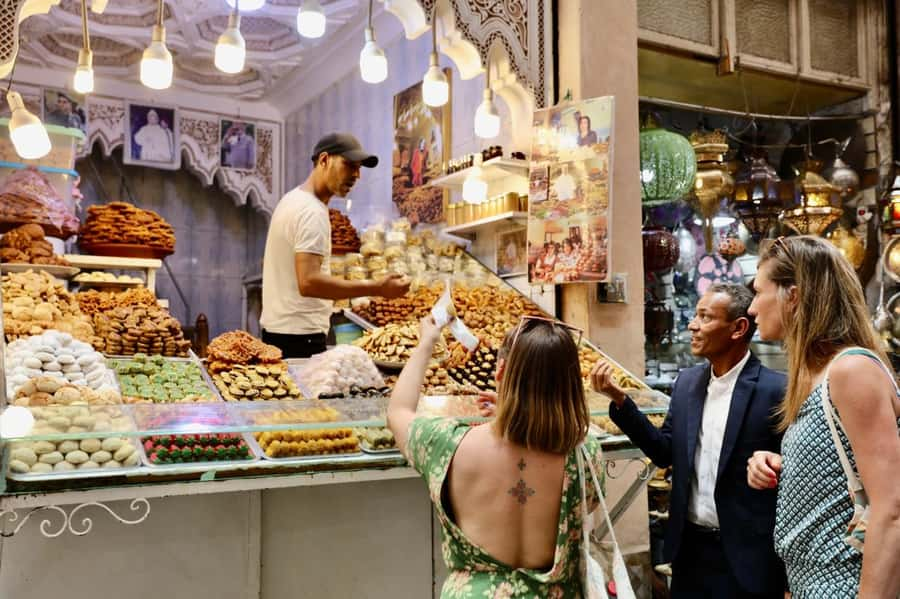
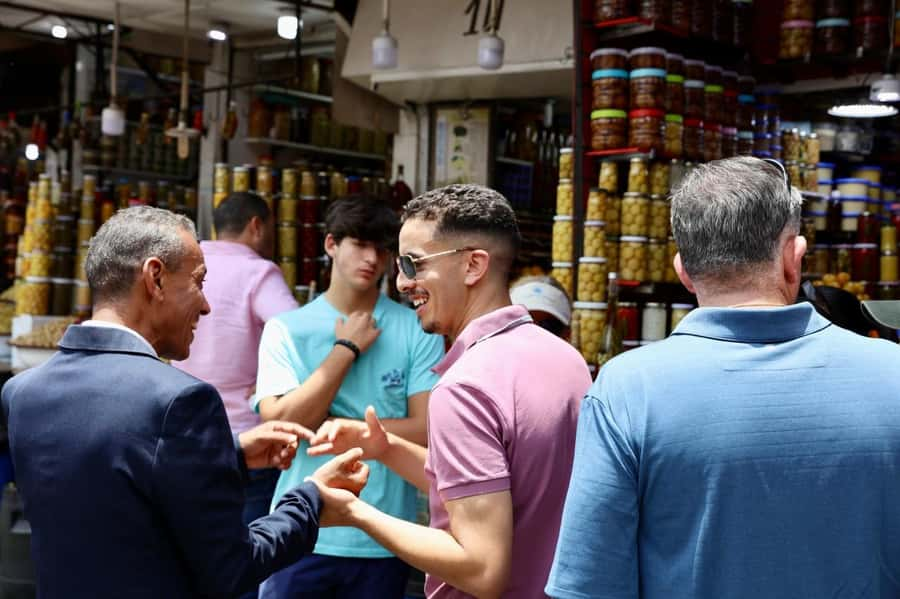
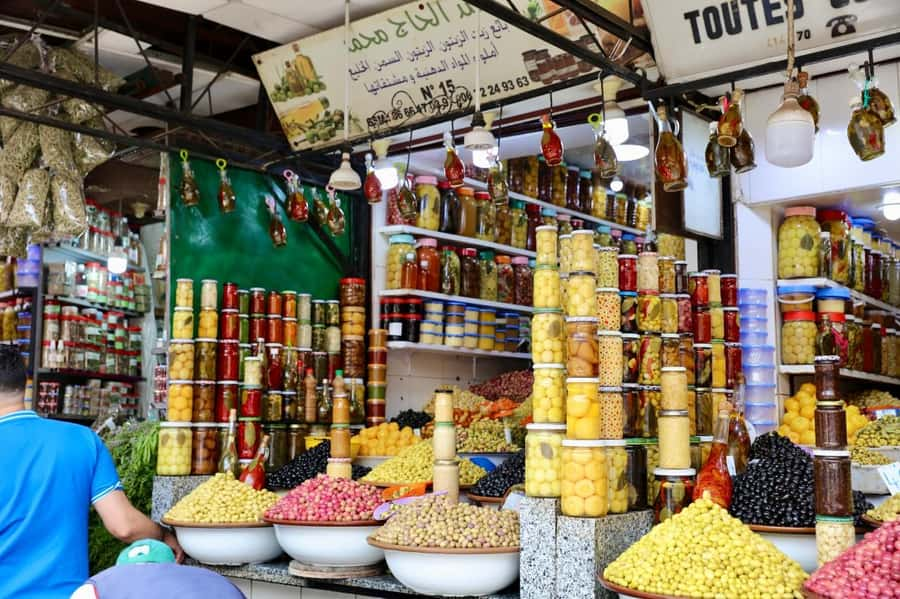
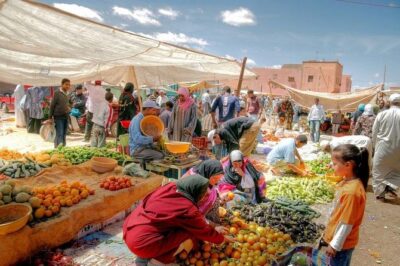
From the square, the route continues through the Mellah market, where food is part of the daily business rather than a staged display. You may see fresh produce, meats, and local specialties arranged for shoppers. That setting adds useful context to the dishes you taste later.
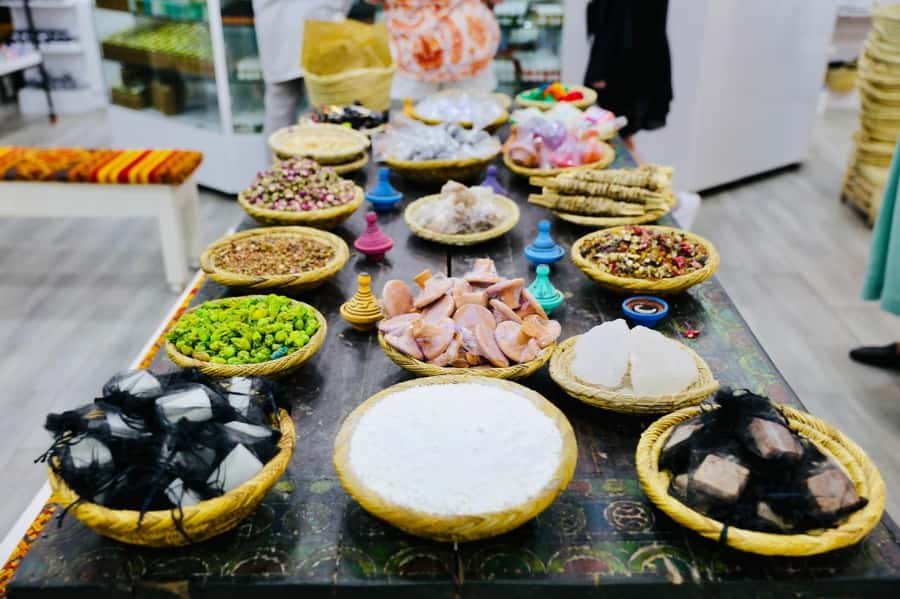
I like this part of the route because it connects the plate to the ingredients. Saffron, cumin, and ras el hanout are not just names on a spice list. They are part of the smells and colors you encounter as you walk through the souks.
Haggling is another topic your guide covers. You will learn how bargaining fits into market shopping, though the tour is not presented as a formal shopping lesson. The useful point is understanding that market prices and interactions follow their own customs.
The lanes can be crowded and uneven, and the food stops may not be arranged in a perfectly predictable order. That is part of the appeal, but it also means you should wear comfortable shoes and stay close to your guide. The experience is listed as wheelchair accessible, although the Medina’s market setting may still feel more demanding than a smooth city sidewalk.
Watching pastry chefs at work
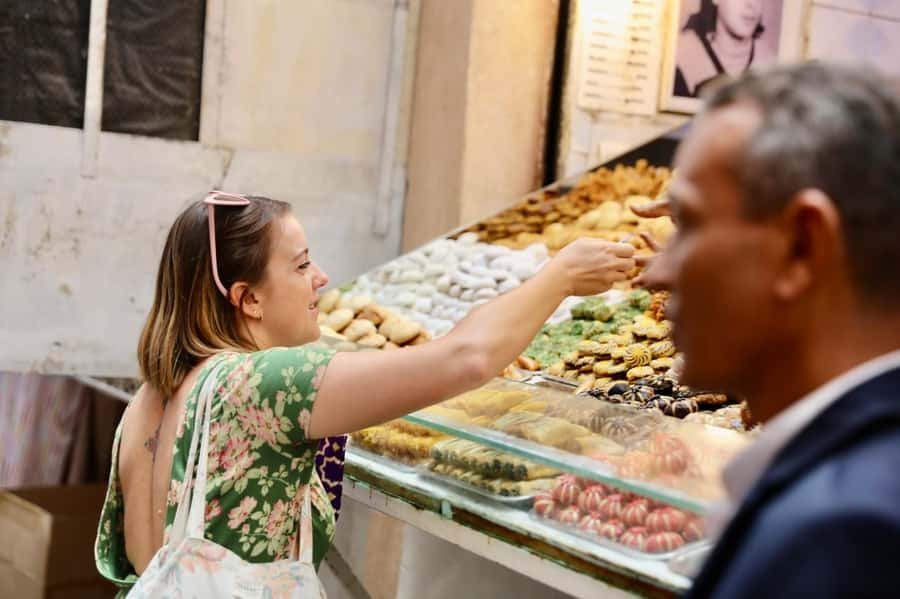
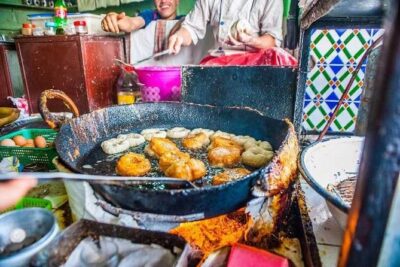
A particularly appealing stop involves seeing local pastry chefs prepare their goods. This gives you something beyond a sample: a look at the skill and labor behind Moroccan sweets.
Pastries are easy to admire in a display case. Watching them being made helps you notice the care that goes into shaping and finishing them. You may also have a chance to sample sweet items alongside dates and an almond drink, giving the tasting a different feel from the meat and vegetable dishes.
The balance matters. Moroccan food is often associated with tagine, but this walk does not limit itself to one famous dish. Sweet pastries, fruit, drinks, salads, and bread help you see how varied a Moroccan food stop can be.
The tour also offers a local tagine recipe as a souvenir. That is a small but useful touch. You can recreate part of the experience at home, and the recipe gives you a better sense of the dish than a quick taste alone.
Tagine, tangia, méchoui, and kofte
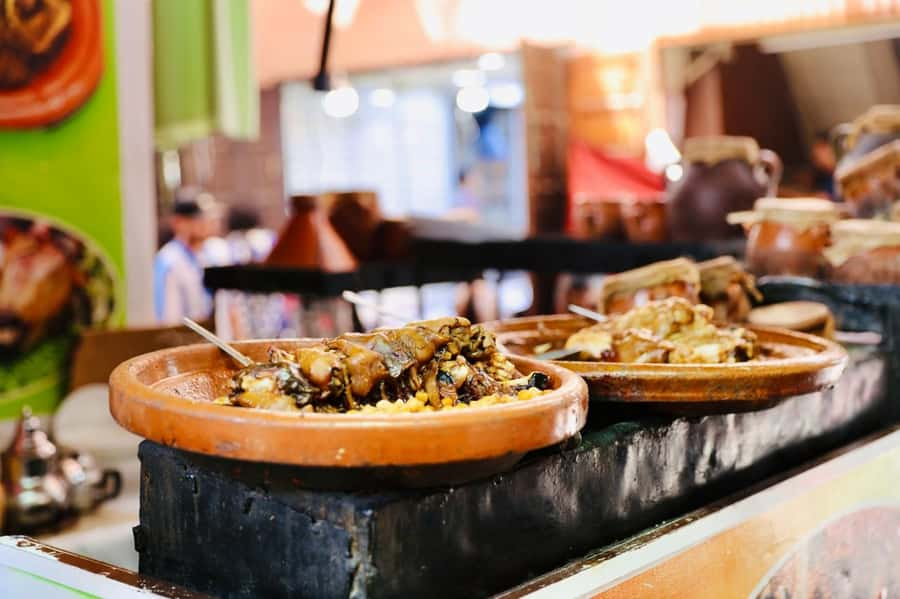
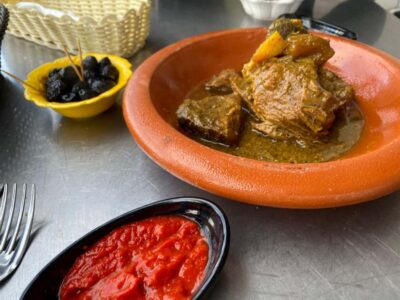
The heart of the tasting includes several classic Moroccan dishes. Tagine is the familiar starting point, but the tour adds dishes that are less often explained to first-time visitors.
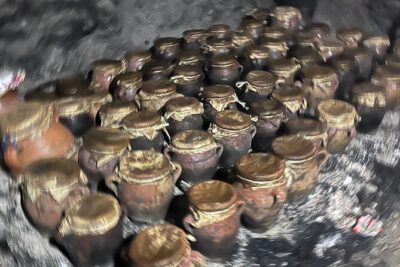
You may sample méchoui, a slow-roasted lamb dish, along with tangia and kofte served with freshly baked bread. These foods give you a chance to compare different textures and cooking styles: roast meat, seasoned minced meat, slow-cooked preparations, and bread used to accompany the meal.
Tangia is especially useful to encounter with a guide because its name may be unfamiliar to many first-time visitors. The guide can explain what you are eating and how it fits into Marrakech’s food culture, rather than leaving you to guess from a menu.
Kofte provides another change of pace. Served with fresh bread, it is straightforward, filling street food. The samples are described as generous, so pace yourself early. One of the clearest practical warnings from the experience is that the meal can become quite filling, even though the walk lasts only two hours.
Same city, another round of plates:
- Marrakech Night Street Food Tour / Taste The Real Marrakech
★ 4.9 · 200 reviews - Marrakech street food tour with a local
★ 5.0 · 55 reviews - Marrakesh: Guided Street Food Tasting by Locals
★ 4.6 · 47 reviews - Marrakech: Street Food Tour by Night
★ 4.5 · 42 reviews
Three Moroccan salads and the value of variety
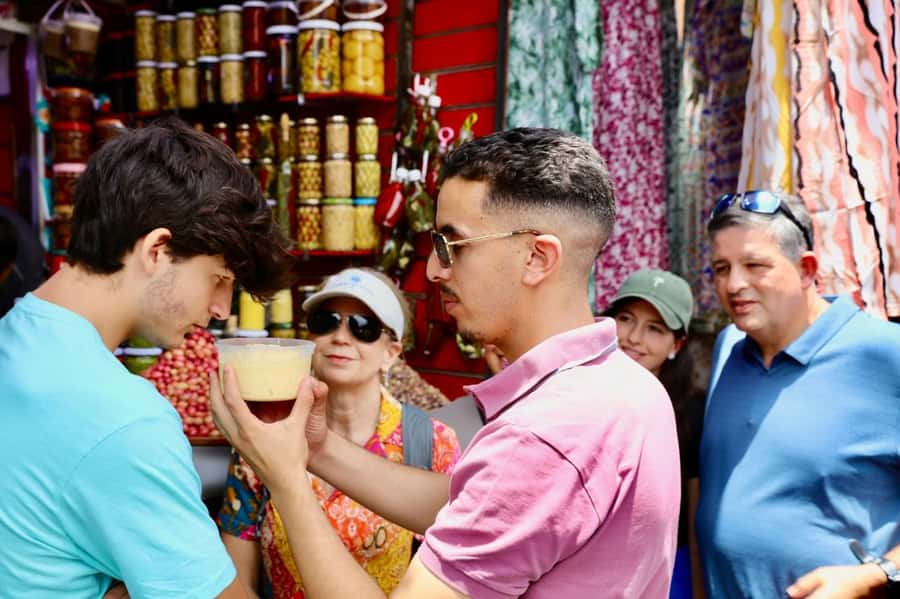
The tour includes three traditional Moroccan salads made with fresh ingredients. These are important because they bring lighter, cooler flavors into a route otherwise weighted toward meat, bread, pastries, and tagine.
I like tasting several salads together because the comparison makes the ingredients easier to notice. You can pay attention to seasoning, freshness, and how the salads work beside bread or a main dish.
Food tours often focus too heavily on famous items. Here, the salads widen the picture. Moroccan cooking is not only about slow-cooked meat and warm spices. Vegetables and fresh ingredients have their own place at the table.
The exact salad recipes are not specified, so you should not book this expecting a particular named dish. Instead, treat this part as a guided introduction to the range of Moroccan market food.
Spices, bread, and local food knowledge
A good guide adds value by explaining what you are tasting. This tour includes discussion of saffron, cumin, and ras el hanout, three spices that help you recognize the flavor profile of Moroccan cooking.
Ras el hanout can vary from one blend to another, so a guide’s explanation is more useful than a fixed list of ingredients. You can ask how spices are used, which flavors suit tagine, and what makes one dish taste different from another.
Fresh bread also plays a practical role in the tasting. It helps you eat certain dishes and gives you a sense of how food is served outside a formal restaurant. These details are easy to miss if you only order a meal at a hotel or restaurant.
The guides speak English, Arabic, and French. That makes the tour a good fit for different language needs, and it gives you a chance to ask direct questions about food, markets, and customs.
Finishing with mint tea on a café terrace
After the food stops, the route ends at a cozy outdoor café. This is a smart finish because you can sit down after walking and eating, rather than ending beside the next crowded stall.
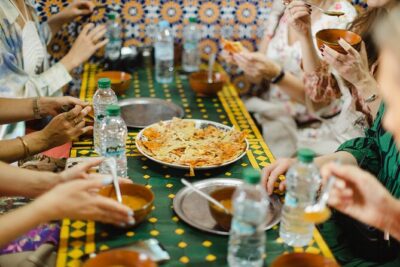
You will have Moroccan mint tea while taking in the café decor, including rugs, mosaic lamps, and fountains. The setting gives the tour a calmer final note and lets you talk with your guide about the dishes you tried.
Mint tea is more than a drink here. It is a familiar Moroccan social ritual, and the final stop gives you time to enjoy it without rushing. If you have questions about a dish, this is the best moment to ask them.
The café stop also helps make the $40 price easier to judge. You are paying for food, drinks, guiding, local explanations, and a planned route through the markets, not just for one sit-down dinner. Still, if you want a large restaurant meal or a long evening of dining, this is not a substitute. It is a compact tasting walk.
Group or private tour: which works better?
You can choose between a shared group tour and a private tour. A group option usually makes the $40 price more appealing, especially if you want an affordable introduction and do not mind following a set pace.
A private tour is the better choice if you want more time for questions or prefer a route shaped around your interests. It may also feel easier if one person in your party has particular food preferences, though the supplied details do not promise menu substitutions.
Guide quality matters on a food walk. Najib is a guide you can request if available. He has been described as polite, welcoming, generous, and especially strong at explaining many parts of Moroccan life and food. Abdou is another named guide associated with a warm and generous approach.
Do not assume a specific guide is guaranteed unless the provider confirms it. Also, one private-tour account describes Najib covering food costs and walking the group back to a taxi. That was an individual gesture, not a standard inclusion, so you should still expect the published price to cover the stated food, drinks, and guide service only.
Is $40 good value for two hours?
At $40 per person, this tour sits above the cost of simply buying one street snack, but the comparison is not quite fair. You are receiving a guided route, several food tastings, drinks, explanations, and a café finish.
The value is strongest if you are new to Marrakech and want help choosing what to taste. A guide can lead you toward dishes such as tangia and méchoui, which you might not order on your own, and explain unfamiliar spices and market habits.
The price is less compelling if you already know the Medina well and are comfortable finding food independently. You could spend two hours eating on your own for less, but you would lose the local explanations, organized route, and chance to compare many foods in one evening.
Because the samples can be quite filling, you may not need a separate full dinner afterward. That improves the value, but appetite varies. The smart plan is to treat the tour as your evening meal unless you know you eat lightly.
Who will enjoy this food walk most?
I would recommend it to first-time visitors who want a gentle introduction to Marrakech’s food culture without committing to a formal cooking class or long restaurant meal.
It suits people who enjoy walking, tasting several foods, and asking questions. It is also useful for anyone who wants to understand the connection between the souks, market ingredients, spices, bread, and finished dishes.
Families and mixed-age groups may like the variety, although the short walking route still passes through active market areas. Food-focused visitors will get the most from the chance to try several savory and sweet items in one outing.
You should think twice if you want a quiet setting, a fixed menu, or a highly structured dining experience. The Medina can be busy, and the tour depends on the energy of the market.
The activity is listed as wheelchair accessible, which is important to note. Still, ask the provider for current route details if mobility access is a major concern, since the supplied information does not describe the exact surfaces or market entrances.
Booking details worth knowing
The experience lasts two hours, and starting times depend on availability. It is an evening activity, so plan to meet at Jemaa el-Fnaa rather than expecting transport from your hotel.
Food and drinks are included, along with a live guide. Hotel pickup and drop-off are not included.
You can cancel up to 24 hours before the activity for a full refund. The reserve-now-and-pay-later option lets you hold a place without paying immediately, which is useful when your Marrakech schedule is still shifting.
The tour is offered in English, Arabic, and French. Group and private formats are available, so check the choice carefully before booking.
Should you book it?
Book this tour if you want a short, food-centered introduction to Marrakech with plenty of tasting and a guide who can explain what lies behind the dishes. The best reasons are the range of food, the Mellah market setting, the spice and haggling context, and the relaxed tea stop at the end.
I would especially consider requesting Najib if he is available, while remembering that guide assignments are not guaranteed. Choose a private format if questions and personal attention matter more than keeping the price down.
Skip it if you already know Marrakech’s food scene well, prefer to eat at your own pace, or want a long formal dinner. For most first-time visitors, though, $40 is a fair price for a compact evening that turns the Medina’s food stalls and market ingredients into a meal you can understand.
FAQ
Where does the Marrakech street food tour begin?
The tour begins at Jemaa el-Fnaa Square in Marrakech.
How long does the experience last?
The tour lasts two hours.
What foods can I expect to sample?
You can sample tagine, méchoui, tangia, kofte, Moroccan salads, pastries, dates, almond drinks, and freshly baked bread.
Is mint tea included?
Yes. The tour ends with mint tea at an outdoor café.
Does the tour include food and drinks?
Yes. Food and drinks are included in the activity.
Is hotel pickup included?
No. Hotel pickup and drop-off are not included.
Can I choose a private tour?
Yes. You can select either a shared group tour or a private tour.
Which languages are available?
Live guides are available in English, Arabic, and French.
Is the tour wheelchair accessible?
Yes. The activity is listed as wheelchair accessible.
What is the cancellation policy?
You can cancel up to 24 hours in advance for a full refund.
Newly added plates around Marrakech
- Marrakech street food tour with a local★ 5.0 · 55 reviews
- Local Hidden Spots Street Food Tour in Medina Marrakech★ 5.0 · 30 reviews
- Marrakech Tasting Tour: Experience Local Street Food & Culture!★ 5.0 · 5 reviews
- Marrakech Street food Tours★ 4.5 · 15 reviews
- Marrakech Street Food with +10Tasting & Tanjia Dinner|Guided Walk★ 5.0 · 21 reviews
- Marrakech: Street Food Tour by Night★ 4.5 · 42 reviews
- Marrakech street Food Tour Eat like Locals★ 5.0 · 4 reviews
- 3 Hours Private Tour Marrakech Night Market★ 5.0 · 2 reviews
Marrakech Street Food Tours, compared.
Marrakech Night Street Food Tour / Taste The Real Marrakech
Read our review →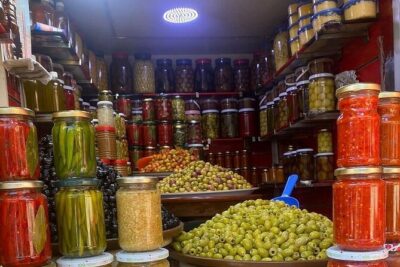
Browse the lists this tour appears in