
REVIEW · EVENING AND NIGHT FOOD TOURS
Marrakech Night Street Food Tour / Taste The Real Marrakech
Marrakech tastes most interesting after dark, when a plate of slow-cooked tangia can lead you far beyond the main tourist lanes. This four-hour walk takes you through the Medina, Kasbah, and local neighborhoods for a generous spread of soups, pancakes, sardines, stews, sweets, and tea.
I like two things right away: the food is not limited to the familiar tagine, and guides such as Nour and Omar add useful stories about Moroccan customs, cooking, Jewish and Berber influences, and daily life. I also like that the group is capped at 10, small enough to move through narrow streets without becoming a parade.
The main caution is simple: this is a lot of food. The advertised time is four hours, but some outings run closer to five, and several people struggled to finish every serving. Come very hungry, wear comfortable shoes, and do not plan a serious meal beforehand.
Key points at a glance
- Tangia cooked in hammam embers: A traditional Marrakech specialty and one of the evening’s most memorable tastes.
- A serious amount of food: Expect many stops, generous portions, sweets, drinks, and enough food to replace dinner.
- Local guides with personality: Nour, Omar, Mustafa, Mohammad, Khawla, and others lead walks that mix food with culture and history.
- Beyond the main tourist lanes: The route reaches local eateries, family-run food spots, the Medina, and the Kasbah.
- Good first-night choice: The food gives you a useful introduction to dishes you can order later in Morocco.
- Small, flexible setup: Groups are limited to 10, with alternatives available if you report allergies in advance.
Starting at Café de France after sunset
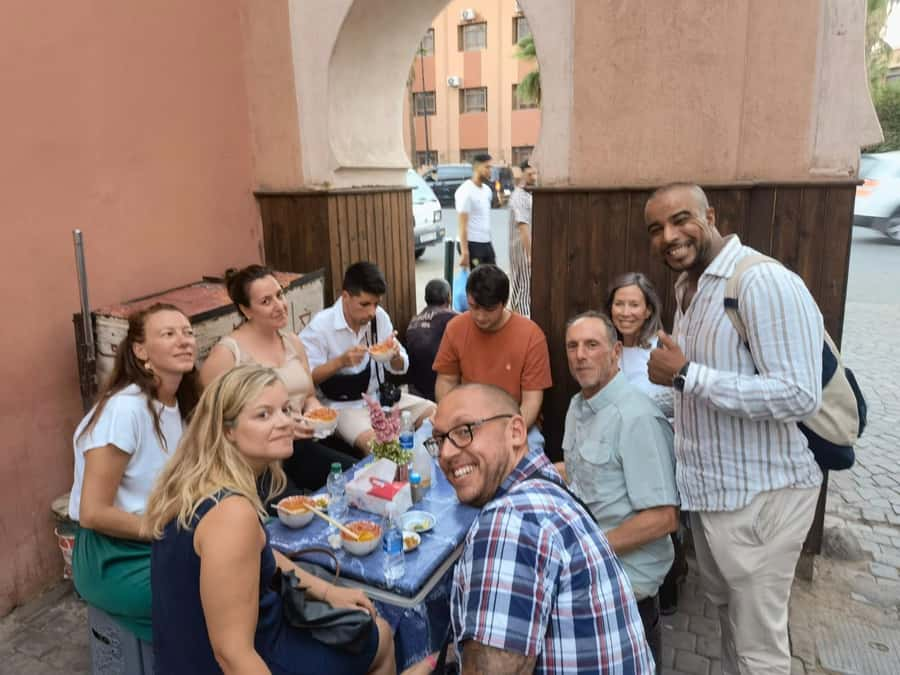
The meeting point is in front of Café de France, a practical landmark in central Marrakech. Your guide explains the route before the group sets off, then the evening unfolds on foot and, according to the activity details, by vehicle through several parts of the city. Transportation itself is not included, so you should not assume a private transfer to or from the meeting point.
The start can feel familiar if you have already spent time around the main square. The tour’s strength is what comes next: it moves away from the polished restaurant circuit and into smaller streets and local eating places. You are not simply handed a snack and sent on your way. The guide explains what you are eating, when people eat it, and how it fits into Moroccan life.
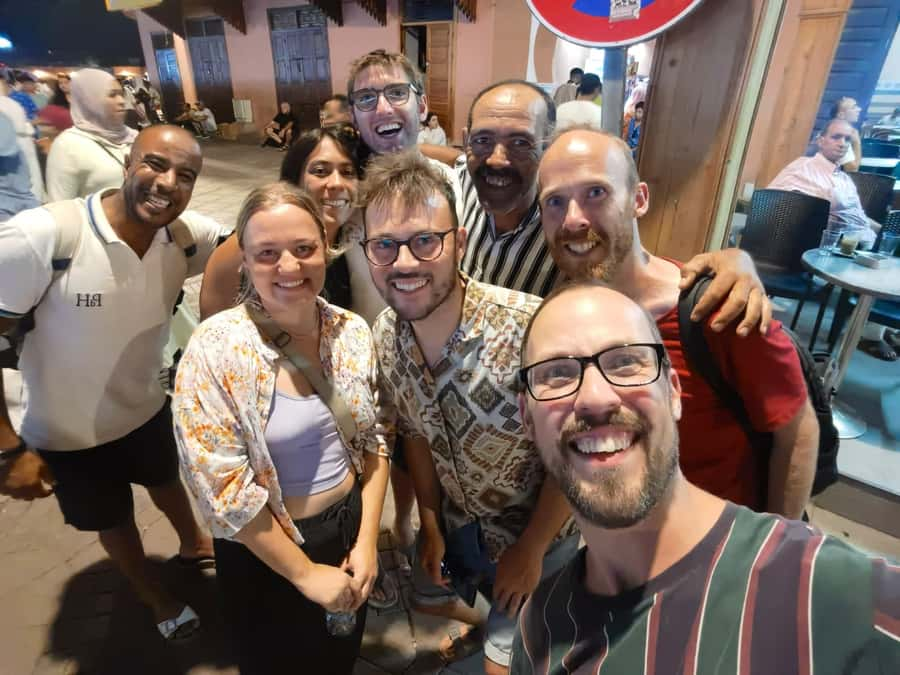
Nour and Omar are especially associated with the tour, though other guides, including Mustafa, Mohammad, Khawla, and Oumar, may lead particular departures. The exact personality will vary, but the guiding style is clear. Expect conversation, jokes, food explanations, and plenty of chances to ask questions.
More Evening and Night Food Tours in Marrakech:
- Marrakech: Street Food Tour by Night
★ 4.8 · 2,838 reviews - Marrakech: Street Food Tour by Night
★ 4.5 · 42 reviews - Saigon By Night and Street Food By Motorbike | Opt: Ao Dai Riders
★ 5.0 · 4,066 reviews
Msemen, harcha, and the first taste of Morocco
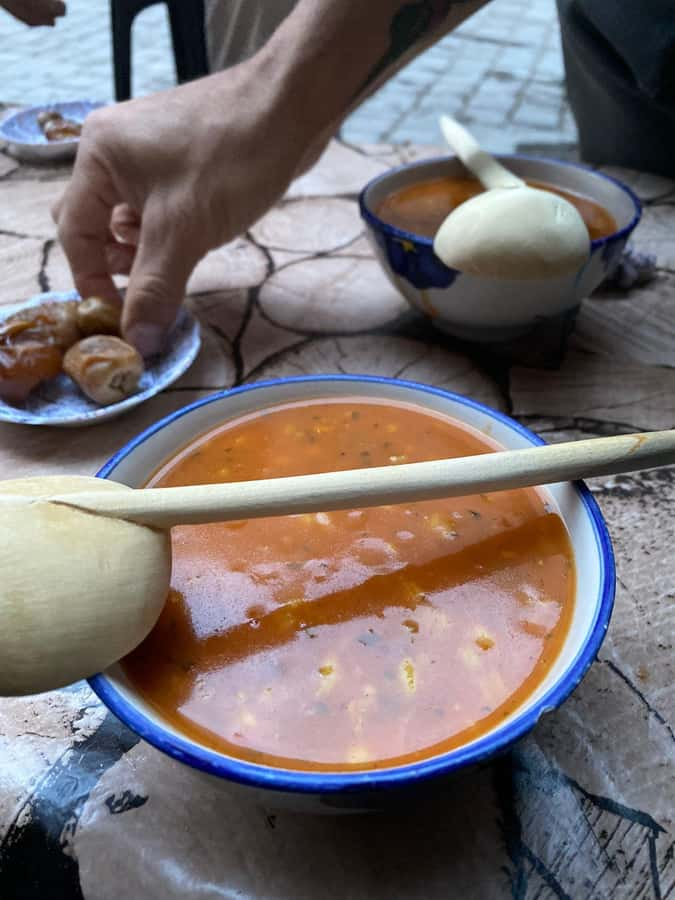
The early stops introduce two Moroccan pancakes: msemen and harcha. Msemen is layered and often pleasantly chewy, while harcha has a different texture and a more crumbly, semolina-based character. These are useful first bites because they show how much Moroccan food depends on simple dough, patient cooking, and a good cup of tea.
Tea and coffee are included, along with bottled water. Tea is not just a drink here. It is part of the social rhythm of the evening, and the guide uses these pauses to explain local habits and ingredients.
The food comes in many forms. Some stops are quick tastings, while others offer portions substantial enough to feel like a full meal. That distinction matters. You may arrive expecting a sampling tour and discover that you are being fed dinner several times over.
If you have a sweet tooth, chebakia and other Moroccan pastries appear among the early or later offerings. Their honeyed, spiced character makes a useful contrast to the savory dishes. The tour also includes raïb, a frozen yogurt-style treat, fresh fruit juice, and other sweets.
Harira, stews, and the comfort-food side of Marrakech
Harira is one of the evening’s key dishes. This well-known soup is described here as vegetarian, and it gives the meal a warm, filling center. You may also try Moroccan stews, with the exact preparation depending on the food stop and the night’s route.
This part of the tour helps explain why Moroccan cooking can feel hearty without relying on one famous dish. Soups, stews, bread, vegetables, meat, and carefully used spices work together. The guide can connect ingredients and methods to local customs, rather than leaving you to guess what is on the plate.
The stops are not presented as formal restaurant courses. You might eat in a modest local place or at a food stall that you would pass without noticing on your own. That is part of the appeal, but it also means the evening has a street-food character rather than the calm service of a high-end dinner.
I would treat the food as the main event and the setting as part of the lesson. This is not the tour for someone who wants a polished dining room and a fixed menu. It suits you better if you enjoy trying unfamiliar foods in places chosen for local use.
Sardines, eggplant, and the wider food culture
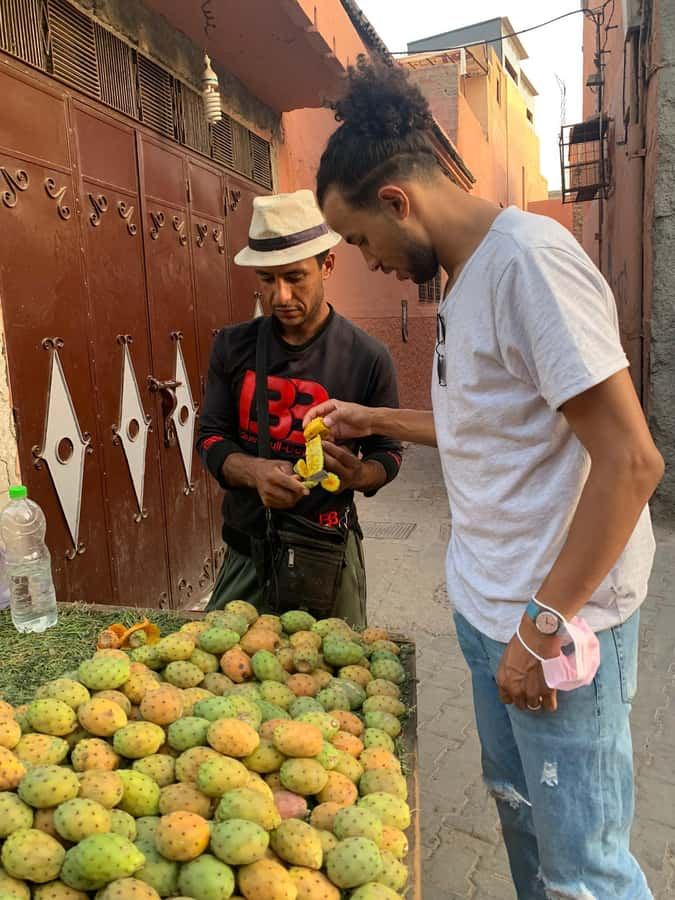
One stop pairs fried sardines with eggplant and vegetables. It is a good reminder that Marrakech’s food is not only about lamb, chicken, and sweet pastries. Fish, vegetables, bread, and fried foods all have a place in the city’s everyday eating.
You may also try l’bid o maticha, a Berber omelet made with eggs and tomatoes. The name and preparation offer a small window into Morocco’s Berber food traditions. The dish is straightforward, but the guide’s explanation gives it meaning beyond a quick breakfast-style bite.
The range is one of the tour’s best features. Instead of sampling five versions of the same dish, you move across pancakes, soup, meat, fish, eggs, sweets, yogurt, tea, and juice. For a first evening in Marrakech, that is a useful survey. It gives you a short list of foods to seek out during the rest of your trip.
Vegetarians and vegans should tell the guide about their needs before starting. Suitable alternatives have been provided for vegetarian and vegan participants at many stops, but the menu is not designed as a vegetarian-only experience. Several of the main highlights are meat-based, so clear communication matters.
More street food tours in Marrakech:
- The Original Marrakech Street Food Tour
★ 5.0 · 248 reviews - Marrakech Street Food Tour
★ 5.0 · 220 reviews - Marrakech street food tour with a local
★ 5.0 · 55 reviews - Marrakesh: Guided Street Food Tasting by Locals
★ 4.6 · 47 reviews
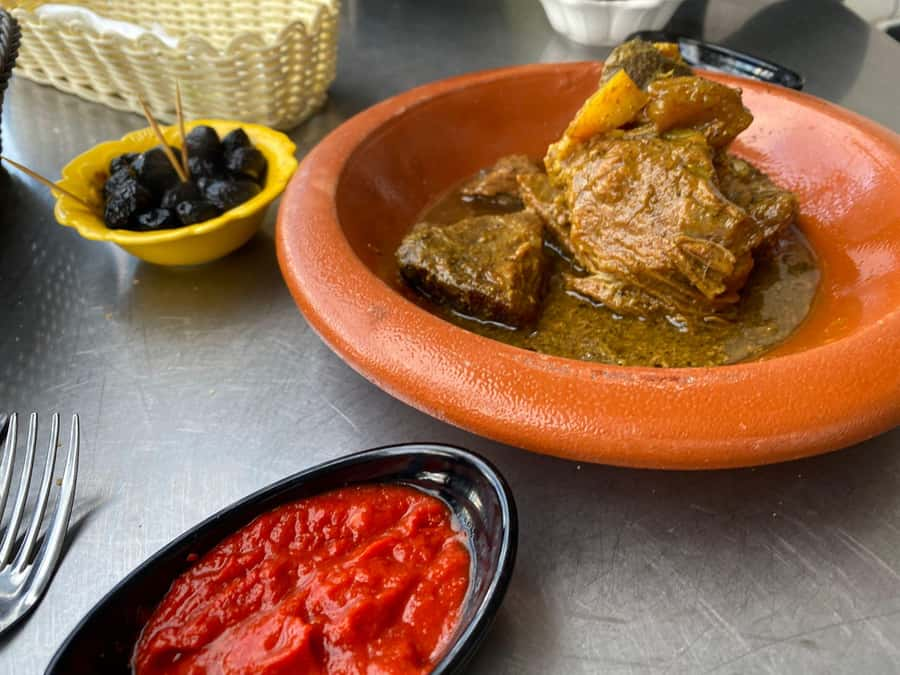
Tangia cooked in the hammam
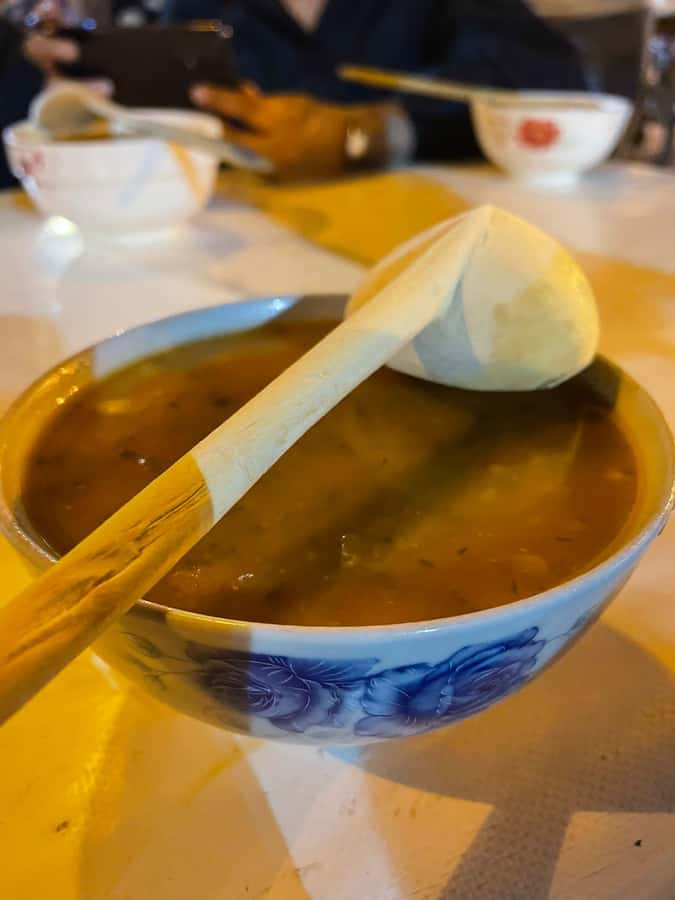
Tangia is the dish that gives this outing its strongest sense of place. It is a traditional slow-cooked meat stew associated with Marrakech, and some guides prepare it specially for the group. The cooking method can involve placing the vessel in the embers of a hammam, where the dish cooks slowly alongside the bathhouse’s heating system.
That is more than a meal stop. It connects food with the working life of the city. One account describes seeing the hammam boiler area and meeting the person responsible for the cooking, while other outings have featured guides who prepared the tangia themselves.
The exact presentation may vary by departure, so do not assume every group will see the same setup. Still, tangia is consistently one of the food highlights, and it is the dish I would pay special attention to. Its long cooking time produces a deep, tender result that is quite different from a quick street snack.
Come prepared to share and sample rather than expect a private pot. The group setting makes the food more sociable, and the small size helps keep the stop manageable.
Chfnj, tea, juice, and the final round of sweets
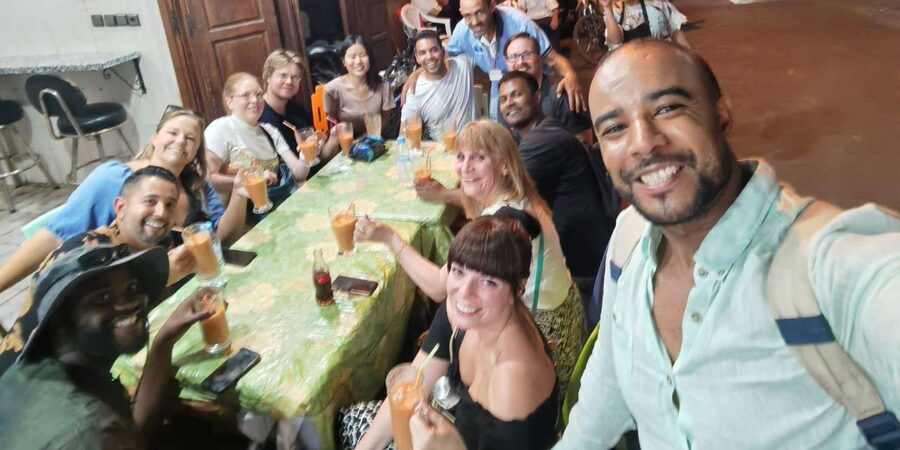
Chfnj, described as Jewish donuts, adds another cultural layer to the route. Served with tea, these fried treats are a reminder that Moroccan cuisine has been shaped by several communities and traditions. The tour does not treat food as an isolated list of dishes. It uses each stop to explain the people and customs connected with it.
Fresh assir, or fruit juice, helps break up the heavier food. By this point, the combination of soup, bread, meat, pancakes, fried sardines, pastries, and stew may have caught up with you. The drink is welcome, especially if you have been walking for several hours.
The final stops can be the hardest to manage. Portions are often generous, and the guides want you to try everything. That enthusiasm is part of the charm, but it can also turn the last third of the tour into an endurance test.
You do not need to finish every bite to get value from the outing. Pace yourself early, take small portions when you can, and tell your guide if you are full. The food is included, so there is no pressure to order extra dishes, but you should still be ready for a very full evening.
Walking through the Medina and Kasbah
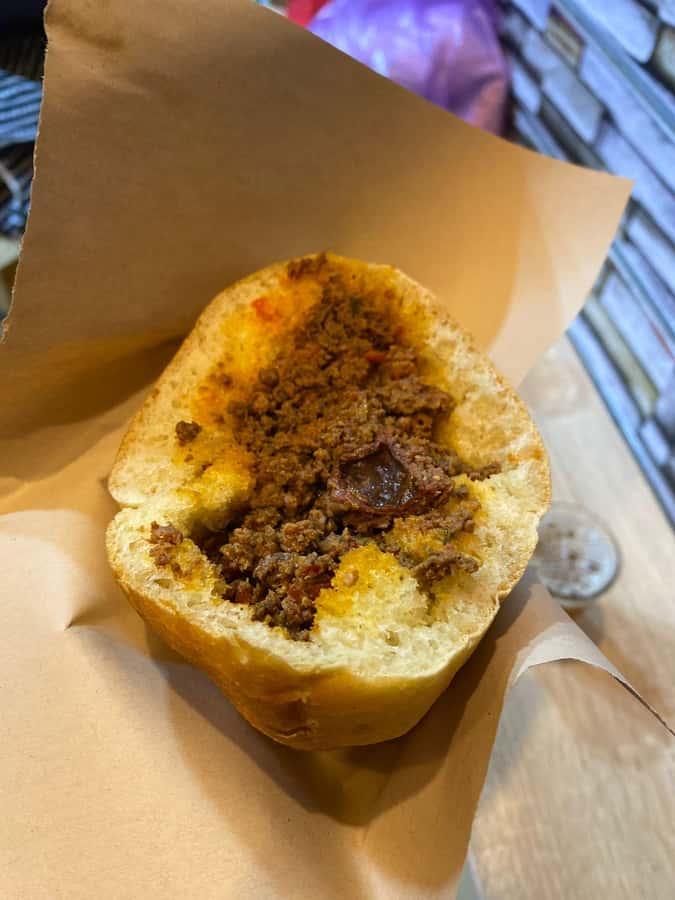
The route is also a night walk through Marrakech. You move through narrow Medina lanes, local streets, and parts of the Kasbah, with stops that take you away from the obvious tourist circuit. The city looks and feels different at night, and the walk gives the meal a sense of movement.
The guide’s commentary extends beyond cooking. You may hear about Moroccan history, sugar and its importance, door knockers, local customs, and the way food appears at different occasions. This turns the evening into part food tour and part introduction to Marrakech.
Do not expect a quiet stroll. The Medina can be crowded, confusing, and full of sudden turns. Keep close to the group, especially at food stops and street crossings. Comfortable shoes are important, since the evening involves several hours on your feet.
The activity is listed as wheelchair accessible, but the route includes walking through Medina streets and local areas. If you use a wheelchair or have limited mobility, contact the provider before booking so the route and vehicle portions can be confirmed for your needs.
What $56 buys you
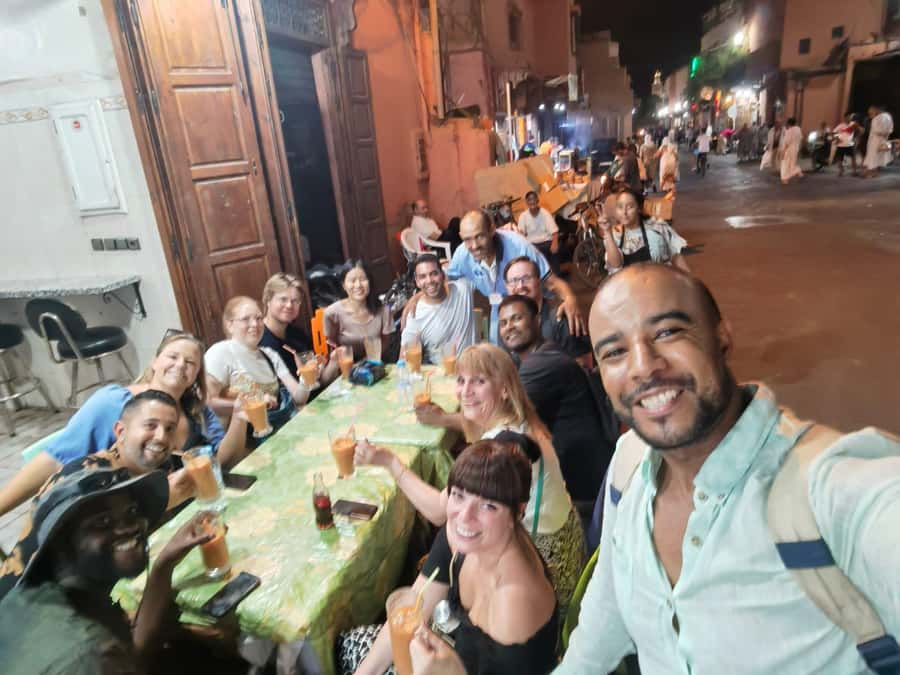
At $56 per person, the price is strong if you arrive hungry and take advantage of the full range of food. You receive a local guide, all food, tea or coffee, and bottled water. Several full portions, drinks, and four hours of guiding can easily make this more economical than arranging separate meals and paying for a standard city walk.
The value is not only the quantity. You are paying for access to places you might not identify on your own, plus explanations that make unfamiliar dishes easier to understand. The tangia stop, in particular, can add something you would be unlikely to arrange casually.
There are limits. Transportation is not included, and the tour can run longer than four hours. If you are mainly seeking a quick tasting session, the large portions may feel excessive. If you enjoy trying many dishes and want food to lead you into local neighborhoods, the cost makes good sense.
Free cancellation is available up to 24 hours before the activity for a full refund, and you can reserve now and pay later. Those options are useful if your Marrakech plans are still shifting.
Who should book this night food walk
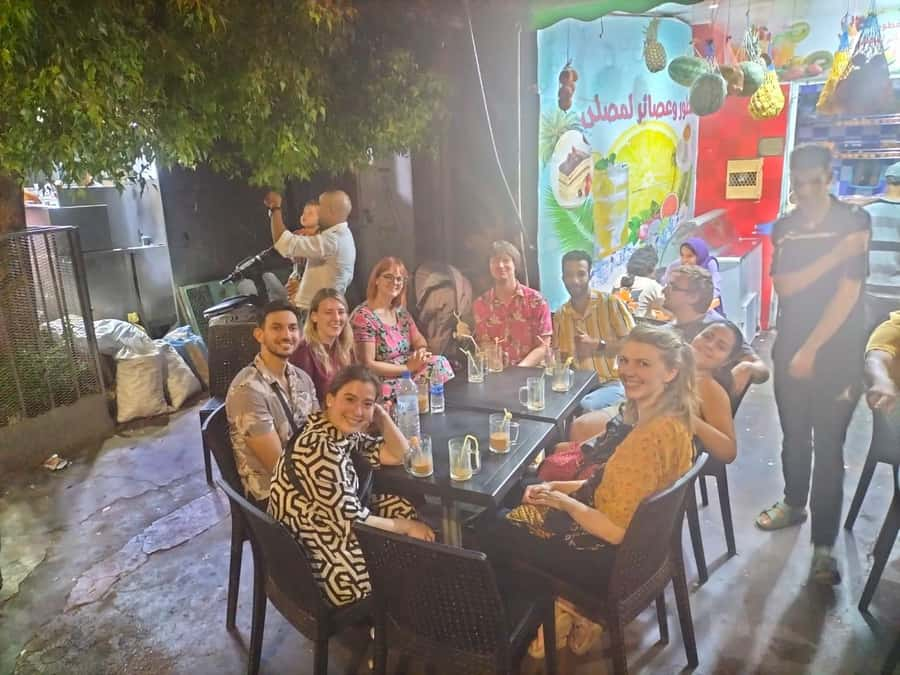
I would recommend it most strongly for first-time visitors, curious eaters, and anyone who wants a practical introduction to Moroccan cuisine. It is especially useful on your first night, since the guide can explain what you are eating and suggest dishes to order later in the trip.
Small groups work well for solo visitors and couples who want an easy way to meet other people. Groups can include up to 10 participants, and the social side is part of the evening. Expect conversation as you eat and walk, not a private culinary class.
You should think twice if you dislike fried food, meat, crowded streets, or long evenings on foot. The menu is broad, but it is not light. It is also not the right fit if you need precise control over every ingredient and cannot discuss allergies in advance.
For allergies, tell the provider before the tour. Alternatives can be arranged, but this is not a place to rely on guesswork. The same advice applies to vegan and vegetarian diets.
Should you book it?
Yes, if you want a generous, social night that connects Marrakech food with local life. The best reasons are the variety, the tangia cooked in hammam embers, the smaller food stops, and guides such as Nour and Omar who make room for cultural questions as well as dinner.
Book it for your first evening if possible, and protect your appetite. Skip the big meal beforehand, wear shoes for several hours of walking, and leave your schedule open in case the outing runs past the four-hour mark.
Skip it if you want a short, refined tasting menu or a quiet restaurant dinner. For everyone else, $56 buys a substantial introduction to Marrakech, with enough food and local context to shape the rest of your stay.
FAQ
Where does the Marrakech night food tour meet?
You meet your guide in front of Café de France in central Marrakech.
How long does the tour last?
The advertised duration is four hours. Some outings may run longer, with some lasting about five hours.
What food is included?
The tour includes msemen, harcha, harira, chebakia, tangia, Moroccan stews, fried sardines with eggplant, l’bid o maticha, chfnj, raïb, fresh fruit juice, sweets, and other local dishes. The exact order and selection can vary.
Are drinks included?
Yes. Coffee or tea and bottled water are included, and the food stops may also include fresh fruit juice.
Is the tour suitable for vegetarians and vegans?
Alternatives can be provided if you explain your dietary needs. Some suitable options have been offered at many stops, but the tour includes several meat dishes and is not designed only for vegetarians or vegans.
How large is the group?
The activity is limited to 10 participants. A live English-speaking guide leads the walk, and guides may include Nour, Omar, Mustafa, Mohammad, Khawla, or other members of the local team.
Newly added plates around Marrakech
- Marrakech street food tour with a local★ 5.0 · 55 reviews
- Local Hidden Spots Street Food Tour in Medina Marrakech★ 5.0 · 30 reviews
- Marrakech Tasting Tour: Experience Local Street Food & Culture!★ 5.0 · 5 reviews
- Marrakech Street Food with +10Tasting & Tanjia Dinner|Guided Walk★ 5.0 · 21 reviews
- Marrakech Street food Tours★ 4.5 · 15 reviews
- Marrakech street Food Tour Eat like Locals★ 5.0 · 4 reviews
- 3 Hours Private Tour Marrakech Night Market★ 5.0 · 2 reviews
- Marrakech: Street Food Tour by Night★ 4.5 · 42 reviews
Evening and Night Food Tours, compared.
Saigon By Night and Street Food By Motorbike | Opt: Ao Dai Riders
Read our review →
Private Street Food Evening Walking Tour in Ho Chi Minh City
Read our review →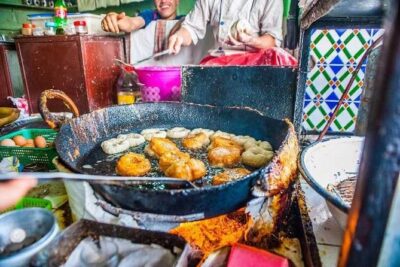

Small Group: Singapore Street Food & Night Tour with 9 tastings
Read our review →
Tasting 8 Different Street Foods + Local Drink at Evening Time by Walking
Read our review →
Small-Group Chiang Mai Evening Street Food Tour
Read our review →
Bangkok Tuk-Tuk Tour by Night with Chinatown Street Food Meal
Read our review →
Browse the lists this tour appears in