
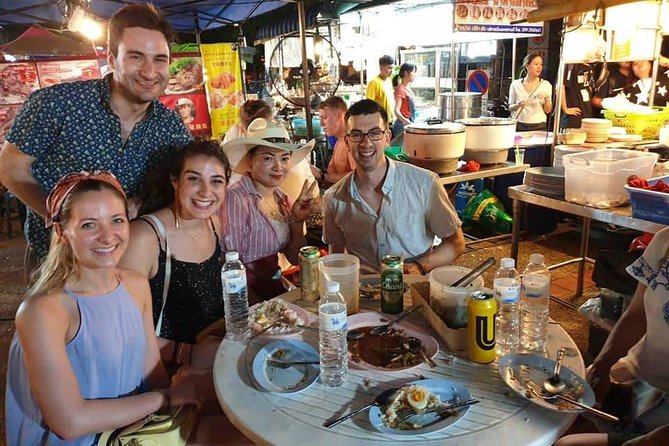
REVIEW · EVENING AND NIGHT FOOD TOURS
Small-Group Chiang Mai Evening Street Food Tour
Chiang Mai’s best food lesson may happen beside a market stall, not at a restaurant table. This 2.5-hour evening tour takes you by foot and songthaew to markets and food stops where you can sample northern Thai dishes, coconut dumplings, Chinese noodles, stewed pork, sweets, and plenty more.
I like the small group of no more than eight, which makes it easier to ask questions and share dishes. I also like the practical side: your guide helps you order in Thai and gives you a food leaflet for later market visits. The main caution is that the tour is not suitable for vegetarians, and the exact transport or route may vary.
Key points to know before booking
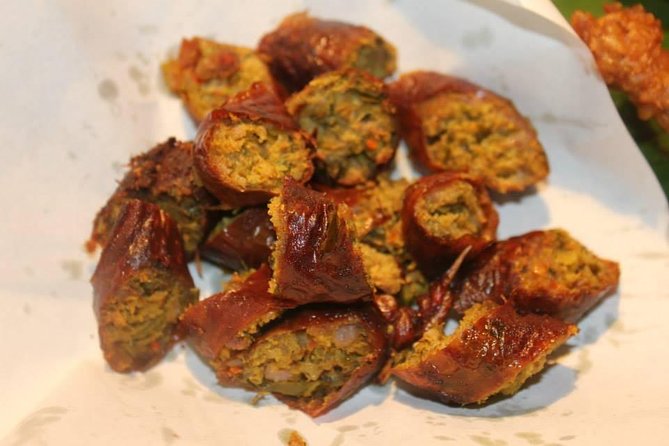
- Up to eight people: Small numbers make it easier to hear your guide and try many shared dishes.
- Around 20 tastings: The food is generous, so arrive hungry and avoid a large late lunch.
- Northern Thai focus: You will try Lanna-style food alongside dishes from other parts of Thailand.
- Useful market training: Guides such as Mr. Goal, Jay, Chai, and Mr. T help with Thai phrases and ordering.
- Two markets plus other stops: The route may include a restaurant and several markets, rather than one single food court.
- Songthaew transport: The planned experience uses Chiang Mai’s shared red truck taxis, though the vehicle may vary.
Starting at 7 p.m. with a proper appetite
The tour begins with pickup from your Chiang Mai accommodation at about 7 p.m. The exact pickup process depends on your location, but hotel pickup and drop-off by private vehicle are included. You then join the small group and begin an evening built around tasting rather than sightseeing from a distance.
This timing works well. Chiang Mai’s evening food scene is at its best after the daytime heat has eased, and the markets provide a more local setting than a formal restaurant. You will spend part of the night walking between vendors, so wear comfortable shoes and expect uneven or dimly lit areas. One useful tip from the food stops: carry a small flashlight if you have one.
You should also arrive genuinely hungry. The tasting list is not symbolic. Several accounts describe roughly 18 to 20 or more dishes, with food from a restaurant, two or more markets, and sometimes an extra stop. Portions are shared, but you can still become very full before the evening ends.
More Evening and Night Food Tours in Thailand
- Bangkok Tuk-Tuk Tour by Night with Chinatown Street Food Meal
★ 5.0 · 635 reviews - Chiang Mai: Evening Local Street Food Market Tour
★ 4.8 · 604 reviews - Bangkok: E-Scooter Night Tour with Local Street Food
★ 4.8 · 488 reviews
Meeting Mr. Goal, Jay, Chai, or another local guide
The guide is the key part of this experience. The strongest accounts describe Mr. Goal as friendly, attentive, and good at explaining how food changes from one region of Thailand to another. Jay is also praised for his clear explanations, easy manner, and practical handout covering dishes and useful Thai phrases. Chai is described as polite, organized, and careful about keeping the group together.
Your guide is not simply there to point at food. The goal is to help you understand what you are eating, how it was prepared, and how northern Thai cooking differs from food elsewhere in the country. You may hear about Lanna food, the influence of nearby countries, and the difference between spicy and mild preparations.
That context matters because a Thai market can be confusing at first. A tray of unfamiliar food may look appealing but offer no clue about its ingredients or texture. Having someone explain the choices lets you try more with less guesswork. Your guide can also help you practice short Thai phrases and place an order, a skill you can use after the tour.
The quality of the evening depends heavily on the individual guide. Most of the supplied feedback praises the guides, but one account describes a disorganized route with limited explanations. That is a fair warning: this is a guide-led food experience, so the pace and clarity may not be identical every night.
The first food stop: a useful introduction to Thailand’s regions
The evening may begin at a local restaurant before you visit the markets. This is a sensible opening because it gives the group a place to sit, share several dishes, and learn the basic themes of Thai food before tackling the stalls.
The restaurant stop has been used to present northern food and dishes from different parts of Thailand. You might try several items in one sitting, then hear how ingredients, cooking methods, and outside influences change as you move around the country.
This stop is not meant to replace the street food portion. Think of it as your orientation. You get a few examples of regional cooking, then have a better frame of reference when you see similar ingredients prepared at market stalls.
One benefit of beginning this way is variety. You are not limited to one dish or one vendor’s specialty. One drawback is that it can be easy to fill up too early. Take small portions when you can, because the markets are where the evening becomes most varied.
Market one: noodles, northern dishes, and everyday food
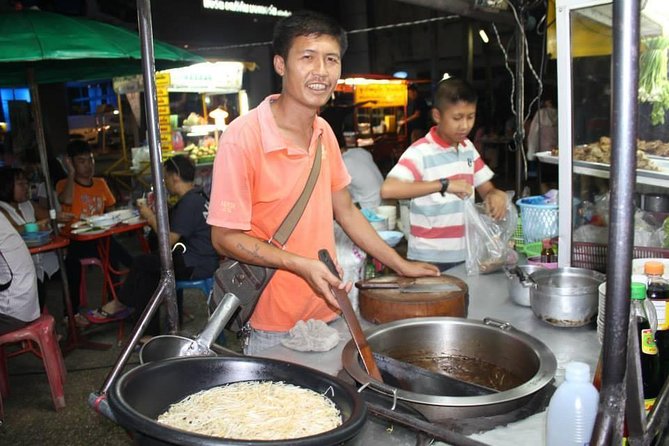
The first market gives you a chance to see how local evening eating works. The tour description specifically includes kannom jin Chinese noodles and northern Thai specialties. You may also encounter cooked dishes that are difficult to identify without help, which is where the guide earns the price of admission.
Kannom jin is especially useful as a market introduction because it is served with different accompaniments and sauces. The point is not only to taste noodles, but to notice how the same basic food can change with the toppings and regional style.
Northern Thai food often has a different feel from the central Thai dishes served abroad. Some dishes may be herbal, spicy, salty, or strongly textured. Your guide can explain what you are eating and help you choose a gentler option if the heat becomes too much. One useful feature noted in the feedback is the presence of both spicy and non-spicy choices at some stops.
You will likely be standing, walking, and sharing food in a market setting. This is part of the appeal, but it is not as comfortable as a restaurant meal. If you need frequent seating or prefer a quiet dinner, this may feel tiring.
Same city, another round of plates:
- Phuket: Full Day City Tour with Night Market
★ 4.5 · 2,888 reviews - Bangkok: Michelin Guide Street Food Tour by Tuk Tuk
★ 4.4 · 1,274 reviews - Ao Nang: Hands-on Learn to Cook 3 Popular Thai’s street food
★ 4.8 · 417 reviews - Bangkok Tuk-Tuk by Night with Chinatown Street Food Meal
★ 4.6 · 263 reviews
Market two: sweets, dumplings, and more unusual bites
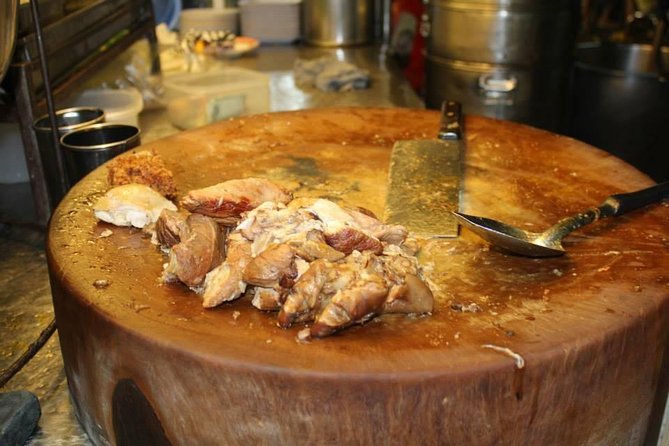
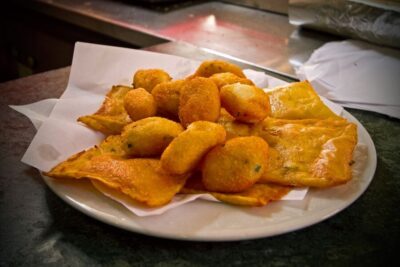
The second evening market adds contrast. After savory food, you may move toward coconut dumplings and Thai sweets. These are not just a final dessert course. They show how coconut, palm sugar, rice flour, and other familiar ingredients create very different textures and flavors.
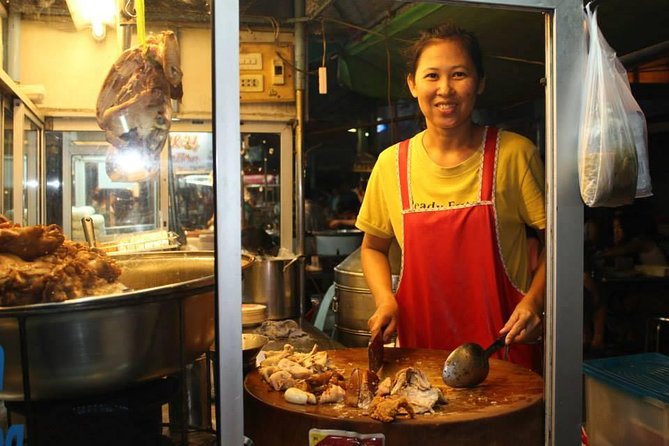
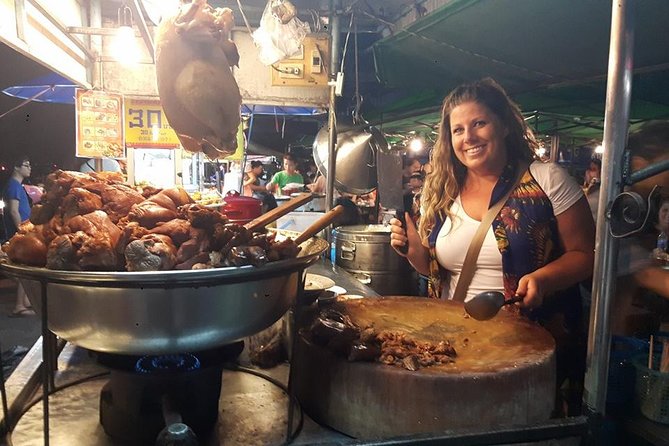
The tour also includes stewed pork and a broad mix of snacks and small dishes. Some food may be ordinary local fare, while other items could be unfamiliar or more adventurous. Your guide is there to explain how to eat them and what to expect before you try them.
This is where the small group helps. Eight people can share several dishes without ordering a full serving for each person. You can taste more kinds of food, compare reactions, and ask questions without getting lost in a large crowd.
The food is generous enough that you should pace yourself. One repeat customer advised starting the tour early in your Chiang Mai stay and not filling up on the first few dishes. That is good advice for two reasons: you will see areas you may want to revisit, and you will have enough appetite for the later stops.
A route that can include three or four market areas
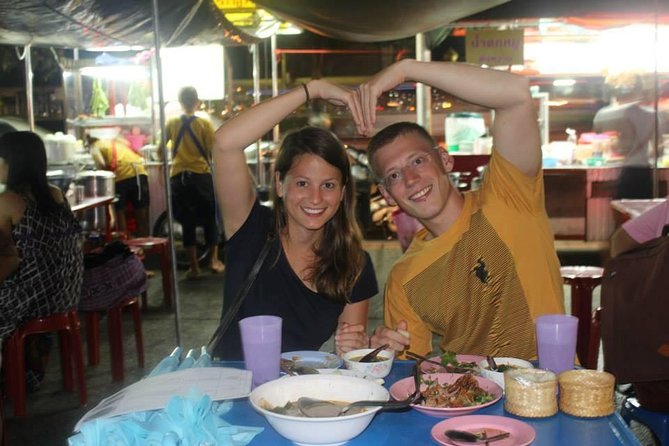
The stated plan focuses on two evening markets, but the actual route can include several food areas. Some accounts describe one restaurant and three markets, while another describes four night markets in one evening. This suggests that the route is flexible rather than fixed to a short list of stalls.
That flexibility can be a strength. Markets change, vendors close, and fresh food is not always available at the same time. A guide who adjusts the route can keep the evening moving and find enough food for the group.
It can also create uncertainty. One poor account describes a guide who wandered between stalls without explaining a clear plan. If you want a tightly scripted food tour with a fixed dish list, this may not suit you as well as a more formal culinary walk.
For most people, the changing route is part of the fun. You see more of Chiang Mai than you would from a single restaurant and reach places you might not find on your own. Just keep in mind that the exact sequence and number of stops may change.
Riding a songthaew through Chiang Mai
The tour is designed to use a songthaew, the shared red pickup taxi that is part of daily transport in Chiang Mai. Riding in one connects the food stops and gives the tour a local feel without making transportation the main event.
The planned arrangement is a mix of walking and short vehicle rides. You are not sitting in a coach all evening. That keeps the experience close to the streets and markets, but it also means you should be comfortable climbing into a shared vehicle and walking between stops.
There is one practical uncertainty. Although songthaew transport is part of the advertised experience, one account reported being taken in an SUV instead. If the vehicle matters to you, ask about the transport arrangement before booking or at pickup. The included hotel pickup and drop-off may also use a private vehicle rather than the songthaew.
Traffic can make the return ride slower than expected. One guide, Mr. T, was praised for handling unexpectedly heavy traffic calmly and carefully. The tour is listed as about two and a half hours, but allow some flexibility in your evening plans.
Why the price can be good value at $42.39
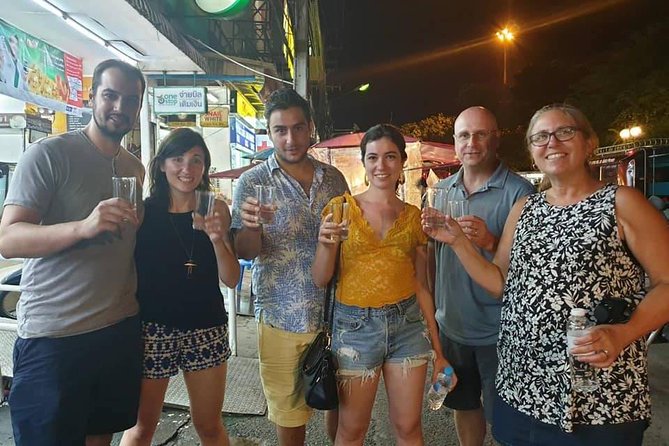
At $42.39 per person, this is not the cheapest way to eat in Chiang Mai. You could buy individual dishes at a market for much less. The value comes from the quantity, the number of places visited, the included food, and the guide’s help choosing and understanding what you eat.
Food tastings, dinner, and drinking water are included. Alcohol is not included, though it may be available to purchase. Some evenings finish with a small drink, but you should not count on that as part of the included cost.
The price also covers hotel pickup and drop-off by private vehicle, plus the local guide. A small group means you are paying for more individual attention than you would receive on a large coach tour. If you are new to Thai food, that help can prevent a cautious first night from turning into a meal of familiar noodles only.
I would consider this good value for a first or second night in Chiang Mai, especially if you plan to keep eating at markets afterward. The leaflet and Thai ordering phrases extend the value beyond the 2.5-hour tour. If you already know the markets well and are happy choosing food alone, the cost may be harder to justify.
Who should book this evening food tour
I would recommend it most strongly to people who:
- Want to try many dishes in one evening
- Feel unsure about ordering at Thai food stalls
- Enjoy walking, shared transport, and informal meals
- Want northern Thai food explained in context
- Prefer a group of eight or fewer
- Plan to use night markets independently later
This is also a good choice for couples, solo visitors, and small groups who like meeting other food-focused people. The small size makes conversation easier and helps the guide notice who needs a milder dish or extra explanation.
I would be more cautious if you are vegetarian. The official information says the tour is not suitable for vegetarians, even though one individual account describes finding some vegetarian choices. If you have dietary restrictions, tell the operator when booking and get a clear answer before you commit.
The tour may also be a poor fit if you need a fixed finish time, dislike crowded market areas, or want a quiet sit-down dinner. The route can change, the amount of food is substantial, and the evening may run beyond the listed duration.
Practical details that affect your night
Confirmation is provided at booking, and the start time is 7 p.m. Pickup is offered, and the experience is available with a mobile ticket. The tour is near public transportation, though most people will use the included pickup and return service.
Most people can participate, but the evening involves walking through markets and getting in and out of vehicles. Bring comfortable shoes, a light layer if needed, and a little patience for dark corners or busy paths. A small flashlight can help you see food and footing more clearly.
Free cancellation is available up to 24 hours before the start time for a full refund. Changes or cancellations inside that 24-hour window are not accepted for a refund. The activity depends on good weather and a minimum number of participants, so a cancellation by the operator may result in another date, another experience, or a full refund.
Should you book the Chiang Mai evening street food tour?
I would book this if your main goal is to taste widely and learn how to order, not simply eat one excellent dinner. The combination of restaurant dishes, market snacks, northern specialties, sweets, a small group, and local transport gives you a useful first look at Chiang Mai’s food culture.
The strongest reason to go is the sheer range. You may taste around 18 to 20 dishes, learn the regional differences, and leave with enough confidence to explore another market on your own. The main risks are the heavy amount of food, the vegetarian limitation, and some variation in guide style and transport.
Come hungry, mention dietary needs before booking, and keep your schedule flexible after 7 p.m. If you want an easy introduction to Chiang Mai’s night markets with a guide such as Mr. Goal, Jay, Chai, or Mr. T, this is a strong-value choice.
FAQ
What time does the tour start?
The tour starts at 7 p.m.
How long does the food tour last?
The listed duration is approximately 2 hours and 30 minutes.
How many people are in each group?
The group is limited to a maximum of eight people.
Is hotel pickup included?
Yes. Hotel pickup and drop-off by private vehicle are included.
Is food included in the price?
Yes. Food tastings, dinner, and drinking water are included.
Are alcoholic drinks included?
No. Alcoholic drinks are not included, but they may be available to purchase.
Is the tour suitable for vegetarians?
The provided information says the tour is not suitable for vegetarians. You should advise the operator of any dietary requirements when booking.
What happens if the tour is canceled because of weather?
If poor weather causes cancellation, you will be offered a different date or a full refund.
Newly added plates around Thailand
- Night Street Food with Local walking phuket old town★ 5.0 · 2 reviews
- Iconic Sunset Safari with Monkey Hill & Street Food Experience★ 5.0 · 20 reviews
- 2 Hours Phuket Old Town Street Food Walking Tour★ 4.5 · 5 reviews
- Phuket City Tour Sightseeing and Night Market Everyday★ 4.0 · 10 reviews
- Round Trip to Chillva Night Market★ 3.5 · 2 reviews
- Tsunami Museum + Temple + Old Town + Street Food Market★ 5.0 · 24 reviews
- Thai Street Food & Morning Market Walking Tour in Hua Hin★ 5.0 · 46 reviews
- Private Half-Day Tour The Old Chiang Mai City With Street Foods★ 5.0 · 3 reviews
Evening and Night Food Tours, compared.
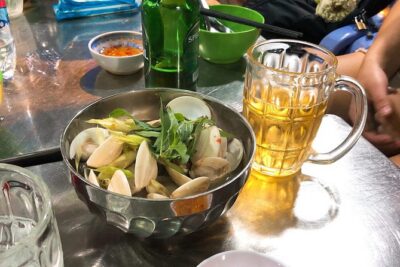
Saigon By Night and Street Food By Motorbike | Opt: Ao Dai Riders
Read our review →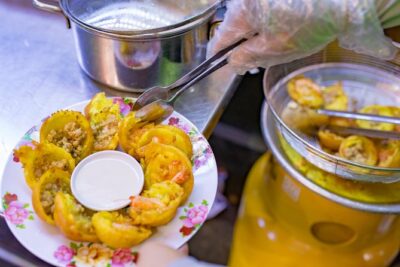
Private Street Food Evening Walking Tour in Ho Chi Minh City
Read our review →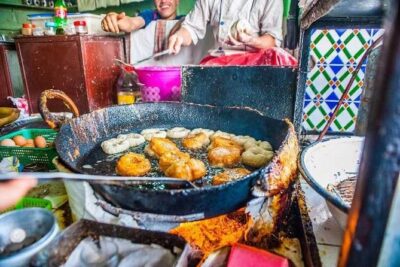

Small Group: Singapore Street Food & Night Tour with 9 tastings
Read our review →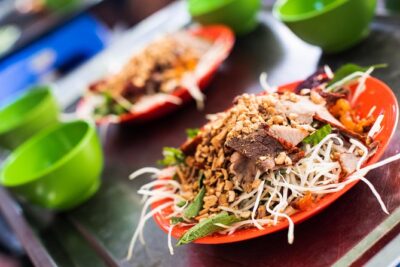
Tasting 8 Different Street Foods + Local Drink at Evening Time by Walking
Read our review →
Bangkok Tuk-Tuk Tour by Night with Chinatown Street Food Meal
Read our review →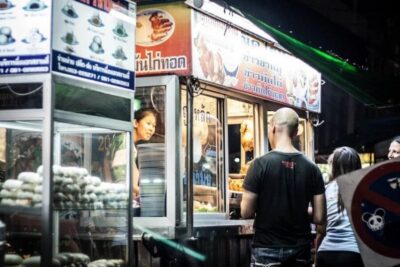
Browse the lists this tour appears in