
REVIEW · MARRAKECH STREET FOOD TOURS
Marrakech street Food Tour Eat like Locals
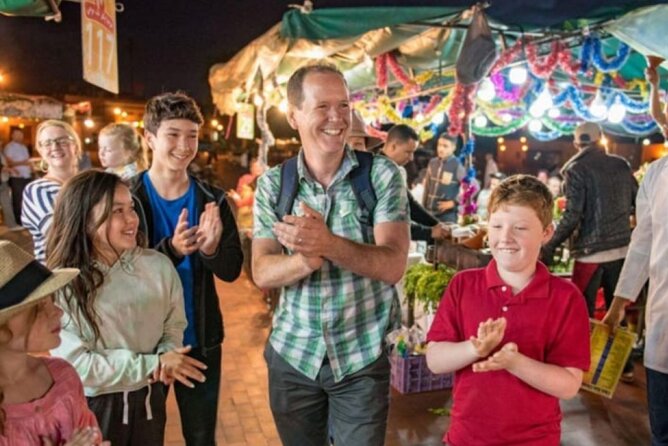
Marrakech is easiest to understand one bite at a time, and this evening walk takes you beyond the main square into the Medina’s narrow streets and back alleys. You’ll try everything from msemen pancakes and harira to snail soup, sardine balls, and fresh fruit juice, with a local guide explaining what belongs on a Moroccan table.
I like the range of food, especially the chance to move from sweet chebakia to earthy bissara, spicy loubya, and coal-cooked sardines in one short outing. I also like the small maximum group of 15 people, which should make it easier to follow the guide through crowded lanes.
The main drawback is the pace. Three hours goes quickly, and the route involves walking on busy Medina streets, so this is not the best choice if you want a slow, seated meal or have trouble walking on uneven surfaces.
Key points to know before booking
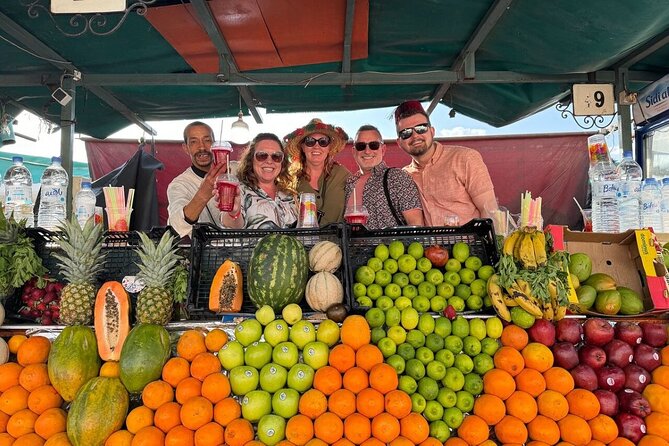
- A full Moroccan tasting route: Sample msemen, harcha, harira, chebakia, bissara, khanez ou bnin, loubya, snail soup, sardine balls, fruit juice, tea, and coffee.
- Starts at Café de France: Meet at 72 Rue des Banques near Jemaa el Fna in central Marrakech.
- Beyond the main square: The walk heads into Old Medina streets and back alleys rather than staying only around the famous plaza.
- Evening timing: The experience is planned as an evening food walk, when Marrakech’s street-food scene is active.
- Walking matters: Good shoes are advised, and crowds are part of the setting.
- Limited group size: The maximum is 15 people, with bottled water and food and drinks included.
From Café de France into the Old Medina
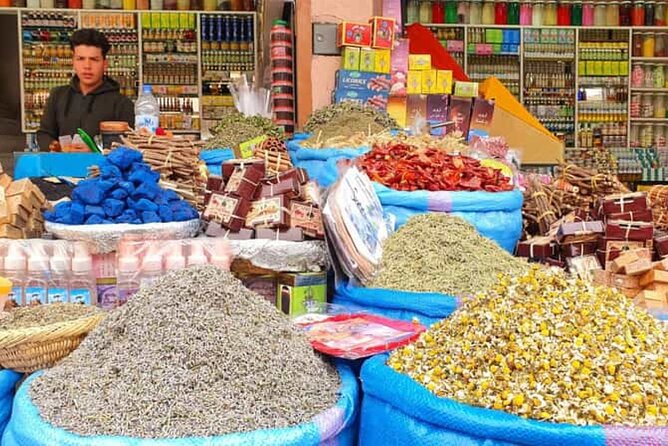
The tour starts at Café de France, at 72 Rue des Banques, a practical meeting place beside Jemaa el Fna. This puts you right at the edge of Marrakech’s best-known public square, where the evening atmosphere begins with food stalls, sellers, sounds, and constant movement.
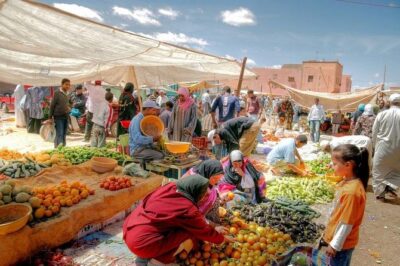
From there, you should expect a walking route rather than a sit-down restaurant meal. The guide leads you through Old Medina streets and smaller lanes, taking you beyond the most obvious tourist stops. That matters because Marrakech’s food culture is not limited to the large stalls in the square. Everyday dishes also appear in modest cafés, food counters, and neighborhood kitchens.
The exact order of stops is not provided, so the tasting sequence may change. That is normal for a street-food walk. A stall may run out of one item, a lane may be especially crowded, or a dish may fit better at a particular time of evening.
Pickup is offered, but the stated meeting point is Café de France. Confirm the pickup details when booking if you want door-to-door collection rather than meeting in the square.
More street food tours in Marrakech:
- Marrakech: Street Food Tour by Night
★ 4.8 · 2,838 reviews - The Original Marrakech Street Food Tour
★ 5.0 · 248 reviews - Marrakech Street Food Tour
★ 5.0 · 220 reviews
Msemen, harcha, and a sweet Moroccan start
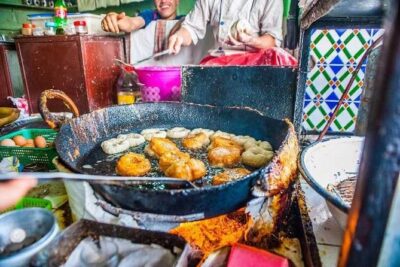
Two of the first foods you may encounter are msemen and harcha, both described as Moroccan pancakes. They give you a quick introduction to the country’s everyday breads and griddle cooking.
Msemen is known for its folded, layered texture, while harcha is made with semolina and has a more crumbly, hearty feel. The important point for you is variety. These are not grand ceremonial dishes. They are familiar, filling foods that help show how much Moroccan eating depends on bread, dough, and simple cooking methods.
Chebakia adds a sweet note. It is described as a brunch sweet, though this is an evening tour, so the timing may feel different from the way you usually think of a morning pastry. Its presence gives the route a useful contrast: you are not moving only from one savory dish to another.
If you prefer savory food, do not worry. The tour includes plenty of substantial options later. If you have a sweet tooth, the chebakia may be one of the easier items to appreciate because it breaks up the stronger flavors of beans, harissa, and sardines.
Harira and bissara, two soups with different personalities
Harira is one of Morocco’s best-known soups, and this experience presents it as a vegetarian dish. Soup can sound modest on a food tour, but it is often where you get the clearest sense of local seasoning and texture.
You might find harira warming and gently spiced, with a consistency more filling than a thin broth. Since the supplied information calls it a famous vegetarian Moroccan soup, this stop may suit you if you want to sample Moroccan food without relying only on meat or seafood.
Bissara brings a different character. It is a fava bean soup, usually valued for its smooth, earthy quality and simple comfort. The contrast between harira and bissara is useful: one shows a famous national preparation, while the other represents the kind of humble dish that can make a quick meal satisfying.
Soup is also a sensible part of a walking route. It gives you something warm and filling without requiring a long restaurant stop. Still, the portions and serving arrangements are not specified, so you should think of this as a tasting tour rather than a guaranteed full dinner.
Khanez ou bnin and loubya for hearty street food
Khanez ou bnin is described as bread with eggs and vegetables. It sounds like the kind of practical combination that works well for a person eating on the move. Bread makes it substantial, while egg and vegetables add more texture and flavor than a plain loaf or pancake.
This is one of the stops that may appeal most to you if you want food that feels like a real local meal rather than a small novelty bite. The name may be unfamiliar, but the ingredients are approachable. You can expect a savory dish with enough substance to balance the sweeter items.
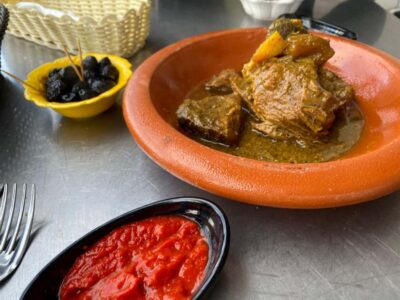
Loubya consists of white beans mixed with tomato and spicy harissa sauce. Here, the harissa is the detail to watch. It can bring heat and a sharp pepper flavor, so take a modest portion first if you are unsure about your tolerance for spice.
The beans also make loubya one of the more filling dishes on the route. Along with harira and bissara, it gives the tour a strong vegetarian side. You can eat well here even if you prefer to limit meat, although the route also includes seafood.
Same city, another round of plates:
- Marrakech Night Street Food Tour / Taste The Real Marrakech
★ 4.9 · 200 reviews - Marrakech street food tour with a local
★ 5.0 · 55 reviews - Marrakesh: Guided Street Food Tasting by Locals
★ 4.6 · 47 reviews - Marrakech: Street Food Tour by Night
★ 4.5 · 42 reviews
Snail soup, a distinctly Marrakech food stop
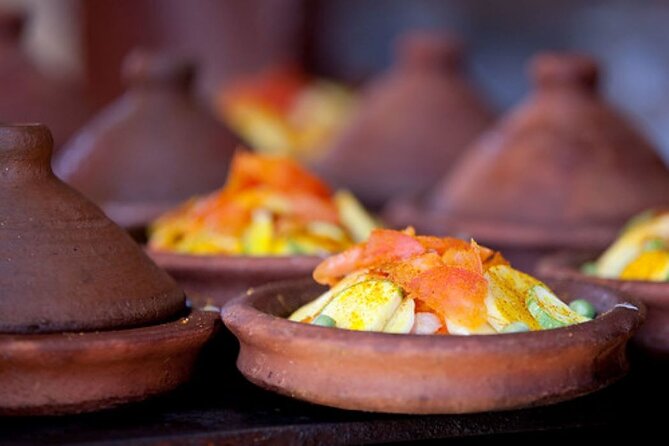
Berbouche is snail soup, one of the more unusual items on the tasting list. This is likely to be the stop that tests your sense of adventure, especially if snails are not part of your normal diet.
You do not need to treat it as a dare. The value is in seeing a food that has a place in Marrakech’s street-food culture and deciding for yourself how you feel about it. If you are curious, try it. If the texture or idea is not for you, the route includes enough other dishes that you will still have plenty to eat.
The soup format may make it easier to approach than a plate of plain snails. You can sample it in a warm, seasoned broth and focus on the overall dish rather than just the main ingredient.
Because the tour is limited to about three hours, this stop should be brief. Do not expect a long explanation of every ingredient unless you ask questions. A direct question about preparation, spice, or local eating habits is likely to make the stop more useful.
Sardil mechoui, sardines cooked over coal
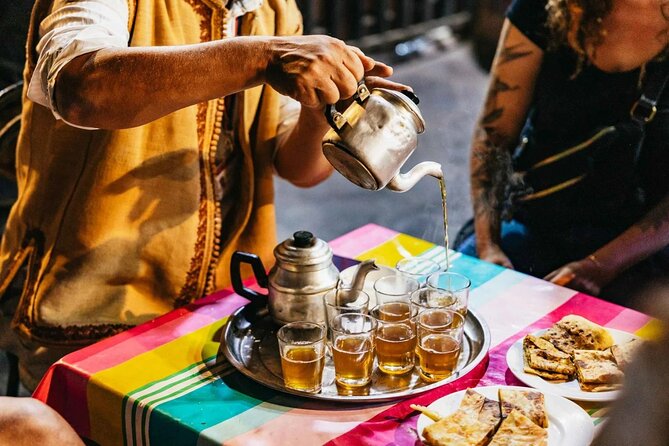
Sardil mechoui is described as sardine balls cooked in coal. This is one of the route’s most distinctive savory tastings and a good example of how Moroccan street food can turn a familiar ingredient into something different.
The coal cooking matters. It adds a smoky quality and gives the sardines a firmer, more compact form than a standard grilled fillet. If you like seafood, this may be one of your favorite stops. If you are sensitive to strong fish flavors, approach it with an open mind but do not feel pressured to eat a large portion.
Sardines are also a practical local food. They are common in Moroccan cooking, and serving them as balls makes them easier to share and sample during a walking route. This is the kind of dish that gives the tour more character than a list of generic Moroccan pastries.
The food is cooked rather than served as a polished restaurant course, so presentation may be simple. That is part of the point, but it also means you should focus on taste and setting rather than expecting formal service.
Fresh juice, tea, and coffee along the way
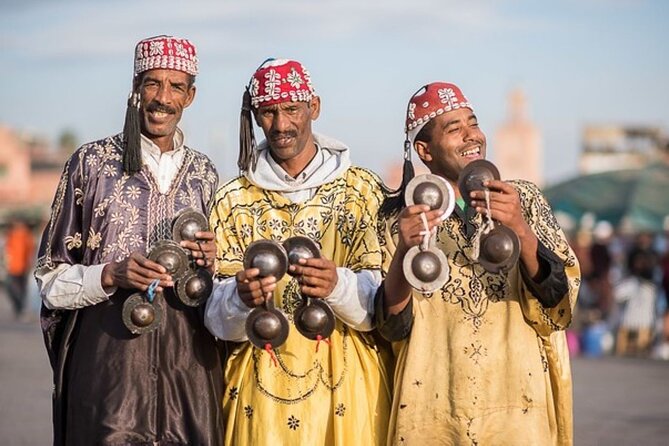
Assir means fresh fruit juice, and it gives the route a bright, cooling break from soups, beans, bread, and spice. The exact fruit is not stated, so you should not assume a particular juice. Still, a fresh drink is welcome during an evening walk through crowded streets.
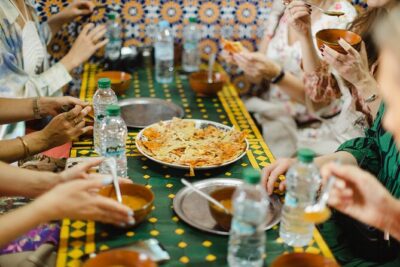
Coffee and tea are included as well. Moroccan tea is an important part of hospitality, though the information provided does not specify the exact tea served. You may find this stop slower and more social than the quick food tastings, depending on where it takes place.
Bottled water is included, which is useful in a walking experience. Even in the evening, the Medina can feel warm and crowded, and water helps you pace yourself through the samples.
The drinks also help you manage the route. You are trying many flavors in a short time, from sweet chebakia to spicy harissa and seafood. A pause with tea, coffee, or juice can keep the meal from feeling like one long rush of strong tastes.
What three hours and $76.35 really buy you
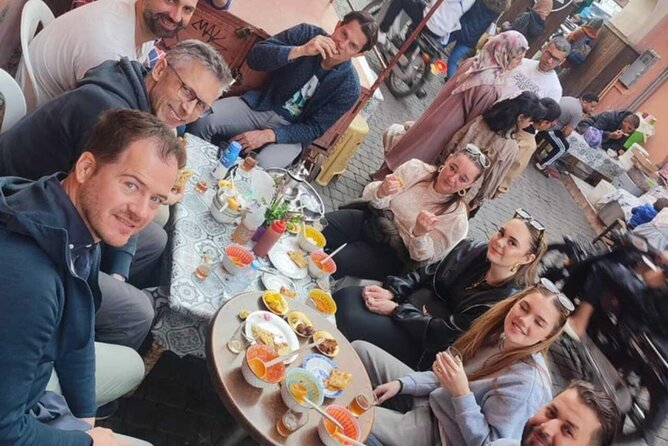
The listed price is $76.35 per person. That is more than you would spend buying one or two individual street foods on your own, so the value depends on what you want from the outing.
You are paying for a local guide, a planned route, bottled water, coffee or tea, and food and drinks. You are also paying for help navigating Old Medina streets and finding several distinct dishes in a short period. If you are new to Marrakech, that guidance can save you time and remove some of the uncertainty of choosing stalls alone.
The food list is broad. It includes breads, soup, beans, vegetables, sweets, seafood, juice, and hot drinks. If you tried to recreate that range independently, you would need to locate multiple places and decide what to order without knowing the portions or ingredients.
Still, I would not book this expecting a lavish dinner. The tour lasts about three hours, and the format is a walking tasting route. Portions are not specified, and the number of food stops may depend on the evening’s conditions. If you want a long meal at one table, your money may be better spent elsewhere.
For a first evening in Marrakech, the price can make sense because you get both food and orientation. For a repeat visitor who already knows the Medina and its eating spots, the value is less obvious unless you specifically want a guide and a set tasting route.
Crowds, shoes, and the practical side of the walk
Wear good walking shoes. This is not a decorative suggestion. The route runs through Old Medina streets and back alleys, and the tour information warns you to prepare for crowds.
A small group helps, but 15 people is still large enough that you may need to stay close to the guide. Keep track of the person leading the group when the route enters busy areas, and arrive at the meeting point with enough time to find Café de France.
Most people can participate, but the experience involves walking and crowded streets. The information does not describe the route as wheelchair accessible, nor does it give details about seating, restroom access, or the amount of time spent standing. If any of those points matter to you, ask before booking.
The tour requires good weather. You can cancel for a full refund up to 24 hours before the start time. Cancellations made within 24 hours are not refunded, and changes in that period are not accepted. If poor weather causes the operator to cancel, you are offered another date or a full refund.
Who will enjoy this Marrakech food walk
I would choose this tour if you are visiting Marrakech for the first time and want a guided introduction to local food without spending an entire day on an excursion. The three-hour length fits well into an evening plan.
It also suits curious eaters who want to try dishes they might not order alone. Snail soup, sardine balls, fava bean soup, and loubya are more interesting than a route made only of familiar pastries.
Vegetarians have several useful options, including harira, bissara, loubya, bread with eggs and vegetables, and the pancakes. However, the tour also includes sardines, and the information does not say that substitutions are available. Tell the provider about dietary needs before you book.
Families with older children may find the food list fun, but the crowds and walking could be tiring for young children. The tour is also a better fit for people who enjoy trying small tastes than for anyone who needs a quiet, predictable meal.
Should you book the Eat Like Locals tour?
Book it if you want a compact, food-focused introduction to Marrakech’s Old Medina and you are willing to walk, share the streets with crowds, and try unfamiliar dishes. The strongest reasons are the wide range of Moroccan foods, the route beyond Jemaa el Fna, and the convenience of having a guide arrange the tasting stops.
Think twice if you need confirmed accessibility details, a guaranteed full dinner, or a relaxed restaurant setting. At $76.35, this is a guided food experience rather than a cheap way to eat.
For many first visits, I would place it early in your Marrakech stay. You can learn the names and flavors of several local foods, then use that knowledge during the rest of your time in the city. Arrive hungry but not starving, wear sturdy shoes, and keep room for the snail soup and coal-cooked sardine balls.
FAQ
Where does the Marrakech street food tour start?
The meeting point is Café de France, 72 Rue des Banques, Marrakech 40000, Morocco.
How long does the food tour last?
The tour lasts approximately three hours.
What food is included?
The experience includes msemen and harcha pancakes, harira, chebakia, bissara, khanez ou bnin, loubya, berbouche snail soup, sardil mechoui sardine balls, and assir fresh fruit juice.
Are drinks included?
Yes. Bottled water, coffee and/or tea, and food and drinks are included.
Does the tour include pickup?
Pickup is offered. The stated meeting point is Café de France, so confirm the pickup arrangement when booking.
How large is the group?
The maximum group size is 15 people.
Is the tour held in the evening?
Yes. It is described as an evening food walking tour in Marrakech’s Old Medina.
What should I wear?
Good walking shoes are advised. You should also be prepared for crowds in the Medina.
Can I cancel for a full refund?
Yes, if you cancel at least 24 hours before the experience starts. Cancellations made less than 24 hours in advance are not refunded. If poor weather causes the tour to be canceled, you are offered another date or a full refund.
Newly added plates around Marrakech
- Marrakech street food tour with a local★ 5.0 · 55 reviews
- Local Hidden Spots Street Food Tour in Medina Marrakech★ 5.0 · 30 reviews
- Marrakech Tasting Tour: Experience Local Street Food & Culture!★ 5.0 · 5 reviews
- Marrakech Street Food with +10Tasting & Tanjia Dinner|Guided Walk★ 5.0 · 21 reviews
- Marrakech Street food Tours★ 4.5 · 15 reviews
- Marrakech: Street Food Tour by Night★ 4.5 · 42 reviews
- 3 Hours Private Tour Marrakech Night Market★ 5.0 · 2 reviews
- Taste Marrakech Street food tour from Medina★ 5.0 · 34 reviews
Marrakech Street Food Tours, compared.
Marrakech Night Street Food Tour / Taste The Real Marrakech
Read our review →
Browse the lists this tour appears in