
REVIEW · MARRAKECH STREET FOOD TOURS
Marrakesh: Guided Street Food Tasting by Locals
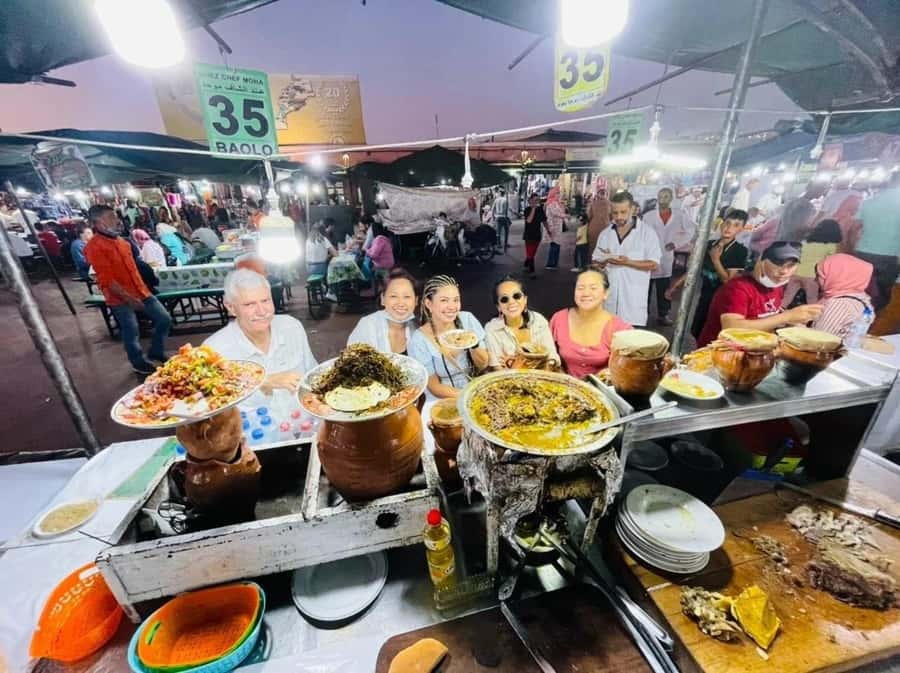
Marrakesh reveals its best flavors after sunset, when Jemaa el-Fnaa fills with food stalls and the Medina’s narrow lanes lead you toward dishes most visitors would miss. This three-hour walk is built around eating, not just looking, so arrive hungry. Tagine, tangia, méchoui, kofte, pastries, olives, dates, and mint tea may all appear before the evening ends.
I especially like the way the guides connect food with daily life, and the final tea stop gives you time to sit back and take in the city. Guides such as Mo, Ali, and Mohamed are praised for their warmth, humor, and clear explanations. The main drawback is practical: the Medina involves narrow, uneven streets, and the activity is not suitable for people with mobility impairments.
Key points to know before you book
- Expect a full meal, not a few token samples: The stops build toward a substantial dinner, and you may be completely full by the end.
- Start at Jemaa el-Fnaa: The tour begins near Café de France, an easy landmark at the square’s edge.
- Taste food you might not find alone: Stops can include méchoui, tangia, kofte, seasonal salads, cactus fruit, pastries, and local drinks.
- Learn the words and stories behind each dish: Guides explain Moroccan cooking, regional influences, home preparation, and food customs.
- Finish above the Medina: Mint tea at a rooftop café provides a calm ending after the noise and movement of the souks.
- Choose shared or private: The shared option adds a social element, while a private tour gives you a more personal pace.
Why an evening food walk works so well in Marrakesh
A food tour is a smart first-night activity here. Marrakesh can feel confusing at first, especially after dark, when the Medina turns into a web of lanes, stalls, cafés, and passing motorcycles. With a local guide in front of you, the scene becomes easier to read.
You are not simply moving from restaurant to restaurant. You are walking through the main food market, watching people shop for the evening, seeing artisans prepare pastries, and learning how bargaining works. That context matters. A plate of olives means more when you understand where it fits into an ordinary Moroccan meal.
The tour costs $47 per person and lasts three hours. For that price, you receive the guide, food, and drinks, with no separate food bill at each stop. The value is strongest if you use the tour as both dinner and orientation. You are paying for a meal, but also for local introductions, a planned route, and access to small food stops you might pass without noticing.
I would not book it as a light snack outing. The food is plentiful. Several stops offer small tastes, but they continue to a full meal, and one evening included roughly 10 or 11 stops. Skip lunch or eat very lightly beforehand if you want to try everything.
More street food tours in Marrakech:
- Marrakech: Street Food Tour by Night
★ 4.8 · 2,838 reviews - The Original Marrakech Street Food Tour
★ 5.0 · 248 reviews - Marrakech Street Food Tour
★ 5.0 · 220 reviews
Meeting at Café de France and entering Jemaa el-Fnaa
The meeting point is in front of Café de France, beside Jemaa el-Fnaa. This is a useful place to begin because the square is one of the easiest landmarks in the Medina to identify. You will meet your guide there, then set off on foot.
The opening section gives you a feel for Marrakesh at night. Jemaa el-Fnaa is noisy, crowded, and full of movement, with food stalls and public activity spreading across the square. Your guide helps you focus on the food rather than feeling lost in the commotion.
This first part is also where the tour starts explaining the difference between a dish you see in a tourist-facing stall and food prepared in a more local setting. That distinction is useful, but you should still expect the square to be lively and crowded. If you prefer quiet streets and a slow dinner, this is not that sort of evening.
The itinerary allows about 30 minutes around Jemaa el-Fnaa. It is described as a visit, guided walk, and photo stop rather than a long seated meal. Keep your camera ready, but do not expect to stay in one place for the whole time.
The main market: produce, pastries, and evening shopping
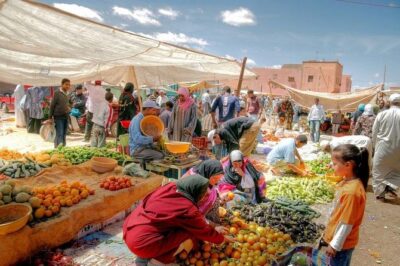
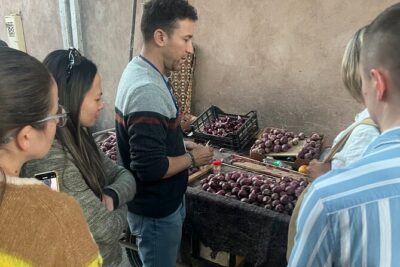
From the square, the route continues toward the Mellah and through a main food market. Here, you see stalls filled with fruit, vegetables, meat, and poultry. The useful part is watching the market operate as a place where local people buy food, rather than treating it only as a display for visitors.
You may see pastries being prepared and learn how shoppers bargain over evening purchases. Your guide can point out ingredients that later appear on your plate, including spices and fresh herbs. This makes the meal easier to understand because you see the raw materials before tasting the finished dishes.
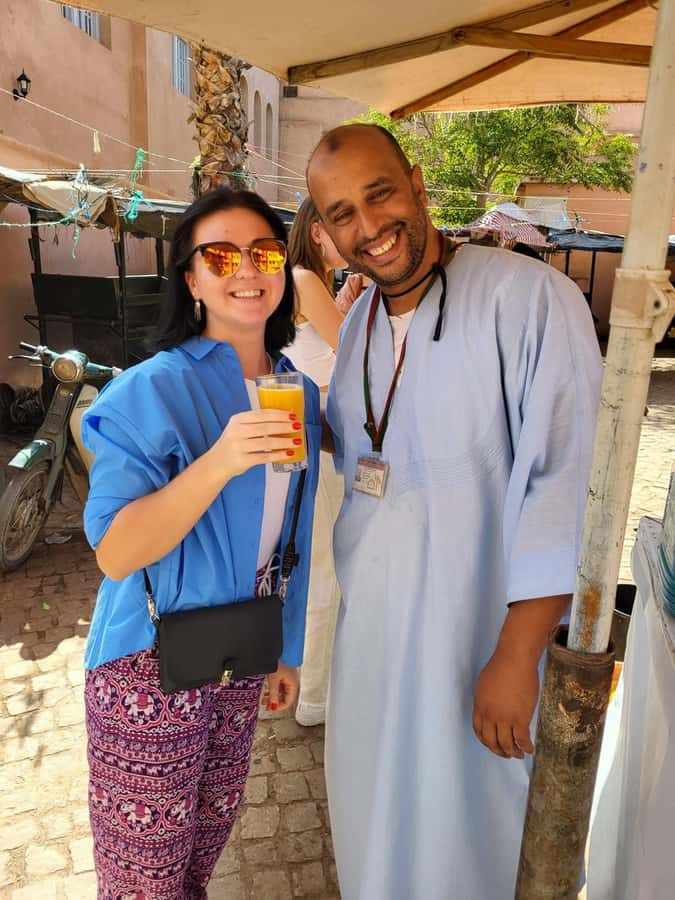
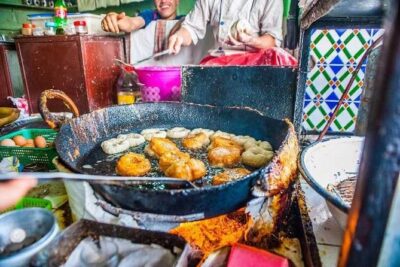
One early tasting is likely to include sweet pastries. Moroccan pastries can be rich and strongly flavored, so this is a good moment to pace yourself. The tour also introduces an almond-based drink, a popular local refreshment. It gives your palate a break from savory food while adding another taste that you might not order on your own.
The route through the market is not a formal cooking class. You will not be preparing a dish yourself. Its value is in the close look at ingredients, shopping habits, and the small food trades that keep the Medina supplied.
Tagine, charcoal cooking, and a recipe to take home
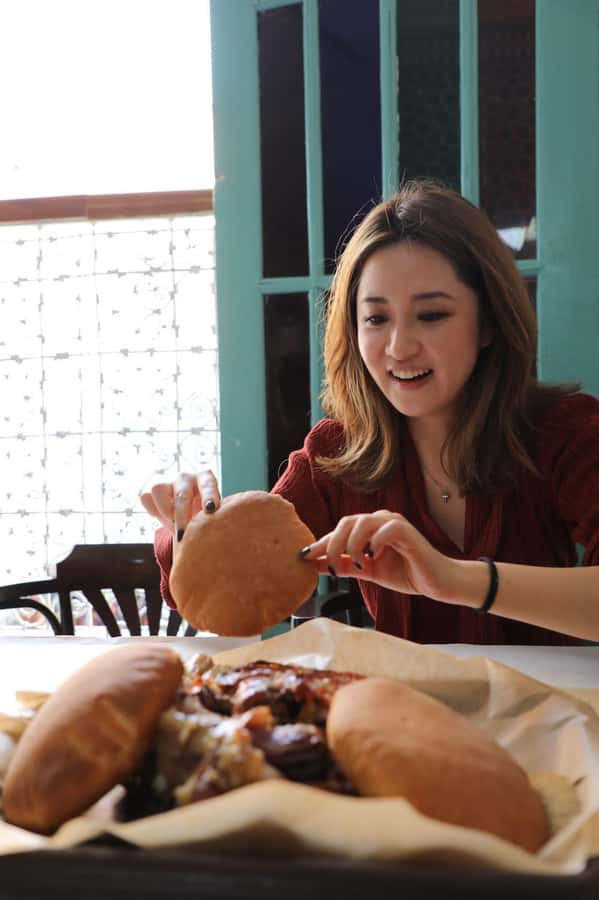
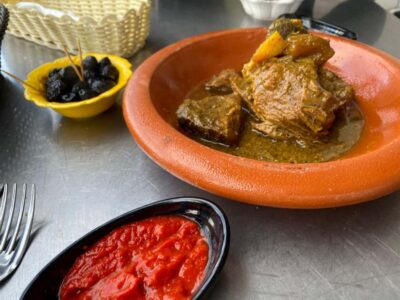
Tagine receives special attention, and rightly so. The word can refer both to the familiar cone-shaped cooking vessel and to the stew prepared inside it. Your guide explains different types of tagine and how Moroccan families traditionally cook them at home.
The experience includes a charcoal-baked tagine, along with explanations of the dish’s preparation and place in Moroccan food culture. This is more useful than simply being told that tagine is a national favorite. You learn to think about the cooking method, the seasoning, and the differences between versions.
A local recipe is also provided as a souvenir. That small detail adds value because it gives you something practical to take home. If you enjoy cooking, you can use it to recreate part of the evening rather than leaving the meal as a pleasant but fleeting memory.
Do not expect every dish to arrive as a large restaurant portion at this point. The tour spreads the meal over many stops, and the early tastings help you sample more kinds of food. By the time you reach the main dinner, however, you may already be feeling full.
Same city, another round of plates:
- Marrakech Night Street Food Tour / Taste The Real Marrakech
★ 4.9 · 200 reviews - Marrakech street food tour with a local
★ 5.0 · 55 reviews - Marrakech: Street Food Tour by Night
★ 4.5 · 42 reviews - Taste Marrakech Street food tour from Medina
★ 5.0 · 34 reviews
Souk Semmarine and side streets beyond the main route
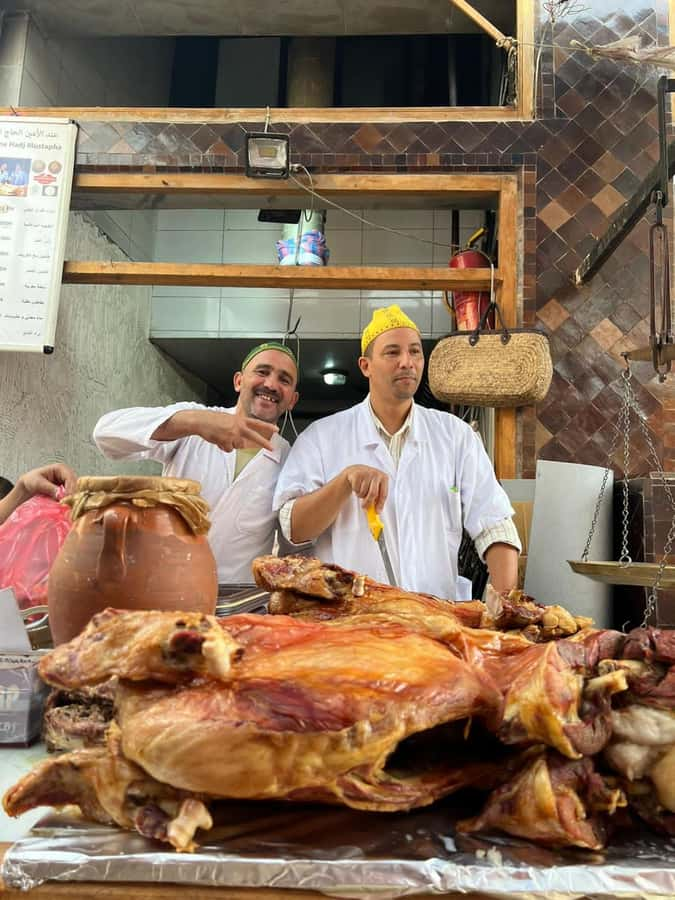
The walk continues through Souk Semmarine and other parts of the Medina. This section is about movement and discovery. The alleys are narrow, the route can feel maze-like, and food stalls appear in places you could easily overlook if you were walking alone.
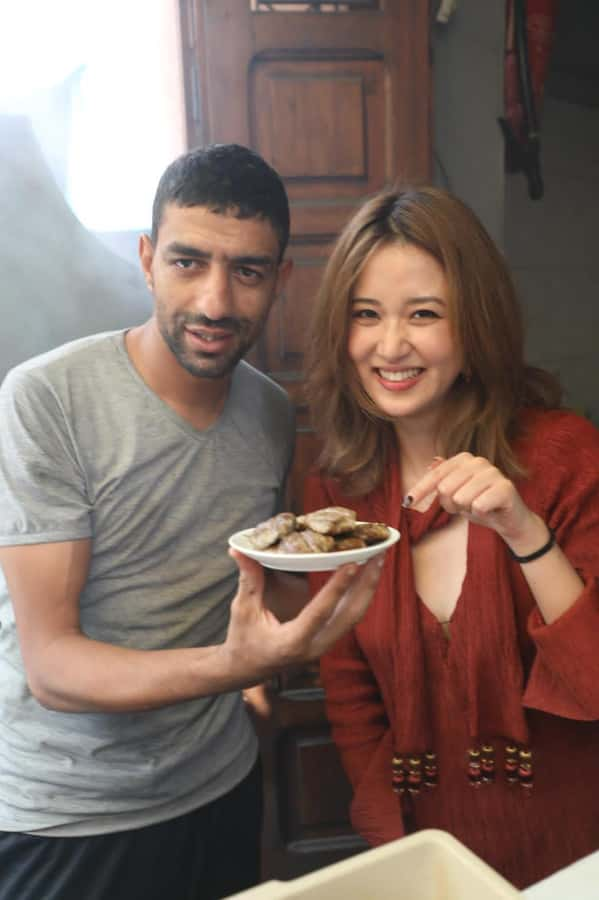
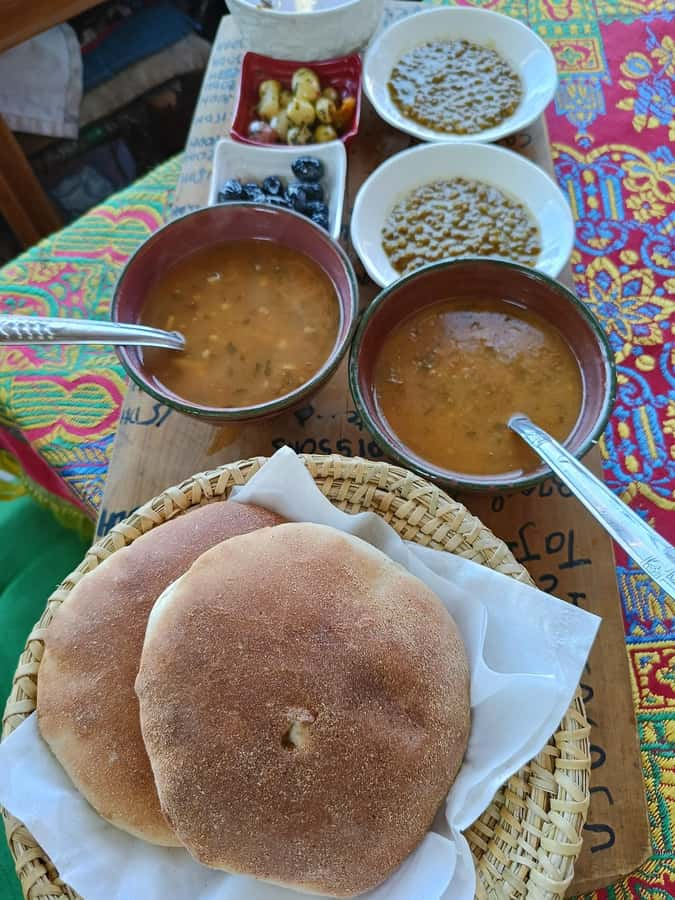
You stop for marinated olives and dates, including dates with a soft, sweet texture. These are not just filler between larger dishes. Olives are a central part of Moroccan meals, and dates offer a clear example of how sweetness appears in everyday food.
The souk portion also gives your guide room to discuss the city’s food traditions and regional influences. The strongest guides, including Mo, Ali, and Mohamed, are praised for combining food facts with stories about Marrakesh. They also teach you the Moroccan names for the dishes, which makes ordering easier later in your trip.
A shared tour can add to the fun here. One group included about 10 people of different ages, with the guide making an effort to involve everyone. A larger group may mean more conversation and less control over the pace. If you want to ask many questions or stop often for photos, the private option may suit you better.
Méchoui, tangia, and kofte at local eateries
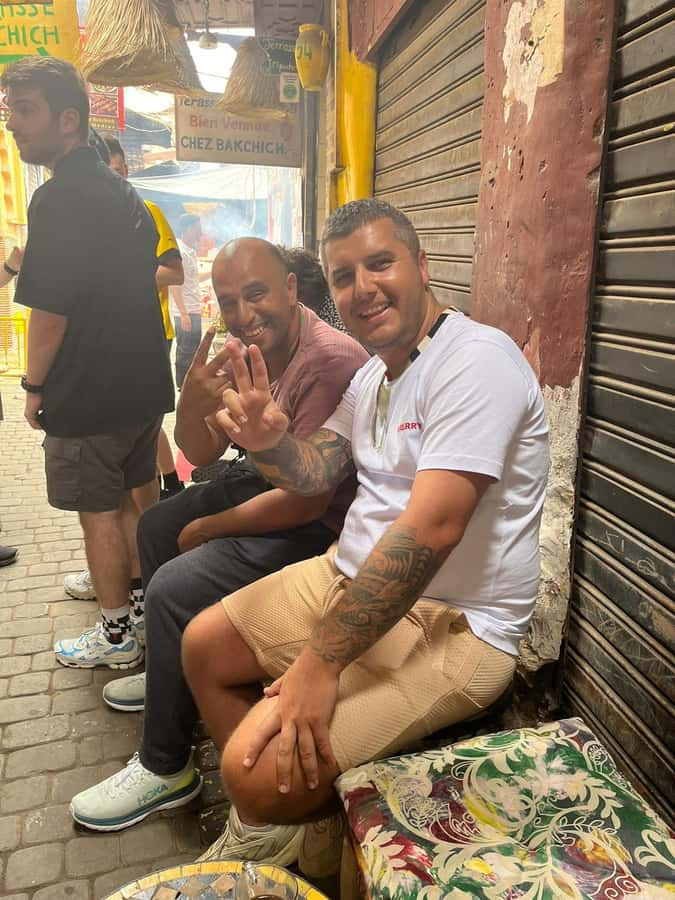
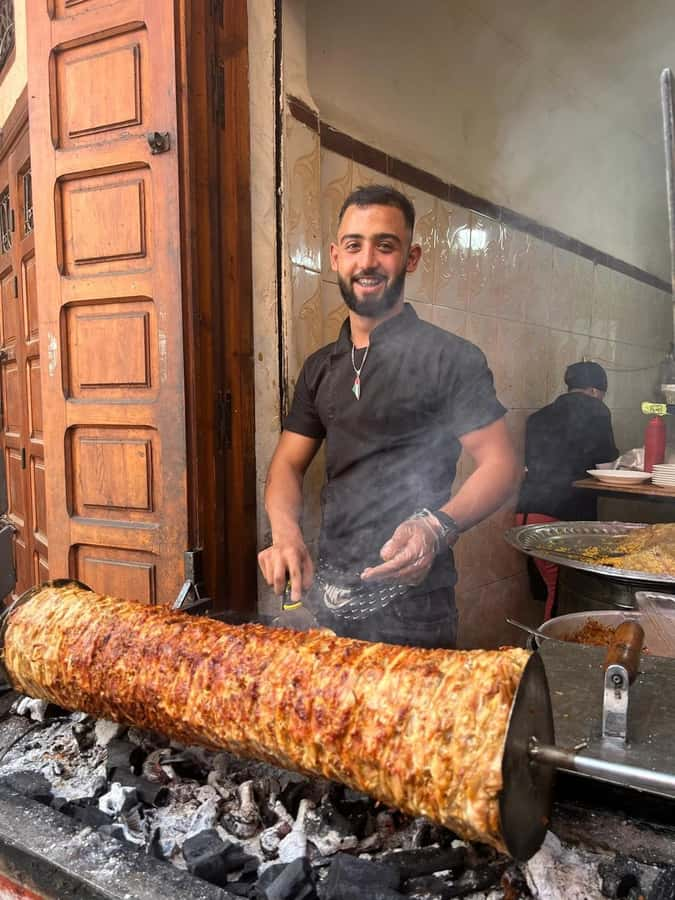
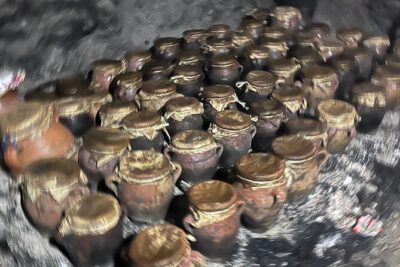
One of the most distinctive food moments is watching a méchoui maker slow-roast a whole lamb in a traditional underground oven. Méchoui is a memorable sight as well as a meal, and the cooking method shows how Moroccan food can be tied to time, patience, and shared occasions.
The route then leads to a local eatery for more substantial dishes. Tangia is one of the key tastes. This Marrakesh specialty is slow-cooked and closely linked with the city’s own food identity. Kofte adds another texture and seasoning style, while freshly baked bread helps turn the samples into a proper meal.
You may also receive traditional salads made with seasonal ingredients, flavored with saffron, cumin, and fresh herbs. These salads bring freshness to an evening that includes roasted meat, pastries, bread, and stews. They also show that Moroccan food is not only about tagine.
The food can include less familiar offerings. Cactus fruit, for example, may appear among the early samples. Its flavor has been compared with guava, but the fruit is purple and distinctive. If you enjoy trying unfamiliar foods, this tour gives you plenty of chances. If you are a cautious eater, tell your guide what you prefer and take small portions when possible.
The rooftop ending with tagine and mint tea
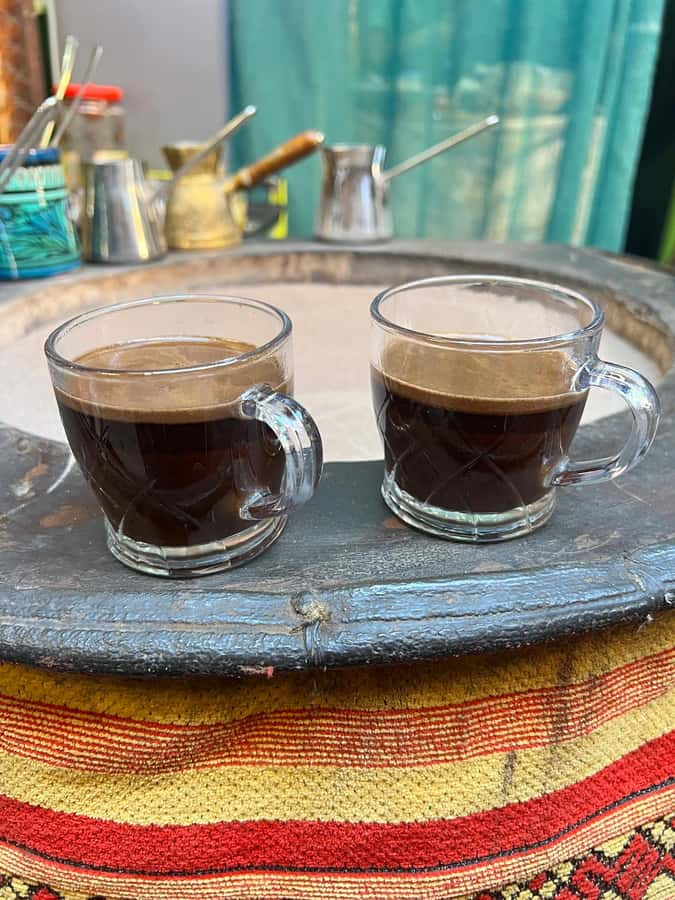
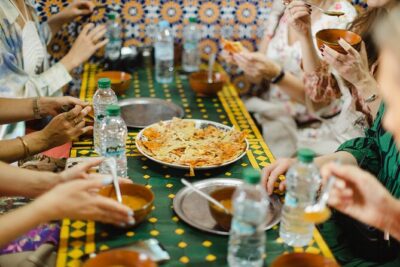
The final part of the evening takes you to a cozy rooftop café, where you sit down with mint tea. The setting includes a courtyard decorated with rugs, mosaic lamps, and fountains, with views over the surrounding area. This change of pace is welcome after several hours of walking and eating.
One evening finished with tagine at a rooftop restaurant overlooking the square. The exact final food stop may vary, but you should expect the tour to end with a more relaxed drink and a view rather than simply leaving you in a side street.
Mint tea is a fitting close. It is refreshing after a heavy meal, and the pause gives you time to discuss what you have eaten. I like this ending because it leaves space for conversation instead of rushing straight back into the Medina.
The rooftop stop also helps you see the square from a different angle. From ground level, Jemaa el-Fnaa can feel loud and intense. From above, you get a broader view of the movement below and a calmer sense of how the evening fits together.
What the guides add to the evening
The guide is the main factor that shapes this experience. Mo is described as informative, funny, and full of energy, with a strong interest in both Marrakesh’s food and its past. Ali is praised for making people feel welcome and for sharing his enthusiasm for the city. Mohamed is noted for warmth, attention to local cuisine, and a connection with local craftspeople.
Those personal qualities matter on a walking food tour. The group spends three hours together in close quarters, so a guide who can explain, joke, and keep people included makes the route more comfortable.
The guides speak English, French, and Arabic. The exact guide depends on the date and arrangement, so you should not assume you will receive a particular person when booking. Still, the repeated strength of this experience is the human side: clear explanations, a friendly manner, and a willingness to point out places worth returning to.
I would schedule this early in your stay. You will learn what foods to look for, which dishes interest you, and how the Medina is arranged. You may also find yourself returning to one of the small eateries later, which is one of the best signs that the tour has practical value beyond the evening itself.
Walking conditions, timing, and who should book
This is a three-hour walking experience with frequent food stops. Wear comfortable shoes and leave room in your appetite. The route includes Jemaa el-Fnaa, Souk Semmarine, the Medina, and smaller side streets, so you should be prepared for a busy setting and uneven movement through narrow lanes.
The activity is not suitable for people with mobility impairments. There is no hotel pickup or drop-off, so you need to reach Café de France on your own. Check the available starting times when booking, since the exact departure time is not fixed in the activity details.
A shared tour is likely the better value for solo visitors or anyone who enjoys meeting other people over food. A private tour makes more sense for families, couples, or anyone who wants a slower pace and more direct time with the guide.
Free cancellation is available up to 24 hours before the start, and you can reserve now and pay later. Those policies make it easier to fit the outing into a changing Morocco itinerary, but the key choice is still the food and walking style.
Should you book this Marrakesh food tour?
Book it if you want a substantial evening meal, local dishes beyond standard restaurant fare, and an introduction to the Medina that feels useful for the rest of your stay. The generous food portions, strong guides, hidden side-street stops, and rooftop tea make the $47 price fair.
Skip it if you want a short tasting with little walking, a quiet private dinner, or a carefully controlled menu. You should also avoid it if narrow Medina streets are difficult for you.
For most first-time visitors who enjoy food and can handle three hours on foot, I would put this near the start of the trip. Arrive hungry, keep an open mind, and plan to return to at least one of the food spots afterward.
FAQ
Where does the tour begin?
Meet your guide in front of Café de France, beside Jemaa el-Fnaa Square in Marrakesh.
How long does the experience last?
The guided food walk lasts three hours.
What foods can I expect to taste?
Tastings can include tagine, pastries, olives, dates, méchoui, tangia, kofte, seasonal salads, freshly baked bread, and an almond-based drink. The tour ends with mint tea.
Is this a shared or private tour?
You can choose between a shared group tour and a private tour.
Which languages are available?
Live guides are available in English, French, and Arabic.
Is hotel pickup included?
No. Hotel pickup and drop-off are not included. You need to meet the guide at Café de France.
Is the tour suitable for people with mobility impairments?
No. The activity is not suitable for people with mobility impairments because it involves walking through the Medina and its narrow streets.
Newly added plates around Marrakech
- Marrakech street food tour with a local★ 5.0 · 55 reviews
- Local Hidden Spots Street Food Tour in Medina Marrakech★ 5.0 · 30 reviews
- Marrakech Tasting Tour: Experience Local Street Food & Culture!★ 5.0 · 5 reviews
- Marrakech Street Food with +10Tasting & Tanjia Dinner|Guided Walk★ 5.0 · 21 reviews
- Marrakech Street food Tours★ 4.5 · 15 reviews
- Marrakech: Street Food Tour by Night★ 4.5 · 42 reviews
- Marrakech street Food Tour Eat like Locals★ 5.0 · 4 reviews
- 3 Hours Private Tour Marrakech Night Market★ 5.0 · 2 reviews
Marrakech Street Food Tours, compared.
Marrakech Night Street Food Tour / Taste The Real Marrakech
Read our review →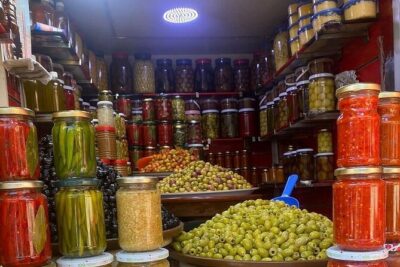
Local Hidden Spots Street Food Tour in Medina Marrakech
Read our review →Browse the lists this tour appears in