
REVIEW · HISTORICAL TOURS
George Town: Heritage Walking Tour with Street Food Tasting
George Town’s best introduction may be on foot, with one street revealing colonial buildings, Taoist worship, Hindu color, Islamic tradition, and food stalls within a few hours. This tour connects those pieces instead of treating each sight as a separate photo stop. The food is part of the history, not a snack tacked onto the end.
I like the small group, capped at eight, and I like the way guides such as Erina and Pooi Ling adjust the pace and food choices to the people in front of them. Vegetarian needs can be handled, and the tastings may lead you to foods you would otherwise pass by, including nutmeg drink and sardine samosas.
The main consideration is physical: this is a four-hour walk in Penang’s heat, with no hotel transfer and no wheelchair access. Religious sites also require covered shoulders and knees, so plan your clothing before you leave.
Key points at a glance
- A four-hour walk through four faith traditions: St. George’s Church, Goddess of Mercy Temple, Sri Mahamariamman Temple, and Masjid Kapitan Keling give the route real cultural range.
- Small groups make a difference: With no more than eight people, you can ask questions and keep a steady pace without feeling lost in a crowd.
- Street food has a story: Tastings may include local drinks and snacks such as nutmeg drink and sardine samosas, with explanations of their place in Penang’s food culture.
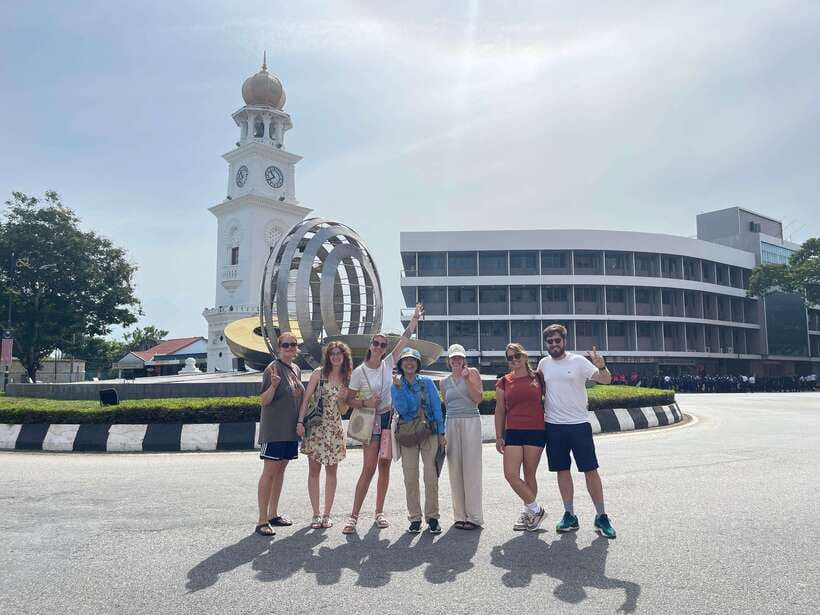
- Colonial George Town opens at the waterfront: The Queen Victoria Memorial Clock Tower and Esplanade provide a clear starting point for Penang’s British-era story.
- Armenian Street adds texture: Shophouses, street art, and daily city life make this more than a monument-to-monument walk.
- Good value for a focused introduction: At $60 per person, the price makes the most sense if you want a guide, several tastings, and a cultural overview in one morning or afternoon.
Starting between two cafes in George Town
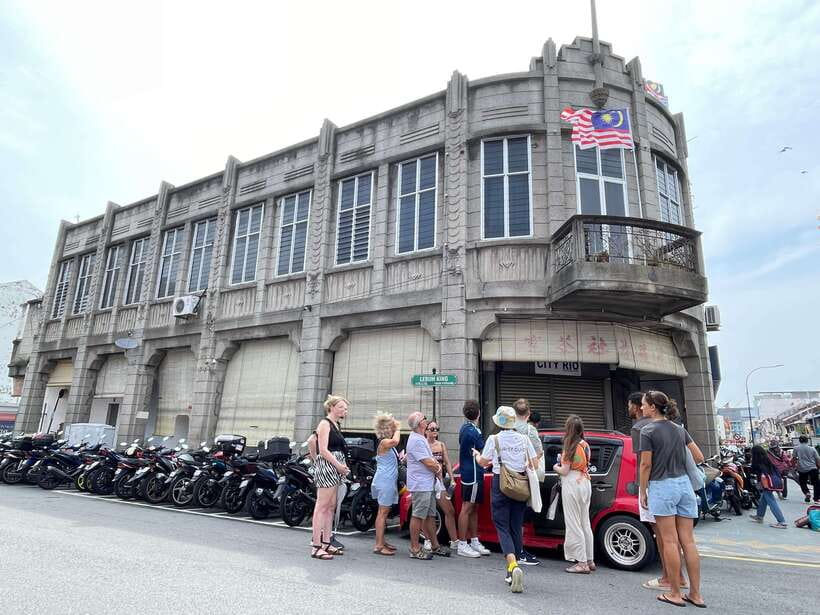
You meet at Whiteaways Arcade, specifically at the location between JAJUJE Coffee and Saigon Bowl Cafe. That detail matters because George Town has many old arcades, lanes, and similarly named streets. Arrive with the meeting point saved on your phone, and allow a little extra time to find it.
There is no hotel pick-up or drop-off. You make your own way to the start, then spend the full four hours on foot. Wear shoes that can handle uneven pavement and bring water, sunscreen, a hat, and an umbrella. Penang weather can change quickly, and shade is not guaranteed along every section.
The English-speaking guide leads the walk, and the group limit of eight gives the experience a more personal feel than a large city tour. You can ask about food, architecture, worship, or daily life without waiting for a whole busload of people to catch up.
The tour is not suitable for children under six, wheelchair users, or people with mobility impairments. That is worth taking seriously. Even without a formal hill climb, four hours of walking, standing, and moving between sites can be tiring.
More history-and-food walks around Malaysia:
- Palermo: Street Food and History Walking Tour
★ 4.9 · 1,486 reviews - Walking Tour and street food Tour Palermo / History and Food
★ 5.0 · 386 reviews - Discover Palermo in 3 hours. Art, history, markets and street food
★ 5.0 · 352 reviews
Colonial George Town from the clock tower to the Esplanade
The Queen Victoria Memorial Clock Tower introduces George Town through its colonial face. The structure is an easy visual marker and a useful place for your guide to explain Penang’s links with British rule, trade, and civic development.
The Esplanade then gives the route breathing room beside the water. This part is less about entering a building and more about understanding George Town’s position as a port city. Your guide can connect the waterfront to the streets behind it, where different communities built places of worship, shops, homes, and food businesses.
I like this opening because it gives you a broad frame before the tour turns into narrower streets. You see the public face of George Town first, then move into the more intimate parts of the city.
Do not expect a long stop at every colonial building. The value here is the explanation and the sequence. If you want to study architectural details or take many photographs, you may wish you had extra time after the tour. The route is designed to keep moving.
St. George’s Church and the city’s layered faiths
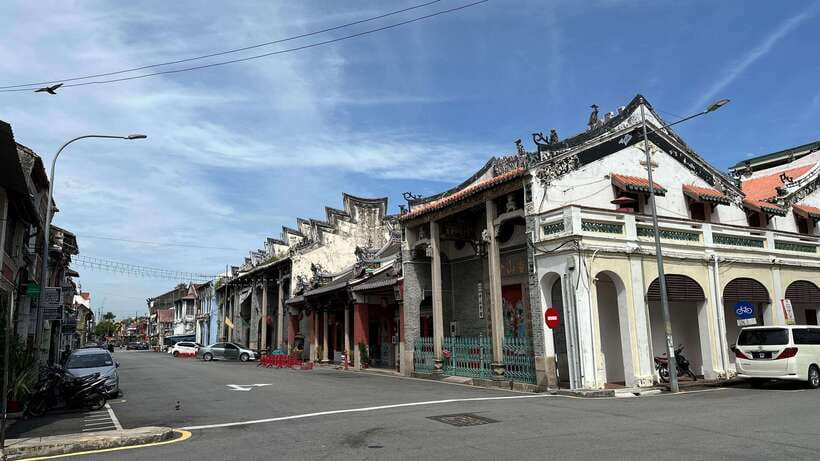
St. George’s Church is described as the oldest Anglican church in Southeast Asia, making it one of the route’s important historical stops. Its presence helps show how British institutions became part of a city that already had strong Chinese, Malay, Indian, and other cultural traditions.
The church is not presented in isolation. It is one stop in a walk that also includes Taoist, Hindu, and Islamic places of worship. That balance is one of the tour’s strongest features. You are not simply collecting famous buildings. You are seeing how different communities shaped the same compact part of George Town.
The guide’s role matters especially here. A building can be impressive from the outside, but context helps you understand why it is in this particular street and how it relates to the city around it. Guides Erina and Pooi Ling have been praised for explaining Penang’s past and keeping a comfortable pace, two qualities that matter when the route mixes history with busy city streets.
Access to religious sites can depend on time and local conditions. Dress modestly from the start, with knees and shoulders covered. This avoids an awkward clothing problem and shows respect at places where people are worshipping.
Goddess of Mercy Temple and living Taoist practice
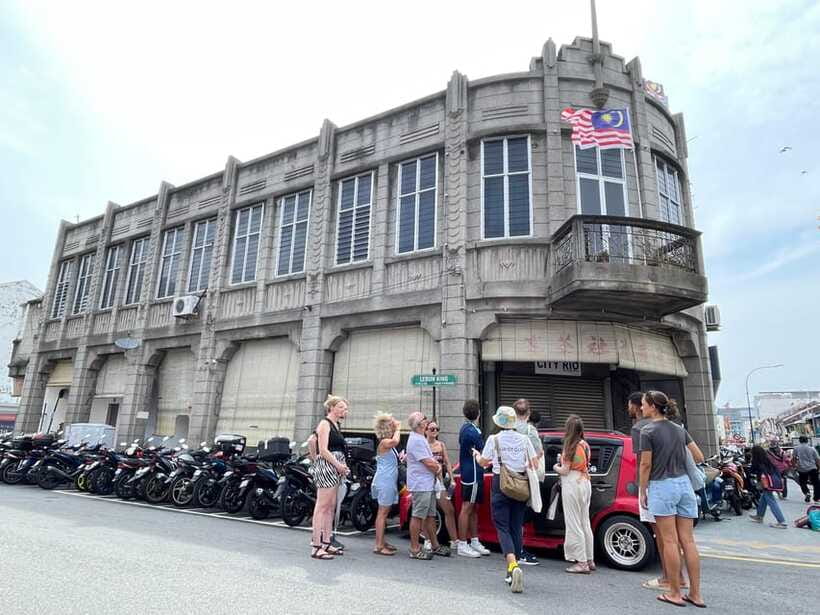
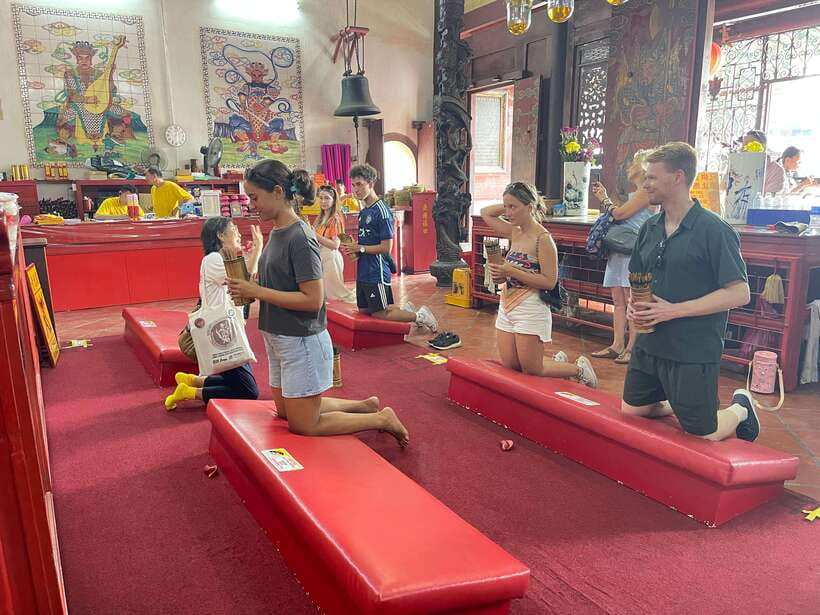
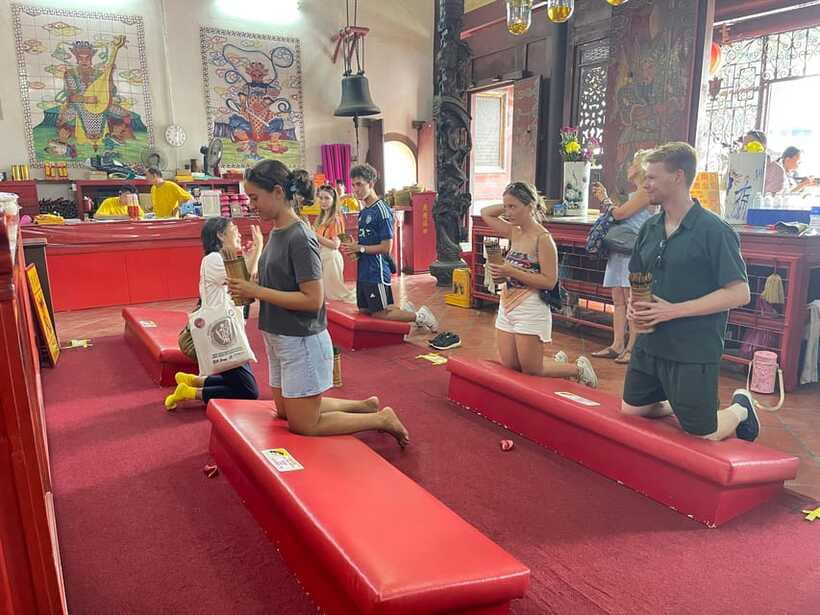
The Goddess of Mercy Temple brings the tour into a different setting. It is an active place for Taoist devotees, not only an old building for sightseeing. You may see the contrast between a quiet historical explanation and the ongoing practices of people who use the temple today.
That distinction is important. A guided visit can help you observe respectfully, understand the site’s role, and avoid treating rituals as a performance arranged for visitors. One person who took the tour described taking part in a religious ritual, but you should follow your guide’s instructions and participate only when it is appropriate.
Photography requires care. Flash photography is not allowed, and that rule makes sense in a working place of worship. Keep your camera away when asked, watch where you step, and let the guide explain what you are seeing before reaching for a picture.
The temple also adds welcome variety to the route. After colonial civic buildings, you are suddenly in a place shaped by faith, family tradition, and daily devotion. That change is one of the reasons this walk feels more substantial than a standard city-center stroll.
More street food tours in Malaysia:
- Kuala Lumpur: Sambal Street Food Tour with 15+ Tastings
★ 4.9 · 1,657 reviews - The 10 Tastings of Kuala Lumpur With Locals: Private Street Food Tour
★ 5.0 · 249 reviews - Kuala Lumpur Local Street Food Private Walking Tour by Night
★ 4.5 · 224 reviews - Eat Like a Local: Kuala Lumpur Hawker Center and Street Food Tour by Night
★ 5.0 · 198 reviews
Sri Mahamariamman Temple and Hindu heritage
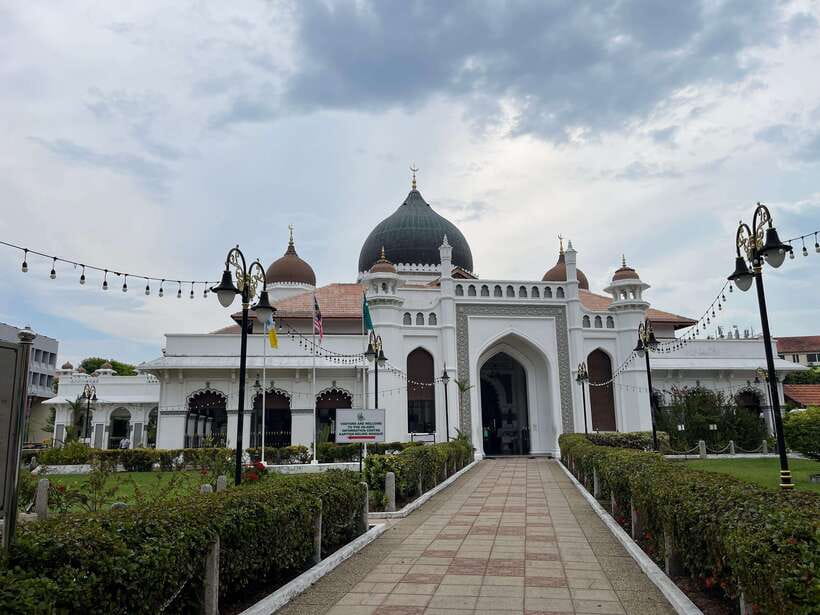
Sri Mahamariamman Temple continues the route’s look at Penang’s religious mix. Its Hindu heritage gives you another way to read George Town, especially alongside the nearby church, Taoist temple, and mosque.
The supplied details do not promise a long interior visit or a particular ceremony, so it is best to think of this as a guided cultural stop rather than a guaranteed ritual experience. Your guide can point out what makes the temple meaningful and explain how it fits into the wider community.
As with the other religious sites, modest clothing is essential. Avoid assuming that every part of the building is open for casual viewing. You will get more from the visit if you treat it as a place of worship first and a sightseeing stop second.
This is also where a small group helps. Eight people or fewer can gather without blocking entrances or making the visit feel intrusive. The guide can answer questions in a natural way, rather than delivering a speech to a large crowd.
Masjid Kapitan Keling and George Town’s Muslim story
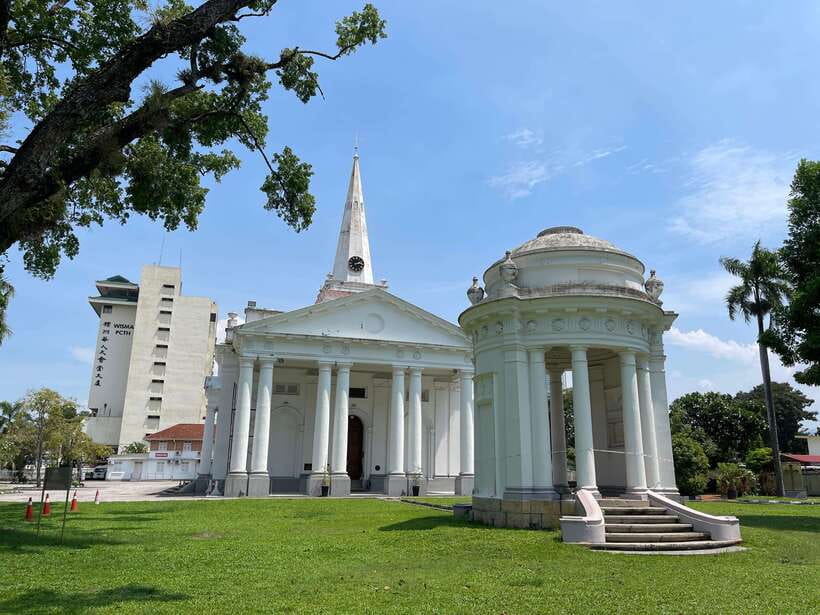
Masjid Kapitan Keling adds the Islamic side of George Town’s story. The mosque is a useful reminder that Penang’s culture was shaped not only by colonial administration and Chinese and Indian communities, but also by Muslim traders, residents, and institutions.
The sequence of stops gives the tour its strongest educational quality. You move from Anglican Christianity to Taoism, Hinduism, and Islam, while walking through streets where these traditions exist close to one another. The point is not to compare religions or rush through a checklist. It is to see the city as a place where communities share the same urban space.
Dress rules matter here. Covered knees and shoulders are required when religious sites are included, so shorts, short skirts, and sleeveless tops are poor choices for this tour. Carrying a light cover-up can be useful, though the stated requirement is simply to dress modestly.
The mosque is also a good place to listen rather than talk. Let your guide set the boundaries for photography and movement. Respectful behavior will improve the experience for you and for people there to pray.
Armenian Street, street art, and the food stops
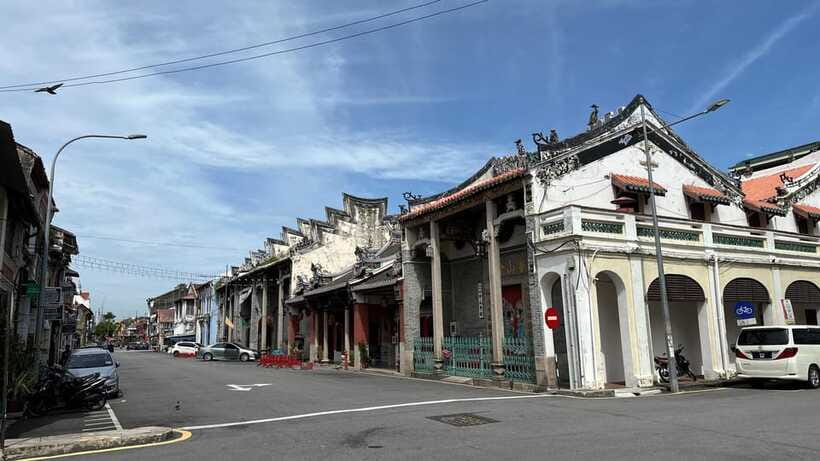
Lebuh Armenian brings a livelier street scene after the formal religious landmarks. Its old shophouses, street art, and active atmosphere show the everyday side of George Town. You get a chance to notice doors, facades, signs, and small details that are easy to miss when moving between major sights.
The food portion gives the street walk a practical purpose. Penang cuisine is not treated as a list of dishes to consume quickly. The guide explains the stories behind local food, which helps you understand why certain ingredients, snacks, and drinks matter to the city.
The tastings can include nutmeg drink and sardine samosas, both singled out as memorable discoveries. These are useful examples of why a guide adds value. You may know to look for well-known noodle dishes, but you might not think to try a local nutmeg drink or a savory sardine pastry on your own.
Food choices can be adjusted for a vegetarian member of your group, as Erina did for one family. Tell the guide about dietary needs at the start rather than waiting until food is served. The supplied information confirms vegetarian accommodation, but it does not promise that every dietary restriction can be handled.
The amount of food is best viewed as sampling, not lunch. If you have a large appetite, plan another meal before or after the walk. You should also carry water, since tastings do not replace hydration in Penang’s warm weather.
What $60 buys you in practical terms
At $60 per person, this tour is not the cheapest way to walk around George Town. You can see some streets and exteriors on your own for nothing. The question is what you want added to that walk.
The price includes a certified English-speaking guide and street food sampling. You are paying for a planned route, explanations at the landmarks, help understanding religious customs, and access to a range of food experiences in four hours. For a first visit, that combination can be good value.
I would be less likely to book it if I had already spent several days in George Town, knew the food scene well, and preferred wandering alone. I would be more likely to book it near the start of a Penang stay, when a guide can give you context and point you toward foods and streets to revisit later.
The small group strengthens the value. A group of eight or fewer is easier to manage at temples, easier to hear on busy streets, and more likely to allow real questions. On the other hand, a small group does not change the basic nature of the tour: you still follow a set route and share the pace with other people.
Free cancellation up to 24 hours before the start gives you some flexibility, and you can reserve now and pay later. Those terms are useful if your Penang plans are still shifting.
Pace, weather, and what to bring
Four hours is long enough to cover a lot, but short enough that the guide must keep things moving. The best pace is steady rather than rushed, with time for explanations, photographs, food, and transitions between sites.
Guides Erina and Pooi Ling have been praised for clear explanations and a good pace. The tour can also feel more personal if your booking ends up as a private group, though you should not assume that will happen. The normal format is a small group of up to eight.
Wear comfortable walking shoes. Add sunscreen, a hat, water, tissues or hand sanitizer, and an umbrella. The umbrella is practical for both sun and rain, and the tissues or sanitizer are sensible after handling street food.
Smoking is not allowed, and alcoholic drinks are not allowed in a vehicle. Since this is a walking tour with no included vehicle transfer, the more important daily concerns are hydration, sun protection, respectful clothing, and keeping your hands clean before eating.
Who will enjoy this George Town walk
I would recommend this experience to a first-time Penang visitor who wants history, religion, architecture, and food in one organized outing. It also suits couples, solo visitors, and small family groups with older children who can manage four hours on foot.
Food-curious people will get particular value from it. The tastings are not just familiar tourist staples, and the guide may introduce you to something as unexpected as nutmeg drink or sardine samosas. Vegetarians can be accommodated, but you should state that need clearly at the beginning.
This is less suitable for anyone who wants a slow photography walk, a dedicated food crawl, or a fully accessible route. It is also not the right pick for children under six or anyone who cannot walk for several hours.
Should you book it?
Book this tour if you want George Town explained as a meeting place of cultures, not just photographed as an old city. The strongest reasons are the small group, the mix of four religious traditions, and the food stories that turn tastings into part of the city lesson.
Skip it if you prefer complete independence, already know George Town well, or need wheelchair access. For most first-time visitors who can walk comfortably and dress for religious sites, $60 is a fair price for a compact, well-structured introduction to Penang.
FAQ
Where does the tour meet?
Meet at Whiteaways Arcade, at the location between JAJUJE Coffee and Saigon Bowl Cafe.
How long does the walking tour last?
The tour lasts four hours.
What language is the tour conducted in?
The live tour guide conducts the experience in English.
How large is the group?
The group is limited to eight participants.
What food is included?
Street food sampling is included. The food may include local items such as nutmeg drink and sardine samosas.
Can vegetarian food be provided?
Vegetarian options can be accommodated. Tell the guide about your dietary needs at the beginning of the tour.
Which religious sites are included?
The route includes the Goddess of Mercy Temple, Sri Mahamariamman Temple, and Masjid Kapitan Keling. It also visits St. George’s Church.
What should I wear?
Dress modestly, with your knees and shoulders covered, because the tour may visit religious sites.
Is the tour suitable for wheelchair users?
No. The experience is not suitable for wheelchair users or people with mobility impairments.
Can I cancel for a refund?
You can cancel up to 24 hours in advance for a full refund. You can also reserve now and pay later.
Newly added plates around Malaysia
- Eat Like A Local: Penang Street Food Tour★ 5.0 · 93 reviews
- Kuala Lumpur’s Nightlife Secrets and Street Food★ 5.0 · 18 reviews
- Yummy Yummy Street Food Tasting + Night City Tour(Private Guided)★ 5.0 · 8 reviews
- 3-Hour Private Street Food Walking Tour in Kuala Lumpur★ 4.5 · 6 reviews
- Authentic Malaysian Street Food Tour With 15+ Tastings Near KLCC★ 5.0 · 68 reviews
- Private Kuala Lumpur Night Market And Food Tour★ 5.0 · 13 reviews
- Private Tour : “Lepak-Lepak” at Local Night Market & Mamak Stall★ 4.5 · 4 reviews
- Back of the Bike Street Food Experience – Real Penang!★ 5.0 · 27 reviews
Historical Tours, compared.
Walking Tour and street food Tour Palermo / History and Food
Read our review →
Discover Palermo in 3 hours. Art, history, markets and street food
Read our review →
Lecce History and Street Food Tasting Small Group Tour
Read our review →
Historic Center Street Food, Market, and Eateries Tour
Read our review →
Dubai Old Town, Culture, History, Street food and Souks Tour
Read our review →
Old Dubai Historic Guided Tour: Creek, Street Food & Souks
Read our review →
Browse the lists this tour appears in