
REVIEW · NIGHT MARKET FOOD TOURS
Bali Food Tour: Savor Street Food and Night Market Adventures
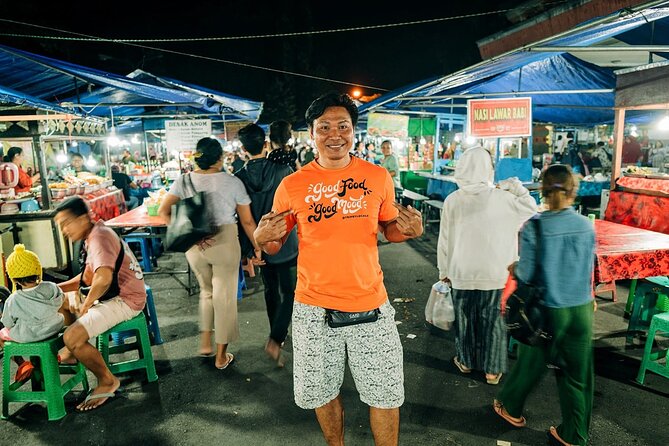
Ubud’s best food lesson may happen after dark, at a local market where you can try babi guling, Balinese suckling pig, satay, fried rice, sweets, and other dishes with a guide beside you. The tour is less about sitting through a formal tasting menu and more about walking, choosing, asking questions, and letting your guide steer you toward local favorites.
I like the access to markets you might not find on your own, and I like the generous spread of food included for $35. Guides such as Nata, Putu, Nara, and Tu are praised for explaining dishes, handling dietary needs, and keeping the evening easy. The main caution is that the route can feel flexible rather than tightly planned, and traffic or heavy rain may affect pickup times.
Quick takeaways
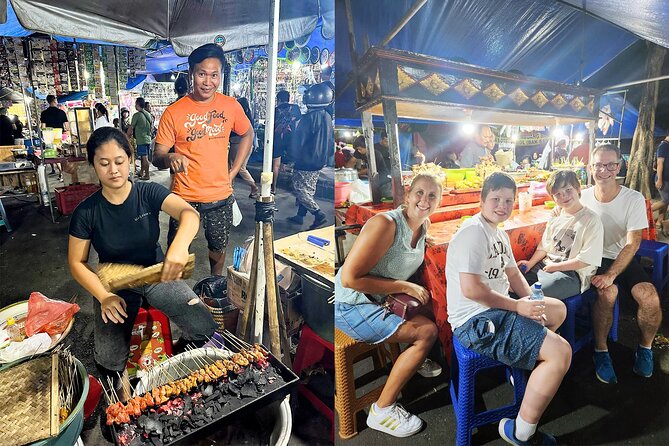
- Local night-market focus: Visit food stalls and markets used by local residents rather than staying only in central tourist areas.
- Babi guling included: Suckling pig is a major highlight, often served with crispy skin, rice, soup, and spicy sauces.
- Vegetarians can join: The guide can recommend meat-free dishes and adjust the meal to your preferences.
- Central Ubud pickup: Pickup and drop-off are included within the Ubud center area. Hotels farther out may require an extra fee.
- Small-group setting: The group limit is 12 people, which leaves room for questions and personal requests.
- More than dinner: The evening may include Balinese appetizers, a main course, dessert, bottled water, and a stop connected with Barong and Keris dance.
Why this Ubud food tour feels different
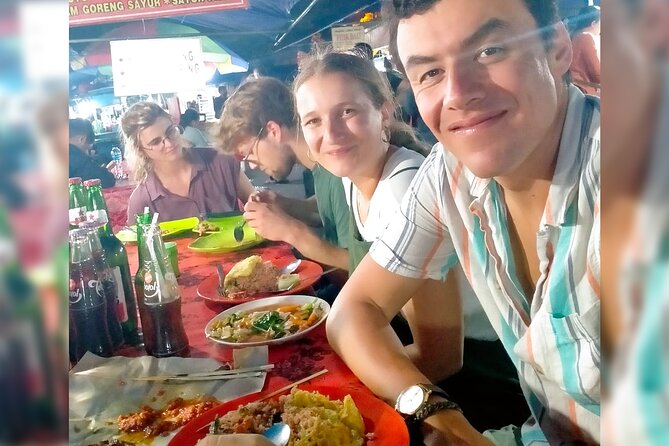
Many food tours work like a restaurant crawl with fixed stops and a fixed menu. This one is looser. Your guide takes you to a night market and local food spots, explains what is available, and helps you decide what to try.
That flexibility is useful in Bali, where a good food stop can depend on what is being served that evening. It also lets you ask for a particular dish. Some people specifically request babi guling, while others want to sample a broad mix of Indonesian and Balinese food.
The tradeoff is clear. If you want a carefully staged tasting with a set number of bites at named restaurants, this may feel under-structured. You may choose some of your own food, and the route can change with traffic, weather, or your preferences.
I see this as a good introduction to Balinese eating habits. You are not simply handed a plate and told its name. You can watch food being prepared, see how locals order, and ask your guide how a dish fits into daily life.
More Night Market Food Tours in Indonesia:
- Ubud Traditional Night Market Food Tour-All Inclusive
★ 4.4 · 95 reviews - Ubud Day Tour : Waterfall, Temple and Local Night Market Tour
★ 5.0 · 17 reviews - Bali Night Market Experience and Ubud Highlights tour
★ 5.0 · 16 reviews
Pickup in Ubud and the reality of Bali traffic
The usual meeting point is your hotel in central Ubud, or another agreed pickup point in the Ubud area. Pickup and drop-off are included within the Ubud center zone. If your hotel is outside that area, transportation can be arranged for an additional charge, but you need to request it in advance.
This detail matters more than it may seem. Ubud traffic can be slow, especially in the evening, and heavy rain can make the roads slower still. One guide, Putu, was praised for managing a difficult, rain-soaked journey, while another evening began late because of traffic.
I would keep your schedule open around the tour. Do not book a nonrefundable show immediately afterward unless you have plenty of time between plans. The official duration is listed as approximately three to nine hours, a wide range that reflects the flexible format, pickup conditions, and possible additions to the evening.
The tour is capped at 12 people. That is not a private tour, but it is small enough for the guide to ask about food restrictions and check that everyone is keeping up.
Your first taste: local dishes and Balinese staples
The food is the heart of the evening. The included meal covers Balinese appetizers, a main course, and a sweet dessert, along with bottled water and carbonated or bottled beverages. Personal purchases are not included, so bring cash for anything extra.
The most requested dish is often babi guling, or Balinese suckling pig. It can come with crisp skin, rice, spicy sauces, and soup. If you like pork, this is one of the strongest reasons to book the tour. Guides have taken people to restaurants serving especially crisp-skinned versions before continuing to the market.
Be careful with the sauces and soup. The accompanying flavors can be hot, and a mild preference is worth stating early. The guide can help you choose, but do not assume every dish will be gentle.
Other foods mentioned during the experience include Indonesian fried rice, Balinese satay, chicken betutu, tuna, and local sweets such as terang bulan. That range gives you a better sense of Balinese food than a single restaurant meal. You may taste grilled food, rice dishes, rich meat preparations, and a sweet finish in one evening.
Portions are generous. Arrive hungry, but not so hungry that you rush through the first stop. The meal can become surprisingly large once appetizers, market samples, a main course, and dessert are added.
At the Gianyar night market

The main food stop is in Gianyar Regency, where you explore a night market known locally as a Pasar Senggol. The market visit takes about two hours in the stated itinerary, although the entire evening can last longer depending on transportation and the route.
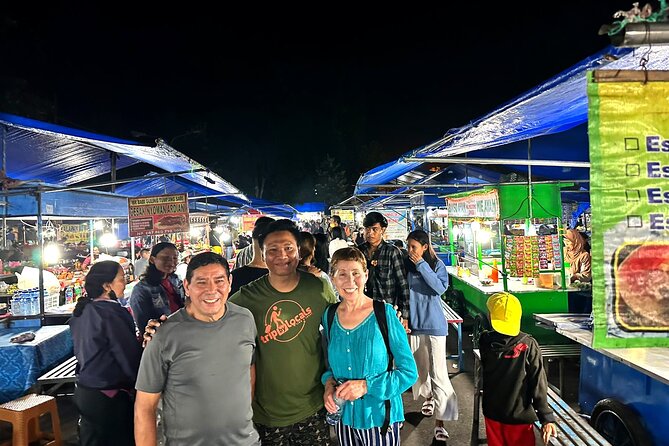
This is the part of the experience that gives the tour its local character. You can look over stalls, see what people are buying, and try foods that may not be obvious to someone walking through alone. Your guide serves as an interpreter for the dishes and helps remove the uncertainty from ordering.
Some food stalls may show you how a dish is prepared. That adds useful context, since Balinese food can include unfamiliar ingredients, textures, and sauces. You are not just eating at a market. You are learning how to read the place.
The market is not presented as a polished attraction, and that is part of its value. Conditions can be simple. You should expect a working food market, not a designed dining hall. Bring cash because debit and credit cards are not accepted there.
The pace can be relaxed. You may have time to sit, watch the market, and finish what you have ordered instead of being hurried from one stall to the next. If you are the sort of person who likes to pause and observe, that is a real advantage.
More street food tours in Indonesia:
- Jakarta: Private Guided Sightseeing & Street Food Night Tour
★ 4.8 · 99 reviews - Bali: Authentic Culinary Street Food Experience Tour
★ 4.7 · 99 reviews - Denpasar: Night Street Food Walking Tour
★ 4.5 · 60 reviews - Night Walking Tour-Malioboro street food with guide at Yogyakarta
★ 5.0 · 53 reviews
Vegetarian food is handled with care
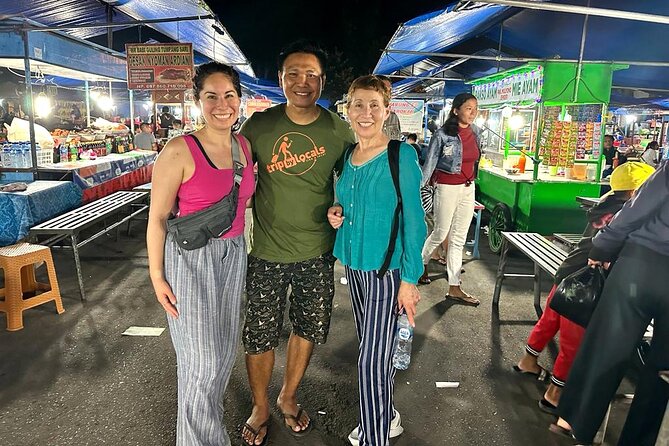
Vegetarians are welcome, and this is more than a token option. The guide can recommend meat-free dishes and adjust the food choices around your needs. A vegetarian meal may include several different items rather than one substitute plate.
Tell the operator and your guide about your diet before the tour starts. The available choices will depend on the market and the evening’s food, but the experience is designed to include vegetarian participants.
You should still ask questions about broths, sauces, and cooking methods if your diet is strict. A dish that looks vegetable-based may use meat stock or be cooked alongside meat. The guide is there to help you sort that out.
The same advice applies to any other dietary request. The tour team has shown a willingness to accommodate preferences, but the market is not a controlled restaurant kitchen. Clear communication is the key.
Guides who make the food easier to understand
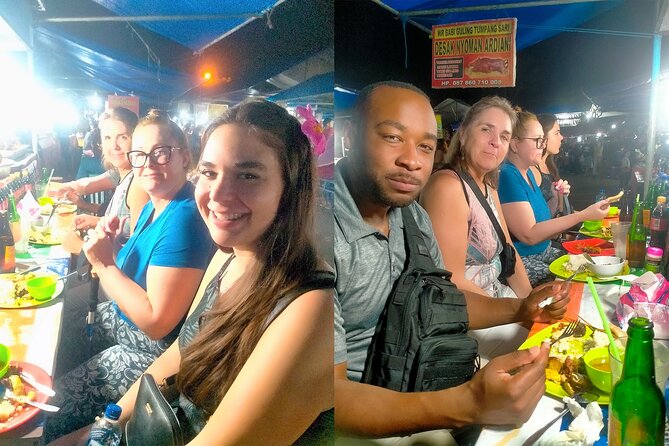
The driver also acts as your guide. That arrangement keeps the tour practical, since the same person handles transport, food stops, timing, and questions.
Nata is frequently praised for explaining Balinese food in clear English, checking dietary restrictions, and keeping people updated about pickup. Putu is known for taking people to local spots and making the evening enjoyable even when traffic and rain complicate the plan. Nara has been praised for helping people try local dishes such as suckling pig and chicken betutu. Tu is another guide associated with a strong introduction to Balinese food culture.
The exact guide depends on availability, so you should not book expecting a specific person unless the operator confirms it. Still, these names give you a sense of the guide-led style: friendly, practical, and focused on helping you order rather than delivering a long formal lecture.
The guide’s role matters most at the market. A menu may not explain every dish, and a stallholder may not speak much English. Having someone explain ingredients and preparation makes it easier to try something unfamiliar.
The Barong and Keris dance option
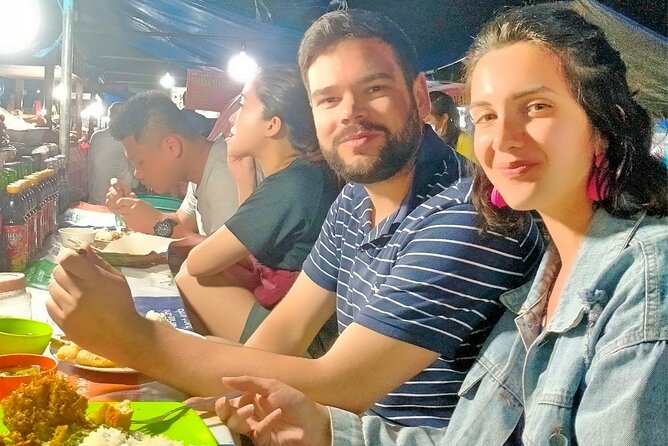
The itinerary includes a stop connected with the Barong and Keris dance, with about one hour allotted. The dance ticket is not included in the tour price.
You should confirm how this portion fits your booking. The food section is the clear center of the experience, while the dance is an added cultural element with a separate admission cost. If you want to attend, carry extra cash and ask about the ticket arrangement before the evening begins.
This stop may appeal to you if you want more than food. The Barong and Keris dance is a well-known Balinese performance, and pairing it with a market visit can give the night a broader cultural shape. If you are booking strictly for eating, you may want to clarify whether the dance is optional and how much time it adds.
Is $35 a fair price?
At $35 per person, the tour offers solid value if you want transportation within central Ubud, a guide, a substantial dinner, drinks, several food tastings, and help navigating a local market.
The value is not just the amount of food. A first-time visitor may spend an evening guessing what to order, missing the best stalls, or avoiding dishes because the names are unfamiliar. The guide saves you that work and takes you to places you might not locate by yourself.
The price is less attractive if you prefer to order independently or eat only a small dinner. Personal expenses are not included, and the Barong and Keris dance ticket costs extra. You should also budget for any pickup outside central Ubud.
A group discount is available, although the exact reduction is not specified. Larger groups should contact the operator directly. The maximum group size is 12, so this is not designed for a large coach-style outing.
What to bring and how to prepare
Arrive hungry, but wear comfortable clothing and shoes suited to walking around a market. You may spend time moving between stalls, sitting to eat, and getting in and out of the vehicle.
Bring cash. The night market does not accept debit or credit cards, and you may want to buy an extra snack or drink. Cash is also useful if you choose the dance or have personal expenses outside the included meal.
Tell the guide about dietary restrictions at the start. If you have strong preferences about spice, pork, seafood, or particular dishes, mention them early. The flexible format works best when the guide knows what you want.
Do not plan this as a rushed activity. The listed duration ranges from three to nine hours, and Bali traffic can affect the schedule. Keep the rest of your evening light.
The experience is not suitable for babies or young children. Most travelers can participate, and a child rate applies only when the child shares with two paying adults.
Who should book this experience?
I would choose this tour if you want an easy first look at Balinese food and would rather have a local guide handle the confusing parts. It suits curious eaters, couples, small groups, and anyone who wants a market visit without arranging transport and food stops alone.
It is especially useful on your first nights in Ubud. You can learn dish names, see where local people eat, and use that knowledge later when exploring independently.
Vegetarians can also book with confidence, provided they explain their needs clearly. The experience offers enough flexibility to build a meat-free meal.
I would hesitate if you want a strict itinerary, a polished restaurant setting, or a short, predictable dinner. The tour can be affected by traffic and weather, and the food choices are not presented as a fixed sequence. That relaxed structure is a strength for some people and a weakness for others.
Cancellation and booking details
You can cancel up to 24 hours before the local start time for a full refund. Changes or cancellations made within 24 hours are not refundable.
Pickup within central Ubud is included. Outside-Ubud transportation costs extra, and you should arrange it ahead of time. Confirmation is provided when you book.
Should you book the Ubud night-market tour?
Book it if you want a filling, local food evening rather than a formal cooking class or a tightly scripted tasting menu. The best parts are the market access, the generous portions, the chance to request dishes such as babi guling, and the guide’s help with food choices.
Skip it if you dislike flexible plans or want every stop and dish fixed in advance. For most food-focused visitors staying in Ubud, though, $35 is a sensible price for dinner, transport in the central area, and a guide who can help you eat with more confidence.
FAQ
How much does the Bali Food Tour cost?
The listed price is $35 per person. Group discounts are available, though the exact discount is not specified.
Is hotel pickup included?
Pickup and drop-off are included within the Ubud center area. Hotels outside Ubud or outside the central pickup zone may require an additional transportation fee.
What food is included?
The tour includes Balinese appetizers, a main course, dessert, bottled water, and carbonated or bottled beverages. Possible foods include fried rice, satay, babi guling, chicken betutu, tuna, and local sweets, depending on the route and your choices.
Can vegetarians join?
Yes. Vegetarian participants are welcome, and the guide can recommend suitable dishes and adjust the food choices to meet vegetarian preferences.
Do I need to bring cash?
Yes. The night market does not accept debit or credit cards. Bring cash for personal expenses, extra food, drinks, or any activity with a separate admission charge.
Is the Barong and Keris dance included?
The itinerary includes a one-hour Barong and Keris dance stop, but the admission ticket is not included in the tour price. Confirm the arrangements and extra cost when booking.
Newly added plates around Indonesia
- Ubud: Night Market Feast with Balinese Culinary Odyssey★ 4.7 · 5 reviews
- Ubud: Gianyar Night Market Food Tour with up to 17+ Tastings★ 4.7 · 13 reviews
- Yogyakarta Night Street Food Hunting★ 5.0 · 3 reviews
- 4D3N Mount Bromo, Ijen Crater & Surabaya Night Market★ 5.0 · 4 reviews
- Denpasar Night Market Food Tour★ 5.0 · 4 reviews
- Taste & Explore Bali: Denpasar Street Food & Historic Sites★ 4.5 · 27 reviews
- Balinese Street Food Tour By Motorbike All You Can Eat and Drink!★ 5.0 · 5 reviews
- Bali Street Food Tour: Savor Authentic Flavors & Night Market★ 5.0 · 2 reviews
Night Market Food Tours, compared.
Small Group: Michelin and Local Hawker Food Tour with 9 tastings
Read our review →

Food Market Visit and Cooking Class with Wine
Read our review →
Venice Street Food Tour with Local Guide with Local Food Market Visit
Read our review →
Cancun Taco Tour, Local Beer and Night Market with Transportation
Read our review →
Tsukiji Fish Market Food and Culture Walking Tour
Read our review →
Cancun Street Food Tour with Food Stalls, Local Market and Murals
Read our review →Browse the lists this tour appears in