
REVIEW · NIGHT MARKET FOOD TOURS
Ubud: Night Market Feast with Balinese Culinary Odyssey
The best part of this Ubud experience is simple: you eat where Balinese families, workers, and students eat after dark. Guide Nata helps you spot dishes you might walk past on your own, then explains what you are trying, how it is made, and when locals usually eat it. Fresh market food and local context are the main draw.
I like the opening tasting of Balinese herbal drinks and coffee, available with the private transport option, and I like the loose, varied approach to the food. You may try savory snacks, grilled items, sweets, and local favorites such as babi guling. The possible drawback is that the market can be crowded, the food is not a fixed restaurant meal, and the walking option includes no hotel transport.
Key points at a glance
- Gianyar after sunset: Eat in a real local market rather than a tourist restaurant.
- Guide Nata: Get help identifying unfamiliar dishes and choosing food that fits your tastes.
- Coffee and herbal drinks: The private transport option begins with a look at everyday Balinese drinks.
- Sweet, smoky, salty, and spicy: Expect variety instead of one set menu.
- Private or shared format: Pick hotel pickup and a more personal pace, or meet the group and walk.
- Bring cash: Most market stalls do not accept cards.
Why the Gianyar night market is the real attraction
Ubud has no shortage of polished restaurants, cooking classes, and scenic dining rooms. This experience takes you somewhere less tidy and more useful for understanding ordinary Balinese eating habits: the Gianyar night market.
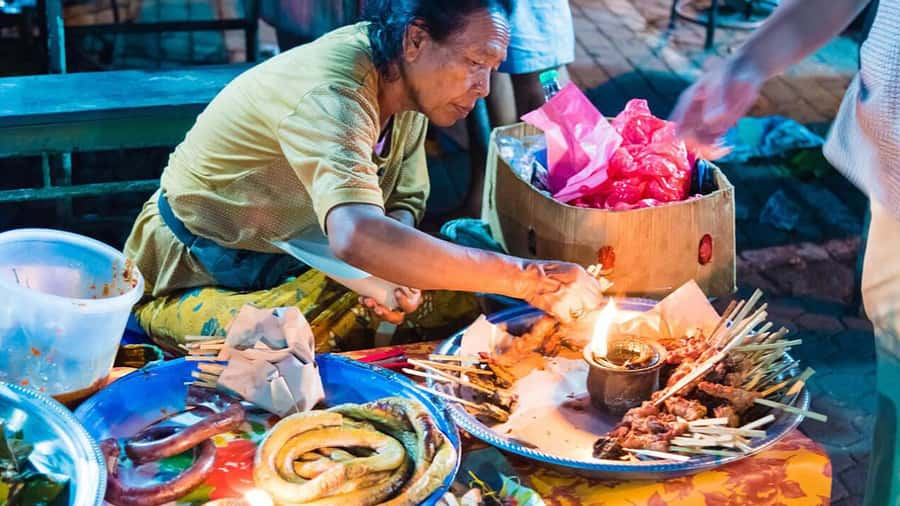
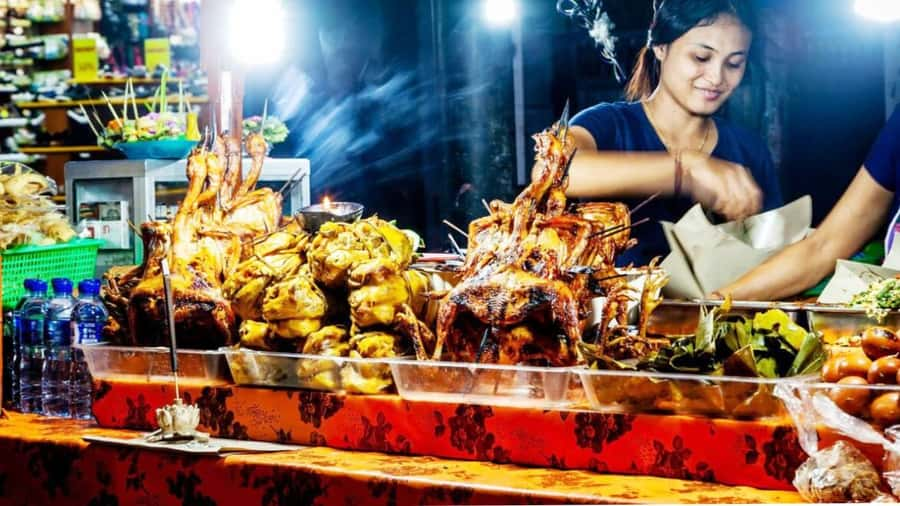
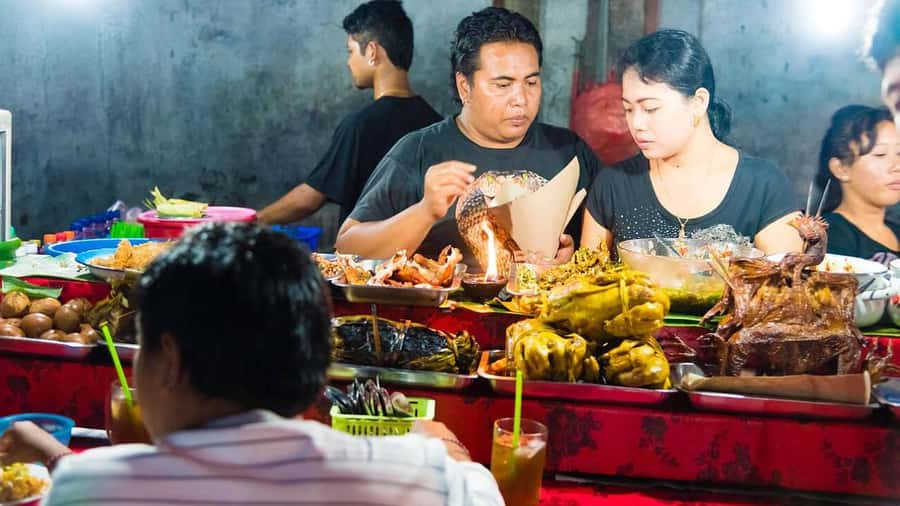
After sunset, food stalls fill with smoke, frying sounds, sweet aromas, and people stopping for a quick meal. The market serves a practical purpose. It is where people can eat after work, buy local snacks, and pick up food without turning dinner into a formal event.
That is what makes this outing worthwhile. You are not simply being handed a plate and told its name. You can watch vendors prepare food in front of you, see how quickly locals make choices, and notice the difference between a dish intended as a snack and one meant to fill you up.
I also like that the experience does not pretend to be fine dining. You should expect market seating or food eaten as you move between stalls, depending on the stop. The appeal is the setting, the freshness, and the chance to try dishes you may not recognize.
More Night Market Food Tours in Indonesia:
- Ubud Traditional Night Market Food Tour-All Inclusive
★ 4.4 · 95 reviews - Bali Food Tour: Savor Street Food and Night Market Adventures
★ 5.0 · 46 reviews - Ubud Day Tour : Waterfall, Temple and Local Night Market Tour
★ 5.0 · 17 reviews
Starting with coffee, tea, and Balinese everyday habits
The private transport option includes a tasting of traditional herbal drinks and Balinese coffee. This opening gives the evening a useful frame. Food culture is not only about special ceremonies or famous dishes. It also appears in the drinks people have as part of a normal day.
Your guide explains the role of herbs, spices, and basic ingredients in Balinese cooking. The tasting is likely to be most interesting if you ask questions about when each drink is served and how locals use it. You may find that the flavors are quite different from the sweet coffee or tea drinks common in tourist areas.
There is an important booking detail here. The coffee and herbal drink tasting is listed for the private transport option only. If you choose the shared group or walking format, do not assume this opening tasting is included.
The drink stop also sets a comfortable pace before the market walk. You get a chance to meet the guide, talk through food preferences, and mention allergies or restrictions. Tell the operator in advance if you avoid peanuts, coconut, strong spices, meat, or other ingredients.
What you eat at the market
There is no fixed menu promising one exact plate after another. Instead, the guide takes you through a selection of market food, including savory dishes, grilled items, local snacks, sweets, and other dishes available that evening.
That flexibility is a strength. Market food changes with supply, time, and what each vendor has prepared. You can try a little of several things rather than commit to one large meal. The experience is especially useful if you are curious but cautious, since Nata can explain the choices before you buy or taste them.
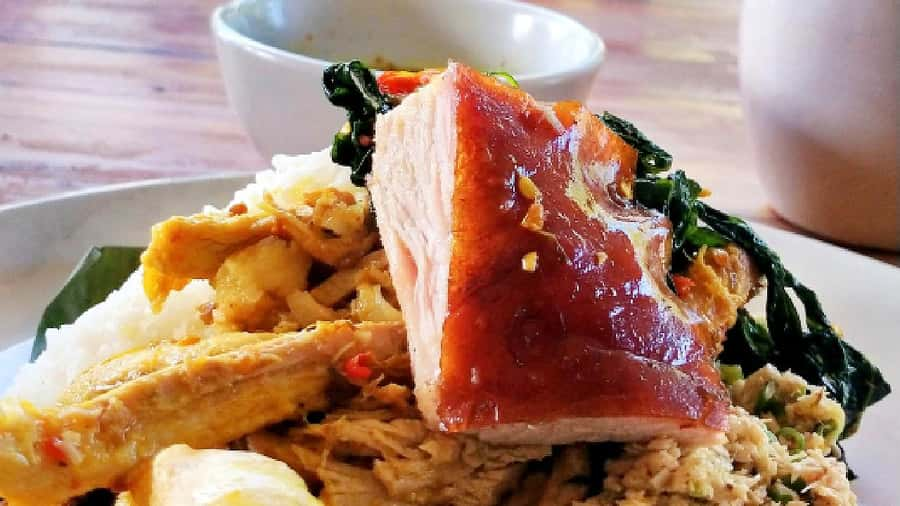
Expect a useful spread of flavors. One evening may move from sweet to smoky, salty to spicy, with different textures along the way. A local favorite such as babi guling may appear during the meal, although food availability can vary.
The food is prepared at stalls and local eateries, not in a controlled restaurant kitchen. That is part of the point, but it also means you should arrive ready for heat, smoke, crowds, and strong seasoning. If you prefer mild food, say so clearly. The guide can help you avoid dishes that are too spicy for your taste.
The portion size seems generous enough to replace dinner for many people. One booking account described eating so much that the meal ended with an immediate trip back to the hotel for sleep. You can pace yourself, though. Since the tour lasts about two to four hours, there is no need to accept every item at once.
How Nata changes the market experience
A market is easy to enter and hard to understand. Without help, you may see trays of food without knowing their names, ingredients, or usual place in local life. You might also miss the less obvious stalls because you do not know what to look for.
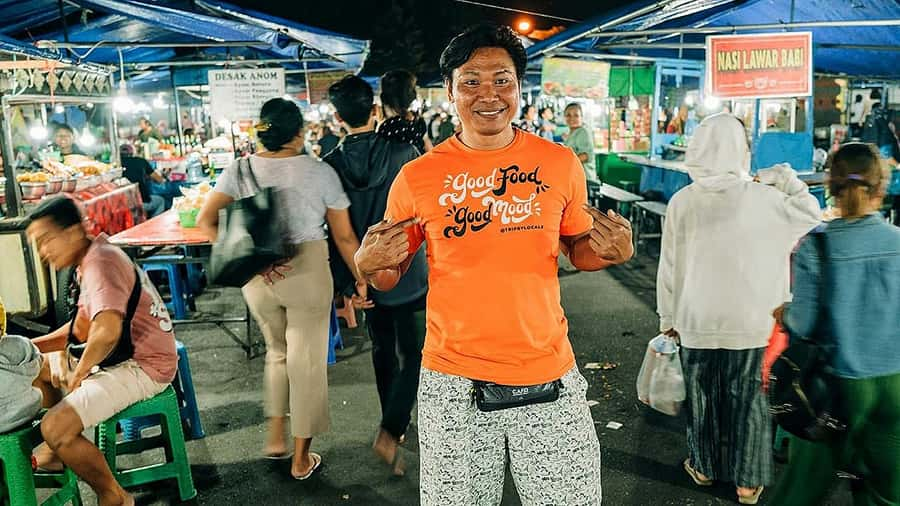
Nata’s role is to remove that guesswork. He explains what is being prepared, points out local favorites, and helps you decide what suits your diet and appetite. Several bookings specifically praised his friendly approach and his ability to recommend food around dietary restrictions.
That makes the guide more than a translator. He gives the food a reason and a setting. You learn when people eat certain dishes, how vendors prepare them, and how food connects with Balinese traditions and ceremonies.
I would still encourage you to ask direct questions. Ask what is being grilled, which ingredients are in a sauce, and whether a snack is sweet or savory. The more you ask, the more useful the evening becomes.
The experience is available as a private tour or a small shared group. Private travel gives you more control over timing and food choices, while a shared group can be a good way to keep the $27 price low and meet other people. Exact group size and starting time depend on availability.
More street food tours in Indonesia:
- Jakarta: Private Guided Sightseeing & Street Food Night Tour
★ 4.8 · 99 reviews - Bali: Authentic Culinary Street Food Experience Tour
★ 4.7 · 99 reviews - Denpasar: Night Street Food Walking Tour
★ 4.5 · 60 reviews - Night Walking Tour-Malioboro street food with guide at Yogyakarta
★ 5.0 · 53 reviews
The evening route, from food stalls to market browsing
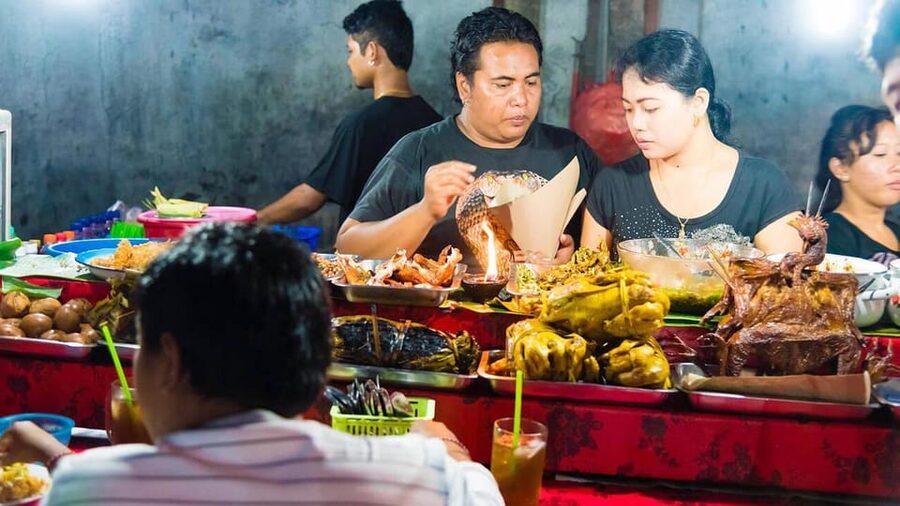
The main food portion takes place in Gianyar and lasts about two hours. This is where you spend most of your time tasting dinner, snacks, dessert, and welcome refreshments while moving through the market.
The route also includes a stop in Bali for a visit, free time, and an arts and crafts market. This gives the evening a change of pace after the food stops. You may browse local goods and watch the market continue around you instead of sitting through a long formal meal.
The supplied timing allows about one hour for this later section, but the full experience can run from two to four hours. Starting times vary, so check the available departure before booking. Night markets are most interesting after sunset, but peak periods can also mean tighter paths and more people.
The description also refers to two night-market areas. The exact combination can depend on the selected arrangement and the evening’s operation. I would treat the route as a guided market food outing rather than expect a rigid list of stalls.
Private transport or shared walking tour?
This choice affects more than your ride.
The private transport option includes hotel pickup and drop-off, with a possible additional fee for hotels outside central Ubud. It also includes the herbal tea and traditional coffee tasting. Pickup and the activity begin at the same time, so you should be ready when the arranged vehicle arrives.
The shared group option does not include hotel pickup. You meet at the designated point and join the guide there. The walking format may suit you if you are staying near the center of Ubud and want the lowest-complexity option, but you need to arrange your way to the meeting point.
The meeting instructions matter. One part of the booking information says that the activity does not include transportation and asks you to come directly to meet the guide. That applies to the walking option. If you select private transport, confirm the pickup address and any outside-central-Ubud fee through WhatsApp.
Provide an active WhatsApp number when booking. It is used for pickup coordination and live updates. This is especially useful in Ubud, where hotel access and traffic can make meeting arrangements less straightforward.
Is $27 good value?
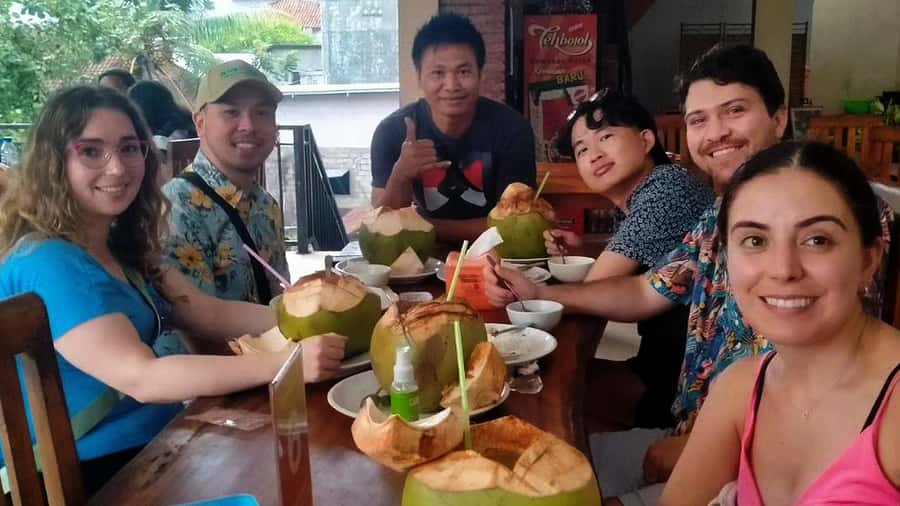
At $27 per person, I consider this good value if you want a guided introduction to Balinese market food rather than one restaurant dinner.
You are paying for the guide, selected tastings, local taxes, a bottle of water, and the effort of finding and explaining food you may not discover alone. The private option adds hotel transport and the coffee and herbal drink tasting, which makes the higher practical value easier to see if you are staying outside the central area.
The cost does not cover alcohol, including beer, or personal spending. Bring cash for extra food, drinks, crafts, or purchases that fall outside the included tastings. Most night-market vendors do not accept cards.
The value is weaker if you want a formal meal, a set menu, or a quiet dining room. It is also less suitable if you already know the markets well and prefer to explore without a guide. For a first evening of local eating in Bali, though, the guide and food selection do most of the work.
Practical comfort and food concerns
Wear comfortable walking shoes. The route involves walking through a busy market, and you may spend time standing while food is prepared or while the group moves between stalls.
Bring comfortable clothes, cash, a camera or phone, and a water bottle if you prefer having your own supply. A bottle of water is included, but the evening can still feel warm, especially around grills and crowded stalls.
The experience runs in rain unless major weather or a major Balinese religious holiday affects operations. Take light rain protection if the forecast looks poor. The market can also be crowded during peak hours, so keep your belongings close and expect a slower pace.
Tell the operator about allergies and dietary restrictions before the tour. Some foods may contain peanuts, spices, or coconut-based ingredients. The supplied information advises against booking if you have food allergies, so people with serious allergies should consider that warning carefully rather than rely only on verbal guidance at the market.
This outing is not designed for children under three, wheelchair users, people with mobility impairments, serious back problems, or heart problems. The combination of walking, crowds, uneven market conditions, and food uncertainty makes those limits practical rather than minor wording.
What the feedback says about the strongest features
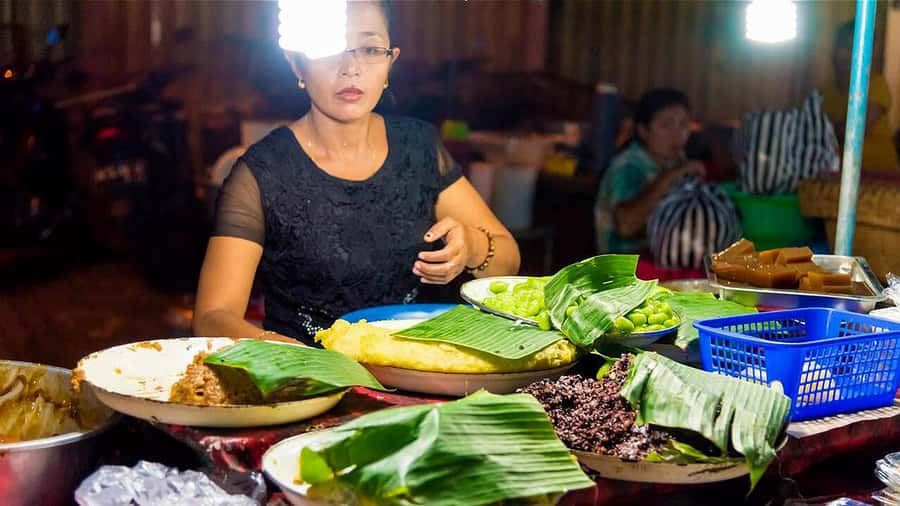
The clearest strength is the guide. Nata received repeated praise for being attentive, informative, and able to adjust food choices. That matters because the market itself does not come with labels or explanations.
The second strength is discovery. People who booked the outing tried dishes they would not have known how to find alone, including food not commonly encountered in regular restaurants or warungs. The guide turns unfamiliar stalls into possible meals.
The third strength is variety. The experience can cover sweet, smoky, salty, and spicy flavors in one evening. It also includes both food and drinks, though the coffee and herbal tasting belongs to the private transport option.
The main caution is that this is a market experience, not a polished culinary show. Conditions can be crowded, the food selection can change, and the walking can be tiring. That tradeoff is exactly what gives the evening its local feel.
Who should book this experience?
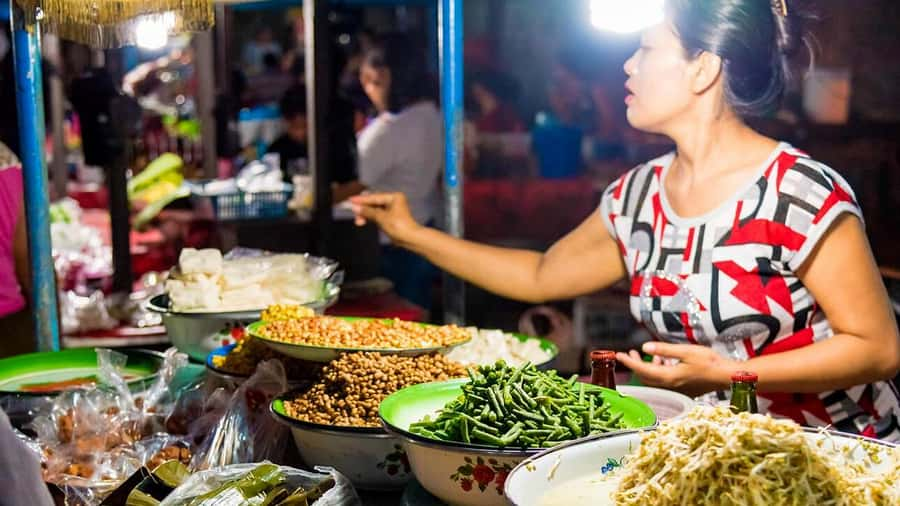
I would book this for a first visit to Bali when you want help getting beyond familiar restaurant menus. It suits curious eaters, couples, solo visitors, and small groups who enjoy trying several foods in modest portions.
It is especially useful if you are nervous about ordering at a local market. You can point to what looks interesting, ask questions, and let the guide explain what may fit your preferences.
The private option works best if hotel pickup matters, you want a more personal pace, or you want the coffee and herbal drink tasting. The shared walking option makes sense if you are near central Ubud and prefer to save money.
I would not choose it if you need strict control over ingredients, cannot manage a crowded walking route, or want a quiet sit-down dinner. The market setting is the experience, and it comes with noise, smoke, crowds, and changing food availability.
Should you book the Gianyar night market food tour?
Book it if you want a practical, friendly introduction to Balinese street food and do not want to guess your way through the market. Nata’s guidance, the range of flavors, and the chance to eat alongside local families make the $27 price sensible.
Choose private transport if you want hotel pickup and the coffee and herbal drink tasting. Choose the shared walking option if you are staying centrally and are comfortable reaching the meeting point yourself.
Bring cash, wear good shoes, tell the operator about restrictions early, and arrive ready for a real market rather than a staged food performance. That is the right expectation for an evening that puts everyday Balinese eating ahead of polish.
FAQ
How much does the Ubud night market food experience cost?
The experience costs $27 per person.
How long does the experience last?
The activity lasts between two and four hours, depending on the selected option and available starting time.
Where does the food portion take place?
The main food portion takes place in the Gianyar night market area, with local snacks, dinner, dessert, drinks, and food stalls.
Is hotel pickup included?
Hotel pickup and drop-off are included only with the Private Transport option. The shared group and walking option require you to meet the guide at the designated meeting point. Pickup from outside central Ubud may require an extra fee.
Are coffee and herbal drinks included?
Traditional Balinese coffee and herbal tea tastings are included with the Private Transport option only.
Can I choose private or shared participation?
Yes. You can select a private experience or a shared small-group option, depending on availability.
Should I bring cash?
Yes. Most night-market vendors do not accept cards, so bring cash for personal purchases and any extra food or drinks.
Can I join if I have dietary restrictions?
You should tell the operator about allergies or dietary restrictions in advance. Some foods may contain peanuts, spices, or coconut ingredients, and the experience is not suitable for people with food allergies.
Newly added plates around Indonesia
- Ubud: Gianyar Night Market Food Tour with up to 17+ Tastings★ 4.7 · 13 reviews
- Yogyakarta Night Street Food Hunting★ 5.0 · 3 reviews
- 4D3N Mount Bromo, Ijen Crater & Surabaya Night Market★ 5.0 · 4 reviews
- Denpasar Night Market Food Tour★ 5.0 · 4 reviews
- Taste & Explore Bali: Denpasar Street Food & Historic Sites★ 4.5 · 27 reviews
- Balinese Street Food Tour By Motorbike All You Can Eat and Drink!★ 5.0 · 5 reviews
- Bali Street Food Tour: Savor Authentic Flavors & Night Market★ 5.0 · 2 reviews
- Experience Jakarta Street Food Scene with MRT Transportation★ 5.0 · 17 reviews
Night Market Food Tours, compared.
Small Group: Michelin and Local Hawker Food Tour with 9 tastings
Read our review →
Food Market Visit and Cooking Class with Wine
Read our review →
Venice Street Food Tour with Local Guide with Local Food Market Visit
Read our review →
Cancun Taco Tour, Local Beer and Night Market with Transportation
Read our review →
Tsukiji Fish Market Food and Culture Walking Tour
Read our review →
Cancun Street Food Tour with Food Stalls, Local Market and Murals
Read our review →Browse the lists this tour appears in