
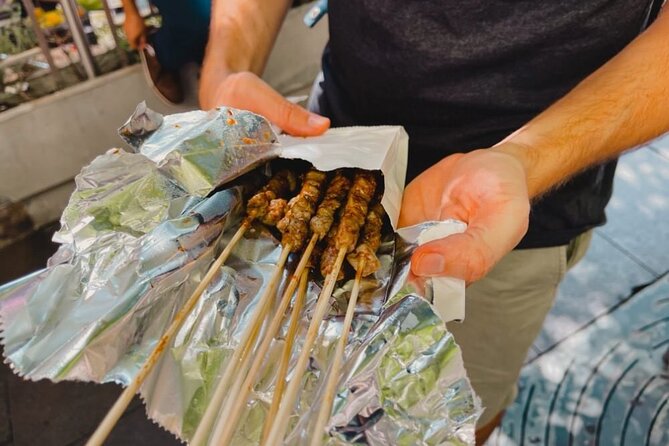
REVIEW · CHINATOWN FOOD TOURS
Sydney’s Chinatown Street Food and Stories Walking Tour
Sydney’s Chinatown is easy to visit on your own, but its most meaningful stories are easy to miss. This small-group walk connects Paddy’s Markets, Dixon Street, and Darling Square with the food and personal stories that explain how Chinese Australians shaped this part of Sydney.
I like the mix of four to five regional snacks and well-told local history. I also like the small group, capped at 12 people, since it is much easier to hear a guide such as Justin, Bunny, Bruce, or Eddie than on a large city tour. The main consideration is that drinks are not included, and the tour deals frankly with racism and discrimination as part of Chinese-Australian history.
Key points at a glance
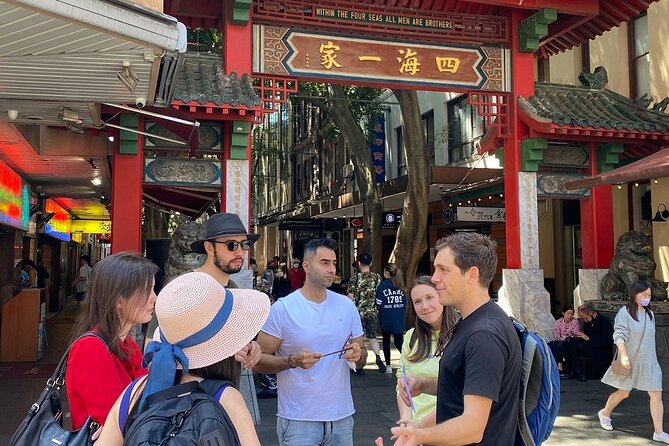
- Four to five food stops: Sample Chinese street food from several vendors, with the exact route depending on the day.
- Paddy’s Markets starting point: Begin where Sydney’s Chinatown story took shape around an important market institution.
- Small group of up to 12: The size gives you a better chance to ask questions and hear the guide.
- History is central: Expect more than restaurant recommendations, including Chinese migration, discrimination, and community life in Sydney.
- A useful food guide included: Leave with restaurant suggestions, ordering tips, and photos shared after the walk.
- Two-hour city walk: The pace is gentle, but there are some easy hills and periods of standing.
Why this Chinatown tour is more than a food crawl
Many food tours treat history as a short introduction before moving on to the next plate. This one gives the past a larger role. You learn how Chinese communities developed in Sydney, how Chinatown changed over time, and how food, business, family, and migration fit together.
That focus gives the snacks more meaning. A bun, rice cake, noodle dish, or other sample is not presented only as something tasty. It also points to the businesses and family traditions that keep Chinatown functioning as a living neighborhood.
I especially like this balance for visitors who have already seen the main sights of central Sydney. You can walk through Dixon Street on your own in five minutes, but a guide helps you notice public art, restaurant clusters, changing streetscapes, and the links between the market district and Chinatown.
The approach is not lighthearted at every moment. Chinese-Australian history includes exclusion and racism, and those subjects receive real attention. That is valuable if you want an honest account of the community’s past, but it may feel heavier than expected if you are looking only for a cheerful tasting walk.
More Chinatown eating walks in the world:
- Bangkok Tuk-Tuk Tour by Night with Chinatown Street Food Meal
★ 5.0 · 635 reviews - Bangkok Tuk-Tuk by Night with Chinatown Street Food Meal
★ 4.6 · 263 reviews - Bangkok: Chinatown Food Tour with Michelin Food Stalls
★ 4.8 · 226 reviews
Starting at Paddy’s Markets on Hay Street
The tour begins outside Paddy’s Markets at 17 Hay Street in Haymarket. The market is an important part of the early story of Sydney’s Chinatown, so this is a sensible place to begin rather than meeting at a random restaurant.
Allow a few minutes to identify the exact meeting spot. Paddy’s Markets occupies a large block, and one person had trouble finding the group despite reaching the market area. The operator sends a reminder with a photo of the meeting place, and using WhatsApp while in Australia can help if you need to clarify the location.
The first section lasts about 15 minutes. It is short, but it gives you a useful sense of why markets mattered to the growth of the district. Since there is no admission charge for this stop, you are paying for the guided interpretation and food later, not for entry to a paid attraction.
Walking Dixon Street and the heart of Chinatown
The longest part of the experience takes place in Chinatown, with about 90 minutes devoted to Dixon Street and nearby streets. Dixon Street is described as the largest Chinatown in the Southern Hemisphere, and the walk looks at how the area has developed over several decades.
This is where the tour’s two strands come together. You hear about Chinese communities in Sydney while stopping for food from local businesses. The guide also explains how Chinatown has changed, rather than presenting it as a frozen historic district.
The route is described as a gentle walk, though it includes some easy hills. There are several pauses, and you may have chances to sit briefly, but you should still wear comfortable shoes and be ready to stand while food is explained and served.
The small group matters here. With a maximum of 12 people, you can usually hear the guide without fighting through the noise of a busy street. You also have a better chance to ask why a dish is served in a certain way or how a particular part of Chinatown fits into the wider story.
Guides have included Justin, Bunny, Bruce, and Eddie. Justin is particularly associated with detailed accounts of Chinese-Australian history, while Bunny has been praised for making the walk lively and clear. The exact guide is not guaranteed, but the operator’s approach is consistent: food is used as a doorway into the people and places behind Chinatown.
Four to five snacks, with a changing food route
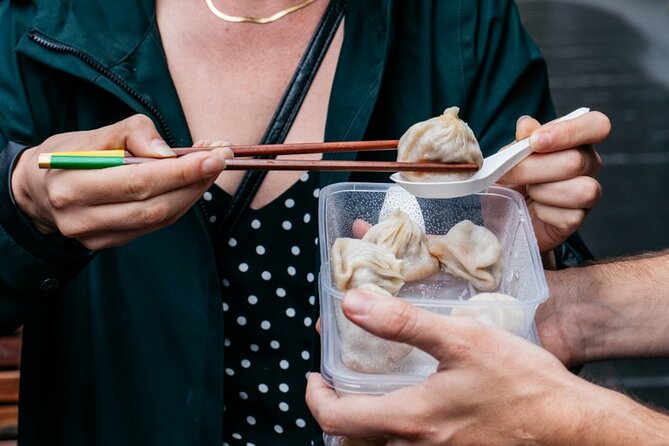
The tasting portion includes at least four Chinese regional street-food snacks, with four to five samples listed depending on the route. The exact dishes are not fixed in the information provided, which is worth keeping in mind if you are hoping for one particular specialty.
That changing route is likely useful because Chinatown’s food businesses and daily conditions can vary. It also means you should treat this as an introduction to several tastes, not as a full meal at one restaurant.
The food has received some of the strongest praise attached to this experience. You may try items from five different vendors, and the samples are intended to introduce places you might not choose on your own. The food also gives you an immediate way to compare regional styles and textures without committing to a large order.
Portions should be understood as snacks. If you arrive hungry, you may want to plan another meal afterward, especially since the tour lasts about two hours and beverages are not included.
Bring your own water. A drink stop is included halfway through the walk, but water is not provided as part of the listed inclusions. One person also felt that some shared food could have been handled more neatly, with serving sticks or clearer access. That is a fair practical concern for anyone cautious about shared plates.
More street food tours in the world:
- Dubai: Old Town, Creek, Museums, Souks, & Street Food Tour
★ 4.8 · 10,816 reviews - Ho Chi Minh City Street Food Tour & Sightseeing By Motorbike
★ 5.0 · 9,413 reviews - Medellin: Comuna 13 Graffiti Tour, Cable Car & Street Food
★ 4.8 · 9,046 reviews - Dubai: Old Town, Souks, Street Food, Guided Tour & Abra Ride
★ 4.9 · 7,170 reviews
Dietary needs and choosing what you eat
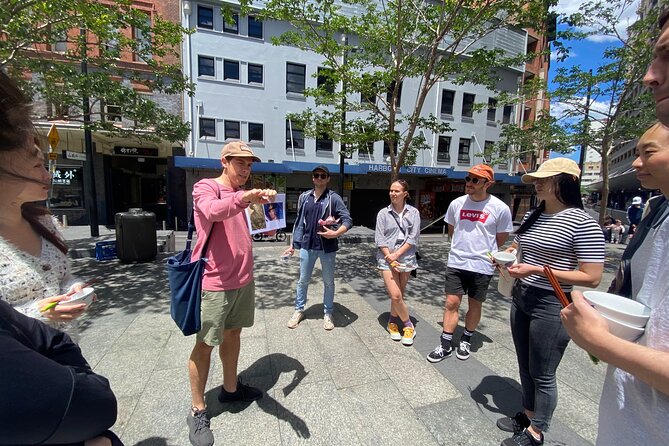
Vegetarian, vegan, and other dietary requirements can be accommodated, but you need to communicate them clearly before the tour. Do not assume that a booking platform will pass your food preferences to the operator. The operator has explained that some platforms do not forward this information.
This point matters because the route includes several different foods, and not every dish will suit every palate. One person disliked a lamb sample and wished for an alternative. If you do not eat lamb, have allergies, or are a particularly selective eater, contact the tour company directly as soon as you book.
The operator has also said that food preferences may be requested close to the tour date. That is not ideal for complex dietary needs, so direct contact is the safest approach. A food tour works best when the guide knows what you can and cannot eat before the first stop.
The Chinese Garden of Friendship: an important clarification

The walk pauses outside the Chinese Garden of Friendship and explains its background. The garden is more than 30 years old and is modeled on a Southern Chinese scholar’s garden.
You should not expect to enter the garden as part of this tour. The route provides an explanation from outside rather than a garden visit. This distinction matters because the garden appears in some descriptions in a way that could suggest an admission stop.
If visiting the garden is one of your main reasons for coming to Chinatown, plan a separate visit and check its opening details independently. On this tour, the garden works as a short historical reference point, not a full attraction visit.
Finishing in Darling Square
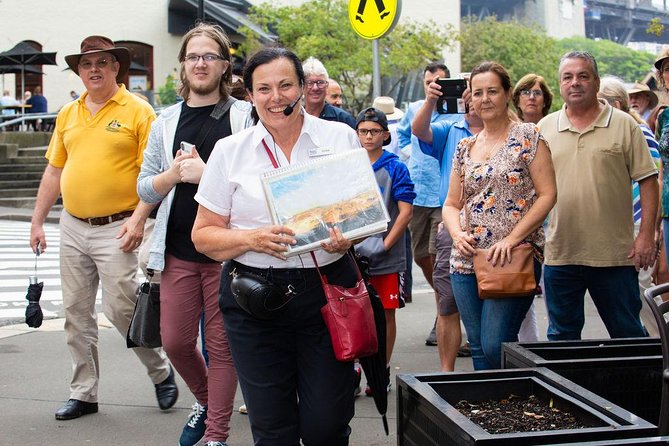
The final stop is Darling Square, one of Sydney’s newer precincts, with restaurants, cafes, and other places to see. The tour spends about 15 minutes here before returning to the meeting point.
This ending helps connect old Chinatown with newer development around Haymarket. You see how the food district continues into a modern dining area rather than ending at the traditional gates or Dixon Street.
The tour finishes back at the starting point. That makes the walk easier to fit into a day of sightseeing, since you are not left at an unfamiliar suburb or required to arrange a separate ride back to your hotel.
What the price includes at $60.97
At $60.97 per person, the value depends on how much you want from a food tour. You receive four to five snacks, about two hours with a guide, a small group, photos shared after the walk, and a guide to Chinatown restaurants with suggestions on what to order.
The restaurant guide may be the most useful part after the tour ends. You can use it to return to places that caught your attention or try restaurants you would otherwise pass. For a first visit to Sydney, that practical information can make the price feel more reasonable than a walk that ends with only a few tastings.
The tour is less compelling if you want a large meal, drinks included, or entry to the Chinese Garden of Friendship. You are paying for interpretation, access to a planned set of food stops, and local direction, not simply for the quantity of food.
The small group also adds value. A maximum of 12 people is modest for a city walking tour, and it allows the guide to explain dishes and history without using a microphone or shouting over a crowd.
The tone of the history and who will enjoy it
The history covers the Chinese presence in Sydney and the difficult treatment Chinese Australians faced. Stories of racism and exclusion are not brushed aside, because they help explain the community’s development and the importance of Chinatown.
I see that as a strength for anyone who wants food connected to real social history. You come away with more than a list of dishes. You gain a clearer idea of the pressures, persistence, and family businesses behind the neighborhood.
Still, you should know the tone in advance. If you prefer a tour focused only on architecture, restaurant bargains, and upbeat anecdotes, this may feel too serious in places. The operator also discusses public art, restaurants, and how Chinatown has changed, but the human history remains a major part of the walk.
This tour suits first-time visitors who want a local introduction, Sydney residents who have never explored Chinatown closely, and food lovers who want help choosing where to eat next. It also works well for people who enjoy meeting a mixed group from different parts of the world, since the small format encourages conversation.
Practical details before you book
The tour lasts approximately two hours and uses a mobile ticket. It starts and ends at 17 Hay Street, Haymarket, near public transport. Most people can participate, and service animals are allowed.
Wear comfortable shoes and bring water. The walk is not described as strenuous, but it includes easy hills and standing at several food stops. If wet weather is forecast, keep an eye on messages from the operator. The experience requires good weather, and a cancellation due to poor conditions brings the choice of another date or a full refund.
You can cancel for a full refund up to 24 hours before the start time. Changes or cancellations made inside that 24-hour window are not accepted for a refund.
Should you book Sydney’s Chinatown Street Food and Stories Walking Tour?
Book it if you want food tied to migration and community history, not just a sequence of tastings. The best parts are the small group, the four to five snacks, the clear local stories, and the practical restaurant guide you can use afterward.
Think twice if you need a full meal, included drinks, a guaranteed visit inside the Chinese Garden of Friendship, or a tour with little discussion of painful history. Tell the operator about dietary needs directly, bring water, and confirm the meeting point before you set out.
For most visitors, this is a useful way to get oriented in Chinatown and return later with better choices about where to eat. At $60.97, it offers solid value when you care as much about the story behind the food as the food itself.
FAQ
How long does the Sydney Chinatown Street Food and Stories Walking Tour last?
The tour lasts approximately two hours.
Where does the tour start?
It starts at 17 Hay Street, Haymarket, New South Wales 2000, Australia, outside Paddy’s Markets.
Where does the tour finish?
The walk ends back at the meeting point.
How many food samples are included?
The tour includes four to five Chinese regional street-food snacks, depending on the route.
Are drinks included?
No. Drinks are not listed as an inclusion, so bring your own water. A drink stop is included halfway through the walk.
Can vegetarian or vegan diets be accommodated?
Yes. Vegetarian, vegan, and other dietary requirements can be accommodated, but you should contact the operator directly with your needs.
Does the tour enter the Chinese Garden of Friendship?
No. The tour pauses outside the garden and explains its history, but it does not include entry.
How large is the group?
The tour has a maximum of 12 people.
What happens if bad weather cancels the tour?
If poor weather causes a cancellation, you can choose another date or receive a full refund. You can also cancel for a full refund up to 24 hours before the experience starts.
Newly added plates around the world
- Zanzibar:Stone town Street food market walking tour,transfer★ 4.5 · 9 reviews
- Zanzibar: Stone town visit, Shopping tour &Night food Market★ 4.4 · 2 reviews
- Zanzibar: Stone town tour, Prison island & night food market★ 4.5 · 2 reviews
- Xi’an Muslim Quarter Night Market Foodie Walking Tour★ 4.2 · 22 reviews
- Xi’an: Gourmet & Street Food Tour★ 4.8 · 22 reviews
- Verona: Street Food and History Tour with Local Guide★ 4.7 · 6 reviews
- Vienna Food Tour: Dishes, Wine, Street Food & Culture★ 4.7 · 12 reviews
- Verona: City Highlights & Street Food Walking Tour★ 5.0 · 3 reviews
Chinatown Food Tours, compared.

Bangkok Tuk-Tuk Tour by Night with Chinatown Street Food Meal
Read our review →
Bangkok Tuk-Tuk by Night with Chinatown Street Food Meal
Read our review →
Kampong Glam, Little India & Chinatown with Local Street Food Tastings
Read our review →
Bangkok Hidden Gems: Talad Noi, Chinatown & Street Food Tour
Read our review →
Michelin Premium Food Tour with Hawker Centre & Chinatown Tour
Read our review →Browse the lists this tour appears in