
REVIEW · MARRAKECH STREET FOOD TOURS
Discover Marrakech Street Food with a Local Guide
The best part of this Marrakech food tour is its focus on what people actually eat, not just the familiar tagines and couscous. You may try snail soup, sardine meatballs, Moroccan pancakes, and spiced herbal tea while moving through local neighborhoods with a guide who explains the food as you go.
I like the generous tasting menu, which can include 10 to 12 small dishes, and the practical advice about where to eat and shop during the rest of your stay. I also like that guides such as Mehdi take time to explain Moroccan customs and ingredients. The main consideration is pace: four hours of walking, eating, and some driving can feel long if you prefer a quick market visit or have limited mobility.
Key points at a glance
- Seven to twelve tastings: The food can cover breakfast, lunch, dinner, snacks, sweets, drinks, and fruit.
- More than standard Moroccan fare: Expect possibilities such as harira, khoudenjal, chwa, berbouche, and sardil mechoui.
- A guide-led route: You move through the Medina with local help rather than choosing stalls at random.
- Food and drinks included: The $50 price covers the guide, walking tour, and tastings.
- Morning or night departures: Timing can affect which street foods are available.
- Useful local orientation: You receive advice on where to eat and shop during the rest of your visit.
Starting at Jamaa el Fna and finding your bearings
The meeting point is given as Post du Maroc at Jamaa el Fna Square, with the location code J2F6+X7P also supplied. The tour description also refers to Café de France as the starting place. These are both central landmarks on the square, but I would confirm the exact meeting spot before you set out, especially at night when the square is crowded and landmarks can be harder to identify.
Jamaa el Fna is a practical place to begin because it puts you right in the middle of Marrakech’s Medina. You are not being collected at your hotel, so allow time to reach the square on your own. Hotel pickup and drop-off are not included.
From there, the guide explains the route and leads you through a mix of walking and driving. That combination matters. A walking food tour lets you notice the small stalls, bakeries, and neighborhood restaurants at street level, while the driving sections allow the route to reach several local areas rather than staying in one tourist-heavy part of the Medina.
The exact order of stops can change. Some foods are sold only at certain times, so a morning tour will not necessarily serve the same dishes as a night tour. Think of the food list as a set of possible tastings, not a fixed restaurant menu.
More street food tours in Marrakech:
- Marrakech: Street Food Tour by Night
★ 4.8 · 2,838 reviews - The Original Marrakech Street Food Tour
★ 5.0 · 248 reviews - Marrakech Street Food Tour
★ 5.0 · 220 reviews
Moroccan breakfast: msemen, harcha, and khaneza
The first foods may be breakfast-style dishes. Msemen is a layered Moroccan pancake, usually enjoyed with tea or another simple accompaniment. Harcha is another pancake-like bread made with semolina. Both give you a useful introduction to everyday Moroccan food because they are familiar, filling, and far removed from the image of Moroccan cooking as only stews and couscous.
You may also try khaneza, bread served with eggs and vegetables. This kind of tasting shows how Moroccan food often works: basic ingredients are combined with care, then seasoned to make a satisfying meal without fuss.
I like this opening because it gives you a sense of how the day begins for local people. It is also a good chance to tell the guide what you can and cannot eat before the heavier dishes arrive. If you have an allergy or dietary restriction, share it in advance. Alternatives may be possible, but you should not wait until the group is already at a food stall.
Soups and sweets with a lesson in tradition
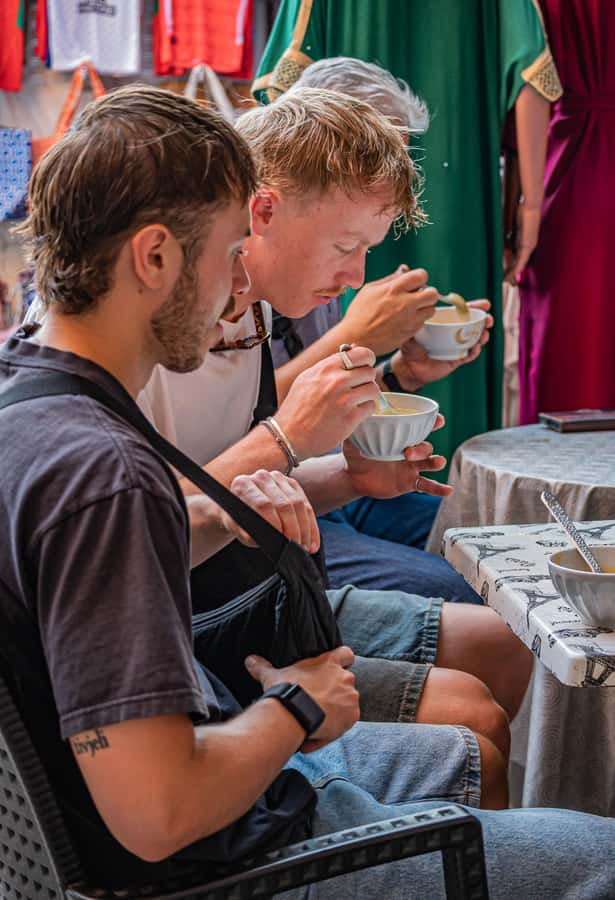
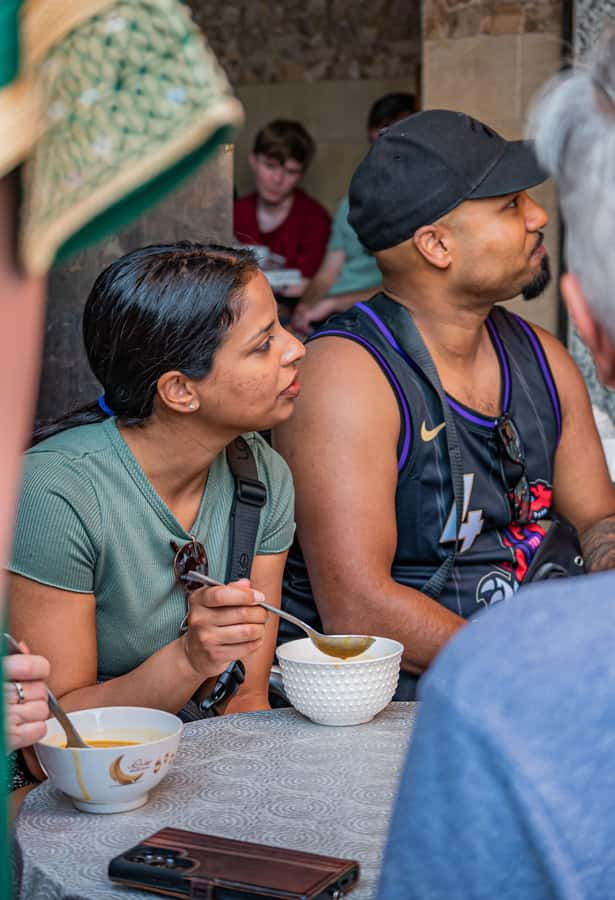
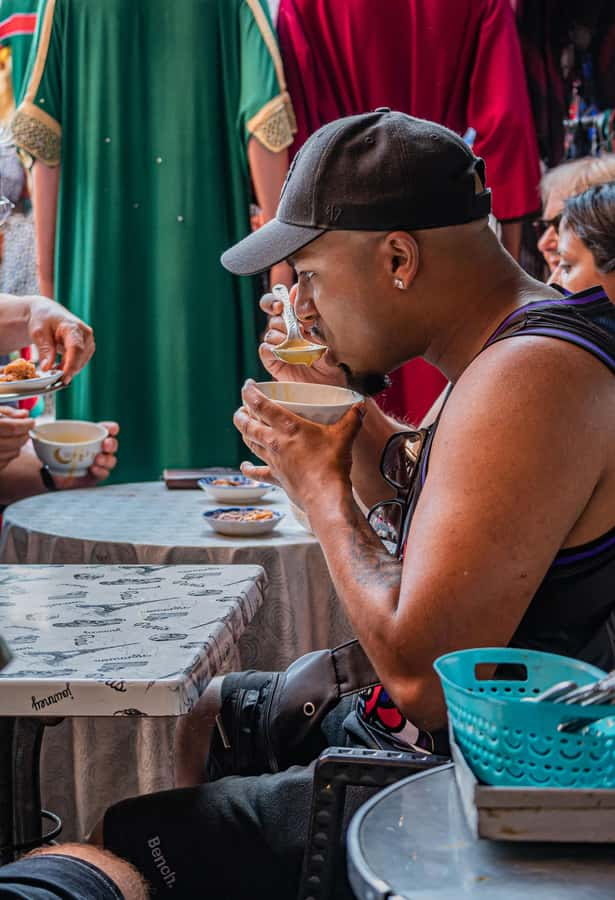
Harira is one of the likely highlights. This classic Moroccan soup is traditionally associated with Ramadan, though it is enjoyed more broadly as well. The version listed here is vegetarian, which may suit you if you do not eat meat. The guide can explain how soups, bread, dates, and sweets fit into Moroccan meals and religious traditions.
Chebakiya brings the sweet side of the tour. These sesame-covered pastries are shaped, fried, and coated in syrup or honey. They are rich and sticky, so you may want to pace yourself rather than treating every tasting as a full serving.
Khoudenjal is a spiced herbal infusion. It is a useful reminder that Moroccan drinks are not limited to mint tea. Its warm spices give the guide another opening to explain local habits and the role of herbs in home cooking.
This portion of the tour works best if you are curious about how dishes connect to daily life. You are not simply checking off names. You can ask how a dish is made, when it is served, and which ingredients are common in Moroccan kitchens.
Main-course stops: grilled meat, fish, and vegetables
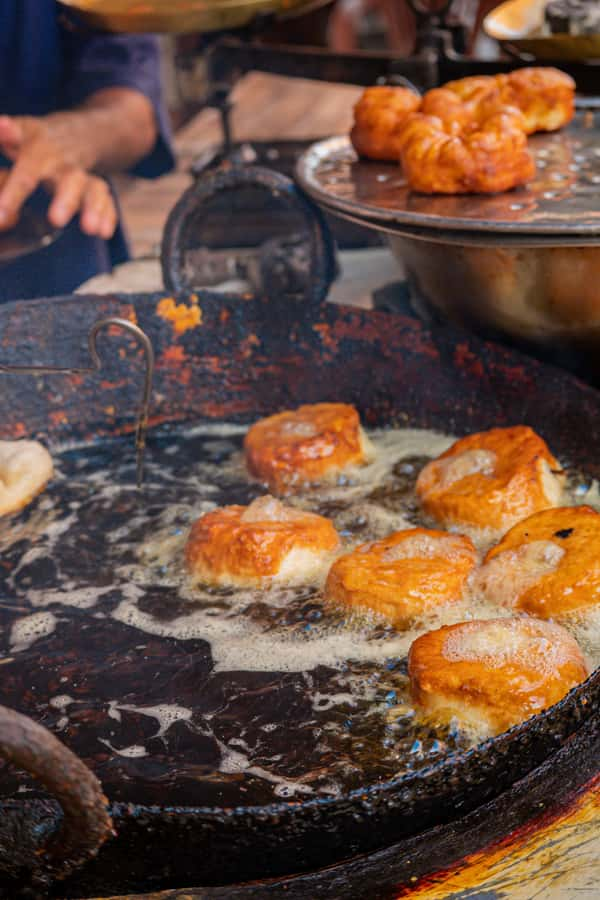
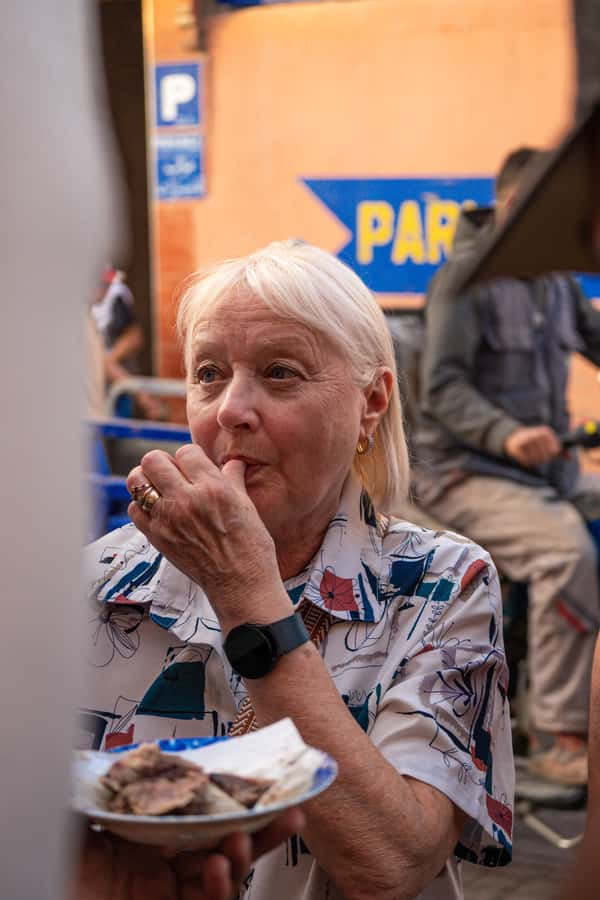
The tour may continue with chwa, grilled beef or chicken. Grilled meat is an easy dish to enjoy, but the setting matters. Instead of ordering a large plate in a restaurant, you taste it as one part of a longer route, alongside foods you might not have thought to choose yourself.
Sardil mechoui is another distinctive possibility. It is made with grilled sardine meatballs, a dish that brings fish into the food story of Marrakech. Since Marrakech is inland, this is a useful reminder that Moroccan cooking draws from the country as a whole, not only from the ingredients found immediately around the city.
Maklla, described as Moroccan-style chakchouka, adds eggs and vegetables to the route. It is hearty but not complicated, and it shows how vegetables can form the center of a meal rather than just a side dish.
The food is served at several family-run stalls and lesser-known eating places. The benefit is variety and a closer look at local dining habits. The trade-off is that street food settings are not designed like formal restaurants. You should expect simple surroundings, short stops, and a route shaped by what is being served that day.
Same city, another round of plates:
- Marrakech Night Street Food Tour / Taste The Real Marrakech
★ 4.9 · 200 reviews - Marrakech street food tour with a local
★ 5.0 · 55 reviews - Marrakesh: Guided Street Food Tasting by Locals
★ 4.6 · 47 reviews - Marrakech: Street Food Tour by Night
★ 4.5 · 42 reviews
Berbouche and the more adventurous side of the menu
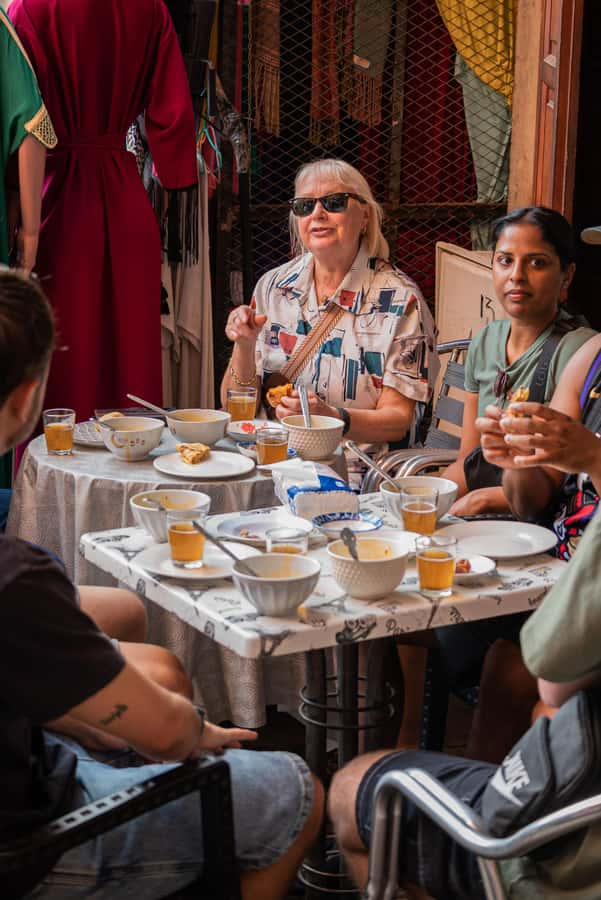
Berbouche, or snail soup, is the tasting most likely to divide the group. If you are open to trying unusual foods, it can be one of the most memorable stops. If you are not, ask the guide what alternatives are available before the tour begins.
The point is not to force every person to eat every item. A good food tour gives you context as well as samples. Even if you pass on the snails, you still learn how this street food fits into Marrakech’s eating culture.
You may also receive a selection of local nuts. These are simple snacks, but they help round out the day and give you something familiar between stronger flavors. With as many as 12 tastings, small portions are important. The whole experience is designed around sampling, not sitting down to eat 12 complete meals.
Raïb, fresh juice, and the final sweet notes
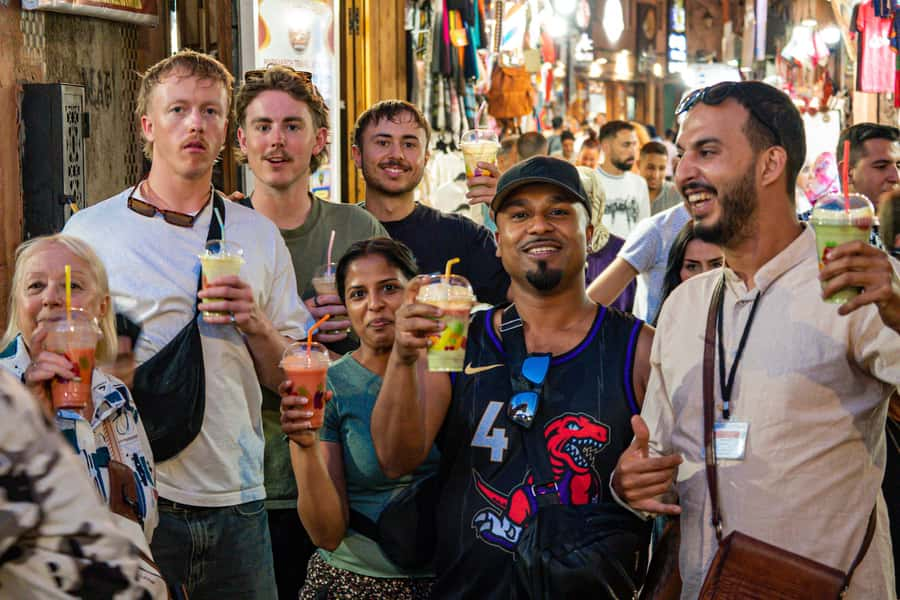
Raïb is a traditional Moroccan frozen yogurt, offering a cool change after soups and grilled foods. Assir, fresh fruit juice, brings another light finish. Depending on the time and route, these drinks may appear at different points rather than at the end.
All food and drinks are included in the stated price, so you do not need to budget extra for the planned tastings. That does not mean you should carry no money at all. Hotel transfers are not included, and you may want cash for personal purchases or any food you choose to buy after the tour.
The tour can leave you very full. One direct piece of advice is to eat lightly beforehand and keep your evening meal flexible. The tastings are described as generous, and the range covers breakfast items, soup, sweets, meat, fish, vegetables, drinks, and nuts.
What the guide adds beyond the food
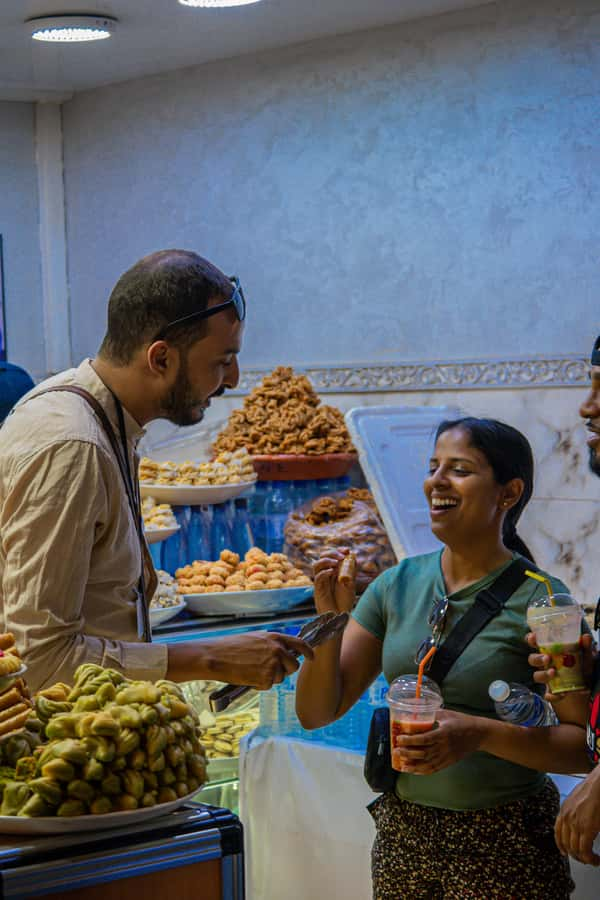
The guide is the main difference between this experience and simply walking through the souks with a list of dishes. Guides speak Arabic, English, or French, and the food is explained along the route rather than presented without context.
Mehdi is named in several of the strongest comments about the experience. He is described as attentive, cheerful, and passionate about the food. He also gave explanations about Moroccan traditions and shared a list of the dishes tasted at the end. Your guide may be Mehdi, but the booking information does not promise that every departure will have the same person.
That end-of-tour list is a useful touch. Marrakech food tours can blur together after several stops, especially when you are trying new names and ingredients. Having a record of what you tried helps you return to a favorite food later.
The guide also gives practical advice on where to eat and shop during your stay. I consider that part of the value. A four-hour tour should not only feed you. It should make the rest of your time in Marrakech easier, especially if this is your first visit and you are unsure which places cater mainly to tourists.
The $50 price and what you receive
At $50 per person, the tour is not the cheapest way to eat in Marrakech. You can certainly buy individual snacks for less. The value comes from the number of tastings, the guide, the route planning, and the help choosing local food without having to work it all out yourself.
The advertised range is seven to 12 dishes, while the detailed plan lists as many as 12 samples. That is a strong amount of food for four hours, particularly because drinks and all planned tastings are included.
You are also paying for access to a planned sequence of stops. Without a guide, you may see the same stalls but miss the explanation, hesitate over unfamiliar dishes, or spend your appetite on one large meal. This tour spreads your spending across many small tastes.
The value is weaker if you already know Marrakech well, speak with local vendors comfortably, and prefer to choose every meal yourself. It is stronger for a first visit, for food-focused couples and families, and for anyone who wants an organized introduction to the Medina.
Timing, walking, and practical comfort
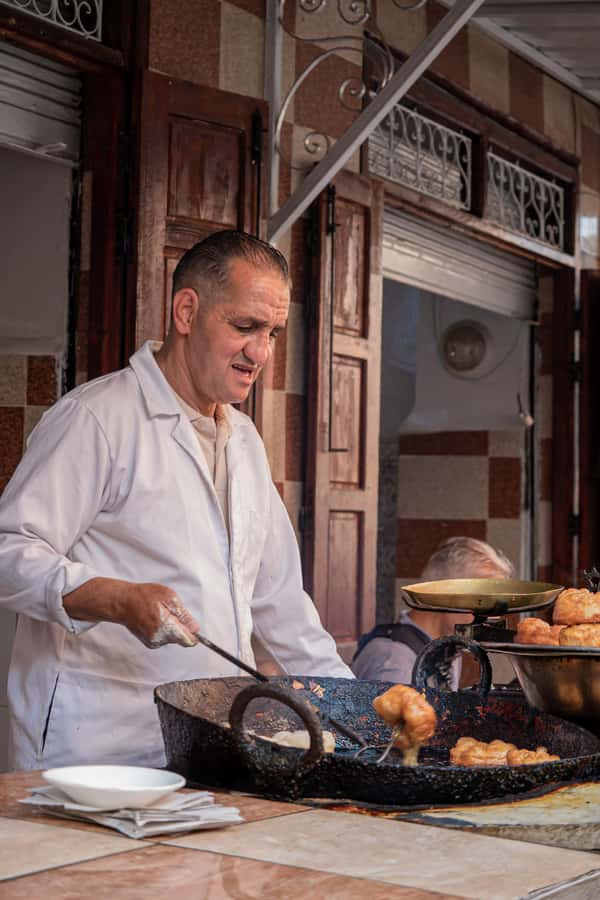
You can choose a morning or night departure, subject to availability. Morning timing may suit you if you want to learn the city early and use the guide’s food advice for the rest of the day. Night timing offers a different feel around Jamaa el Fna and may better suit people who enjoy evening food stalls.
Timing also affects the menu. Some street foods are available only during particular parts of the day, so ask what is likely to be served at your chosen start time if a certain dish matters to you.
The stated duration is four hours, with about three hours described for the guided tour, walking, and class portion. Since the route includes both walking and driving, you should be ready to move between stops rather than sit in one restaurant.
Wear comfortable shoes and avoid arriving full. The tour is not presented as a formal cooking class, despite the itinerary using the word class. It is primarily a guided food walk with explanations and tastings.
The experience is available in Arabic, English, and French. Cancellation is free up to 24 hours before the start, and you can reserve now and pay later. Those terms are useful if your Marrakech plans are still changing.
Who should book this Marrakech food tour
I would choose this tour if you want to:
- Try foods beyond tagine and couscous
- Learn what dishes are called and when they are eaten
- Get practical eating advice for the rest of your stay
- Visit family-run stalls and local eating places
- Share a food-focused outing with friends, a partner, or older children
- Let someone else handle the route through the Medina
It may not suit you if you want a quiet restaurant meal, dislike walking, or prefer a fixed menu with no surprises. It also deserves caution if you have serious allergies. The operator asks you to provide restrictions in advance and will try to offer alternatives, but street food routes cannot guarantee every ingredient or preparation method.
The tour is also a good fit for adventurous teenagers. One family with two 15-year-old sons found the food varied and enjoyable, which suggests the format can work well for families who want more than sightseeing. Still, young children who tire quickly may find four hours and many stops demanding.
Should you book it?
Book this Marrakech street food tour if you want a generous, guided introduction to local eating and are happy to let the route shape your meal. The strongest reasons are the broad tasting list, the chance to try unusual dishes such as berbouche and sardil mechoui, and the personal explanations from guides such as Mehdi.
Skip it if you already have a carefully planned food itinerary or want to eat only familiar dishes. For most first-time visitors, though, $50 is a fair price for four hours of food, transport between some neighborhoods, cultural explanation, and useful local advice. Confirm the exact meeting point and tell the guide about dietary needs before you go.
FAQ
Where does the tour meet?
The meeting point is Post du Maroc at Jamaa el Fna Square. The location code provided is J2F6+X7P. The tour description also refers to Café de France, so confirm the precise meeting landmark before departure.
How long does the food tour last?
The experience lasts four hours. The itinerary describes a guided walking, driving, and class portion of about three hours within the overall activity.
How many dishes will I taste?
You can expect between seven and 12 local tastings. The detailed food list includes 12 possible items, but the exact selection depends on timing and availability.
Is hotel pickup included?
No. Hotel pickup and drop-off are not included, so you must make your own way to the meeting point.
What foods might be included?
Possible tastings include msemen, harcha, harira, chebakiya, khoudenjal, khaneza, raïb, chwa, berbouche, sardil mechoui, maklla, assir, and local nuts.
Are drinks included?
Yes. All planned food and drinks are included in the price. Possible drinks include khoudenjal, a spiced herbal infusion, and assir, fresh fruit juice.
Can I choose a morning or night tour?
Yes. The experience is offered in the morning or at night, subject to available starting times.
What languages does the guide speak?
The live guide can speak Arabic, English, or French.
Can dietary restrictions be accommodated?
You should tell the operator about allergies or dietary restrictions in advance. The guide will do their best to provide suitable alternatives.
What is the cancellation policy?
You can cancel up to 24 hours before the activity for a full refund. You can also reserve now and pay later.
Newly added plates around Marrakech
- Marrakech street food tour with a local★ 5.0 · 55 reviews
- Local Hidden Spots Street Food Tour in Medina Marrakech★ 5.0 · 30 reviews
- Marrakech Tasting Tour: Experience Local Street Food & Culture!★ 5.0 · 5 reviews
- Marrakech Street Food with +10Tasting & Tanjia Dinner|Guided Walk★ 5.0 · 21 reviews
- Marrakech Street food Tours★ 4.5 · 15 reviews
- Marrakech: Street Food Tour by Night★ 4.5 · 42 reviews
- Marrakech street Food Tour Eat like Locals★ 5.0 · 4 reviews
- 3 Hours Private Tour Marrakech Night Market★ 5.0 · 2 reviews
Marrakech Street Food Tours, compared.
Marrakech Night Street Food Tour / Taste The Real Marrakech
Read our review →
Browse the lists this tour appears in