
REVIEW · VEGAN AND VEGETARIAN STREET FOOD
Tashkent Vegan Street Food Tour
Tashkent’s meat-heavy food culture makes this vegan street food tour especially useful. Akmal, who was born and raised in the city, takes you from Chorsu Bazaar to Alay Bazaar, through quiet old-town lanes, and into a local restaurant serving plant-based versions of Uzbek dishes. You get food, city life, and a personal guide to eating well in Uzbekistan without meat.
I like the route for two reasons: it shows two very different markets, and it treats food as a doorway into local customs rather than a parade of tastings. I also like the small maximum of seven people, which should make it easier to ask questions and adjust the pace. The main consideration is the $72 price, which is not cheap for four hours in Tashkent, and the tour requires good weather.
Key points at a glance
- Chorsu Bazaar begins the morning: Try potato-filled khanum in tomato sauce at the old city’s best-known market.
- Old-town walking adds context: The Khadra stop brings narrow lanes, neighborhood life, and a slower side of Tashkent.
- Alay Bazaar brings a different mood: Sample round Uzbek bread with traditional Korean salads at a central farmer’s market.
- The final meal is unusual: A local restaurant serves veganized Uzbek dishes, including plant-based beshbarmak.
- Akmal leads the experience: He speaks excellent English, grew up in Tashkent, and has lived and traveled in Europe.
- The group stays small: A maximum of seven people, with hotel pickup offered and group discounts available.
Why this tour is useful in meat-focused Uzbekistan
Uzbek cuisine can be a puzzle for anyone avoiding animal products. Meat appears often in familiar dishes, and a menu translation may not tell you what is cooked into a pastry, sauce, or noodle dish. This tour gives you practical food knowledge at the start of your stay, so you can make better choices for the rest of your time in the country.
I like that the tour does not stay inside a restaurant. You move through markets where food is part of ordinary city life, then walk through the old town before finishing at a place that has made a special effort to adapt local recipes. That mix helps you understand what is naturally plant-based, what has been modified, and how local food fits into daily routines.
The tour also has a clear personal angle. Akmal is a Tashkent native who later lived and traveled in Europe before returning to the city. That background gives him a useful point of comparison when explaining Uzbek customs, food habits, and the challenge of finding vegan choices in a cuisine built around meat.
Part of the tour fee supports imprisoned vegan activists. If that cause matters to you, it adds a social purpose to the purchase. You should still judge the tour mainly by its route, food, and price, but this detail may help you decide between similar food experiences.
More Vegan and Vegetarian Street Food in the world:
- Vegan Street Food & Stories of Hanoi
★ 5.0 · 282 reviews - Hanoi: Vegan Street Food & Stories
★ 4.9 · 201 reviews - Mexico City Vegan & Vegetarian Street Food Adventure
★ 5.0 · 176 reviews
Starting at Chorsu Bazaar and Gluttony Lane
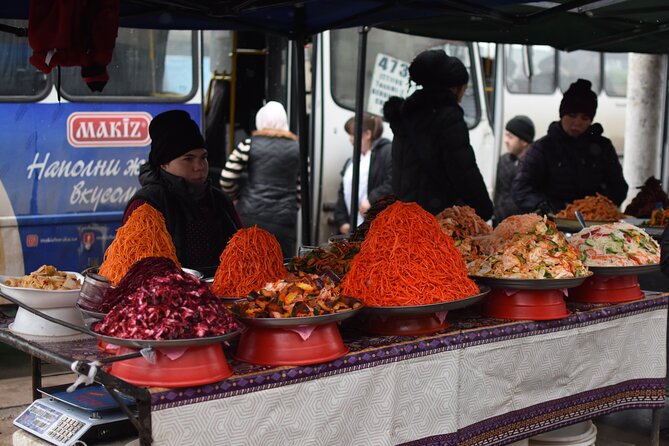
The tour opens at Chorsu Bazaar, Tashkent’s oldest and most picturesque market. This is a strong first stop because the setting gives you an immediate sense of the city’s food culture. You are not simply handed a prepared plate. You begin among market stalls and local shoppers, with the sounds, smells, and movement of a working bazaar around you.
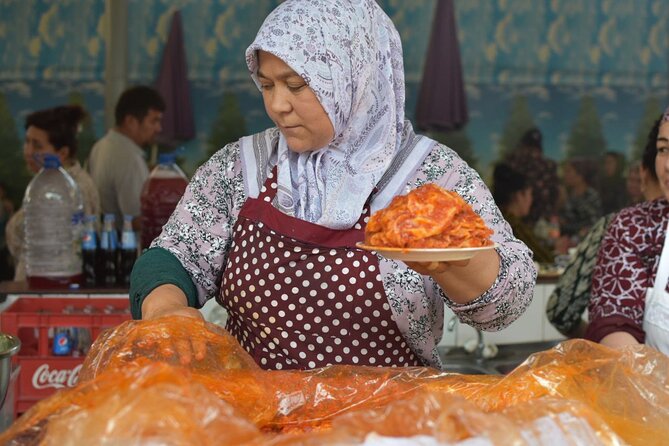
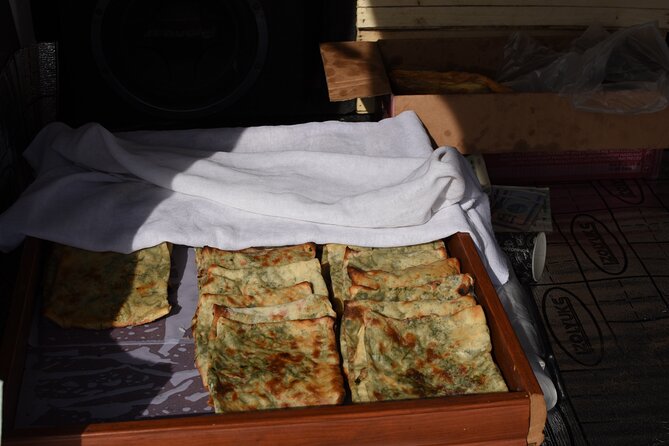
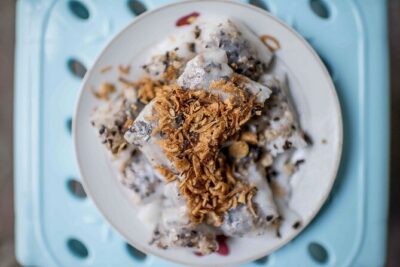
The first featured dish is khanum, a potato pastry served in a tomato sauce. The tour takes you to an area known as Gluttony Lane, where this local favorite is served. For a vegan visitor, this is a welcome introduction to the fact that Uzbek food is not limited to meat dishes, even if meat receives most of the attention.
Allow about an hour here. That gives enough time for tasting and for Akmal to explain what you are eating, though the exact pace can change with the group. Go hungry. The food portions across the morning are substantial, and this first market stop is only the beginning.
Chorsu is also the sort of place where a guide adds real value. A first-time visitor may notice the large market hall and colorful stalls, but not know which lane or counter is worth stopping at. Akmal’s role is to lead you toward the plant-based choices that fit the tour rather than leave you guessing.
A possible drawback is that markets are active public places, not controlled dining rooms. You may prefer a quiet, seated meal, but this stop is meant to feel local and direct. The reward is a closer look at how food is bought and eaten in Tashkent.
Walking through Khadra’s old lanes
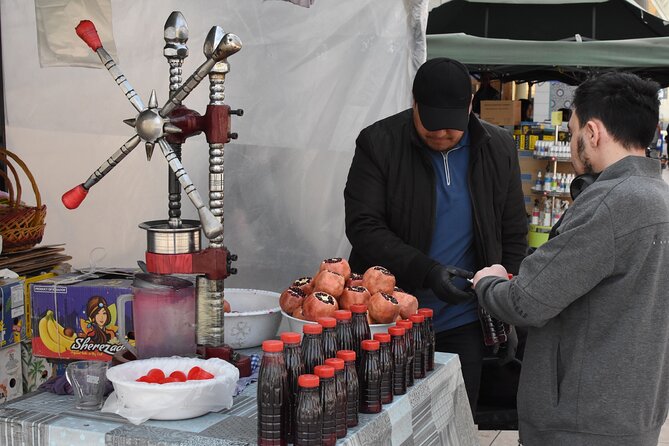
After Chorsu, the route slows down in Khadra, part of Tashkent’s Old City. You spend about 40 minutes walking through narrow, winding alleys and observing local life. Children may be playing in the neighborhood, and the pace is notably calmer than at the market.
This break matters because it keeps the morning from becoming a food crawl. The tour provider specifically aims to mix walks, pictures, stories, and people with the tastings. I like that choice. Food is more meaningful when you see the streets and homes around it, rather than moving from one plate to another without a pause.
Khadra also gives you time to ask questions. If you are trying to understand how vegetarian and vegan eating works in Uzbekistan, this is a good place to talk with Akmal about customs and everyday meals. The information in the tour is not limited to ingredients. It also covers the city and the way people use its markets and neighborhoods.
The old-town walk is not described as a formal sightseeing visit with a long list of monuments. Expect local streets and ordinary surroundings instead. That is a strength if you want a more personal view of Tashkent, but it may feel too informal if you want a conventional history tour.
Comparing Chorsu with central Alay Bazaar
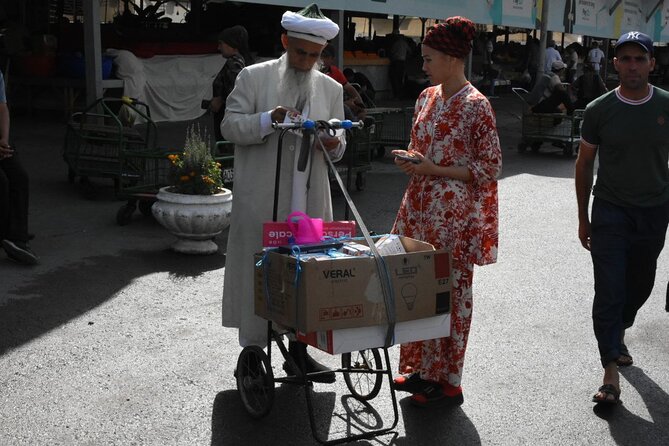
The next market is Oloy, also called Alay Bazaar, in the city center. Its location and feel differ from Chorsu, so visiting both gives you a useful comparison. Chorsu represents the old town and its famous market culture. Alay offers a central farmer’s market with its own everyday food traditions.
The stop lasts about an hour. Here you try round Uzbek bread stuffed with traditional Korean salads, a combination that reflects one of the city’s local food influences. The salads are especially popular with school students at lunchtime, which gives the tasting a clear connection to ordinary local habits rather than tourist presentation.
This is one of the most interesting details of the route. Tashkent food is not isolated from the wider region. The Korean salad tradition shows how communities and food customs become part of the city’s daily eating patterns. You get a small but useful lesson in how local cuisine changes over time.
I also like the bread-and-salad combination because it gives you something practical to remember. It is the sort of pairing that may help you identify a simple plant-based lunch later in your trip. Still, ingredients can vary, so you should ask the guide about each preparation if you have allergies or strict dietary rules.
With two markets included, the tour offers more than one snapshot of Tashkent. You see an older market district and a central food market, then connect them through the city streets. That makes the $72 fee easier to assess. You are paying for guiding, several tastings, transportation between areas if needed, and the benefit of having someone select suitable food for you.
More street food tours in the world:
- Dubai: Old Town, Creek, Museums, Souks, & Street Food Tour
★ 4.8 · 10,816 reviews - Ho Chi Minh City Street Food Tour & Sightseeing By Motorbike
★ 5.0 · 9,413 reviews - Medellin: Comuna 13 Graffiti Tour, Cable Car & Street Food
★ 4.8 · 9,046 reviews - Dubai: Old Town, Souks, Street Food, Guided Tour & Abra Ride
★ 4.9 · 7,170 reviews
Finishing near the National Library with vegan Uzbek dishes
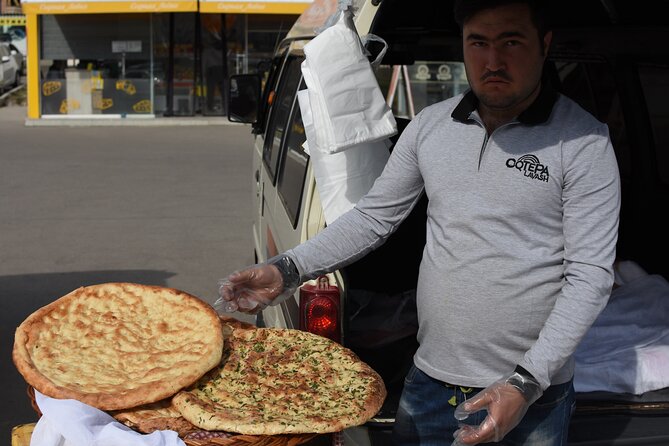
The final stop is a local restaurant near the National Library of Uzbekistan named after Alisher Navoi. This restaurant has adapted familiar local dishes into vegan versions, giving the tour a proper sit-down finish after the market tastings.
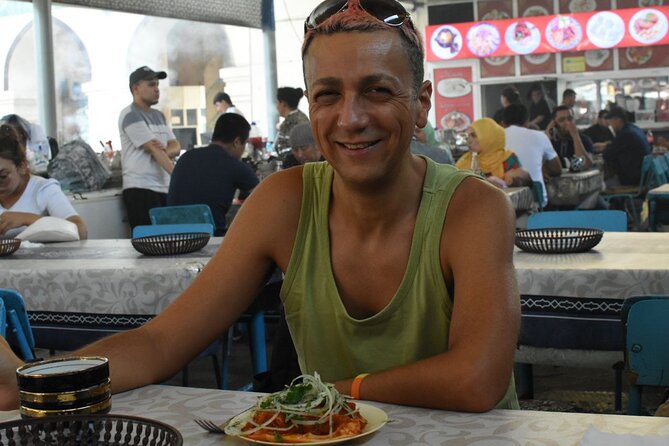
The headline dish is vegan beshbarmak, an unusual plant-based version of a Central Asian dish traditionally associated with meat. The tour presents it as an oxymoron, and that is part of the fun. You are not only eating a vegan meal. You are seeing how a local kitchen rethinks a dish that usually sits firmly in the meat-centered part of the menu.
This stop helps you separate two kinds of vegan food in Tashkent. At the markets, you taste foods that can naturally fit a plant-based diet, such as potatoes, bread, tomato sauce, and salads. At the restaurant, you see deliberate adaptations of recognizable Uzbek dishes. Both are useful, but they answer different questions.
The restaurant also gives the morning a more comfortable ending. After roughly three hours of markets and walking, sitting down for a prepared meal lets you slow down and talk with the guide. The listed duration is about four hours, with the restaurant portion taking about one hour.
Do not assume every vegan dish elsewhere in Uzbekistan will taste or look the same. The value here is learning what kinds of food are possible and gaining vocabulary and confidence. You can then use that understanding when ordering on your own.
Akmal’s role and the small-group format
Akmal is the owner and guide named in the tour information. He grew up in Tashkent, speaks excellent English, and has spent time living and traveling in Europe. Those details matter because the tour is built around conversation as much as food.
You can expect explanations of Uzbek food, culture, history, customs, and the city itself. The strongest part of the format is its flexibility. The route can be adjusted with walks, photographs, stories, and conversations instead of forcing every group through an identical schedule.
The maximum group size is seven. That is small enough to keep the experience personal without requiring a private-tour price. Solo visitors may find this especially useful. The tour can still run as a one-person experience when no one else has booked, according to the information provided, though availability will determine the final arrangement.
Pickup is offered, and the scheduled operating window is Monday through Sunday from 9 a.m. to 1 p.m. Confirmation is sent within 48 hours, subject to availability. Since the experience is often booked about 38 days ahead, I would reserve early if the morning is important to your Tashkent plans.
Is $72 good value for four hours?
At $72 per person, this is a premium food walk by Tashkent standards. The price makes more sense if you value a guide who can bridge language and food questions, several tastings, transport between separate districts, a restaurant meal, and a route designed for vegan eating.
It is less compelling if you only want the cheapest way to sample local food. You could spend less by visiting a market independently, but you would need to identify suitable dishes, explain your dietary needs, and find your way between Chorsu, Khadra, Alay Bazaar, and the final restaurant.
Group discounts may improve the price for people booking together. Mobile tickets make the practical side simple, and pickup is useful if you are still finding your bearings in Tashkent. The tour is also easy to fit into the first morning of a trip because it runs from 9 a.m. to 1 p.m.
The main value is not the amount of food alone. It is the time saved and the confidence gained. After four hours, you should have a clearer sense of what to look for in Uzbek markets and restaurants, which can make the rest of your Uzbekistan trip easier.
Who should book this Tashkent food tour?
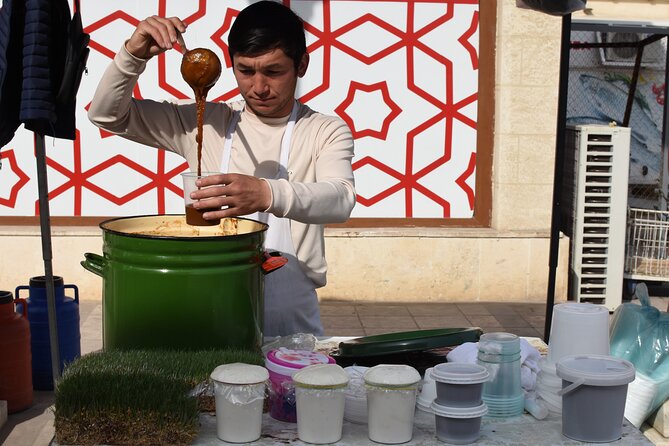
I would recommend it first to vegan and vegetarian visitors who want help with a meat-centered cuisine. It is also a smart choice for anyone arriving in Tashkent without much knowledge of Uzbek food, since the route combines eating with local context.
You do not need to be vegan to enjoy it. The tour focuses on food culture, markets, and the city, and the plant-based angle gives you a different view of familiar dishes. If you normally eat meat, the experience can show you how much variety exists beyond plov, kebabs, and other meat-based staples.
Solo visitors, first-time visitors, and people who like small groups are good matches. You should be comfortable walking through market areas and old neighborhood streets, and you should arrive ready to eat. The morning includes several food stops, not just light samples.
It may not suit you if you want a formal architectural tour, a large group with a fixed script, or a late-day activity. The tour is available in the morning only, and poor weather can lead to a different date or a full refund.
Should you book the Tashkent Vegan Street Food Tour?
Book it if you want a practical introduction to Tashkent through markets, neighborhood streets, and plant-based versions of local dishes. The combination of Chorsu, Khadra, Alay Bazaar, and the restaurant near the National Library gives you more range than a standard restaurant tasting.
I would especially choose it near the beginning of an Uzbekistan trip. The food guidance can help you order with more confidence later, while Akmal’s local perspective gives you a useful first frame for the city.
Skip it if $72 feels too high for a four-hour food experience or if you prefer exploring markets alone. For everyone else, the small group, carefully chosen route, unusual vegan beshbarmak, and personal connection to Tashkent make this a strong morning introduction.
FAQ
How long is the Tashkent Vegan Street Food Tour?
The experience lasts approximately four hours. The scheduled operating hours are Monday through Sunday from 9:00 a.m. to 1:00 p.m.
What food is included on the tour?
The route includes potato khanum in tomato sauce at Chorsu Bazaar, round Uzbek bread with traditional Korean salads at Alay Bazaar, and veganized local dishes at a restaurant near the National Library, including vegan beshbarmak.
Is the tour suitable for people who are not vegan?
Yes. The tour is built around plant-based food, but its focus also includes Tashkent’s markets, culture, history, customs, and neighborhoods. You do not need to be vegan to join.
Who guides the tour?
Akmal is the owner and guide. He was born and raised in Tashkent, has lived and traveled in Europe, and speaks excellent English.
How many people can join the tour?
The maximum group size is seven people. Group discounts are available.
Is hotel pickup offered?
Yes, pickup is offered. The experience also provides a mobile ticket.
What happens if I need to cancel?
You can cancel up to 24 hours before the start time for a full refund. Changes or cancellations made less than 24 hours before the start time are not accepted for a refund. If poor weather causes the tour to be canceled, you will be offered another date or a full refund.
Newly added plates around the world
- Zanzibar:Stone town Street food market walking tour,transfer★ 4.5 · 9 reviews
- Zanzibar: Stone town visit, Shopping tour &Night food Market★ 4.4 · 2 reviews
- Xi’an Muslim Quarter Night Market Foodie Walking Tour★ 4.2 · 22 reviews
- Xi’an: Gourmet & Street Food Tour★ 4.8 · 22 reviews
- Zanzibar: Stone town tour, Prison island & night food market★ 4.5 · 2 reviews
- Verona: Street Food and History Tour with Local Guide★ 4.7 · 6 reviews
- Vienna Food Tour: Dishes, Wine, Street Food & Culture★ 4.7 · 12 reviews
- Verona: City Highlights & Street Food Walking Tour★ 5.0 · 3 reviews
Vegan and Vegetarian Street Food, compared.
Mexico City Vegan & Vegetarian Street Food Adventure
Read our review →


Browse the lists this tour appears in