
REVIEW · NIGHT MARKET FOOD TOURS
Sapa Night Market Experience – BBQ, Hotpot & Black Chicken
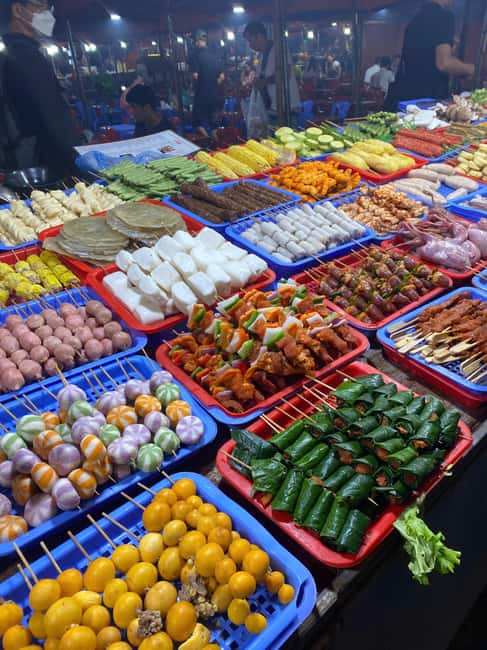
Sapa’s best evening meal may begin with a small charcoal grill, a steaming hotpot, or a plate of H’mong black chicken. This two-hour outing takes you into the night market with a local guide, so you can ask what you are eating instead of pointing at an unfamiliar menu and hoping for the best. I like the freedom to choose your dish and the chance to learn why mountain pepper, wild vegetables, and black chicken matter here.
I also like the private-group format and the guide’s role as a bridge between you and the market sellers. Guides such as Chinh have helped visitors find places they would struggle to locate alone, explained local customs, and made the evening feel more comfortable. The main drawback is simple: food is not included, and Sapa’s night market can feel repetitive after you have seen several stalls selling similar goods.
Key points to know before you go
- Choose your own dinner: Pick Sapa BBQ, hotpot, black chicken, or simply buy what appeals to you.
- Learn the local story: Your guide explains the food, H’mong traditions, and everyday life in northern Vietnam.
- Food costs extra: The $10 price covers the guide, booking fee, and one 500ml bottle of water, not the dishes.
- Private and flexible: You have a more personal outing than a large food group, with room for questions and changes of plan.
- Two hours is enough for a taste: Expect a market walk, food browsing, dinner, and a return to Sa Pa.
- The market is not the main attraction: The strongest part is the guide and meal, not a huge range of shopping stalls.
Why Sapa food is worth an evening of your time
Sapa is known for mountain scenery and ethnic cultures, but its food gives you another way to understand the area. Cold evenings shape what people cook. Charcoal grills provide warmth as well as dinner, hotpot brings everyone around one table, and black chicken connects food with H’mong tradition.
I like this outing because it does not force you into one fixed meal. You can choose the dish that suits your appetite, budget, and curiosity. If you have already eaten a large lunch, you can keep things modest. If the temperature has dropped and you want something warming, hotpot makes more sense.
The guide also adds context that you would miss by eating alone. You can ask about ingredients, local customs, and life in Vietnam while walking between the hotel area, market, and food stalls. That conversation is a major part of the value.
More Night Market Food Tours in Vietnam
- Guided Tour to Marble Mountains & Hoi An Walking Tour , Night Market, Boat Ride
★ 5.0 · 218 reviews - Hoi An Night Market – Ancient Town street food tours by Night
★ 5.0 · 165 reviews - Hoi An Ancient Town – Night Market Street Food Tours By Night
★ 4.5 · 161 reviews
Meeting your guide in Sa Pa
If your hotel is within 5km of central Sa Pa, you can provide its name, full address, street or alley, your name, and a WhatsApp number. The guide and car are scheduled to arrive about 10 minutes before departure.
If you are farther out, choose a clear meeting place such as Sa Pa Stone Church or the train station. Give your full name and WhatsApp number so the guide can contact you and arrange the pickup. The supplied details describe pickup support, but shuttle transport is not included as a tour feature, so confirm the exact arrangement when booking.
This small bit of preparation matters. Sa Pa has steep streets, busy central areas, and many hotels with similar names. A precise meeting point saves time and prevents the first part of your dinner from becoming a search mission.
Walking into the night market
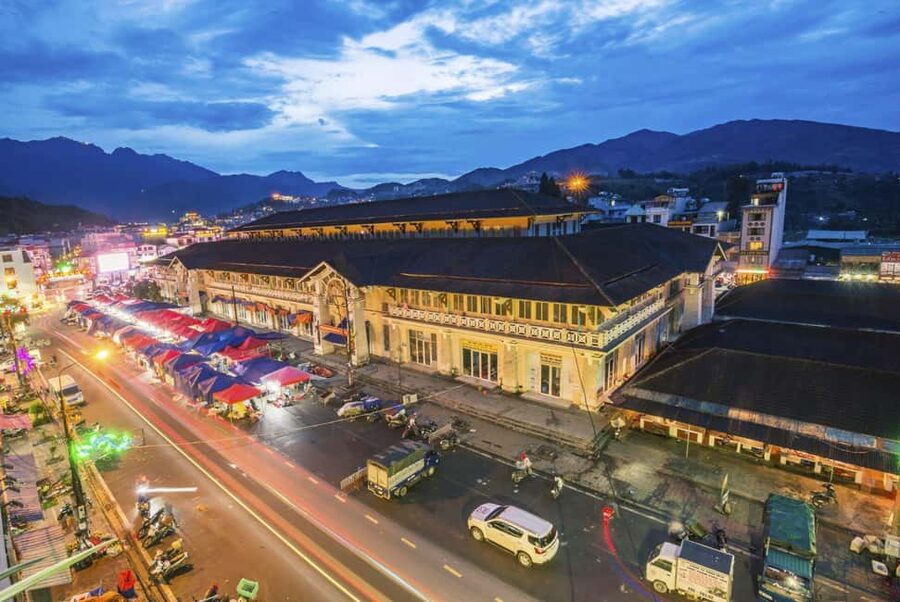
The outing includes a walk, market visit, sightseeing, shopping, and food tasting. The market itself is useful for getting a feel for the evening rhythm of Sa Pa, but keep your expectations in check.
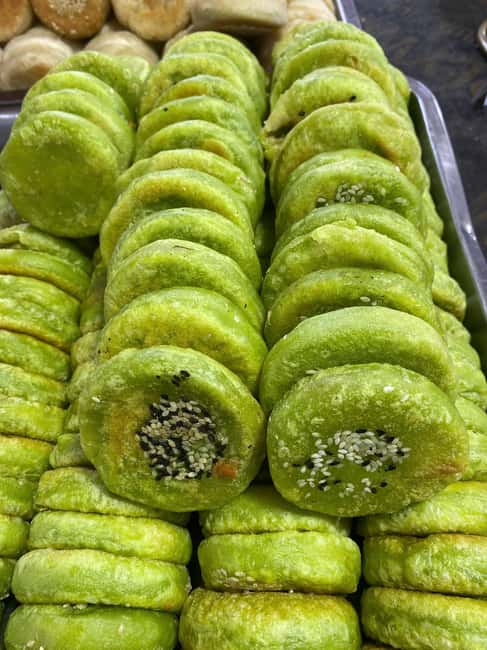
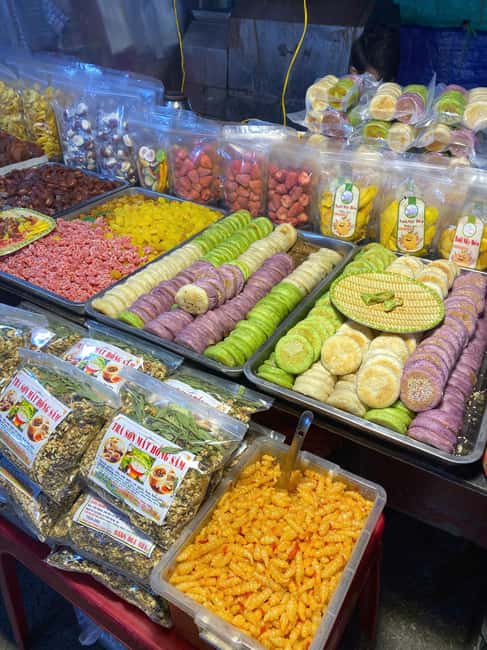
The stalls are not described as a large food hall with endless variety. You may see several sellers offering similar goods, and once you have looked at one stall, you may feel you have seen much of the same selection. If shopping is your main goal, two hours may feel long.
The guide changes the experience. You can ask what an item is, how food is prepared, and which stall makes sense for your meal. A guide can also speak with sellers for you, which is helpful when you want to try or buy something but are unsure how to begin.
That local contact is particularly valuable for first-time visitors to Sa Pa. You are not simply being led from one photo stop to another. You have someone who can explain everyday customs and help you make choices in the market.
Choosing between BBQ, hotpot, and black chicken
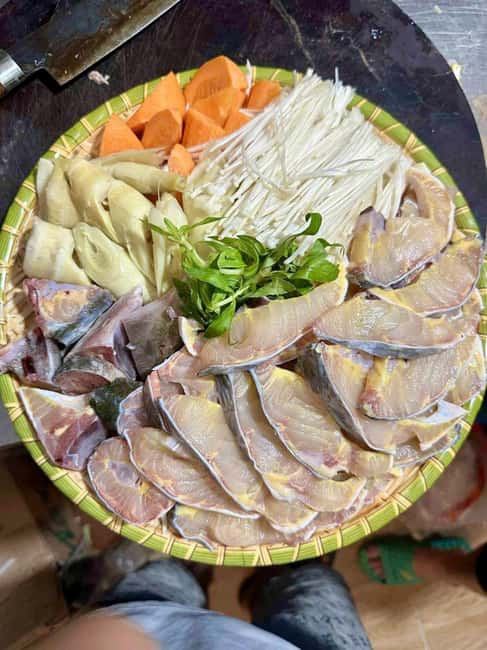
The central decision is what you want to eat. The price includes the guide’s service and one bottle of water, but you pay separately for the dishes you select. This is both a strength and a limitation. You get control, but you need to ask the price before ordering if you want to keep spending predictable.
Same city, another round of plates:
- Ho Chi Minh City Street Food Tour & Sightseeing By Motorbike
★ 5.0 · 9,413 reviews - Small Group Hanoi Street Food Tour with a Real Foodie
★ 5.0 · 4,682 reviews - Saigon By Night and Street Food By Motorbike | Opt: Ao Dai Riders
★ 5.0 · 4,066 reviews - Private Street Food Tour by Motorbike/Car with Local Students
★ 5.0 · 3,950 reviews
Sapa BBQ with mountain herbs
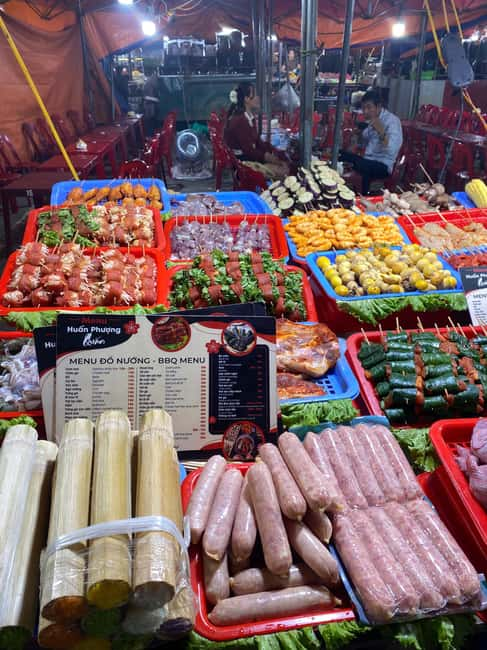
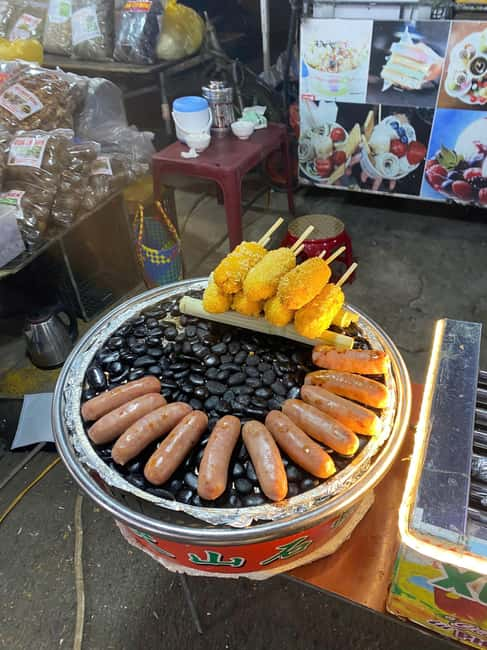
Sapa BBQ, or nướng, is built for cool evenings. Small charcoal grills are used for vegetables, sweet potatoes, mushrooms, pork, and beef skewers. Local seasoning may include mắc khén, a mountain pepper with a fragrant, tingling quality similar to Sichuan pepper.
I like BBQ for visitors who want to sample several things rather than commit to one large dish. A few skewers can give you a broad taste of local cooking. It also suits a social evening, since food is cooked and shared around the grill.
The tradition has a practical side. Grilling warms people quickly in cold weather, and the fire becomes a natural place to sit and talk. Your guide can explain the ingredients and the connection between street grilling, family meals, and social time.
Sapa hotpot with mountain vegetables
Hotpot is familiar across Vietnam, but Sapa gives it a highland character. The broth may include cardamom, star anise, wild mushrooms, and bone marrow from buffalo or pork. Local mustard greens, known as cải mèo, help balance the richness.
Hotpot is the better choice if you want a warm, filling meal. It is also a good option for sharing, though the supplied details do not specify portion size or final price, so ask before ordering.
The social meaning matters here. Everyone gathers around one pot and adds ingredients to the shared broth. For ethnic minority communities, that act reflects unity and togetherness. You are not just ordering soup. You are taking part in a meal built around conversation and shared eating.
H’mong black chicken
Black chicken, or gà đen, is a distinctive highland dish associated with the H’mong people. The skin, bones, and meat are darker than those of ordinary chicken. In local medicine, it has traditionally been viewed as a strengthening food, including for new mothers.
Choose it if you want the most unusual dish of the three. It is less about quick street snacking and more about trying a food connected to a particular community and its traditions.
The dish may appeal to curious eaters, but it is not the safest choice if you are looking only for familiar flavors. Ask your guide how it is prepared and what portion suits you. Since food is paid for separately, you can make that choice with clear information rather than ordering blindly.
What the guide adds to the meal
The guides speak English and Vietnamese, and the private-group setup gives you room to ask direct questions. That matters more here than a long list of stops. Market food can be easy to misunderstand, especially when ingredients and cooking methods are unfamiliar.
Chinh received especially strong praise for being polite, friendly, supportive, and open to questions. He walked with visitors from their hotel to the night market, explained Sa Pa culture in detail, and helped them find places they would have had difficulty locating alone. A separate evening with Chinh led to another booking the following day, which says a lot about the personal connection he can create.
You may not have Chinh as your guide, so treat him as an example rather than a guarantee. Still, the activity is designed around the same useful idea: a local person helps you understand the market, communicate with sellers, and choose food with more confidence.
The guide can also make the market feel safer and less uncertain. That does not mean the area is presented as dangerous. It means you have someone beside you who knows how to communicate and what to expect.
Is two hours enough?
Two hours is a sensible length for this kind of evening. You have time to meet the guide, walk through the market, discuss the dishes, eat, and return to Sa Pa without giving up an entire night.
The short format works well before or after another activity. You could fit it around a daytime hike, a train journey, or an evening free from hotel plans. It is also useful on a first night because the guide can help you get your bearings and introduce food you might try again later.
There is a tradeoff. You should not expect a full food crawl with many restaurants, long cooking demonstrations, or a detailed tour of every market section. This is a compact introduction to local eating, with the guide conversation doing much of the work.
If you want to linger over dinner, shop slowly, or compare many stalls, you may prefer to continue after the official two hours. The flexible meal format makes that possible, but any extra food or purchases remain your responsibility.
The real value of the $10 price
At $10 per person, the price is reasonable for a private or very small-group introduction, especially if you value help with communication. You receive an English-speaking guide, booking service, and a 500ml bottle of water.
The low headline price can be misleading if you expect dinner to be included. It is not. BBQ, hotpot, black chicken, and other dishes cost extra, so your final spending depends on what you order.
I see this as a useful model for people who dislike fixed menus. You pay for guidance, then decide how much food you want. A light meal keeps the total lower, while a full hotpot or several BBQ items will add to the cost.
Ask about dish prices before ordering, particularly if you are traveling on a tight budget. The guide can help you understand the choices, but the tour does not promise a set food allowance.
Who will enjoy this most
I would recommend this outing to first-time visitors who want local food with help from a person who knows Sa Pa. It suits solo visitors, couples, and families who prefer a private group and want to ask questions without holding up a large crowd.
It is also a good match for cautious eaters. You are not required to accept one fixed dish, and you can see your options before deciding. The guide can explain unfamiliar ingredients and help you communicate with sellers.
Food-focused visitors should enjoy the stories behind mắc khén, cải mèo, hotpot, and black chicken. The strongest reward is not simply eating. It is understanding why these foods belong to cold mountain evenings and H’mong cultural traditions.
You may be less impressed if your priority is shopping variety. The market can feel repetitive, with similar goods appearing from stall to stall. It is better to think of the market as the setting for a guided food outing, not as Sa Pa’s largest retail attraction.
The experience is also not suitable for people bringing pets, or anyone who plans to attend intoxicated. Alcohol and drugs, littering, fireworks, and explosive substances are not allowed.
Practical booking advice
Give complete pickup information when you book. Include your hotel name, full address, street or alley, full name, and WhatsApp number if you are within the 5km central area. If you are outside that zone, use a landmark such as the stone church or train station.
Wear comfortable shoes for walking and bring room in your appetite for a meal that may be shared or selected in stages. The tour provides one bottle of water, but food, insurance, and shuttle arrangements are not included.
Starting times depend on availability. Cancellation is free up to 24 hours before the activity, and you can reserve now and pay later, which helps if your Sa Pa schedule may change.
FAQ
How long does the Sapa Night Market Experience last?
The activity lasts two hours, including the market visit, walking, sightseeing, food tasting, and return to Sa Pa.
What food can I choose?
You can choose traditional Sapa BBQ, Sapa hotpot, or H’mong black chicken. Other market foods may also be available for purchase.
Is food included in the $10 price?
No. The price covers the guide’s service, the booking platform fee, and one 500ml bottle of water. You pay separately for the dishes you choose.
Is the tour private?
Yes. The activity is described as a private group experience, allowing you to ask questions and adjust your meal choices with the guide.
What languages does the guide speak?
The guides speak English and Vietnamese.
Can I be picked up from my hotel?
If your hotel is within 5km of central Sa Pa, pickup can be arranged when you provide the hotel’s full details. If you are farther away, use a prominent Sa Pa meeting point such as the stone church or train station.
What happens if I need to cancel?
You can cancel up to 24 hours in advance for a full refund.
Is shuttle transport included?
No. Shuttle transport is listed as not included. Provide your pickup details or selected meeting point so the exact arrangement can be confirmed.
Should you book it?
Book this if you want a friendly local guide, flexible food choices, and an easier way to understand Sapa’s evening market. The best parts are the personal conversation, help with sellers, and the chance to try a dish with a real cultural story behind it.
Skip it if you want a large, varied market or a fully prepaid dinner with no extra decisions. For most first-time visitors, though, $10 is a fair price for guidance, local context, and a more confident introduction to BBQ, hotpot, and H’mong black chicken.
Newly added plates around Vietnam
- Phu Quoc Street Food Tour By Night★ 3.5 · 6 reviews
- Phu Quoc City – Local Street Food Tour By Night★ 5.0 · 33 reviews
- Street Food Tour With Chef Dat★ 5.0 · 5 reviews
- Street Food Discovery Tour★ 4.5 · 10 reviews
- Hue Food Tour: Central Vietnam Culinary Heritage (Small Group)★ 5.0 · 42 reviews
- Hue Night Walking And Street Food Tour★ 5.0 · 2 reviews
- Hue Street Food On Foot (Daily Tour – Group Tour | 12 pax max)★ 5.0 · 15 reviews
- Walking street food tour★ 4.5 · 7 reviews
Night Market Food Tours, compared.
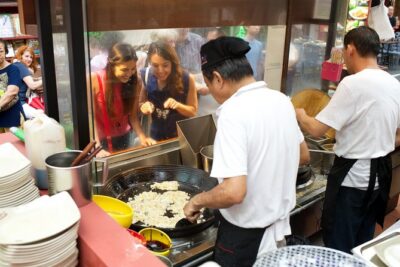
Small Group: Michelin and Local Hawker Food Tour with 9 tastings
Read our review →
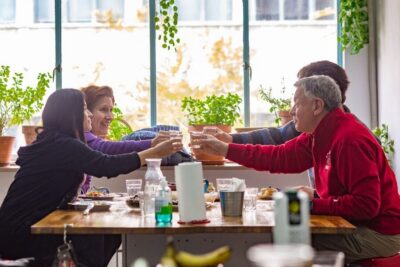
Food Market Visit and Cooking Class with Wine
Read our review →
Venice Street Food Tour with Local Guide with Local Food Market Visit
Read our review →
Cancun Taco Tour, Local Beer and Night Market with Transportation
Read our review →
Tsukiji Fish Market Food and Culture Walking Tour
Read our review →
Cancun Street Food Tour with Food Stalls, Local Market and Murals
Read our review →Browse the lists this tour appears in