
REVIEW · MAURITIUS STREET FOOD TOURS
Mauritius: Port Louis Street Food City Tour
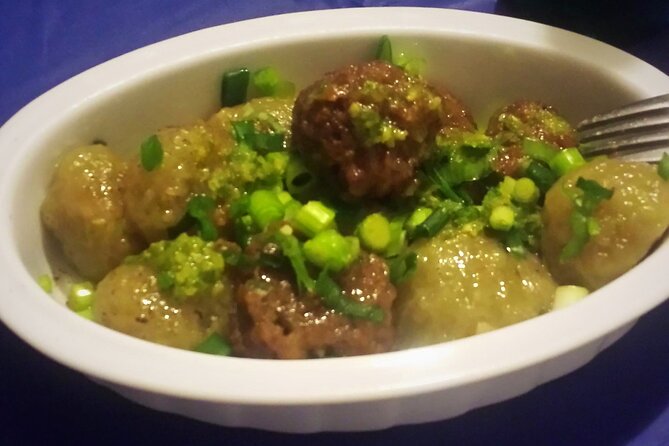
Port Louis is best understood one bite at a time. This three to four-hour walk moves from the Caudan Waterfront through the central market and Chinatown, mixing gato pima chili bites, Chinese-influenced snacks, and other Mauritian tastes with the city’s old streets and landmarks.
I like the way the tour connects food with place, especially at the market and in Chinatown. I also like the small group limit of 10 people, which gives the guide room to adjust the pace and explain what you are eating.
The main drawback is that this is a walking tour with a fixed 10:00 am start, and Port Louis can feel hot, crowded, and noisy around the market. You also arrange your own way to the IBL House meeting point.
Key points to know before booking
- About eight dishes are included, with tastings shaped by Mauritius’s Indian, Chinese, African, and Creole influences.
- Aapravasi Ghat adds important context, showing where a major chapter of indentured migration began.
- The central market is the food heart of the walk, with fruit, herbs, spices, potions, and cooked snacks.
- Chinatown gives the tour a distinct Hakka Chinese flavor, including old family-run shops and traditional treats.
- Dourvesh has been praised for a relaxed, adaptable style, giving useful background without filling every minute with talk.
- The $49.40 price includes food, lunch, bottled water, and a local guide, but not hotel transportation.
Port Louis through food, history, and street life
This is not simply a meal with a few sights added on. It is a walking introduction to Port Louis, using food as the thread that joins together Mauritius’s Indian, Chinese, African, Creole, and colonial past.
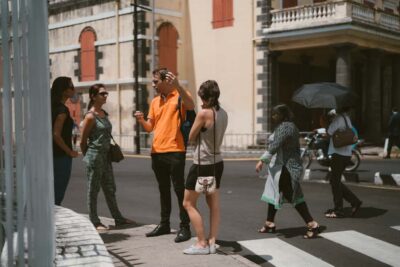
You begin at the Caudan Waterfront and make your way into the older city. The route includes Aapravasi Ghat, Jummah Mosque, Chinatown, the central market, and Les Jardins de la Compagnie. Between these stops, you get a look at old buildings, narrow commercial streets, market stalls, and the everyday rhythm of the capital.
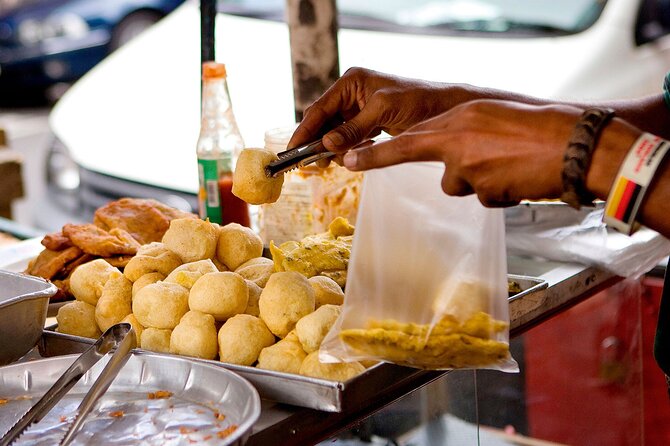
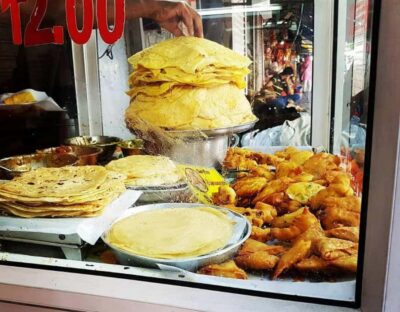
The food is the main reason to book. You try about eight dishes, including Mauritian snacks and foods with Hakka Chinese roots. One early favorite is likely to be gato pima, a deep-fried chili bite made from soaked split peas, spring onions, and green chilies. It is small, crisp, and lively in flavor.
I like this approach because it gives you something to talk about as you walk. Instead of viewing Port Louis as a list of monuments, you begin to understand how people, trade, migration, religion, and food shaped the city.
More street food tours in the world:
- Dubai: Old Town, Creek, Museums, Souks, & Street Food Tour
★ 4.8 · 10,816 reviews - Ho Chi Minh City Street Food Tour & Sightseeing By Motorbike
★ 5.0 · 9,413 reviews - Medellin: Comuna 13 Graffiti Tour, Cable Car & Street Food
★ 4.8 · 9,046 reviews
What $49.40 really includes
At $49.40 per person, this tour is priced above a simple self-guided walk, but it includes more than a guide with a few recommendations. Snacks, lunch, food tastings, bottled water, and the local guide are included.
That matters in Port Louis, where a first-time visitor could easily pass by a good food stall without knowing what to order or how a dish fits into Mauritian culture. You are paying for the interpretation as much as for the food.
The price is also easier to justify because the tour combines several sightseeing stops with the tastings. A separate guided visit to Aapravasi Ghat, a market visit, and a food crawl could cost more in time and planning, even if you could spend less on food alone.
Still, value depends on what you want. If your priority is a large lunch or a long museum visit, this may not be the best use of your money. The meal is spread across the walk, and the tour’s purpose is to sample several foods rather than sit down for one extended restaurant meal.
The group maximum of 10 is another useful part of the calculation. A small group makes it easier to hear explanations, ask questions, and keep moving through narrow streets. It also helps the guide respond to your interests. Dourvesh, one of the guides associated with this experience, has been noted for adapting the route and pace to the group.
Aapravasi Ghat: the serious beginning
The first major stop is Aapravasi Ghat, a 1,640-square-meter World Heritage Site in Port Louis. This is where the modern indentured labour diaspora began.
After the abolition of slavery, the British Government selected Mauritius in 1834 for what it called an experiment in using free labour. Between 1834 and 1920, almost half a million indentured labourers arrived from India at Aapravasi Ghat. Many worked on Mauritius’s sugar plantations, while others were sent onward to Réunion, Australia, southern and eastern Africa, or the Caribbean.
You have about 30 minutes here, with admission included. That is enough time to grasp the site’s role and see why Mauritius has such strong Indian cultural influence today.
This stop gives the food tour its historical backbone. The spices, cooking styles, languages, and family traditions you encounter later are not random additions to island life. They connect to large movements of people and labour across the Indian Ocean.
Aapravasi Ghat is also the point where the walk becomes more than a pleasant sampling route. Some visitors may find the subject sobering, especially when set beside the cheerful market and food stops that follow. That contrast is useful. It keeps the tour from reducing Mauritian culture to food alone.
Jummah Mosque and the meeting of traditions
The walk continues to Jummah Mosque, also called Jummah Masjid. The mosque dates from the 1850s and combines Indian, Creole, and Islamic architectural elements.
You spend about 10 minutes here, with admission included. It is a short stop, so expect a quick look and explanation rather than an extended architectural visit.
The mosque also houses the remains of Jamal Shah, a pir from Kutch in India, in a marble tomb beside the building. This detail helps connect Port Louis to the wider Indian Ocean world, where merchants, religious figures, and families moved between South Asia, East Africa, and island ports.
I appreciate this stop because it fits neatly with the food theme. Indian influence in Mauritius is not limited to curry or chili. It also appears in religious life, building styles, family traditions, and the shape of the city itself.
Ten minutes is brief, but that is probably the right balance for a food-focused walk. If you want a detailed mosque visit, you will need a separate visit with more time.
Same city, another round of plates:
- Dubai: Old Town, Souks, Street Food, Guided Tour & Abra Ride
★ 4.9 · 7,170 reviews - Naples: Street Food Walking Tour with Local Guide
★ 4.9 · 4,976 reviews - Small Group Hanoi Street Food Tour with a Real Foodie
★ 5.0 · 4,682 reviews - Rome: Street Food Tour with Local Guide
★ 4.8 · 4,077 reviews
Chinatown and the old commercial streets
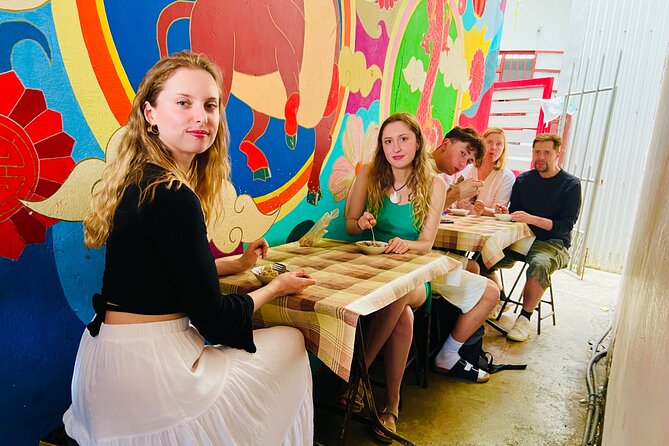
Chinatown receives the longest scheduled stop, about one hour. This is where the route shifts toward Hakka Chinese influence and the long commercial role of Sino-Mauritian families.
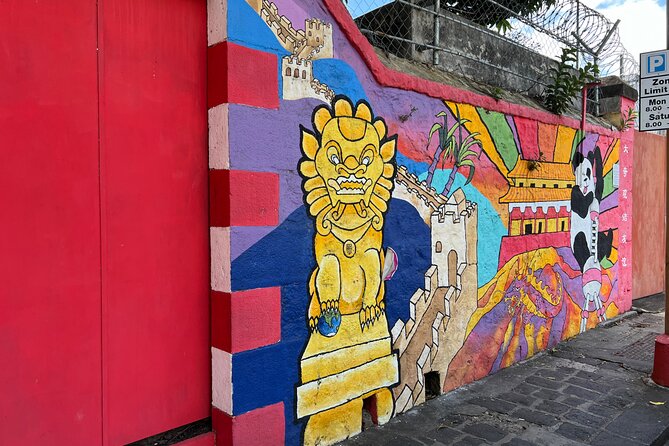
Many shops are more than a century old, and some families have run businesses for generations. You may see very small, dark retail spaces beside newer buildings. The contrast is part of the area’s character: old shopfronts and long-running family businesses sit beside modern commercial blocks.
The district once served as a major trade center in Mauritius. Its commercial role declined after supermarkets became common, and parts of Chinatown lost their former importance. That change gives the area a slightly worn, lived-in feel rather than the polished appearance of a purpose-built attraction.
Food is central here. The tour includes treats derived from Hakka Chinese dishes, adding a different set of flavors and cooking traditions to the Mauritian mix. You do not simply taste Chinese food in isolation. You see how it became part of island life.
A guide is especially useful in Chinatown because the best details are often small. A family shop, an old building, or a particular food stall can pass unnoticed if you are walking alone. The hour also gives you time to look around rather than rush from one tasting to the next.
The drawback is that Chinatown is a working commercial district, not a preserved historical quarter. Buildings vary, some streets can feel untidy, and not every shop will be open or visually appealing. If you expect a picture-perfect attraction, adjust your expectations. The reward is a more ordinary and authentic part of Port Louis.
The central market and gato pima
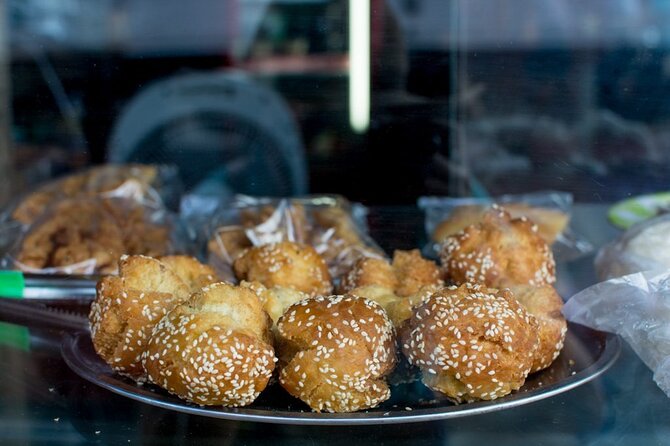
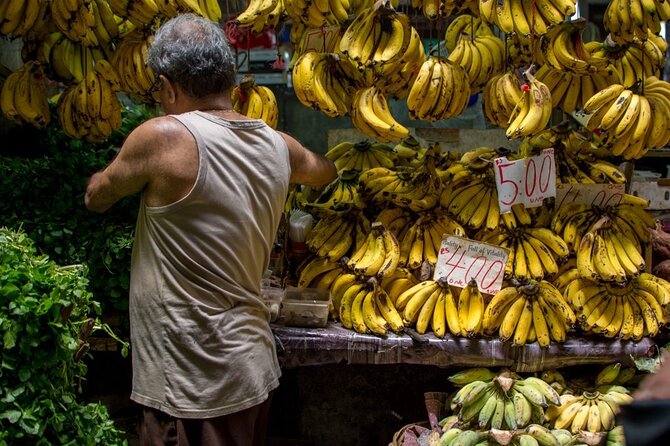
The central market is the food center of the walk. You spend about 30 minutes among stalls selling fruit, herbs, spices, and potions, with the sounds and smells of daily trade all around you.
This is where the tour earns its keep for many people. A market can be hard to read when you visit alone. You may not know which ingredients matter, how local shoppers use them, or which cooked snack is worth trying. A guide gives the market a clear shape.
The famous gato pima is a key taste. These deep-fried chili bites are made with soaked split peas, spring onions, and green chilies. The outside is crisp, the inside is soft, and the chili gives the snack a sharp little kick.
The market also helps explain why Mauritian food does not fit neatly into one national style. Indian ingredients and methods sit alongside Chinese traditions, African influences, and local adaptations. The result is food that reflects Mauritius’s history as a port and plantation society.
You should come ready to sample rather than fill up at the first stop. The tour includes lunch and several tastings, so the best strategy is to try everything in modest portions and save room for later dishes.
The market is also the busiest part of the route. Keep your belongings secure and stay aware of where the group is. The practical reward is a close look at Port Louis’s daily food trade, not a quiet or carefully arranged market visit.
Les Jardins de la Compagnie and the banyan trees
Les Jardins de la Compagnie provides a calmer pause near the end of the walk. You have about 20 minutes to see the garden, its large banyan trees, statues, fountains, and benches.
In the early colonial period, the garden served as the vegetable patch of the French East India Company. Today, it is known for its broad banyan trees and statues, including work by local sculptor Prosper d’Épinay and a tribute to the musician Ti Frère.
This is a good place to let the food and history settle. After the market and Chinatown, the shade and open space give you a change of pace. The banyan trees are the visual highlight, and they make a memorable final stop.
There is one practical caution. The garden is considered appealing and safe during the day, but it is best avoided at night because it becomes a hangout for sex workers and people using drugs. Your tour takes place in the morning and early afternoon, so this warning should not affect the scheduled experience.
Several people have found they needed extra time after the tour to enjoy the banyan trees. The official walk ends back at the meeting point, but if you like old gardens and city photography, you may want to linger nearby afterward.
A relaxed pace with room for questions
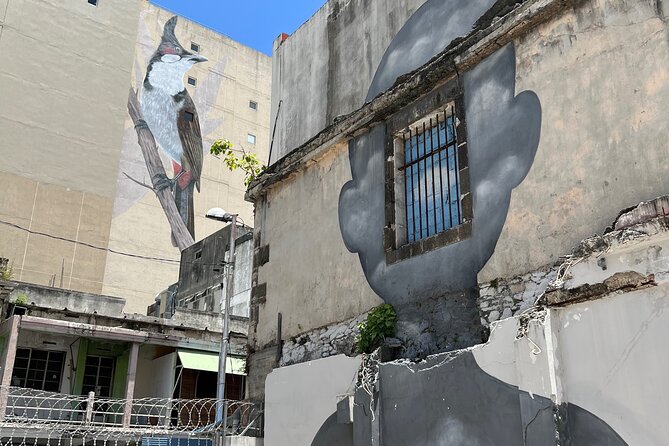
The tour lasts roughly three to four hours and starts at 10:00 am. That morning timing works well for the market and the food tastings, though you should expect heat and plenty of activity as the city gets going.
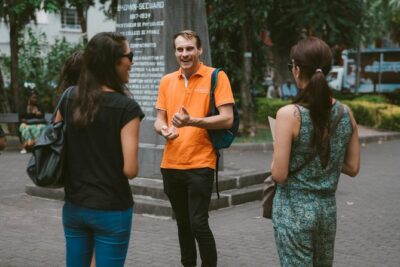
The tour has a maximum of 10 people. That is small enough for a guide to keep the group together without turning every stop into a formal lecture. The pace is described as relaxed, with time for information and some time to look around on your own.
Dourvesh has been specifically praised for giving useful background while allowing personal interests to shape the walk. If he is leading your tour, you can expect a guide who may adjust the emphasis rather than deliver the same speech at every corner. The experience provider is Beyond Sea.
You need to get yourself to IBL House in Port Louis. Hotel pickup and drop-off are not included, but the meeting point is near public transportation. The tour ends where it begins, which makes it easier to plan the rest of your day in the capital.
A mobile ticket is provided, and confirmation arrives at booking. The tour is suitable for most people, but remember that the experience involves walking through city streets, markets, and Chinatown rather than remaining seated in one place.
Who should book this Port Louis food tour?
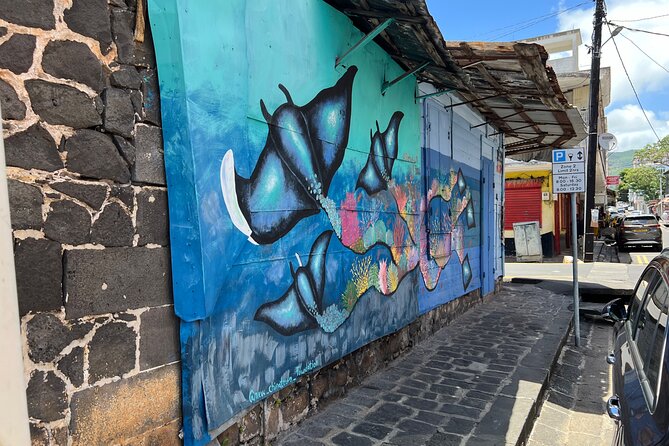
I would choose this tour if you are visiting Port Louis for the first time and want both food and context. It suits curious eaters who like trying small portions, hearing the story behind a dish, and seeing the city on foot.
It is also a good match if you are nervous about exploring the capital alone. The guide gives you a route, helps interpret the food, and points out places you might otherwise miss.
Families and couples may appreciate the short duration and small group size, though people with limited mobility should consider the walking involved before booking. The tour is listed as suitable for most participants, but no detailed accessibility information is provided.
You may want to skip it if you dislike group walks, spicy food, markets, or eating several small dishes instead of having one long restaurant lunch. It is also not ideal for a late riser because the meeting time is fixed at 10:00 am.
Free cancellation is available if you cancel at least 24 hours before the local start time. Weather or minimum group requirements can also lead to a cancellation, in which case you are offered another date or a full refund.
Should you book it?
Book this Port Louis tour if you want a compact, well-shaped introduction to Mauritian culture through food, trade, religion, and migration. The strongest parts are the central market, the old Chinatown shops, the roughly eight tastings, and the way Aapravasi Ghat gives the whole walk meaning.
At $49.40, the value is good when you count lunch, snacks, bottled water, admission, and a small group guide. Just arrive ready to walk, taste unfamiliar foods, and see Port Louis as a working city rather than a polished sightseeing set.
FAQ
How long does the Port Louis street food tour last?
The experience lasts approximately three to four hours.
What time does the tour start?
The tour starts at 10:00 am.
Where does the tour begin?
The meeting point is IBL House in Port Louis, near the Caudan Waterfront area.
Where does the tour end?
The activity ends back at the meeting point.
How many food items are included?
The tour includes about eight different dishes, along with snacks, lunch, and food tastings.
Is bottled water included?
Yes. Bottled water is included in the tour price.
How large is the group?
The tour has a maximum of 10 travelers.
Is hotel pickup included?
No. Hotel pickup and drop-off are not included. The meeting point is near public transportation.
What is the cancellation policy?
You can cancel for a full refund if you do so at least 24 hours before the local start time. Cancellations or changes made less than 24 hours before the start are not refunded or accepted. If poor weather or an insufficient number of participants cancels the experience, you are offered another date or a full refund.
Newly added plates around the world
- Zanzibar:Stone town Street food market walking tour,transfer★ 4.5 · 9 reviews
- Zanzibar: Stone town visit, Shopping tour &Night food Market★ 4.4 · 2 reviews
- Zanzibar: Stone town tour, Prison island & night food market★ 4.5 · 2 reviews
- Xi’an Muslim Quarter Night Market Foodie Walking Tour★ 4.2 · 22 reviews
- Xi’an: Gourmet & Street Food Tour★ 4.8 · 22 reviews
- Verona: Street Food and History Tour with Local Guide★ 4.7 · 6 reviews
- Vienna Food Tour: Dishes, Wine, Street Food & Culture★ 4.7 · 12 reviews
- Verona: City Highlights & Street Food Walking Tour★ 5.0 · 3 reviews
Mauritius Street Food Tours, compared.

Mauritius: Snorkeling with Turtles & Port Louis Street Food
Read our review →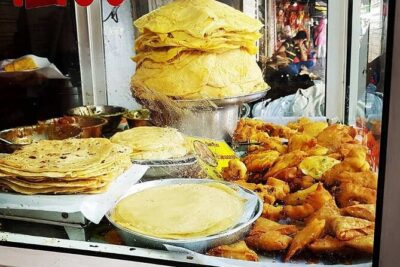
Port Louis: Private Guided Tour and Street Food Tasting
Read our review →
Browse the lists this tour appears in