
REVIEW · NIGHT MARKET FOOD TOURS
Busan: Food Market Tour, Smash Seafoods and Street Foods
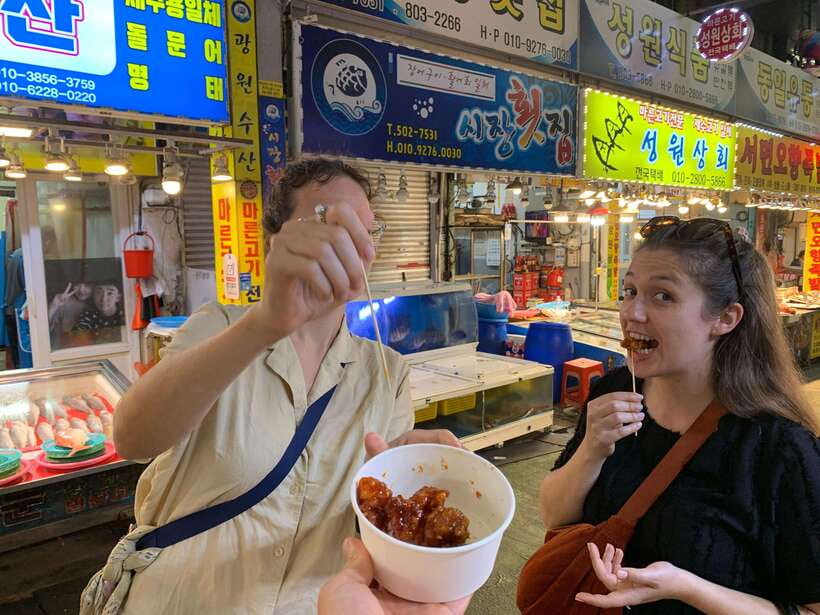
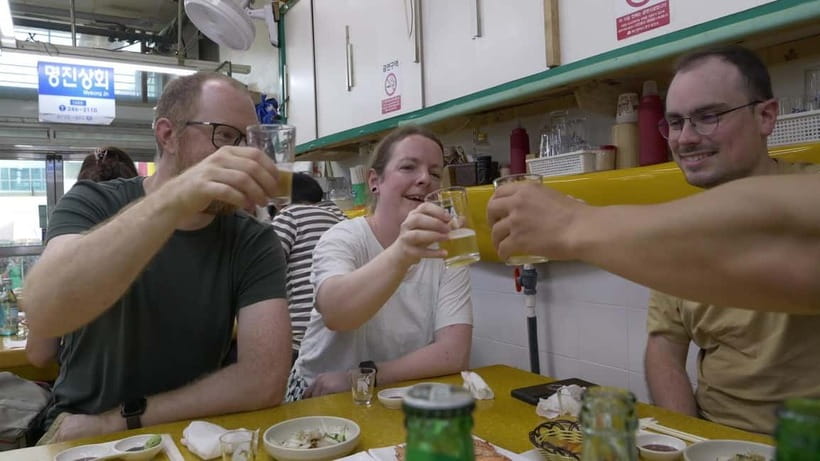
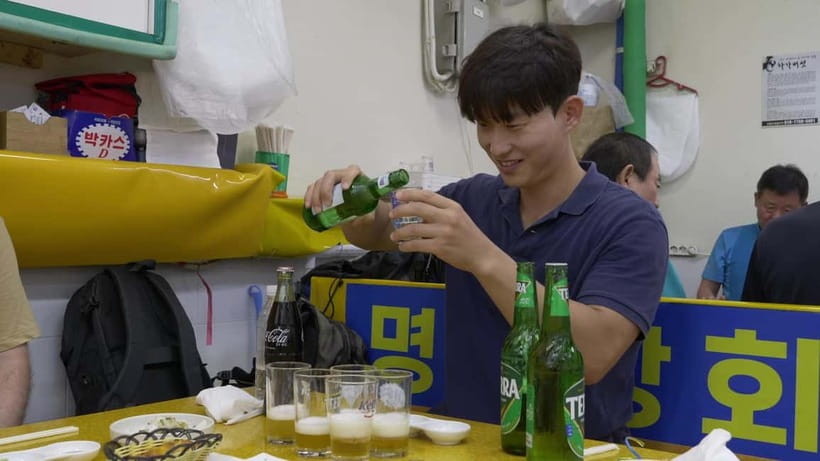
Busan’s best food lesson may happen at a market counter, with a plate of fresh seafood in front of you and a glass of soju mixed with beer nearby. This three-hour walk begins at Jagalchi Station and connects seafood stalls, street-food lanes, and traditional markets where eating is part of daily life. I like the small groups of up to 10 and the way guides such as HugYou, Junwoo, Doyour, and Hokyu turn ordering into a relaxed social experience.
I also like that this is a full dinner, not a token tasting. You can expect seafood, fishcake, Korean savory pancakes, hotteok, and other local bites, plus soju, beer, or makgeolli. The main caution is simple: this is not a good match for vegans, and you should be ready for raw or unfamiliar seafood.
Key points to know before you book
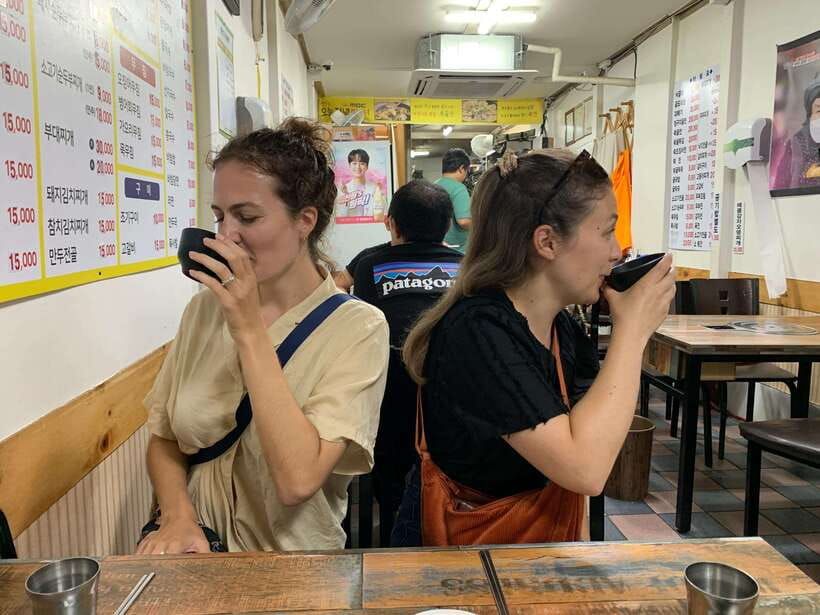
- A proper meal, not just samples: The food usually adds up to a full dinner, with three or more types of food and local drinks included.
- Jagalchi is the anchor: You begin and end at Jagalchi Station, with the largest seafood market in Busan at the center of the evening.
- Small-group guidance matters: With no more than 10 people, your guide can help you order, explain ingredients, and adjust the pace.
- Expect unusual seafood: Raw fish and unfamiliar dishes can be part of the fun, but cautious eaters should say so early.
- Markets are part of the lesson: The walk may include Jagalchi, BIFF Square, Kkangtong Market, and other local market areas.
- Good first-night choice: The tour gives you food ideas, market bearings, and practical help before you explore Busan on your own.
Why this Busan food tour works so well
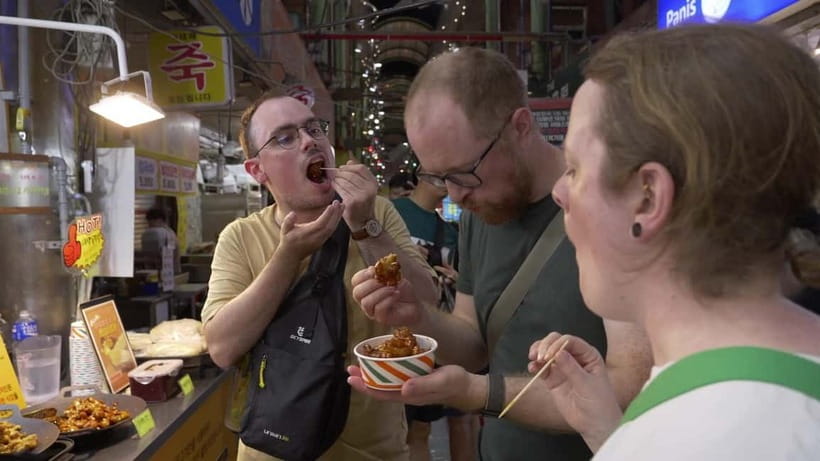
This experience is less about sitting in one restaurant and more about learning how Busan eats. You walk through food markets, stop for small portions, watch vendors handle ingredients, and let a local guide manage the parts that can feel confusing.
That matters in Busan. A market can be easy to admire and hard to use. Signs may be unfamiliar, menus may not explain every ingredient, and seafood stalls can feel intimidating if you do not know what to order. Your guide bridges that gap without turning the evening into a lecture.
The tone is also informal. Several guides, including HugYou and Junwoo, are praised for joining in with the meal, answering questions, and keeping everyone involved. That makes the tour feel more like eating with a well-connected local than following a guide through a series of formal stops.
The booking price is $52 per person. For three hours of food, drinks, guiding, and market access, I consider that fair, especially if you would otherwise spend your first evening guessing what to order. It is less useful if you already know Busan’s markets well or prefer to choose every dish yourself.
More Night Market Food Tours in South Korea:
- Seoul Street Food Market Tour
★ 5.0 · 1,226 reviews - Seoul: Night Market Food Tour with Local Guide
★ 4.9 · 943 reviews - Busan Food Market Tour Seafoods and Street Foods
★ 5.0 · 8 reviews
Starting at Jagalchi Station Exit 10
The meeting point is outside Exit 10 of Jagalchi Station. This is a practical place to begin because Jagalchi is one of Busan’s main seafood districts, and the tour returns to the same station at the end.
Arrive ready to walk and eat. The route is described as a guided food-market visit rather than a seated meal, so comfortable shoes will help. You may also want to keep your schedule open after the tour. The food is substantial, and the walk gives you plenty to look at along the way.
The group limit is 10 people. That is small enough for direct questions and quick help at a food stall, while still giving the evening a social feel. If your guide is HugYou, Doyour, Junwoo, Hokyu, or another member of the team, you can expect the guide to explain what you are eating and help with simple interactions.
English and Korean are available. You do not need Korean to take part, but you will have chances to practice short phrases while buying food or speaking with vendors. The point is not to become fluent in one evening. It is to make the market feel less closed off.
Inside Busan’s seafood market
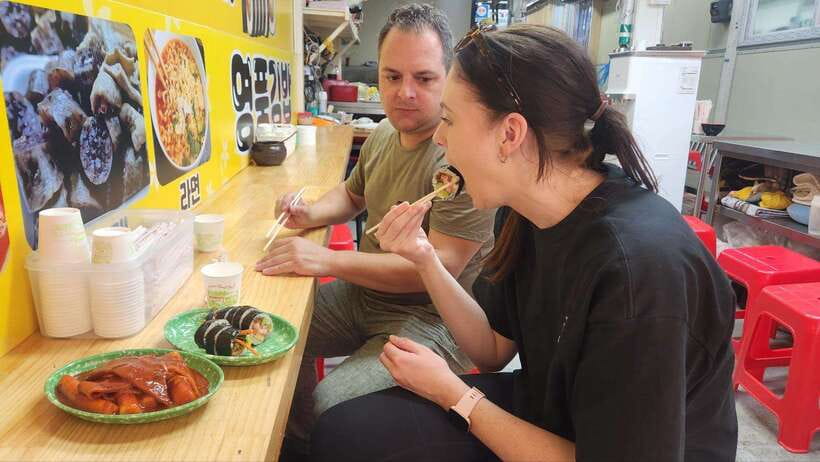
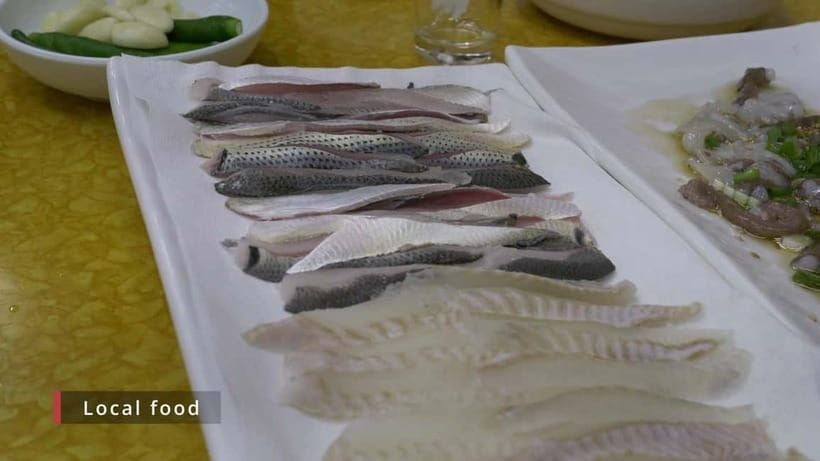
Jagalchi is the heart of the seafood portion. The experience is designed around Busan’s connection to the sea, with freshly caught seafood and a seafood combination meal at the center of the evening.
This is where a guide adds real value. You might see ingredients that you would not recognize, or face a choice between raw, cooked, familiar, and very unfamiliar dishes. Your guide can explain how the food is eaten, which side dishes go with it, and how to combine flavors at the table.
Several food choices may push you beyond your usual comfort zone. Raw fish is specifically part of the possibility, so do not book this expecting only grilled or fully cooked seafood. If you are curious but nervous, tell the guide at the start. The route can be adjusted to suit food preferences, as several participants found when guides tailored the meal.
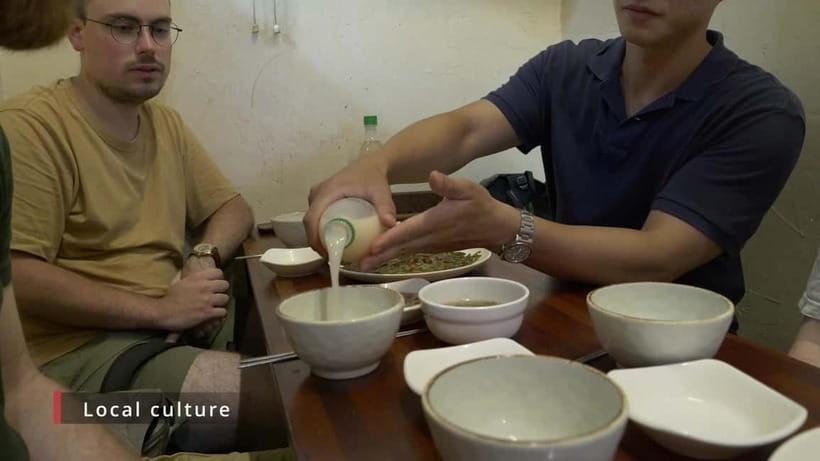
The seafood stop is also tied to Korean drinking culture. Soju, beer, and makgeolli are included, and the guide explains how these drinks fit into a shared meal. You may encounter the familiar Korean habit of mixing soju and beer, often called somaek, but you are not required to drink alcohol. Nonalcoholic options have been available for people who prefer them.
This part of the evening is social rather than rushed. The food is shared, questions come naturally, and the guide may eat and drink with the group. That helps explain why the experience feels less like a transaction and more like a dinner with local context.
Street food around BIFF Square and Kkangtong Market
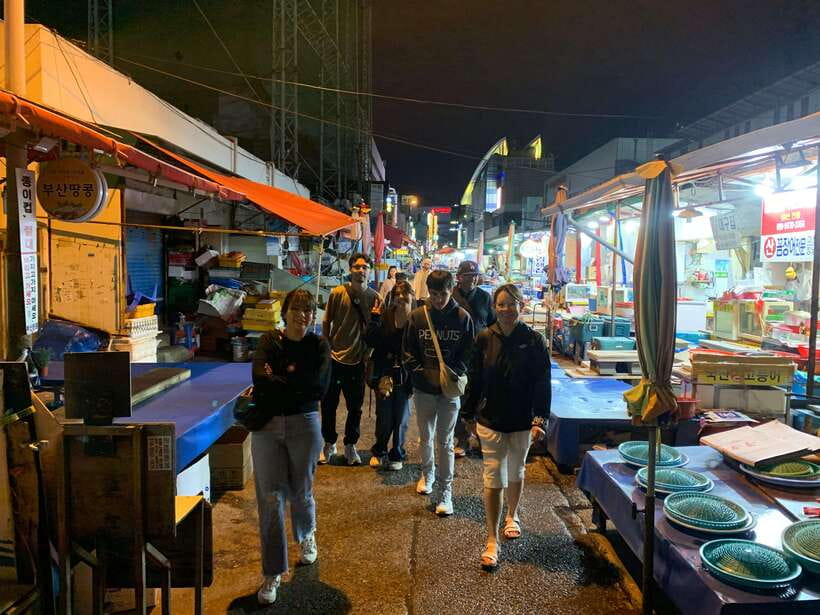
The second half shifts from seafood to street food. The route can include BIFF Square and Kkangtong Market, two well-known food areas near Jagalchi. These streets give you a different view of Busan, with portable snacks, sweets, cooked dishes, and vendors serving food directly to people passing by.
You may try fishcake, Korean savory pancakes, hotteok, and other local snacks. Hotteok is especially useful for balancing the seafood portion because it offers a sweet finish after savory food. The precise selection can vary, but the aim is to sample several kinds of Korean market food rather than repeat one dish.
I like this contrast. Jagalchi shows Busan’s maritime identity, while the street-food markets show how Korean people snack, shop, and meet in public spaces. You get more than a checklist of dishes. You begin to see why traditional markets matter to neighborhood life.
The guide can also point out ingredients and explain how food is prepared or served. If you walk these streets alone, you may notice the smells and colors but miss the meaning of what is in front of you. With a guide, a stall becomes a chance to ask what an ingredient is, how it is eaten, and why it is popular.
One practical warning: the pace may feel full. The food is generous, and several participants described finishing completely stuffed. Eat lightly before you arrive, especially if you want to try everything.
More street food tours in South Korea:
- Taste hidden street food in Seoul with a 2.5h food tour
★ 4.4 · 12 reviews - Seoul: Jongno 3-Ga and Ikseon-Dong Tour with Street Food
★ 3.9 · 12 reviews - Seoul: Guided Street Food Tour at Namdaemun Market
★ 5.0 · 10 reviews - Street Food Fiesta in Namdaemun Market
★ 4.5 · 7 reviews
The market lesson behind the food
A strong part of this tour is the explanation of traditional markets. Your guide discusses their role in local communities and gives background on Busan’s food culture and city history as you walk.
That context helps you read the market differently. A seafood stall is not simply a place to buy dinner. It connects the port, fishermen, vendors, cooks, and families who rely on the market. A street-food stand is not just a quick snack. It is part of a social pattern that makes markets useful gathering places.
The guides also share details about Korean life, drinking customs, regional food, and Busan traditions. Doyour and DuYeol, for example, have been praised for explaining both the city and everyday culture in clear English. HugYou is often noted for making the atmosphere warm and easygoing.
You should not expect a formal museum-style presentation. The information comes while you are walking, eating, and asking questions. That makes it easier to remember, though anyone seeking a highly structured history tour may find the format casual.
What the food selection may include
The package promises three or more types of food. The named examples include a seafood combination, fishcake, Korean savory pancakes, and hotteok. The route also includes other local snacks and drinks, depending on the evening and the group.
Here is how I would think about the range:
- Seafood combination: The main meal and the best chance to try ingredients you might not order alone.
- Fishcake: A familiar Korean market staple and a gentle introduction if raw seafood feels like too much.
- Savory pancakes: A filling, shareable dish that adds a warm and hearty element.
- Hotteok: A sweet street snack that rounds out the meal.
- Soju, beer, or makgeolli: Drinks that connect the meal to Korean social customs, with nonalcoholic choices available according to the information provided.
The exact dishes are not fixed in the description, so you should not book expecting one guaranteed menu. That flexibility is useful for a small group with different tastes, but it also means the experience may change from one evening to another.
If you have allergies, dietary restrictions, or strong dislikes, contact the provider and speak with the guide before ordering. The tour is not recommended for vegans or people on special diets. It is much easier to adjust the meal before the first stop than after food has been purchased.
The guides make the difference
The guide is central to the value of this experience. Names appearing across the tour team include HugYou, Hokyu, HoGyu, Doyour, Doyours, DuYeol, Junwoo, and Tuye, with some names written in different ways. The important point is the role they play: explaining the food, handling orders, answering questions, and keeping the group together.
English ability can vary by guide, but the overall feedback points to clear communication and a friendly manner. One participant rated the tour four stars and still highlighted the guide’s English, planned route, and knowledge of Busan history. That suggests the experience is strong, while the exact guiding style may depend on who leads your group.
The guides also seem willing to tailor the evening. They can explain alternatives for someone who does not like seafood, help cautious eaters try a smaller amount, and make room for questions about Korean culture. If you have a personal connection to Korea, such as adoption or family ties, this kind of informal conversation can add an unexpected personal layer.
Do not expect the guide to act as a private food critic. This is a shared small-group experience. You will eat with other people, make conversation, and accept some choices that are designed for the whole group.
Who should book this experience
I would choose this tour if you are visiting Busan for the first time, especially near the beginning of your stay. It gives you a practical introduction to the market district and may help you return later with more confidence.
It suits you if you:
- Like trying unfamiliar dishes with help from a local.
- Want a full dinner rather than a short tasting.
- Enjoy walking and conversation.
- Are curious about Korean drinking customs and market life.
- Prefer a small group to a large bus tour.
- Want to practice a few Korean phrases in real situations.
It may not suit you if you need a fixed menu, avoid seafood, do not drink and cannot confirm nonalcoholic choices in advance, or prefer quiet fine dining. The food may be raw, the markets may feel crowded, and the evening is built around shared discovery rather than personal control.
The tour is wheelchair accessible according to the provided information, but the route takes place in market areas and includes walking. If you have specific mobility needs, confirm the current route with the provider before booking.
Timing, cancellation, and practical value
The experience lasts three hours and is offered at various starting times, subject to availability. Because it includes dinner, an evening departure is likely to make the most sense, but check the available time when you reserve.
The provider offers free cancellation up to 24 hours before the activity for a full refund. You can also reserve now and pay later, which is useful when your Busan schedule is still changing.
At $52, the value depends on how much independent food exploration you would do. If you would order only one safe dish at Jagalchi and skip unfamiliar stalls, the tour can easily justify its price through the number of foods, drinks, and explanations included. If you already have a detailed market plan and speak Korean, you may prefer to spend that money on a larger seafood meal of your own choosing.
Should you book the Busan food market tour?
I would book it for a first or second night in Busan, when you want a friendly introduction to Jagalchi, street food, and local eating habits. The combination of a substantial seafood meal, market snacks, drinks, and a small group gives you a lot in three hours.
Book with an open mind and an appetite. Tell your guide about dietary limits immediately, expect raw seafood to be possible, and do not fill up before meeting at Exit 10. If you want the confidence to explore Busan’s markets on your own afterward, this is a practical and enjoyable choice.
FAQ
Where does the Busan food market tour start?
The tour starts outside Exit 10 of Jagalchi Station. You return to Jagalchi Station at the end.
How long does the activity last?
The experience lasts three hours.
What food is included?
The tour includes three or more types of food. Examples include a seafood combination, fishcake, Korean savory pancakes, hotteok, and other local snacks.
Are drinks included?
Yes. Soju, beer, or makgeolli are included. Nonalcoholic options have also been available according to the activity information.
Will I eat raw seafood?
Raw seafood may be included, so you should be prepared for it. Tell the guide about your preferences or concerns at the beginning.
Is the tour suitable for vegans or special diets?
The activity information says it may not be suitable for vegans or people on special diets. Contact the provider before booking if you have dietary restrictions.
What languages are available, and how large is the group?
The tour is offered in English and Korean. It is a small-group activity limited to 10 participants.
Newly added plates around South Korea
- Hidden Street Food food tour in Seoul★ 5.0 · 4 reviews
- Street Food Fiesta in Namdaemun Market★ 4.5 · 7 reviews
- Flavors of Seoul: Grandma’s Handmade Noodles to Night Market Tour★ 5.0 · 4 reviews
- Street Food Tour in Jongno, Heart of Seoul★ 5.0 · 5 reviews
- 4 Hours UNESCO Palace and Street Food Tour in Seoul★ 5.0 · 7 reviews
- Busan Food Market Tour Seafoods and Street Foods★ 5.0 · 8 reviews
- Jagalchi Sunset Cruise and Night Market Tour in Busan★ 3.5 · 2 reviews
- Visit Busan night market and enjoy the night view of Busan harbor★ 5.0 · 6 reviews
Night Market Food Tours, compared.
Small Group: Michelin and Local Hawker Food Tour with 9 tastings
Read our review →
Food Market Visit and Cooking Class with Wine
Read our review →
Venice Street Food Tour with Local Guide with Local Food Market Visit
Read our review →
Cancun Taco Tour, Local Beer and Night Market with Transportation
Read our review →
Tsukiji Fish Market Food and Culture Walking Tour
Read our review →
Cancun Street Food Tour with Food Stalls, Local Market and Murals
Read our review →Browse the lists this tour appears in