
REVIEW · OLD QUARTER AND MEDINA FOOD WALKS
Dubai: Discover Dubai Old Town, Souks, Museum & Street Food
Dubai’s modern skyline gets all the postcards, but this three-hour walking tour takes you into the older city, where narrow lanes, wind-tower houses, souks, and Dubai Creek tell a more useful story. You walk from Al Seef through Al Fahidi, sample local treats, then cross the creek by traditional abra.
I like the mix of history and food, especially the chance to try Arabic coffee, tea, fresh juice, street food, and camel milk chocolate rather than just hear about local customs. I also like the low price, $16, which makes the guided context and boat ride a strong value.
The main consideration is pace. You spend three hours on foot in open-air markets, with shopping, tasting, and sightseeing packed together. During Ramadan, street food, coffee, and tea are not provided, and the tour is conducted only in English.
Key points to know before booking
- Start at Al Seef and finish at the Gold Souk: The route crosses Dubai Creek, so arrange your onward transport from Deira rather than expecting to return to the starting point.
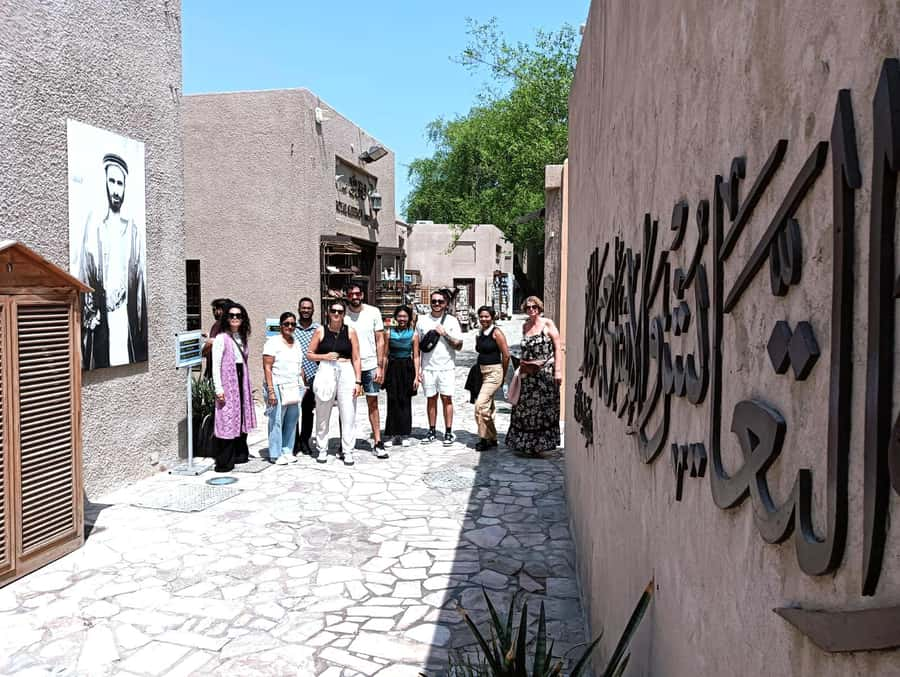
- Al Fahidi supplies the historical heart: See Al Fahidi Fort, old homes, the Coffee Museum, the oldest mosque in Dubai, and the traditional Al Bastakiya quarter.
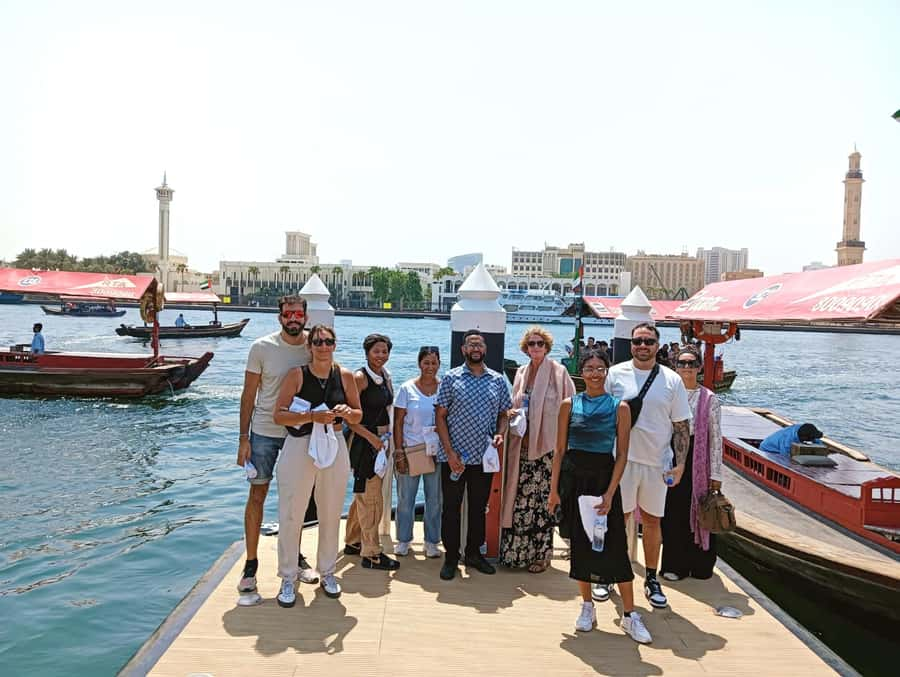
- The abra ride is part of the route: This is a short, practical crossing on a traditional boat, with views of the creek and old trading districts.
- Food tastings add local flavor: Arabic coffee, tea, water, fresh juice, street food, and camel milk chocolate are included, except for some tastings during Ramadan.
- Guiding is a major strength: Guides such as Hesham and Abdullah have received especially warm feedback for clear explanations, friendly conversation, and answering questions.
- Bring cash and walking shoes: You have free time in the markets, where browsing and buying are part of the experience.
Why old Dubai is worth three hours
This tour works because it shows you a side of Dubai that the glass towers cannot explain. The older districts grew around Dubai Creek, trade, fishing, coffee, religion, and family homes. You are not simply looking at restored buildings. You are moving between the places where those parts of daily life are presented to you through food, architecture, and market streets.
At $16 per person, the experience is priced more like a short orientation walk than a full sightseeing excursion. That makes it useful on a first visit, especially if you want someone to explain what you are seeing before returning to the souks on your own.
You should expect a social walking tour rather than a private, slow-paced photo session. The guide leads, explains, and keeps the group moving through several districts. Recent feedback gives special credit to Hesham for learning everyone’s names and making the group comfortable, while Abdullah is noted for answering questions and keeping the group size pleasant.
More Old Quarter and Medina Food Walks in Dubai:
- Dubai: Old Town, Creek, Museums, Souks, & Street Food Tour
★ 4.8 · 10,816 reviews - Dubai: Old Town, Souks, Street Food, Guided Tour & Abra Ride
★ 4.9 · 7,170 reviews - Dubai: Old Town, Souks, Street Food, Guided Tour & Abra Ride
★ 5.0 · 1,664 reviews
Starting at Al Seef and walking toward Al Fahidi Fort
You meet at Wokyo Noodle Bar, House 10, near Al Fahidi Abra Station in the Al Seef area. This is an important detail because the meeting-point information uses several names, including Al Fahidi Abra Station and Al Seef Heritage Village. Save the exact address before leaving your hotel.
Al Seef gives you an easy introduction to the older side of Dubai. From here, the tour begins on foot, with time for a guided visit, photographs, and some browsing. You do not receive hotel pickup or drop-off, so you need to make your own way to the start.
If you use the metro, Sharaf DG on the green line is listed as the closest station, followed by a short walk. Taxi is simpler if you are carrying shopping bags or traveling during the hottest part of the day. Free parking is also listed at the meeting area, though parking conditions can change.
The first section is a good place to listen closely. Your guide helps connect the polished heritage setting with the larger story of old Dubai, rather than treating Al Seef as a stand-alone photo stop.
Al Fahidi Fort and the older residential quarter
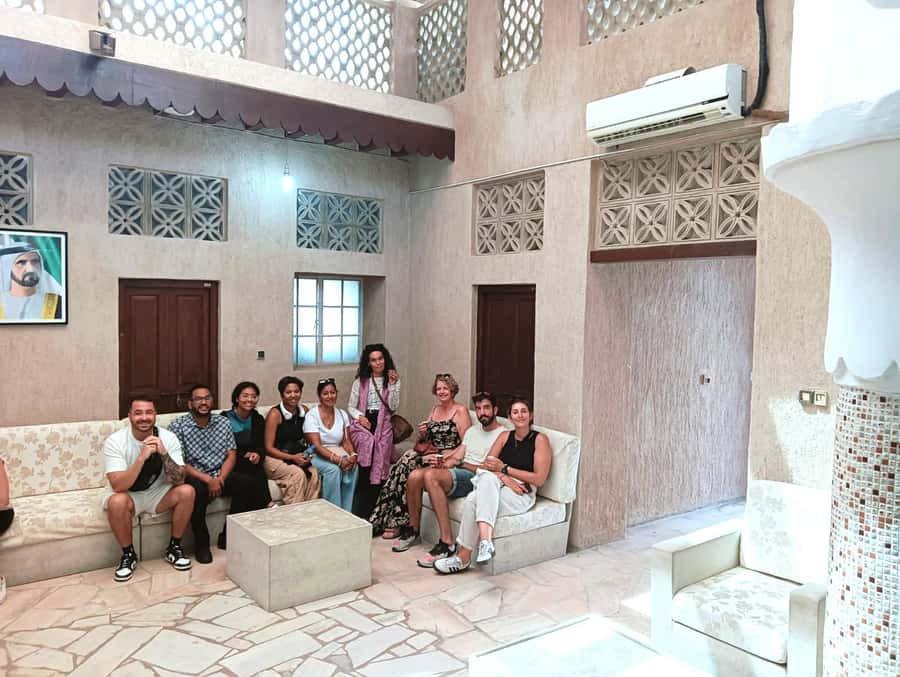
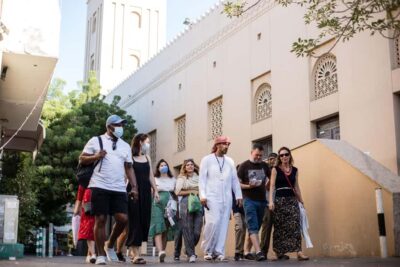
The route continues to Al Fahidi Fort, with time for a photo stop, sightseeing, and explanation. The fort gives the tour a solid historical marker, while the nearby Al Bastakiya area shows how older homes were arranged and built.
In Al Fahidi, you can admire traditional houses and wind-tower architecture. The point is not only that the buildings look different from modern Dubai. The structures help explain how people lived before air conditioning and high-rise development changed the city.
You also receive information about local currency and Emirati life in the heritage area. That kind of background is useful because the market stalls and restored homes can otherwise feel like a collection of attractive scenes with no clear connection.
I would pay attention to the guide’s stories here, especially if you are interested in the change from a smaller creek-side settlement to a global city. One of the strongest parts of the experience is this connection between past and present. Guides including Hesham have been praised for telling that story with feeling, not just listing dates and names.
The walk is not difficult in a technical sense, but it is still a walking tour. Wear comfortable shoes and expect warm conditions, depending on the season and start time.
Coffee, tea, and Dubai’s oldest mosque
The route passes the Coffee Museum, which fits neatly with the food and culture theme of the tour. You learn about coffee traditions as you move through the neighborhood, then continue past the Arabian Tea House, a well-known restaurant associated with local food.
The tea house is a pass-by point, not necessarily a full meal stop. That distinction matters. You should think of the included tastings as small samples and refreshments rather than lunch.
The guide also points out Dubai’s oldest mosque and shares religious facts. This is a useful moment to ask respectful questions about local customs and daily life. The tour’s English-speaking guide is there to provide context, but you should still dress and behave appropriately near religious sites.
The food element works best when treated as a way into the culture. Arabic coffee and tea are not just drinks on this route. They give you a direct connection to hospitality traditions, while the guide can explain what you are tasting and where it fits into the local experience.
More museum visits around Dubai:
- Dubai.Discover Old town,Markets,street food,Abra &Museums
★ 4.9 · 181 reviews - Dubai Souks, Museum, Street Food Walking Tour with Hotel Transfer
★ 4.5 · 7 reviews - Private Dubai Old Town Tour,street food,Boat & Museums
★ 5.0 · 6 reviews - Takua Pa: Food Market, Tsunami Museum, Temple, & Old Town
★ 4.9 · 165 reviews
Al Souq Al Kabeer and the tasting break
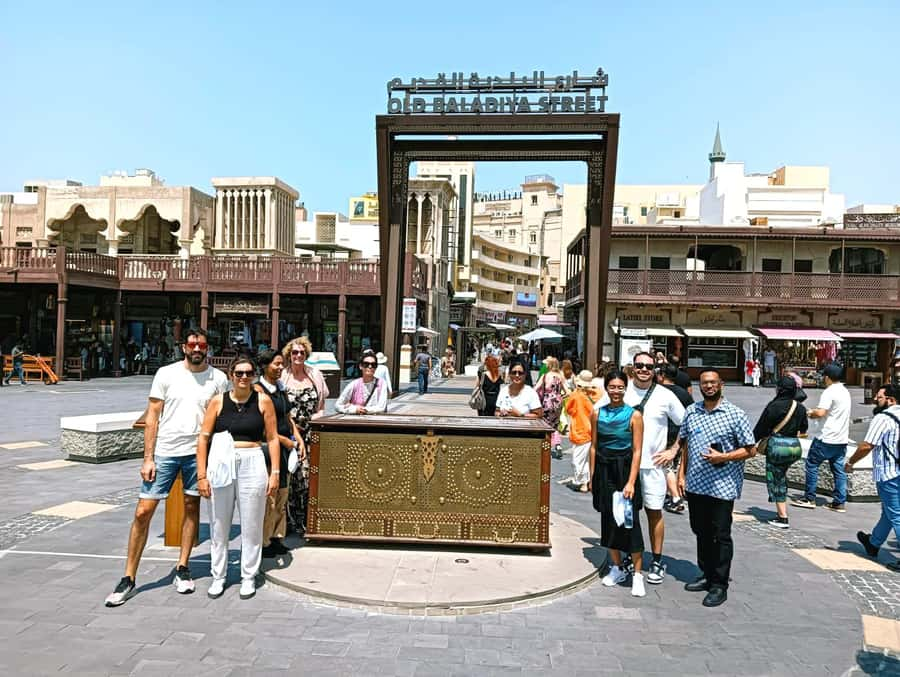
At Al Souq Al Kabeer, you have time for photographs, shopping, and street food. The tour includes street-food tasting, fresh juice, water, Arabic coffee, tea, and camel milk chocolate, although the exact food selection may vary.
Camel milk chocolate is a particularly distinctive sample. It is an easy way to try a local product without committing to a full dish, and it gives the tasting portion a Dubai-specific touch.
You should carry some cash. The tour includes shopping time, but it does not cover purchases, and market stalls are part of the experience rather than a background detail. If you dislike sales pressure, remember that browsing is enough. You are not required to buy anything.
This is also where the tour can feel a little compressed. Three hours must cover food, architecture, two souks, a boat crossing, and several historical stops. You will get an introduction to each place, but not unlimited time at any one stall or museum.
Crossing Dubai Creek by traditional abra
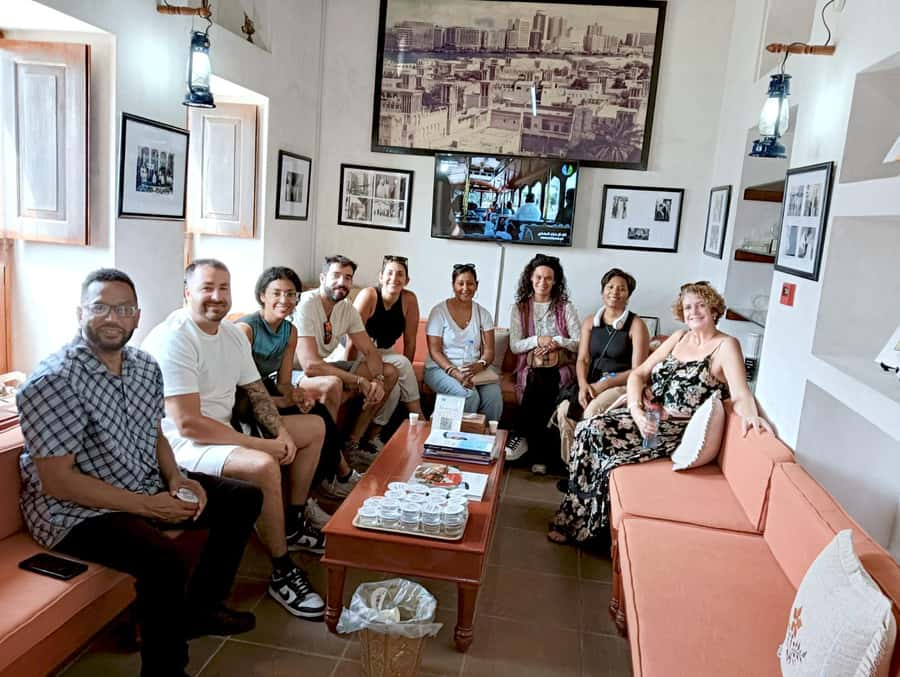
The abra ride is one of the tour’s most memorable practical details. You board at Bur Dubai Abra Dock and cross to the Deira side of Dubai Creek, where the Spice Souk and Gold Souk await.
This is not a long cruise or a sightseeing boat trip. It is a traditional crossing used to connect the two sides of the creek. That is precisely why it works well here: the boat ride is part of how the old districts fit together, not a separate attraction added to fill time.
From the water, you get a different view of the creek-side buildings and the movement between the historic trading neighborhoods. Keep your camera ready, but do not let the ride distract you from the guide’s explanation of the area.
There is a short break around the dock, which gives you a moment to reset before the final market section. Since the tour ends across the creek, check your plans before booking. You will not be returned to Al Seef.
Spices, gold, and the final market walk
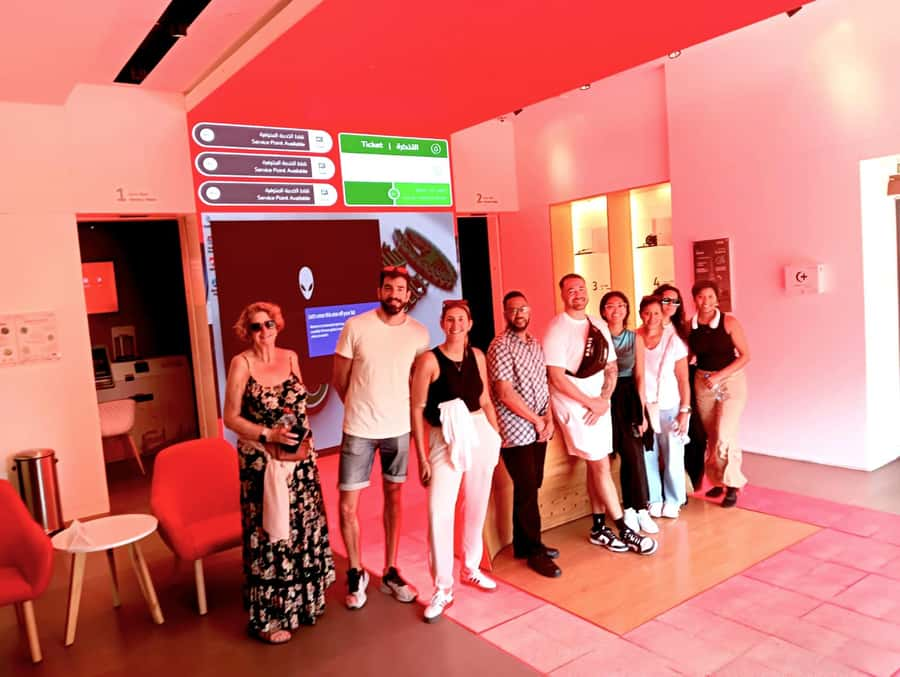
The Spice Souk is a sensory stop, with colorful displays and the chance to see the products that give the market its name. The tour includes a guided visit and photo time, while shopping remains optional.
Your guide can help you understand the difference between seeing a market and buying from it. Ask questions about prices, quantities, and what you are being offered, but keep your own budget in mind. The tour is designed to introduce the souk, not guarantee the lowest price for every purchase.
The Gold Souk is the last stop and the official finish. It is described as one of the largest gold markets in the world, with shop windows filled with jewelry and large decorative pieces. Even if you are not shopping for gold, the scale and presentation make it worth seeing.
Because the tour ends here, this is a convenient place to continue exploring Deira on your own. It is also a useful point for a taxi or onward plans, though the activity does not include transport after the finish.
What the guides add to the experience
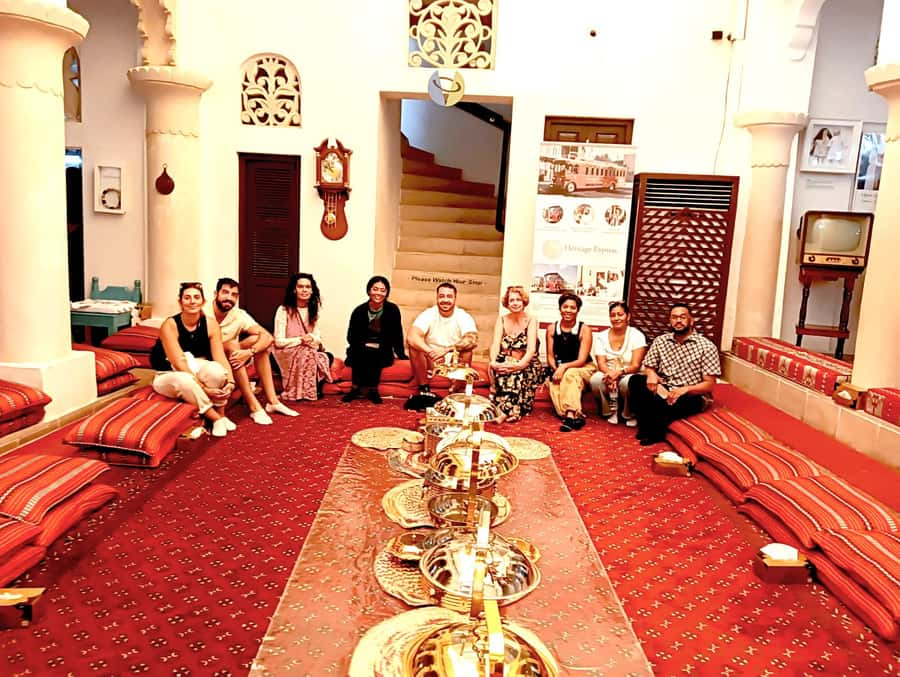
The guide makes a real difference on a route like this. Without one, Al Fahidi, the souks, and the creek can become a string of pleasant stops. With a good explanation, the old houses, coffee customs, mosque, markets, and boat crossing form a connected picture.
Hesham has been singled out for being friendly, attentive, and able to explain Emirati history, culture, and traditions in a personal way. His approach includes learning the names of people in the group and making space for questions. Abdullah has also received strong feedback for clear explanations and responding to the group rather than delivering a rigid speech.
You cannot guarantee a specific guide unless the operator confirms it. Still, the repeated emphasis on guide quality is useful when judging this activity. The route itself is straightforward. The storytelling is what turns it into a worthwhile introduction.
English is the listed tour language. The activity is not suitable for people with hearing impairments, so you should take that seriously before booking.
Food, Ramadan, and what to carry
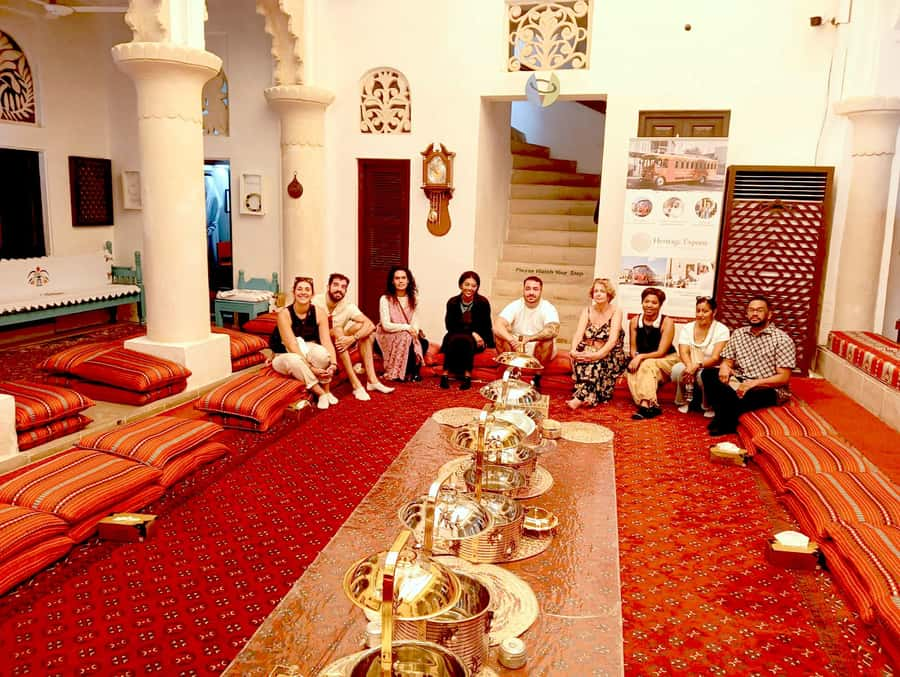
Bring comfortable shoes, cash, and water if you prefer to carry your own supply. Water and refreshing beverages are included, but three hours of walking through open-air areas can make an extra bottle useful.
The food is best viewed as tasting rather than a complete meal. You may sample street food, Arabic coffee, tea, fresh juice, and camel milk chocolate. If you need a substantial lunch, arrange one before or after the tour.
Ramadan changes the food portion. Street food, coffee, and tea are not provided during the holy month. The walking, market visits, history, and abra ride still form the main structure, but you should not book this specifically for the tastings if your date falls during Ramadan.
The tour is also not designed for travelers who want a cool indoor museum visit. Much of the experience takes place outdoors, in streets and markets, so the season and time of day matter.
Is $16 a fair price?
Yes, if you want an introduction rather than an exhaustive historical tour. For $16, you receive an English-speaking guide, a three-hour route, several tastings, a traditional boat ride, and a guided look at Al Fahidi, the creek, the Spice Souk, and the Gold Souk.
The value becomes even better if you would otherwise struggle to connect the districts on your own. The boat crossing and food samples add variety, while the guide gives you a useful framework for returning to the markets later.
The price does not cover shopping, hotel transportation, or a full meal. You also need to handle your own route to Al Seef and away from the Gold Souk. Those are modest limitations, but they matter if you prefer an all-inclusive excursion.
Free cancellation up to 24 hours before the activity and the option to reserve now and pay later make the booking flexible. Check the available start times, since the heat and daylight can affect how comfortable the walking feels.
Who should book this old Dubai walking tour?
I would choose this tour if you are visiting Dubai for the first time, want to understand the older districts, or have already seen the modern city and want a different side of it. It suits curious eaters, first-time souk shoppers, and anyone who prefers local history explained in plain language.
It is also a good choice for a short stopover. Three hours gives you a compact introduction without taking a full day away from other Dubai plans.
I would hesitate if you dislike walking, want a private pace, need a substantial meal, or are mainly interested in museums and air-conditioned interiors. You should also skip it if your main priority is returning to your starting point, since the tour finishes at the Gold Souk.
For most people who want a practical first look at Al Fahidi, Dubai Creek, and the souks, this is a strong low-cost choice. Book it for the guide, the connections between the neighborhoods, and the abra crossing. Treat the tastings and shopping as pleasant extras, not the whole reason to go.
FAQ
How long does the Dubai Old Town tour last?
The tour lasts three hours.
Where does the tour start?
It starts at Wokyo Noodle Bar, House 10, near Al Fahidi Abra Station on Al Seef Street in Dubai.
Where does the tour finish?
The tour finishes at the Dubai Gold Souk.
Is hotel pickup and drop-off included?
No. You must make your own way to the meeting point and arrange transport after the tour.
What food and drinks are included?
The experience includes local street food, Arabic coffee, tea, water, fresh juice or other refreshing beverages, and camel milk chocolate tasting. Street food, coffee, and tea are not provided during Ramadan.
What language is the tour conducted in?
The live tour guide conducts the tour in English.
Newly added plates around Dubai
- Original Street Food Tour of Dubai★ 4.5 · 41 reviews
- Old Dubai Walk, Souk, Street Foods, Al Fahidi and Al Seef Tales★ 4.0 · 9 reviews
- Discover Old Dubai Town, Souks, Street Food, Culture and History★ 5.0 · 3 reviews
- Dubai Souks, Museum, Street Food Walking Tour with Hotel Transfer★ 4.5 · 7 reviews
- Dubai Street Food Tour★ 5.0 · 5 reviews
- Local Street Food and Guided Walking Tour of Dubai Old Town★ 5.0 · 37 reviews
- Private Dubai Street Food Tour .★ 4.5 · 7 reviews
- Private Dubai Old Town Tour,street food,Boat & Museums★ 5.0 · 6 reviews
Old Quarter and Medina Food Walks, compared.
Old Town, Creek, Museums, Souks, & Street Food Tour
Read our review →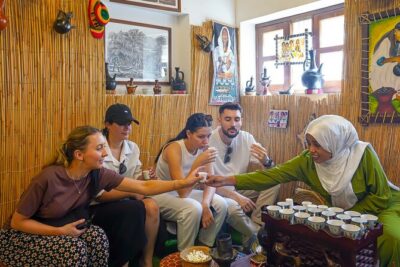
Old Town, Souks, Street Food, Guided Tour & Abra Ride
Read our review →
[HOT] Hanoi Old Quarter Walking Street Food – Small Group Tour
Read our review →Old Town, Souks, Street Food, Guided Tour & Abra Ride
Read our review →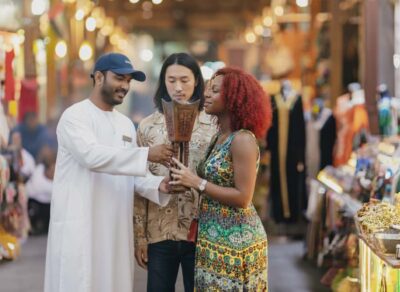
Chania: Old Town Highlights Guided Tour with Street Food
Read our review →Browse the lists this tour appears in