
REVIEW · FOOD TOURS BY MOTORBIKE OR SCOOTER
Singapore Street Food and Ethnic Quarters Kick Scooter Tour
Singapore’s best stories often sit beside its best snacks, and this tour links the two by kick scooter. Over three and a half hours, you move from Little India through old Jewish, Japanese, European, Chinese, and Malay quarters, stopping for seven vegetarian-friendly foods and drinks along the way. The route is packed, but the scooter helps cover ground without turning the evening into a long march.
I like the food range, especially the giant dosai cone with masala tea and the hawker-centre tasting of popiah, chwee kway, muah chee, and bubur pulut hitam. I also like the human scale of the ride: a small group of no more than 15 people and a guide who can connect food, temples, old businesses, and changing neighborhoods. Guide Ms Ping is specifically praised for careful, attentive hosting.
The main catch is simple: you need to feel reasonably comfortable on a kick scooter. One rider needed time to find their balance, and the tour does not accept children aged seven or below or anyone weighing more than 100 kilograms. Hot weather, traffic, and a full stomach can also make the final stretch feel more demanding.
Key points at a glance
- Seven local tastes in one evening: Dosai, masala tea, popiah, chwee kway, muah chee, bubur pulut hitam, and pisang goreng.
- A fast route through several cultures: Little India, Albert Mall, the old Jewish and Japanese quarters, the old European Town, and Kampong Glam.
- The food is vegetarian-friendly: This makes the tasting plan useful for vegetarians, not just an afterthought.
- A small evening group: The maximum is 15 people, which gives the guide room to help with scooters and food choices.
- A strong first-time Singapore route: You see temples, shophouses, markets, churches, a mosque, Raffles Hotel, and Haji Lane in one outing.
- You must be ready to ride: The tour suits people who can manage a kick scooter and meet the stated age and weight limits.
Seven foods that give the tour its purpose
The food is not a minor extra here. It is the reason the route works. You move through different districts, then stop to taste something tied to the local food culture.
At Komala Vilas Restaurant in Little India, you get a giant dosai cone and masala tea. Dosai is a crisp, thin South Indian crepe, and the cone shape makes this stop more playful than a standard restaurant meal. You have about 40 minutes here, so this is the main early food break rather than a rushed bite.
The hawker-centre stop at Albert Mall is the most varied part of the meal. The area is described as Today’s Chinatown, and you try several vegetarian-friendly dishes there:
- Popiah, a freshly made Chinese spring roll
- Chwee kway, steamed rice pudding topped with radish and sambal
- Muah chee, small glutinous rice pieces coated in sugar and nuts
- Bubur pulut hitam, black glutinous rice dessert with coconut cream
The last food stop comes in Kampong Glam, where you try pisang goreng, Malay-style banana fritters. By then, you have moved from South Indian food to Chinese hawker dishes and Malay sweets, which gives the tasting a clear sense of place.
You should arrive hungry, but not starved. Seven types of food and drink across a 3.5-hour ride can add up quickly, even if the portions are tasting-sized. The vegetarian-friendly plan is a real advantage, though the supplied details do not explain how meat allergies, vegan diets, or other dietary needs are handled. If food restrictions matter to you, ask before booking.
More Food Tours by Motorbike or Scooter in Singapore:
- Singapore: Street Food & Ethnic Quarters Kick Scooter Tour
★ 5.0 · 10 reviews - Ho Chi Minh City Street Food Tour & Sightseeing By Motorbike
★ 5.0 · 9,413 reviews - Saigon By Night and Street Food By Motorbike | Opt: Ao Dai Riders
★ 5.0 · 4,066 reviews
Little India begins with temples, color, and a dosai cone
The tour starts in Little India at 5 pm, when the light begins to soften and the streets take on an evening rhythm. The first stop is the House of Tan Teng Niah, a brightly painted Chinese villa built in 1900 by a Chinese merchant for his wife. It is described as the only Chinese villa left in Little India, making it a quick but useful reminder that the neighborhood’s story is not limited to one community.
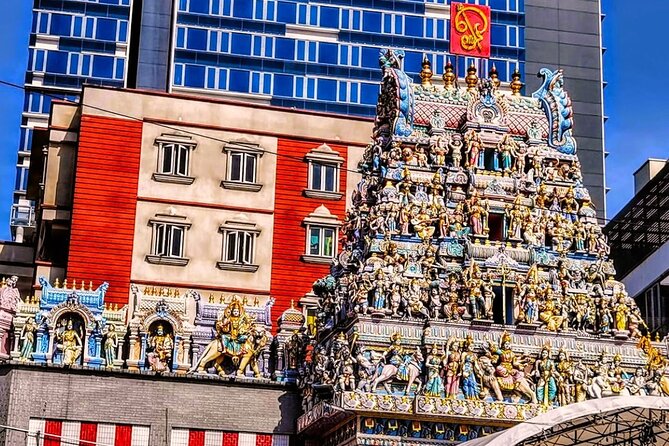
You then visit Sri Veeramakaliamman Temple, established in 1855 and dedicated to the Hindu goddess Kali. The stop lasts about 10 minutes. This is a short visit, not a lengthy temple tour, so you should expect an introduction and time to look rather than an extended religious program.
The longer stop is Komala Vilas Restaurant. The dosai cone is the visual star, but the value is in having time to sit, eat, and let the guide explain what you are tasting. The masala tea adds a warm, spiced drink to the meal.
Campbell Lane follows, with traditional Indian trades such as sweetmeat stores and flower shops. You get only about 10 minutes here, so think of it as a snapshot of the street rather than a shopping stop. The quick pace is part of the tradeoff: you cover a great deal, but you will not linger at every storefront.
Selegie reveals Singapore’s changing quarters
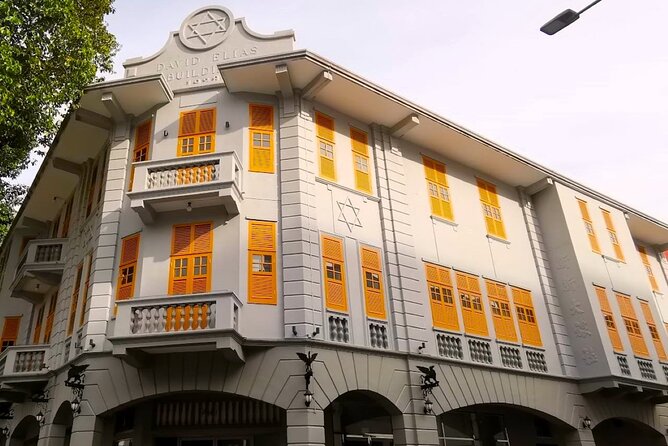
From Little India, you ride by kick scooter toward Selegie. The guide points out remnants of the old Jewish Quarter and Little Japan, two parts of Singapore’s past that are easy to miss if you only visit the major sights.
This section gives the tour more substance than a simple food crawl. Singapore’s districts changed as businesses, communities, and colonial-era trade patterns shifted, and the route uses present-day streets to explain what used to be there. Some of these traces may be subtle, so you will get more from the stop if you listen closely rather than expecting preserved historic blocks.
You also pass Sri Krishnan Temple, built in 1870 and dedicated to Lord Vishnu. It is noted for attracting Buddhist and Taoist worshippers as well as Hindus. Nearby, Kuan Yin Thong Hood Cho Temple dates from 1884 and is dedicated to the Goddess of Mercy. It is known for fortune telling and is one of Singapore’s busiest temples.
Both temple visits are very brief, about two minutes each. That is enough for a look and a piece of context, but not enough for a full examination of either site. Dress and behavior should be respectful at religious places, even when the stop is short.
Albert Mall turns the ride into a hawker-centre meal
Albert Mall is one of the practical highlights. The area has developed into what the tour calls Today’s Chinatown, and the hawker-centre stop gives you several tastes in one place.
This is where the tour feels most useful for a first visit. A hawker centre can be confusing when you do not know what to order, how dishes are served, or which foods fit your diet. Having a guide lead you through four vegetarian-friendly items removes much of that guesswork.
You have around 30 minutes for the stop. That is enough time to taste the dishes and keep the tour moving, but you should not expect a slow restaurant meal. The flavors and textures also change quickly: soft rice pudding, crisp or fresh spring roll textures, chewy rice morsels, and a creamy black-rice dessert.
The stop is a good reason to avoid eating a large meal before the tour. It is also a good reason to bring water, though the supplied details do not state whether bottled water is provided.
More street food tours in Singapore:
- Small Group: Michelin and Local Hawker Food Tour with 9 tastings
★ 5.0 · 1,890 reviews - Small Group: Singapore Street Food & Night Tour with 9 tastings
★ 5.0 · 1,240 reviews - Singapore: UNESCO Street Food & Cultural Experience
★ 5.0 · 524 reviews - Small-Group Food Tour With Hawker Center: Eat Like A Local
★ 5.0 · 420 reviews
Bugis connects old nightlife with the old European Town
The route continues to Bugis Street, once known as a red-light district and now a busy marketplace. You have only about five minutes here, so the point is the contrast between its former reputation and its current role as a shopping and street-life area.
At Bugis Junction, the guide looks for traces of the streets where Japanese-owned businesses, including brothels and photography studios, operated before World War II. The stop offers a striking lesson in how quickly a city can change. Modern buildings can conceal an older social and commercial world, and the guide’s explanation is what makes this stop worthwhile.
Next comes St Joseph’s Church, founded by a Portuguese mission in 1853. It is described as one of Singapore’s most attractive Catholic churches and one of several Catholic churches connected with the old European Town. The visit is brief, about two minutes, so you will not get a full church tour.
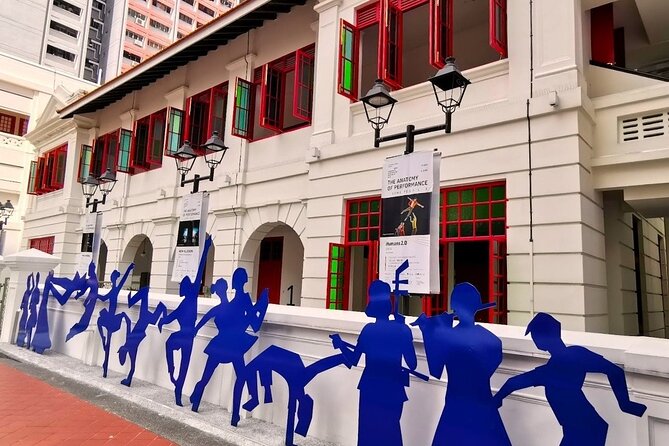
Chijmes gives you more time, roughly 10 minutes. The former Catholic girls’ school and orphanage is now a dining, entertainment, and lifestyle area. This is a useful example of adaptive reuse: a religious and educational site now serves a very different urban purpose.
Raffles Hotel adds a famous name to the route
The 20-minute stop at Raffles Hotel Arcade is longer than the church visits and gives you time to take in one of Singapore’s best-known addresses. The hotel once hosted Charlie Chaplin, Elizabeth Taylor, and Michael Jackson, and it is closely associated with the Singapore Sling cocktail.
You should keep your expectations in check. The tour takes you to the arcade and pays a visit to the hotel area, but the details provided do not include a cocktail, a hotel-room visit, or a dedicated drink tasting. Think of this as a compact look at an important landmark, not a luxury hotel experience.
This stop also breaks up the food-and-scooter rhythm. After several quick roadside points, you get a little more time to pause, take photographs, and hear about the hotel’s place in Singapore’s popular culture.
Kampong Glam finishes with Haji Lane and Sultan Mosque
The final part of the route shifts into Kampong Glam, once the seat of Malay royalty. Haji Lane is known for its lively nightspots, and the 10-minute visit gives you time to take in its street art, small businesses, and evening atmosphere.
Sultan Mosque follows. Originally built in 1824, it was named for Sultan Hussein Shah, who signed the 1819 treaty allowing the British to establish a trading post in Singapore. The stop lasts about five minutes, enough for an exterior look and historical context.
Bussorah Street is a short final stop. This pedestrian street is lined with royal palms, halal restaurants, and perfume shops. The route then ends at the operator’s office at 73 Dunlop Street, close to Rochor, Jalan Besar, Bugis, and Little India MRT stations.
The final food is pisang goreng, Malay-style banana fritters. Ending with a sweet, fried snack makes sense after the mosque and Kampong Glam stops, and it gives the tour a clear culinary finish rather than simply ending after sightseeing.
Why the kick scooter matters
The scooter is not just a novelty. It helps link districts that would take longer on foot, especially when the tour includes Little India, Selegie, Bugis, the old European Town, and Kampong Glam in one evening.
One participant described being wobbly at first but getting the hang of it. That is useful advice for you: allow yourself a few minutes to settle in, and do not book this as a purely passive food tour. You need enough balance and confidence to move through city streets as part of a group.
The tour has a maximum of 15 people. That is small enough for a guide to keep an eye on the group and help with the food stops, though it is not a private tour. Ms Ping is one guide specifically associated with careful, attentive help from beginning to end.
The supplied information does not give a detailed account of traffic conditions, scooter training, or the exact riding surfaces. If you are nervous on two wheels, ask the operator about those points before booking. The tour’s value depends partly on enjoying the ride rather than merely tolerating it.
Price, timing, and who gets good value
At $55.43 per person, the price covers about 3 hours and 30 minutes, the guided route, scooter touring, and seven types of food and drink. I consider that a fair price if you want both sightseeing and a structured tasting session, especially since the route covers several districts that would be hard to connect efficiently on foot.
The price is less appealing if you mainly want a relaxed dinner or a deep visit inside temples and churches. Several stops last only two to five minutes, and the schedule favors breadth over long visits.
I would choose this for:
- A first Singapore evening when you want orientation and food together
- People who like active sightseeing and can manage a kick scooter
- Vegetarians looking for a clearly planned tasting route
- Couples, friends, and small groups who enjoy moving between neighborhoods
- Anyone interested in how different communities shaped Singapore
I would hesitate if you dislike scooters, want a slow meal, need extensive time at religious sites, or have food needs that have not been confirmed with the operator.
The tour is usually booked about 20 days ahead, so planning early makes sense. Mobile tickets are used, and confirmation is provided at booking. Free cancellation is available up to 24 hours before the 5 pm start time. If poor weather cancels the tour, you are offered another date or a full refund. The same applies if the minimum number of participants is not reached.
Should you book the Singapore kick scooter food tour?
Book it if you want a broad, lively introduction to Singapore with real local snacks, short historical stories, and an efficient way to move between ethnic quarters. The strongest parts are the seven vegetarian-friendly tastings, the Albert Mall hawker-centre stop, and the chance to connect places such as Little India, Raffles Hotel, and Kampong Glam in one evening.
Skip it if your idea of a food tour is a long dinner at a few restaurants, or if riding a scooter sounds stressful. For the right person, this is good value: active, filling, and packed with more neighborhoods than most short evening tours can cover.
FAQ
Where does the tour start?
The tour starts in Little India, Singapore, at 5 pm.
Where does the tour end?
It ends at 73 Dunlop Street, Singapore 209401. The office is within walking distance of Rochor, Jalan Besar, Bugis, and Little India MRT stations.
How long is the tour?
The tour lasts approximately 3 hours and 30 minutes.
How many people can join?
The maximum group size is 15 participants.
What foods and drinks are included?
The tasting includes dosai, masala tea, popiah, chwee kway, muah chee, bubur pulut hitam, and pisang goreng.
Are the food tastings vegetarian-friendly?
Yes. The seven listed types of street food and drink are described as vegetarian-friendly.
Are young children allowed?
Children aged seven or below are not allowed to participate.
Is there a weight limit?
Yes. People weighing more than 100 kilograms are not allowed to participate.
Is the tour available with a mobile ticket?
Yes. The experience includes a mobile ticket, and confirmation is provided when you book.
Can I cancel for a refund?
You can cancel up to 24 hours before the start time for a full refund. Cancellations or changes made less than 24 hours before the start are not refunded or accepted.
Newly added plates around Singapore
- UNESCO Hawker Culture: Chinatown Food Tasting Tour★ 4.9 · 43 reviews
- Singapore Street Food Join-In Tour★ 5.0 · 2 reviews
- Private Tour Singapore Street Food & Night Tour★ 5.0 · 4 reviews
- UNESCO Hawker Culture: Chinatown Food Tasting Tour★ 5.0 · 47 reviews
- Singapore Nightlife: Street Food, Night Views and Drinks★ 5.0 · 19 reviews
- Signature Urban Night Tour: Sunset Street Food in Singapore★ 5.0 · 4 reviews
- Singapore: Little India Hawker Food Tasting Tour★ 5.0 · 21 reviews
- Singapore Chinatown Local Hawker Food Tour★ 5.0 · 2 reviews
Food Tours by Motorbike or Scooter, compared.
Ho Chi Minh City Street Food Tour & Sightseeing By Motorbike
Read our review →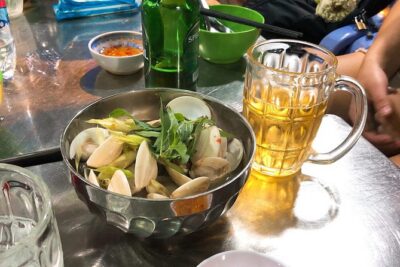
Saigon By Night and Street Food By Motorbike | Opt: Ao Dai Riders
Read our review →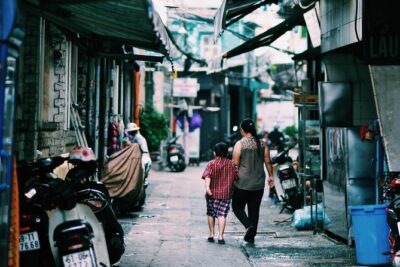
Private Street Food Tour by Motorbike/Car with Local Students
Read our review →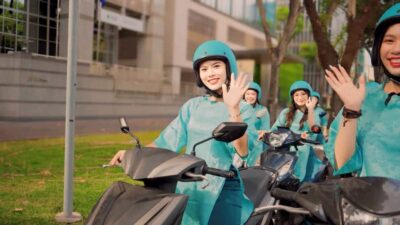
Street Food Tasting & Sightseeing Tour by Motorbike
Read our review →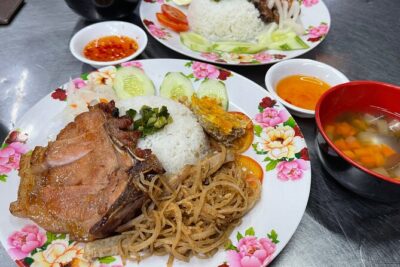
Top Notch Street Food Motorbike Tour In Ho Chi Minh City
Read our review →
Private Street Food Motorbike Tour in Ho Chi Minh City
Read our review →
Saigon Afternoon Unseen Street Food by Scooter |Opt: Ao Dai Rider
Read our review →
Browse the lists this tour appears in