
REVIEW · SINGAPORE STREET FOOD TOURS
Singapore: UNESCO Street Food & Cultural Experience
Singapore’s food culture makes the best kind of city introduction: you eat your way through Chinatown, Kampong Glam, and Little India while your guide explains how Chinese, Malay, Indian, and Indonesian influences shaped the island. This is not just a meal with a few facts attached. It is a walking tour, transit lesson, neighborhood visit, and generous food session rolled into about five and a half hours.
I like the small group, capped at eight people, and I like that Gerry brings in Singapore’s public buses and MRT rather than keeping you inside a private vehicle. The main caution is practical: this is a food-heavy, walking-based morning and is not a good fit for serious allergies, strict dietary restrictions, vegetarians, prams, or personal mobility devices.
Key points to know before booking
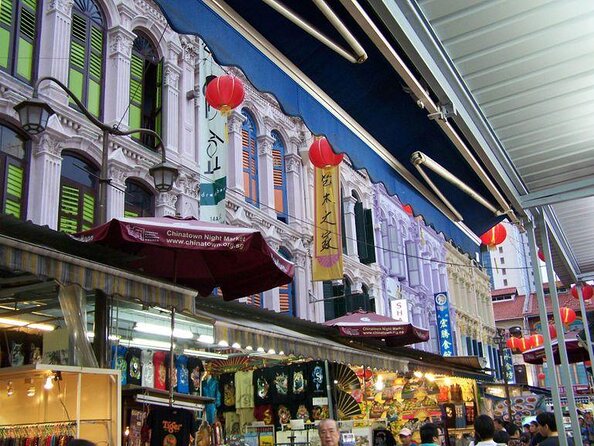
- Three neighborhoods in one morning: Visit Chinatown, Kampong Glam, and Little India, each with its own cultural setting and food traditions.
- Hawker-center focus: Eat from local stalls, including centers connected with Singapore’s UNESCO food culture.
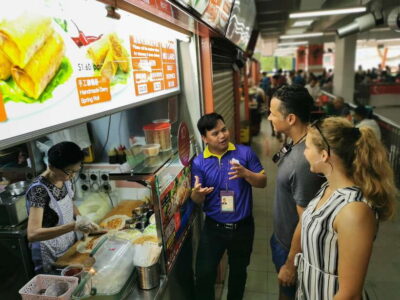
- Gerry leads the experience: Expect personal stories, old photographs, history, and plenty of help choosing and understanding the food.
- Food is generous: You are served enough to sample many dishes, so arrive hungry and skip breakfast.
- Transit is part of the tour: Gerry guides you on the MRT and public buses, useful if this is your first visit.
- Small group, clear limits: Groups range from a minimum of two to a maximum of eight people.
Why this tour is a smart first look at Singapore
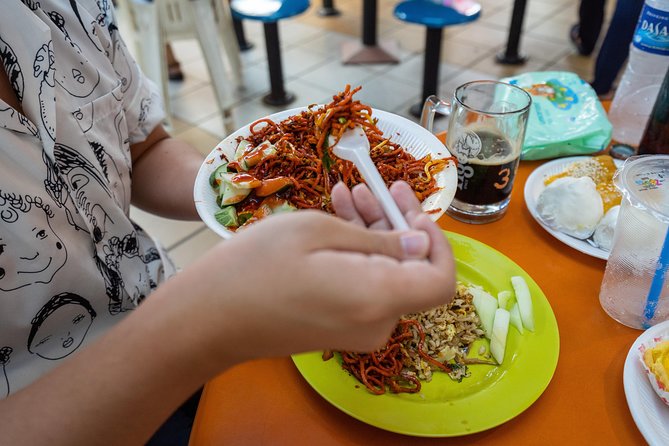
Singapore can feel polished and modern at first glance. The hawker center tells a more useful story. It is where everyday meals, family traditions, migration, religion, language, and modern city planning meet at one table.
This tour uses food as the thread connecting three distinct neighborhoods. You do not simply stop for lunch and move on. You walk through Chinatown, Kampong Glam, and Little India, listen to explanations about each area, and try food linked to Chinese, Malay, Indian, and Indonesian traditions.
The tour begins at 9 a.m. and runs for about five hours and 30 minutes. That timing matters. Singapore is warm, and a morning schedule lets you cover the main walking sections before the day feels too hot. It also gives you the afternoon to revisit a favorite food stall, see another sight, or rest.
The tour is led by Gerry from Singapore Foodsters. He is the kind of guide this format needs: someone who can explain the food, point out how the neighborhoods changed, and keep the group moving without making the outing feel like a lecture. His approach includes personal stories, historical photographs, and practical help with local transport.
I especially like that the tour treats the MRT and buses as part of the experience. You learn how to move around Singapore while going from one district to the next. For a short stay, that is useful information you can put to work immediately.
More street food tours in Singapore:
- Small Group: Michelin and Local Hawker Food Tour with 9 tastings
★ 5.0 · 1,890 reviews - Small Group: Singapore Street Food & Night Tour with 9 tastings
★ 5.0 · 1,240 reviews - Small-Group Food Tour With Hawker Center: Eat Like A Local
★ 5.0 · 420 reviews
Chinatown: start with Singapore’s hawker tradition
The Chinatown portion lasts about one hour and 10 minutes. This is the food center of the morning, with tasting at a UNESCO-inscribed hawker center included in the route.
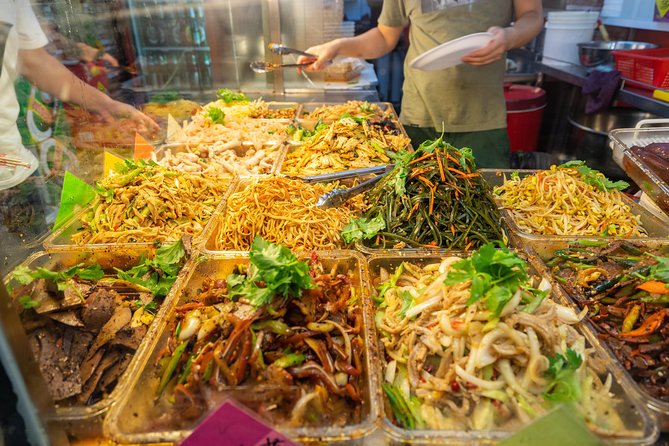
Hawker centers are not dressed-up restaurants. They are organized public food halls with individual stalls, shared tables, and a wide range of inexpensive meals. The setting gives you a direct look at ordinary Singaporean eating habits. You can watch how people order, collect food, share tables, and move through a meal without ceremony.
Gerry handles the difficult part: deciding what to order and explaining what is on the table. The tasting is described as generous, with enough food to try several local favorites. You may also encounter stalls associated with Michelin recognition, an interesting reminder that Singapore’s most respected food can come from simple counters rather than formal dining rooms.
Do not expect a single neat dish and a quick photo stop. The food is a major part of the tour, and the portions can add up. One of the clearest practical tips is to skip breakfast. If you arrive after a full hotel buffet, you may spend the rest of the morning trying to keep up.
Chinatown also gives Gerry a place to explain how Singapore’s Chinese community developed and how older neighborhoods changed as the city modernized. The tour combines present-day food with photographs and stories from earlier decades, which helps you see more than restored facades and souvenir shops.
The drawback is that hawker centers can feel busy and noisy, especially when several dishes arrive at once. If you prefer a quiet, seated meal with a fixed menu, this will feel less controlled. If you want to understand how people actually eat in Singapore, that lack of ceremony is part of the point.
Kampong Glam: Malay and Muslim Singapore in view
The next neighborhood is Kampong Glam, sometimes written Kampong Gelam in route information. The walking section lasts about one hour and 10 minutes.
This district gives the tour a different cultural frame. The food here connects with Malay traditions and the wider influences of the region, including Indonesia. Gerry explains the neighborhood as part of Singapore’s broader cultural story rather than treating it as a quick backdrop for more eating.
The strength of this stop is the change of setting. After Chinatown’s hawker focus, Kampong Glam helps you see how food fits into religion, community, trade, and migration. You are not only collecting dishes. You are learning why Singapore’s cuisine has so many overlapping influences.
Food tasting is included during the experience, although the supplied details do not promise a precise dish-by-dish menu. That is worth noting. Menus at local stalls can vary, and the guide may select food based on what is available and what suits the group.
The walking pace is balanced with sitting time, according to the tour details. Still, you should be ready to walk between stops and stand at food centers. Comfortable shoes and light clothing make sense in Singapore’s warm climate, though the tour information does not specify a dress code.
Kampong Glam is also a useful place to ask questions. Gerry is described as open to conversation and attentive to the people in his group. That matters in a small tour. You can ask about ingredients, customs, Singapore’s past, or how to use the transit system instead of simply following a flag through the streets.
Little India: another food tradition, another view of the city
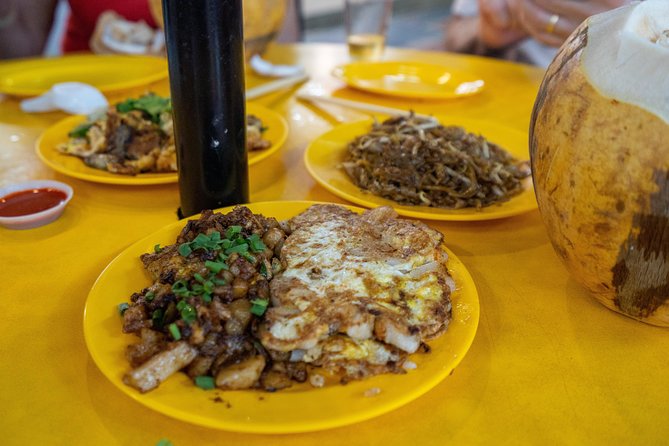
Little India completes the three-neighborhood route and adds an Indian dimension to the morning. The scheduled stop is also about one hour and 10 minutes.
This district shows why Singapore is best understood through several communities rather than one national food label. The route links Indian culture and food with the Chinese and Malay influences introduced earlier. The result is a more useful picture of Singapore as a place shaped by many arrivals and traditions.
The food focus remains central, but the stop is also about daily life. You walk through the area, hear stories about its past and present, and see how cultural identity remains visible in the city. Gerry’s historical photos and personal explanations help connect what you see now with the way these districts looked and functioned in earlier years.
The order of neighborhoods may make the morning feel full. You are covering three areas, eating repeatedly, and moving by public transport or bus. That is excellent for a first orientation but less suitable if you want a slow photographic walk with long periods in one district.
The tour’s food notes also explain why people with strict dietary needs should think carefully before booking. It is not recommended for vegetarians, people with food allergies, or those with major dietary restrictions. Even if a guide tries to adjust the choices, the experience is built around shared sampling across local food traditions, so the range may be reduced.
Same city, another round of plates:
- Singapore: Guided Street Food Tour at Night
★ 4.5 · 393 reviews - Singapore: Local Hawker Food Tour with Tastings
★ 4.7 · 181 reviews - Singapore Street Food Tour with a Local: A Feast for Foodies 100% Personalized
★ 5.0 · 169 reviews - A Taste of Singapore: Hawker Center Private Customized Food Tour
★ 4.5 · 106 reviews
Gerry’s guiding style and the value of local context
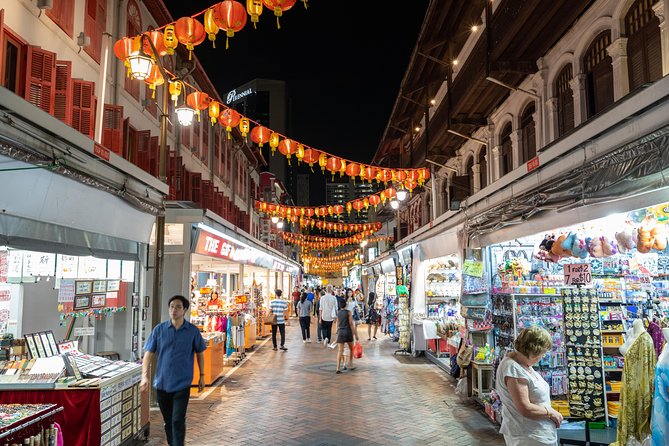
The food is the headline, but Gerry’s role is what gives the morning shape. His work includes explaining the city’s history, connecting dishes to communities, and helping you use public transportation.
You can expect a conversational style rather than a formal museum lecture. The strongest parts of the experience are the links between personal stories, older photographs, neighborhood change, and food. That combination gives you context without asking you to memorize dates.
Gerry is also described as careful with communication before, during, and after the tour. That can make a difference when hotel pickup is involved or when you need clear instructions for the meeting point.
The tour has a strong hospitality element. Food is ordered in quantities meant for sampling, and surplus food may be given to hawker-center cleaning workers rather than wasted. That small detail says something about the guide’s way of running the outing: generous, practical, and attentive to the people around him.
The group limit matters, too. With no more than eight people, you have a better chance of hearing the explanations and asking questions. A minimum of two people is required, so solo bookers should confirm that the departure conditions work for them before paying.
Price, transport, and what the $161.62 buys
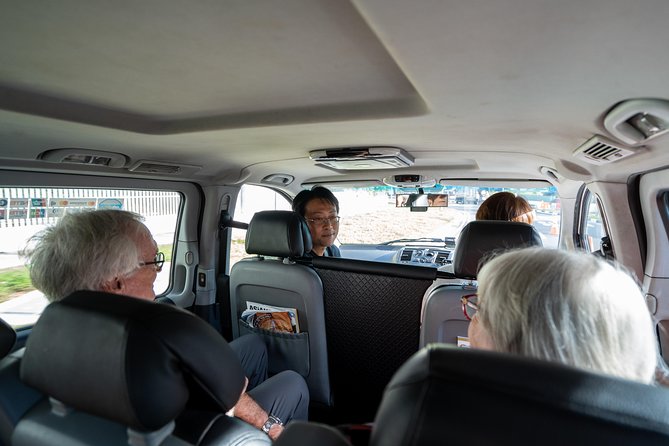
At $161.62 per person, this is not the cheapest way to eat in Singapore. You can spend far less by visiting a hawker center on your own.
The value comes from what is bundled into the price. You receive multiple food tastings, bottled water, coffee or tea, soda, and beer. The package also includes a professional host, guidance on the MRT and public buses, and hotel pickup and drop-off when available for your location.
The food quantity appears substantial, not token-sized. That makes the price easier to assess, especially if you would otherwise pay for several separate meals while trying to identify unfamiliar dishes. You are also paying for selection, explanation, navigation, and the guide’s local connections.
Pickup is optional and subject to location. Do not assume every hotel receives door-to-door service. The meeting point is in Singapore, and the activity ends back at the meeting point unless arrangements are specifically confirmed.
For a short visit, the value is stronger. If you have only one or two days, this tour gives you a working introduction to neighborhoods, food, and transit in one morning. If you have a long stay and enjoy planning your own meals, the cost may be harder to justify.
Who should book, and who should skip it
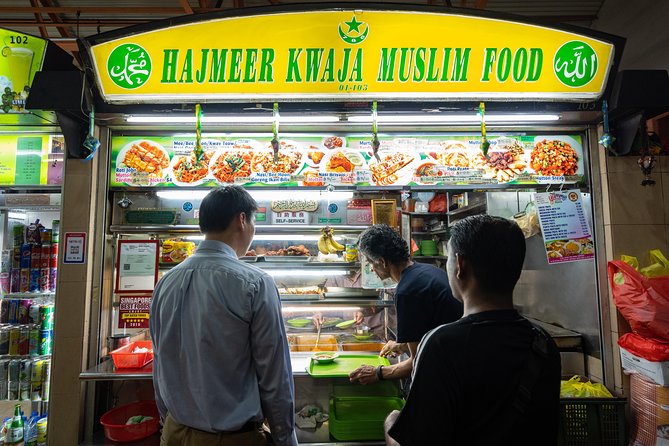
I would recommend this experience to first-time visitors who want a strong start in Singapore. It suits couples, friends, and small families with older children who can manage walking, public transport, and a food-centered schedule.
It is also a good match for a short layover. Several hours are enough to see three districts and learn how to continue exploring on your own. The transit guidance is especially useful if you plan to rely on Singapore’s MRT and buses afterward.
You should skip it if you need a fully accessible route. The experience is not recommended for people using personal mobility aids or devices, and it is not designed for children in prams.
You should also think twice if food restrictions are central to your trip. The operator specifically advises against booking for people with food allergies, strict dietary restrictions, and vegetarians. A flexible eater will get much more from the planned tastings.
The moderate fitness requirement is important. You do not need to be an athlete, but you should be comfortable walking through several neighborhoods, standing at food stalls, and transferring between transport modes.
Should you book this Singapore food tour?
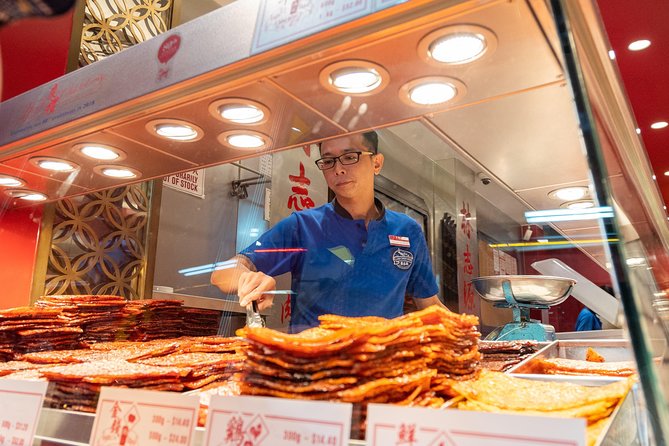
Book it if you want food plus context, not just a list of dishes. The combination of hawker-center tastings, three cultural districts, public transport, and Gerry’s personal storytelling gives you a useful first map of Singapore.
The strongest reason to choose it is the balance. You eat well, but you also learn how the city works. Just arrive hungry, wear comfortable shoes, keep your schedule flexible, and understand that the tour is not built for strict dietary needs or mobility limitations.
Free cancellation is available if you cancel at least 24 hours before the 9 a.m. start time. After that point, the payment is not refunded and changes are not accepted.
FAQ
How long does the Singapore food tour last?
The experience lasts approximately five hours and 30 minutes.
What time does the tour start?
The listed start time is 9 a.m.
Which neighborhoods does the tour visit?
The route includes Chinatown, Kampong Glam, and Little India.
Is hotel pickup included?
Hotel pickup and drop-off may be available, depending on your location. The service is optional and subject to confirmation.
How many people can join the tour?
A minimum of two people is required per booking, and the maximum group size is eight.
Does the tour include public transportation?
Yes. MRT and public bus travel may be used, with guidance on how to use Singapore’s transit system.
Is food included in the price?
Yes. Food tastings, bottled water, coffee or tea, soda, and beer are included.
Is the tour suitable for vegetarians or people with food allergies?
The experience is not recommended for vegetarians, people with food allergies, or those with dietary restrictions, because the tasting format may be compromised.
Newly added plates around Singapore
- UNESCO Hawker Culture: Chinatown Food Tasting Tour★ 4.9 · 43 reviews
- Singapore Street Food Join-In Tour★ 5.0 · 2 reviews
- Private Tour Singapore Street Food & Night Tour★ 5.0 · 4 reviews
- UNESCO Hawker Culture: Chinatown Food Tasting Tour★ 5.0 · 47 reviews
- Signature Urban Night Tour: Sunset Street Food in Singapore★ 5.0 · 4 reviews
- Singapore Street Food and Ethnic Quarters Kick Scooter Tour★ 5.0 · 8 reviews
- Singapore Nightlife: Street Food, Night Views and Drinks★ 5.0 · 19 reviews
- Singapore: Little India Hawker Food Tasting Tour★ 5.0 · 21 reviews
Singapore Street Food Tours, compared.
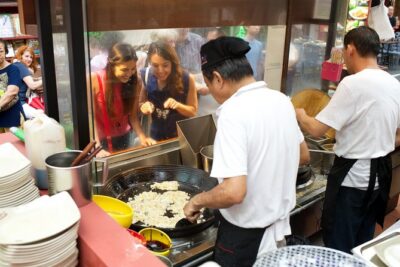
Small Group: Michelin and Local Hawker Food Tour with 9 tastings
Read our review →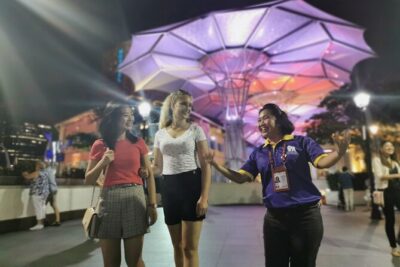
Small Group: Singapore Street Food & Night Tour with 9 tastings
Read our review →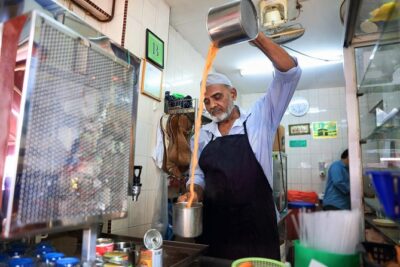
Small-Group Food Tour With Hawker Center: Eat Like A Local
Read our review →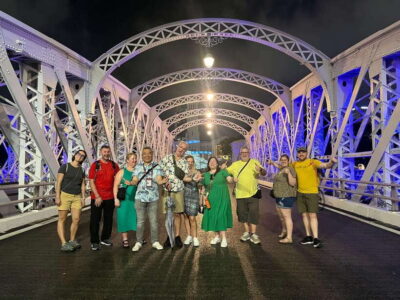
Singapore Street Food Tour with a Local: A Feast for Foodies 100% Personalized
Read our review →
A Taste of Singapore: Hawker Center Private Customized Food Tour
Read our review →
Browse the lists this tour appears in