
REVIEW · MEXICO CITY STREET FOOD TOURS
El Centro Street Food Walking Tour
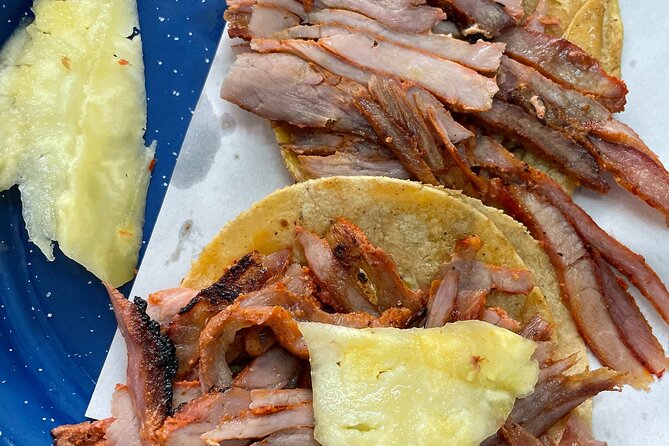
Mexico City’s best food stories often begin with a market stall, not a restaurant table. This 3 to 4 hour walk starts with chapulines, Oaxaca cheese, and mezcal at Mercado de San Juan, then moves through tlacoyos, gorditas, tamales, and Mexican sweets while the city supplies the scenery.
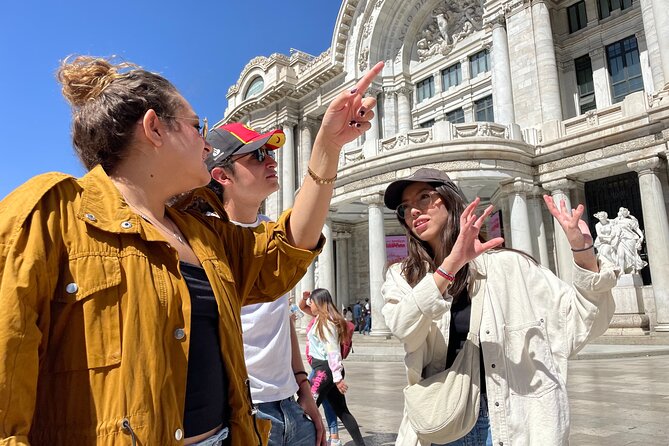
I like the wide range of flavors, from smoky mezcal to grasshoppers and creamy cheese. I also like the history woven into the route, with time at Bellas Artes, the House of Tiles, Palacio Postal, Zócalo, and the cathedral. The main consideration is pace: this is a walking and tasting tour, not a deep visit to the museums or archaeological sites along the way.
What makes this Centro food walk worth considering
- Chapulines at Mercado de San Juan: You get an early taste of Mexico’s adventurous side, along with cheese and mezcal.
- Several kinds of street food: Tlacoyos, gorditas, tamales, and sweets give you more than a single taco stop.
- Historic Centro route: Food is paired with Bellas Artes, the House of Tiles, Palacio Postal, Zócalo, and Templo Mayor.
- Small group size: The maximum is 15 people, a useful limit for a market and narrow city streets.
- Guides with strong local knowledge: Luis and Paola are among the guides associated with this experience, and both are praised for clear explanations and friendly group handling.
- A rooftop finish: The route ends near Templo Mayor with a city view and time to take stock of the day.
Starting with chapulines at Mercado de San Juan
The tour begins at Plaza de San Juan in Colonia Centro. From there, you step into Mercado de San Juan for the first tasting, a compact introduction to the range of Mexican food you will encounter during the day.
The sampler includes chapulines, or seasoned grasshoppers, Oaxaca cheese, and mezcal. Chapulines are the attention-grabber. They have a crisp texture and can be a small test of nerve for anyone who has not eaten insects before. You do not need to treat the tasting as a dare, though. The point is to show that Mexican food is not one narrow category, and that market food can be both traditional and surprising.
The cheese offers a gentler counterpoint, while mezcal brings a smoky note. This is a good place to ask your guide about ingredients and regional food customs, since the tasting gives you several clear starting points.
You spend about 30 minutes here. That is enough time to look around and taste without turning the market portion into a long shopping stop. Mercado de San Juan is especially useful early in a Mexico City visit because it introduces ingredients you may see again elsewhere.
More street food tours in Mexico:
- Cancun Taco Tour, Local Beer and Night Market with Transportation
★ 5.0 · 816 reviews - Cancun Street Food Tour with Food Stalls, Local Market and Murals
★ 5.0 · 723 reviews - Mexican Cooking Class with Food Market Visit in Mexico City
★ 5.0 · 506 reviews
Tlacoyos and gorditas in Barrio Chino
The next food stop takes you through Mexico City’s Chinatown, known locally as Barrio Chino. Here, a local señora prepares tlacoyos and gorditas at a classic street-food stand.
These are not polished restaurant dishes. Their value is in watching food prepared in a direct, everyday setting. A tlacoyo is a thick masa preparation, while a gordita is another substantial masa-based item. The precise fillings and preparation details are part of what your guide can explain on the spot.
You spend around 30 minutes in this part of the route. That gives you time to eat, watch the cooking, and keep moving before the tour settles into its long walk through Centro.
I like this stop because it shifts the focus from market sampling to food made for people going about their day. It also helps explain why a street-food tour can be more useful than a restaurant crawl: you see the setting, the preparation, and the rhythm of local eating.
Tamales beside Alameda Central
Alameda Central provides a change of pace. After the first food stops, the route passes into this historic park for tamales, with about 15 minutes set aside for the tasting.
The park setting matters. You are no longer standing inside a market or beside a street stand. You can take a short pause among the trees while trying a food that is closely tied to daily Mexican life.
This is one of the shorter stops, so do not expect a long sit-down meal. The tour is built around several small tastes rather than one large serving. That format lets you sample more types of food, but it also means you should arrive ready to keep walking and avoid eating a heavy meal beforehand.
Bellas Artes and the story of Centro
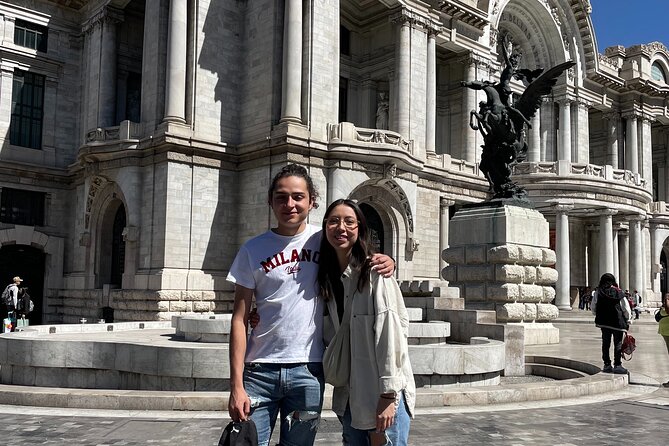
Palacio de Bellas Artes is the formal meeting point for the tour, even though the route begins at Plaza de San Juan. Your guide gives an overview of the walk, explains emergency exits, and sets out what you need to know before continuing.
The stop lasts about 15 minutes and focuses on the palace and the city’s history. You do not receive an admission ticket to enter Bellas Artes as part of the experience, so think of this as an exterior and orientation stop rather than a museum visit.
That distinction is important. Mexico City’s Centro has enough major buildings to fill several days, and a walking food tour cannot give each one a full visit. Bellas Artes works well here as a landmark and a lesson in the city’s changing architecture and public life.
If you want to tour the interiors of Bellas Artes, Museo Nacional de Arte, or Templo Mayor, plan separate visits. This experience gives you context and a route through the area, not complete museum access.
Same city, another round of plates:
- Merida Street Food Walking Tour
★ 5.0 · 417 reviews - Street Food Tour with Friends
★ 5.0 · 326 reviews - Mexico City: Hidden Markets, Street Food & Salsa-Making Tour
★ 5.0 · 310 reviews - Mexico City Street Food: A Beginner’s Guide
★ 5.0 · 197 reviews
The House of Tiles and Palacio Postal
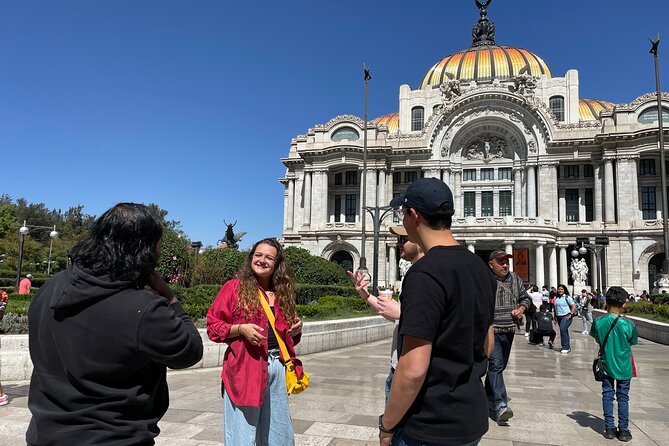
The House of Tiles, also called Sanborns de los Azulejos, is one of the most photogenic stops. Its tiled facade is easy to recognize, and the guide leads you inside to see a mural connected with Mexico’s art and history.
The visit lasts about 15 minutes. You are not simply walking past the building for a quick photograph, but you should still keep your expectations realistic. This is a short look inside, not a full architectural tour or an extended meal at the Sanborns restaurant.
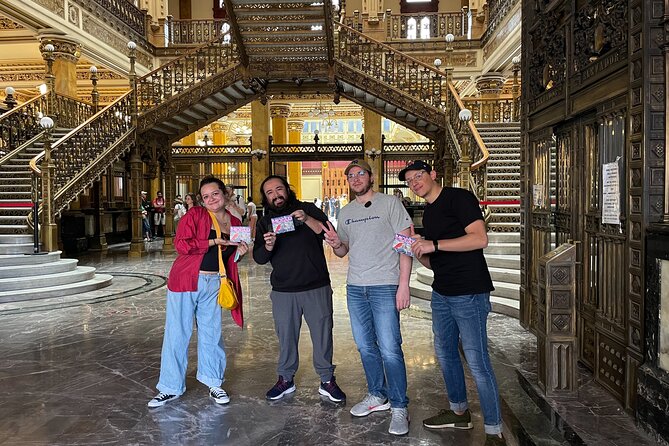
Next comes Palacio Postal, where you spend about 30 minutes. The building is presented as one of the city’s most striking examples of architecture, and the tour includes a special treat revealed at the start of the experience.
The exact surprise is not specified, which is part of the fun but also means you should not book this portion expecting a named dish or drink. What is clear is that Palacio Postal is more than a photo stop. You get time to appreciate the interior and connect the building to the city’s grand civic and commercial past.
This part of the route is a strong value point. You are not paying only for food. You are also getting a guided path through buildings that can be easy to rush past when exploring Centro on your own.
A look at MUNAL without entering
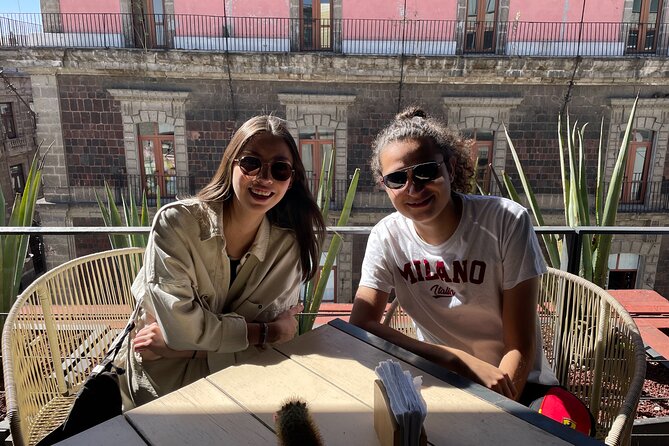
The route continues around Museo Nacional de Arte, usually known as MUNAL. The guide points out the architecture and discusses Mexico City’s many museums, but the tour does not enter the museum.
The stop is about 10 minutes. That is enough for orientation and a quick look at the surrounding streets, but not enough for an art collection. If MUNAL is high on your list, save it for another day.
I see this as a practical compromise. You learn where the museum is and why the area matters without using a large part of the food tour inside one institution. The tradeoff is that anyone hoping for museum admission may find the stop too brief.
Mexican sweets and the long Centro walk
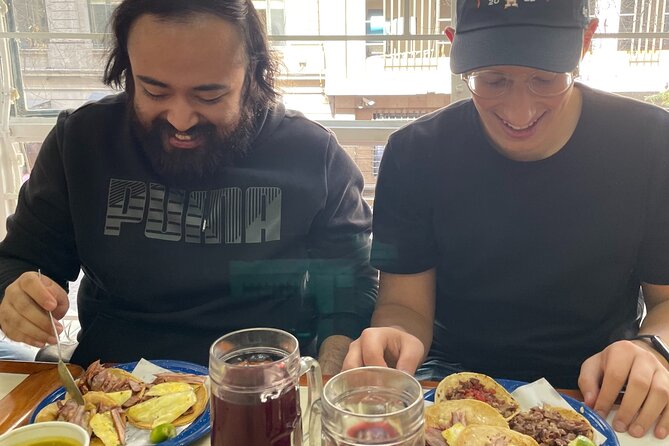
At another point on the route, the focus turns to dessert. Your guide looks for treats such as churros, gorditas de nata, or merengues along the street.
The wording here matters: these sweets depend on what is available during the walk. You may find one of these choices, or another local dessert. That uncertainty is normal for a street-food outing and is preferable to pretending every stall carries the same food every day.
This is also where you should keep some appetite in reserve. The route has already included several savory tastings, and Mexican sweets can be filling. Small portions are helpful, but you are still eating across many stops in a few hours.
The food is only half the reason this section works. As you walk, the guide can help you read the city through its storefronts, street vendors, old facades, and public spaces. That makes the route feel connected rather than like a series of unrelated snacks.
Zócalo, the cathedral, and Templo Mayor
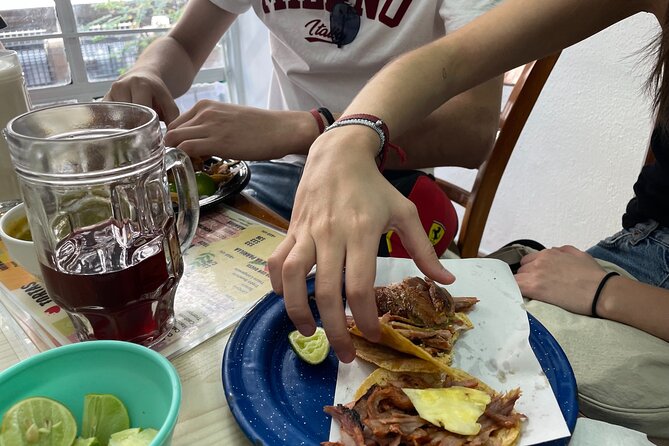
Zócalo is the city’s great central square and one of the best places to pause and take in the scale of Centro. The tour does not focus on eating here. Instead, the guide explains the square’s past and present while you look at the surrounding architecture and public life.
That choice is sensible. Zócalo is a place for orientation and history, not just another food stop. You get a better sense of why the surrounding streets matter and how the modern city sits on layers of earlier Mexico City.
The route then reaches Catedral de Nuestra Señora de Guadalupe, where you have about 15 minutes. You can enter the cathedral and look at the interior, but the tour does not present a food tasting here.
The cathedral is free to enter as part of the experience. Keep in mind that this is a short visit, so it is an introduction rather than a full study of the building, its art, or its religious history.
The final stop is a rooftop across from Templo Mayor. The tour passes the archaeological site but does not enter Museo del Templo Mayor. Instead, you get a panoramic view and a chance to look back over the mix of old buildings, excavated remains, and modern city streets.
This is a fitting ending for a route that has moved between markets, food stands, grand buildings, parks, churches, and archaeological history. It also gives you a good reason to schedule the tour early in your Mexico City stay. The route can help you decide which sites deserve a return visit with more time.
What the $95.64 price buys you
At $95.64 per person, this is not the cheapest way to sample street food in Mexico City. You can certainly eat for less by choosing stalls on your own.
The price makes more sense if you value structure and interpretation. You are paying for several tastings, a guide, navigation through Centro, local food context, and a route that links major sights without requiring you to plan every turn.
The food variety is a real part of the value. You are not limited to one category. The day may include chapulines, cheese, mezcal, tlacoyos, gorditas, tamales, and a sweet. The route also includes a special treat at Palacio Postal, though the exact item is not specified.
The price is harder to justify if your main goal is a full museum day or a large meal. Bellas Artes, MUNAL, and Templo Mayor are not entered as full attractions, and admission is not included for those sites. Think of the tour as a guided tasting walk with cultural stops, not an all-access sightseeing pass.
Group size, timing, and practical fit
The maximum group size is 15 people. That is small enough to make a market visit manageable, though the group can still feel noticeable in busy Centro streets.
The tour is offered in English and uses a mobile ticket. It is near public transportation, and most people can take part. Service animals are allowed.
Wear shoes suited to several hours of walking. The route includes markets, sidewalks, parks, plazas, historic buildings, and a rooftop finish. The scheduled stops range from 10 to 30 minutes, so the day has a steady rhythm rather than long periods of sitting.
The tour is booked, on average, 50 days ahead. That does not guarantee every date sells out, but it is a useful sign that you should reserve early if your Mexico City schedule is fixed.
Guides such as Luis and Paola have been singled out for friendly group management, strong city explanations, and practical food recommendations. Luis is also noted for answering detailed questions and helping people practice Spanish. Those qualities matter here because the best parts of the tour depend on conversation, not simply on being led from one address to another.
Free cancellation is available up to 24 hours before the start time for a full refund. Changes or cancellations inside that 24-hour window are not accepted and are not refunded.
Who should book this experience
I would choose this tour for a first visit to Mexico City, especially if you want a quick orientation to Centro and do not yet know which foods to try. It suits curious eaters who are open to chapulines, masa-based dishes, mezcal, and sweets rather than looking only for familiar tacos.
It also works well for anyone who likes architecture but does not want a full museum lecture. You get the major visual markers of Centro, along with short explanations that help you return later on your own.
Families and mixed groups may appreciate the range. Some people can enjoy the cheese, tamales, or sweets while others try the chapulines. Still, anyone who dislikes walking, prefers large meals, or wants extensive time inside museums should choose a different activity or pair this tour with separate sightseeing.
Should you book the El Centro Street Food Walking Tour?
Book it if you want food and city history in the same outing, and if a guide’s local connections are more valuable to you than finding the lowest possible meal price. The combination of Mercado de San Juan, street food, Palacio Postal, Zócalo, the cathedral, and the Templo Mayor view gives you a broad first look at Mexico City’s Centro.
Skip it if you want a focused taco tour, a full museum itinerary, or a slow restaurant meal. For most first-time visitors who can handle three to four hours of walking and are willing to try something new, the variety, small group limit, and thoughtful route make the $95.64 worthwhile.
FAQ
How long does the El Centro Street Food Walking Tour last?
The tour lasts approximately 3 to 4 hours.
Where does the tour begin?
It begins at Plaza de San Juan in Colonia Centro, Mexico City.
Where does the tour end?
The activity ends at a different location from the starting point, near a rooftop across from Templo Mayor.
What food can I expect to try?
The route includes chapulines, Oaxaca cheese, mezcal, tlacoyos, gorditas, tamales, and Mexican sweets such as churros, gorditas de nata, or merengues when available.
Is the tour offered in English?
Yes. The experience is offered in English.
Does the tour enter Bellas Artes, MUNAL, or Templo Mayor?
No. The tour visits or passes these locations, but it does not include admission to Bellas Artes, Museo Nacional de Arte, or Museo del Templo Mayor.
How many people can join the tour?
The maximum group size is 15 people.
What is the cancellation policy?
You can cancel at least 24 hours before the start time for a full refund. Cancellations or changes made within 24 hours are not accepted and are not refunded.
Newly added plates around Mexico
- Tour of the Oaxaca Food Market★ 4.0 · 4 reviews
- Oaxaca Street Food Essentials★ 5.0 · 21 reviews
- Taco Tour in Oaxaca : delicious street food by bike★ 5.0 · 3 reviews
- Mexico City Street Food Tour Adventure★ 5.0 · 12 reviews
- Private Half-Day Traditional Markets Street Food Tour in Mexico City★ 3.0 · 2 reviews
- Night Street Food & Bike Tour / Small Groups /All Inclusive★ 5.0 · 25 reviews
- Mexico Off the Beaten Track: Street Food & Bikes — All Inclusive★ 5.0 · 14 reviews
- Private Street Food & Mural Art Tour in Mexico City★ 3.5 · 3 reviews
Mexico City Street Food Tours, compared.
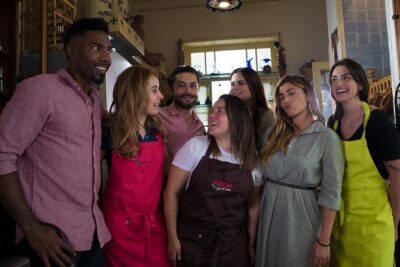
Mexican Cooking Class with Food Market Visit in Mexico City
Read our review →
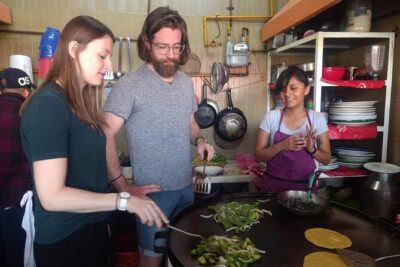
Hidden Markets, Street Food & Salsa-Making Tour
Read our review →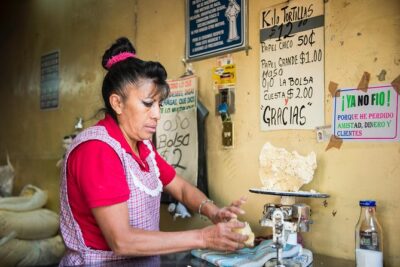
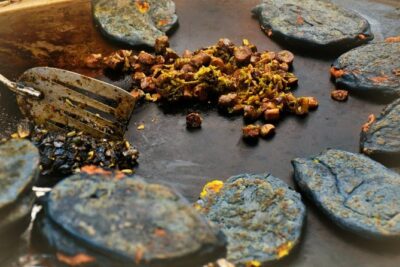
Mexico City Vegan & Vegetarian Street Food Adventure
Read our review →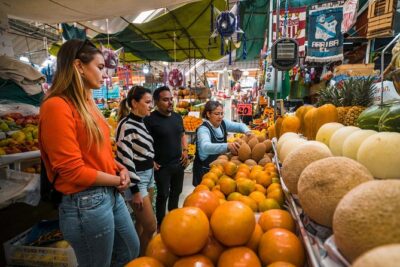
Street Food Bike Tour / Mexico is not only Tacos / All Inclusive
Read our review →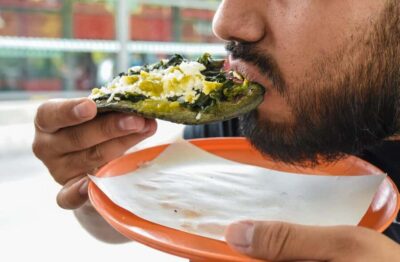

Night Street Food & Bike Tour / Small Groups /All Inclusive
Read our review →Browse the lists this tour appears in