
REVIEW · HIDDEN FOOD SPOTS
Genoa Walking Tour: Discover Hidden Treasures and Street Food
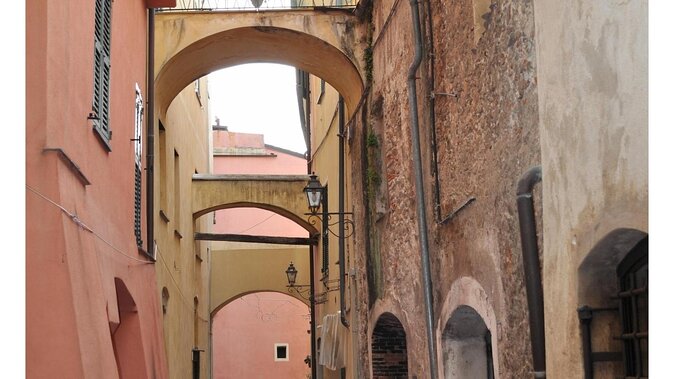
Genoa’s best surprise is how much history hides behind ordinary-looking lanes. This six-hour walk links grand banker palaces, a hilltop view, a royal residence, an old harbor district, and a Gothic church with pesto, focaccia, coffee, Prosecco, lunch, and an aperitivo. Karl Ziegler leads with humor and strong local feeling, though a multilingual colleague such as Riccardo may guide some departures.
I like two things right away: the food is built into the day, not tacked on as a token tasting, and the included trains, buses, lifts, or cable-way save you from fighting Genoa’s steep streets. The tour also reaches beyond the postcard center, including Via Prè and La Commenda di Pré.
The main caution is simple: this is a long, active day. Several hours of walking, uneven old streets, stairs, heat, and frequent stops make it a better fit for people with moderate fitness than for anyone wanting a gentle sightseeing ride. At $208.03 per person, the price only makes sense if you value the full meal, drinks, transport, admissions, and personal guiding.
Key points at a glance
- Six hours in Genoa: A full introduction to the city, beginning at Genova Piazza Principe at 10 a.m.
- Palaces with serious financial history: Via Giuseppe Garibaldi and Palazzo Reale show how Genoa’s bankers and merchant families displayed their wealth.
- Food is part of the tour: Expect pesto, focaccia, coffee, Prosecco, lunch, drinks at bars and restaurants, and one cocktail.
- A useful hilltop break: Spianata Castelletto gives you one of the best views across Genoa.
- A look beyond polished streets: Via Prè and La Commenda di Pré add a more varied, less decorated side of the city.
- Good for families and cruise stops: The tour returns to its starting point and has worked well for groups with teenagers, though you need to keep walking.
Why this tour makes sense in Genoa
Genoa can be difficult to read on your own. The old center is a maze of narrow lanes, grand façades, churches, shops, bars, and sudden changes in atmosphere. A building that looks plain from one angle may open onto a richly decorated courtyard. A short uphill street may lead to a sweeping view.
That is why a local guide matters here. Karl Ziegler’s style, judging from the supplied experiences, is lively, personal, and generous with time. He has adjusted the pace for hot weather, paused for water and bathroom breaks, and stayed longer when a group needed more time. That flexibility matters in Genoa, where the heat and hills can shape your day as much as the sights do.
The tour is also designed as a complete day rather than a quick orientation. You are not only looking at buildings. You are moving through the city with pauses for food and conversation, using public transport when useful, and seeing how wealth, trade, religion, poverty, and modern city life sit close together.
More Hidden Food Spots in Italy:
- Hidden Rome: Small Group E-Bike Tour with Street Food Stops
★ 5.0 · 169 reviews - Hidden Rome: Small Group E-Bike Tour with Street Food Stops
★ 4.9 · 144 reviews - Rome: Street Food, Local Market and Hidden Gems Tour
★ 5.0 · 57 reviews
Meeting at Piazza Principe at 10 a.m.
The day begins at Genova Piazza Principe, Genoa’s main rail station area, at 10 a.m. This is a practical starting point if you arrive by train or are coming into the city from the cruise port. One participant with a delayed train was still able to join after the guide waited, though you should never assume that a late arrival can be accommodated.
The tour ends back at the same meeting point. That makes the outing easier to fit around a train departure or a cruise schedule, but you should leave a generous buffer after the official finish. A six-hour activity can run close to the planned length, and the final return depends on the route, meals, transport, and group pace.
The group can reach up to 20 people. That is not a private tour by default, so the experience may feel more social than intimate. At the same time, the guide’s reported habit of checking on water, food, comfort, and interests should help keep a larger group together.
Via Giuseppe Garibaldi and Genoa’s palace wealth
The first major stop is Via Giuseppe Garibaldi, the famous palace street. Allow about an hour here, with admission included.
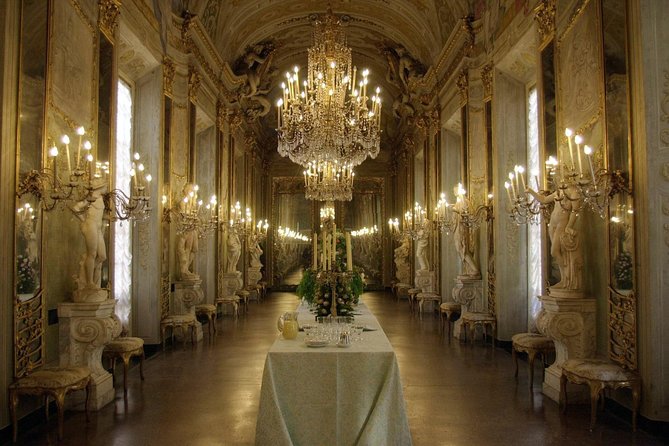
This is where Genoa’s financial power becomes visible in stone, courtyards, grand stairways, and decorated interiors. The tour connects these palaces to Genoa’s bankers, who financed European rulers and built homes designed to impress visiting courts. The guide also presents the street as an early example of large-scale real estate investment, dating the development to 1565.
You will get more from this stop if you listen for the link between money and architecture. These were not simply pretty homes. They were public statements about status, credit, access, and political reach. Genoa’s leading families used their houses to receive important visitors and display their place in European affairs.
The practical drawback is that palace visits can feel heavy if you prefer street life to formal rooms. This tour helps by placing the buildings inside a larger story, but you should still expect a substantial history lesson at the start.
Spianata Castelletto and the city from above

After the palace district, the route reaches Spianata Castelletto for about 30 minutes. Admission is free, and transport is included if the route uses a lift, bus, train, or cable-way.
This is the tour’s visual reset. Genoa is famously compressed between the Ligurian Sea and hills, and the viewpoint helps you understand that shape. You can look across the rooftops, identify the dense historic center, and see why getting around the city involves steep climbs and vertical transport.
The guide keeps the exact impact of the viewpoint partly as a surprise, which is sensible. A good view works best when you are not handed every detail in advance.
Use this stop to catch your breath and take photographs. It is also a good point to judge the physical demands of the rest of the day. The break is short, so keep your shoes on and be ready to continue.
More street food tours in Italy:
- Naples: Street Food Walking Tour with Local Guide
★ 4.9 · 4,976 reviews - Rome: Street Food Tour with Local Guide
★ 4.8 · 4,077 reviews - Florence: Cinque Terre Park Day Trip with Optional Street Food
★ 4.5 · 3,593 reviews - Florence: Day Trip to Cinque Terre with Optional Street Food
★ 4.5 · 2,854 reviews
Palazzo Reale and the theater of royal life
The one-hour visit to Museo di Palazzo Reale offers a different kind of palace. This residence was used by the king of Italy, and the tour focuses on how Genoese families spent money to impress royal courts and other high-ranking visitors.
The building helps you see the private side of Genoa’s public wealth. Via Garibaldi shows a street lined with powerful homes. Palazzo Reale shows how that wealth looked when arranged for court life, formal visitors, and display inside a single grand residence.
The guide also ties Genoese commercial success to the idea of early venture capital. That comparison with modern technology finance is playful, but it gives you a useful way to understand Genoa’s old business culture. The city’s power rested not only on ships and goods, but also on financing, partnerships, risk, and international connections.
The included entrance fee improves the value here, since palace admissions can add up quickly. If you are mainly interested in food, though, this is another substantial indoor history stop before the day returns to streets and restaurants.
Palazzo Ducale and a story about Marco Polo
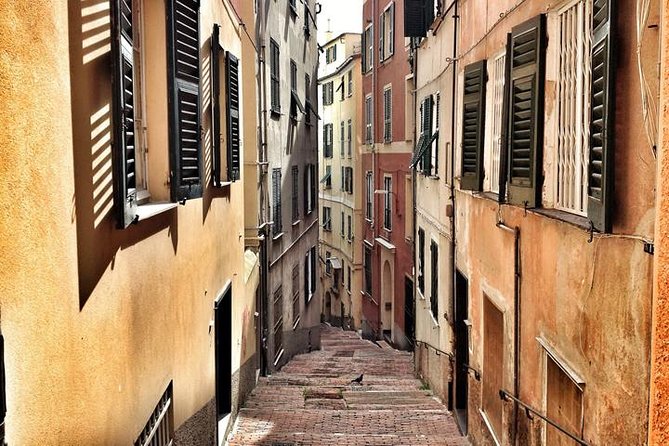
Palazzo Ducale receives about 30 minutes. The entrance fee is listed as free for this tour, so you should expect an exterior-focused visit or a limited stop rather than a full museum program.
The building is an imposing marble center of civic and political power. One of the stories attached to it concerns Marco Polo, who is said to have spent time in prison here and to have written Il Milione during his captivity. The guide uses that story to connect Genoa’s medieval rivalry with Venice to the wider world of trade and exploration.
This is a short stop, but it gives the day a strong urban anchor. You move from private palaces to the seat of public power, then toward streets where commerce and daily life are more visible.
Because only 30 minutes are assigned, do not expect to see every room or collection. Think of Palazzo Ducale as a compact architectural and historical pause within a broader walking route.
Via Prè and Genoa’s less polished face
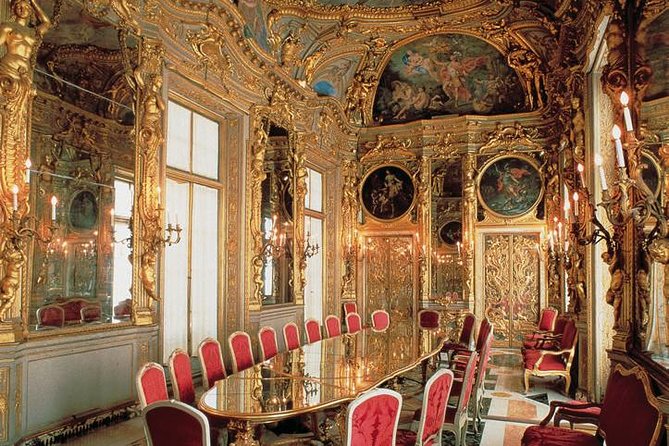
Via Prè is only about 15 minutes, but it may be one of the most revealing parts of the route. The street has a long commercial past and now reflects Genoa’s international population, with Asian, African, and Eastern European influences visible in its shops and street life.
The tour does not present Genoa as a cleaned-up museum city. It shows the contrast between very expensive yachts and nearby streets with a more complicated social and economic character. That contrast is important. A city’s identity is not limited to palaces and handsome squares.
You should keep an open mind here. Via Prè may feel rougher or less comfortable than the palace district, and the atmosphere can change quickly. The short visit is useful because it gives context without making the whole day about one street.
This is also where the tour’s promise of hidden places has practical meaning. You are not only following the standard route between the cathedral and the harbor. You are seeing how different parts of Genoa sit side by side.
La Commenda di Pré and the Templar connection
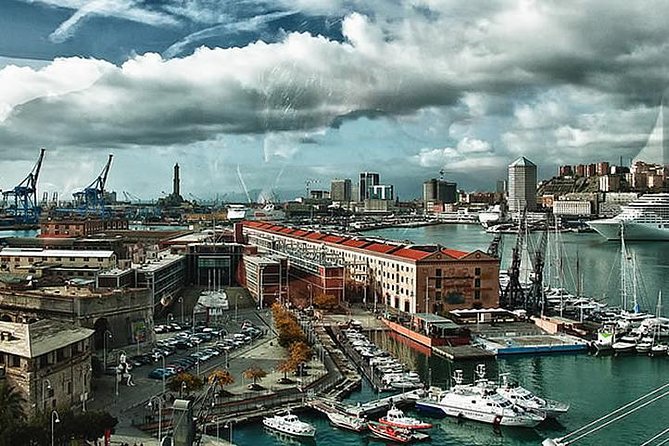
The final listed stop is La Commenda di Pré, a Gothic church and former hospital complex. The visit takes about 15 minutes and has no admission charge listed.
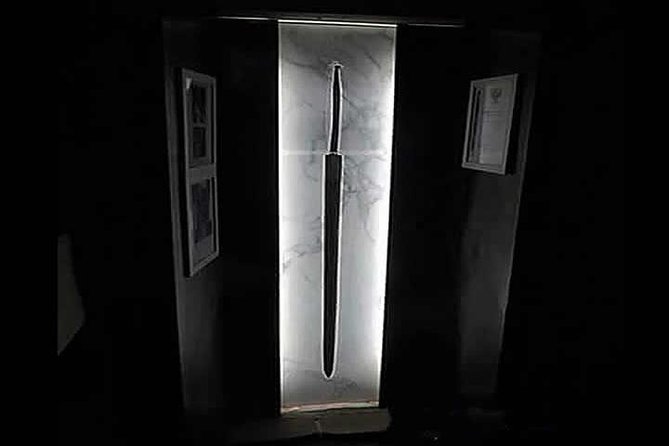
The site is linked with the Knights Templar and with people returning from the Crusades. The guide points out Malta Crosses dated to 1184 and the marks left by hand tools in the stone. The short stop works best as a close look at medieval construction rather than a full museum visit.
This is the kind of place that benefits from explanation. Without a guide, you might see an old church façade and walk on. With context, the building becomes part of Genoa’s role in movement between Europe and the eastern Mediterranean.
The allotted time is brief, so the visit may feel rushed if you want to study every detail. Still, the church adds an older layer to a day that has already covered banking, monarchy, civic power, modern migration, and food.
Food stops that make the day feel local
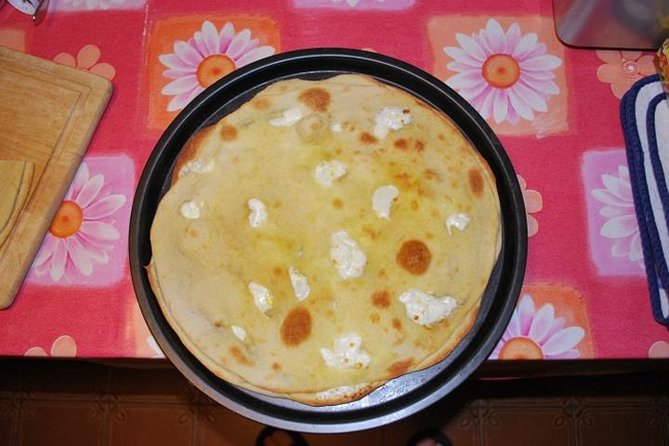
Food is not an afterthought here. The price includes focaccia and pesto, drinks in bars and restaurants, lunch at a well-regarded restaurant, and one aperitivo cocktail. Coffee and Prosecco are also part of the stated tasting plan.
That matters in Genoa because local food gives you a direct connection to place. Pesto is the obvious star, but focaccia is just as useful for understanding everyday Ligurian eating. Small tastings spread across the day prevent the tour from becoming one long lecture, and lunch gives you a proper pause in air conditioning when the weather is hot.
The lunch location is described as excellent and well placed, but the exact menu is not specified. You should also remember that the included drinks are part of a shared guided experience, not a guarantee of unlimited choice at every stop.
The all-inclusive format can be a real advantage. You do not have to keep calculating the cost of every snack, coffee, glass of wine, or transport ticket. It also lets the guide choose places that fit the route instead of sending you off to find food alone.
If you have allergies, dietary restrictions, or strong dislikes, ask before booking. The supplied details do not explain how special diets are handled, so you should not assume every dish can be changed.
How much walking and transport to expect
The tour requires a moderate level of fitness. The route covers historic streets, palace areas, a viewpoint, churches, food stops, and transport connections. Several people who took the experience found that there was plenty of walking, and that is the clearest expectation to take seriously.
Genoa’s old center can include uneven paving, slopes, and stairs. The included trains, buses, lifts, or cable-way reduce the strain, but they do not turn this into a seated sightseeing tour. Wear shoes with good grip, carry water, and plan for warm weather if you visit in summer.
The guide has adjusted the pace during very hot days, using cooler areas and adding practical comfort breaks. That is encouraging, but the activity still begins at 10 a.m. and lasts around six hours. Anyone who tires easily should think carefully before booking.
Teenagers have enjoyed the mix of food, stories, and movement, including a 13-year-old and two teenage sons in different family groups. Children must be accompanied by an adult, and the child rate applies only when sharing with two paying adults.
Is $208.03 a fair price?
At $208.03 per person, this is expensive compared with a basic two-hour city walk. The fair comparison is not another walking tour. You are paying for about six hours, a local guide, entrance fees, public transport in Genoa, food tastings, drinks, lunch, aperitivo, and taxes.
The value improves if you would otherwise pay separately for palace admission, several meals, transport, coffee, wine, and snacks. It also improves for a first visit, when a local guide can help you make sense of a city that is not always easy to navigate.
The value drops if you prefer to explore alone, eat wherever you choose, or spend most of the day inside museums. You may also find the group size of up to 20 too large for detailed one-to-one attention.
For a cruise stop, the price can be easier to justify. You get a planned day from a station area that is easy to reach, and the tour returns to the same place. For a longer stay in Genoa, you may prefer a shorter orientation tour and independent meals on later days.
Who should book this Genoa experience?
I would choose this tour if you want one full day that combines food, architecture, local stories, transport, and practical orientation. It suits first-time visitors, cruise passengers with a full day, families with curious teenagers, and people who enjoy a guide with a strong personality.
It is also a good match if you want to see both polished Genoa and less decorated areas. The route does not reduce the city to palaces and pesto. Via Prè and La Commenda di Pré add social and medieval context.
I would hesitate if you dislike long walks, group tours, scheduled meals, or frequent stops. I would also hesitate if your main goal is a quiet museum day or if $208.03 is beyond your food and sightseeing budget.
Free cancellation is available up to 24 hours before the start time. The tour requires at least two people to book, and if the minimum is not met, the provider offers another date or experience, or a full refund.
Should you book it?
Book this tour if you want Genoa explained through its food, money, buildings, and contradictions, and if you are ready to walk for much of the day. The strongest reason to choose it is the combination of a personal guide, substantial inclusions, and places you might miss while wandering alone.
Skip it if you want a short, cheap overview or complete control over your meals and schedule. For the right person, the price buys more than admission tickets and lunch. It buys a structured way to understand a difficult, fascinating city in one long day.
FAQ
Where does the Genoa walking tour start?
The tour starts at Genova Piazza Principe, 16134 Genoa, at 10 a.m.
Where does the tour end?
The activity ends back at the meeting point at Genova Piazza Principe.
How long does the tour last?
The tour lasts approximately six hours.
What food and drinks are included?
Included items are focaccia, pesto, drinks at bars and restaurants, lunch, coffee, Prosecco, and one aperitivo cocktail.
Are transportation costs included?
Yes. Transportation used during the tour in Genoa is included, including trains, buses, lifts, and cable-way services when used.
Is the tour suitable for children?
Children can join when accompanied by an adult. The child rate applies only when sharing with two paying adults.
Can I cancel for a full refund?
Yes. You can cancel at least 24 hours before the experience start time for a full refund. Changes or cancellations made less than 24 hours before the start are not accepted for a refund.
Newly added plates around Italy
- Verona: Street Food and History Tour with Local Guide★ 4.7 · 6 reviews
- Verona: City Highlights & Street Food Walking Tour★ 5.0 · 3 reviews
- Verona: Street Food Tour and City Guided Sightseeing★ 4.9 · 11 reviews
- Verona: street food walking tour near the historical center★ 5.0 · 2 reviews
- Venice: Rialto Area Street Food Tour and Sightseeing★ 4.6 · 8 reviews
- Venice: Cicchetti Street Food and Sightseeing Walking Tour★ 4.9 · 57 reviews
- Catania: Underground and Street Food Walking Tour★ 4.7 · 56 reviews
- Turin: Aperitivo & Street Food Tour Delights with a Local★ 4.9 · 46 reviews
Hidden Food Spots, compared.
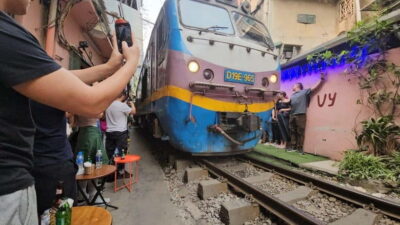
Street Food Tour with Train Street & Hidden Alleyways
Read our review →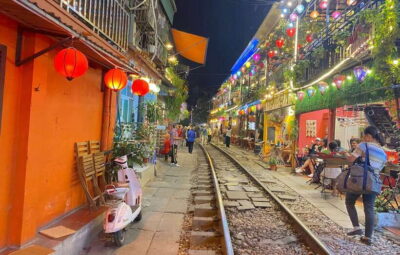
Guided Street Food Tour with Train Street Experience
Read our review →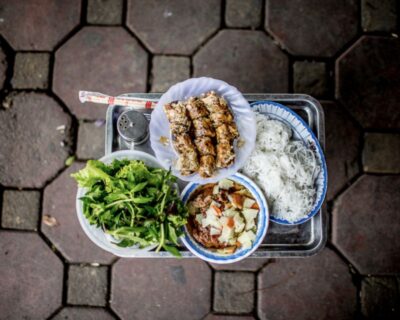
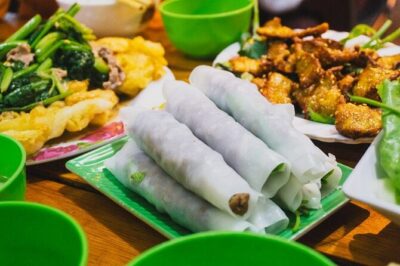
Walking Street Food Tour in Hanoi and Train Street
Read our review →
Hidden Markets, Street Food & Salsa-Making Tour
Read our review →
Saigon’s Hidden Flavors – Private Street Food Walk with Local Students
Read our review →
Vespa Female Ao Dai riders Night Street Food + See Train Street
Read our review →
Amman Walking Tour: Hidden Gems, Culture & Street Food
Read our review →Browse the lists this tour appears in