
REVIEW · COLOMBIA STREET FOOD TOURS
The Cali Street Food Walking Tour
Cali’s best introduction may come in small bites: a warm pandebono, a crisp empanada, a scoop of passion fruit ice cream with fried pork. This two-hour walk links street food with Cali’s history, art, and daily life, so you get more than a quick list of snacks.
I like the generous tastings and the guides’ personal approach. Juan and Andrés are both praised for making the walk lively and interactive, with Andrés asking what guests see in the murals and Juan adding history and local context. The main drawback is simple: two hours is packed, and the food can be substantial enough that you may want a light meal beforehand.
Key points to know before you book
- Food comes in several rounds: Bakery items, fried specialties, drinks, and two scoops of ice cream can leave you very full.
- The walk connects major sights: You pass Bulevar del Río, the Túnel Mundialista, Calle de la Escopeta, and San Antonio.
- Guides Juan and Andrés add local character: Expect history, questions about street art, and possibly a small salsa lesson.
- La Linterna is a rare stop: Its lithography machines date as far back as 1870 and still operate with modern adaptations.
- The price is $32.90 per person: That is fair if you value a guide, multiple tastings, and a compact introduction to central Cali.
- The group can reach 30 people: Larger groups may feel less personal than a small private walk.
Why this Cali food walk works so well
Many food tours hurry from one restaurant to another. This one uses food as a reason to move through the city. You begin near San Pedro, cross central streets, look at public art, pause at an old house, and then eat your way through local bakeries and snack counters before finishing in San Antonio.
That structure matters. You learn what people eat, but also where they spend time and how Cali’s center has changed. A guide can explain why bakeries matter in local society, point out details in murals, and give meaning to foods that might otherwise look like anonymous fried dough.
The tour has a current score of 5.0 from 81 ratings, with 100 percent recommending it. The strongest praise centers on three things: the guides’ warmth, the blend of food and city history, and the amount of food served. One family group also found the pace manageable for an older mother, though your comfort will depend on walking speed, heat, and the size of the group.
More street food tours in Colombia:
- Medellin: Comuna 13 Graffiti Tour, Cable Car & Street Food
★ 4.8 · 9,046 reviews - Medellín: Comuna 13 True Story and Street Food Tour
★ 4.9 · 1,779 reviews - Cartagena: Guided Street Food Tour with Tastings
★ 4.9 · 833 reviews
Starting at Bulevar del Río
Meet at Subway, Cl. 8 #1-02, in San Pedro. The first stop is Bulevar del Río, where you spend about 15 minutes getting your bearings in one of Cali’s best-known public spaces.
This is a smart starting point because it gives the tour a broad opening. You are not dropped straight into a bakery with no context. Instead, you begin by seeing one of the places that helps define central Cali, then move toward the city’s art, old streets, and food culture.
The first stop is free, as are all the attractions listed along the walk. Your payment covers the guide and food tastings rather than entrance tickets. That makes the cost easier to understand: this is a hosted city walk with a generous snack budget built in.
Murals above the Túnel Mundialista
Next comes the Túnel Mundialista, a short 10-minute stop. The tour takes you above Colombia’s longest urban tunnel, where you can see some of Cali’s largest street art.
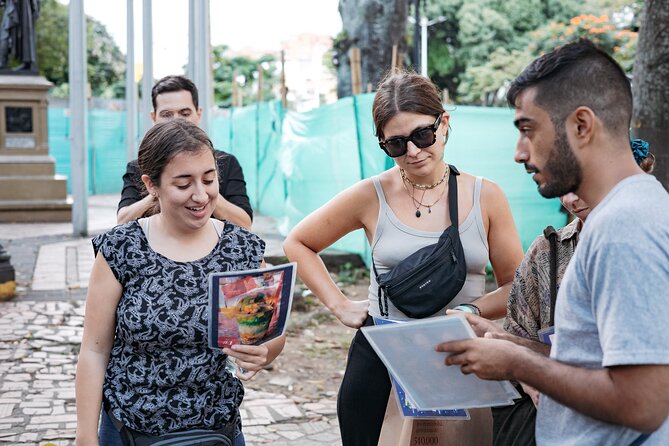
This is one of the better moments for slowing down and looking around. The murals are not just colorful background for photographs. They give the guide a chance to talk about the city’s visual language and ask what you think the images mean. Andrés is especially praised for making this part interactive, inviting people to interpret the art rather than delivering a one-way lecture.
If you like public art, this stop adds real value. If you prefer a food tour to stay almost entirely about eating, it may feel like a brief detour. I think the balance helps, since the art gives you another way to read Cali.
Old Cali on Calle de la Escopeta
Calle de la Escopeta is a 15-minute stop in the historic center. The street dates back hundreds of years and offers a look at older Cali, before the tour turns more fully toward bakeries and snack counters.
The point here is not a long museum visit. You walk, listen, and connect the street to the city’s past. The guide’s commentary helps keep the stop moving, which matters on a two-hour schedule.
This section also gives the walk some shape. You are not simply trying random foods. You are moving through parts of Cali that have their own identity, then learning how food fits into those neighborhoods.
Same city, another round of plates:
- Medellin: Street Food and Poblado Rooftop Tour with a Local
★ 4.8 · 317 reviews - Medellin: Party Bus with DJ & Street Food Tastings
★ 4.5 · 112 reviews - Street Food Tour in Medellín with Tastings
★ 5.0 · 76 reviews - Cali: Street Food Tour
★ 4.8 · 71 reviews
Artesanías Chila Gamboa House
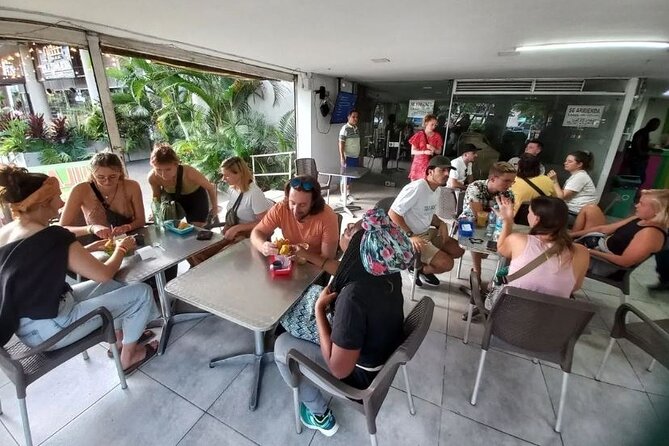
The Chila Gamboa House is a short 10-minute visit. It is one of Cali’s old houses and now supports a community of single mothers who run a souvenir shop, café, and restaurant.
That makes this stop more than a photo pause. You see a historic building being used for present-day community work. If you are interested in buying a small souvenir, this may be a useful place to browse, though the tour does not state that purchases are included.
The stop is brief, so do not expect a long shopping session or a full meal here. Its value is in seeing how an older building remains part of local life rather than sitting empty.
The first food round at Panaderia Quinta con Quinta
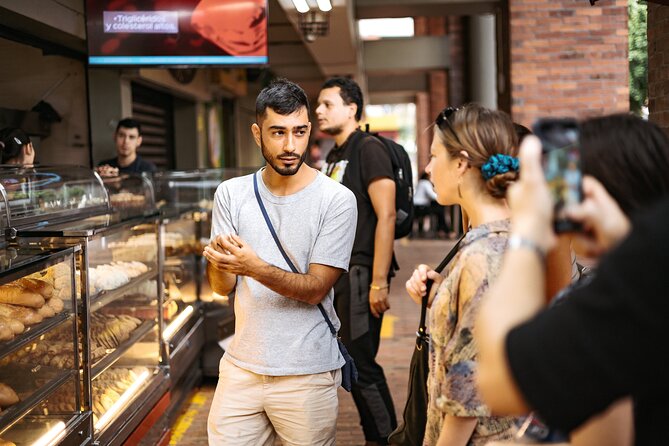
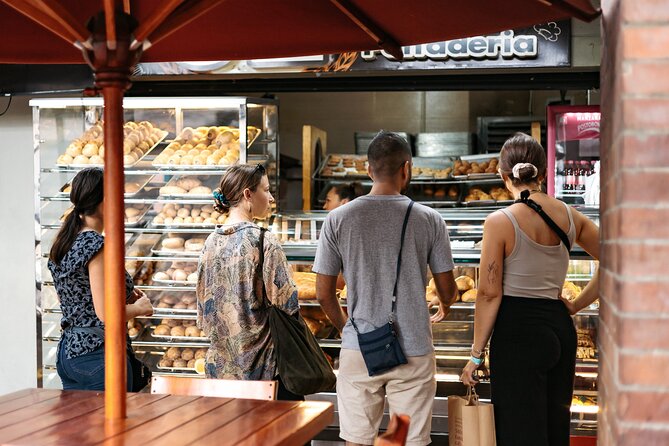
After the opening sights, the tour reaches Panaderia Quinta con Quinta for about 25 minutes. This is the first main food stop and one of the tour’s most useful introductions to everyday Colombian eating.
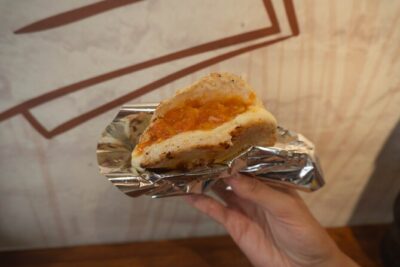
You can choose from pandebono, buñuelo, arepa, almojabana, empanada de cambray, coffee, fruit juices, oatmeal drinks, fruit-flavored yogurt, or bottled water. The guide explains the role bakeries play in local society, so you learn not only what is on the plate but why this kind of stop matters.
The baked items are a good way to start. Pandebono and almojabana offer a taste of Colombia’s cheese bread tradition. Buñuelo brings another familiar bakery texture, while an arepa gives you a more substantial option. The empanada de cambray adds variety if you want something less predictable.
You may choose up to two items at a stop, according to the tour’s food guidance. That sounds modest until you remember that there are several food rounds ahead. If you choose a pastry, a drink, and later fried snacks, you will likely have little need for lunch immediately afterward.
A neighborhood food walk before the fried specialties
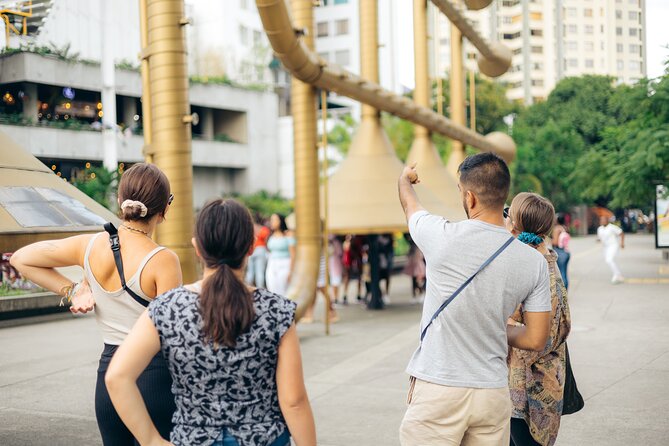
Between the bakery and the next main stop, the route moves through a neighborhood known for colorful corners and local food spots. The description does not give this section a separate timed stop, which suggests that it works as part of the walk rather than as a formal tasting.
This is where a good guide matters. Juan is praised for being warm and genuine, while Andrés is praised for his humor and care with the group. Their role is to point out things you might pass without noticing and keep the walk connected to the city around you.
Traffic can be a real issue in Cali. One large group arrived 10 to 15 minutes late because of traffic, and Juan waited for them. That shows a considerate approach, but you should still arrive on time. A delay can put pressure on the later food stops.
Fried favorites at Champús de Fabiola
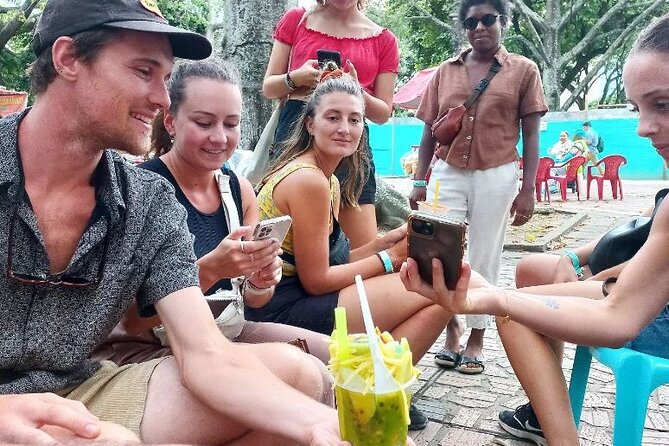
The second main food stop is Champús de Fabiola, with about 20 minutes for tasting. The menu turns toward hearty fried food: empanadas, marranitas, papa rellena, papa aborrajada, and maduro aborrajado.
This is the point where the tour becomes especially filling. Marranitas combine plantain and pork, while papa rellena centers on a stuffed potato preparation. Aborrajado-style dishes bring sweet plantain into the mix, often with a rich, fried finish. The exact portion size can vary, but the tour warns you that people are often full by the end.
If you have been anxious to try local food, this stop gives you a strong sample of Cali’s fried snack culture in one place. It is also the stop most likely to test your appetite. Choose carefully if you are planning dinner soon after, and do not feel obliged to eat every option offered.
The name Champús de Fabiola may suggest a drink-focused stop, but the listed choices here are mainly savory and fried. The tour includes bottled water, which is welcome after several warm bites and a walk through the city.
La Linterna and its 19th-century printing machines
La Linterna is a very short five-minute stop, but it may be the most unusual. This printing workshop has lithography machines originally designed to run on steam, later adapted to electricity, with examples dating as far back as 1870.
You will not spend long inside, yet the stop gives the walk a strong sense of place. It is a working part of Cali’s creative culture, not just another historic façade. Printing, posters, and handmade design all connect to the city’s art scene in a way that fits naturally after the mural stop.
The five-minute timing is worth noting. Think of La Linterna as a focused look and explanation, not a full workshop tour. Its short length keeps the food schedule on track, but people who enjoy printmaking may wish they had more time.
Finishing with two scoops in San Antonio
The final food stop is Butterfly Tongue, an artisan ice cream parlor in San Antonio. You receive two scoops, and the flavors can be far outside the usual chocolate and vanilla routine.
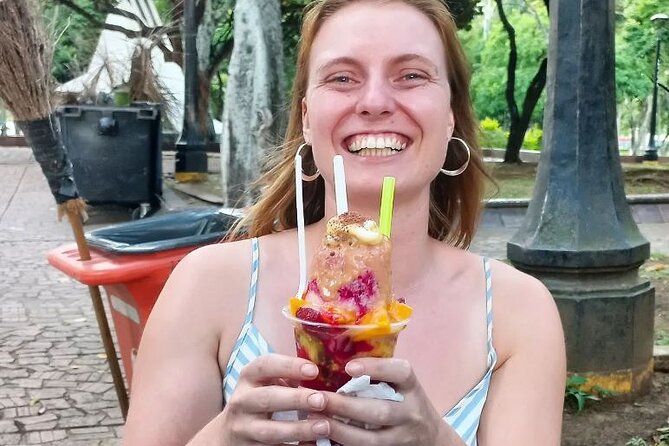
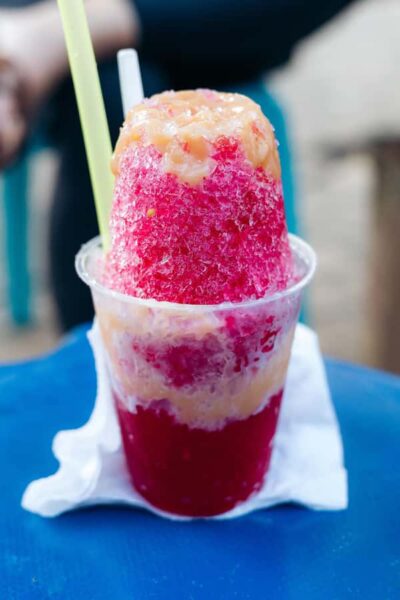
The specialty mentioned is passion fruit with honey-caramelized fried pork. It sounds odd until you remember the owner’s goal: to express Colombia through ice cream. The flavor combines sweet, sour, creamy, and savory notes in one spoonful.
This is a clever ending. After bread, cheese, potatoes, plantain, pork, and fried snacks, the ice cream gives you a final food memory that is playful and hard to confuse with a standard dessert stop. You can choose two scoops, though the available flavors may depend on what the shop is serving that day.
The tour ends at Cra. 6 #1-19 in Comuna 3, in San Antonio. That is useful if you want to continue exploring the neighborhood afterward, but your next destination is not included. You finish at the last food stop rather than returning to the starting point.
What $32.90 buys you
At $32.90 per person, this tour offers solid value if you would otherwise pay separately for several snacks, bottled water, and a city guide. You get a two-hour walk, multiple tastings, two ice cream scoops, and stops at several places that would be easy to miss on your own.
The value is less about eating the cheapest possible food. You could spend less by buying one snack at a time. You are paying for the route, explanations, introductions, and the ease of having someone choose a useful sequence through central Cali.
The amount of food is a major part of the deal. You can sample bakery foods, savory fried items, drinks, and dessert without planning each purchase. For a first day in Cali, that can save time and reduce the worry of ordering unfamiliar dishes alone.
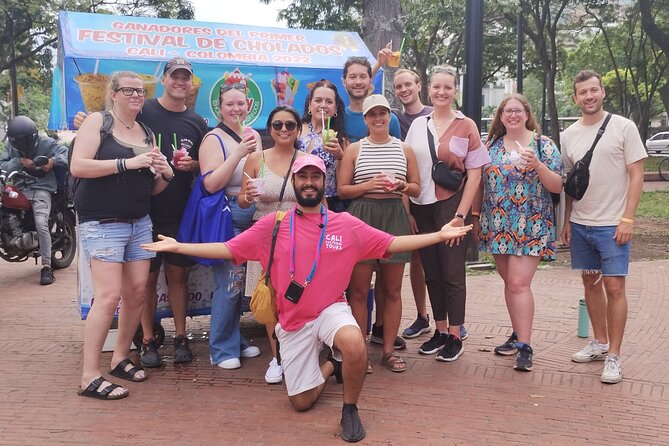
The group limit is 30 people. That is not a small private walk, so the experience may feel less personal when the group is full. Still, the guide feedback suggests that Juan and Andrés make an effort to check on people, answer questions, and keep the tone friendly.
Who should book this walk
I would choose this tour if you want an easy first look at Cali and prefer food with context. It suits people who like trying several small portions, asking questions, and learning a bit about murals, old streets, local businesses, and printing traditions along the way.
Families can also find it workable. One group included an elderly mother who kept pace, and the guide checked often that everyone was comfortable. That does not promise a universally easy walk, but it shows that the tour can be adapted when the guide is attentive.
You should think twice if you need a quiet, private tour or if you have strict dietary limits. The provided information does not list vegetarian, vegan, allergy, or other special-diet arrangements. It also does not describe a fully seated format, so expect to walk between stops and eat in a casual setting.
Confirmation arrives when you book. Service animals are allowed, and the meeting point is near public transportation. Most people can participate, but the tour can include up to 30 people. Free cancellation is available if you cancel at least 24 hours before the local start time. Inside that window, the payment is not refunded.
Should you book the Cali Street Food Walking Tour?
Book it if you want a generous, social introduction to Cali rather than a restaurant-by-restaurant food crawl. The strongest reasons are the unusual food choices, the short but varied route, and guides such as Juan and Andrés, who bring warmth, history, art, and even a little salsa spirit to the walk.
The main cautions are the full food load, the possible size of the group, and the tight two-hour schedule. If those points suit you, $32.90 is a sensible way to begin your Cali stay. Come hungry, arrive on time, wear comfortable shoes, and save room for the pork-and-passion-fruit ice cream.
FAQ
How long is the Cali Street Food Walking Tour?
The tour lasts approximately two hours.
How much does the tour cost?
The listed price is $32.90 per person.
Where does the tour start?
It starts at Subway, Cl. 8 #1-02, San Pedro, Cali, Valle del Cauca, Colombia.
Where does the tour end?
It ends at Butterfly Tongue Artisan Ice Cream Parlor, Cra. 6 #1-19, Comuna 3, Cali.
What food is included?
Included tastings can include bakery foods, empanadas, marranitas, stuffed and fried potato dishes, plantain dishes, drinks, bottled water, and two scoops of ice cream.
Are entrance tickets included?
The listed stops have free admission, and no separate attraction ticket is required.
What is the cancellation policy?
You can cancel at least 24 hours before the experience for a full refund. Cancellations or changes made less than 24 hours before the start time are not refunded or accepted.
Newly added plates around Colombia
- Street Food Tour in Medellín with Tastings★ 5.0 · 76 reviews
- Private Cartagena city and street food tour.★ 5.0 · 31 reviews
- Street Food Tour – Live A Unique Gastronomic Experience★ 5.0 · 34 reviews
- Street Food Tour in Bogotá with Tastings★ 5.0 · 34 reviews
- Cali: Street Food Tour★ 4.8 · 71 reviews
- Santa Marta Street Food Tour★ 4.4 · 2 reviews
- Santa Marta A Historical & Street food Experience★ 4.7 · 41 reviews
- Medellin: tasting Street Food with Rooftops of El Poblado★ 4.4 · 61 reviews
Colombia Street Food Tours, compared.

Comuna 13 Graffiti Tour, Cable Car & Street Food
Read our review →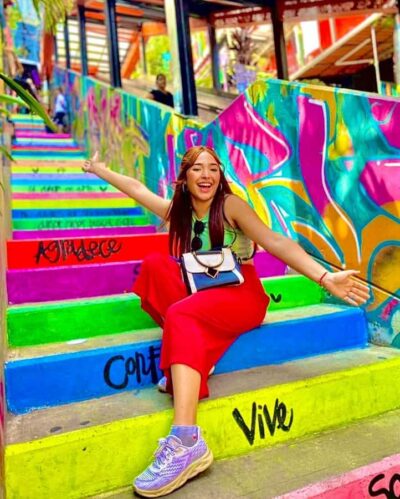
Street Food and Poblado Rooftop Tour with a Local
Read our review →
Santa Marta A Historical & Street food Experience
Read our review →Browse the lists this tour appears in