
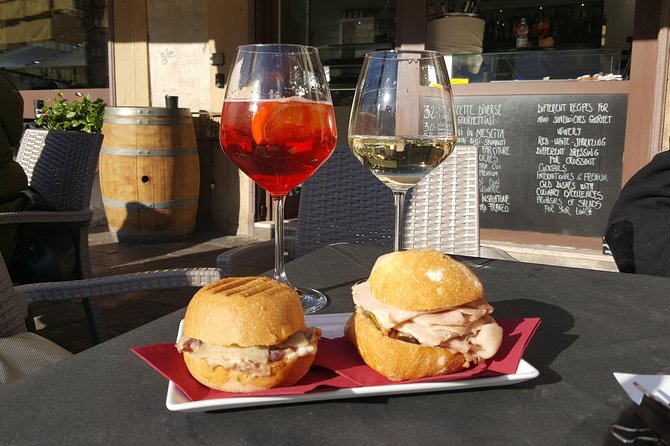
REVIEW · ITALY STREET FOOD TOURS
Street Food Walk in Padova
Padua’s best introduction may be found not in a museum but at a market counter. This two-hour street food walk leads you through the city’s old squares, covered food halls, and small shops while turning local bites into a light lunch.
I like the small group, limited to eight people, and the way the tastings cover a full range of Padua’s everyday food: Asiago and other cheeses, cured meats, bread, olives, gelato, and espresso. I also like the practical route, which stays around the central squares rather than sending you on a long march.
The main consideration is price. At $142.02 per person, this is not a cheap snack tour, so you should arrive hungry and treat it as both a food experience and a guided introduction to central Padua. The tour is offered in English and begins at 10:30 a.m.
Key points to know before you book
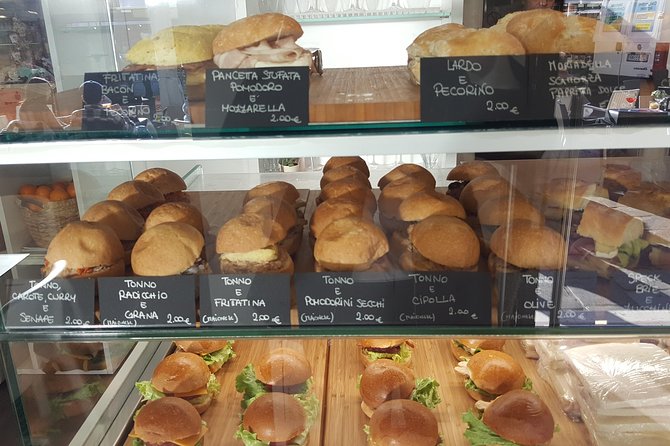
- A market meal in motion: Tastings can include cheeses, prosciutto, salami, focaccia, olives, fruit, gelato, and coffee.
- A compact central route: You visit Palazzo della Ragione, three major piazzas, the clock tower, and the University of Padua.
- A very small group: The maximum is eight people, which makes it easier to ask questions and follow the guide through market stops.
- Rachel leads the walk: Rachel is the named guide, with a focus on local food, origins, and pairings.
- Drinks are part of the tasting: You receive a glass of Prosecco or Spritz, or a soft drink.
- A light lunch, not just a nibble: The food can leave you happily full, so plan your next meal accordingly.
Starting at Piazza delle Erbe with a hungry appetite
The walk begins at the fountain in Piazza delle Erbe, at Piazza delle Erbe 21, at 10:30 a.m. That meeting point puts you right in the middle of Padua’s historic center, where the city’s food life and public life have shared the same squares for centuries.
You will spend the opening part of the tour getting oriented around the market area. The point is not simply to eat a few samples and move on. Rachel connects the food to its origins and explains how different products work together, from a salty slice of prosciutto to a sharper or creamier local cheese.
This approach matters because Italian food shopping is often about pairing simple things well. A piece of bread, a few olives, cured meat, and cheese can form a satisfying meal without a complicated recipe. You get to taste that idea directly rather than hearing a long explanation about it.
The tour ends back at the same meeting point. That is useful if you want to continue exploring Padua on foot afterward, since you will finish in the same central area where you started.
More street food tours in Italy:
- Naples: Street Food Walking Tour with Local Guide
★ 4.9 · 4,976 reviews - Rome: Street Food Tour with Local Guide
★ 4.8 · 4,077 reviews - Florence: Cinque Terre Park Day Trip with Optional Street Food
★ 4.5 · 3,593 reviews
Palazzo della Ragione and the city’s food heart
Palazzo della Ragione is the first listed stop. This enormous historic building fronts the central market squares and helps explain why the area remains such a natural place for a food walk. The surrounding market activity gives you a sense of how food, commerce, and city life fit together.
The stop is not presented as a separate museum visit, so do not book this expecting a long architectural tour inside the building. Instead, Palazzo della Ragione works as a landmark and setting for the market experience. You are using the building to understand where Padua’s food trade happens, then moving toward the stalls and small shops that supply the tastings.
This is one reason I like the route. You are not being taken to a distant restaurant for a fixed menu. You are staying in the center and seeing the places where food is bought, displayed, and served.
Piazza delle Erbe and fresh market flavors
Piazza delle Erbe is the main food-market setting on the route. Covered food halls and small shops in and around the square provide the stage for several tastings.
The exact order can vary, but the planned selection includes fresh seasonal fruit and olives from market stands. These are modest foods, yet they tell you something useful about the local table. Fruit changes with the season, and olives provide a salty, bright contrast to the richer meats and cheeses.
You may also taste bakery products such as focaccia and bread. These are especially important because they turn the other samples into a meal rather than a collection of unrelated bites. Bread gives you a way to try the cheeses, cured meats, and olives together.
If you are comparing this with a restaurant lunch, keep the format in mind. You are not seated for two hours with a menu and table service. You are tasting your way through the market, which offers more variety and a closer look at local food shopping, but less quiet and less control over the pace.
Piazza della Frutta and the cheese board
Piazza della Frutta is the next major market square. As its name suggests, fresh produce is central to the square’s identity, and the stop supports the tour’s emphasis on seasonal food.
The cheese selection is one of the strongest parts of the menu. You might taste fresh Asiago, Ubriaco, Parmigiano Reggiano, and Grana Padano. These cheeses offer different textures and levels of age, so this is a useful chance to compare them side by side.
Fresh Asiago is a good example of a regional cheese with a softer, more direct flavor. Parmigiano Reggiano and Grana Padano are firmer and more familiar to many people, while Ubriaco brings a distinct character from its unusual aging method. The guide’s explanation of origins and pairings helps you understand why one cheese may work better with bread, fruit, or a drink than another.
I would pay attention here rather than simply eating quickly. A tasting like this gives you ideas for what to buy later in Italy, and it can make a supermarket shelf far less confusing. You may also find that the cheese tasting is more filling than expected, especially when combined with bread and cured meats.
Same city, another round of plates:
- Florence: Day Trip to Cinque Terre with Optional Street Food
★ 4.5 · 2,854 reviews - Rome: Trastevere & Campo de Fiori Street Food Walking Tour
★ 4.9 · 2,768 reviews - Venice: Street Food Tour with a Local Guide and Tastings
★ 4.8 · 2,613 reviews - Authentic Naples Street Food Tour With Local Expert Guide
★ 5.0 · 2,402 reviews
Prosciutto, salami, and the logic of a market lunch
Local prosciutto and salami add the savory center of the meal. These are not decorative garnishes. Along with bread and cheese, they make the food walk substantial enough to replace a light lunch.
The value of this part of the tour comes from comparison. Instead of ordering one plate of cold cuts, you can taste several items in the setting where local products are sold. Rachel can explain how the foods are made, where they come from, and how they pair with the other samples.
The tour description does not promise a specific producer or a fixed brand for every tasting, so you should not book it expecting a precise menu. Seasonal availability and market selection can affect what appears on the table. That flexibility is normal for a market-based food walk, but it is worth understanding before you pay the higher price.
The route is also designed to avoid excessive walking. One review specifically praised the fact that the experience did not involve long-distance walking. You still move between squares and stops, but the focus stays on the central market area rather than on covering a large part of Padua.
Piazza dei Signori and a local drink
Piazza dei Signori adds another of Padua’s grand public spaces to the route. Here, the food walk continues to connect eating with the city itself. You are not tasting in isolation. You are stopping in the same central zone where people gather, shop, and pass through during the day.
A glass of sparkling Prosecco or a Spritz is included, with a soft drink offered as an alternative. This is a small but useful part of the experience because the drink gives you another pairing to consider with the salty foods.
The choice also makes the tour more flexible. If you do not drink alcohol, you are not left out of the tasting. If you want a classic Italian aperitivo, the Prosecco or Spritz fits the setting.
Because the start time is 10:30 a.m., the drink may feel early for some people. For others, it fits naturally into a late-morning market meal. The important point is to plan around the tour rather than assume it is only an appetizer stop before lunch.
Torre dell’Orologio and the rhythm of central Padua
The Torre dell’Orologio is another landmark on the walk. It helps break up the food stops with a little city orientation and gives you a clearer sense of the compact historic center.
The listed itinerary does not promise entry into the tower, a climb, or a detailed clock mechanism visit. Expect it to function as a stop along the walking route rather than a separate attraction ticket. That keeps the experience focused and helps explain why the tour can cover several central sights in about two hours.
I like this balance. Food tours can become tiring when every stop is a lecture, while sightseeing tours can leave you hungry and distracted. Here, the landmarks provide context, and the tastings keep the pace lively.
The University of Padua and a final taste of the city
The University of Padua is the final named sight on the route. It gives the walk a different note from the markets and civic squares, showing that Padua’s center is not only about commerce and food.
The experience closes with sweet and simple items: artisanal organic gelato in seasonal flavors, fresh seasonal fruit, and a typical espresso coffee. Gelato provides the main dessert, while fruit keeps the ending fresh rather than overly heavy. Espresso gives you the classic Italian finish.
Seasonal flavors mean you should not expect one fixed gelato choice. That is a benefit if you like trying food tied to the time of year, but it also means you cannot plan around a particular flavor.
Coffee is served as a typical espresso, not as a large café drink. If you prefer milk coffee, this is worth knowing. The espresso is a short final taste, and the tour ends back at the Piazza delle Erbe meeting point.
What the $142.02 price really covers
At $142.02 per person, the price is high for two hours if you measure only the amount of food. It becomes easier to justify if you value the small group, the guide’s local explanations, the number of tastings, and the chance to use the market as your introduction to Padua.
The food list is broad. You are not paying for one pastry and a drink. You receive a progression of cheeses, cured meats, bread, bakery products, olives, fruit, gelato, coffee, and a drink. Taken together, the samples can function as a light lunch.
The group limit of eight is important. A larger group would make market counters harder to manage and reduce your chances of asking questions. With a maximum of eight, the experience should feel more personal, though the available information does not guarantee a private tour.
I would book this for your first full day in Padua if you want help understanding what to eat afterward. I would skip it if you are mainly looking for the cheapest possible lunch or prefer to explore markets at your own pace.
Timing, meeting point, and practical details
The meeting point is the fountain in Piazza delle Erbe, at Piazza delle Erbe 21, Padova. The start time is 10:30 a.m., and the activity lasts about two hours.
The tour is offered in English and uses a mobile ticket. Confirmation is sent within 48 hours of booking, subject to availability. The activity has a minimum number of participants, so if that minimum is not met, you are offered another date or experience, or a full refund.
Most people can take part, and service animals are allowed. The route is near public transportation, and the compact central setting helps if you want to continue sightseeing after the food walk.
Free cancellation is available until 24 hours before the start time for a full refund. Cancellations or changes made less than 24 hours before the start are not refunded or accepted, and the cut-off is based on Padua’s local time.
Who should book the Padua food walk
This experience suits you if you enjoy learning through food, want a small group, and would like a local guide to explain what you are tasting. It is especially useful if Padua is unfamiliar to you and you want a quick introduction to its market squares, food shops, and everyday specialties.
It also suits couples, friends, and families who prefer several small tastings to one formal meal. The food is varied enough to keep the walk interesting, and the route does not require long-distance walking.
You may want to choose something else if you have strict dietary needs, since the supplied information does not specify vegetarian, vegan, allergy-friendly, or gluten-free alternatives. The menu includes dairy, meat, bread, and alcoholic drinks, though a soft drink is available instead of Prosecco or Spritz.
Should you book this experience?
Book it if you want Padua to make sense through its food, not just its monuments. Rachel’s role is central: she explains origins and pairings while guiding you through the market stalls, and the tastings are substantial enough to count as a light lunch.
The best reason to book is the combination of market access, small-group attention, and a wide tasting menu. The main reason to hesitate is the price for a two-hour activity. If you arrive hungry, value local context, and want a friendly introduction to central Padua, the cost is easier to defend. If you only want a quick bite, spend your money at the market on your own.
FAQ
Where does the Street Food Walk in Padova begin?
It begins at the fountain in Piazza delle Erbe, at Piazza delle Erbe 21, 35122 Padova PD, Italy.
What time does the food walk start?
The start time is 10:30 a.m.
How long does the experience last?
The walk lasts approximately two hours.
Where does the activity end?
The activity ends back at the meeting point in Piazza delle Erbe.
How many people can join the tour?
The maximum group size is eight people.
Is the tour offered in English?
Yes. The experience is offered in English.
What food is included?
The menu can include local cheeses, prosciutto, salami, focaccia, bread, olives, seasonal fruit, artisanal organic gelato, and espresso coffee.
Is a drink included?
Yes. You receive Prosecco, Spritz, or a soft drink.
Is the tour suitable for most people?
Most people can participate, and service animals are allowed. The activity is near public transportation.
Can I cancel for a full refund?
Yes. You can cancel at least 24 hours before the start time for a full refund. Changes or cancellations made less than 24 hours before the start are not accepted or refunded.
Newly added plates around Italy
- Verona: Street Food and History Tour with Local Guide★ 4.7 · 6 reviews
- Verona: City Highlights & Street Food Walking Tour★ 5.0 · 3 reviews
- Verona: Street Food Tour and City Guided Sightseeing★ 4.9 · 11 reviews
- Verona: street food walking tour near the historical center★ 5.0 · 2 reviews
- Venice: Rialto Area Street Food Tour and Sightseeing★ 4.6 · 8 reviews
- Venice: Cicchetti Street Food and Sightseeing Walking Tour★ 4.9 · 57 reviews
- Catania: Underground and Street Food Walking Tour★ 4.7 · 56 reviews
- Turin: Aperitivo & Street Food Tour Delights with a Local★ 4.9 · 46 reviews
Italy Street Food Tours, compared.
Trastevere & Campo de Fiori Street Food Walking Tour
Read our review →
Street Food Tour with a Local Guide and Tastings
Read our review →
Authentic Naples Street Food Tour With Local Expert Guide
Read our review →
Palermo Original Street Food Walking Tour by Streaty
Read our review →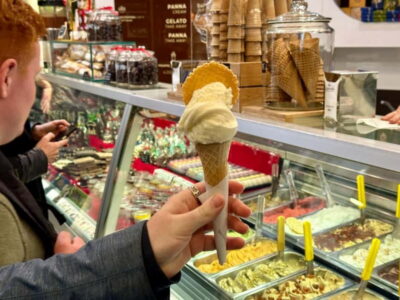
Trastevere Street Food Walking Tour with Local Expert
Read our review →
Browse the lists this tour appears in