
REVIEW · ROME STREET FOOD TOURS
Rome: Jewish Quarter and Campo de’ Fiori Street Food Tour
Rome’s best food stories often arrive in small portions. This 2.5-hour walk links Campo de’ Fiori with the Jewish Quarter, pairing five tastings with places such as Portico d’Ottavia, Teatro Marcello, and Largo di Torre Argentina. I like the way the tour connects food to neighborhoods, and I like that it includes both market stops and local-style street food rather than one long restaurant meal.
The main catch is timing. Campo de’ Fiori market closes in the afternoon, so you need a morning departure if the market matters to you. Vegans and people with gluten intolerance should skip this tour, while vegetarians need to request an alternative ahead of time.
Key points at a glance
- Five tastings in 2.5 hours: Expect Roman street food, a Roman-Jewish specialty, dessert, beer, and wine.
- A useful historic route: The walk goes from Campo de’ Fiori to the Jewish Quarter and ends near Largo di Torre Argentina.
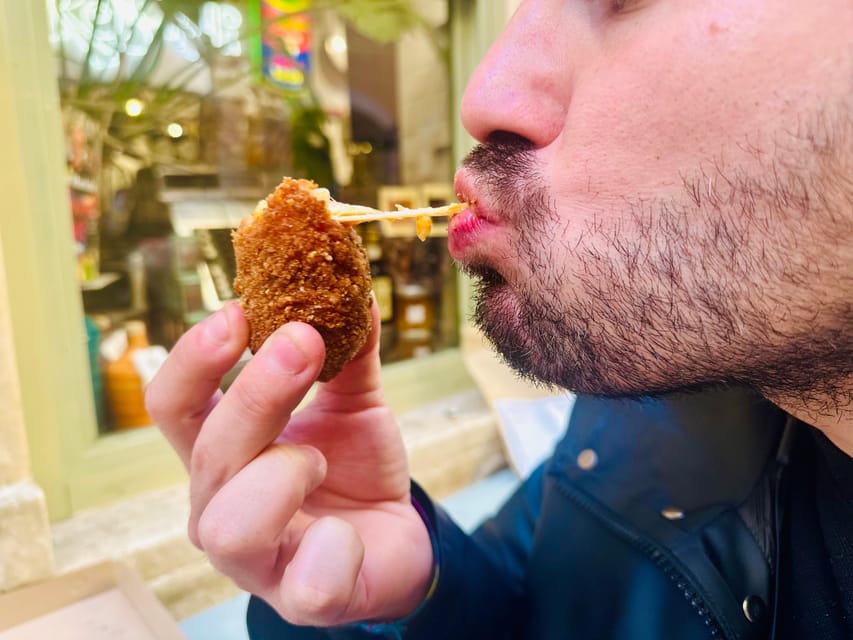
- Classic Roman bites: Supplì and pizza al taglio give you two essential tastes of everyday Roman food.
- Market timing matters: Campo de’ Fiori is included, but the market is closed in the afternoon.
- English-speaking local guides: Martina and Ramona have been praised for clear, friendly explanations.
- Good value for a short visit: At $46 per person, the tour combines food, guiding, and sightseeing in one compact outing.
Why this route works so well in Rome
Rome can feel like a city of grand ruins and famous fountains, but its food culture is often more casual. A slice of pizza eaten standing up, a fried rice ball from a neighborhood counter, or a sweet shared after a walk can tell you as much about daily life as a formal museum visit.
This tour uses food as the thread. You move through Campo de’ Fiori, the former Theatre of Pompey area, Via dei Chiavari, and the Roman Ghetto before finishing at Largo di Torre Argentina. The route is short enough to manage without turning into an exhausting day, yet full enough to give you a useful first look at central Rome.
I especially like the contrast between the stops. Campo de’ Fiori gives you the market setting, while the Jewish Quarter brings a different culinary tradition and a more reflective historical setting. The guide is there to explain what you are eating and why certain dishes belong to Rome, not simply to hand you a snack and point toward the next stop.
The tour is conducted in English. Martina has been praised for speaking clearly to French participants, and Ramona for her friendly, enthusiastic style and ability to show repeat visitors something new. Guide quality matters on a food walk, since the explanations are what turn five small samples into a useful introduction to Roman cooking.
More street food tours in Rome:
- Rome: Street Food Tour with Local Guide
★ 4.8 · 4,077 reviews - Rome: Trastevere & Campo de Fiori Street Food Walking Tour
★ 4.9 · 2,768 reviews - Rome Street Food Tour with Local Guide
★ 5.0 · 2,361 reviews
Starting under Giordano Bruno in Campo de’ Fiori
Meet your guide beneath the statue of Giordano Bruno in the center of Campo de’ Fiori. This is an important detail because the square can be busy, and the statue gives you a clear landmark.
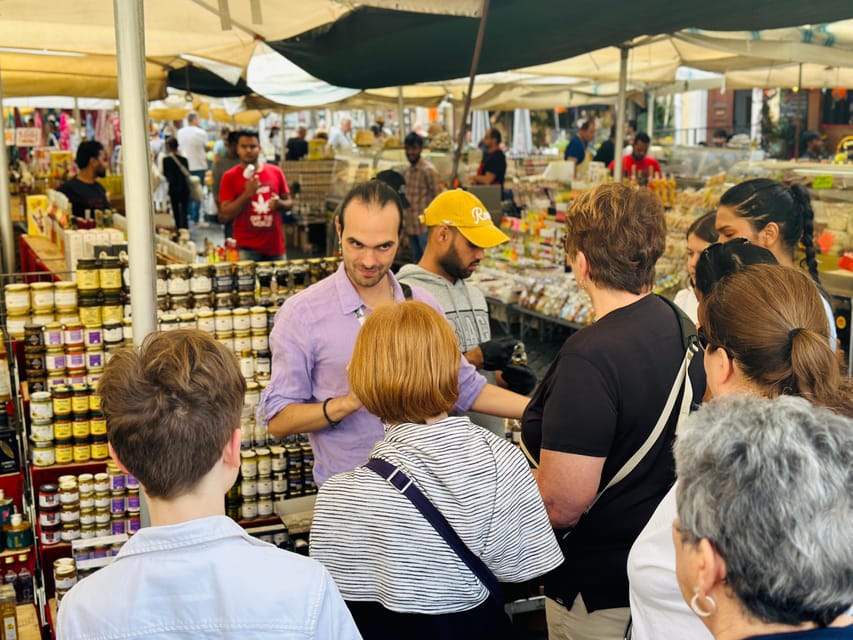
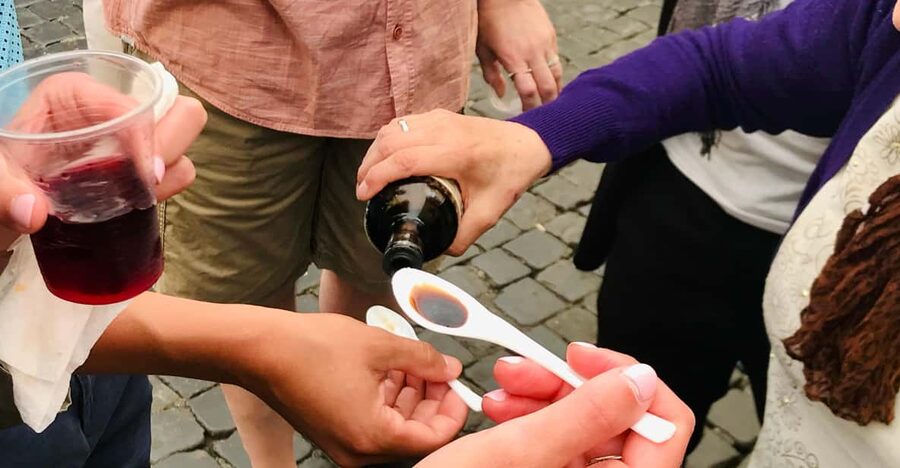
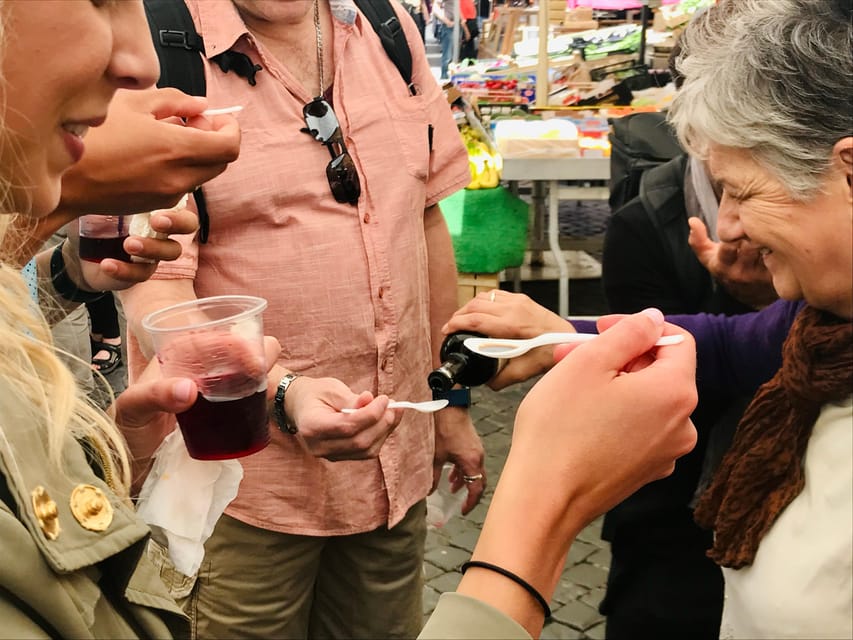
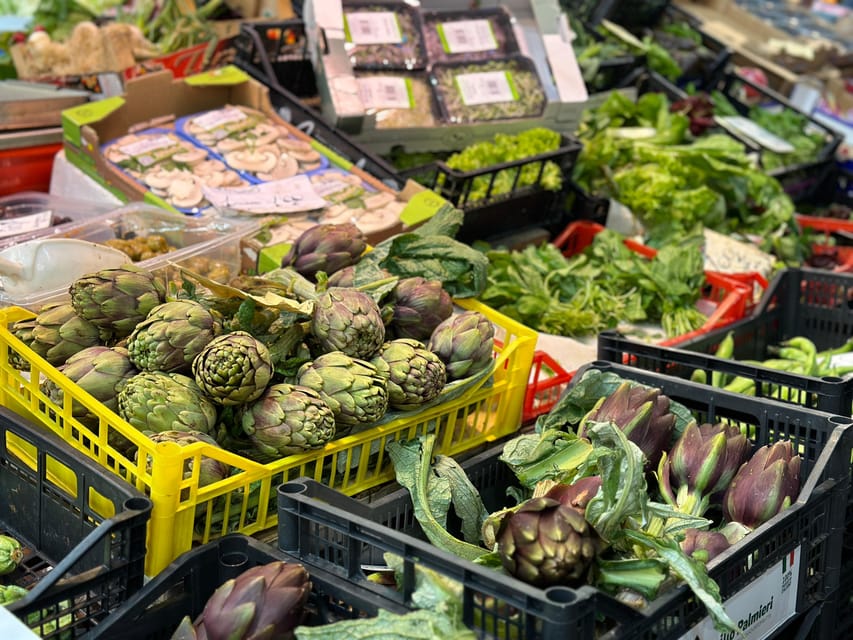
The first portion lasts about 30 minutes and centers on street food, the market, and regional products. You may sample items such as fresh truffles, olive oil, and balsamic vinegar. These tastings are useful because they introduce ingredients that appear throughout Italian cooking, but keep your expectations sensible: the tour is offering samples, not a full market lunch.
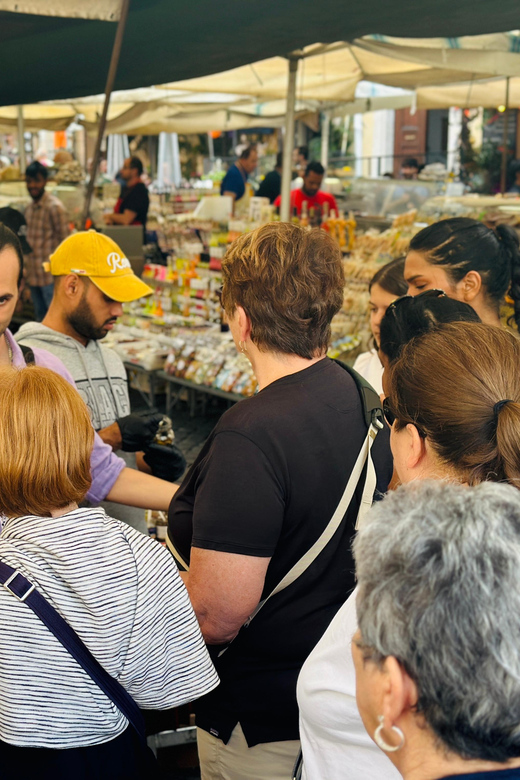
Campo de’ Fiori is at its most useful in the morning, when the market is open. You can see the food stalls as part of the experience rather than treating the square as a simple meeting point. If you are choosing between available start times, pick the morning if you want the complete market portion.
One practical warning deserves attention here. After tasting products, you may be tempted to buy them. Take a moment to compare the price, quantity, and quality before spending money. One recent participant felt that some products offered for sale were priced higher than their quality and portion justified. The tasting can be enjoyable without turning into a shopping obligation.
Wine, a market walk, and Roman flavors
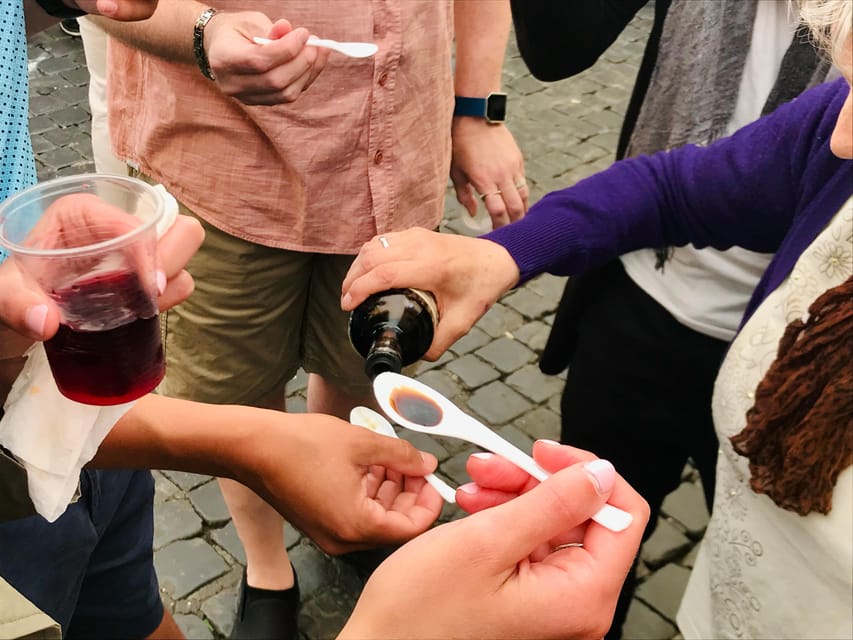
The route returns to Campo de’ Fiori for another 30-minute section with wine and regional food. This gives the opening part of the tour a relaxed pace instead of rushing you through one bite after another.
The wine sample is included, as is a beer sample later in the walk. Extra food and drinks are not included, so you should think of the price as covering the planned tastings rather than unlimited eating. That is normal for a compact walking tour, but it matters if you arrive hungry and expect a full meal.
The food is likely to appeal most to people who enjoy trying traditional products in small portions. You can ask the guide about the ingredients and customs behind each sample. Since the tour promises five different street food tastings, the variety is more important than the size of any one serving.
I would eat a light breakfast first. You do not want to arrive full, but you also do not want to rely on five tasting portions as your only meal of the day.
From the Theatre of Pompey to Via dei Chiavari
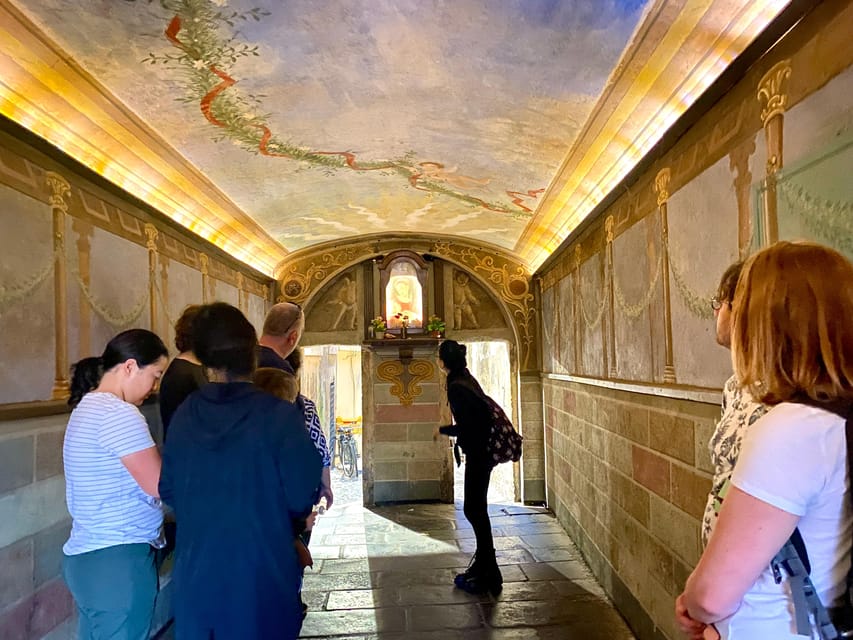
After a short walk, the group reaches a lesser-known stop for about 15 minutes of sightseeing. The route then continues to the Theatre of Pompey area for another street food tasting and a brief explanation of the site.
The Theatre of Pompey is a good example of how Rome layers ordinary streets over ancient landmarks. You are not simply moving between food counters. The guide helps place the meal in the setting of the old city, where ruins and modern life share the same blocks.
Via dei Chiavari brings a quick five-minute stop with beer, street food, and sightseeing. Five minutes is not long, so this part is best seen as a taste and a transition rather than a major visit. Still, small stops can keep the walk moving and give you a sense of how Romans eat on the go.
The route involves several short walks, including sections of two and three minutes. You should wear comfortable shoes, since the experience is on foot from start to finish. The distance is not presented as a strenuous hike, but old central streets are better handled in practical footwear than in shoes chosen only for photographs.
Same city, another round of plates:
- Rome: Trastevere Street Food Walking Tour with Local Expert
★ 4.8 · 1,784 reviews - Roman Food Tour with Visit to the Trionfale Food Market
★ 5.0 · 471 reviews - Trastevere & Campo de’ Fiori Street Food Tour, Eat Like a Local
★ 5.0 · 207 reviews - Hidden Rome: Small Group E-Bike Tour with Street Food Stops
★ 5.0 · 169 reviews
Entering the Jewish Quarter near Portico d’Ottavia
The tour then reaches Portico d’Ottavia, one of the key landmarks in Rome’s Jewish Quarter. You spend about 15 minutes here with a guided visit and walk.
This is where the experience becomes more than a general food tour. The Roman Ghetto, located in Rione Sant’Angelo near the Tiber, has its own identity and culinary tradition. The guide connects the neighborhood’s past with the Roman-Jewish specialty you taste later.
Portico d’Ottavia is also a useful place to slow down. After the quick food stop on Via dei Chiavari, you have more time to look around and hear the story of the area. I like this balance: the route does not treat history as a long lecture, but it also does not reduce the Jewish Quarter to a backdrop for lunch.
You should expect walking and outside sightseeing rather than a full interior tour of every landmark. The schedule specifically includes the Synagogue from outside, so do not book this experience expecting an entrance visit.
Passing the Great Synagogue and tasting Roman-Jewish food
The group walks past the Great Synagogue of Rome for about 10 minutes. This exterior stop helps you understand the setting before the food tasting in the Jewish Ghetto, which lasts around 20 minutes.
The Roman-Jewish dish is one of the strongest reasons to choose this route instead of a general street food walk. It gives you a taste tied to a specific community and neighborhood. The guide’s explanation matters here, since the dish is not just another item to check off a menu.
Food tours are at their best when they explain the difference between a local specialty and a generic Italian snack. This stop provides that contrast. You have already encountered broad Roman staples such as pizza and supplì, then you move into a food tradition connected to the Jewish Quarter.
The synagogue visit is a pass-by stop, not an interior tour. Dress and behave respectfully around the area, and give yourself time to listen rather than focusing only on the next bite.
Teatro Marcello and the final dessert at Largo di Torre Argentina
The route continues to Teatro Marcello for about five minutes of sightseeing before ending at Largo di Torre Argentina. The final 15-minute stop includes dessert and regional food.
Largo di Torre Argentina gives the tour a clear finish in a historic part of central Rome. Ending there is useful if you want to continue sightseeing or find a separate meal nearby, although no onward plan is included in the tour itself.
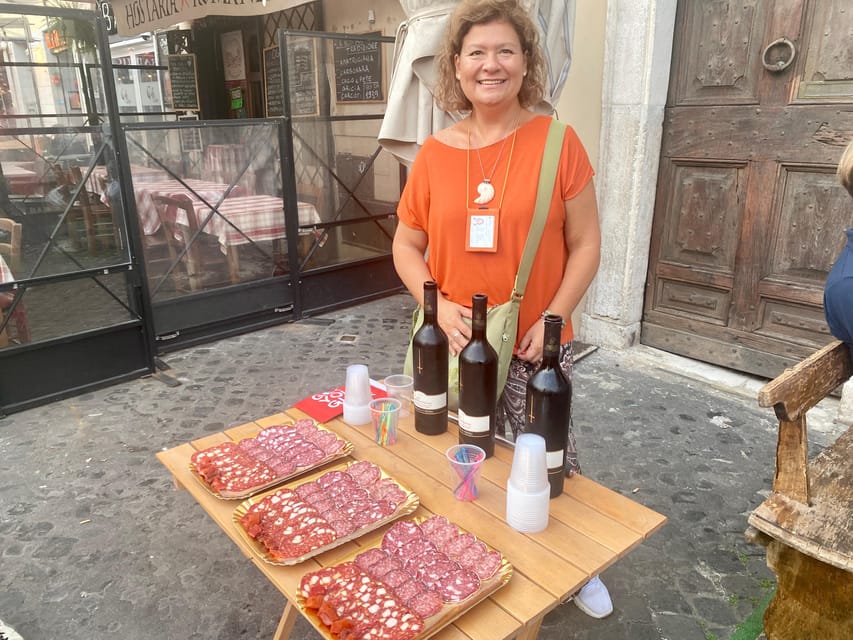
The dessert gives the food sequence a sensible close. You begin with market products and savory street food, move through beer and wine, taste Roman-Jewish cooking, and finish with something sweet. Because the tour lasts only 2.5 hours, this structure keeps the experience varied without asking you to sit through a long meal.
The finish also makes the tour easy to fit into a Rome schedule. You could book it as a morning introduction before an afternoon museum visit, provided you choose a start time that allows the market to operate. Or you could use it early in your stay, then return to a favorite area or dish later on your own.
What the $46 price really covers
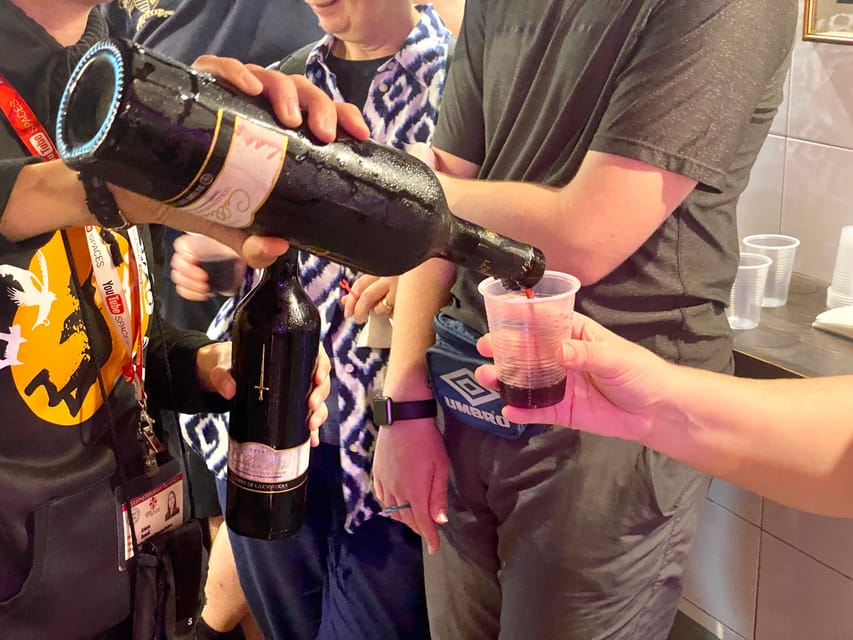
At $46 per person, the value depends on how you use the tour. You are paying for a licensed English-speaking guide, five planned food tastings, a beer sample, a wine sample, neighborhood history, and 2.5 hours of walking. Compared with paying for separate snacks and finding the route yourself, that is a fair package.
The strongest value is the combination of food and place. A simple food tasting can become forgettable if you do not understand where you are. A history walk can feel dry if you are hungry. This tour links the two in a compact format.
Still, you should not view the $46 as the cost of lunch and dinner combined. Extra food and drinks cost more, and the included samples are designed to introduce specialties rather than fill you completely. If you want a large meal, plan one before or after.
The included wine and beer also add variety, but they may not suit every diet or preference. If you do not drink alcohol, the food and history remain the main reasons to book, though the package does include those samples as part of the experience.
Who will enjoy this food walk most
I would recommend this tour to first-time Rome visitors who want an easy introduction to central neighborhoods without spending half a day in a restaurant. It also suits repeat visitors. Ramona’s ability to show a frequent Rome visitor new places points to the value of the route beyond the standard postcard sights.
It is a good fit if you enjoy tasting several foods instead of committing to one large dish. Couples, small groups, and solo visitors who like guided conversation can all make good use of it.
The tour is less suitable for strict dietary needs. Vegans cannot take part according to the activity information, and gluten-free visitors should not book it. Vegetarians can be accommodated, but you must request the option in advance. Last-minute changes are not promised.
You should also consider the market schedule. If your only available time is afternoon, you may still receive the other food and sightseeing portions, but Campo de’ Fiori’s market section will not be operating in the same way.
Practical planning before you book
Wear comfortable walking shoes and arrive at the statue of Giordano Bruno in the middle of Campo de’ Fiori. The finish is at Largo di Torre Argentina, not back at the starting point, so plan your next stop from there.
The tour is in English, and guide style can shape the experience. Martina has been noted for distinct, easy-to-follow English, while Ramona has been described as warm and enthusiastic. Those details are useful if clear explanations matter to you, especially when food names and local history move quickly.
The tour has free cancellation up to 24 hours before the start for a full refund. You can also reserve and pay later, which helps if your Rome schedule is still changing.
Before booking, check the available start times and choose a morning slot if Campo de’ Fiori market is important to you. Also notify the provider about vegetarian needs in advance.
Should you book this Rome street food tour?
Book it if you want a guided introduction to Roman food and central neighborhoods in one manageable outing. The mix of market products, supplì, pizza al taglio, wine, beer, Roman-Jewish food, and dessert gives you more range than a single tasting stop. The historic route adds real value, especially in the Jewish Quarter.
Skip it if you need vegan or gluten-free food, want a large meal, or can only attend in the afternoon and care most about the market. For everyone else, $46 is a reasonable price for five tastings, a licensed guide, and a route that shows you both familiar Roman sights and less obvious food traditions.
FAQ
How long does the Rome Jewish Quarter and Campo de’ Fiori food tour last?
The tour lasts 2.5 hours.
Where does the tour begin?
Meet your guide in Campo de’ Fiori square, under the statue of Giordano Bruno in the middle of the square.
Where does the tour finish?
The tour finishes at Largo di Torre Argentina.
How many food tastings are included?
Five different street food tastings are included.
Are beer and wine included?
Yes. The tour includes a sample of beer and a sample of wine.
Is the Campo de’ Fiori market open during every tour?
No. The market is closed in the afternoons, so choose a morning departure if you want to visit the market while it is operating.
Can vegetarians join the tour?
Yes, vegetarian options can be arranged if you advise the provider in advance. Last-minute requests cannot be accommodated.
Is the tour suitable for vegans?
No. The activity is not suitable for vegans.
Is the tour suitable for people with gluten intolerance?
No. The activity is not suitable for people with gluten intolerance.
What language is the tour conducted in?
The live tour guide speaks English.
Newly added plates around Rome
- Vegan Street Food Tour in Rome★ 5.0 · 6 reviews
- Testaccio Street Food Tour Eat Like a Local★ 3.5 · 2 reviews
- Vatican Street Food Tour and Wine Experience with Local Guide★ 5.0 · 7 reviews
- Tasty Trastevere Street Food Tour in Rome from Tiberine Island to Ponte Sisto★ 5.0 · 25 reviews
- Gems of Rome: Small group E-bike tour with street food stops★ 5.0 · 36 reviews
- Tasty Rome Street Food Tour around Campo de’ Fiori Market & Jewish Ghetto★ 5.0 · 2 reviews
- Small-Group Rome Street Food Guided Tour★ 5.0 · 15 reviews
- Rome Street Food Tour – History, Craft and Authentic Taste★ 5.0 · 25 reviews
Rome Street Food Tours, compared.
Trastevere & Campo de Fiori Street Food Walking Tour
Read our review →
Trastevere Street Food Walking Tour with Local Expert
Read our review →
Roman Food Tour with Visit to the Trionfale Food Market
Read our review →
Trastevere & Campo de’ Fiori Street Food Tour, Eat Like a Local
Read our review →
Hidden Rome: Small Group E-Bike Tour with Street Food Stops
Read our review →Hidden Rome: Small Group E-Bike Tour with Street Food Stops
Read our review →
Browse the lists this tour appears in