REVIEW · OLD QUARTER AND MEDINA FOOD WALKS
Old Delhi Heritage and Street Food Walk with a Local
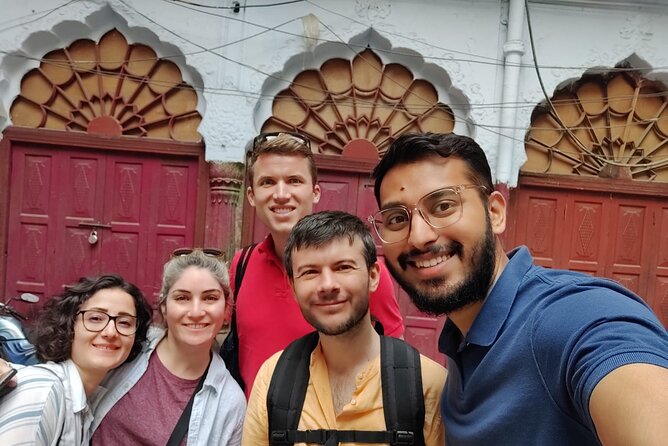
Old Delhi comes into focus through its contrasts: a Jain temple beside the Red Fort, a Sikh shrine tied to martyrdom, a British church shaped by the upheaval of 1857, and Jama Masjid at the finish. Akshay Jain, who grew up in Chandni Chowk, connects these places with stories from his own childhood and a clear interest in cultural exchange.
I like the personal connection to Chandni Chowk and the way the walk covers Jain, Muslim, Sikh, and British chapters instead of treating Old Delhi as only a Mughal relic. I also like the small-group limit of 12, which should make questions and conversation easier. The main drawback is pace: 2 hours 30 minutes is short for six stops, street food, and narrow lanes, and entrance fees at Red Fort and Jama Masjid are not included.
Key points to know before you book
- Akshay Jain grew up in Chandni Chowk, so the walk includes personal memories along with historical explanation.
- The route links several faiths and eras, from the Mughal court to Sikh resistance and British rule.
- Street food is part of the experience, with local culinary stops woven into the walk rather than treated as a separate meal.
- The route runs from Red Fort to Jama Masjid, making it useful for seeing Old Delhi before continuing by metro.
- The group has a maximum of 12 people, a good size for a crowded area and a storytelling-led walk.
- Red Fort and Jama Masjid admission cost extra, so factor that into the $28.80 price.
Why this Old Delhi walk feels different
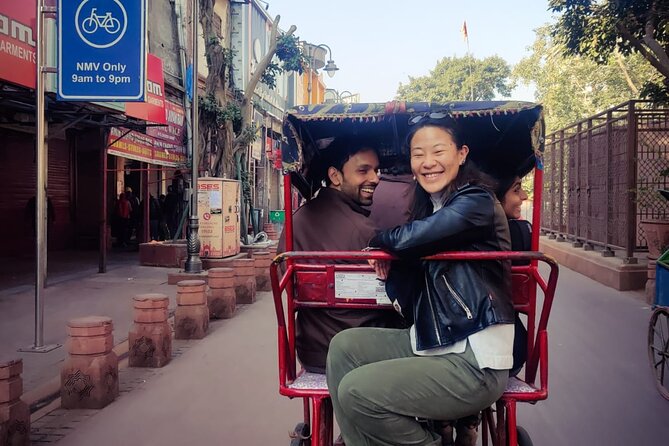
Many Old Delhi outings focus on architecture, shopping, or food. This one tries to tie all three together through the changing power of the city. You hear about Shah Jahan, Sikh martyrdom, the rise of the East India Company, and the 1857 uprising while walking through streets where religious buildings and old commercial lanes sit close together.
That approach matters because Chandni Chowk can feel like a wall of sound and motion when you first arrive. A guide gives you a way to read the scene. The Jain temple is not just a meeting point. The fort is not just a red sandstone wall. A church is not just an unexpected building in an old Mughal district.
Akshay’s background gives the walk a useful human scale. He grew up in Chandni Chowk, left Delhi at 14 on an academic scholarship to Singapore, and later traveled widely as a student. His interest in history and cultural exchange comes through in the design of the route. You are not simply moving from monument to monument. You are following the layers that shaped Old Delhi.
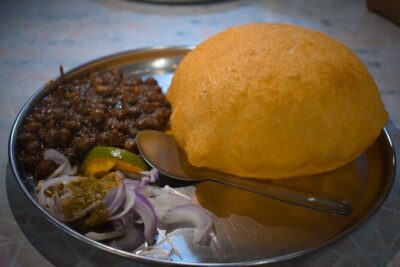
The food adds another layer. The experience is described as a street food and heritage walk, and the food stops are part of the cultural story. Specific praise has focused on local culinary details, including malai sandwiches, as well as lesser-known sights. You should think of this as a tasting walk with historical context, not a full lunch or a list of every famous food shop in Chandni Chowk.
More Old Quarter and Medina Food Walks in India
- Old Delhi Street Food Tour
★ 5.0 · 497 reviews - Delhi: Old Delhi Street Food Tour with Rickshaw Ride
★ 4.9 · 403 reviews - Old Delhi Street Food Tour – Explore Spices in Chandni Chowk
★ 5.0 · 334 reviews
Starting beside the Red Fort
You meet at Shri Digambar Jain Atishay Kshetra Lal Mandir, the Jain temple opposite the Red Fort on Netaji Subhash Marg. This is a strong starting point because the fort’s red sandstone walls immediately establish the scale of imperial Delhi.
The first stop takes about 15 minutes. Akshay explains Shah Jahan’s decision to move the Mughal capital from Agra to Delhi and build the fort in 1648. You also hear about Shah Jahan as the emperor behind the Taj Mahal, which helps connect two of India’s best-known monuments.
The Red Fort is not entered as part of the tour. Admission is extra, and the stop is an exterior introduction. That is worth noting if you expect a full fort visit. You will get the setting and the story, but not the courtyards, halls, and museums within the complex unless you arrange a separate visit.
I like beginning here because the fort gives the rest of the walk a clear reference point. Old Delhi can seem random at first. Starting with the Mughal capital lets you understand why the streets around it developed as they did.
The Jain temple and a lesson in coexistence

The Sri Digambar Jain Lal Mandir is the next stop, with about 10 minutes set aside for it. Its location directly beside the Mughal fort raises a useful question: how did a Jain temple come to sit next to the seat of a Muslim emperor?
Akshay is Jain, so this part includes some personal background and basic insight into Jainism as a religion and way of life. That personal link should make the stop more than a quick architectural glance. You get a sense of how different communities have occupied the same part of Delhi across time.
Admission here is free. As with any active place of worship, you should expect the visit to be more about respectful observation and listening than about a long formal tour. The itinerary allows only 10 minutes, so the value comes from the explanation and the connection to the larger theme of Old Delhi’s mixed religious identity.
This is one of the walk’s strongest ideas. Instead of presenting Delhi as a sequence of separate monuments, Akshay shows how close these places are, both physically and historically.
Begum Samru’s Palace and an unlikely rise to power
The stop at Begum Samru’s Palace lasts about 15 minutes. It introduces one of the more unusual figures in northern Indian history: Begum Samru, who began as a nautch girl, became a mercenary warrior, ruled a province near Delhi, and served as a diplomat in the Mughal court.
The palace was gifted to her by the Mughal emperor. That detail gives the building a sharp sense of political drama. It also broadens the walk beyond famous emperors and colonial officials. You hear about a woman who gained military and political influence in an era when power was often described through male rulers alone.
The stop is free, which helps the overall value of the experience. You should not expect a lengthy palace visit based on the timing. The point is the story, the setting, and the reminder that Old Delhi’s past includes ambitious figures who do not always appear in standard sightseeing plans.
I especially like this section for anyone who already knows the basic Mughal story. It adds a less familiar character and shows that the city’s political life was more complicated than a simple line of emperors.
More Old Quarter and Medina Food Walks in New Delhi
- Delhi: Old Delhi City Tour with Tuk-Tuk Ride & Street Food
★ 4.8 · 88 reviews - Old Delhi Street Food and Spice Market Tour
★ 5.0 · 81 reviews - Old Delhi Cultural, Temples, Heritage Walking Street Food Tour
★ 5.0 · 57 reviews - Old Delhi: Guided Street Food Tour w/ Private Transportation
★ 5.0 · 49 reviews
Gurudwara Sis Ganj Sahib and the cost of imperial rule
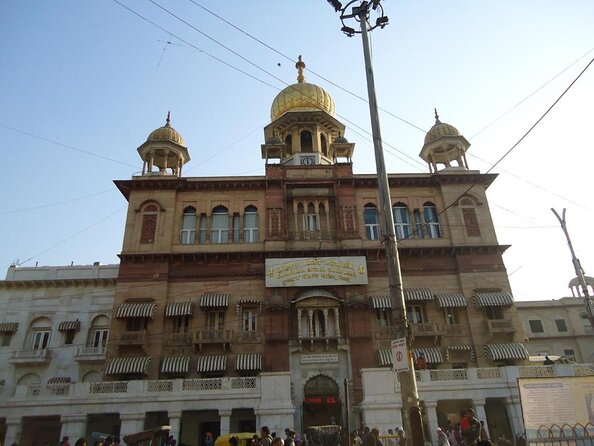
At Gurudwara Sis Ganj Sahib, the walk turns toward Sikh history and religious persecution. The stop lasts about 10 minutes and focuses on the Sikh guru who was executed here along with his followers.
You also learn who followed Shah Jahan on the Mughal throne and how these events relate to the later weakening of Mughal authority. The story is not only about one act of martyrdom. It helps explain why the relationship between imperial power and religious communities mattered so much in northern India.
The gurdwara gives the route a different tone. After the fort and palace, where power is seen through rulers and buildings, this stop brings attention to belief, resistance, and sacrifice. You should dress and behave respectfully at this active place of worship.
The short time allocation keeps the walk moving, but it also means you may want to return later if you want a quieter visit. The value here is the connection between place and event. You are standing where the story happened, not hearing it in a museum far away.
Central Baptist Church and the upheaval of 1857
Central Baptist Church introduces the British chapter of the walk. By this point, the Mughals are losing control and the East India Company is gaining political power. Akshay explains how the events of 1857 shook the church and marked a major turning point in India’s struggle against British rule.
The discussion continues through the Company’s victory and the transfer of India to direct British rule under Queen Victoria. In only 10 minutes, this is a brisk lesson, but it gives you the political bridge between Mughal Delhi and colonial Delhi.
The church is an especially effective stop because it prevents the route from ending with the Mughal period. Old Delhi is often sold through images of emperors, domes, and bazaars. This building points to the force that eventually replaced Mughal authority.
You should keep your expectations practical. The church is one element in a moving walking tour, not a full church history visit. Its main purpose is to place 1857 and British expansion within the streets you are crossing.
Jama Masjid and the view at the end
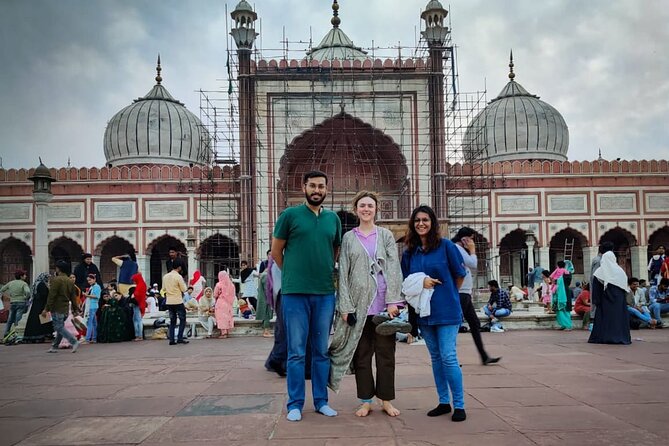
The walk finishes at Jama Masjid, one of Old Delhi’s great landmarks. About 30 minutes is allowed here, making it the longest named stop on the route.
The mosque is described as a peaceful ending after the noise and tight streets of Chandni Chowk. You can hear more about its place in Shah Jahan’s Delhi and take time to look around. Adventurous visitors can climb the minarets for views over the old city, though admission is not included.
That extra cost is important. If the minaret view is a priority, bring enough money for the entrance fee and be ready for a climb. The tour itself does not cover the Jama Masjid ticket.
Ending here works well from a practical point of view. The mosque is near Jama Masjid Metro Station, so you can continue to another part of Delhi without arranging a separate ride. It also gives you a strong final image: the dense old city below, the mosque’s open space around you, and the many eras discussed during the walk.
The food side of the experience

The food is one of the main reasons to book this instead of a standard monument walk. Chandni Chowk is best understood through its smells, flavors, shopfronts, and constant movement, and Akshay connects those details to his memories of growing up nearby.
The available information does not list every tasting or promise a set meal. That means you should not book this expecting a detailed menu or enough food to replace lunch. Instead, expect selected street food experiences woven into the history walk.
Malai sandwiches are one specific food highlight associated with the experience. The food component also includes local culinary details that are less familiar than the usual sightseeing stops. That can be useful if you have already seen Delhi’s major monuments and want a more local angle.
Food hygiene and personal comfort are worth considering in any Old Delhi tasting walk. You should tell Akshay about dietary concerns before or at the start of the walk, but the supplied details do not specify how dietary restrictions are handled. The same applies to the exact number of tastings and whether drinks are included.
Is $28.80 good value?
At $28.80 per person, the price is reasonable if you want a guided introduction to Old Delhi rather than a private car tour or a stand-alone food crawl. The value comes from the combination of a small group, personal local background, several religious and historic sites, and food along the way.
The maximum group size is 12. That is large enough to keep the price down but small enough for a guide-led conversation in narrow streets. It also matters at busy stops, where a huge group can become difficult to keep together.
The price does not include admission to the Red Fort or Jama Masjid. You may not need to enter the Red Fort during this walk, since the stop is an exterior introduction, but you should budget for any visit you want to make afterward. Jama Masjid admission is also extra, including the minaret climb if you choose it.
For the strongest value, treat the tour as a first look at Old Delhi. It gives you context, food ideas, and a route you can revisit at your own pace. If you want long interior visits at every monument, the short duration and separate admission costs may make it feel less complete.
Timing, walking, and who will enjoy it
The walk lasts about 2 hours 30 minutes. That is long enough to cover the main route but short enough to fit into a larger Delhi sightseeing day.
You will be walking through narrow Old Delhi lanes, so comfortable shoes are sensible. The meeting point is near public transportation, and the end is near Jama Masjid Metro Station. The route is not presented as a strenuous hike, and most people can participate, but the pace and crowded streets may be tiring for anyone who needs frequent breaks.
I would recommend this for:
- First-time visitors who want a clear introduction to Old Delhi
- History lovers who enjoy stories about political change
- Food-focused visitors who also want cultural context
- People interested in Jain, Sikh, Muslim, and British influences
- Delhi residents who have seen Old Delhi but want a new way to read it
- Solo visitors or couples who prefer a small group rather than a large bus tour
It may be less suitable if you want a long, slow food crawl, a full Red Fort tour, or a private itinerary built around your own interests. The route is carefully structured, so the short time at each stop is part of the trade-off.
Booking details and cancellation
You receive confirmation at booking, and the experience uses a mobile ticket. The tour is available to most participants and has a maximum of 12 people.
Free cancellation is available if you cancel at least 24 hours before the local start time. Cancellations made within 24 hours are not refunded, and changes inside that window are not accepted. Plan carefully if your Delhi schedule may shift.
Should you book the Old Delhi Heritage and Street Food Walk?
I would book this if you want stories with your street food. Akshay Jain’s connection to Chandni Chowk gives the walk a personal thread, while the route covers a useful sweep from Shah Jahan’s Mughal capital to Sikh martyrdom, British rule, and the events of 1857.
The best reason to choose it is the mix. You get Red Fort, a Jain temple, Begum Samru’s Palace, a Sikh gurdwara, a Baptist church, and Jama Masjid, with food and personal memories tying the stops together.
Skip it if you want a full interior visit at each landmark or a long list of tastings. For everyone else, the $28.80 price, 12-person limit, metro-friendly route, and unusually broad view of Old Delhi make this a smart two-and-a-half-hour introduction.
FAQ
How long does the Old Delhi Heritage and Street Food Walk last?
The walk lasts approximately 2 hours and 30 minutes.
Who leads the experience?
The experience is led by Akshay Jain, who grew up in Chandni Chowk and has a personal connection to the area.
Where does the walk start?
It starts at Shri Digambar Jain Atishay Kshetra Lal Mandir, opposite the Red Fort on Netaji Subhash Marg in Chandni Chowk, Delhi.
Where does the walk end?
It ends at Jama Masjid in Old Delhi, near Jama Masjid Metro Station.
Is admission to the Red Fort included?
No. The Red Fort stop is listed with admission not included.
Is admission to Jama Masjid included?
No. Admission to Jama Masjid is not included. The minaret climb is also an optional activity with admission not included.
How many people can join the tour?
The maximum group size is 12 people.
What is the cancellation policy?
You can receive a full refund if you cancel at least 24 hours before the experience start time. Cancellations within 24 hours are not refunded.
More history-and-food walks around New Delhi
- Spice & Stories: 3-Hour Old Delhi Heritage Food Walk Guided Tour
★ 4.5 · 36 reviews - Old Delhi Temples, Cultural, Heritage Walking Street Food Tour
★ 5.0 · 19 reviews - Palermo: Street Food and History Walking Tour
★ 4.9 · 1,486 reviews - Walking Tour and street food Tour Palermo / History and Food
★ 5.0 · 386 reviews
Newly added plates around New Delhi
- Old Delhi Cultural, Temples, Heritage Walking Street Food Tour★ 5.0 · 57 reviews
- Local Delhi Food Tour with Tour Guide – walk and taste street food★ 5.0 · 5 reviews
- Old Delhi Street Food Tour with TUK-TUK Adventures★ 5.0 · 4 reviews
- Customized Half Day and Full Day Delhi Shopping, Street Food Tour★ 5.0 · 52 reviews
- Delhi: Street Food Crawl (2 Hours Guided Food Tasting Tour)★ 3.5 · 18 reviews
- Old and New Delhi Street Food Sampling★ 5.0 · 3 reviews
- Old Delhi Tour by Tuk-Tuk Street Food and Shopping Experience★ 5.0 · 12 reviews
- Old Delhi Street Food Tour With Spice Market On Tuk Tuk★ 5.0 · 12 reviews
Old Quarter and Medina Food Walks, compared.
Old Town, Creek, Museums, Souks, & Street Food Tour
Read our review →
Old Town, Souks, Street Food, Guided Tour & Abra Ride
Read our review →
[HOT] Hanoi Old Quarter Walking Street Food – Small Group Tour
Read our review →Old Town, Souks, Street Food, Guided Tour & Abra Ride
Read our review →