
REVIEW · OLD QUARTER AND MEDINA FOOD WALKS
Off-beaten Route: Shanghai Old Town Discovery&Street Food Tasting
Shanghai Old Town is where Shanghai feels most connected to its past, and this three-hour walk uses food to make that past easier to understand. You move from the old city wall and Dajing Ge Pavilion to Yu Garden, old neighborhood streets, a birds market, and a 700-year-old Confucius temple, with local bites along the way.
I like the small group size, capped at 12 people in the additional tour details, because narrow streets and food stops are easier with fewer bodies. I also like the mix of egg pancakes, sticky rice rolls, wonton soup, fried dumplings, Shanghai noodles, and tea. The main consideration is the pace: three hours of walking and tasting calls for moderate fitness, and the tour may be canceled if fewer than two people book or if the weather is poor.
Key points at a glance
- Taste several everyday Shanghai foods: Try egg pancakes, sticky rice rolls, wonton soup, fried dumplings, Shanghai noodles, and other snacks rather than relying on one formal meal.
- Begin beside the old city wall: Dajing Ge Pavilion gives the walk a clear historical starting point in the old town.
- See more than the postcard Shanghai: The route includes a birds market, an old shantytown area, a Confucius temple, and traditional lanes.
- Visit the Yu Garden district: You get time around one of Shanghai’s best-known historic areas, including its 400-year-old garden.
- Finish with tea and dim sum: The tour ends in the old city area at the last dim-sum shop in Shanghai’s old town.
- Keep the group intimate: The tour has a maximum of 12 people, though the main description refers to no more than 15.
Why Shanghai Old Town is worth your morning
Shanghai’s modern skyline can make the city feel new from every angle. Old Town provides the needed counterpoint. Here, the focus shifts to city walls, temples, food stalls, older homes, and streets that show how people lived before the high-rises took over the view.
This tour is useful because it does not treat food and sightseeing as separate activities. A snack becomes a reason to pause, look around, and talk about local habits. You are not simply checking off a garden and a temple. You are moving through a part of the city where eating, shopping, worship, and neighborhood life have long shared the same streets.
I would choose this walk early in a Shanghai visit. It helps you get your bearings in the old city and gives you a list of foods to seek out later. Since it lasts about three hours, it also leaves much of the day open for museums, the Bund, or another neighborhood.
The route is not a grand tour of every major Shanghai sight. It is more focused than that. You get a close look at one historic part of town, and the appeal lies in the details between the main stops.
More Old Quarter and Medina Food Walks in China:
- 3-Hour Shanghai Street Food Tasting & Old Town Private Tour
★ 5.0 · 4 reviews - Dubai: Old Town, Creek, Museums, Souks, & Street Food Tour
★ 4.8 · 10,816 reviews - Dubai: Old Town, Souks, Street Food, Guided Tour & Abra Ride
★ 4.9 · 7,170 reviews
Dajing Ge Pavilion and the old city wall
The walk begins at Dajing Ge Pavilion, at the site of Shanghai’s ancient city wall. This is a sensible starting point. A wall gives you a physical clue about how the old city was defined, and the pavilion leads you into the older streets rather than dropping you into the district without context.
The first hour is listed for this opening section. That does not mean you spend a full hour staring at one structure. The point is to use the old city wall area as an introduction to the old town and its related streets.
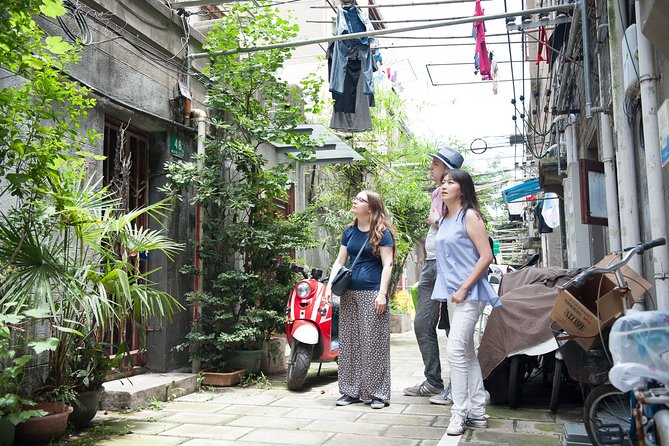
I like this beginning because it gives the route a sense of direction. You start with a major marker, then move inward toward smaller scenes. Along the way, you may see the birds market and the last remaining shantytown mentioned for the area. These are not polished attractions, which is precisely why they matter. They show a less packaged side of Shanghai.
Conditions in old neighborhoods can be uneven, and the tour requires moderate physical fitness. Wear comfortable shoes and expect to remain on foot for most of the experience. Hotel pickup is not included, so you also need to make your own way to the starting point in Huangpu.
Food stops that make the walk worthwhile
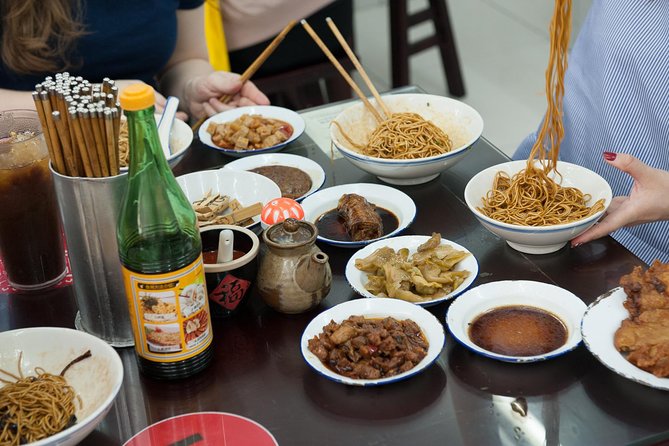
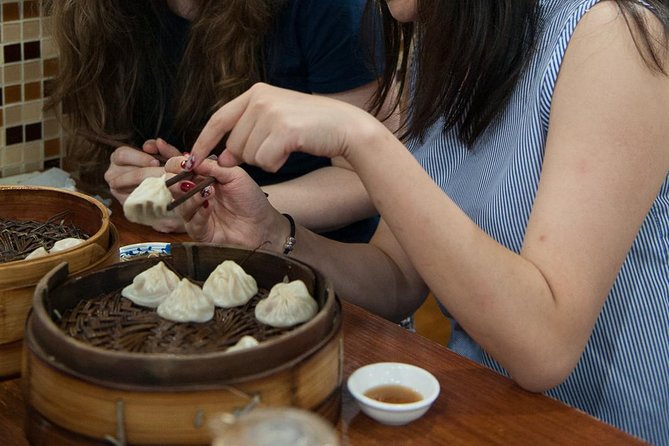
The tasting is the heart of the experience. The menu includes egg pancakes, sticky rice rolls, wonton soup, fried dumplings, Shanghai noodles, and other local snacks. The included section lists snacks, but it also says that drinks and other extra food purchases are not included, so you should not assume every item you see along the way is covered.
This distinction matters at a price of $98 per person. The cost pays for a guided small-group walk, temple admission, food samples, and a tea ceremony rather than a single sit-down meal. If you want a structured introduction and a guide to explain what you are eating, the price can make sense. If you mainly want the cheapest possible way to sample street food, exploring independently will cost less.
The range of foods is a strong point. Fried dumplings show one side of Shanghai eating, while wonton soup and Shanghai noodles offer something more substantial. Egg pancakes and sticky rice rolls add different textures and breakfast-style flavors. You should think of the tasting as a series of samples, not a guaranteed full lunch.
Dietary needs should be shared when booking. The tour specifically asks for this information in advance, but the available details do not promise that every restriction can be accommodated. If you have a serious allergy or strict diet, ask before paying.
The food stops also make this an easy experience to enjoy with a companion or family member. Children must be accompanied by an adult, and the small group format may help keep the walk manageable. Still, young children need to be comfortable walking for several hours and trying food in a fairly active urban setting.
Yu Garden and the old city district
The route continues into the Yu Garden district, one of Shanghai’s most recognized historic areas. The garden is described as about 400 years old, with traditional architecture, rockeries, and ponds. Admission to Yu Garden itself is listed as free, while entrance tickets for the temple are included.
Yu Garden is a different experience from the wall and neighborhood lanes. The garden gives you carefully arranged spaces, ornamental details, and quieter corners. It is a good place to slow down after the first part of the walk, though you should expect the district around such a famous attraction to feel more organized for sightseeing.
The tour does not present Yu Garden as an isolated attraction. You reach it as part of a larger old town route, which helps explain why the surrounding district matters. The garden is attractive on its own, but the real value comes from seeing it beside working streets, food shops, religious sites, and older residential areas.
I would not book this tour only for Yu Garden. You can visit the garden without joining a food walk. Book it if you want the garden placed within a broader old city route and want someone to connect the stops.
The itinerary gives this portion about an hour. That is enough for a guided look, but not an unlimited garden visit. If you prefer to linger over every architectural detail or take many photographs, you may want to return on your own later.
More street food tours in China:
- Small Group Kowloon Michelin Rated Street Food and Culture Tour
★ 5.0 · 170 reviews - The 10 Tastings of Hong Kong With Locals: Private Street Food Tour
★ 4.5 · 124 reviews - Private Shanghai Evening Street Food Walking and Cruise Tour
★ 5.0 · 123 reviews - Kowloon Night Street Food Tour with a Local: Private & Customized
★ 4.5 · 72 reviews
The Confucius temple and older neighborhood life
One of the more unusual sights on the route is a 700-year-old Confucius temple. The temple entrance is included, which adds value to the ticket and gives the walk a cultural stop beyond food and shopping.
A Confucius temple also changes the tone of the tour. Instead of seeing Shanghai only through its meals and commercial streets, you get a place connected to learning and tradition. The available information does not provide a detailed list of rooms, displays, or ceremonies at the temple, so you should think of this as a guided visit rather than a specialized academic tour.
The inclusion of a birds market and the last remaining shantytown makes the route feel less predictable than a standard Yu Garden outing. These places may be more interesting to you than another famous viewpoint because they show the everyday texture of the old district. They may also feel less tidy or comfortable than the city’s major tourist sites. That contrast is part of the experience, but it is worth knowing before you book.
The guide matters here. Lynn is specifically praised for being informative and accommodating, with the feel of exploring on foot with a good friend. That kind of personal approach is valuable on a route with several small stops, since the quality of the experience depends on explanations and timing as much as on the sights themselves.
Tea ceremony and the final dim-sum stop
The final 30 minutes take place at a local tea house for a traditional tea ceremony. Tea gives the walk a calm finish after the street food and walking sections. It also offers a chance to experience a custom in a more settled setting rather than while standing beside a busy food counter.
The tea ceremony is included, but drinks and other expenses are not generally covered. The wording is a little broad, so ask the guide what is included if you are considering additional tea or food purchases.
The tour ends on Renmin Road in the old city area, at the last dim-sum shop in Shanghai’s old town. This is practical. You finish near more food and within the district you have just explored, rather than being returned to your hotel. Hotel pickup and drop-off are not included, so plan your onward route from the end point.
Because the tour ends at a food shop, you can treat the final stop as either the close of the tasting or a chance to buy something more substantial. The available details do not promise a full dim-sum meal, so bring enough money if you expect to eat beyond the included snacks.
Group size, guide style, and pace
The main description promises no more than 15 people, while the additional details give a maximum of 12. Either way, this is a small-group tour rather than a large coach outing. A group of this size is better suited to narrow streets, quick food stops, and questions than a crowded city tour.
The experience needs at least two people to operate. Even after confirmation, it can be canceled if that minimum is not met. If that happens, you are offered another option or a full refund. Poor weather can also lead to a new date or a full refund.
The guide is not a minor detail on this route. Much of the value comes from knowing what you are seeing and tasting. Lynn received particular praise for being accommodating and informative, so if she is leading your departure, you can expect a friendly, personal tone based on the available feedback. A specific guide is not guaranteed in the tour details, so do not book solely on the assumption that Lynn will lead every departure.
A moderate fitness level is required. You will walk for roughly three hours, stand during some food stops, and navigate urban streets. There is no hotel transport built into the experience. Give yourself enough time to reach Huangpu for the start and check the exact meeting instructions before leaving.
Is $98 a fair price?
At $98, this is not a budget food crawl. The value depends on what you want from the morning. You are paying for a professional guide, a small group, temple admission, snacks, and a tea ceremony, plus the convenience of a planned route through several parts of Old Town.
I see the strongest value for first-time visitors who want help finding and understanding local food. The tour combines places that would be easy to pass without context, such as the old city wall, Confucius temple, birds market, and shantytown area. It also removes some of the uncertainty that comes with ordering unfamiliar dishes alone.
The value is weaker if you already know Shanghai well, speak enough Chinese to order confidently, and prefer to set your own pace. You would likely spend less by visiting Yu Garden and buying food independently, though you would give up the guide’s explanations and the planned tasting sequence.
Group discounts may be available, which could help if you are booking for several people. Mobile tickets are supported, and free cancellation is available up to 24 hours before the start time. Changes or cancellations inside that window are not accepted for a refund.
Who should book this walk?
I would recommend it to first-time visitors, food-focused couples, small families with older children, and anyone who wants a short introduction to Shanghai’s older center. It also suits you if you like a guide who can adjust the tone and answer questions rather than deliver a long speech from a bus.
You should be comfortable with walking, local street food, and a route that includes both polished attractions and rougher neighborhood scenes. The experience is not designed as a luxury food tour, a private car tour, or a deep architectural study of Yu Garden.
The 4.9 rating from 17 reviews and the 100 percent recommendation figure point to strong satisfaction, especially with the personal guiding style. The sample feedback gives special attention to Lynn’s warmth and flexibility, which supports booking if you value human contact over a rigid schedule. The small number of published reviews means I would still judge the tour by its format and price rather than treating the rating as a guarantee.
Should you book it?
Book this tour if you want Shanghai Old Town explained through both its sights and its food. The best reasons are the varied route, the included temple visit, the tea ceremony, and the chance to try several local dishes without planning every stop yourself.
Skip it if you want a slow, independent visit to Yu Garden, a full restaurant meal, or the lowest possible food costs. For most first-time visitors with three hours to spare, the combination of old walls, temples, neighborhood streets, snacks, and tea makes this a useful introduction to a side of Shanghai that is easy to miss.
FAQ
How long does the Shanghai Old Town tour last?
The tour lasts approximately three hours.
Where does the tour start?
It starts in Huangpu, Shanghai, at the listed meeting point in the 200021 postal area.
Where does the tour end?
It ends on Renmin Road in the old city area, at the last dim-sum shop in Shanghai’s old town.
What food is included?
Included snacks may include egg pancakes, sticky rice rolls, wonton soup, fried dumplings, Shanghai noodles, and other local foods. Extra drinks and other purchases are not included.
Is a tea ceremony included?
Yes. The tour includes a traditional tea ceremony at a local tea house during the final part of the experience.
Is entry to the temple included?
Yes. Entrance tickets for the temple are included.
How large is the group?
The tour has a maximum of 12 people according to the additional details. The main description refers to a group of no more than 15, so confirm the exact limit when booking.
Is hotel pickup included?
No. Hotel pickup and drop-off are not included.
What happens if the tour is canceled?
If poor weather causes a cancellation, you can choose another date or receive a full refund. If the minimum of two passengers is not met, you will be offered an alternative or a full refund. You can also cancel at least 24 hours before the start time for a full refund.
Newly added plates around China
- Xi’an Muslim Quarter Night Market Foodie Walking Tour★ 4.2 · 22 reviews
- Xi’an: Gourmet & Street Food Tour★ 4.8 · 22 reviews
- 3-Hour Xi’an Muslim Street Food Walking Tour★ 5.0 · 17 reviews
- 4-Hour Xiamen Private Local Food Market Experience★ 5.0 · 2 reviews
- Discover Local Life and Street Food Shanghai Bike Adventure★ 5.0 · 4 reviews
- Hong Kong Private & Personalized Street Food Tour with a Local★ 4.5 · 6 reviews
- Private Kowloon Michelin Rated Street Food & Culture Tour★ 5.0 · 42 reviews
- Kowloon Street Food Tour Private & Personalized with a Local★ 4.5 · 20 reviews
Old Quarter and Medina Food Walks, compared.
Old Town, Creek, Museums, Souks, & Street Food Tour
Read our review →
Old Town, Souks, Street Food, Guided Tour & Abra Ride
Read our review →
[HOT] Hanoi Old Quarter Walking Street Food – Small Group Tour
Read our review →Old Town, Souks, Street Food, Guided Tour & Abra Ride
Read our review →

Chania: Old Town Highlights Guided Tour with Street Food
Read our review →Browse the lists this tour appears in