
REVIEW · KRAKOW STREET FOOD TOURS
Krakow: Traditional Street Food Walking Tour
Kraków’s food story begins with a surprising link: the local obwarzanek is an ancestor of the New York bagel. This compact walking tour uses that chewy ring, along with pierogi, zapiekanka, vodka and market food, to explain how Polish cooking connects to the wider world.
I like the 90-minute format, which gives you a useful first taste of Kraków without taking half a day. I also like the finish at Stary Kleparz, the city’s oldest market, where regional cheeses, sausage and pickles feel more local than a stop at a standard restaurant.
The main drawback is that the tour moves at a brisk pace, and it is not suitable for wheelchair users. You also need to arrive 10 minutes early, since latecomers cannot join after the group leaves.
Key points to know before booking
- Obwarzanek comes with a bagel connection: Learn why Kraków’s famous ring-shaped bread is often linked to the New York bagel.
- The Old Town becomes a tasting route: Walk historic streets while sampling classic Polish foods rather than only hearing about them.
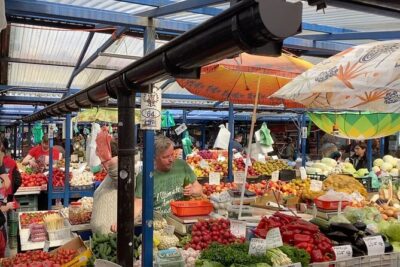
- Stary Kleparz adds a local market stop: See regional cheese, sausage, pickles and sweets in the city’s oldest market.
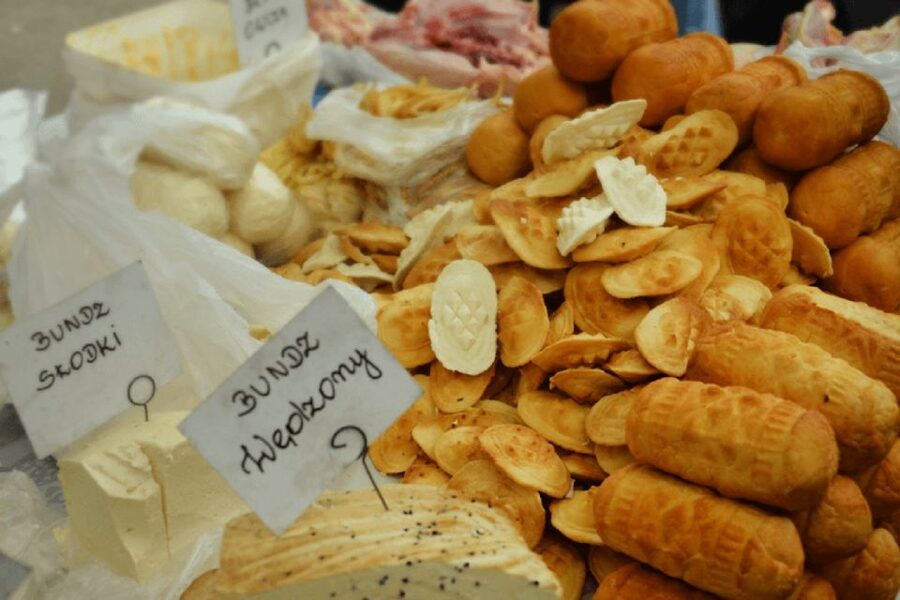
- The tasting menu is broad: Expect pierogi, zapiekanka, obwarzanek, vodka, oscypek, bundz and traditional sweets.
- The tour suits a short city break: In 90 minutes, you get food, local stories and a quick orientation to Kraków.
- Language and access matter: Tours run in one selected language, in English, Italian or French, and the route is not wheelchair accessible.
Why this food walk is a smart first taste of Kraków
Food is one of the quickest ways to understand Kraków. A church, square or museum can tell you what a city built, but a snack often shows how people live, trade and celebrate.
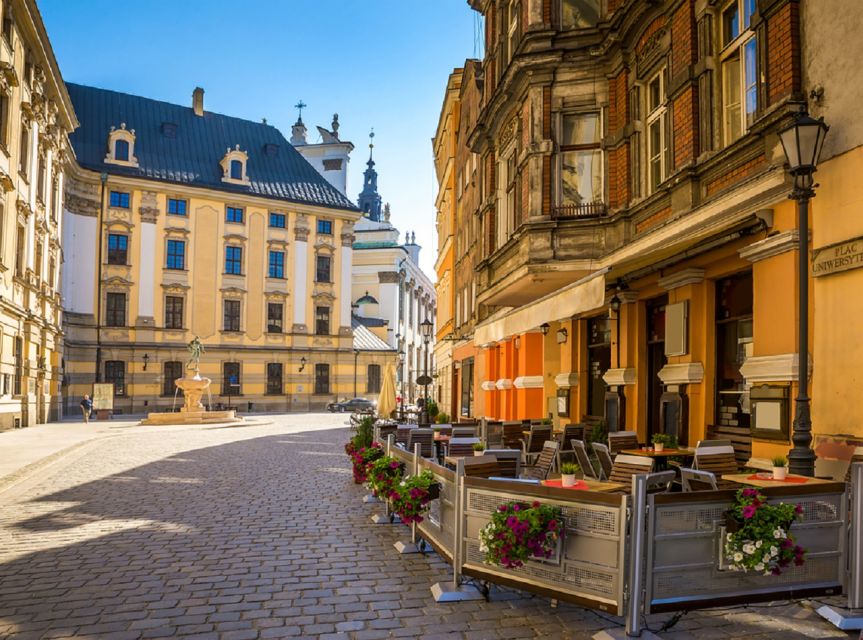
This tour works because it links each bite to a place and a story. You are not simply handed a plate of pierogi and sent on your way. You walk through the Old Town, hear how food shaped local culture, and stop for small portions that build into a proper introduction to Poland.
The 90-minute length is especially useful. If you have only a weekend in Kraków, you may not want to spend three or four hours on a food tour. This one gives you a sample of the major Polish staples, plus a market visit, while leaving most of your day free for Wawel Castle, Kazimierz or the city’s museums.
I would schedule it near the beginning of your stay. You can use the guide’s food suggestions later, and you will have a better idea of what to order when you sit down for dinner.
More street food tours in the world:
- Dubai: Old Town, Creek, Museums, Souks, & Street Food Tour
★ 4.8 · 10,816 reviews - Ho Chi Minh City Street Food Tour & Sightseeing By Motorbike
★ 5.0 · 9,413 reviews - Medellin: Comuna 13 Graffiti Tour, Cable Car & Street Food
★ 4.8 · 9,046 reviews
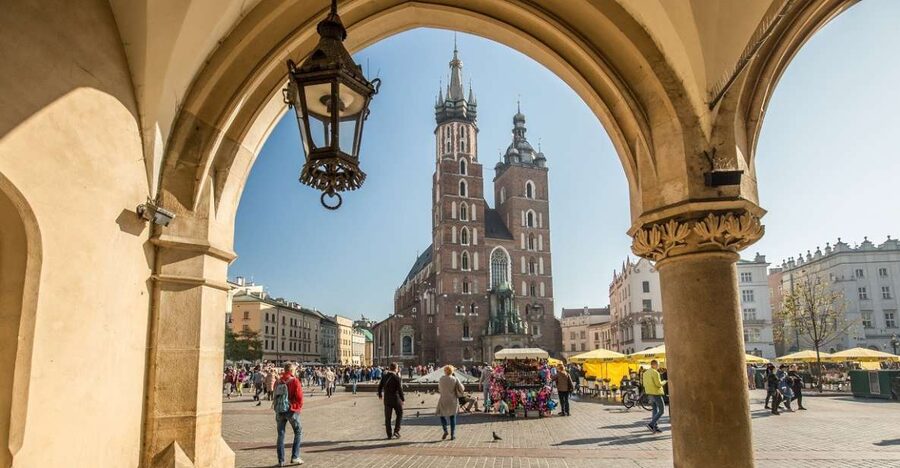
Meeting at Saint Mary’s Church in the Main Square
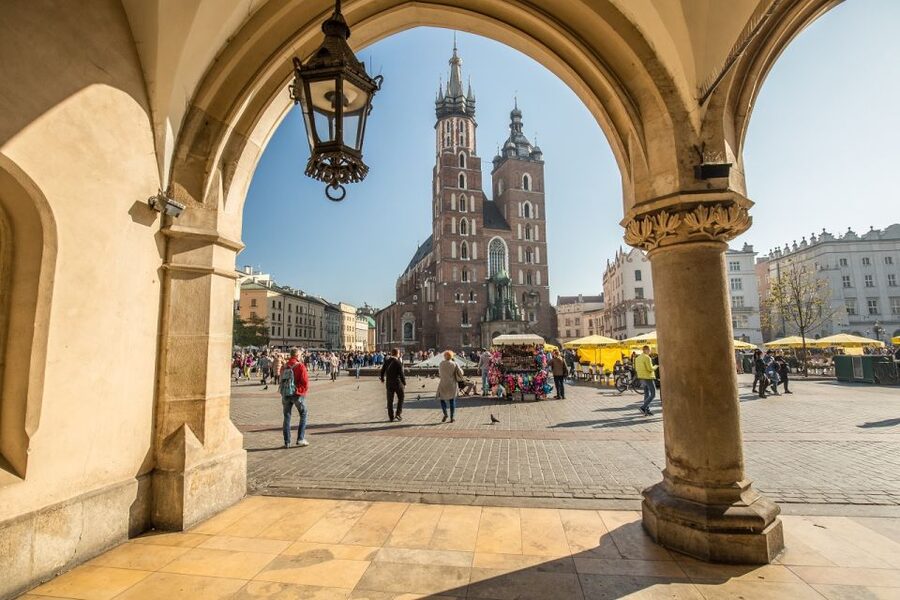
The tour begins in front of Saint Mary’s Church, known in Polish as Kościół Mariacki, on Kraków’s Main Square. Look for the guide holding a Street Food Tour sign.
This is an easy meeting point in the heart of the Old Town, but the square can be crowded. Give yourself time to find the church and the sign, especially if you are arriving during a busy sightseeing period. The operator asks you to arrive 10 minutes before departure, and that warning matters: once the group has left, late arrivals cannot join and the ticket is not refunded.
The meeting point also sets the tone nicely. You begin among Kraków’s best-known historic buildings, then move into the city streets with food as your guide. You get a little orientation before the tasting starts, rather than being dropped straight into an anonymous restaurant.
Obwarzanek and the Polish answer to the bagel
One of the most interesting early tastings is obwarzanek. This ring-shaped bread is boiled and baked, often covered with toppings such as salt, poppy seeds or sesame. The important point for you is not only how it tastes, but what it reveals about Kraków’s place in food history.
The connection to the New York bagel gives the guide a useful way to explain how foods travel and change. Kraków’s version is generally larger and more braided in appearance, while a bagel is usually denser and more compact. The comparison makes an ordinary street snack more memorable.
This is also a good example of the tour’s approach. You taste something simple, then receive the cultural context behind it. That is more useful than a long lecture on Polish cuisine because you have a flavor to attach to the story.
If you like trying food from market stands and bakeries, this part should be a highlight. If you want full meals at every stop, keep your expectations in check. The experience is built around tastings, not restaurant-sized servings.
Pierogi, zapiekanka and the main Polish classics
The tour includes pierogi, Poland’s most famous dumpling. Fillings can vary, but the key value here is getting a taste of a national staple while learning how it fits into Polish cooking.
Pierogi are familiar enough to please cautious eaters, but they still offer room to discover something new. You might already know them from Polish restaurants at home, yet tasting them in Kraków gives the dish a clearer sense of place. The guide can also help connect the food to Polish family cooking and everyday meals.
Zapiekanka brings a different style of Polish street food. It is an open-faced toasted baguette topped with ingredients such as mushrooms and cheese, though toppings can vary. Think of it as a Polish street-food pizza, a comparison one guide used effectively for visitors who wanted an instant reference point.
This is one of the tour’s more filling stops. Combined with pierogi and the other samples, it may replace a light lunch for many people. One practical tip: do not eat a large meal right before the tour. You will want room for the full range of tastings, including sweets and drinks.
The food is served in small portions, so you are not committing to a full plate of something unfamiliar. That makes the walk friendly for first-time visitors who want to sample Polish dishes without guessing at a restaurant menu.
Same city, another round of plates:
- Dubai: Old Town, Souks, Street Food, Guided Tour & Abra Ride
★ 4.9 · 7,170 reviews - Naples: Street Food Walking Tour with Local Guide
★ 4.9 · 4,976 reviews - Small Group Hanoi Street Food Tour with a Real Foodie
★ 5.0 · 4,682 reviews - Rome: Street Food Tour with Local Guide
★ 4.8 · 4,077 reviews
Polish vodka, cheese and the flavors of the region
A Polish vodka shot is included, adding a drink to the food-focused route. This is a brief tasting, not a vodka-centered pub crawl, so you should think of it as part of the cultural lesson rather than the main event.
The guide may explain how vodka fits into Polish social customs and food traditions. If you do not drink alcohol, check the arrangements when booking, since the included tasting specifically lists a Polish vodka shot.
The regional cheese sampling is another strong part of the experience. You taste oscypek and bundz, cheeses associated with Poland’s highland traditions. Oscypek is the firmer, smoked cheese many visitors notice first, while bundz is softer and milder.
These cheeses help broaden the tour beyond the familiar pierogi and zapiekanka. They point toward the food traditions of southern Poland and show that Polish cuisine is not limited to dumplings, cabbage and sausage.
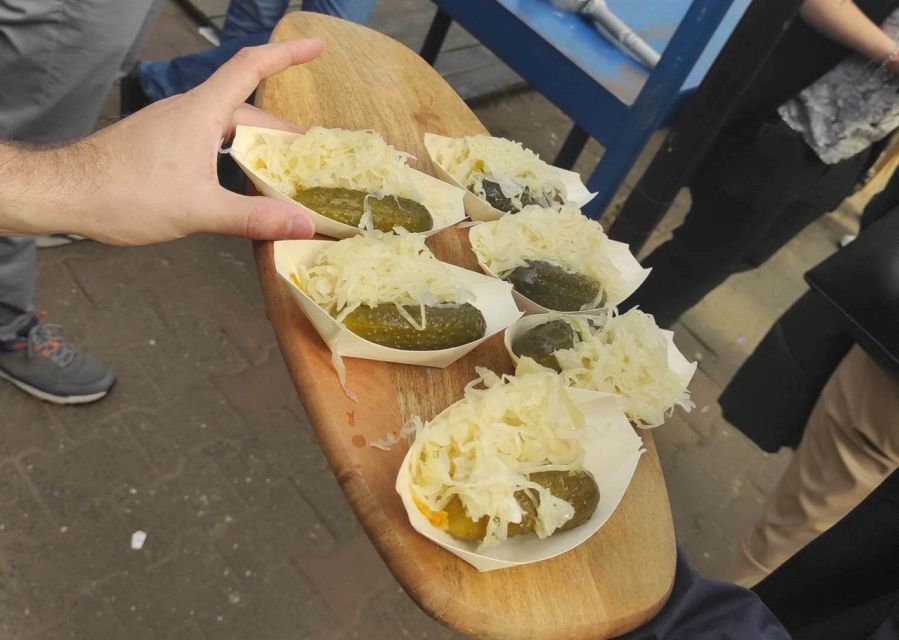
You also try sausage and pickles, two foods that fit naturally into a market visit. The combination gives you contrasting flavors: smoky, salty, sour and savory. It is a small but effective lesson in how Polish food balances hearty ingredients with sharp pickled tastes.
Walking through the Old Town between bites
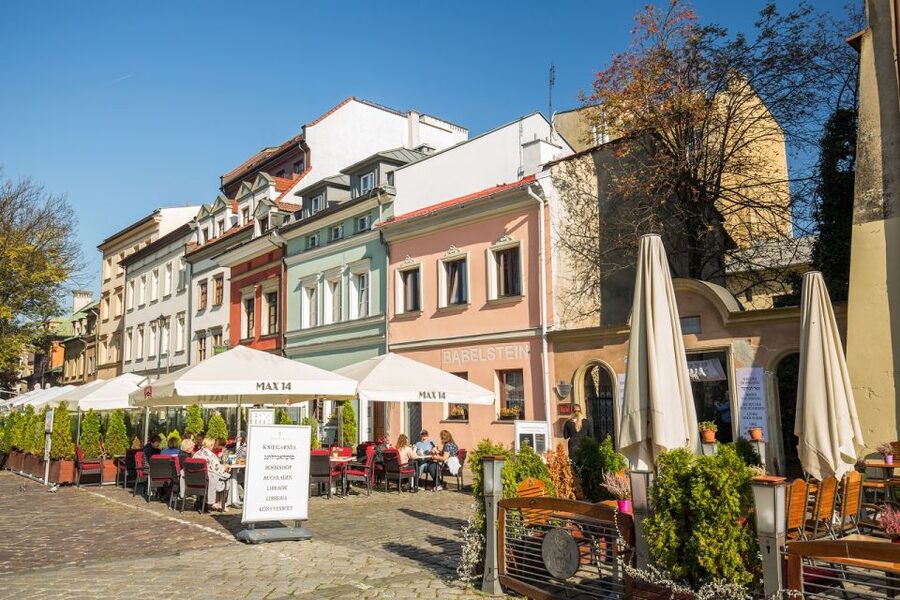
The walking itself is part of the value. You move along historic streets instead of sitting in one venue, so the tour gives you both food and a basic sense of Kraków’s Old Town.
The route is compact, but cobblestones and changing weather can affect your comfort. Wear practical footwear and bring clothing suited to the forecast. The tour runs in rain or shine, and there is no promise of shelter at every tasting stop.
That weather policy is worth taking seriously. A wet 90-minute walk can feel much longer if you arrive in thin shoes or without a rain jacket. On a clear day, though, the outdoor format makes the tour feel relaxed and social. You can talk with the guide and fellow group members while moving between tastings.
The small-group setup should help you hear the explanations and ask questions. Group size can vary, but the experience is designed as a friendly shared walk rather than a large coach outing. One particularly useful detail from the feedback is that a very small group made it easy to hear the guide clearly.
Guides named in the feedback include Alicja, Jana, Aneta and Damian, though the person assigned to your departure may be different. The strongest pattern is clear: guides are expected to explain both Polish food and city history, not simply point out the next snack.
Stary Kleparz, Kraków’s oldest market
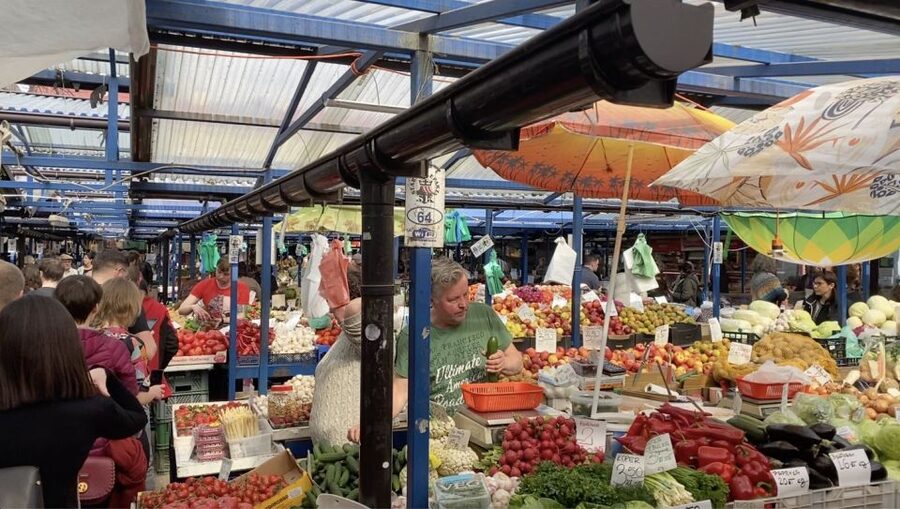
The tour finishes at Stary Kleparz, described as Kraków’s oldest market. This is where the experience shifts from prepared street food to ingredients and local trade.
You can expect to see stalls with highlander cheeses, sausage, pickles and other traditional products. The market is valuable because it shows food in its everyday setting. Instead of only tasting dishes prepared for visitors, you see the kinds of ingredients that shape Polish meals.
The market also gives the tour a strong ending. You have already tasted recognizable foods, and now you can look at the raw and preserved products behind them. The cheese and sausage samples make more sense after seeing how they are sold locally.
Bring your appetite under control by this point. The total amount of food can be substantial, even though the tour uses tasting portions. Several people found the combination filling enough to replace lunch or dinner, especially when the sweets are added.
The market may be the most useful stop for anyone who wants to continue exploring Polish food independently. You can note products you would like to buy later, look for a market stall near your accommodation, or use the experience to build a more confident restaurant order.
Sweets, rose jam and the final taste
Traditional sweets round out the tour. One notable sample mentioned in the feedback was a cake with rose jam, which gives you a different side of Polish food from the savory dumplings and sausage.
Rose jam is a memorable flavor because it is floral and fragrant rather than simply sugary. It helps show that Polish desserts have their own character and are not just variations on familiar European cakes.
The sweet course also keeps the tour balanced. If every stop focused on meat, cheese and pickles, the experience could feel heavy. Adding cake or another traditional sweet gives you a softer finish.
You should still treat the published food list as a guide rather than a guarantee of every exact item at every departure. The included tastings specifically cover pierogi, zapiekanka, obwarzanek, vodka, oscypek, bundz, sausage, pickles and traditional sweets, but individual products can vary.
What the $35 price gets you
At $35 per person, this is a reasonable price if you value several small tastings, a local guide and a walking introduction to Kraków. You are not paying only for food. You are paying for someone to connect the snacks to the streets, markets and customs around you.
The value is strongest for a first visit. You get enough food to understand the basics, plus suggestions that can help with later meals. A self-guided version would cost less if you bought one snack at a time, but you would not necessarily get the explanations or the organized range of dishes.
The tour also saves decision-making time. Instead of wondering which market stall to trust or which Polish dish to try first, you receive a planned sequence of tastes. For a short stay, that efficiency has real value.
It is less useful for you if you are seeking a long, restaurant-based food experience with full portions and extended time at each stop. At 90 minutes, this is an introduction, not a full afternoon of dining.
The free cancellation policy allows a full refund when you cancel at least 24 hours before the tour. You can also reserve and pay later, which helps if your Kraków schedule is still shifting.
Who should book this Kraków tasting walk?
I would recommend it to first-time visitors, couples, solo visitors and families with older children who want a friendly introduction to Polish food. It also suits anyone who has limited time and wants a guided experience that does not take over the day.
Food-curious visitors will get the most from it, especially if you want to try dishes but prefer small samples before ordering a full meal. The market finish is useful for anyone interested in local ingredients and everyday Polish shopping.
The tour is also a good choice for people who like history in short, practical doses. Guides such as Alicja, Jana, Aneta and Damian were praised for explaining the city and food with warmth, humor and clear detail. Your guide will vary, but the format depends on that personal explanation.
I would be more cautious if you use a wheelchair, since the experience is not suitable for wheelchair users. I would also reconsider it if you dislike walking on cobblestones, outdoor stops or eating a broad mix of foods in a short period.
Choose one language when booking. Each group tour runs in a single language, with English, Italian and French available. That keeps the explanations focused and makes it easier to follow the food stories.
Should you book the Traditional Street Food Walking Tour?
Book it if you want a short, affordable introduction to Kraków through food, especially near the start of your visit. The combination of obwarzanek, pierogi, zapiekanka, Polish vodka, highlander cheese, sausage, pickles and sweets gives you a broad first look at local flavors.
The best reason to choose it is the balance between tasting and place. You walk from Saint Mary’s Church through the Old Town and finish at Stary Kleparz, so the tour gives you more than a snack list.
Skip it if you want large restaurant portions, a slow multi-hour meal or a route designed for wheelchair access. For most other visitors who have 90 minutes and an appetite, $35 is a fair exchange for food, guidance and a useful first orientation to Kraków.
FAQ
How long does the Kraków street food tour last?
The tour lasts 90 minutes.
Where does the tour meet?
Meet in front of Saint Mary’s Church, Kościół Mariacki, on the Main Square. The guide will hold a Street Food Tour sign.
What food and drinks are included?
Included tastings are pierogi, zapiekanka, obwarzanek, Polish vodka, oscypek, bundz, sausage, pickles and traditional sweets.
Which languages are available?
The tour is available in English, Italian and French. Each group tour operates in one selected language.
Is the tour suitable for wheelchair users?
No. The activity is not suitable for wheelchair users.
Can I cancel or pay later?
You can cancel up to 24 hours before the tour for a full refund. You can also reserve now and pay later.
Newly added plates around the world
- Zanzibar:Stone town Street food market walking tour,transfer★ 4.5 · 9 reviews
- Zanzibar: Stone town visit, Shopping tour &Night food Market★ 4.4 · 2 reviews
- Xi’an Muslim Quarter Night Market Foodie Walking Tour★ 4.2 · 22 reviews
- Xi’an: Gourmet & Street Food Tour★ 4.8 · 22 reviews
- Zanzibar: Stone town tour, Prison island & night food market★ 4.5 · 2 reviews
- Verona: Street Food and History Tour with Local Guide★ 4.7 · 6 reviews
- Vienna Food Tour: Dishes, Wine, Street Food & Culture★ 4.7 · 12 reviews
- Verona: City Highlights & Street Food Walking Tour★ 5.0 · 3 reviews
Krakow Street Food Tours, compared.
Krakow’s Local Flavor: Craft Beer and Street Food with Guide
Read our review →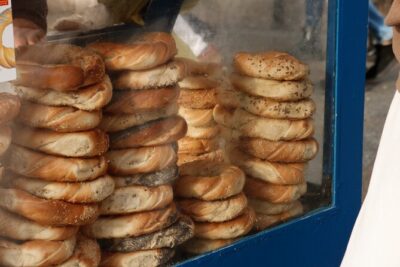
Browse the lists this tour appears in